AI influencer pitches aren’t the future anymore. They’re the baseline.
In 2026, brands aren’t impressed by a well-written pitch alone. They want to know one thing: will this collaboration actually drive results? Creativity still matters, of course. But without a clear performance angle, even the most polished pitch is easy to ignore.
This is where a lot of creators get stuck.
Pitching used to be about sounding enthusiastic and hoping the brand would “see the vision.” You’d spend ages rewriting the same message, tweak the subject line one more time, and hit send—only to hear nothing back. Meanwhile, brands are opening hundreds of pitches a week, skimming fast, and looking for proof, not promises.
That shift is exactly why AI influencer pitches matter more than ever in 2026.
But let’s be clear: this isn’t about spamming brands or letting AI talk for you. The creators landing deals today are using AI as a support system. They use it to sharpen their message, highlight the right metrics, and frame Collabs in a way brands instantly understand.
Tools like CreatorGPT help take the pressure off the hardest part—figuring out what to say. Instead of starting from scratch, creators can generate smart drafts, refine their tone, and focus on pitching partnerships that make sense for both sides.
If you want to use AI influencer pitches to stand out, sound confident, and land better brand deals in 2026, this is where to start.
1. Why Traditional Pitches Don’t Work Anymore

For years, influencer pitching meant guesswork and generic emails. You’d paste a basic template, hit send, and hope for a reply. But in 2026, that approach is outdated.
Brands now get hundreds of influencer messages every week. Most look the same, with copy-paste intros and vague subject lines. The result? Most pitches are ignored.
In 2026, the problem goes deeper than inbox overload. Brands are under pressure to justify every partnership, every campaign, and every dollar spent. A pitch that sounds nice but doesn’t hint at performance is easy to pass on.
The bigger issue is personalization. A generic “Hey, I love your brand, let’s collab” doesn’t prove you understand their products, their goals, or what you bring to the table in terms of results. Add in the time it takes to draft, edit, and send dozens of emails, and the odds of a reply drop even further.
That’s why many influencers are turning to smarter options. In 2026, the answer lies in tools that help creators pitch with clarity, relevance, and performance in mind.
2. What Are AI Influencer Pitches?
At its core, an influencer pitch is a message to a brand. But in 2026, it’s also a business case. You introduce yourself, explain your value, and suggest a collaboration. The challenge? Doing it well, and doing it at scale. That’s where AI influencer pitches come in.
In 2026, AI influencer pitches are less about automation and more about assistance. The goal isn’t to send more messages. It’s to send better ones. AI helps creators frame their value clearly, surface relevant performance signals, and position collaborations in a way brands immediately understand.
With tools like CreatorGPT, you don’t start with a blank page. You give a few details—your niche, audience size, and the type of Collab—and get a polished draft that feels specific to the brand.
AI influencer pitches can highlight why your audience is a match, adjust tone, and even suggest creative campaign ideas, and help surface the performance metrics or outcomes that matter most to brands.
The benefits go beyond saving time. AI removes the stress of figuring out what to say, helps structure stronger pitches, and makes it easier to communicate your value in a clear, results-focused way. Instead of hours spent writing, you can generate multiple strong drafts in minutes.
When used well, AI influencer pitches don’t replace your voice. They sharpen it.
3. How to Pitch Brands with AI: Step-by-Step with CreatorGPT
The beauty of AI pitching is that it takes the hardest part—the writing—off your plate. Here’s how it works:
Step 1: Enter your details.
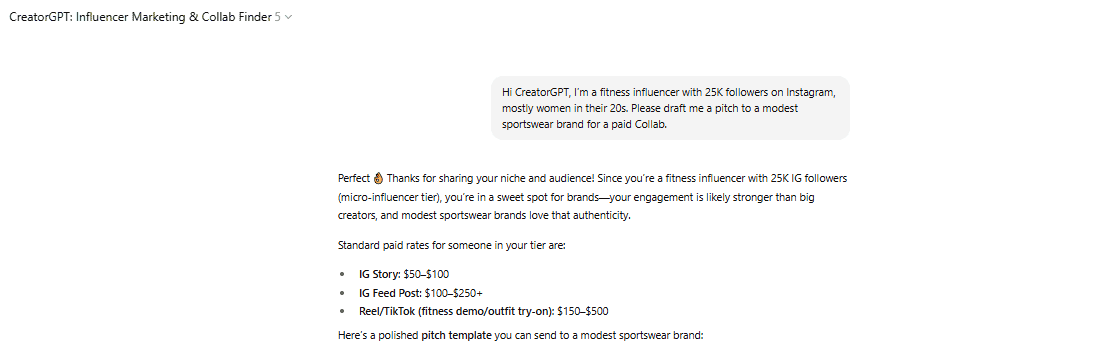
Start by telling CreatorGPT who you are and what you want. For example: “I’m a fitness influencer with 25K followers on Instagram, mostly women in their 20s. Draft me a pitch to a sportswear brand for a paid Collab.” The more details you give, the better the draft will be.
Step 2: Review the pitch draft.
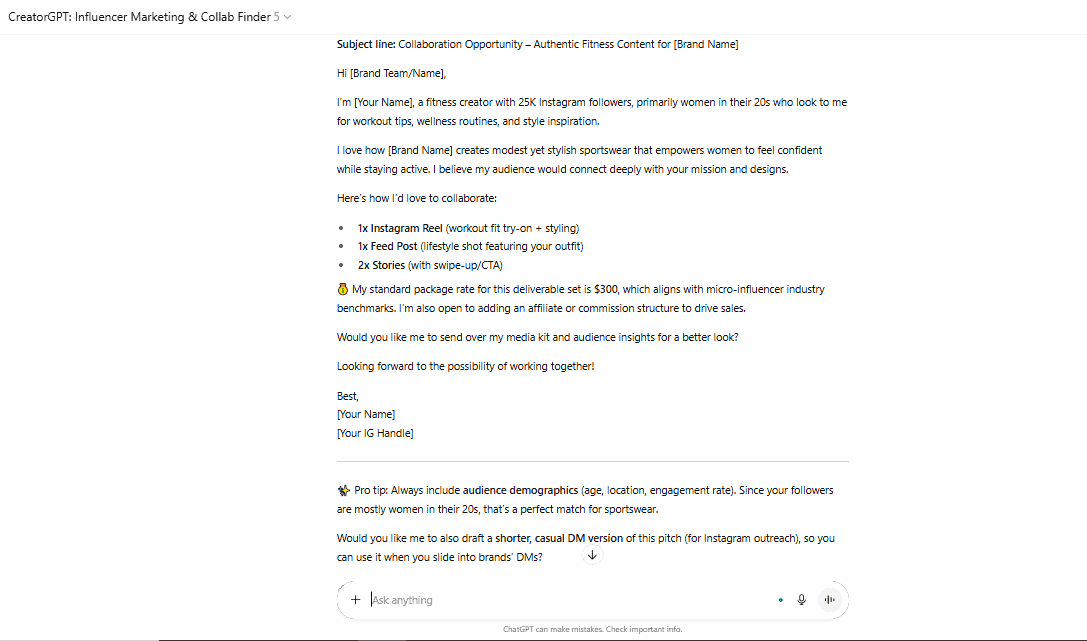
CreatorGPT will generate a professional pitch based on your info. It includes an intro, highlights your audience, and explains the value you bring. It may even suggest a creative idea for the Collab. These drafts feel personalized right from the start.
Step 3: Adjust the tone and details.
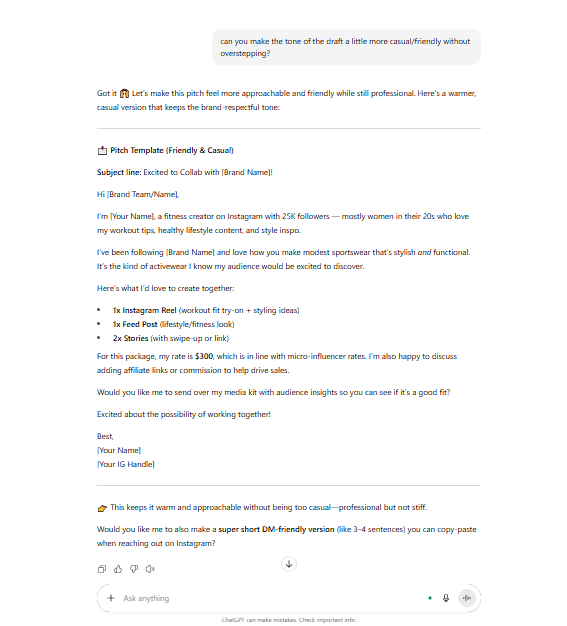
Want to sound casual? Professional? Bold? You can ask CreatorGPT to rework the tone until it feels like you. Always tweak the final draft to add your personal touch, like a favorite product or a reason you love the brand.
Step 4: Send with confidence.
Once your pitch feels right, copy it into an email or DM and hit send. Because the heavy lifting is already done, you can focus on building the relationship instead of stressing over every word.
4. Examples of AI Influencer Pitches That Work
Seeing AI influencer pitches in action makes it easier to understand what actually works in 2026. The strongest pitches today don’t just sound friendly or creative—they quickly communicate value, intent, and confidence.
These examples show how creators are using AI-generated drafts as a foundation, then layering in performance signals, clear ideas, and partnership intent. That combination is what helps pitches stand out.
Example 1: Skincare Brand (Professional, Paid Collab)
Hi [Brand Team],
I noticed your new Vitamin C serum launch—congratulations on expanding your line. The packaging is beautiful, and I’ve already seen buzz building around the product.
I’d love to collaborate on a “Morning Glow” series for Instagram Reels, showing how your serum fits into a simple three-step skincare routine. My tutorials usually generate strong engagement (my last product demo earned 20K views in a week), and I believe this campaign could do the same for your launch.
My audience values trustworthy, science-backed recommendations, and I know they’d be excited to try your products. Would you be open to discussing a paid partnership around this idea?
Example 2: Fitness Brand (Casual, Gifted Collab)
Hey [Brand Name],
Your logo has been all over my gym feed lately—it’s impossible to miss those bold designs. I think my community would love to see me test your gear in my workout content.
If you’re open to a gifted collab, I’d be happy to share an unboxing plus a workout reel putting your products to the test. My last gear review post pulled 15K impressions and sparked dozens of comments from people asking for recommendations, so I know this type of content resonates.
I’ve built a really engaged community of fitness lovers, and I think this could be a fun way to introduce them to your brand. What do you think?
Example 3: Lifestyle Brand (AI, Discovery-Focused Pitch)
Hi [Brand Team],
I love how your brand focuses on everyday products that feel practical, not overhyped. That’s something my audience really connects with.
My content is designed to drive discovery and long-term interest, not just quick views. As a micro-influencer, my last 3 short-form videos generated a combined total of over 1,800 saves and shares, which tells me people aren’t just watching—they’re coming back and passing the content along.
I also create videos with AI discovery in mind, meaning they’re structured to perform well beyond social feeds and be picked up in AI-powered search and recommendations. This helps brands stay visible even after the initial post goes live.
I’d love to explore a collaboration that combines content creation with a performance-based element so that we can track real interest and results together. If this sounds aligned, I’d be happy to share a few content angles that could work well for your brand.
What these examples show is simple: you understand the brand, you bring content ideas, and you can back it up with results.
5. Best Practices for Writing AI Influencer Pitches
In 2026, writing AI influencer pitches isn’t just about sounding professional—it’s about showing brands that you understand results.
AI can help structure your message, but the strongest pitches go a step further. They highlight performance signals, show intent to drive sales, and make it easy for brands to see the business value behind the collaboration. Whether you’re pitching via email, DM, or video, the goal is the same: clarity over cleverness.
Think of AI as your support system, not your spokesperson. Use it to sharpen your message, then apply the best practices below to make sure your pitch feels human, confident, and aligned with what brands expect today.
Lead with outcomes, not deliverables.
Instead of focusing only on the type of content you’ll create, use AI to help highlight results—such as past conversions, saves, clicks, or buying intent. In 2026, brands care more about what your content can drive than how it looks.
Keep it short and clear.
Brands don’t have time to read long emails. Stick to two or three short paragraphs. Introduce yourself, mention something about the brand, and suggest a collab idea. That’s all you need.
Make it brand-focused.
AI will give you structure, but you need to make sure your pitch starts with the brand, not just you. A line about a recent launch, campaign, or product shows you’ve done your homework.
Add a personal touch.
AI can sound polished, but it won’t know your personal connection. Mention how you’ve used the product or why you genuinely like the brand. It turns a good draft into a great one.
Always edit before sending.
The biggest mistake in learning how to pitch brands using AI is copying and pasting a draft without adjustments. Even the best AI needs a human layer—your voice, your personality, and your story.
6. Why CreatorGPT Is the Best Tool for AI Influencer Pitches
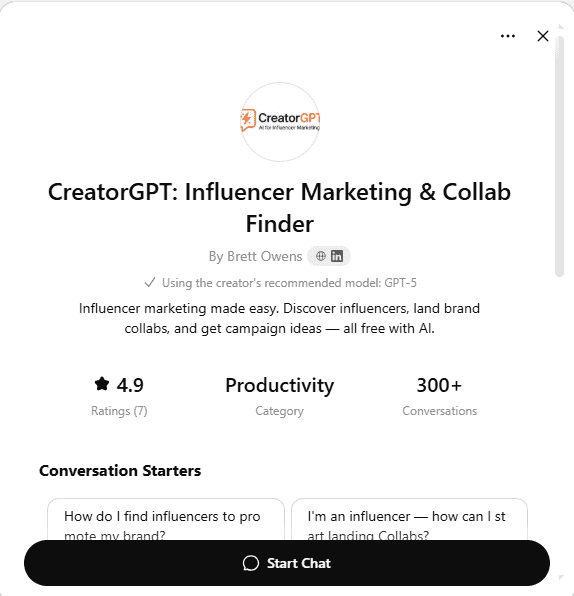
There are plenty of AI writing tools out there, but most are too broad for influencer marketing. They can draft a caption or generate email text, but they don’t really understand Collabs. That’s where CreatorGPT stands out.
CreatorGPT is built specifically for influencers, but in 2026, its biggest advantage isn’t just writing faster. It helps creators think more strategically about how they pitch, what they highlight, and how they position their value to brands. If you’re reaching out to a skincare brand, the draft will highlight your audience’s interest in beauty and product discovery. If you’re contacting a fitness brand, it will suggest angles that fit workout content and performance-driven engagement.
CreatorGPT can also help creators frame their content for discovery beyond social feeds. This includes positioning content in a way that supports AI-powered search and recommendations—an increasingly important factor for brands in 2026.
Instead of focusing only on wording, CreatorGPT helps creators structure pitches around what brands care about most today: performance. From highlighting intent-driven engagement to framing partnerships around outcomes, it supports a more results-aware pitching approach without making creators sound overly sales-focused.
Another big advantage? It’s free to try in the GPT Store. While other platforms charge for influencer databases or pitch templates, CreatorGPT gives influencers an entry point to experiment with AI influencer pitches at no cost.
Because it’s powered by GPT and informed by real influencer campaigns, the drafts feel natural and relevant. You save time, communicate your value more clearly, and spend less energy second-guessing what to say.
For influencers learning how to pitch brands with AI, CreatorGPT is the most practical, accessible, and risk-free tool to start with.
Stop Guessing, Start Winning with AI Influencer Pitches
In 2026, brands aren’t just looking for creators who can make content. They’re looking for partners who understand performance, intent, and long-term value.
That’s why AI influencer pitches work best when they’re used thoughtfully. AI can help structure your message, surface the right details, and sharpen your positioning—but it’s your insight, experience, and voice that turn a pitch into a real opportunity.
If you’re serious about landing better brand deals, start treating your pitches like business conversations, not cold outreach. Use AI to prepare smarter, clearer pitches that show brands exactly why working with you makes sense.
Ready to pitch with more confidence?
Test CreatorGPT free in the GPT Store, then start creating and sending AI influencer pitches that actually open doors.