.svg)


- Ainfluencer Alternatives That Make Influencer Marketing Easy
- What Is Influencer Marketing and Why It Matters
- 1. Afluencer: The Best Ainfluencer Alternative
- 2. Influencer Hero: Built for Brands Scaling Creator Programs
- 4. Influencity: Advanced Analytics Meets Scalability
- 5. Upfluence: Harness the Power of Data
- 6. Aspire: Streamlined Campaign Management
- Tips for Choosing the Best Ainfluencer Alternative
- Afluencer: A Strong Contender in the Market
- Final Thoughts on Choosing an Ainfluencer Alternative
Ainfluencer Alternatives That Make Influencer Marketing Easy
Looking for Ainfluencer alternatives? You're in the right place. Ainfluencer has carved out its niche in influencer marketing, but it's not the only platform in town. There are options out there that might suit your brand's needs better.
Choosing the right influencer marketing platform can make or break your campaign. Whether it's advanced filters, better pricing, or a more intuitive user experience, exploring alternatives makes sure you're making the best decision for your business.
Let's get into the top Ainfluencer alternatives, starting with the one built for small business brands that want simplicity and results.
What Is Influencer Marketing and Why It Matters
Influencer marketing is no longer just a buzzword. It's a core strategy for businesses of all sizes. By collaborating with creators who have established audiences, brands can connect with potential customers in a more authentic and engaging way.
But here's the catch: managing influencer campaigns without the right tools feels like juggling ten things at once. From finding the perfect match to keeping everything organized, the process gets overwhelming fast. That's where influencer marketing platforms step in.
Platforms like Ainfluencer, and the alternatives we'll explore, make it easier to:
- Discover influencers who align with your brand
- Streamline communication and collaboration
- Manage multiple campaigns without the hassle
These platforms aren't just for large companies with big budgets. Small businesses and startups use influencer marketing tools to grow their reach and increase sales, often on modest budgets. The key is finding a platform that offers the right mix of features for where you are right now.
With the right platform, you save time, stay organized, and get results that matter. Now let's look at the top Ainfluencer alternatives.
1. Afluencer: The Best Ainfluencer Alternative
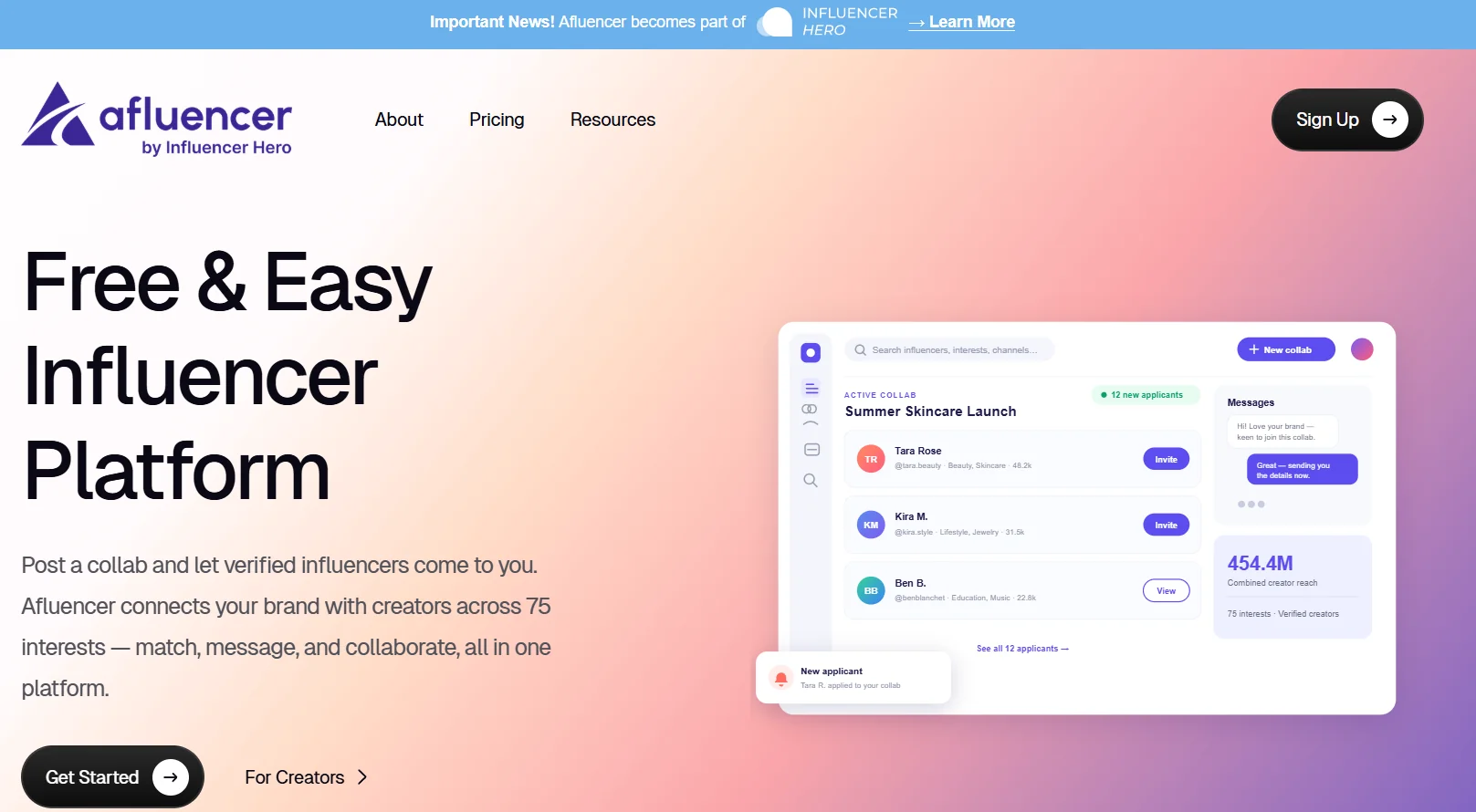
Afluencer takes the lead for small and growing brands thanks to its accessibility, its inbound model, and its focus on results.
A Robust Influencer Database
Afluencer connects you to a network of over 40,000 creators across niches and locations. From beauty bloggers to fitness creators, you'll find matches no matter your industry. If you want a sense of who's on the platform, our roundup of top creators is a good starting point.
Comprehensive Filtering Options
Afluencer doesn't leave you searching blindly. Interest filters let you narrow influencers by niche, location, engagement rate, audience demographics, and more. That precision makes it easy to find creators who match your specific campaign goals.
What You Get on the Marketplace Plan
Afluencer's brand pricing starts at $49 per month on the Marketplace plan. Here's what that gets you:
- Post a Collab and receive unlimited influencer applications
- 60 invite credits per month to reach out to creators directly
- Premium influencer filters across the full directory
- Direct chat with creators inside the platform
- Detailed influencer profiles to assess fit before you commit
- Support by phone, email, and live chat
Creators join Afluencer free, which is exactly why the inbound applications keep coming. As a brand, you're paying for reach and tooling, not for access to a directory that sits empty.
When you're ready to scale, Standard runs $649 per month with 1,000 reach outs, product shipping, and influencer payments. Pro runs $1,049 per month with 5,000 reach outs, a dedicated account manager, and three or more seats. Everything is listed on the pricing page.
Other Benefits That Make Afluencer Stand Out
- Nano, micro, macro, and mega influencers. Whether you're after niche appeal or wide reach, Afluencer has creators at every level.
- Intuitive interface. The platform is built to be easy to navigate, so campaign management doesn't eat your week.
- 7-day support team. Help is available seven days a week.
- Predictable upgrades. Every tier is published, so scaling up never involves a surprise quote.
Afluencer is built for businesses that want results without the headache. It's the ideal choice for brands getting started with creators and running a manageable number of Collabs at a time.
2. Influencer Hero: Built for Brands Scaling Creator Programs
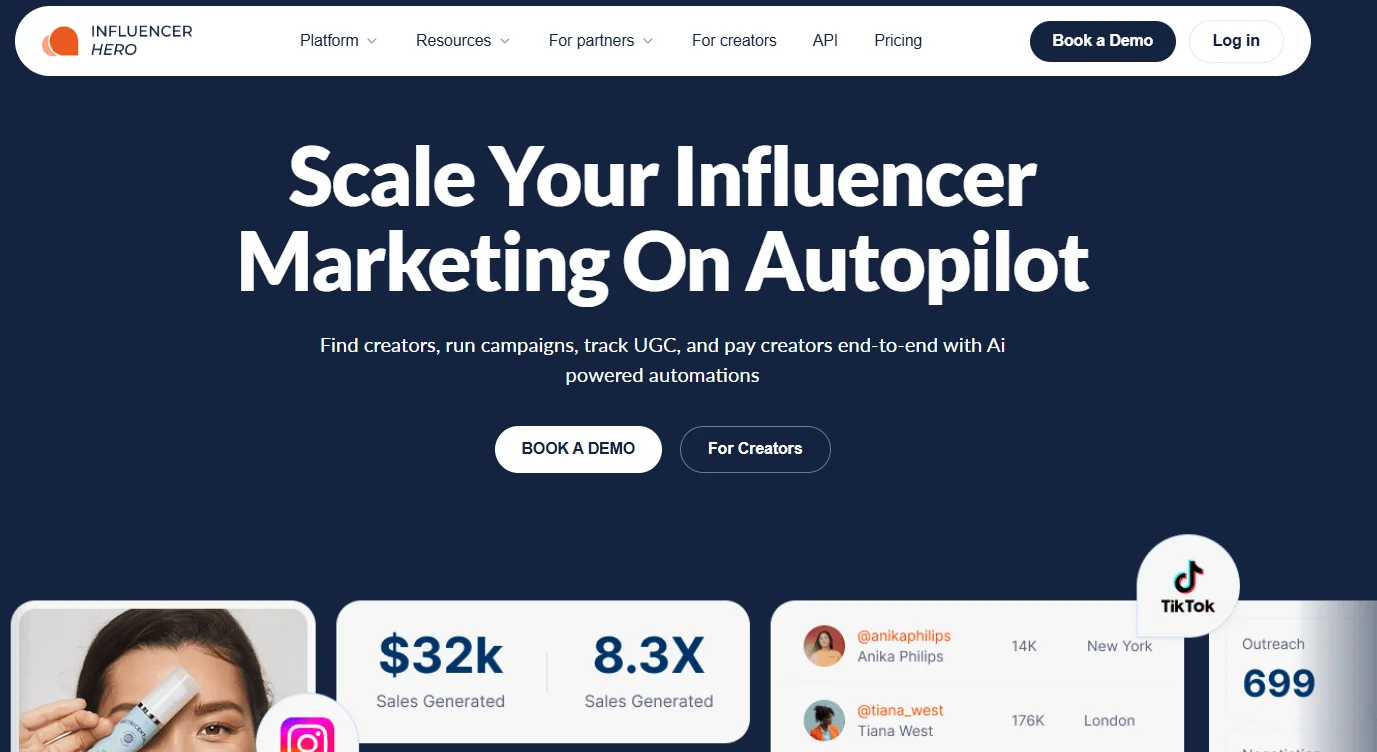
Afluencer and Influencer Hero are part of the same family, so here's the honest split. Afluencer is the ideal choice for brands just getting started. Brands that want to scale and work with a lot of creators at once need Influencer Hero.
The difference is volume. A marketplace works beautifully when you're running a few Collabs and replying to applications yourself. Once you're moving dozens or hundreds of creators through outreach, contracts, product, content approval, and payouts at the same time, you need a system built for that load.
Key features:
- Influencer discovery across Instagram, TikTok, and YouTube with fake follower detection, lookalike search, and AI matching
- Automated outreach sequences with follow ups, so you're not sending messages one at a time
- A full influencer CRM that tracks every creator by stage, from first contact to content delivered
- Product gifting that syncs with Shopify and WooCommerce
- Affiliate links, automated payouts, and sales attribution, so you can see revenue per creator instead of just reach
- ROI reporting that connects content back to conversions
Pricing: Standard at $649 per month, Pro at $1,049 per month, and Business at $2,490 per month. All published, no quote process, which is unusual in this category.
Best for: D2C brands and agencies running influencer marketing as a real acquisition channel, where outreach volume and attribution matter more than browsing a directory.
Book a demo with Influencer Hero to see the discovery, outreach, and attribution workflow applied to your own brand.
3. Influence.co: A Community-Driven Platform
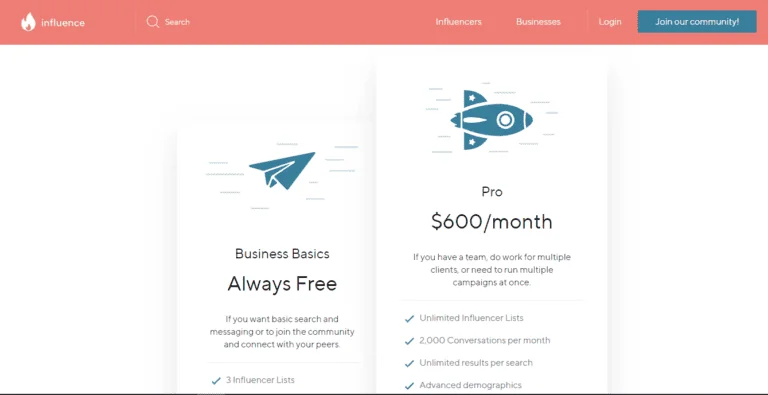
If you want a platform that combines influencer marketing with a strong sense of community, Influence.co is worth exploring. It's now owned by Social Native and leans heavily into the creator network side of things, with over 300,000 members.
What makes Influence.co stand out:
- Community features. Creators and brands build profiles, showcase work, and engage with each other through Creator Communities and a Q&A product.
- Portfolio displays. Influencers showcase their best work, which helps brands make informed decisions before reaching out.
- Live opportunities. The platform lists over 2,000 collaboration opportunities from brands at any given time.
- Free entry, paid depth. You can search and connect at no cost, but analytics and campaign management sit behind a paid subscription.
Best for: Brands and agencies that treat networking as part of their influencer strategy and want a platform with a social layer. If you're still shaping your outreach approach, our guide to finding micro influencers pairs well with this kind of platform.
4. Influencity: Advanced Analytics Meets Scalability
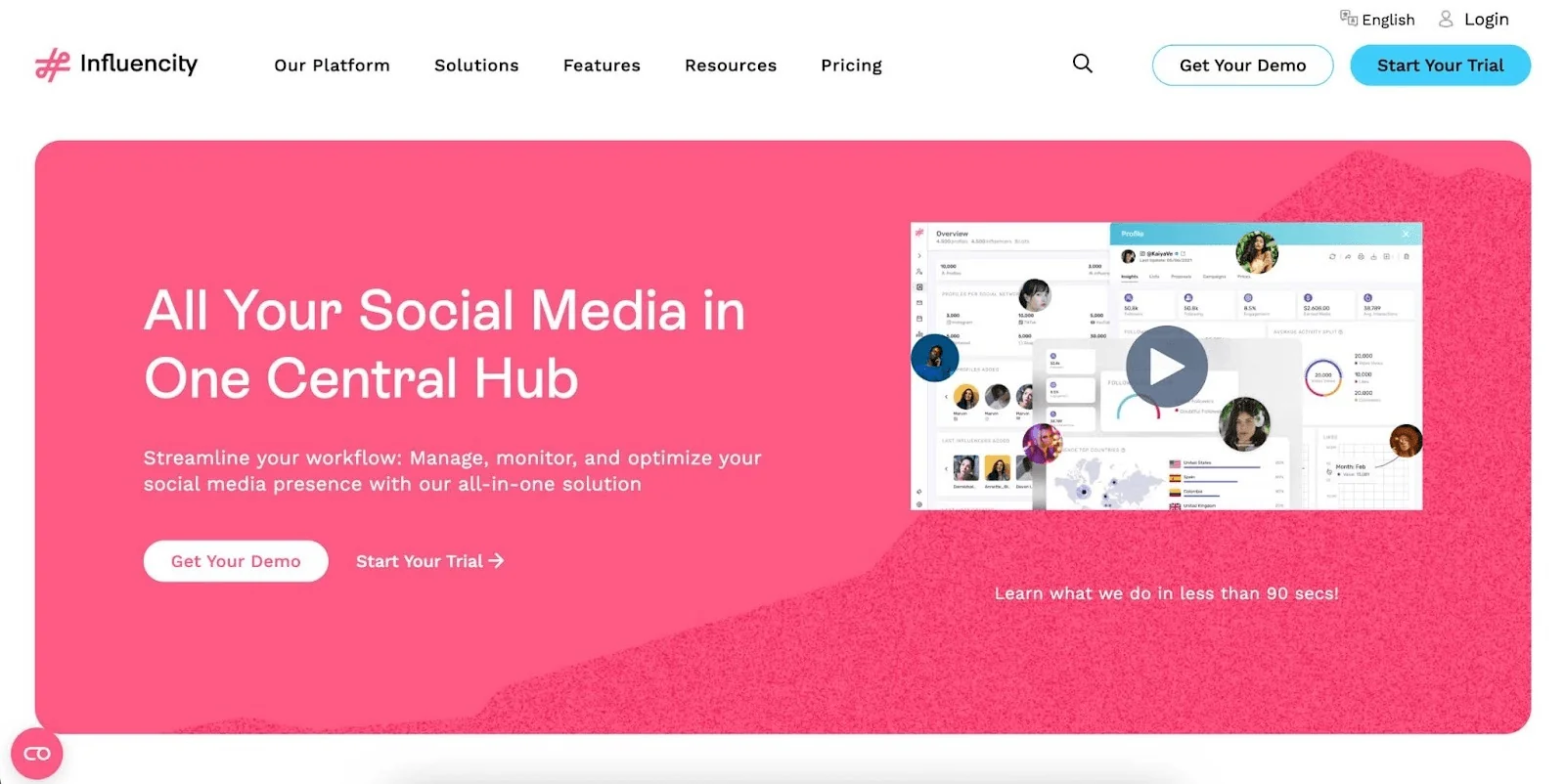
For brands that want deep insights and the ability to scale, Influencity offers a sophisticated set of tools built for data-driven marketers.
What makes Influencity unique:
- Detailed analytics. In-depth data on influencer performance, audience demographics, and engagement rates across a database of more than 200 million creator profiles.
- Customizable campaign management. Build tailored workflows so campaigns run cleanly from start to finish.
- IRM module. Influencer Relationship Management for organizing creators into lists and tracking collaborations over time.
Pricing: Plans start around $168 per month for Basic, with Professional around $348 per month and Business around $698 per month. Enterprise is custom. There's no free plan, and analysis credits are capped monthly, so heavy vetting can hit the ceiling fast.
Best for: Brands and agencies that prioritize data and need a platform that adapts as campaigns expand.
5. Upfluence: Harness the Power of Data

Upfluence leans heavily into data to help brands identify, connect with, and manage influencers. Its analytics and automation make it a favorite among businesses running large programs.
Key features:
- Influencer discovery. A searchable database of more than 9 million creator profiles across industries.
- Audience insights. Deep demographic data to make sure your chosen influencer matches your target market.
- Ecommerce integrations. Native connections with Shopify, WooCommerce, Magento, BigCommerce, and Amazon Attribution for tracking ROI directly. It also plugs into Klaviyo, Zapier, and Gmail, alongside the wider set of AI marketing tools brands are stacking together.
Pricing: Upfluence doesn't publish rates. Third-party sources commonly report entry around $478 per month for a single module, with full deployments running into four figures monthly and a 12-month contract required.
Best for: Mid-size to large brands with the budget and internal resources to get value out of a modular, contract-based platform.
6. Aspire: Streamlined Campaign Management

Aspire, formerly AspireIQ, is a versatile platform built to simplify influencer marketing for larger brands. Its campaign tools appeal to businesses that want everything organized in one place.
Key features:
- Comprehensive campaign tools. Manage collaborations, send contracts, and track deliverables from a single dashboard.
- Creator marketplace. A database of more than 170 million influencers plus a separate opt-in marketplace of over 1 million creator profiles.
- Performance tracking. Analytics covering engagement, content performance, and ROI.
Pricing: Aspire doesn't publish rates either. Reported starting points sit around $2,000 per month with an annual contract, which puts it firmly in enterprise territory.
Best for: Established brands with dedicated influencer marketing teams and budget to match.
Tips for Choosing the Best Ainfluencer Alternative
With so many platforms to choose from, narrowing it down gets overwhelming. Here's how to make the call:
- Define your goals. Start by outlining what you want influencer marketing to do. Brand awareness, direct sales, and content generation point toward different platforms.
- Set a budget and know what it buys. At $49 per month you're getting an inbound marketplace. At $649 to $1,049 you're getting automated outreach, CRM, and attribution. At $2,000 or more you're paying for enterprise workflows and an annual commitment. Match the tier to the volume you'll actually run.
- Check the influencer database. Look for a platform that covers your niche with filtering options that get you to a shortlist quickly. Database size matters less than relevance.
- Explore filtering and search tools. Good filters save hours. Make sure you can search by niche, location, engagement rate, and audience demographics. Some platforms now layer in AI matching so you describe what you want instead of building filters by hand.
- Review campaign management features. Direct messaging, content tracking, and reporting are what keep a campaign from turning into a spreadsheet problem.
- Read user reviews. Check what other brands say about usability, support, and actual results, not just feature lists.
- Watch for contracts and hidden costs. Several platforms here require annual commitments or quote-based pricing. If transparency matters to you, that narrows the field fast.
Afluencer: A Strong Contender in the Market
Afluencer stands out for brands that want cost-effective influencer campaigns without a long ramp-up. With over 40,000 creators and a full set of search filters, you get the flexibility to find matches for your campaigns quickly.
Unlike most platforms on this list, Afluencer publishes every price. You know what $49 per month gets you before you enter a card, and there's no sales call standing between you and the product. The 7-day support team means you're never stuck when something goes sideways.
Start with a gifting campaign to see how creators respond to your brand, then scale from there. When your program outgrows a marketplace, Influencer Hero picks up where Afluencer leaves off.
Final Thoughts on Choosing an Ainfluencer Alternative
Finding the right Ainfluencer alternative comes down to understanding your own volume and goals. Each platform here offers something different, from Afluencer's inbound marketplace to Upfluence's ecommerce data stack.
Some shine at community and networking. Others are built for analytics or enterprise workflow. The deciding question is usually simpler than a feature comparison: how many creators will you actually be managing at once, and do you need outreach automation or just a place to meet them?
If the answer is "a handful, and I want to start this week," Afluencer is the fit. If it's "a hundred or more, and I need attribution," Influencer Hero is the one to book time with.
Frequently Asked Questions
<details class="ih-faq"><summary>What should I look for when comparing influencer marketing platforms?</summary><div class="ih-faq-a">Key factors include database size and relevance, filtering capabilities, pricing structure, user interface, customer support, and features like campaign management and analytics. Pay close attention to whether pricing is published or quote-based, and whether an annual contract is required, since that varies widely across this list.</div></details><details class="ih-faq"><summary>Can small businesses use influencer marketing platforms effectively?</summary><div class="ih-faq-a">Yes. Small businesses and startups use influencer marketing platforms to grow reach and boost sales without large budgets. The trick is starting on a platform priced for your stage. Afluencer's Marketplace plan at $49 per month is built for exactly that, while enterprise platforms like Aspire start near $2,000 per month.</div></details><details class="ih-faq"><summary>How many influencers should a good platform have?</summary><div class="ih-faq-a">Relevance matters more than raw volume. A database of 200 million profiles is useless if none of them are in your niche or open to a collab. Afluencer's directory of over 40,000 creators is curated toward brands that want responsive micro and nano creators, while discovery-first platforms optimize for breadth instead.</div></details><details class="ih-faq"><summary>When should I move from a marketplace to a full influencer platform?</summary><div class="ih-faq-a">When outreach volume becomes the bottleneck. A marketplace works well while you're managing a handful of creators. Once you're running automated outreach at scale, tracking creators through a pipeline, and needing sales attribution per creator, Influencer Hero is the platform built for that stage.</div></details><details class="ih-faq"><summary>What types of influencers can I find on these platforms?</summary><div class="ih-faq-a">Quality platforms offer creators at every level: nano, micro, macro, and mega. That range lets you choose based on your goals, whether that's niche appeal and high engagement from smaller creators or broad reach from larger accounts.</div></details><details class="ih-faq"><summary>Tagged In:</summary><div class="ih-faq-a">Ainfluencer alternatives, influencer marketing platforms, Influencer Hero, influencer marketing tools, Afluencer</div></details><script type="application/ld+json">{"@context":"https://schema.org","@type":"FAQPage","mainEntity":[{"@type":"Question","name":"What should I look for when comparing influencer marketing platforms?","acceptedAnswer":{"@type":"Answer","text":"Key factors include database size and relevance, filtering capabilities, pricing structure, user interface, customer support, and features like campaign management and analytics. Pay close attention to whether pricing is published or quote-based, and whether an annual contract is required, since that varies widely across this list."}},{"@type":"Question","name":"Can small businesses use influencer marketing platforms effectively?","acceptedAnswer":{"@type":"Answer","text":"Yes. Small businesses and startups use influencer marketing platforms to grow reach and boost sales without large budgets. The trick is starting on a platform priced for your stage. Afluencer's Marketplace plan at $49 per month is built for exactly that, while enterprise platforms like Aspire start near $2,000 per month."}},{"@type":"Question","name":"How many influencers should a good platform have?","acceptedAnswer":{"@type":"Answer","text":"Relevance matters more than raw volume. A database of 200 million profiles is useless if none of them are in your niche or open to a collab. Afluencer's directory of over 40,000 creators is curated toward brands that want responsive micro and nano creators, while discovery-first platforms optimize for breadth instead."}},{"@type":"Question","name":"When should I move from a marketplace to a full influencer platform?","acceptedAnswer":{"@type":"Answer","text":"When outreach volume becomes the bottleneck. A marketplace works well while you're managing a handful of creators. Once you're running automated outreach at scale, tracking creators through a pipeline, and needing sales attribution per creator, Influencer Hero is the platform built for that stage."}},{"@type":"Question","name":"What types of influencers can I find on these platforms?","acceptedAnswer":{"@type":"Answer","text":"Quality platforms offer creators at every level: nano, micro, macro, and mega. That range lets you choose based on your goals, whether that's niche appeal and high engagement from smaller creators or broad reach from larger accounts."}},{"@type":"Question","name":"Tagged In:","acceptedAnswer":{"@type":"Answer","text":"Ainfluencer alternatives, influencer marketing platforms, Influencer Hero, influencer marketing tools, Afluencer"}}]}</script>