.svg)
.png)
10 Best Brand Ambassador (Now Club) Platforms in 2026
Finding ambassadors is the easy part. Keeping them active, tracked, and paid is where most programs fall apart. Plenty of brands start an ambassador program in a spreadsheet. It works fine for the first twenty people. Then discount codes leak, content slows down, nobody can tell who earned what, and the whole thing quietly dies. That is exactly the gap a brand ambassador platform fills.
Here is the tricky part. "Brand ambassador platform" covers wildly different tools. Some focus on community activation and gamified missions. Others are full influencer suites that happen to manage ambassadors too. A few are Shopify apps that turn every customer into an affiliate. Pick the wrong category and you lose months.
So we pulled together the ten platforms worth your shortlist this year, with verified 2026 pricing for each so you are not guessing at budget. We ranked them from the most accessible, ambassador-first tools to the heavier enterprise suites, which makes it easy to self-select by stage. Let's break them down one by one.
Quick Comparison: The Best Brand Ambassador Platforms at a Glance
Before we dig into each platform, here's how they stack up on price, free options, and fit:
The Top Brand Ambassador Platforms That Actually Scale
Every platform below does the core job: turn fans and creators into a managed, measurable program. Where they differ is price, focus, and how much horsepower you actually need. Some are built for a scrappy Shopify store.
Others are built for a brand running thousands of ambassadors across regions. We have flagged who each one fits best, plus one honest catch where it matters.
1. Afluencer

Afluencer is a brand and creator marketplace built around collabs. You post a Collab describing what you need, and verified creators apply to you directly. That flips the usual workflow.
Instead of cold-emailing hundreds of influencers and hoping someone replies, you get interested ambassadors coming to you, already opted in. For brands building an ambassador roster from scratch, that inbound flow is the fastest way to fill a program.
Because the relationship starts with an opt-in, Afluencer is built for running an ongoing brand ambassador program, not just one-off posts. You can post recurring Collabs, re-invite creators who performed well, and layer in gifting or commission offers to keep them active month after month. Over time that turns a single collab into a standing roster of advocates who already know and trust your brand, which is exactly what a healthy ambassador program looks like.
The numbers: Afluencer runs on a freemium model, and it is free for brands to create an account, post Collabs, and browse creators. Paid brand plans add more firepower: the VIP plan is $49 per month. Full brand pricing is on the Afluencer pricing page.
What makes Afluencer stand out is how much it removes from the manual side of recruitment. You can also run a micro influencer gifting campaign straight from your account if product-for-content is your model. And the AI layer goes further. Chat with CreatorGPT for instant program strategy, or use the Afluencer Collab Finder to get matched with live opportunities and the right creators for your brand.
2. Influencer Hero
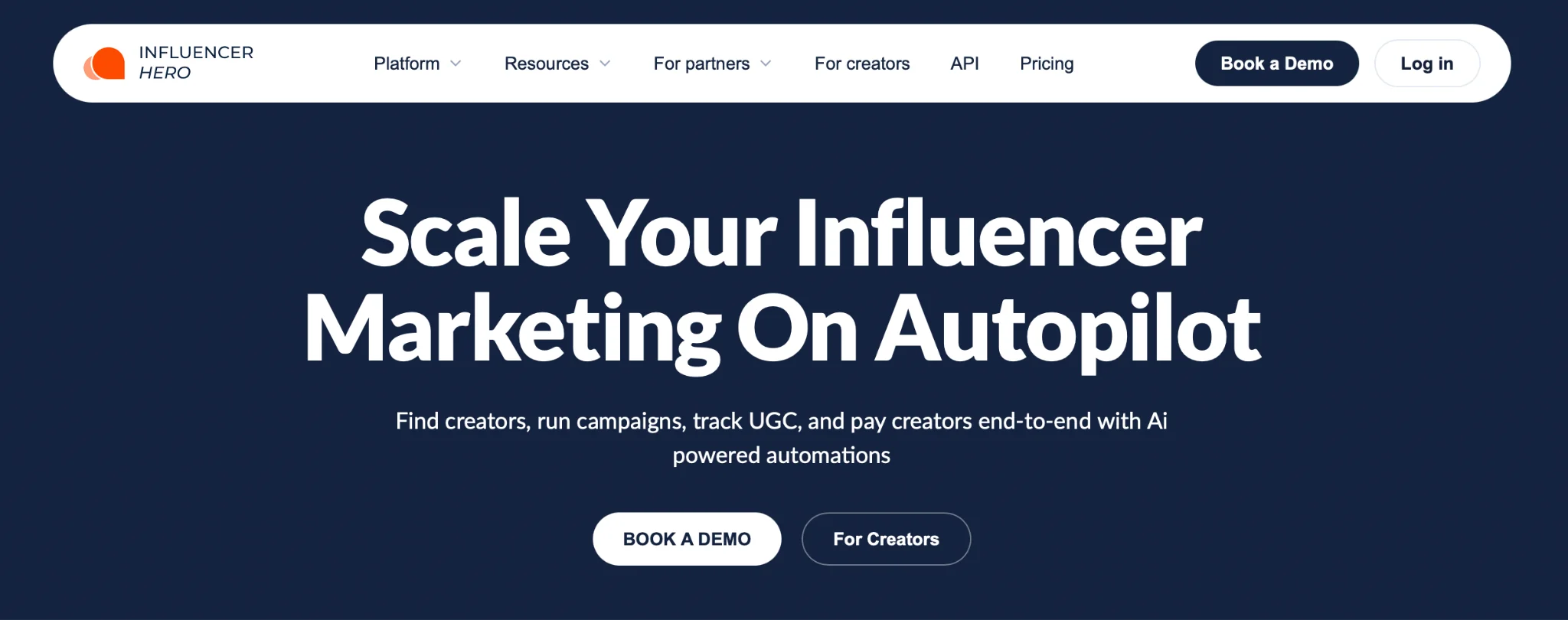
Influencer Hero is an all-in-one creator marketing platform, and on an ambassador list it deserves a closer look than "it does everything." The ambassador-specific machinery is the reason it sits at number two.
Recruiting comes from three directions. Brand-follower detection scans your own social following and pulls out the creators already following you, which is the single best-converting ambassador pool most brands never mine. Hosted application pages let people apply to your program from your site or a post-purchase email, so inbound sign-ups collect themselves. And when you need to go outbound, discovery runs across a 450M+ creator database on Instagram, TikTok, and YouTube with lookalike search, so you can clone the profile of an ambassador who is already performing.
Running the program is where it separates from a campaign tool. Each ambassador gets their own storefront plus a trackable affiliate link or discount code, so commissions calculate on their own and code leaks stop being a mystery. Payouts, contracts through DocuSign, and gifting all run inside the platform, with native Shopify and WooCommerce syncing so product seeding and order attribution happen without a spreadsheet. The CRM holds each advocate at a pipeline stage, so you can see at a glance who has gone quiet and needs re-activating, and every piece of content they post lands in a UGC library you can pull into ads and product pages.
The numbers: The Standard plan starts at $649 per month and covers up to 1,000 creator reach-outs. Pro is $1,049 per month for 5,000 reach-outs with a dedicated account manager and 3+ seats, and Business is $2,490 per month for 10,000. Quarterly and annual billing come at a discount. There is no free plan or trial, and the platform requires a three-month minimum commitment.
Outreach automation is the feature reviewers name most: multi-step sequences sent from your own domain, with follow-ups that stop the moment a creator replies. One honest caveat: no free trial and a three-month commitment means it asks for upfront confidence, and it is more platform than you need if all you want is simple missions. But if your ambassador program is meant to drive revenue rather than posts, it is the most complete option here. Book a demo with Influencer Hero to see the affiliate and storefront side in action.
3. Brandbassador

Brandbassador (now also branded as Club) is a purpose-built ambassador platform aimed squarely at ecommerce and Shopify brands. Its whole model runs on gamified "Missions." You set tasks, and ambassadors complete them in exchange for cash, points, gift cards, or freebies. That mission structure keeps a community engaged week to week instead of going quiet after the first post.
The numbers: Brandbassador uses custom quotes only, with no public list pricing. Plans like Growth, Pro, Co-Pilot, and Auto-Pilot are all "get pricing." Based on industry benchmarks, expect roughly $500 to $3,000 per brand per month depending on ambassador count, campaign volume, and add-ons such as managed services. There is no free tier.
It connects to Shopify, BigCommerce, WooCommerce, and more, with custom discount codes and tracking links so you can tie missions to real sales. If gamification and an always-on community are your priority, Brandbassador delivers strong engagement.
4. SocialLadder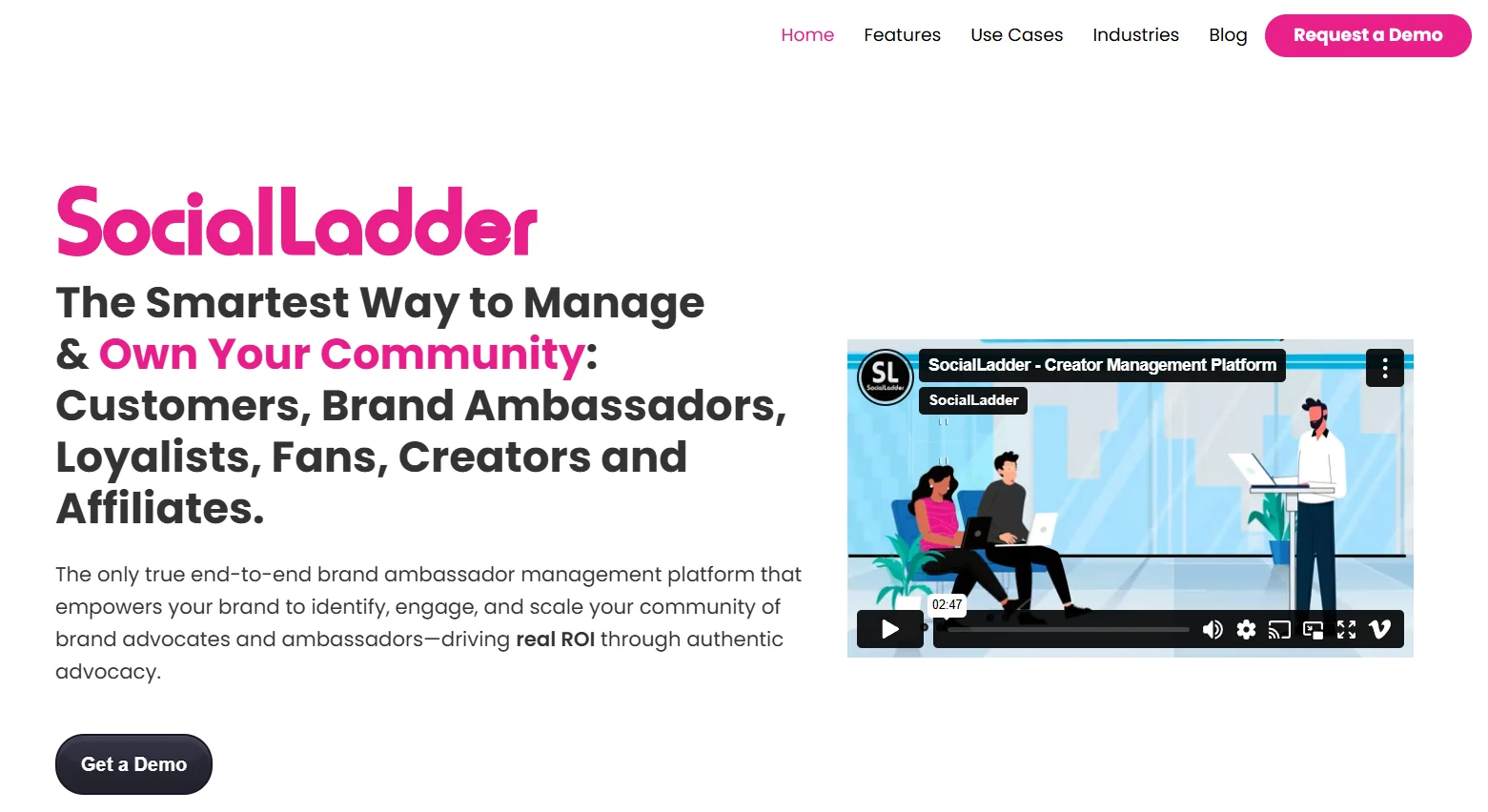
SocialLadder is an end-to-end ambassador management platform with a heavy focus on community activation. It leans mobile-first, so ambassadors get tasks, challenges, and rewards through an app with push notifications. That makes it a natural fit for brands that run both online and in-person activations, like events and field marketing. It also has the client list to back it up, working with brands such as Lululemon, Victoria's Secret, Benefit Cosmetics, and Celsius.
The numbers: SocialLadder does not publish pricing. You book a demo and get a custom quote based on your ambassador count, integrations, and program goals. There is no public free tier or trial.
The platform covers discovery, recruitment, onboarding, challenges, content review, and payouts in one place, with machine learning that surfaces your best potential advocates from your existing customer base. For mid-market and enterprise teams running large communities, it is one of the most complete options here.
5. Roster
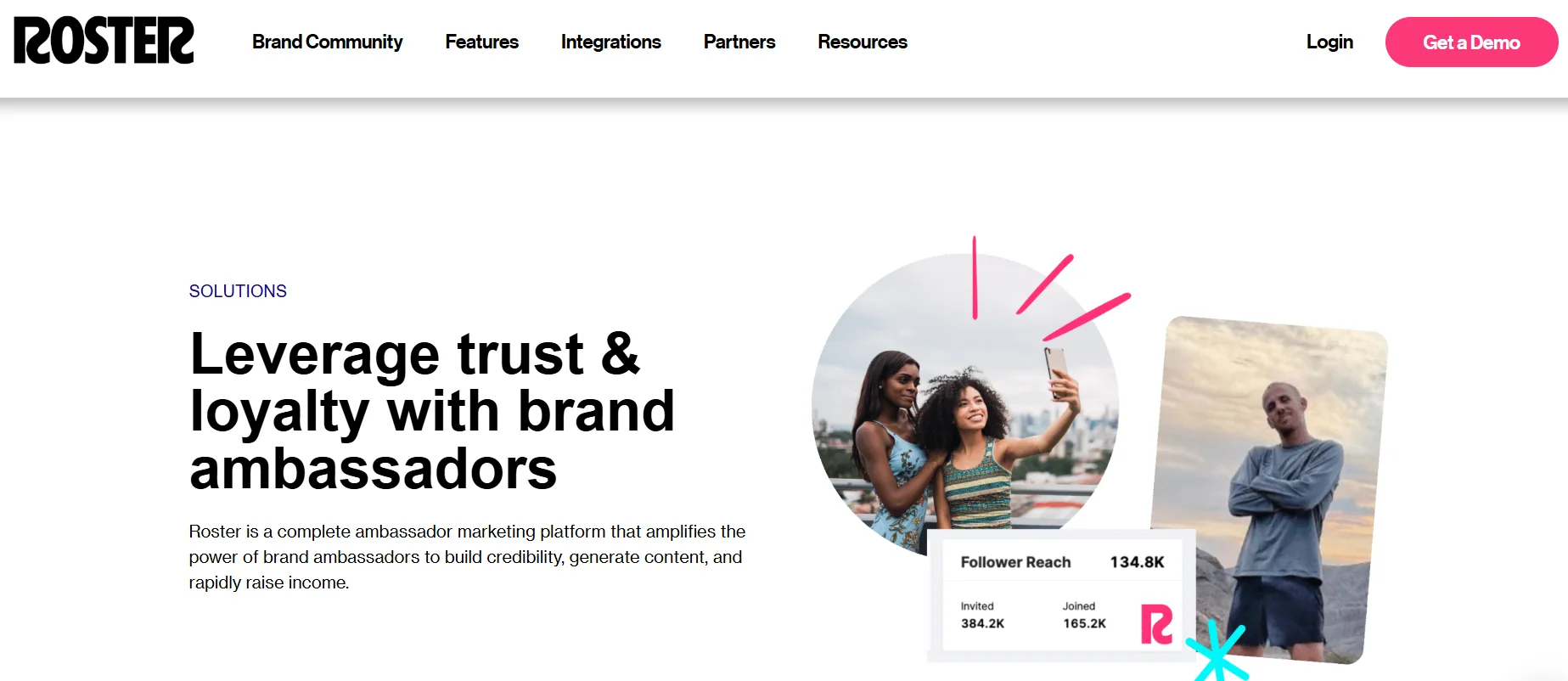
Roster is built specifically for converting loyal customers into a structured ambassador community, and it is squarely aimed at DTC and ecommerce. It centralizes applications, onboarding, contracts, tasks, communication, commissions, and analytics, so your whole program lives in one dashboard instead of scattered across inboxes and sheets.
The numbers: Roster's starting plan runs around $499 per month. It integrates deeply with Shopify, WooCommerce, BigCommerce, and Magento, which is where a lot of its value sits for ecommerce teams.
One honest caveat worth knowing: ambassadors have to log into Roster to receive campaign invitations. For creators used to DMs or email, that extra step can slow participation if you do not onboard them clearly. Still, for brands that want clean attribution and shoppable links that cut down on code leaks, Roster is a practical, mid-priced pick.
6. BrandChamp
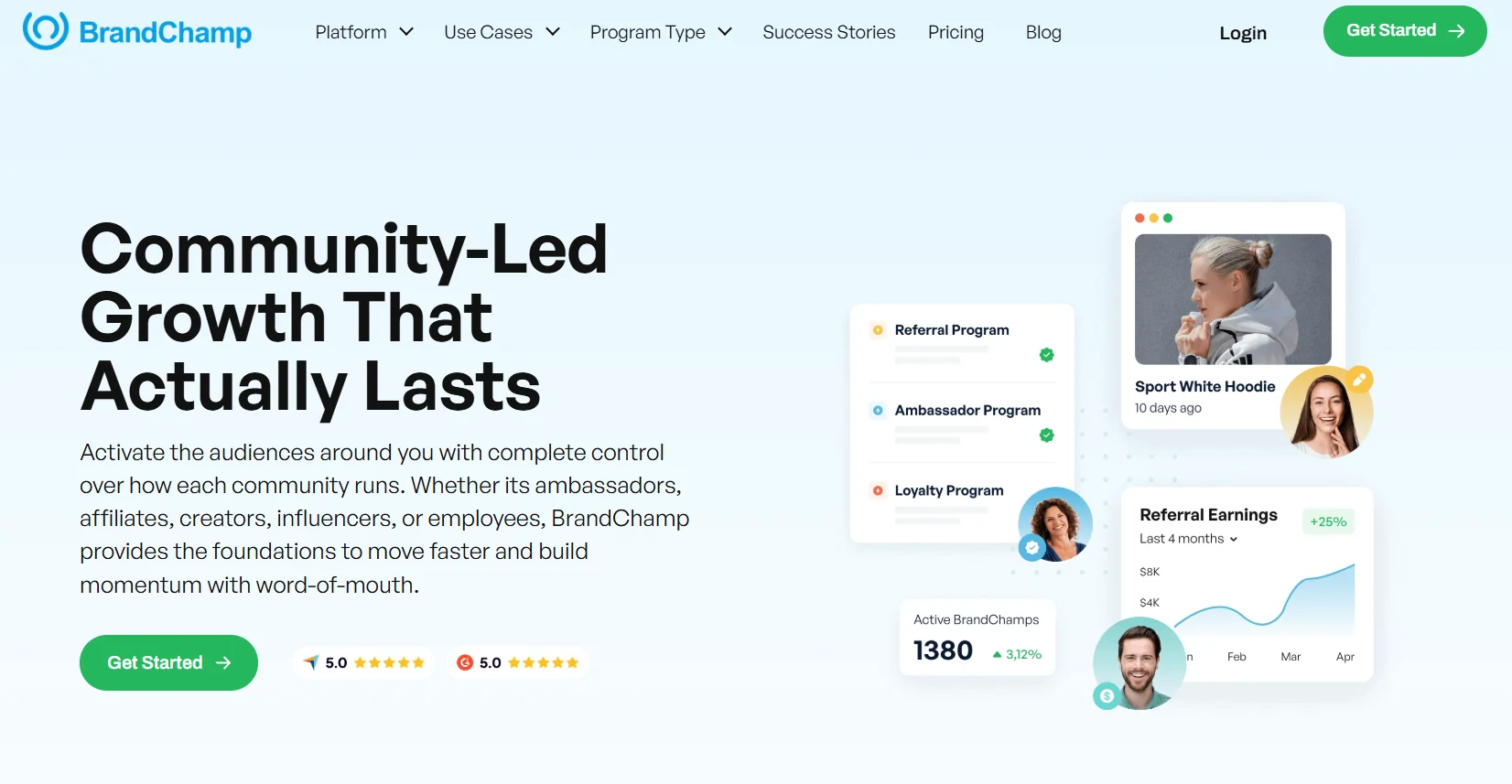
BrandChamp rolls ambassador, affiliate, and influencer programs into one platform, with a clear ecommerce focus. It assigns tasks, rewards participation, and tracks referrals through branded links and discount codes. If you run on Shopify, it syncs your orders so attribution is straightforward. It also gives ambassadors a branded mobile experience with push notifications and newsletters to keep the community warm.
The numbers: Unlike most enterprise tools here, BrandChamp publishes tiers: roughly $249, $468, $810, and $1,530 per month as you scale features and seats. A free trial is available, which makes it easy to test before committing.
The transparent pricing alone is a refreshing change in this category. Add the affiliate and ambassador crossover plus solid ecommerce integrations, and BrandChamp is a strong middle option for brands that want clarity on cost and a people-centric program in one tool.
7. Social Snowball
Social Snowball takes a different angle. It is a Shopify app that automatically turns every customer into an affiliate the moment they check out. The buyer sees their referral link or discount code right on the thank-you page, so the program grows on autopilot with almost no manual setup. For DTC stores that want a customer-to-ambassador engine running in the background, it is genuinely hands-off.
The numbers: The entry "Snow Day" plan runs around $99 per month plus a 3% cut of affiliate-generated revenue. The higher "Blizzard" plan drops that commission and adds a dedicated account manager and enterprise support. Both come with a 30-day free trial.
Here is the honest caveat: that 3% fee on the entry plan adds up fast. Do $50,000 in affiliate revenue and you are paying $1,500 on top of the subscription, so most brands outgrow the commission model and move to the flat Blizzard tier as they scale. For automating the customer-as-advocate flow, though, few tools make it this easy.
8. GRIN
GRIN is a heavyweight end-to-end creator management platform, strongest in automated ecommerce workflows with deep Shopify and Magento integrations and excellent product seeding. It is built for brands that prioritize execution depth, so order fulfillment, tracking, and creator payments all run with less manual work.
The numbers: GRIN made a notable move in 2026 and switched from custom quotes to transparent tiers. Lite is $399 per month for 15 active creators, Essentials is $699 for more capacity plus automated creator payments and 1099 processing, Growth is $1,149, and Complete is $1,799 for 400 creators plus API access. Every plan includes a 30-day trial and runs month-to-month, so you can cancel anytime.
That transparent, no-contract pricing is rare in the enterprise tier and makes GRIN far easier to budget than custom-quote rivals. If you want deep automation and ecommerce execution without a long-term lock-in, GRIN is a top contender.
9. Aspire
Aspire (formerly AspireIQ) blends influencer discovery with ambassador management, which makes it a good middle ground if you run both one-off campaigns and ongoing programs. It is often called the best fit for Shopify stores, DTC brands, and Amazon sellers, and it leans into building long-term creator communities rather than transactional posts. Its creator marketplace is massive, with over 170 million creators to source from.
The numbers: Aspire does not list pricing publicly. Quotes typically start around $2,000 to $2,500 per month with an annual contract, and the cost climbs for higher tiers or added modules like managed services.
The full workflow is covered, from discovery and product gifting to content collaboration and sales tracking, with a dashboard most users find easy to navigate. For serious brands investing in a creator community at scale, Aspire's depth pays off, though the annual commitment means it is not a casual first step.
10. Upfluence

Upfluence rounds out the list as a discovery-heavy influencer platform with strong ecommerce integrations. Its real strength is sourcing, with a large verified creator database and tools that help convert influencers into sales generators for DTC brands. It also supports live commerce and affiliate workflows, so it can extend an ambassador program into broader creator marketing.
The numbers: Upfluence's standard plan runs about $1,276 per month billed annually, with a lower gifting-only option around $399 per month. That puts it in the same serious-investment bracket as Aspire and GRIN.
If discovery is your bottleneck and you want a deep database plus ecommerce and live-commerce tracking, Upfluence is a capable enterprise choice. Just know you are paying for breadth, so it is overkill for a brand that only wants to manage an existing ambassador community.
How to Choose the Right Brand Ambassador Platform in 2026
There is no single best platform here. The right pick depends on your stack, your budget, and how you actually want your program to run. Here is how to narrow it down fast.
- Ambassadors or influencers? Decide what you are really building. Long-term advocates who post consistently need community tools like SocialLadder, Brandbassador, or Roster. Campaign-based creator partnerships lean toward Aspire, GRIN, or Upfluence. Many brands run both, which is where Influencer Hero and BrandChamp shine.
- Your ecommerce stack. If you live on Shopify, prioritize deep native integration so attribution and payouts are automatic. Roster, GRIN, Social Snowball, and Influencer Hero all sync orders tightly, which removes a huge amount of manual tracking.
- Your pricing model. Watch how you pay, not just the headline number. Flat monthly fees (GRIN, BrandChamp, Influencer Hero) are predictable. Percentage-of-revenue models (Social Snowball's entry plan) start cheap but scale with your success. Custom quotes (SocialLadder, Aspire, Brandbassador) mean a sales call before you know your real cost.
- Your program size and stage.A new store testing the waters wants a low, no-contract entry point, which is where Afluencer at $49/month and Social Snowball fit. If you want a refresher on what to actually offer creators, our roundup of the best brand ambassador programs to kickstart 2026 shows what high-converting offers look like in practice.
- Gamification versus automation. Some teams want missions, points, and leaderboards to keep a community buzzing. Others want set-and-forget automation that runs in the background. Be honest about which one your team will actually maintain, since the fanciest features mean nothing if nobody manages them.
The takeaway: match the platform to your situation, not to whoever has the longest feature list. You only need the one or two that fit your stage.
Build Your Ambassador Program Without the Spreadsheet Chaos
Brand ambassadors remain one of the highest-trust, best-ROI channels in 2026, but only when the program is managed properly. The ten platforms above span every stage, from a $49-a-month Afluencer plan to an enterprise GRIN or Aspire build, so there is a right-sized option whether you are recruiting your first ten advocates or scaling to thousands.
You do not need every tool on this list. You need the one or two that fit your budget, your stack, and the kind of relationship you want with your creators. Start small, prove the ROI, then scale the program once it is earning its keep.
Ready to fill your roster? Post your Collab on Afluencer and let verified creators apply to you. Chat with CreatorGPT for instant ambassador strategy, or use the Afluencer Collab Finder to get matched with live brand opportunities and the right creators for your next campaign.