.svg)

.png)
- 10 Best Influencer Marketing Software for Agencies in 2026
- Quick Comparison: The Best Influencer Marketing Software for Agencies at a Glance
- The Top 10 Influencer Marketing Software for Agencies in 2026
- 1. Afluencer
- 2. Influencer Hero
- 3. Amplify
- 4. Influencity
- 5. Modash
- 6. GRIN
- 7. Upfluence
- 8. Aspire
- 9. Traackr
- 10. CreatorIQ
- How to Choose the Right Influencer Marketing Software for Your Agency in 2026
- Final Thoughts on Influencer Marketing Software for Agencies
10 Best Influencer Marketing Software for Agencies in 2026
Running influencer campaigns for one brand is hard enough. Running them for ten clients at once, each with its own creators, deadlines, contracts, and reporting, is a different game. That's where agency-grade software earns its keep. The right platform keeps every client's program organized, proves ROI without a spreadsheet marathon, and lets your team scale without drowning in admin.
The catch is that "influencer marketing software" covers everything from a $49 marketplace to a $36,000-a-year enterprise suite. Some tools are built for discovery, some for relationship management, and some for client-ready reporting. For an agency, the wrong pick means either paying enterprise money you don't need or outgrowing a tool mid-retainer. Knowing how to collaborate with creators at scale is only half the battle; the software you run it on is the other half.
We compared the top ten on price, free options, and agency fit, from lean tools that let you find creators for free up to enterprise platforms with white-label reporting. Let's start with a side-by-side, then break each one down.
Quick Comparison: The Best Influencer Marketing Software for Agencies at a Glance
The Top 10 Influencer Marketing Software for Agencies in 2026
1. Afluencer

For an agency, the hardest part of onboarding a new client is filling the creator pipeline fast. Afluencer flips that problem. You post a "Collab" on a client's behalf, and verified creators apply to you. So instead of cold-pitching for every account, your team reviews inbound applicants who already want the work. That's a real time-saver when you're staffing campaigns across several clients at once, and it cuts the ghosting you get from scraped databases.
Afluencer also scales with your agency. The entry Marketplace plan keeps sourcing simple, while the Standard and Pro plans add a full influencer management system: high-volume reach-outs, product send-outs, influencer payments, and a dedicated account manager. Pro includes 3+ seats, which matters when multiple account managers share the same tool. It pairs well with a clear gifting strategy for the product-first campaigns most DTC clients run.
The numbers: Marketplace at $49/mo (60 invitation credits, premium filters, full support), Standard at $649/mo (1,000 reach-outs, product send-outs, influencer payments), and Pro at $1,049/mo (5,000 reach-outs, dedicated account manager, 3+ seats). No free plan.
If you want creators to come to you and then grow into full management as your client roster expands, Afluencer covers both. Chat with CreatorGPT to plan a client's campaign, or use the Afluencer Collab Finder to get matched with creators, then post your first Collab.
2. Influencer Hero
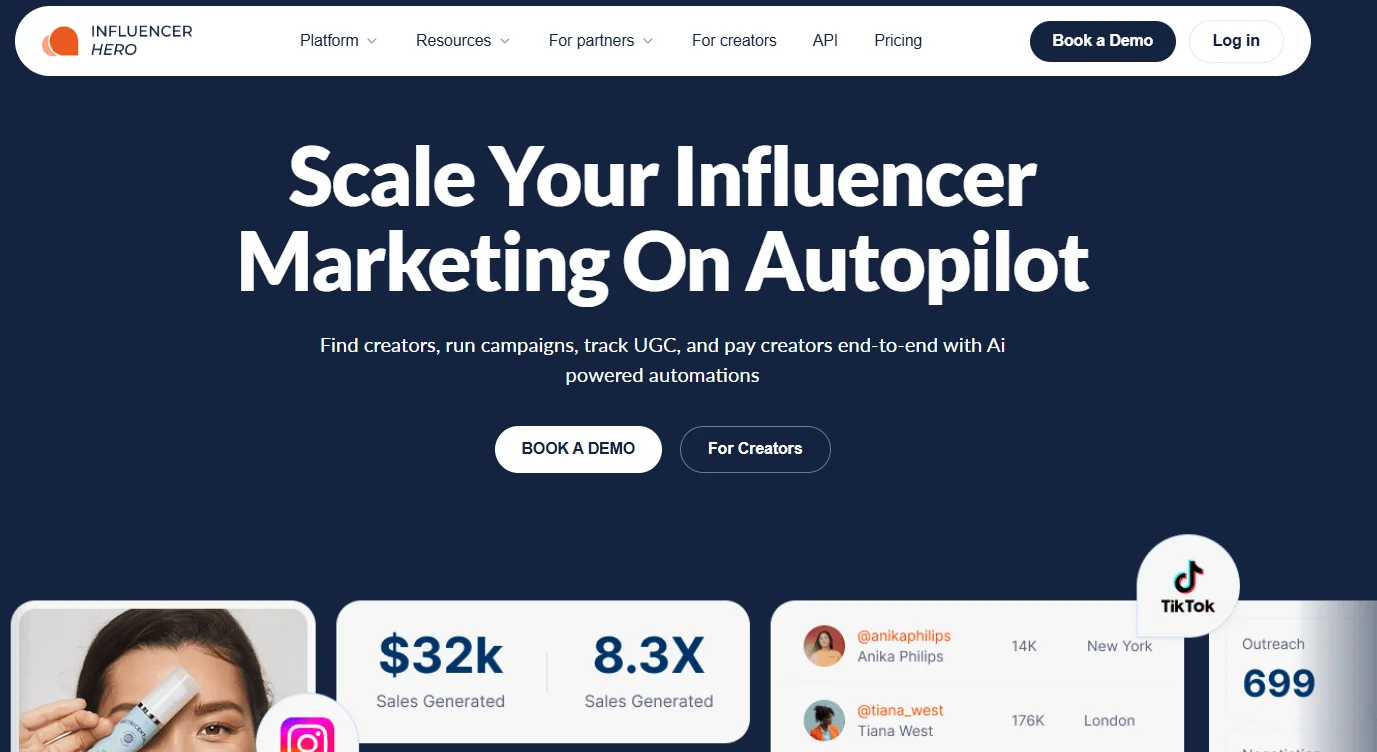
Influencer Hero is a common agency pick because it puts the whole workflow in one dashboard: discovery across a 250M+ creator database, outreach automation, a CRM for every relationship, affiliate tracking, and analytics. For agencies, the real draw is the reporting. Real-time dashboards on ROI, conversions, reach, and engagement are easy to put in front of a client, so you spend less time exporting and reformatting and more time on strategy.
It fits mid-market and Shopify or ecommerce clients especially well, since it ties creator activity straight to sales. Custom and agency plans are available for teams managing several accounts at once.
The numbers: Standard at $649/mo (up to 1,000 creators), Pro at $1,049/mo (5,000), Business at $2,490/mo (10,000), plus custom Agency pricing. Capterra rating: 5.0/5 (G2: 4.8/5).
One honest caveat: there's no free trial, and plans carry a three-month minimum commitment. So it suits agencies that treat influencer marketing as an ongoing service line, not a one-off test for a single client. For agencies at that stage, the discovery-plus-CRM-plus-attribution combo is hard to match without stitching several tools together.
3. Amplify

Amplify is a lightweight influencer CRM built for D2C teams and lean agencies that don't need enterprise overhead. It organizes your whole program into Kanban or list pipelines, so you drag creators between stages and filter by owner, campaign, or platform.
For a small agency team, the "who owns this creator" clarity is what prevents dropped balls when you're running several accounts in parallel.
It connects directly to Shopify for sales attribution, so you can show each client which creators actually drove revenue. You can also upload contracts, track deliverables and deadlines, and automate follow-up reminders so nothing slips.
The numbers: From $99/mo, priced by team size, with a free trial and no credit card required.
Amplify is best for lean agencies and D2C clients that want a clean pipeline with contracts and Shopify ROI, without the complexity (or cost) of an enterprise system.
4. Influencity
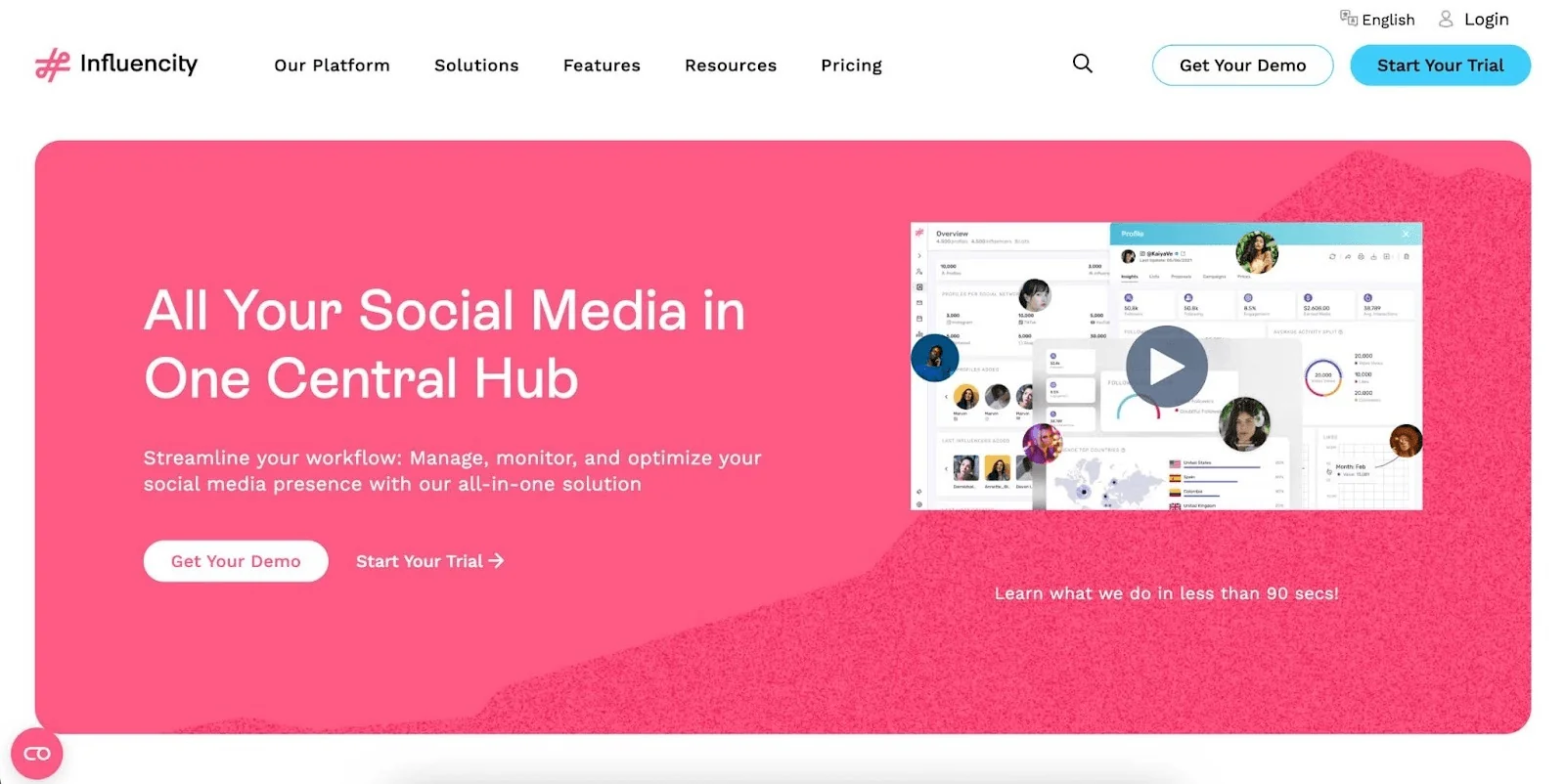
Influencity suits agencies juggling several client campaigns at once. Its Trello-style visual workflow makes multi-campaign management easy to scan, and discovery combines AI filters, hashtags, and audience data across 200M+ profiles. The deep audience analytics also help you justify creator picks to clients with data instead of guesswork.
Automated email outreach tracks opens and clicks, and Shopify integration handles affiliate tracking and seeding. Seats and plan tiers scale as your team grows.
The numbers: Basic from $168/mo, with campaign and CRM features unlocking on the Professional tier from about $318/mo (annual). Free trial available. G2 rating: 4.6/5.
Influencity is a smart pick for mid-sized agencies that want visual campaign management plus serious audience data for client reporting.
5. Modash

Modash is the value pick for agencies running Shopify clients. Its 350M+ creator database and strong audience filters make discovery fast, and built-in fake-follower detection helps you vet creators before you commit a client's budget. That vetting step alone saves agencies from awkward "why did this creator flop" conversations.
It connects outreach through Gmail and Outlook, automates affiliate links, and integrates with Shopify so you can tie creator activity to client sales. It's discovery-first, so contract-heavy workflows may need a companion tool.
The numbers: Essentials at $199/mo on annual billing ($299 month-to-month), Performance at $499/mo annually, and a custom Enterprise tier. There's a 14-day free trial, no card required. G2 rating: 4.5/5.
Modash works best for agencies that need scalable discovery and affiliate-linked tracking for Shopify clients on a reasonable budget.
6. GRIN

GRIN is built for established DTC programs, which makes it a fit for agencies serving scaled ecommerce clients. It centralizes relationship management, product seeding, UGC collection, affiliate tracking, and payments, with deep Shopify and WooCommerce sync. Its move toward transparent tiered pricing also makes it easier to scope into a client retainer than the old enterprise-only model.
The numbers: Tiered plans from $399 to $1,799/mo, with a 30-day trial. Capterra rating: 4.7/5.
GRIN is best for agencies managing established DTC and Shopify clients that want scalable management with clearer, budgetable pricing.
7. Upfluence

Upfluence helps agencies turn a client's own customers into creators. Its Live Capture feature surfaces influencers who already buy from the client, which usually means warmer partnerships and higher acceptance rates. Around that sit a unified CRM, the Jace AI outreach assistant, affiliate and discount tracking, and Shopify and Amazon integrations.
The numbers: Custom pricing, with a typical full setup around $1,276/mo on an annual contract (quarterly options available). G2 rating: 4.5/5.
Upfluence is best for agencies whose ecommerce clients want to build customer-to-creator programs and track sales conversion closely.
8. Aspire

Aspire fits agencies nurturing long-term ambassador programs for mid-market and enterprise clients. It blends outbound creator management with an inbound marketplace where influencers apply, automates contracts and approvals, and handles Shopify gifting plus affiliate tracking. The content hub keeps deliverables and usage rights organized across multiple client accounts.
The numbers: Custom pricing, generally starting around $2,000/mo on annual agreements. G2 rating: 4.6/5.
Aspire is best for agencies building ongoing ambassador relationships rather than one-off campaigns. If gifting drives those programs, our guide to running a micro-influencer gifting campaign pairs well with it.
9. Traackr
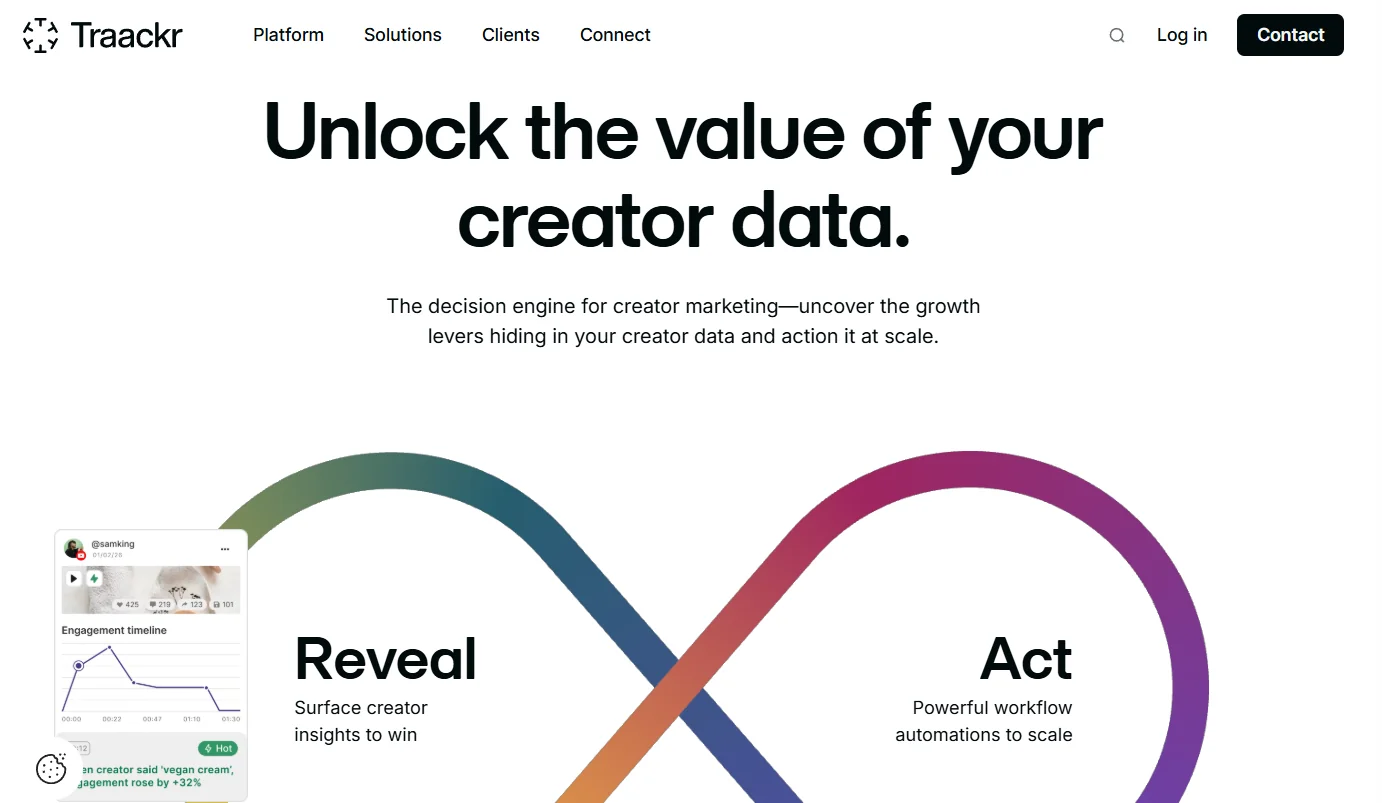
Traackr is an influencer relationship management platform for agencies serving global enterprise clients. Its strength is measurement: spend tracking, ROI analytics, competitive benchmarking, and built-in compliance and FTC workflows. For agencies that answer to enterprise procurement and legal teams, that governance and data depth is the selling point.
The numbers: Custom enterprise pricing, typically starting around $25,000/yr on annual contracts. G2 rating: 4.2/5.
Traackr is best for agencies running global, measurement-heavy programs where benchmarking and compliance matter as much as creative.
10. CreatorIQ
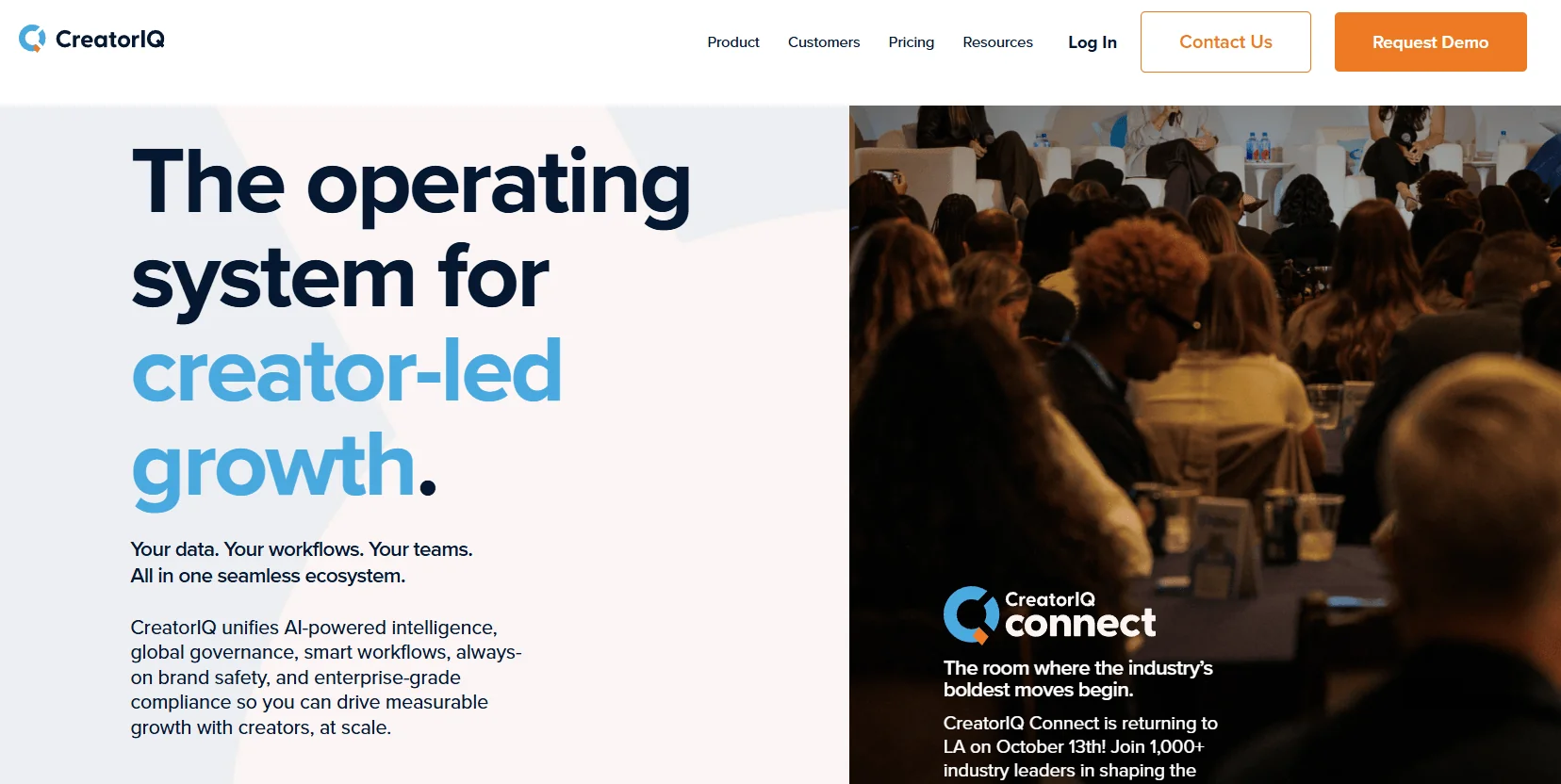
CreatorIQ is enterprise-grade software for agencies and large brands managing complex, multi-market creator programs. It offers AI discovery across a 20M+ vetted creator database, white-labeled dashboards and branded one-sheets for clients, EMV and deep reporting, brand-safety tools, and global payments in 190+ countries.
For agencies, the white-label client reporting is often the deciding factor.
The numbers: Custom pricing, generally around $30,000 to $36,000/yr (roughly $2,350/mo) on an annual contract. G2 rating: 4.6/5.
CreatorIQ is best for agencies that need governance, EMV measurement, and polished client-ready reporting at enterprise scale.
How to Choose the Right Influencer Marketing Software for Your Agency in 2026
The best platform depends on your client mix, your team size, and how you prove value. Here's how to narrow it down fast.
- Clients and seats. An agency running five accounts needs multi-seat access and clean client separation. Watch per-seat fees, and favor tools built for it: Afluencer Pro (3+ seats), Influencity, and CreatorIQ all scale across a team.
- Client-ready reporting. You'll live or die by the deck you show clients. White-label or branded dashboards (CreatorIQ, Traackr) and clean ROI reporting (Influencer Hero) save you hours of reformatting every month.
- Inbound vs outbound sourcing. Marketplace tools (Afluencer, Aspire) let creators apply to you, which is faster when you're staffing many campaigns. Database tools (Modash, Upfluence) are built for proactive search when a client wants very specific creators.
- Client budget and commitment. Match the software's contract length to the client retainer. Month-to-month tools fit short or trial engagements, while annual platforms (GRIN, Upfluence, the enterprise suites) suit long-term accounts. Knowing current influencer rates helps you budget the campaigns themselves, not just the software.
- Ecommerce attribution. If your clients sell on Shopify or WooCommerce, prioritize tools that tie creator activity to real sales. Influencer Hero, GRIN, Amplify, and Modash all do this, which is how you prove ROI and renew the retainer.
There's no single winner here. The right software is the one that matches your client roster, your reporting needs, and the budgets your clients actually have.
Final Thoughts on Influencer Marketing Software for Agencies
The right software turns a chaotic, multi-client influencer operation into something you can scale with confidence. The tools on this list cover every stage, from Afluencer's $49 Marketplace plan for sourcing creators to enterprise suites managing thousands of creators across global markets.
You don't need the most expensive option to run a sharp agency program. You need the one or two tools that fit your client mix and let you prove results. Start with what your current roster needs, then upgrade as you take on bigger accounts. That path almost always beats overbuying on day one.
If you're ready to start sourcing creators for your clients today, post a Collab on Afluencer. Chat with CreatorGPT to plan your next client campaign, or use the Afluencer Collab Finder to get matched with creators who already want to work with brands like the ones you represent.
Frequently Asked Questions
<details class="ih-faq"><summary>What is the best influencer marketing software for agencies?</summary><div class="ih-faq-a">There's no single best, it depends on your client mix. Afluencer fits agencies sourcing creators at low cost, Influencer Hero suits those wanting all-in-one CRM and reporting, and CreatorIQ or Traackr fit enterprise client work. Match the tool to your roster size, reporting needs, and the budgets your clients can support.</div></details><details class="ih-faq"><summary>How much does influencer marketing software cost for agencies?</summary><div class="ih-faq-a">Pricing ranges widely. Entry tools like Afluencer ($49/mo) and Amplify ($99/mo) suit lean agencies, mid-tier platforms run $200 to $2,000/mo, and enterprise suites like Traackr and CreatorIQ cost $25,000 to $36,000+ per year. Most enterprise pricing is custom, based on seats, client volume, and features.</div></details><details class="ih-faq"><summary>Can influencer marketing software manage multiple clients at once?</summary><div class="ih-faq-a">Yes. Most agency-focused platforms support multiple seats, separate campaigns, and per-client reporting. Tools like Influencity, Influencer Hero, and CreatorIQ are built for teams running several accounts, with role assignments and client-ready dashboards. Watch per-seat pricing, since that's where agency costs add up fastest.</div></details><details class="ih-faq"><summary>What's the cheapest influencer marketing software for agencies?</summary><div class="ih-faq-a">Afluencer is the most accessible entry point at $49/mo for its Marketplace plan, with creators applying to your client Collabs directly. Amplify follows at $99/mo with a Shopify-connected pipeline. Both let an agency start lean and upgrade as client work grows, which beats committing to an annual enterprise contract early.</div></details><details class="ih-faq"><summary>Can influencer marketing software track ROI for clients?</summary><div class="ih-faq-a">Yes. Most platforms track clicks, conversions, and revenue through affiliate links and discount codes, often tied to Shopify or WooCommerce. Tools like Influencer Hero, GRIN, and Amplify connect creator activity to real sales, so you can show each client exactly which creators drove revenue. For a full walkthrough, see our guide to<a href="https://afluencer.com/how-to-run-a-successful-micro-influencer-campaign/" target="_blank"> </a><a href="https://afluencer.com/how-to-run-a-successful-micro-influencer-campaign/" target="_blank">running a successful micro-influencer campaign</a>.</div></details><script type="application/ld+json">{"@context":"https://schema.org","@type":"FAQPage","mainEntity":[{"@type":"Question","name":"What is the best influencer marketing software for agencies?","acceptedAnswer":{"@type":"Answer","text":"There's no single best, it depends on your client mix. Afluencer fits agencies sourcing creators at low cost, Influencer Hero suits those wanting all-in-one CRM and reporting, and CreatorIQ or Traackr fit enterprise client work. Match the tool to your roster size, reporting needs, and the budgets your clients can support."}},{"@type":"Question","name":"How much does influencer marketing software cost for agencies?","acceptedAnswer":{"@type":"Answer","text":"Pricing ranges widely. Entry tools like Afluencer ($49/mo) and Amplify ($99/mo) suit lean agencies, mid-tier platforms run $200 to $2,000/mo, and enterprise suites like Traackr and CreatorIQ cost $25,000 to $36,000+ per year. Most enterprise pricing is custom, based on seats, client volume, and features."}},{"@type":"Question","name":"Can influencer marketing software manage multiple clients at once?","acceptedAnswer":{"@type":"Answer","text":"Yes. Most agency-focused platforms support multiple seats, separate campaigns, and per-client reporting. Tools like Influencity, Influencer Hero, and CreatorIQ are built for teams running several accounts, with role assignments and client-ready dashboards. Watch per-seat pricing, since that's where agency costs add up fastest."}},{"@type":"Question","name":"What's the cheapest influencer marketing software for agencies?","acceptedAnswer":{"@type":"Answer","text":"Afluencer is the most accessible entry point at $49/mo for its Marketplace plan, with creators applying to your client Collabs directly. Amplify follows at $99/mo with a Shopify-connected pipeline. Both let an agency start lean and upgrade as client work grows, which beats committing to an annual enterprise contract early."}},{"@type":"Question","name":"Can influencer marketing software track ROI for clients?","acceptedAnswer":{"@type":"Answer","text":"Yes. Most platforms track clicks, conversions, and revenue through affiliate links and discount codes, often tied to Shopify or WooCommerce. Tools like Influencer Hero, GRIN, and Amplify connect creator activity to real sales, so you can show each client exactly which creators drove revenue. For a full walkthrough, see our guide to running a successful micro-influencer campaign."}}]}</script>