.svg)

.png)
- 10 Best Platforms for Creator Storefronts in 2026
- Quick Comparison: The Best Creator Storefront Platforms at a Glance
- The Top 10 Creator Storefront Platforms for 2026
- 1. Influencer Hero
- 2. Affable.ai
- 3. Aspire
- 4. GRIN
- 5. Upfluence
- 6. Modash
- 7. Impact.com
- 8. CreatorIQ
- 9. Captiv8
- 10. Later
- How to Choose the Right Creator Storefront Platform in 2026
- Start Building Storefronts That Sell
10 Best Platforms for Creator Storefronts in 2026
Creator storefronts turn influencer partnerships into something you can actually track. A sponsored post disappears in a day. A storefront keeps a creator selling your products for weeks, with every click and sale tied back to them. For brands that are tired of paying for reach and hoping for revenue, that shift matters.
The problem is that "creator storefront platform" means very different things depending on who you ask. Some tools bundle storefronts into a full influencer workflow with discovery, gifting, and affiliate tracking. Others bolt a shoppable page onto a discovery tool, lock you into an annual contract, or hide the price behind a sales call.
Below are the ten best platforms for creator storefronts in 2026, ranked from the most accessible to the most enterprise-heavy, with pricing and a clear sense of who each one is for. Let's break them down one by one.
Quick Comparison: The Best Creator Storefront Platforms at a Glance
The Top 10 Creator Storefront Platforms for 2026
1. Influencer Hero
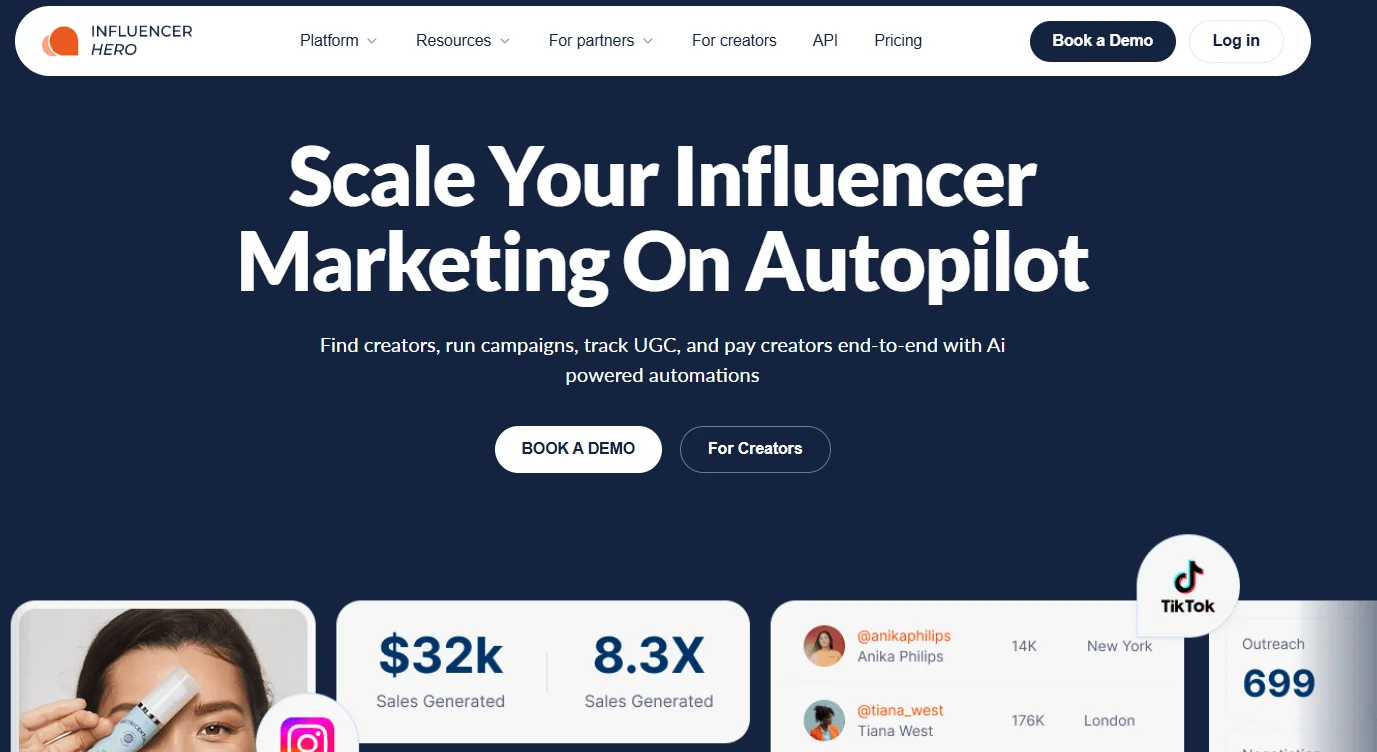
Influencer Hero is an all-in-one influencer platform built for brands that want discovery, management, and storefronts under one roof. Where some tools stop at finding creators, this one carries you through the whole campaign: discovery, a CRM to manage relationships, automated outreach, gifting, affiliate tracking, and creator storefronts tied to revenue.
Creator Hero, powered by Influencer Hero, is its storefront feature that is the reason it lands high here. Each creator gets a dedicated, branded page curated from your live catalog, and Influencer Hero generates the trackable affiliate links automatically. It connects to Shopify, WooCommerce, and Magento, so storefront clicks, sales, and payouts all sync back to each creator's deal page. Mid-market and ecommerce brands running ongoing programs tend to get the most out of it.
The numbers: Plans start at $649/month on monthly billing, dropping to roughly $454/month ($5,452/year) on the annual Standard plan. All plans carry a minimum 3-month commitment.
The honest caveat is that it's more platform than a brand that only wants a simple storefront builder needs. But if you're running real campaigns and want storefronts connected to outreach, gifting, and ROI in one place, it's a strong pick.
2. Affable.ai
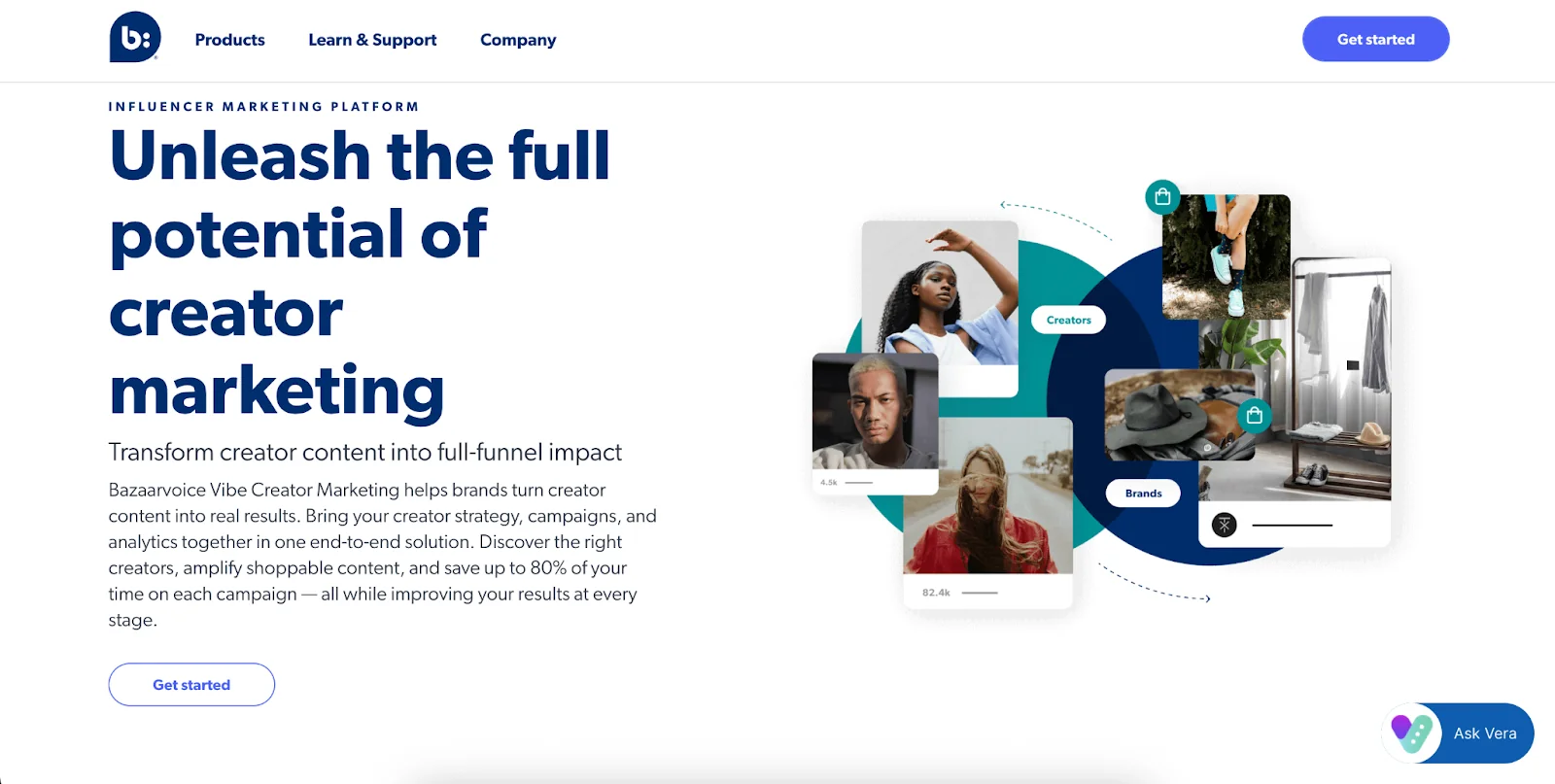
Affable.ai is an AI-driven platform built around data-driven discovery and automated campaign management. Since its acquisition by Bazaarvoice, it now sits on a large ecosystem of user-generated content and retail data. It's made for ecommerce brands that want to move fast, using machine learning to vet influencer audiences so every partnership is backed by real performance data.
That setup creates a direct path from social content to checkout, with real-time sales and ROI data for every storefront. The AI vetting is the standout: it flags ghost followers and suspicious engagement so your storefront traffic comes from real potential buyers. Through the Bazaarvoice integration, you can also syndicate top creator content onto your product pages to lift on-site conversion, plus benchmark competitors to see which creators they work with.
The numbers: Affable.ai uses custom, quote-based pricing tied to brand size. The SME plan covers roughly 400 influencer analytics a month and up to 3 users, Pro adds higher analytics volume and advanced CRM features, and Enterprise covers unlimited campaigns with full API access. There's no public pricing, so budget for a demo.
The honest caveat for this list is that its storefront customization is less flexible than a dedicated builder, so pages can read more like standard landing pages than fully immersive brand shops. Its outreach tools also sometimes need a manual warm-up to avoid spam filters. But for data-driven DTC brands that want AI vetting behind their storefronts, it's a strong fit.
3. Aspire

Aspire (formerly AspireIQ) is a full-suite platform aimed at mid-market and enterprise ecommerce brands. Its storefront product, CreatorStores, builds co-branded micro-shops that live directly on your Shopify site. That keeps shoppers in your ecosystem instead of bouncing them to a generic affiliate link, and it helps you capture first-party data. Brands like HelloFresh and Dyson use it, which tells you the tier it plays in.
On top of storefronts, Aspire combines a 1M+ creator marketplace with campaign management, affiliate tracking, and content tools. Both inbound discovery (creators apply) and outbound search feed into it, so you can build a long-term creator program rather than running one-off drops.
The numbers: Aspire uses custom, quote-based pricing. User and third-party reports place entry plans around $1,000 to $2,000/month, with a mandatory annual commitment and minimums commonly reported near $24,000/year.
The trade-off is cost and lock-in. There's no monthly option and no easy way to test before signing. For brands committed to building a creator community, Aspire is purpose-built. For anyone still testing storefronts, it's a heavy first step.
4. GRIN

GRIN is a creator management platform built specifically for ecommerce, and its storefronts come through Creator Shops (via its CreatorCommerce integration). Creators build co-branded, shoppable pages inside your Shopify ecosystem while GRIN handles the backend attribution. For DTC brands that live in their sales data, that tight link between storefront and revenue is the headline.
It also covers the full lifecycle: a 38M+ recruitment suite, an integrated email inbox, affiliate links, discount-code generation, and product seeding. So your storefront isn't bolted on. It's woven through campaigns you're already running. It helps to know how influencer marketing rates actually work before you scale spend behind it.
The numbers: GRIN restructured to transparent, month-to-month tiers in 2026. Lite is $399/month (15 creators), Essentials $699 (100 creators), Growth $1,149 (200), and Complete $1,799 (400 creators plus API access). There's a 30-day free trial.
That no-contract pricing is a real shift for an enterprise-tier tool and makes GRIN easier to evaluate than it used to be. The catch is that creator volume drives cost fast, so a growing storefront program can jump tiers quickly.
5. Upfluence

Upfluence is a full influencer and affiliate platform with a strong commerce backbone. Its standout feature, Live Capture, surfaces influencers hiding inside your own customer and subscriber lists, turning existing fans into storefront affiliates. For storefronts, creators feature products from your live catalog on dedicated pages, with promo codes and affiliate links generated automatically.
It's tailored to DTC and ecommerce brands, with deep integrations across Shopify, WooCommerce, Klaviyo, and Zapier. That makes it especially useful for teams that need creator commerce to prove business impact, not just engagement.
The numbers: Upfluence uses modular, custom pricing with no public page. Individual modules start around $478/month, and user-reported entry costs commonly land in the $800 to $1,200/month range, scaling higher with more modules and seats. The standard contract is 12 months.
The downside is predictable: no transparent pricing, a year-long commitment, and seat plus implementation fees that push the real total above the headline number. But if your best future creators are already your customers, Live Capture is a genuinely different way to fill a storefront program.
6. Modash

Modash is a discovery and audience-analytics platform with one of the biggest databases around: 350M+ creator profiles across Instagram, TikTok, and YouTube. One honest note for this list: Modash doesn't host full storefronts the way a dedicated builder does. Instead, it powers affiliate-linked creator pages, where creators browse your Shopify catalog, pick products, and Modash generates unique codes and tracking links for their selection.
For ecommerce brands, the Shopify integration is the hook. It connects creator activity to sales data, so discovery and ROI tracking live in the same place. That makes it a strong fit for DTC teams that have validated influencer marketing and want to scale it without enterprise pricing.
The numbers: Essentials starts at $199/month on annual billing ($299 monthly), and Performance runs $499/month annually ($599 monthly). Enterprise is custom, reportedly starting around $14,700/year. A 14-day free trial is available on both core plans, no credit card required.
Worth knowing: Modash's audience metrics are estimates based on public signals, not verified first-party data, and you're getting trackable creator pages rather than fully built storefronts. For discovery plus affiliate attribution at a mid-market price, though, it's hard to beat.
7. Impact.com
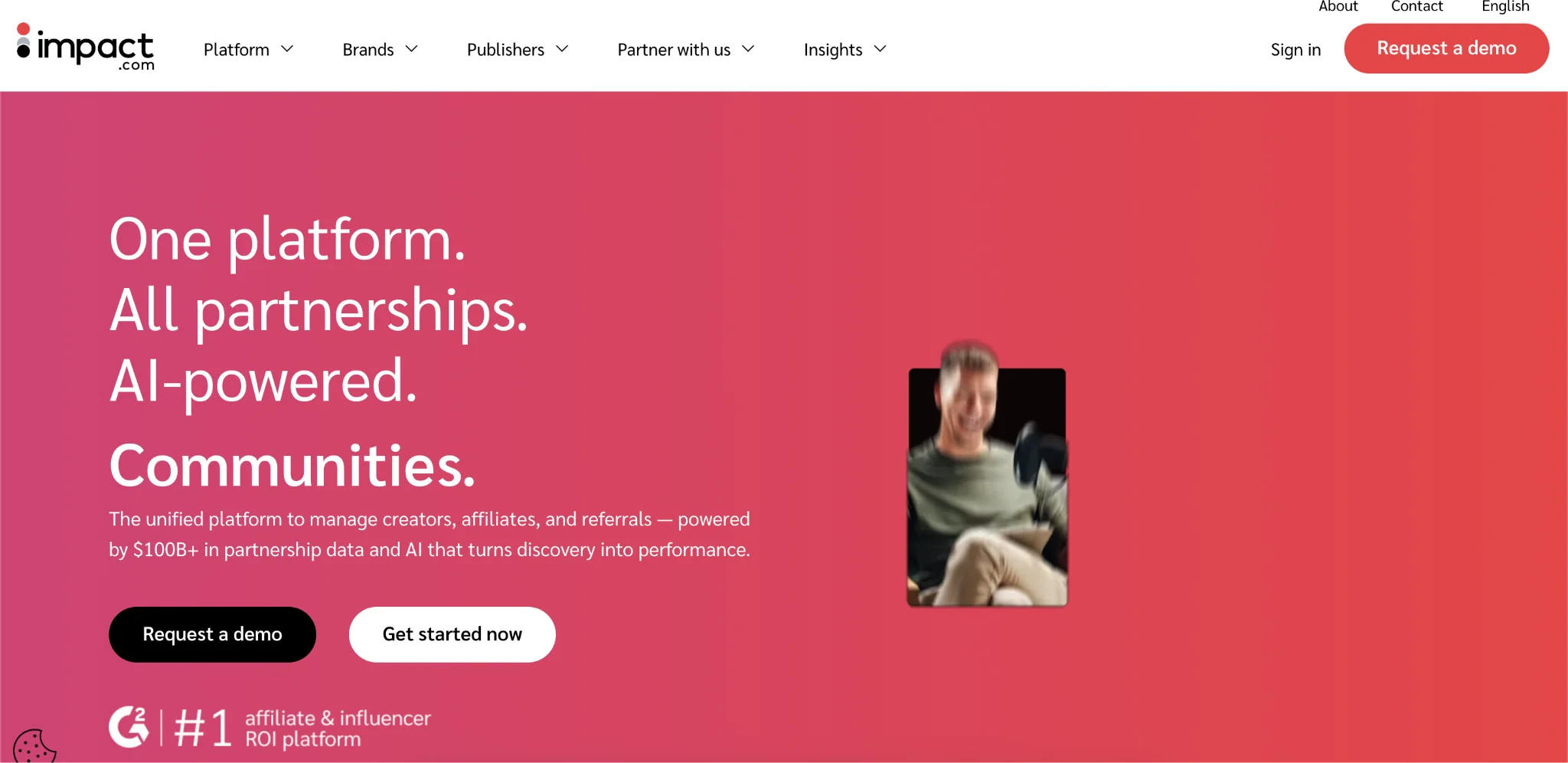
Impact.com is a global leader in partnership automation that covers influencers, affiliates, and creator commerce in one performance system. It grew out of enterprise affiliate tooling, which shows in its attribution depth. Its storefronts come through Creator Pages and Shop My Look, where creators build personalized shoppable pages with tracking links and promo codes credited in real time.
The appeal is consolidation. If you already run a traditional affiliate program, Impact.com lets you manage creators and affiliates side by side instead of in separate tools. That's a real win for brands that think about affiliate and influencer revenue as one channel.
The numbers: Impact.com uses quote-based pricing with a performance-scaling focus. Rates aren't published, so budget for a sales conversation before you can compare it cleanly.
The trade-offs are that it reads more data-first than social-first, and the advanced tracking setup can need a developer to implement. For brands that want storefronts inside a serious performance-marketing system, it's a heavyweight option.
8. CreatorIQ
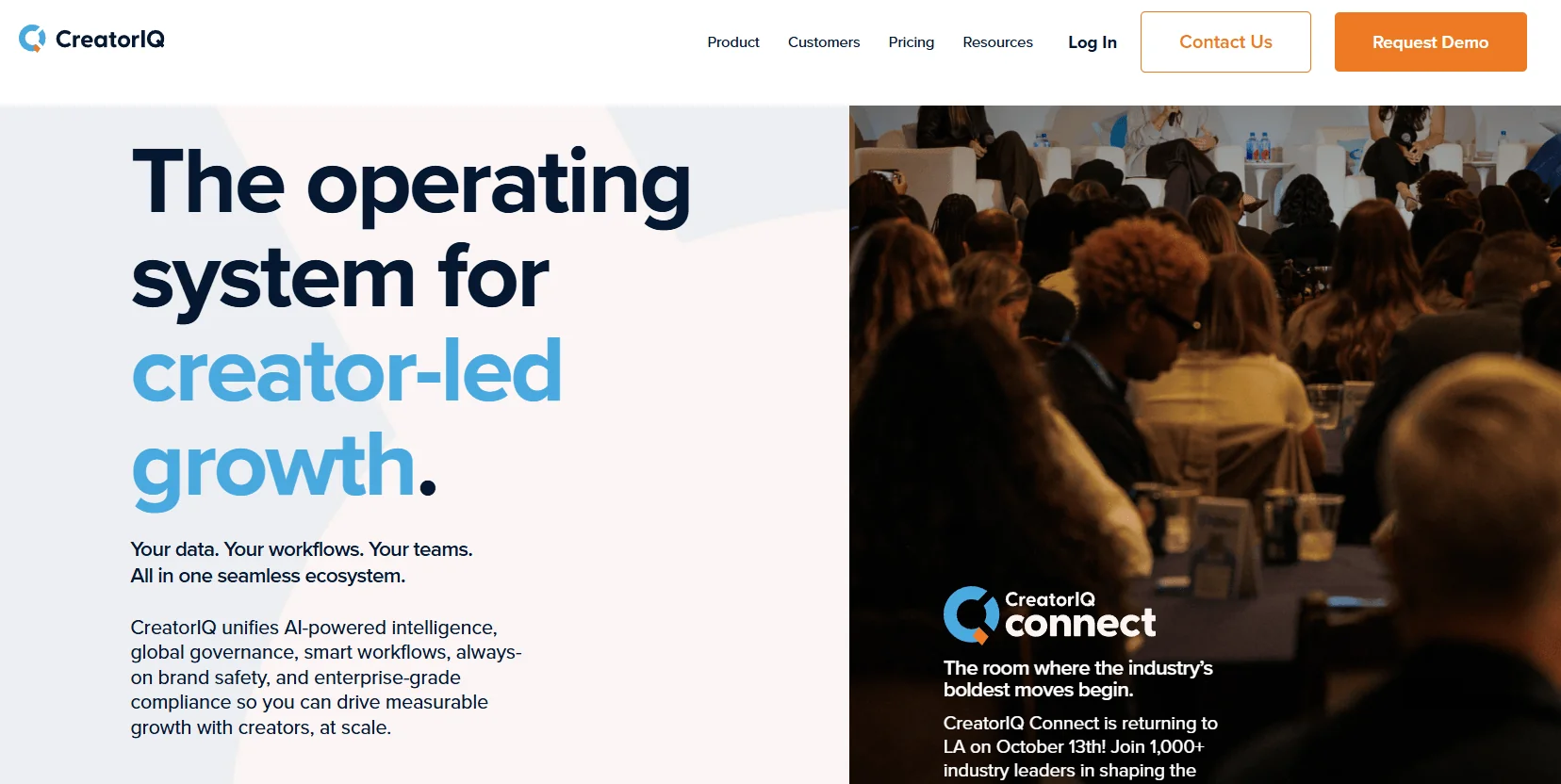
CreatorIQ is the enterprise analytics leader, and its storefronts run through Creator Stores built for scale. Large brands and Fortune 500 teams reach for it when they need governance, standardized reporting, and creator operations across multiple markets. Its reporting depth is consistently its most-praised feature.
It runs on a database of 20M+ creator profiles with discovery, campaign management, content approvals, and storefront analytics. This is less a daily-workflow tool and more an operating system for a mature, high-budget program that has to prove ROI to leadership.
The numbers: CreatorIQ uses custom enterprise pricing with no public rates and an annual contract required. Industry reports put entry contracts around $30,000 to $36,000/year, with higher tiers reaching $50,000 to $90,000+ depending on seats, features, and database access.
The reality is simple: this is built for organizations with seven-figure influencer budgets and dedicated teams. If that's you, the storefront analytics and governance justify the spend. If it isn't, almost everything else on this list serves you better for far less.
9. Captiv8
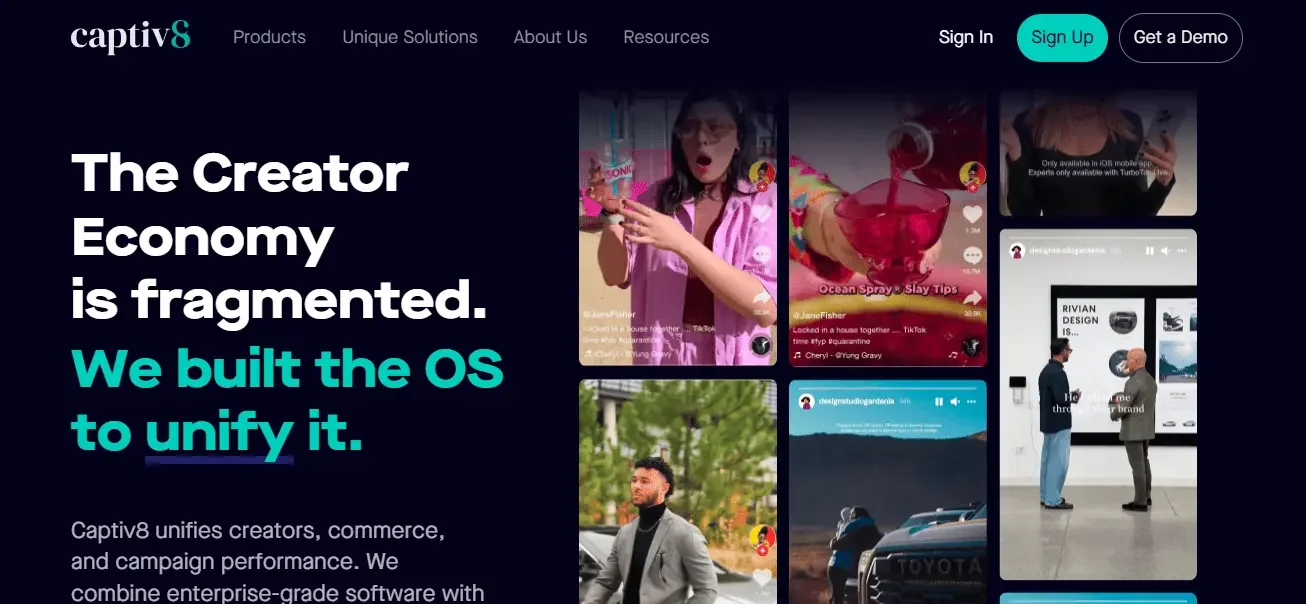
Captiv8 is an enterprise platform, recently strengthened by its acquisition by Publicis Groupe, known for a Social Commerce Engine that aims to close the loop from social post to purchase across 15M+ creators. Its storefronts come as Branded Storefronts: customizable, shoppable pages where creators host immersive content galleries aligned to your brand while the platform tracks the full path from impression to purchase.
Beyond commerce, its real edge is data. Deep social listening and competitor insights make it a fit for enterprises that care about brand sentiment and market positioning as much as sales.
The numbers: Captiv8 is an enterprise solution with custom pricing and annual commitments. Standard enterprise generally starts around $2,100+/month, and full suites can exceed $40,000/year for global brands needing advanced listening and competitive insights.
The constraints are cost and complexity. It's expensive for smaller teams, and some reviewers find the outreach tooling robotic without heavy personalization. For large brands that want brand-aligned storefronts on top of serious social data, it delivers.
10. Later

Later pairs Mavrck's influencer management with Later's social scheduling, built for teams that want to plan content and run creator commerce in one ecosystem. Its storefronts run through a Mavely integration, where influencers build curated shopping pages that link to your site and act like digital personal shoppers, with clicks and conversions tracked per collection.
The appeal is consolidation for content-led teams. If your brand already lives in a social calendar, adding storefronts in the same dashboard keeps your influencer marketing content and commerce connected instead of scattered across logins.
The numbers: Later's Influence tiers run $649/month (Growth) and $949/month (Advanced), often billed annually. Enterprise reaches custom quotes around $28,500/year, and one published figure adds a $5,000 onboarding fee on top.
The catch is the onboarding fee and the fact that two merged products can make navigation between scheduling and storefronts feel disjointed. For teams that want social planning and creator commerce together, though, it's a logical home.
How to Choose the Right Creator Storefront Platform in 2026
There's no single best tool here, only the best one for how you actually want to run creator commerce. Run your shortlist through these factors before you commit to anything.
- Just storefronts, or the full lifecycle. Some tools are storefront-only. Others bundle discovery, outreach, gifting, and CRM around them. Buying a full suite when you only need a shoppable page means paying for features you'll never open, and the reverse leaves you stitching tools together.
- Your budget and contract tolerance. Transparent, low-commitment options like Afluencer, GRIN, and Modash let you test without a year-long lock-in. Enterprise tools like CreatorIQ, Aspire, and Captiv8 demand annual contracts and bigger budgets, sometimes with onboarding fees on top.
- Your tech stack. Ecommerce brands on Shopify or WooCommerce get far more from platforms with native sales integrations. Storefront attribution only works when the tool can see your actual orders.
- Where your creators come from. If you don't already have a roster, start by sourcing verified influencers before you pay for a heavy storefront suite. A storefront is only as good as the creators filling it.
- Free vs. paid entry. If you're early in creator commerce, starting free lets you learn the channel before spending. A marketplace approach also helps you understand how influencer rates and partnerships work before you build a budget around them.
The takeaway: match the tool to how you actually want to run storefronts, not to its longest feature list. A focused platform you'll use beats an enterprise suite gathering dust.
Start Building Storefronts That Sell
Creator storefronts finally give brands a way to turn partnerships into trackable, repeatable revenue. In 2026, the brands winning aren't the ones spending the most, they're the ones pairing the right creators with the right storefront setup and tracking real sales. The ten platforms above all help you do that, just at very different scales and price points.
You don't need every platform on this list. You need the one or two that fit how you sell, whether that's a full lifecycle suite, a Shopify-native tracker, or simply a way to find verified creators worth building a storefront around in the first place. Start with your biggest gap and grow from there.
Ready to start with vetted creators and real opportunities? Post a Collab on Afluencer to connect with verified influencers, chat with CreatorGPT for campaign strategy, or try the Afluencer Collab Finder to get matched with creators built for your brand.
Frequently Asked Questions
<details class="ih-faq"><summary>What is a creator storefront?</summary><div class="ih-faq-a">A creator storefront is a branded, shoppable page where an influencer curates and sells a brand's products to their audience. Instead of a single sponsored post, the creator gets a dedicated shop with trackable links, so every click and sale ties back to them. It turns a one-time collaboration into an ongoing, measurable sales channel.</div></details><details class="ih-faq"><summary>What's the cheapest way to start with creator storefronts?</summary><div class="ih-faq-a">The cheapest start is free. Afluencer lets you post a Collab and source verified creators at no cost, which is the first step before any storefront goes live. On the paid side, Modash is the most accessible at $199/month and connects creator activity to Shopify sales, though it offers affiliate-linked creator pages rather than fully built storefronts.</div></details><details class="ih-faq"><summary>Which creator storefront platform is best for Shopify brands?</summary><div class="ih-faq-a">Shopify-native brands have strong options in GRIN, Modash, and Influencer Hero, all of which sync directly with your store so storefront sales attribute back automatically. GRIN and Aspire build co-branded shops that live on your Shopify site, while Modash leans toward affiliate-linked pages. The right pick depends on whether you want a full storefront builder or just clean attribution.</div></details><details class="ih-faq"><summary>Do creator storefronts actually drive trackable sales?</summary><div class="ih-faq-a">Yes, that's the entire point. A proper storefront platform generates unique affiliate links and discount codes per creator, so you can see clicks, conversions, and revenue by partner instead of guessing. The key is choosing a tool that integrates with your ecommerce platform, since attribution only works when the system can see your real orders.</div></details><details class="ih-faq"><summary>Can I run creator storefronts without buying a full influencer platform?</summary><div class="ih-faq-a">You can, especially when you're testing the channel. Start by<a href="https://www.afluencer.com/blog/" target="_blank"> </a><a href="https://www.afluencer.com/blog/" target="_blank">finding and vetting creators</a> through a marketplace like Afluencer, then add a lightweight affiliate or storefront tool once you know it works. Brands that already run ongoing programs tend to graduate to an all-in-one platform later, but you don't need to start there.</div></details><script type="application/ld+json">{"@context":"https://schema.org","@type":"FAQPage","mainEntity":[{"@type":"Question","name":"What is a creator storefront?","acceptedAnswer":{"@type":"Answer","text":"A creator storefront is a branded, shoppable page where an influencer curates and sells a brand's products to their audience. Instead of a single sponsored post, the creator gets a dedicated shop with trackable links, so every click and sale ties back to them. It turns a one-time collaboration into an ongoing, measurable sales channel."}},{"@type":"Question","name":"What's the cheapest way to start with creator storefronts?","acceptedAnswer":{"@type":"Answer","text":"The cheapest start is free. Afluencer lets you post a Collab and source verified creators at no cost, which is the first step before any storefront goes live. On the paid side, Modash is the most accessible at $199/month and connects creator activity to Shopify sales, though it offers affiliate-linked creator pages rather than fully built storefronts."}},{"@type":"Question","name":"Which creator storefront platform is best for Shopify brands?","acceptedAnswer":{"@type":"Answer","text":"Shopify-native brands have strong options in GRIN, Modash, and Influencer Hero, all of which sync directly with your store so storefront sales attribute back automatically. GRIN and Aspire build co-branded shops that live on your Shopify site, while Modash leans toward affiliate-linked pages. The right pick depends on whether you want a full storefront builder or just clean attribution."}},{"@type":"Question","name":"Do creator storefronts actually drive trackable sales?","acceptedAnswer":{"@type":"Answer","text":"Yes, that's the entire point. A proper storefront platform generates unique affiliate links and discount codes per creator, so you can see clicks, conversions, and revenue by partner instead of guessing. The key is choosing a tool that integrates with your ecommerce platform, since attribution only works when the system can see your real orders."}},{"@type":"Question","name":"Can I run creator storefronts without buying a full influencer platform?","acceptedAnswer":{"@type":"Answer","text":"You can, especially when you're testing the channel. Start by finding and vetting creators through a marketplace like Afluencer, then add a lightweight affiliate or storefront tool once you know it works. Brands that already run ongoing programs tend to graduate to an all-in-one platform later, but you don't need to start there."}}]}</script>