.svg)

.png)
10 Best Upfluence Alternatives in 2026 (Pricing, Features & Reviews)
If you are hunting for the best Upfluence alternatives in 2026, you are not alone. Upfluence is one of the older, more established influencer marketing platforms, with a big creator database, a Chrome extension, and solid ecommerce integrations. It works. The problem most brands run into is the buying experience around it.
Upfluence does not publish its pricing. Everything runs through a sales call, plans are modular, and entry points commonly land around $478 a month for a single search-and-contact module before add-ons, seats, and onboarding stack on top. On top of that, the standard contract is a 12-month commitment. For a large team that already knows it wants the whole stack, that can be fine. For a smaller DTC brand still testing the channel, paying enterprise prices on a year-long lock-in to find the right micro-influencers is a tough first move.
The good news is that the market has changed a lot. Plenty of platforms now do discovery, outreach, and campaign management with transparent pricing, monthly billing, or a genuinely free way to start. Some let you post a campaign and have creators apply to you instead of paying for a giant database you have to comb through yourself.
So whether you want something cheaper, more flexible, or just less of a sales gauntlet, here are the 10 best Upfluence alternatives worth a look this year.
1. Afluencer

Afluencer flips the Upfluence model on its head. Instead of paying for access to a massive database and then chasing creators with cold outreach, you post a collaboration (a "Collab") describing your campaign, and verified influencers apply directly to you. That alone removes a huge chunk of the manual work that makes platforms like Upfluence feel heavy.
It is built for brands that want results without the enterprise price tag. The community leans heavily toward nano and micro-influencers across niches like beauty, fitness, food, fashion, and lifestyle, which is exactly the talent pool most DTC and Shopify brands actually convert with. You set your criteria (followers, location, niche, platform), creators apply, and you chat with them directly inside the app.
Where Upfluence asks for a sales call and a year-long contract, Afluencer lets you start with a smaller fee. The paid brand plans start around $49 a month and scale up through higher tiers with more invites, premium filters, and newsletter features. No 12-month lock-in to find out if it works for you.
The honest caveat: Afluencer is not built to manage a 500-creator enterprise program with deep ROI attribution dashboards. It is built to help you find, vet, and start working with the right creators quickly and affordably. For most growing brands, that is the part that was actually broken.
2. Influencer Hero
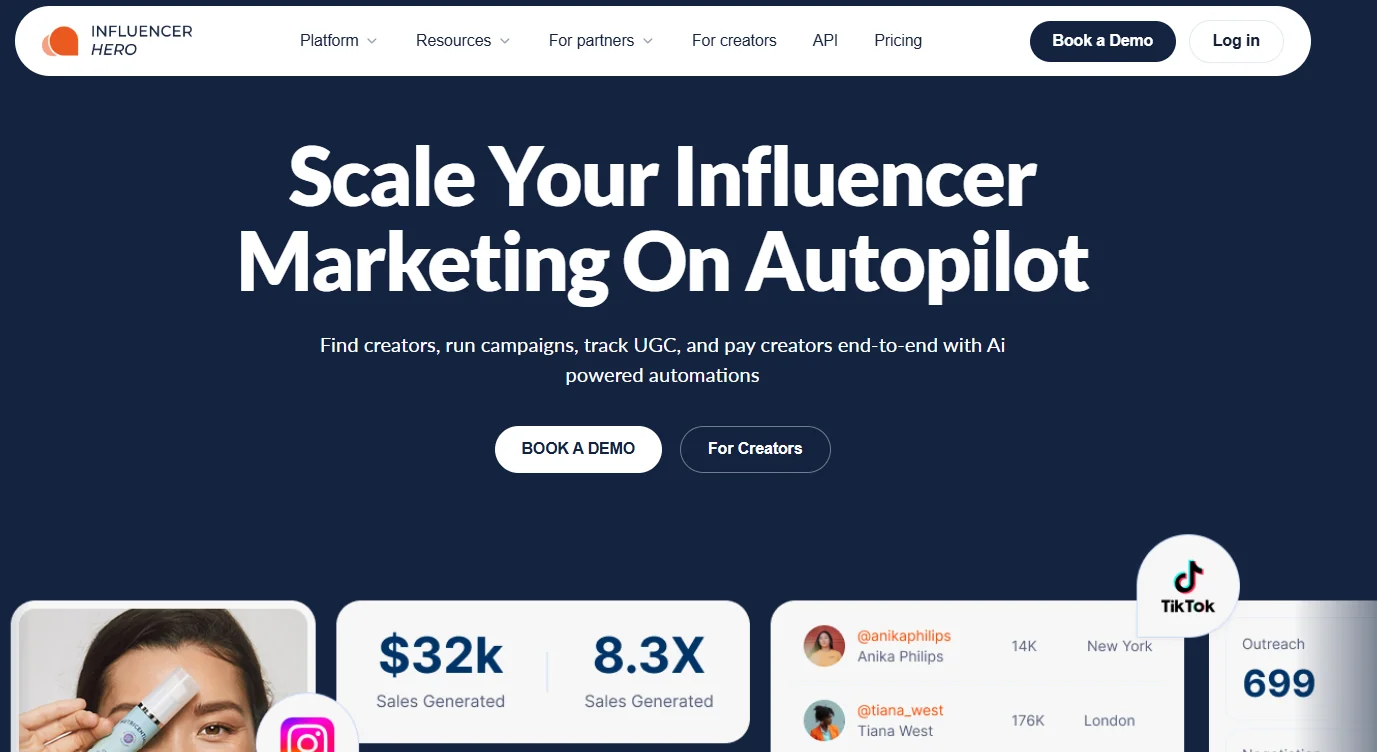
Influencer Hero is the best influencer marketing software and the closest like-for-like swap if you want everything Upfluence does in one platform, but without the opaque sales process. It is a full all-in-one stack: influencer discovery, a CRM to manage relationships, automated outreach and follow-up sequences, gifting, affiliate tracking, and real sales attribution tied back to revenue.
The outreach automation is the feature users rave about most. Where a lot of platforms stop at "here is the contact info," Influencer Hero runs the email sequences and follow-ups for you, which is a big time-saver for lean teams running ongoing programs. It is especially strong for mid-market and ecommerce brands on Shopify, WooCommerce, or Magento, since the gifting integration removes a major operational headache.
Pricing is published, which already beats Upfluence on transparency. The Standard plan starts at $649 a month (1,000 monthly reach-outs, one seat), Pro runs $1,049 a month for 5,000 reach-outs, and Business is $2,490 a month for 10,000. Crucially, plans bill monthly rather than locking you into a year, with a short minimum commitment, so you keep flexibility Upfluence does not offer.
The trade-off is the entry price. At $649 a month, it is more than a discovery-only tool, and because pricing is per brand, agencies juggling multiple clients can see costs climb. Some users have also flagged that the search and filtering could be sharper. But for a brand that wants the full workflow automated rather than just centralized, it is a serious contender.
3. Modash

If discovery is the main reason you were looking at Upfluence, Modash is the cleaner, more transparent option. It indexes a creator database of 350M+ profiles across Instagram, TikTok, and YouTube, with detailed audience analysis, verified email lookups, outreach, gifting, and campaign tracking layered on top.
The big differentiator versus Upfluence is honesty about cost. Modash publishes its pricing and offers a 14-day free trial with no credit card, so you can test it before a single dollar changes hands. Essentials starts at $199 a month on annual billing ($299 monthly), Performance is $499 a month annual ($599 monthly), and Enterprise is custom. No demo gauntlet, no 12-month minimum to get started.
It is a favorite for ecommerce brands thanks to a strong Shopify integration that handles gifting, promo codes, and sales attribution out of the box.
A couple of honest limitations: the 14-day trial is fairly short to fully evaluate a platform, and Modash sticks to Instagram, TikTok, and YouTube, so if you need Twitch, Pinterest, or blog creators, it will not cover you. Its metrics are also estimates pulled from public profiles, which is standard for the category but worth knowing.
4. GRIN

GRIN is an all-in-one creator management platform built specifically for ecommerce brands running influencer programs at scale. It covers discovery, recruitment, product seeding, affiliate links and discount codes, content management, and live ROI reporting, with deep integrations into Shopify and other ecommerce stacks. If your program is mature and revenue-focused, GRIN gives you the reporting depth to present results to leadership without exporting spreadsheets all night.
It competes directly with Upfluence on capability, and it has moved toward more transparent, tiered pricing. Published tiers now start in the few-hundred-per-month range and scale up through higher plans, with a 30-day free trial and more month-to-month flexibility than it used to offer. That said, historical deployments and enterprise contracts have run far higher (often tens of thousands per year), so confirm exactly what your scope costs before signing.
The honest caveat: GRIN has a real learning curve. Users consistently note that the platform has a lot of depth, and without dedicated setup time, teams underuse what they pay for. Smaller brands testing the channel often find the entry cost harder to justify than a lighter discovery tool.
5. Aspire

Aspire (formerly AspireIQ) is a word-of-mouth commerce platform with one of the largest creator marketplaces in the space. It pulls influencers, ambassadors, affiliates, customers, and UGC into a single program, with customizable relationship workflows, product seeding, affiliate management, and social ads amplification. Household names like M&Ms, Samsung, and HelloFresh run programs on it, which tells you the tier it is built for.
What makes it a real Upfluence alternative is the marketplace plus relationship-building angle. Rather than just searching a database, you can have creators discover and apply to your brand, then nurture those relationships into long-term ambassador programs.
Like Upfluence, Aspire keeps pricing behind a sales call. Reported entry points start around $1,000 a month and climb from there depending on seats and scope, so it sits firmly in the mid-market-to-enterprise bracket. That is the honest limitation: it is powerful, but it is not a budget pick, and the lack of public pricing means the same demo-and-quote process you may be trying to escape from Upfluence.
6. HypeAuditor
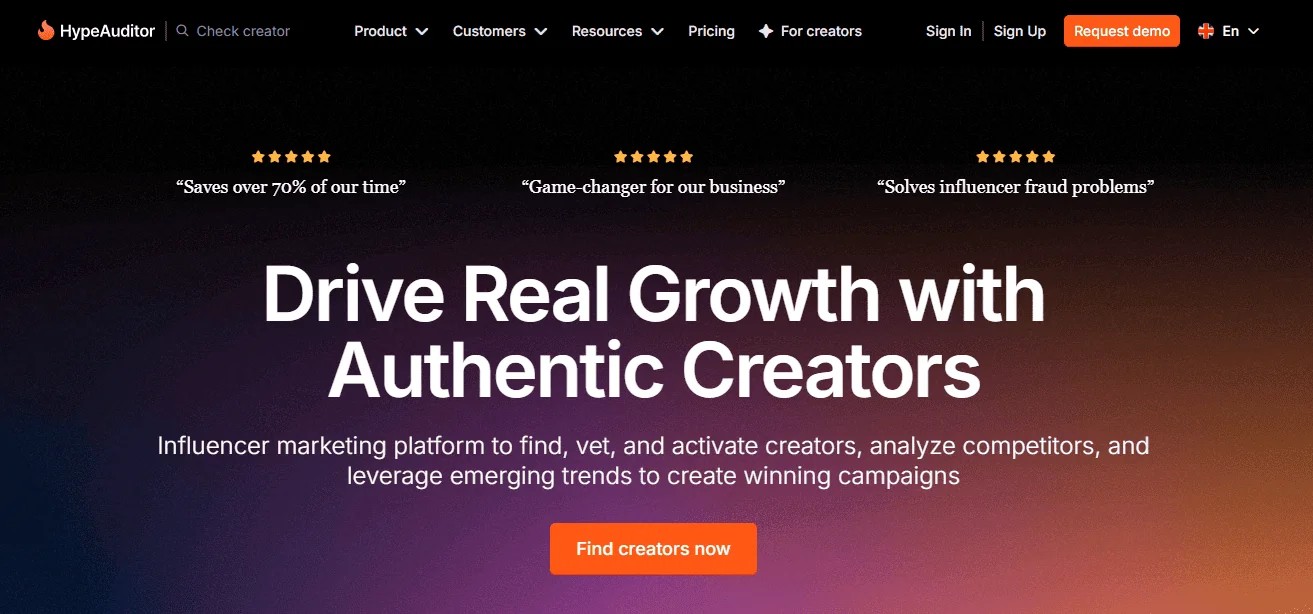
HypeAuditor is the pick if your biggest frustration is trusting the data. It is an influencer analytics and discovery platform built around audience validation and fraud detection. Before you spend budget on a creator, HypeAuditor shows you fake-follower analysis, audience demographics, engagement authenticity, and growth patterns, so you partner based on data instead of a pretty grid.
For brands that have been burned by inflated follower counts, that vetting layer is the whole reason to switch. It is essentially a truth detector for influencer profiles, and it covers discovery and campaign workflows on top.
Helpfully, HypeAuditor offers a free tier plus 40+ free audit tools, so you can run basic checks before committing. Paid plans start at $299 a month (Basic) and $499 a month (Pro) on annual billing, with Enterprise custom-quoted.
The honest caveats: the published rates require annual billing, every plan has usage caps that scaling teams hit quickly, and if your core job is actually running and executing campaigns rather than vetting and analyzing creators, HypeAuditor can be more platform (and more cost) than you need.
7. Heepsy

Heepsy is one of the most affordable ways to get into creator discovery, which makes it a natural Upfluence alternative for small brands and agencies on a tight budget. It is an AI-powered search and analytics platform covering Instagram, TikTok, and YouTube, with filters for location, category, follower count, engagement rate, and audience demographics, plus fake-follower analysis and a creator marketplace where brands post campaigns.
The appeal is the entry price. Heepsy has a free plan for basic search, and paid plans start around €69 (roughly $89) a month, a fraction of what Upfluence quotes. If all you need is to find and vet micro-influencers without committing to a heavy platform, it gets the job done.
The honest limitations are worth knowing before you buy. Heepsy's database (around 11M+ profiles) is much smaller than Modash or GRIN, and it skews stronger in some regions than others. The cheapest plan also caps results and gates advanced filters, and ecommerce features like Shopify integration and affiliate tracking live on the higher tiers. Read the plan limits carefully so you do not get surprised.
8. CreatorIQ
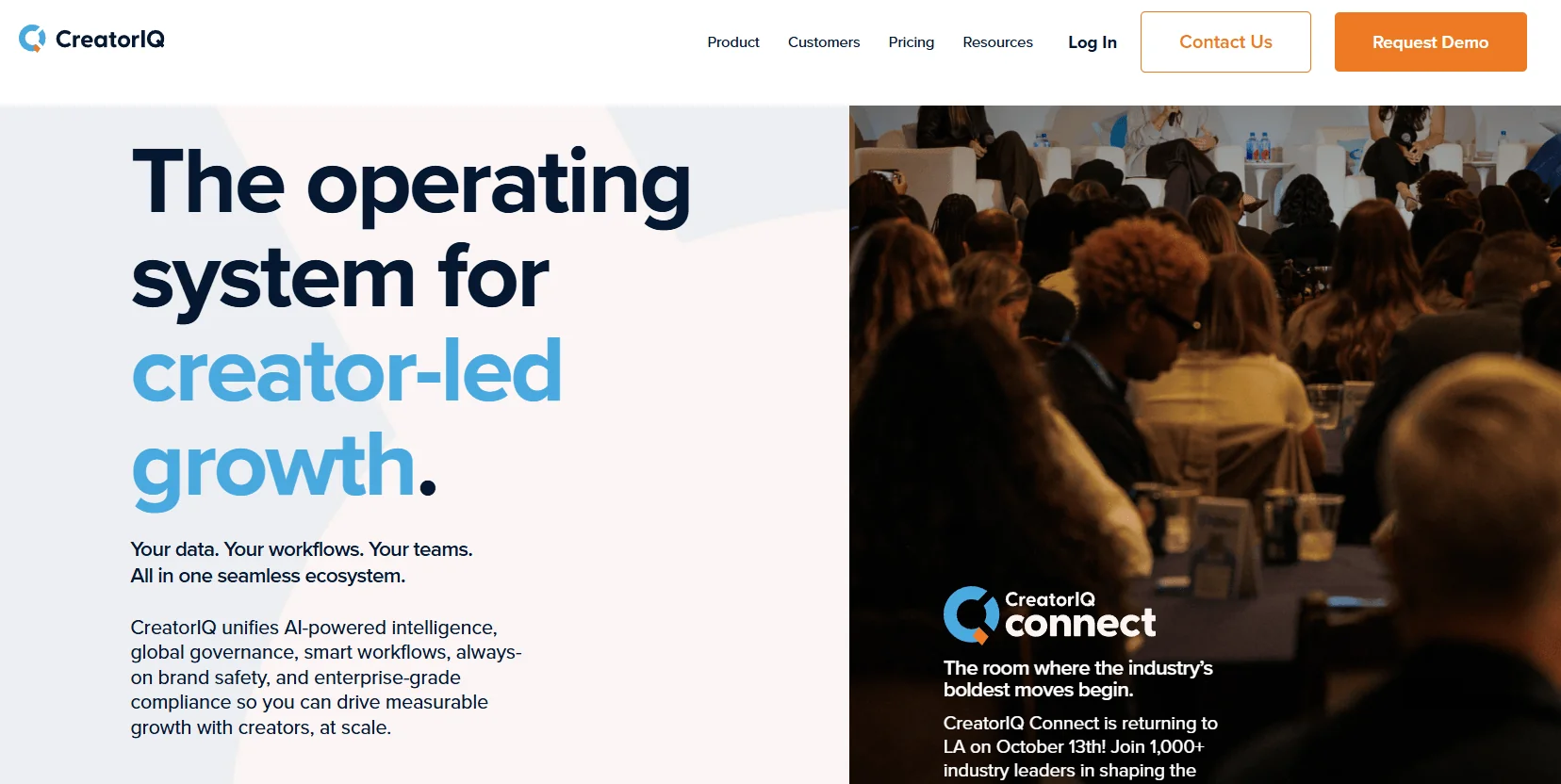
CreatorIQ is the enterprise end of the market. If you are leaving Upfluence because you have outgrown it, this is the platform built for global brands and large agencies. It is a full-stack creator marketing system covering discovery, campaign management, creator CRM, and analytics, drawing on data from over a billion public social accounts. Disney, Sephora, Unilever, Google, and LVMH run programs on it.
As a Upfluence alternative, it competes on depth and data quality rather than price or simplicity. The analytics, reporting, and brand-safety tooling are genuinely best in class for organizations managing creator programs at serious scale.
The honest caveat is the obvious one: cost and commitment. CreatorIQ does not publish pricing, contracts are annual with no monthly or self-serve option, and entry-level deals commonly run $30,000 or more per year. There is also a meaningful onboarding period before teams ship their first campaign, and it does not automate outreach the way lighter tools do. For brands managing fewer than 50 active creators, it is overkill. For Fortune 500 programs, it is the standard.
9. Collabstr
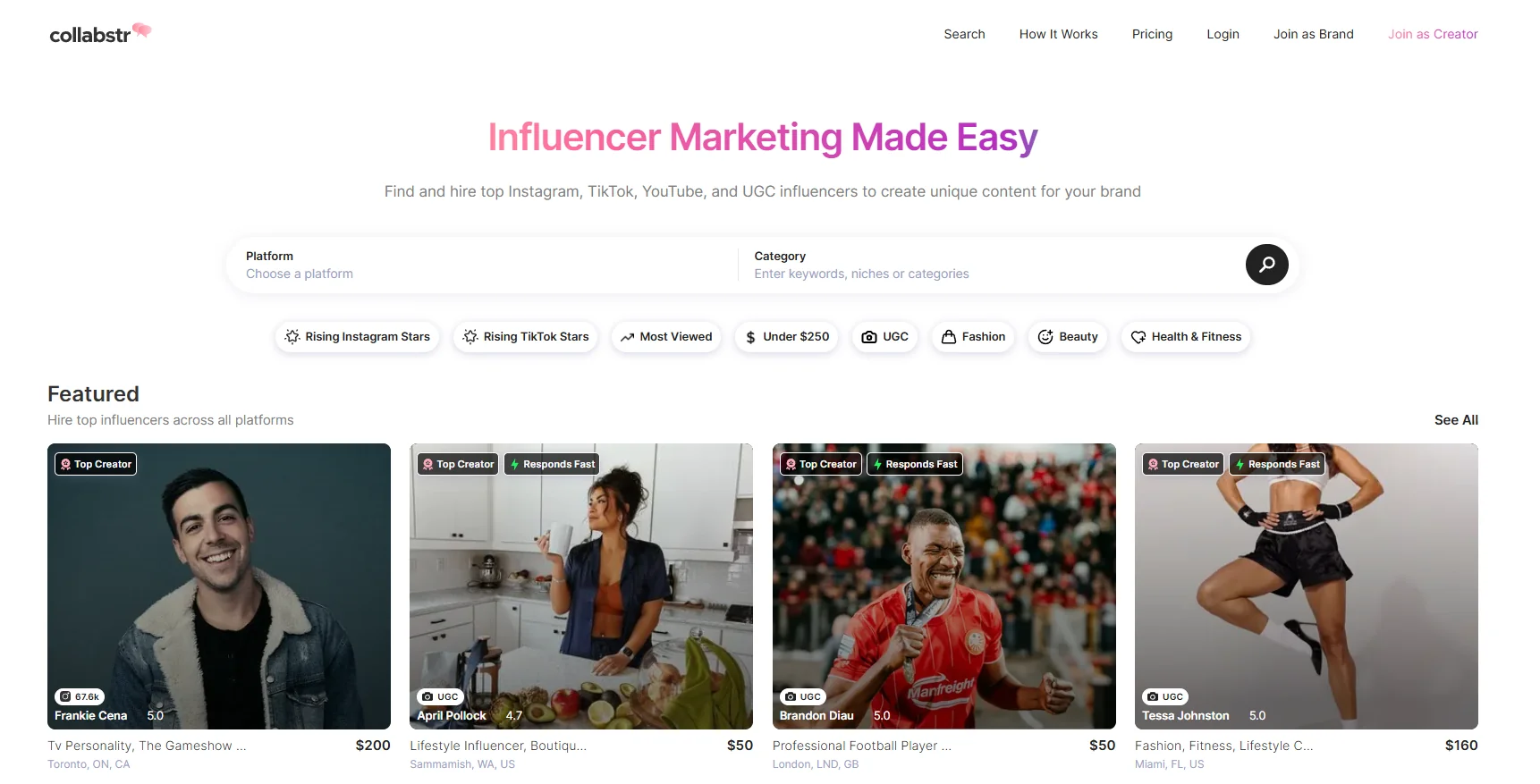
Collabstr is the antidote to a 12-month enterprise contract. It is a self-serve creator marketplace where you browse vetted influencers and UGC creators across Instagram, TikTok, and YouTube, then hire and pay them directly in the platform. No sales call, no annual lock-in, no learning curve. You can be live with a creator the same day.
That makes it ideal for brands running one-off campaigns or testing influencer marketing for the first time. Creators list their own rates and packages, so you see pricing upfront and skip a lot of the negotiation back-and-forth.
On cost, Collabstr is refreshingly flexible. The Basic plan is free to browse and hire (with a 10% marketplace fee on transactions), Pro is $299 a month, and Premium is $399 a month, which drops the marketplace fee to 5%. Annual billing roughly halves those monthly rates.
The honest limitation: Collabstr only includes creators who have signed up to its marketplace, so you cannot discover or reach a specific creator who is not on the platform the way a database tool lets you. And on high-volume campaigns, the per-transaction marketplace fees add up. For low-commitment, fast collaborations, though, it is one of the easiest entry points around.
10. Insense
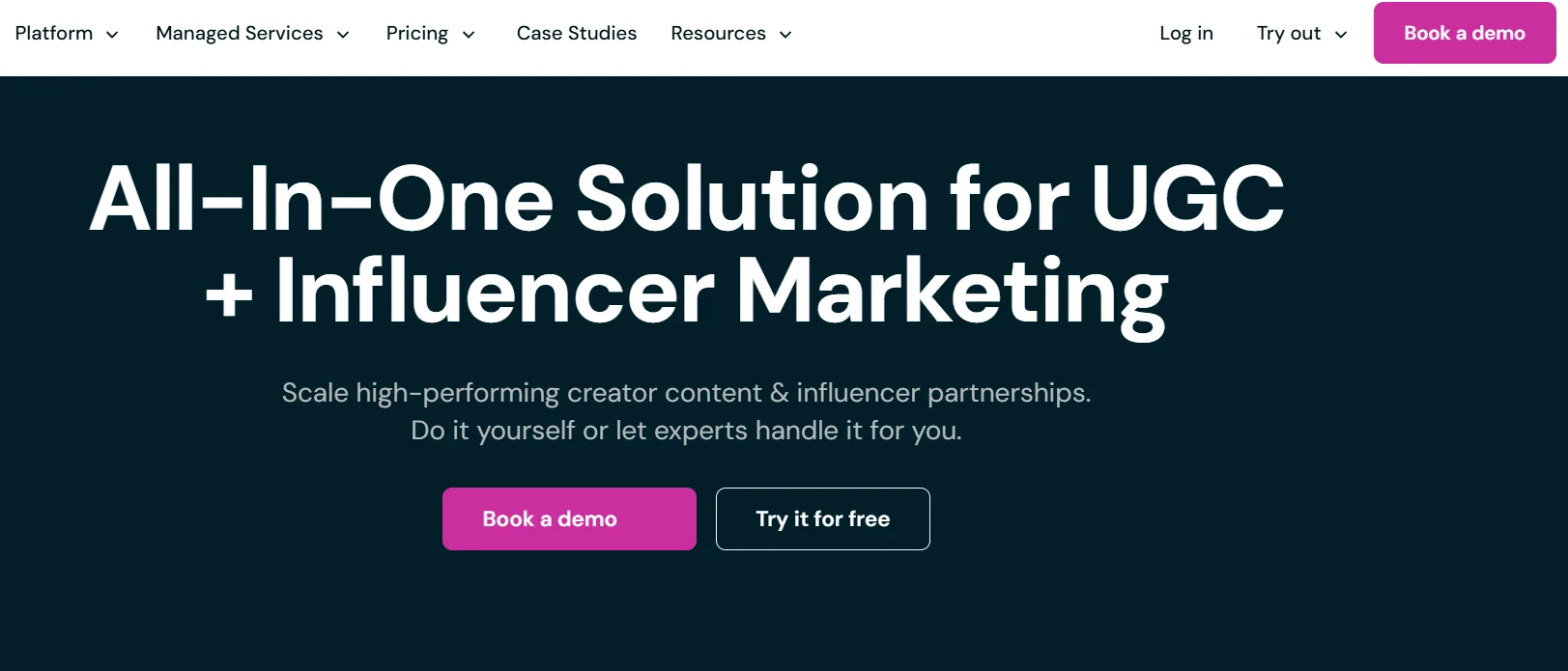
Insense is the pick if your real goal is content, not just creator relationships. It is an all-in-one UGC and influencer platform that lets you source authentic video from a community of 20,000+ vetted creators, then push it straight into Meta Partnership Ads and TikTok Spark Ads. It also handles product seeding, influencer posts, affiliate, and TikTok Shop, all from one workflow, which is a different angle than Upfluence's discovery-first approach.
For ecommerce and DTC brands that live on paid social, that pipeline from creator brief to ad-ready content is the whole value. You brief creators, review content inside the platform, and run it as whitelisted ads, often in just a few business days.
Insense uses self-service plans that run roughly $500 to $800 a month depending on tier and features. The honest caveat is the cost structure: creator payments are not included in the subscription. Those are separate, starting around $100 per UGC video and up, with a marketplace fee (commonly 7 to 20%) on top. Budget the full picture, subscription plus creator payments plus fees, before your first campaign so the numbers do not surprise you.
Which Upfluence Alternative Should You Pick?
Here is the thing: there is no single best Upfluence alternative, because the right one depends entirely on your size, budget, and what you actually need solved. If your problem is discovery and data, Modash, HypeAuditor, or Heepsy fit. If you want the full workflow automated, Influencer Hero or GRIN. If you are a global enterprise, CreatorIQ or Aspire. If you just want content for paid ads, Insense. And if you want fast, low-commitment collaborations, Collabstr.
But if you are a growing DTC or Shopify brand that wants to skip the sales call, skip the year-long contract, and start working with creators who actually want to work with you, Afluencer is the easiest place to begin. You post a Collab, verified creators apply, and plans start at $49 a month with no annual lock-in. That is a very different starting line than a custom quote and a 12-month commitment.
Try CreatorGPT for a quick strategy gut-check, and post your first Collab today.