.svg)
.png)
CreatorIQ vs Influencer Hero: A Detailed Comparison
CreatorIQ and Influencer Hero both describe themselves as end-to-end influencer marketing platforms, and in 2026 both descriptions hold up. The difference isn't the feature list. It's who each platform was built to serve.
CreatorIQ sits at the enterprise end of the market. It runs creator programs for Disney, Unilever, Ralph Lauren, Nestlé and Sephora, it sells on annual contracts that start around $30,000, and it never publishes a price. Influencer Hero targets DTC brands and agencies, lists its plans publicly starting at $649 a month, and builds around one job: run the whole creator workflow without stitching five tools together.
So the useful question isn't which platform is stronger. It's whether your program needs enterprise governance across dozens of markets, or whether it needs outreach, tracking and payments to stop living in a spreadsheet.
By the end of this you'll know what each one costs in 2026, where each genuinely leads, and what to do if neither price tag fits yet. If you're earlier in the process, our guide on getting started is the better first read.
Quick Comparison: CreatorIQ vs Influencer Hero vs Afluencer
What Is CreatorIQ?
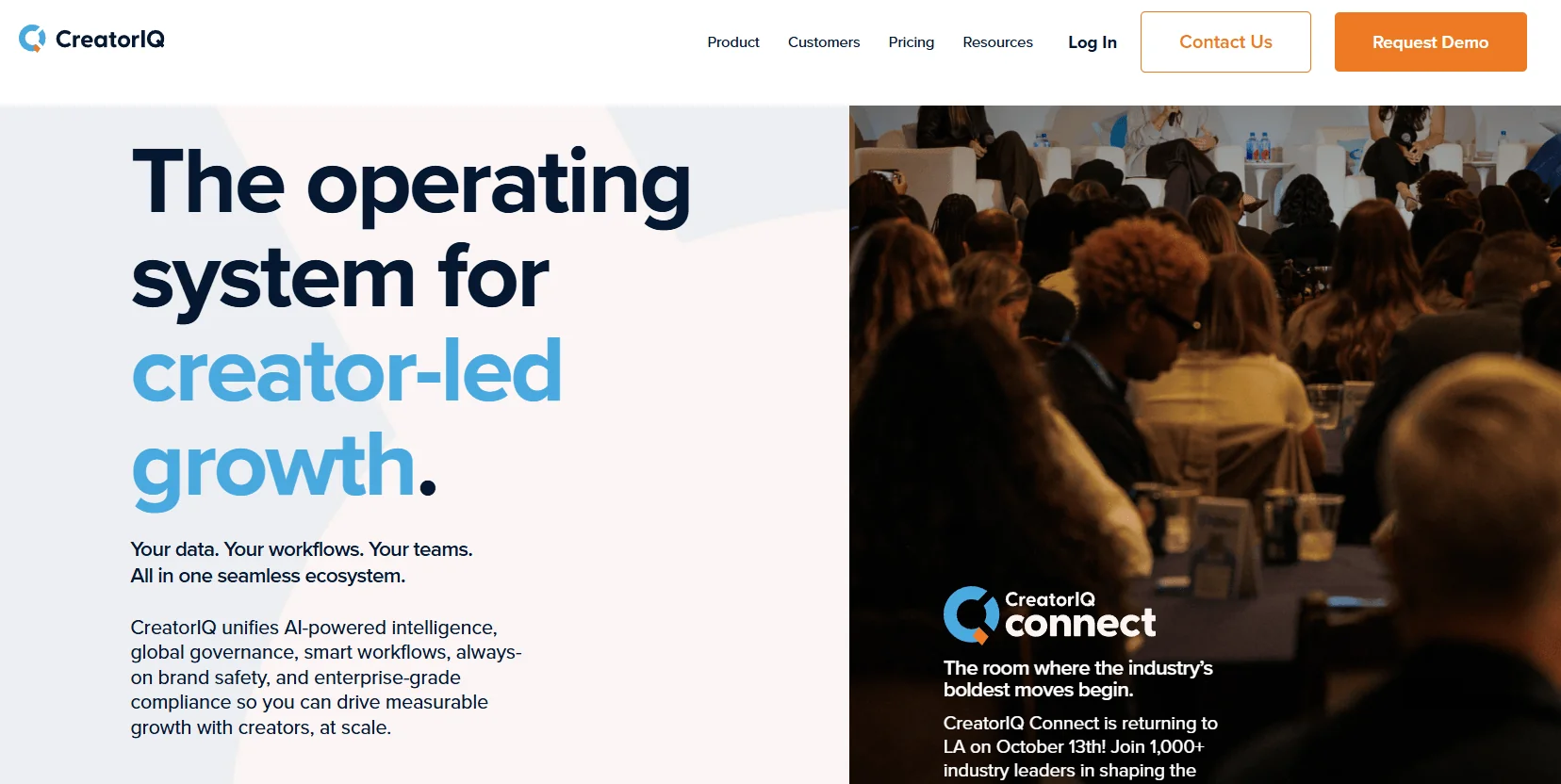
CreatorIQ is an enterprise creator marketing platform used by more than 1,300 brands and agencies, including Disney, Unilever, CVS, Salesforce and Sephora. It has been in the category for over a decade, and in late 2025 it relaunched as what the company calls an AI-native operating system for creator-led growth. IDC named it a Leader in its 2025 to 2026 assessment of influencer marketing platforms for large enterprises.
The product is built around governance and measurement more than speed. Large organizations use it to run creator programs across multiple brands, regions and agency partners with one set of data, one approval process and one reporting layer. That focus explains both its strengths and its price.
The typical buyer has a dedicated influencer marketing team, a seven-figure creator budget, and stakeholders who need creator activity connected to business outcomes in a format finance will accept.
AI-Powered Creator Discovery
Discovery runs on the Creator Graph, CreatorIQ's intelligence layer, which processes more than 123 million social posts a day. Search works semantically, so you can describe a creator in plain language instead of stacking filters, and smart recommendations surface similar profiles once you've found someone who works.
The depth here is real. Because the graph is built on years of creator, content and performance data, results skew toward creators with a track record rather than accounts that simply match a keyword.
Brand Safety and Fraud Detection
SafeIQ is CreatorIQ's brand safety system, and it analyzes text, imagery, audio and video together rather than scanning captions alone. Paired with the Integrity Quotient score for authenticity, it gives risk-averse teams a defensible vetting process before a creator ever signs anything. For regulated categories and global brands, that's often the feature that closes the deal. Our breakdown on how to find the perfect influencer covers the manual checks worth running alongside any automated score.
Competitive Benchmarking and Reporting
BenchmarkIQ lets teams compare their creator performance against competitors, and it got a significant upgrade in mid-2026 with a new dashboard and deeper filtering. Reporting is consistently the capability reviewers single out, which is why CreatorIQ keeps landing on enterprise shortlists even when cheaper tools cover the same workflow steps.
Global Payments and Governance
CreatorIQ handles creator payments in more than 60 currencies across 80-plus markets, with the compliance and approval structure large organizations need. ExchangeIQ, its API, pushes creator data into the wider marketing stack, and a 2026 integration with Sprinklr pulls owned, earned, paid and creator data into one measurement view.
Where CreatorIQ Falls Short
The commitment is the barrier. There's no monthly billing, no free plan and no self-serve trial, so you sign an annual contract before you know whether the platform earns its keep. G2 reviewers report roughly two months to implement and around 15 months to see return, which is workable for a global team with a rollout budget and painful for a five-person marketing department.
What Is Influencer Hero?
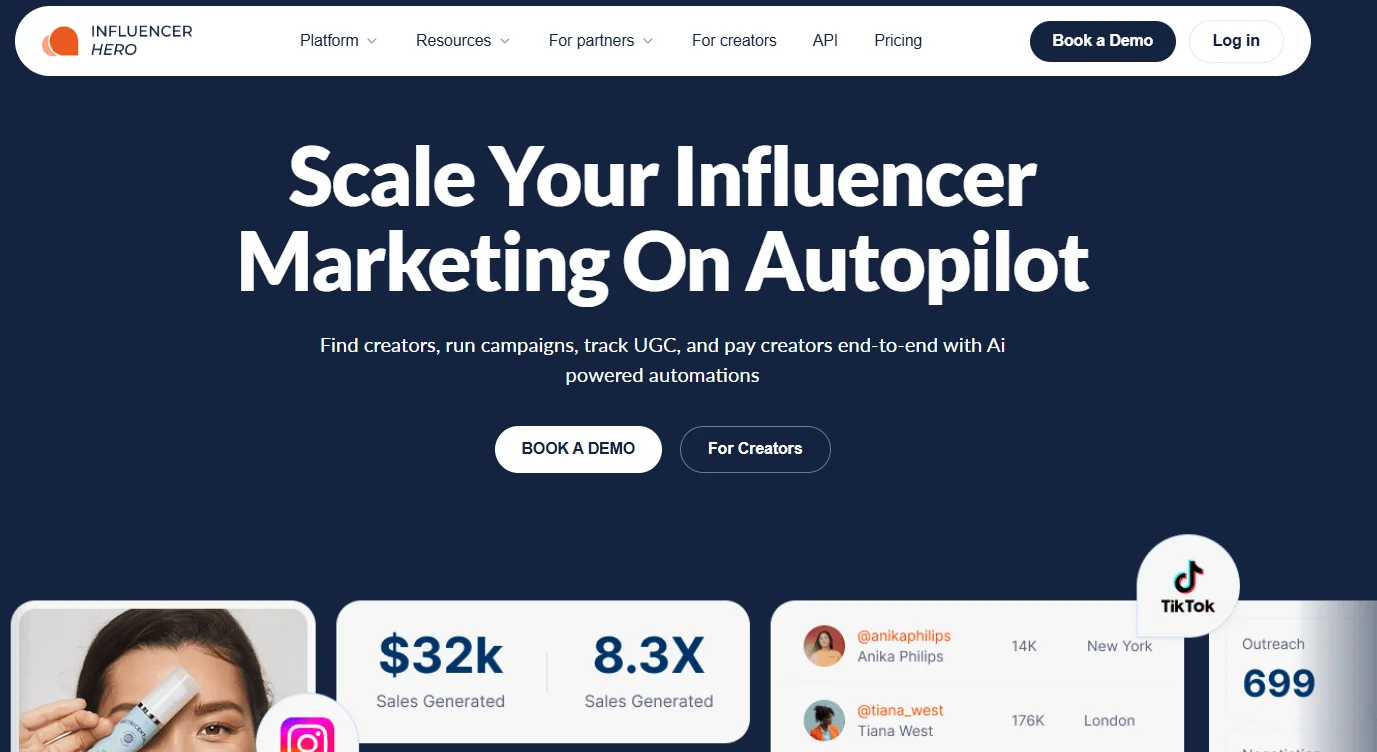
Influencer Hero is an all-in-one influencer marketing platform built for DTC brands and agencies that treat creators as an ongoing channel rather than a quarterly campaign. It's used by 1,200-plus brands and 100-plus agencies, and it's also the parent of Afluencer, so the marketplace side and the software side connect instead of competing.
Scope is the pitch. Discovery is step one, and everything after it lives in the same place: outreach, creator CRM, gifting and seeding, contracts, affiliate links and discount codes, UGC storage and content approvals, payments, and revenue reporting per creator.
The workflow reads like this. Search in plain language, shortlist, fire an automated outreach sequence with follow-ups, move responders into the CRM, ship product, generate affiliate links, then watch attributed revenue land by creator. If that process currently spans Gmail, a spreadsheet and three browser tabs, consolidation is the whole value.
AI Search Across 450M+ Creators
The database covers 450M+ creators across Instagram, TikTok and YouTube, with 20-plus filters, fake follower detection and lookalike search layered on top. One feature worth calling out is brand follower detection, which surfaces creators who already follow your Instagram account. Those creators are roughly eight times more likely to say yes, which changes the economics of a cold list.
Automated Multi-Channel Outreach
Sequences run across email, Instagram and TikTok DMs and WhatsApp, personalized per creator by AI, with follow-ups that fire automatically when nobody replies. Most positive responses arrive on the second or third touch, which is exactly where manual outreach collapses. Our post on outreach techniques is worth reading before you load a sequence.
Creator CRM, Gifting and Content Reviews
Every relationship sits in one record with status, message history, content and performance attached. Product seeding runs from the same screen, deliveries get tracked, and content reviews let you request drafts, approve or reject them with a reason, and loop until the asset is right. At 200 creators, that's the difference between a program and a mess.
Affiliate Links, Codes and Low-Fee Payments
You generate unique affiliate links and discount codes per creator, attribute sales back to individuals, and pay everyone from the same dashboard. Payout fees run 0.1% to 0.5%, against the 5% to 7% most platforms charge, which is a meaningful line item once you're paying out monthly. AI coupon leakage detection flags codes that escape onto deal sites.
Where Influencer Hero Falls Short
Entry is $649 a month with a three-month minimum, and there's no free trial. Pricing is public, so you're not chasing a quote, but you still book a demo to get set up properly. The feature surface is also wide, so a team running one campaign a quarter will pay for capability it won't touch.
CreatorIQ vs. Influencer Hero: Feature-by-Feature Breakdown
Influencer Discovery
Both search well, and both use AI to cut down filter stacking. CreatorIQ's advantage is depth of signal: the Creator Graph is built for judging creator quality and brand affinity at scale, and it's the better tool for vetting a shortlist that a legal team will review. Influencer Hero's advantage is raw reach and speed, with 450M+ profiles and lookalike plus brand-follower search. For brands building programs around micro-influencers, that volume matters more than benchmark data.
Outreach & Communication
This is the clearest split. CreatorIQ handles communication inside its Community layer with bulk messaging, which suits brands whose creators already applied or were recruited by an agency. Influencer Hero is built for cold outreach at volume, with AI personalization, multi-channel sending and automatic follow-ups. If your program grows by contacting creators who've never heard of you, that difference decides your response rate.
CRM & Campaign Management
CreatorIQ is stronger on governance: multi-brand structure, permissions, approval flows and agency access across regions. Influencer Hero is stronger on operations: gifting logistics, contracts, content approvals and per-creator status in a single record. One is built so twelve stakeholders can work without stepping on each other, the other so two people can run 300 creators.
Campaign Tracking & Analytics
CreatorIQ leads on measurement breadth, with competitive benchmarking, multi-brand rollups and reporting depth that reviewers consistently praise. Influencer Hero focuses tighter on commercial outcomes: revenue by creator, ROI by campaign, gifting cost against sales, and results split by creator tier.
If your reporting question is "how do we compare to the category," CreatorIQ answers it. If it's "which creators made us money," Influencer Hero does. It also helps to be clear on which metrics you're actually judging, and our take on reach or impressions is a good starting point.
Integrations
CreatorIQ connects into enterprise stacks through ExchangeIQ, with partners like Sprinklr and enterprise commerce systems. Influencer Hero ships 45-plus integrations aimed at ecommerce teams: Shopify, WooCommerce, Magento and BigCommerce on the store side, Klaviyo, Mailchimp and Omnisend on email, plus Slack, Zapier, Gorgias, DocuSign and an open API. The question is whether your stack is enterprise martech or a Shopify store with an email platform bolted on.
Pricing in 2026: What You'll Actually Pay
CreatorIQ doesn't publish pricing. Procurement data puts entry contracts near $30,000 a year, with a median around $39,250 and larger programs landing near $59,500 and above. Every deal is annual, there's no monthly option and no free trial, and you'll go through a sales conversation before you see a number. For an enterprise with a dedicated team, that's normal. For everyone else, it's a year of commitment made on a demo.
Influencer Hero lists its plans openly: Standard at $649 a month for up to 1,000 creators, Pro at $1,049 for up to 5,000, and Business at $2,490 for up to 10,000, with custom and agency options above that. Billing is monthly with a three-month minimum, so the cost of being wrong is measured in weeks rather than quarters.
Afluencer starts at $49 a month for Marketplace access, which gets you in front of 75,000-plus registered creators who actively apply to brand collabs. Standard at $649 and Pro at $1,049 add reach-out volume, product shipping and creator payments, and from Standard up you also get access to the Influencer Hero platform itself.
Run the math against your actual budget before you shortlist. If you're spending $2,000 a month on creators, a $30,000 annual contract isn't a software decision, it's a different business. Software should be a slice of your influencer spend, not the headline. Our list of questions worth asking when choosing a platform is a useful filter before you take any demo.
Which Platform Is Right for You?
CreatorIQ earns its position at the top of the market. If you're running creator programs across several brands and a dozen markets, with legal review, agency partners and a CFO who wants creator performance benchmarked against competitors, very little else is structured for that job. The safety tooling, the governance model and the payment infrastructure across 80-plus markets are built for organizations where a compliance mistake costs more than the software.
Influencer Hero makes more sense when the hard part is operations rather than oversight. If you're sending outreach from Gmail, tracking creators in a spreadsheet, generating discount codes by hand in Shopify and rebuilding a report every month, that's a workflow problem.
Influencer Hero covers discovery, outreach automation, CRM, gifting, affiliate tracking, payments and attribution end to end, on public monthly pricing, which is a different shape of commitment than an annual enterprise contract.
Curious how that plays out on your own program in 2026? Book a demo with Influencer Hero.
And if both of those price tags feel early, that's a reasonable read. Afluencer is where brands build a creator program before they commit to full software. Post a Collab, get applications from creators who want to work with brands at your size, and learn what your offer and your ideal creator profile actually look like.
The Bottom Line
CreatorIQ answers "prove this channel works across our whole portfolio." Influencer Hero answers "get 300 creators contacted, shipped, tracked and paid without hiring two more people." Those are different problems, and most brands only have one of them.
If you're not sure which one you have yet, don't sign anything in 2026 to find out. Start on Afluencer with real creators applying to your brand, and let the volume tell you what to invest in. When spreadsheets stop holding, Influencer Hero picks it up from there.