

12 Best Influencer Marketing Tools for Brands in 2026
The best influencer marketing tools save you hours on the parts of a campaign that eat your week: finding creators, chasing replies, shipping product, and proving the sales.
The catch is that no single app does everything. Most brands run a core influencer platform plus a handful of supporting tools for content, listening, scheduling, and search. Pick the wrong combo and you end up paying for overlap while the real bottleneck stays manual. If you're working with a tight budget, a smart budget-friendly strategy matters even more.
We rebuilt this list for 2026 with current pricing and a clear job for each tool. Let's get into it.
Quick Comparison: Influencer Marketing Tools in 2026
The 12 Best Influencer Marketing Tools for Brands
We grouped these by the job they do. The first two run your creator program, and the rest handle content, listening, scheduling, search, and email around it.
Let's break them down one by one.
1. Influencer Hero
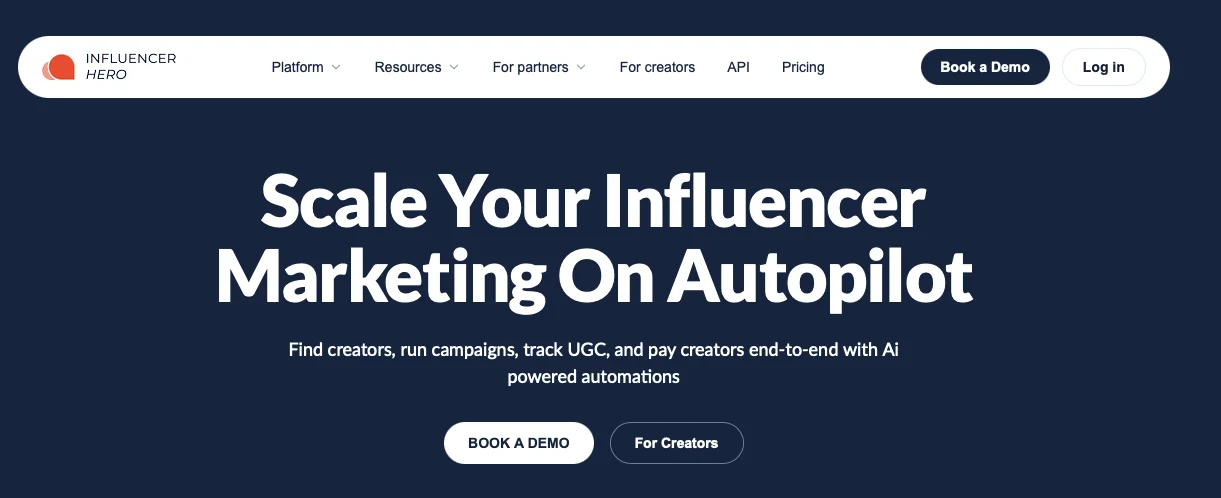
Influencer Hero is an all-in-one influencer marketing platform built to run your whole creator program on autopilot. Most tools on this list handle one step. Influencer Hero connects every step, from finding a creator to paying their commission, so your team sets up the workflow once and lets it run.
That's why brands like Gymshark use it to run fully automated campaigns with 1,500+ creators a month, and why Slip has grown its gifting and affiliate program past 2,000 affiliates.
What runs on autopilot:
- Discovery: AI search across Instagram, TikTok, and YouTube. You can describe your ideal creator in plain words or upload an image to find creators with a matching look. Lookalikes, fake-follower checks, and Deep Research turn a brief into a ranked shortlist without manual scrolling.
- Outreach and replies: Personalized email sequences go out automatically. The AI assistant drafts replies by learning from similar past deals in your account, and AI follow-ups adapt to each conversation instead of repeating the same static template.
- Creator onboarding: Branded application pages let creators apply, pick the products they want, and get auto-accepted when they match your criteria. No back-and-forth over sizes and shades.
- Gifting and affiliate: Product orders flow through Shopify or WooCommerce. Each creator gets a unique discount code, so every sale gets attributed to the right person.
- Content and payments: Creators submit content for review and send invoices through the Creator Hero app. Once you approve, payouts go out with fees of just 0.1% to 0.5%, compared with the 5% to 7% many platforms charge.
- Automations: Every key action can trigger the next step, from an application being accepted to content being approved or an invoice coming in. Custom fields let you build rules like tiered commissions that apply only within a sales range.
Integrations: More than 45 integrations including Shopify, WooCommerce, Klaviyo, Slack, DocuSign, GoAffPro, Zapier and an open API, so creator data moves into the rest of your stack without exports.
Automation doesn't mean you're on your own. Every account gets human account management 24/7, so there's always someone to help you set up workflows and fix problems.
The numbers: Standard costs $649/month with 1,000 reach-outs, Pro costs $1,049/month with 5,000, and Business costs $2,490/month with 10,000. Annual billing lowers that to $5,452, $8,812, and $20,916 a year. It holds a 4.4/5.0 rating on Capterra.
The trade-off is no free trial, and there's a learning curve to setting up the automations. For a brand running five creators, it's more platform than you need. For brands managing hundreds of creators a month, nothing else on this list saves as many hours. Book a demo to see the workflow on your own use case.
2. Afluencer
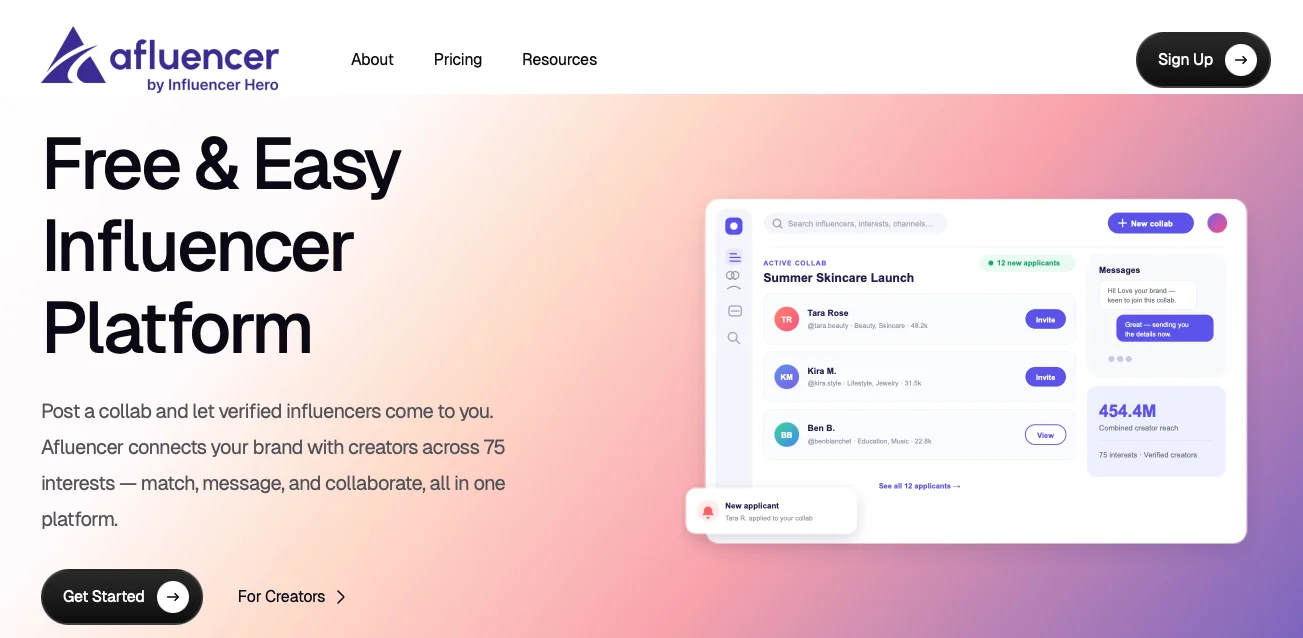
Afluencer is an influencer marketplace that flips outreach around. Instead of cold emailing creators, you post a Collab and verified creators apply to work with you. That makes it the easiest way to start product gifting campaigns without a big tool budget.
The numbers: Marketplace starts at $49 a month. adds 1,000 reach-outs, product send-outs, and influencer payments. Pro ($1,049/month) adds 5,000 reach-outs, a dedicated account manager, and 3+ seats. Full details are on the pricing page.
Afluencer works best for brands that are just getting started. Once you want to scale to hundreds of creators, Influencer Hero is the next step. To sharpen your targeting, chat with CreatorGPT for creator matching and campaign strategy.
3. RankControl

RankControl is an AI SEO platform that helps brands get cited in AI answers (ChatGPT, Claude, Perplexity, Gemini, Grok, and Google AI Mode) and rank on Google. It combines AI visibility tracking with a content engine that writes and publishes articles directly to your site. Influencer campaigns drive a spike of branded searches, and RankControl makes sure people find you when they look you up.
- AI Visibility Tracking: monitors how six AI engines answer questions in your market and rates each brand mention as positive, neutral, or negative
- Google AI Overviews Monitoring: shows keyword by keyword whether Google's AI answer appears and whether your page is a source
- AI Content Engine: AI agents research, draft, and publish brand-matched articles in your CMS (WordPress, Webflow, Shopify, Framer, and more), with auto-publish off by default
- Content Refresh and Link Building: flags pages when rankings or citations drop, rewrites them once you approve, and drafts outreach for link opportunities
- Analytics, AI Crawler Insights, and MCP/CLI/API access: shows which AI assistant sent each visitor and lets your team run it from Claude, Cursor, or the terminal
The numbers: One all-inclusive plan starts at 4,000/year), and managed backlinks or a dedicated strategist are optional add-ons.
It's best for SaaS companies, eCommerce brands, and lean marketing teams that want more organic and AI search traffic without hiring an SEO agency.
4. Canva
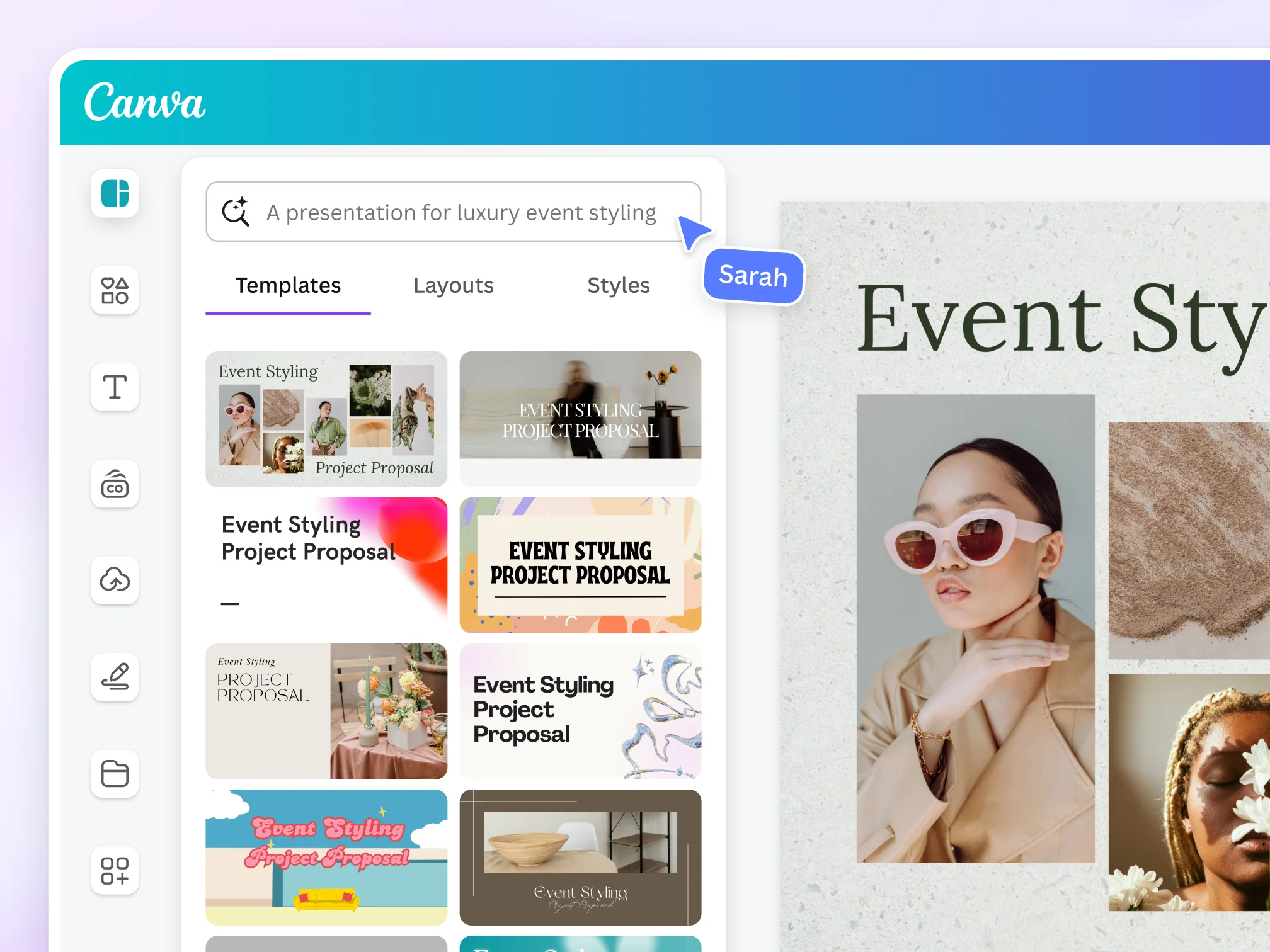
Canva is the design tool most creators on Afluencer already use, which makes it a natural shared workspace. Brands use it for creator briefs, mood boards, and quick edits on whitelisted ad creative.
The numbers: Canva has a free plan. Pro costs about $18/month or $180/year for one person. The old Teams plan is now called Business at $25 per person per month, with no seat minimum.
Pick Canva if you want on-brand briefs and ad variations without waiting on a designer.
5. Lumen
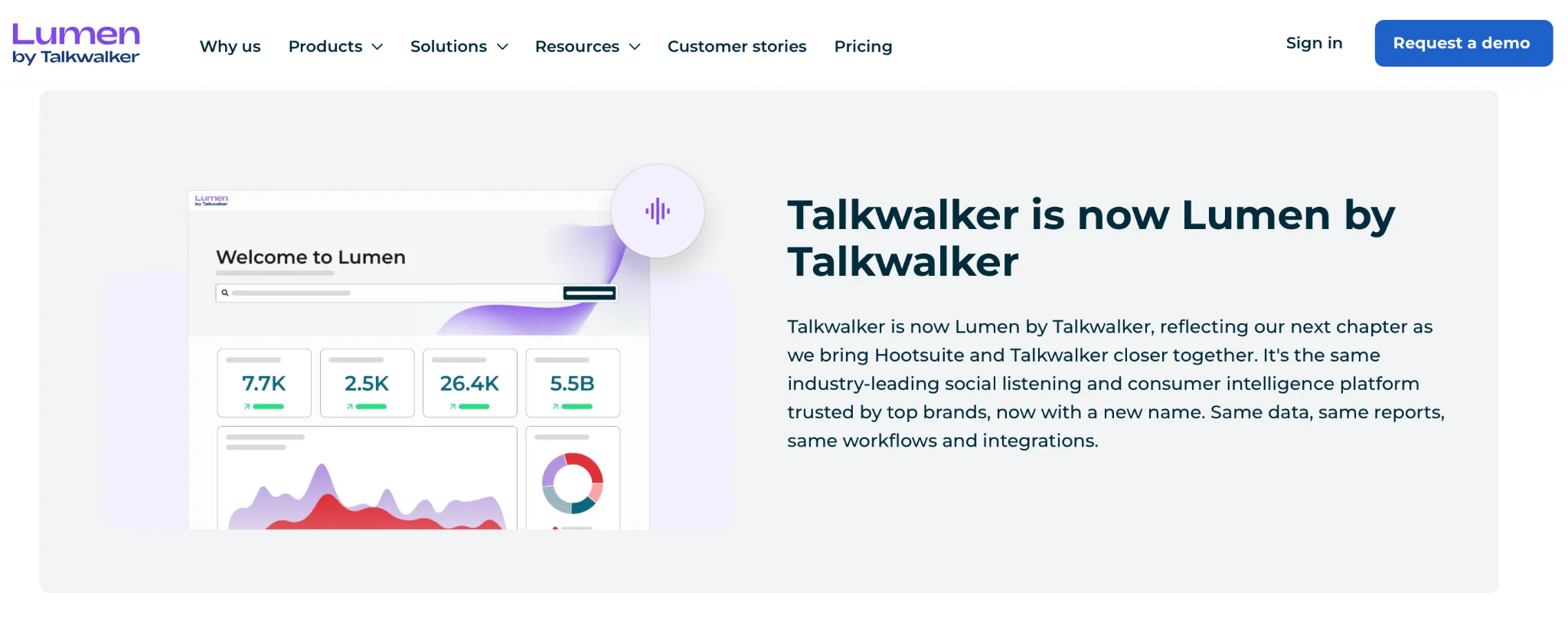
Lumen by Talkwalker is a social listening platform, now owned by Hootsuite. It tracks who's talking about your brand, how they feel about it, and which hashtags and creators drive the conversation. That's handy both for spotting organic fans to recruit and for keeping an eye on your brand reputation during a big launch.
The numbers: Talkwalker doesn't publish pricing. Every tier is quote-based on an annual contract, so expect enterprise-level budgets.
It fits mid-size and enterprise brands that need listening across markets, not small teams on a monthly budget.
6. Hootsuite
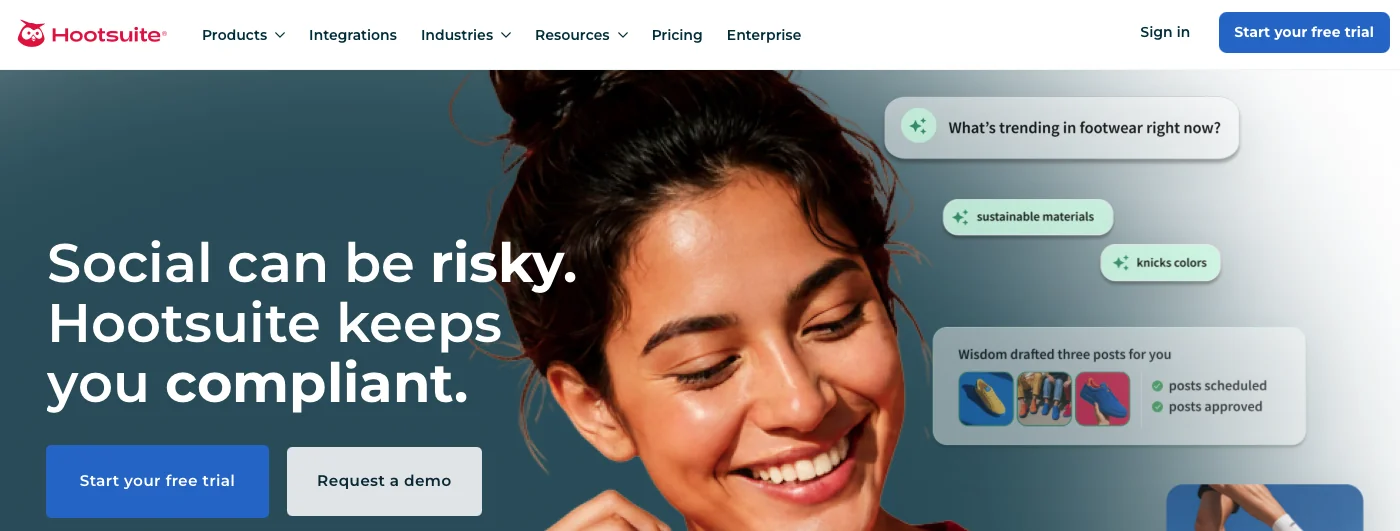
Hootsuite is one of the most established social media management tools. Teams use it to schedule posts, manage inboxes, and report on performance across accounts. For influencer programs, it's where you reshare creator content and measure how it performs on your own channels.
The numbers: Standard costs $99/user/month, Professional $199, and Advanced $399, all billed annually. Enterprise is custom, and there's a 14-day trial but no free plan.
It's a strong fit for teams managing many accounts or regions. Smaller brands will likely find it pricey.
7. Buffer
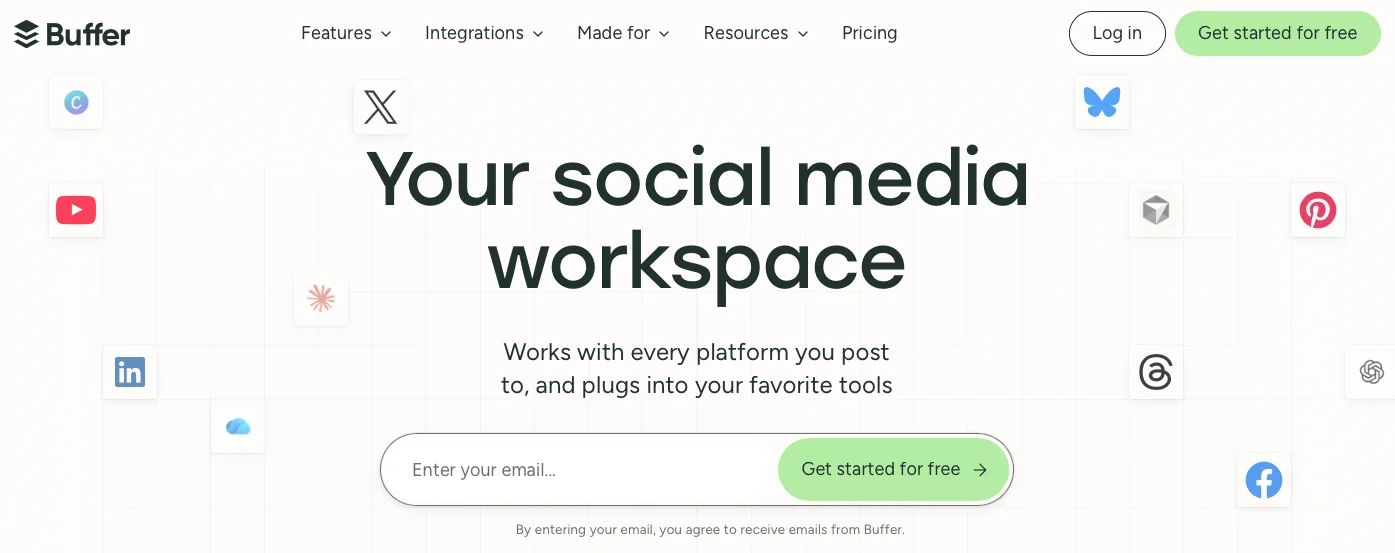
Buffer is the lightweight option for scheduling and simple analytics. It covers all the main platforms and keeps the interface clean, so a one- or two-person team can plan creator reposts in minutes.
The numbers: The free plan covers 3 channels. Essentials costs 6 monthly), and Team costs 12 monthly) with unlimited users. Per-channel pricing drops once you pass 10 channels.
Choose Buffer if you want scheduling that stays cheap as you add channels.
8. Later
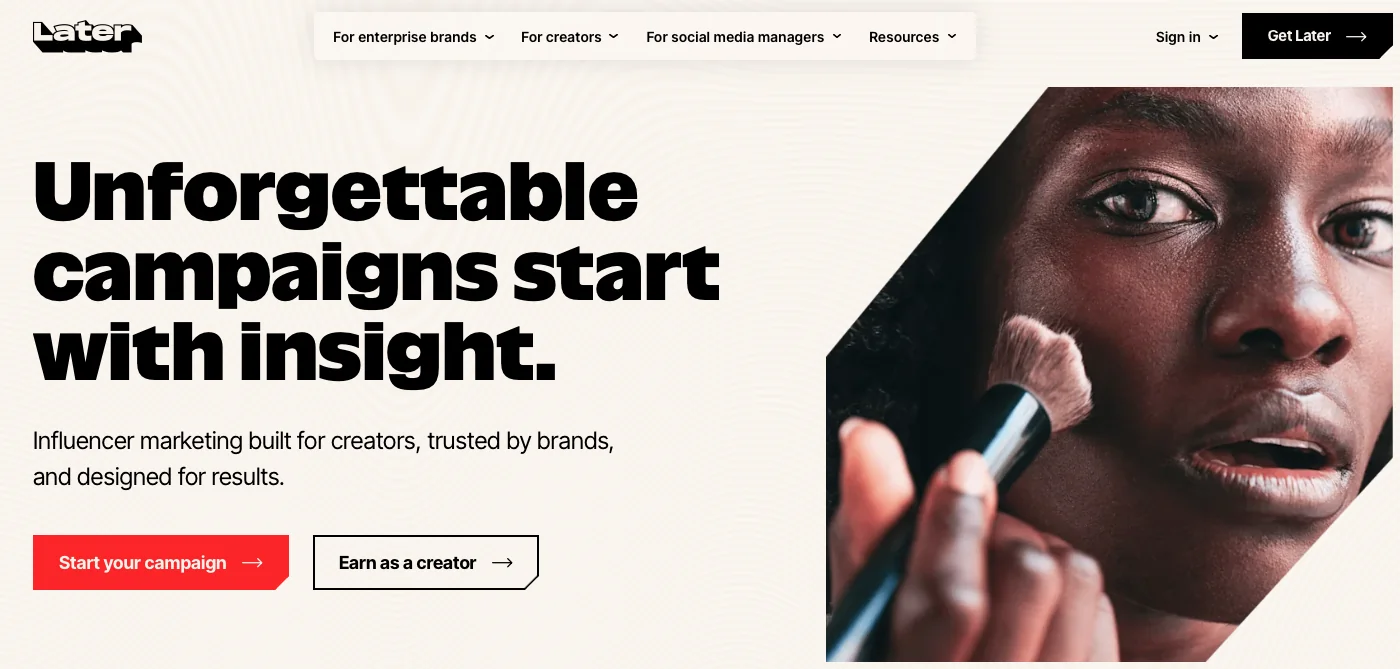
Later started as a visual Instagram planner and now covers TikTok, Pinterest, and more. It also sells Later Influence, its influencer platform (formerly Mavrck), for brands that want discovery and campaign tools from the same vendor.
The numbers: Social plans start at $25/month for Starter, with Growth at $50/month, and annual billing lowers both. Later Influence doesn't publish pricing and runs through a sales call.
Later suits visual brands that plan heavily around Instagram and TikTok grids.
9. Trello
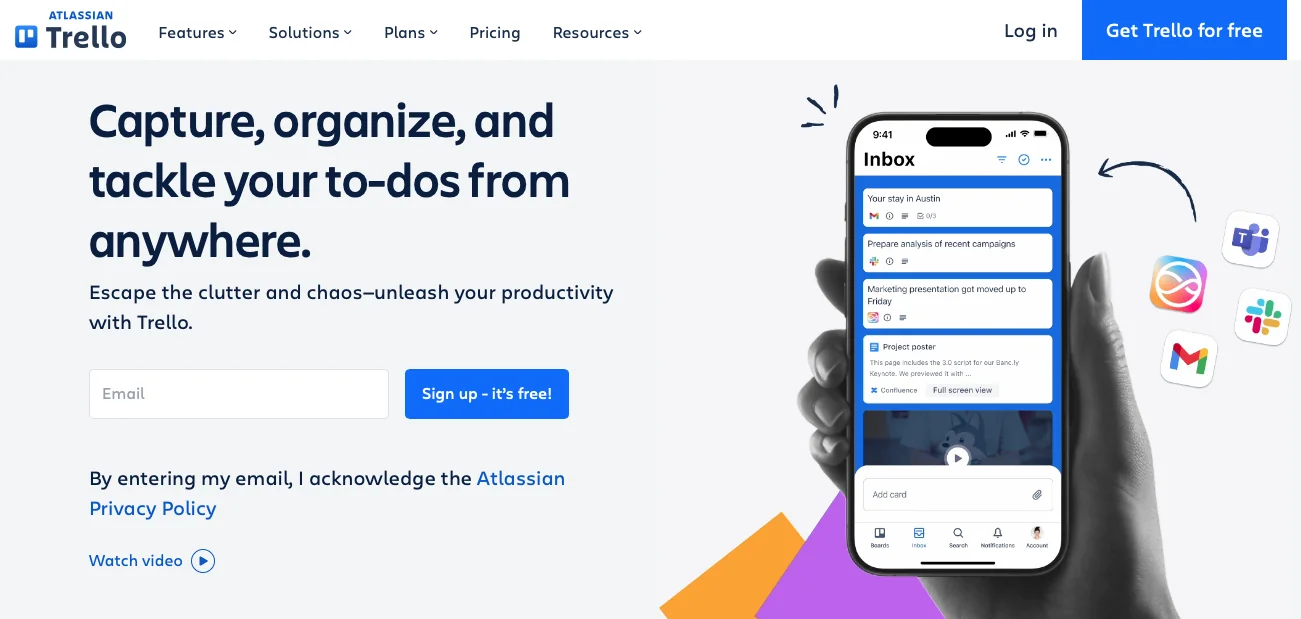
Trello is a simple board-based project manager. Brands use it to map each creator from "contacted" to "posted," keep content calendars, and route drafts for approval. If you're still learning how to send product to influencers, a shipping column on the board keeps every package accounted for.
The numbers: The free plan covers up to 10 boards. Standard costs 6 monthly), Premium 12.50 monthly), and Enterprise $17.50/user/month on annual billing.
Trello is great for small programs. Once you pass a few dozen creators, a dedicated influencer CRM saves far more time.
10. Adobe Lightroom
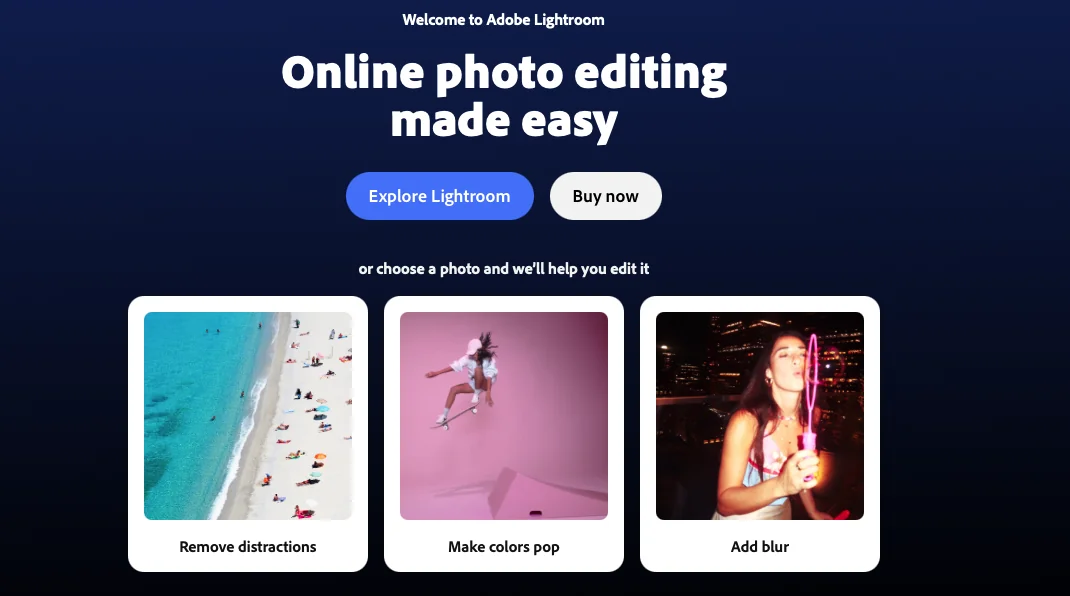
Adobe Lightroom is the photo editor many top creators swear by. Brands use it to color-match creator photos before they go into ads, emails, and product pages, so UGC still looks on-brand.
The numbers: The Lightroom plan with 1TB of cloud storage costs $11.99/month on an annual plan. Adobe raised it from $9.99 in January 2025.
It's worth it if you reuse a lot of creator photography across paid and owned channels.
11. Google Keyword Planner
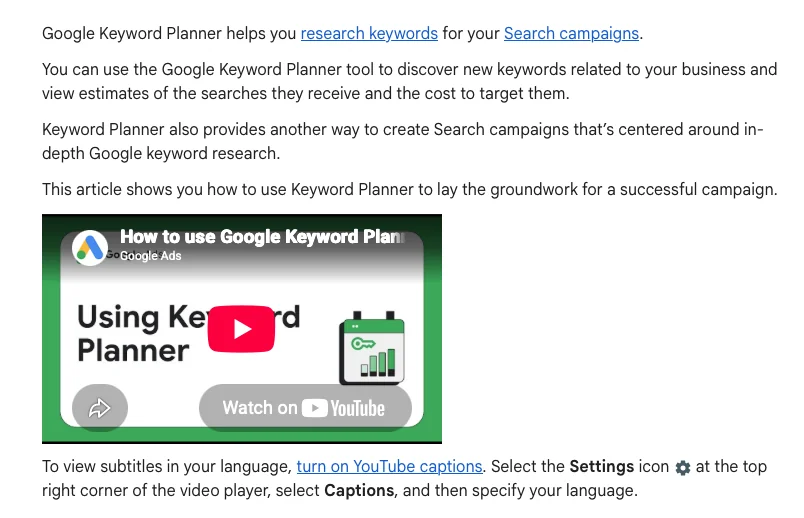
Google Keyword Planner shows what people search for around your product. Influencer teams use it to pick the terms creators should mention in YouTube titles and captions, and to plan blog content that catches the search spike after a campaign. It pairs well with a clear SEO and social plan.
The numbers: It's free with a Google Ads account. Without an active campaign you only see volume ranges, such as 10K to 100K, while exact numbers require ad spend.
Use it as a free starting point and pair it with RankControl if search is a real growth channel for you.
12. Mailchimp
Mailchimp is an email marketing platform that helps you keep the customers your creators bring in. You can add influencer traffic to welcome flows, segment by discount code, and feature creator content in newsletters.
The numbers: The free plan covers 250 contacts and 1,000 sends a month. Essentials starts at $13/month, Standard at $20/month, and Premium at $350/month, with prices rising as your list grows. Automation journeys need Standard or higher.
Pick Mailchimp if you want an easy way to turn one-time creator buyers into repeat customers.
How to Choose the Right Influencer Marketing Tools in 2026
Start with your bottleneck, then build the stack around it.
- Program size: Running fewer than 20 creators a month? A marketplace like Afluencer covers it. At hundreds a month, you need automation like Influencer Hero.
- Where you lose time: If finding creators is slow, prioritize discovery. If follow-ups and shipping are slow, prioritize outreach and gifting workflows.
- How you measure success: If revenue matters, choose tools with per-creator discount codes and affiliate tracking, not just likes and reach.
- Your content reuse: If creator content feeds your ads and site, budget for Canva or Lightroom and a scheduler.
- Search visibility: If buyers research before they purchase, add Keyword Planner or RankControl so your brand shows up on Google and in AI answers.
There's no single best stack. Pick the one or two tools that fix your biggest bottleneck first, then add the rest as you grow.
Influencer Marketing Tools: Conclusion
Influencer marketing in 2026 runs on a stack, not a single app. The platform at the center decides how many creators you can manage, and the supporting tools decide how far each piece of content travels.
You don't need all 12. Most brands start with one core platform plus a design tool and a scheduler, then layer on listening, SEO, and email. For more ideas on sourcing creators, check out our list of tools to find influencers.
Ready to launch your first campaign? Post a Collab on Afluencer and let verified creators come to you, or chat with CreatorGPT to plan your strategy.