.svg)

.png)
10 Best Influential Alternatives in 2026
Looking for the best Influential alternatives in 2026? You are probably here because Influential sits at the very top of the market, and that is exactly the problem. It is the world's largest influencer marketing company, now owned by Publicis Groupe, running the Captiv8 platform across 15M+ creators and working with more than 60% of the Fortune 500. That scale is real. So is the reality that it was built for enterprise brands and big agency budgets, not for a DTC team trying to run its own campaigns.
Influential does not publish pricing. There is no self-serve signup, no free trial, and no way to just log in and start. You book a call, talk to sales, and end up in a managed, agency-style engagement. For a global brand spending seven figures on creators, that makes sense. For everyone else, it is a lot of platform and a lot of process. Add the fact that it is now folded into a giant holding company, and plenty of smaller and mid-sized brands start shopping for something they can actually run themselves, at a price they can see before a sales call.
The good news is the market is full of strong options at every budget, from simple marketplaces to full operating systems that handle discovery, outreach, influencer rates research, CRM, and ROI tracking. Some are cheaper. Some are more flexible. Most let you start today. Here are the 10 best Influential alternatives worth a look this year.
1. Afluencer
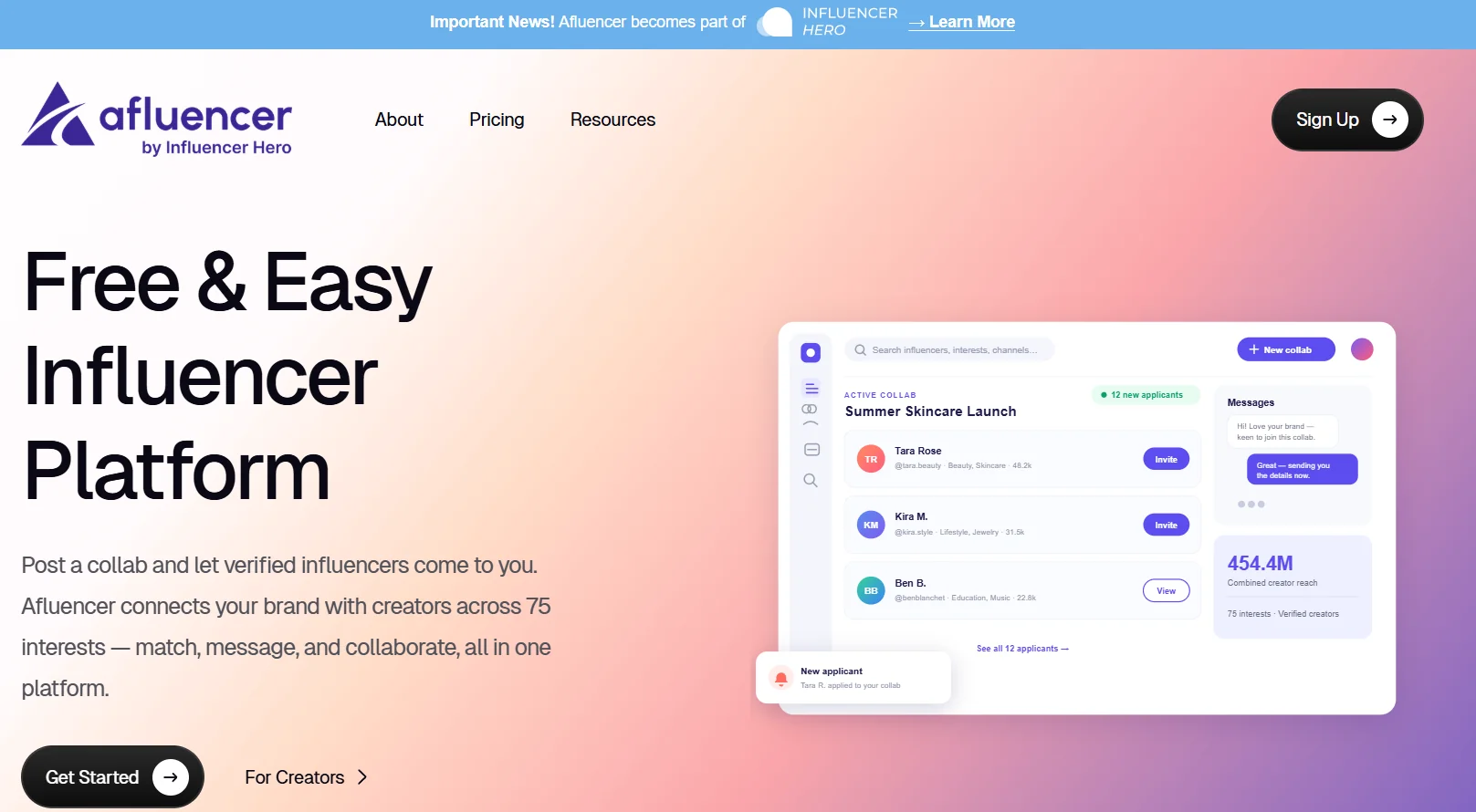
Afluencer flips the whole model that makes Influential feel heavy. Instead of a sales team, a database license, and a managed engagement, you post a "Collab" and verified creators apply to you. It is built for DTC brands, Shopify merchants, and small marketing teams who want to work with real, opted-in influencers without booking a single call.
That inbound approach is the main reason brands pick it over an enterprise tool. Influential hands you a massive database and a team to run it. Afluencer hands you a marketplace where nano and micro-influencers raise their hand first, so you spend your time reviewing genuine interest instead of cold-emailing people who have never heard of you. For gifting, product seeding, and affiliate-style partnerships, that is a faster path to a live campaign.
The platform has been running since 2017 and leans into the niches where micro creators actually convert, like beauty, fashion, wellness, and lifestyle. You set your criteria by platform, follower count, interest, and demographics, then field applications and message matches right inside the app. No contracts, no minimum commitment.
Afluencer also brings AI into the workflow with AI creator matching, which pairs brands and creators based on goals, style, and budget so the right partnerships surface without endless scrolling. It is the kind of assist an enterprise tool charges a premium for, available here on an entry-level plan.
On price, Afluencer is one of the most accessible options on this list. Brand plans start at $49/month for the entry Marketplace tier.
The honest caveat is scope. Afluencer is a marketplace, so you work with the creators active on the platform, and outbound invites are capped by plan. If your program grows into heavy outbound outreach, affiliate attribution, and revenue tracking, you will want more tooling. But for launching and running micro-influencer collabs without agency overhead, it is hard to beat at this price. Post your first Collab free to test the fit before you commit.
2. Influencer Hero
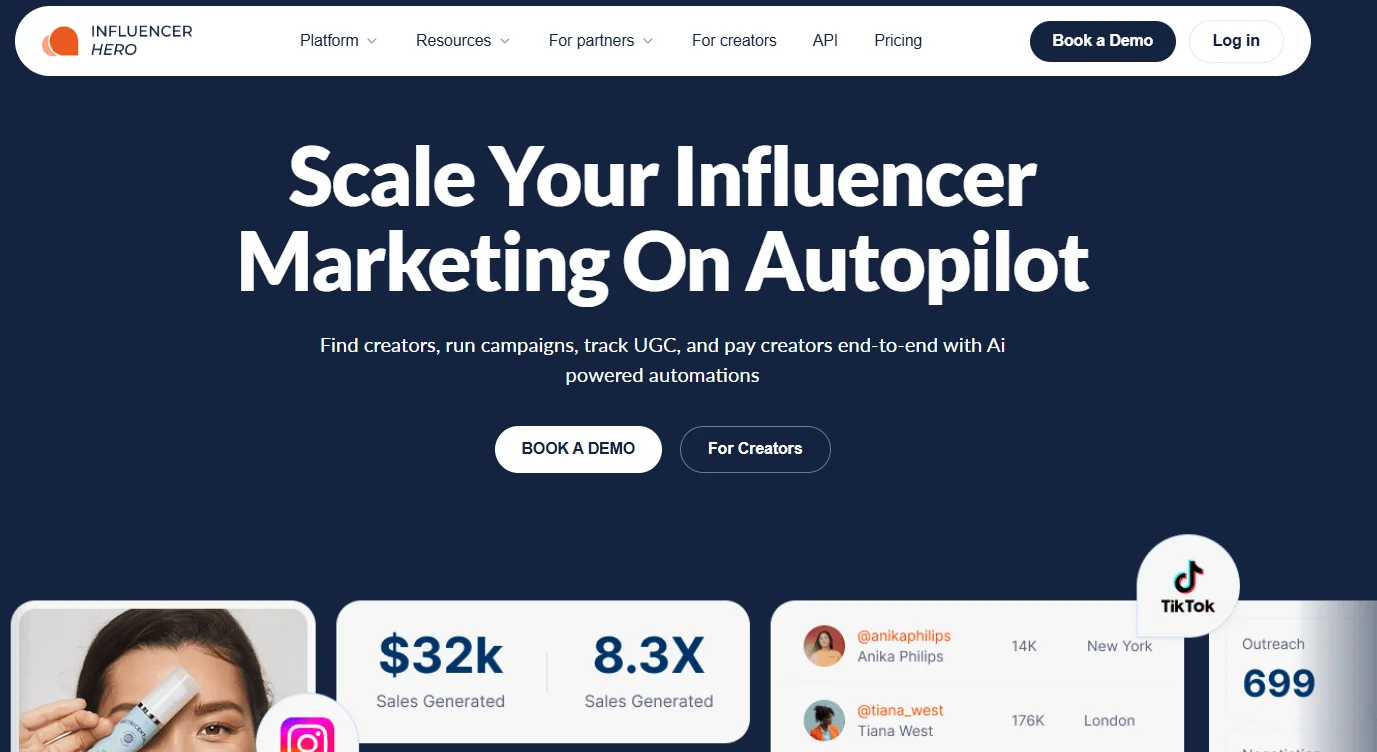
If you want the enterprise-grade capability of Influential without the enterprise contract, Influencer Hero is the strongest all-in-one pick on this list. It is a full influencer marketing operating system, and it is the platform most growing D2C and Shopify brands land on when a marketplace stops being enough and a Fortune 500 agency tool is overkill.
The feature set is the reason it stands out. You get a 450M+ influencer database for active discovery across Instagram, TikTok, and YouTube, automated outreach with personalized email sequences, and a proper influencer CRM to manage every relationship and pipeline stage in one place. On top of that sits full gifting and affiliate management, native Shopify integration with ROI tracking down to the individual order, and content and UGC management. That is the entire workflow Influential sells as a managed service, packaged as software you actually operate yourself.
Where Influential keeps you dependent on a team and a quote, Influencer Hero gives lean marketing teams the automation to run high-volume programs without adding headcount. Bulk outreach, drip follow-ups, content approvals, and performance tracking all live in the same dashboard, so a two-person team can manage hundreds of creators. For brands that care about attribution, tying spend to real revenue instead of estimated media value is the difference-maker.
Pricing starts at $649/month, based on current plan data, and scales with the volume of creators and outreach you run. That is more than a pure-discovery tool or a marketplace, which is the fair caveat here: if all you need is a creator search, you can spend less elsewhere. But if you want discovery, CRM, outreach, gifting, affiliate, and ROI in one system, the per-feature value is strong, and you get transparent pricing instead of an enterprise negotiation.
3. Modash

Modash is the discovery-first alternative for brands that mostly want Influential's data power without the agency wrapper. Its core is a 350M+ creator database that indexes public profiles across Instagram, TikTok, and YouTube, so you find creators that opt-in marketplaces simply do not surface, including the ones your competitors miss.
The reason it works as an Influential alternative is transparency and self-serve access. You can find micro-influencers, vet audience authenticity to dodge fake followers, unlock verified emails for outreach, and track campaign performance, all without a sales gatekeeper. The native Shopify integration ties creator activity back to sales, which is exactly what a DTC brand needs.
Pricing is public and mid-market. Essentials runs $199/month on annual billing (or $299 month to month), Performance is $499/month annually (or $599 monthly), and Enterprise starts around $14,700/year. A 14-day free trial means you can test it before paying.
The catch is the usage caps. Profile views and email unlocks are limited per tier, and heavy-discovery teams burn through Essentials fast, which pushes you up to Performance sooner than you might expect. It is also discovery-led, so contract-heavy or outreach-heavy workflows need more support than it offers out of the box.
4. GRIN

GRIN is the go-to for DTC and ecommerce brands that want to own their creator relationships in-house rather than hand them to an agency. It is built around brand-owned programs, with deep Shopify, WooCommerce, and Magento integrations, automated product seeding, and strong sales attribution.
As an Influential alternative, GRIN appeals to brands that want enterprise-level campaign management and ecommerce-native workflows, but with a tool their own team drives. It handles trackable links, creator portals, contracts, and posting status automatically, so a small team can run a large ambassador program. It pairs naturally with structured ambassador programs, which is where a lot of its power shows up.
GRIN's published plans start around $399/month for its Lite tier, with higher tiers for bigger creator volumes, and enterprise programs quoted custom and running significantly higher, often into five and six figures a year. The honest limitation is that its built-in cross-platform discovery is weaker than dedicated discovery tools, so some teams pair it with an external search, and its full depth comes with real complexity and cost once you scale.
5. CreatorIQ
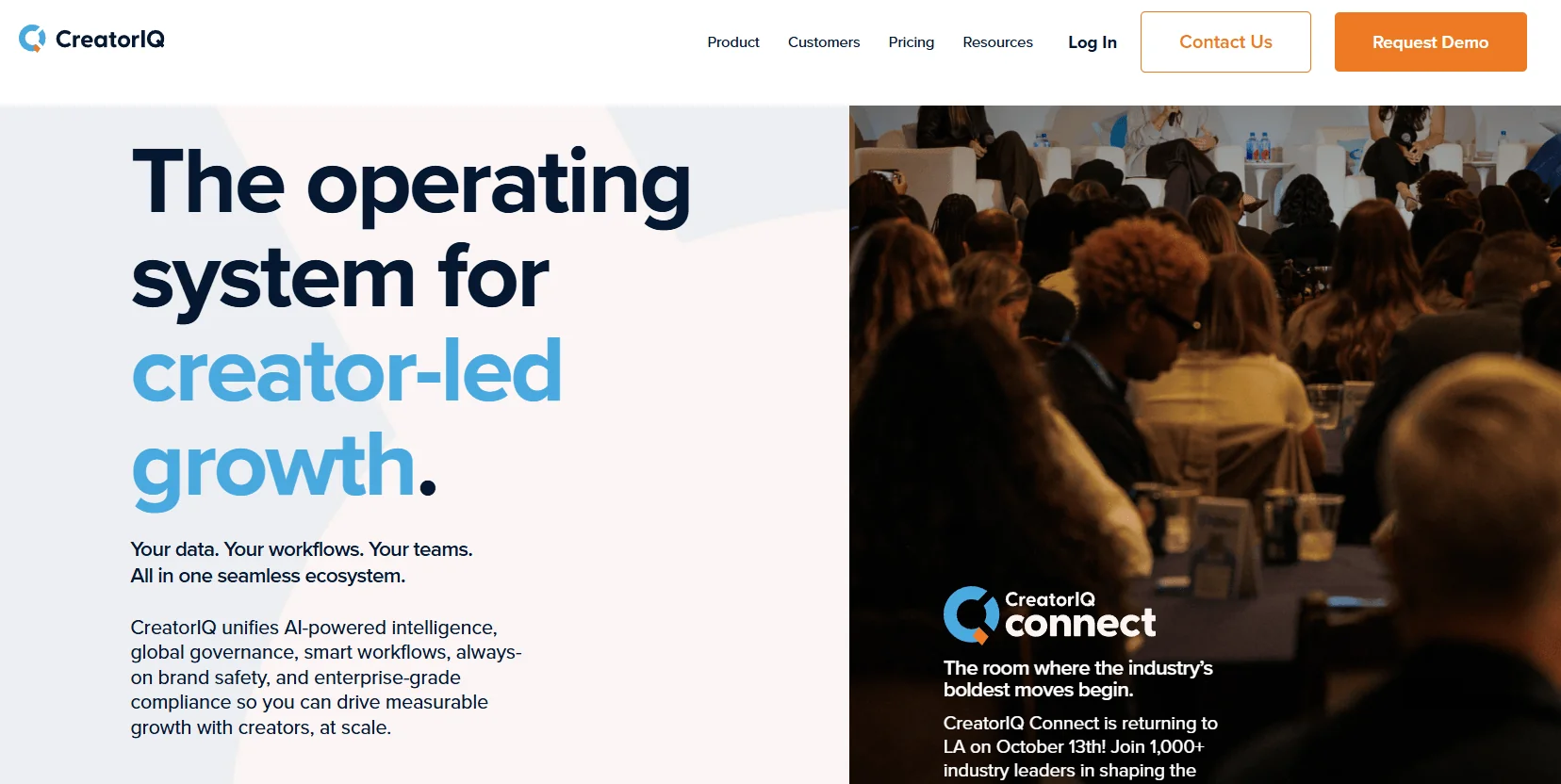
CreatorIQ is the closest true peer to Influential on this list, which makes it the alternative for enterprises that want a different enterprise. It is built for large global brands and agencies running complex, multi-region creator programs, with API-level data accuracy pulled directly from Meta, TikTok, YouTube, and more.
Brands switch to it for defensible, first-party reporting and serious governance: stakeholder approval flows, integrated payments and tax compliance, custom dashboards, and multimodal brand safety. If your influencer program involves legal, finance, and executive sign-off, CreatorIQ is designed for exactly that world.
Pricing reflects the tier. It starts around $35,000/year on annual contracts only, roughly $2,500 to $5,000+ per month, with optional add-ons that push it higher. The obvious caveat: it is out of reach for most small and mid-sized brands, and onboarding takes weeks, not hours. This is an enterprise decision, not a tool you try on a whim.
6. Upfluence

Upfluence is an all-in-one platform built for ecommerce, and its standout trick is turning your existing customers into creators. It connects to Shopify and Amazon to identify customers who already have audience and influence, then helps you recruit them, which is a smarter starting point than cold discovery.
It works as an Influential alternative for brands that want broad multi-platform reach plus affiliate and outreach automation in one system. It indexes 12M+ creators across eight platforms including blogs, and its Jace AI assistant automates outreach, follow-ups, and campaign setup to save teams hours a week.
Upfluence uses modular, custom pricing. Basic modules start around $478/month, but real-world costs typically land near $2,000/month (about $24,000/year), and plans require an annual commitment, often a 12-month minimum. That contract requirement is the main tradeoff: there is no instant self-serve trial, and you assemble the modules you need rather than picking a simple published tier.
7. Aspire

Aspire is an end-to-end social commerce platform for ambassador, influencer, and affiliate programs, and it is a favorite among Shopify and DTC brands. Its dual model combines AI-powered search with an inbound marketplace where creators apply to your campaigns, which shortens time-to-launch compared to pure cold outreach.
Brands choose it over Influential for workflow automation and community building rather than a managed engagement. Aspire automates a huge share of manual tasks, including briefs, contract generation, content approvals, affiliate links, and payments, and it is strong at organizing UGC for reuse in ads. It rewards brands that invest in long-term influencer collaborations instead of one-off posts.
Pricing starts around $2,000 to $2,500/month (roughly $24,000 to $30,000/year) with an annual commitment and a setup or onboarding fee. There is no free trial. The tradeoff is that its creator pool is smaller than pure-discovery tools, and the entry cost prices out brands still testing the channel, but for scaling an ambassador program it is a serious contender.
8. HypeAuditor
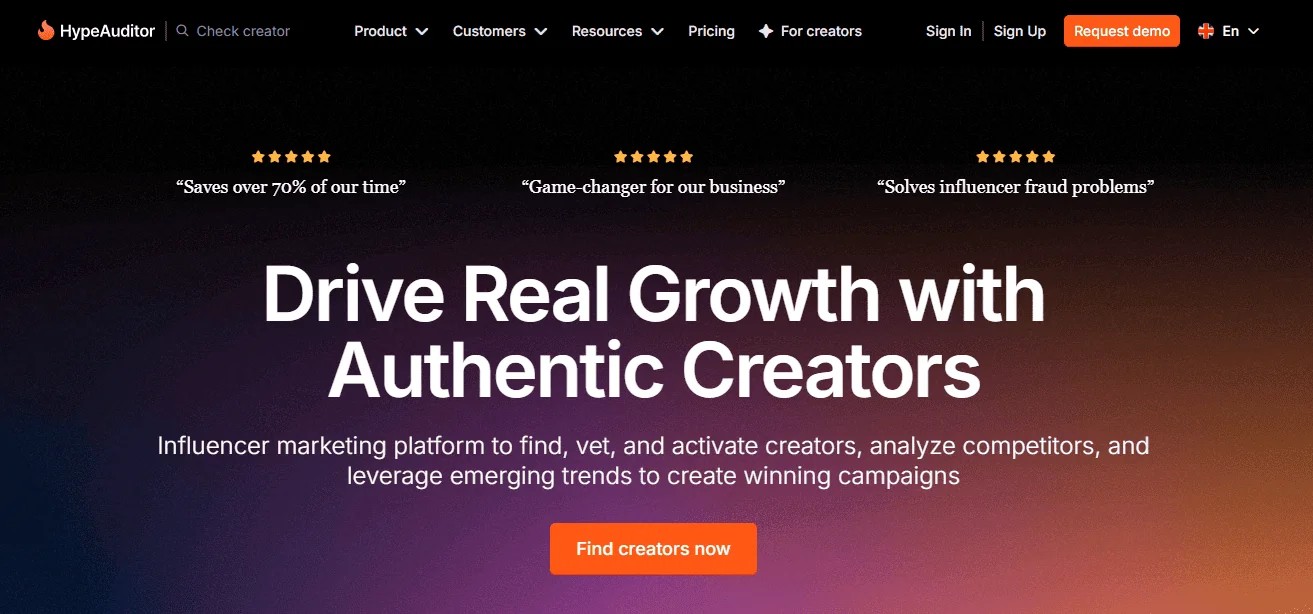
HypeAuditor is the alternative for brands whose top priority is data accuracy and audience authenticity. Its reputation is built on fraud detection and audience quality scoring, backed by a 218M+ creator database across Instagram, TikTok, YouTube, and X, with industry-leading accuracy on fake-follower detection.
It competes with Influential for brands that want to vet creators rigorously before spending a cent, then manage discovery, analytics, campaigns, and a built-in CRM in one place. Shopify, WooCommerce, and Magento integrations let you generate affiliate links and distribute promo codes on top of the analytics.
Pricing starts at $299/month for the Basic plan on annual billing, with Pro around $499/month, and higher tiers quoted through sales. The limitation is that its lower tiers cap discovery filters and recruitment tools, and it leans more toward intelligence and vetting than full campaign execution, so payments and deeper operations can feel more manual than an all-in-one system.
9. Traackr
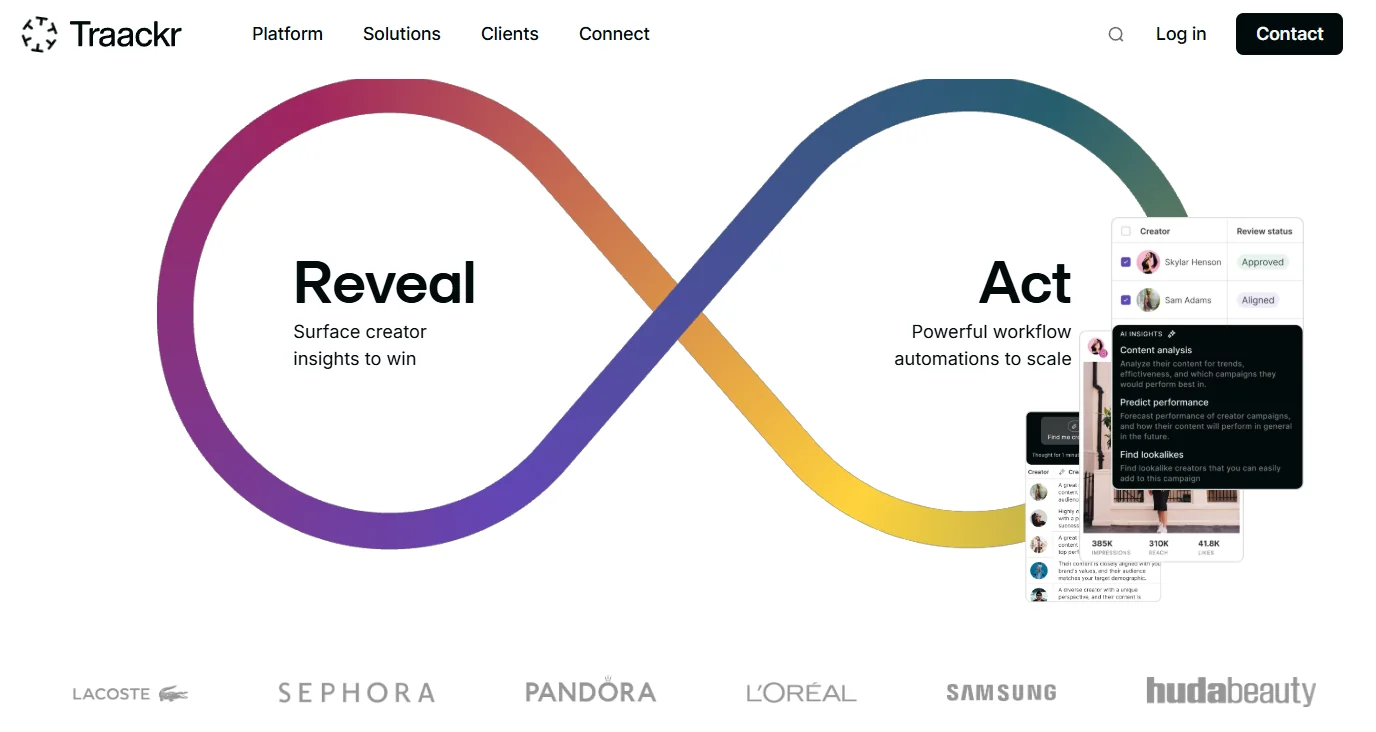
Traackr is a creator marketing intelligence platform aimed at global enterprise brands, so it is another strong swap for teams that like Influential's rigor but want a different partner. Its strength is data quality and measurement, with discovery across 71 countries and 26 languages and AI-powered workflows for organizing, optimizing, and forecasting programs.
Brands pick it for standardized measurement and benchmarking at scale, especially in beauty and CPG where it is widely used. It is built to give large, distributed teams a single source of truth for creator performance, ROI, and market trends.
Pricing is enterprise and custom, with packages reported to start around $32,500/year for a small number of users. The caveat mirrors the other enterprise tools here: it is a significant investment aimed at big brands, and it focuses on intelligence and analytics, so payment execution and hands-on campaign fulfillment usually live in adjacent tools or teams.
10. Influencity
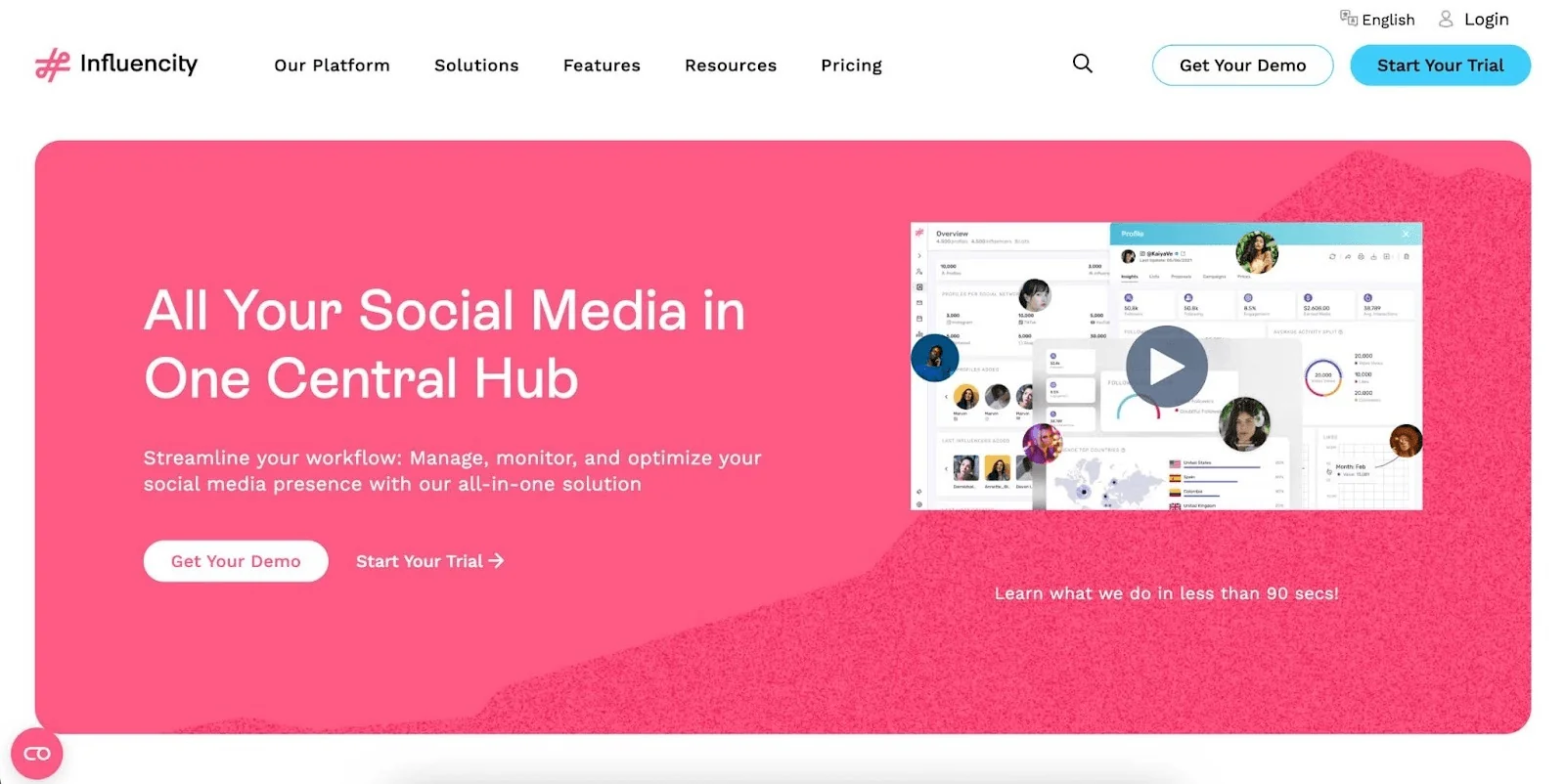
Influencity rounds out the list as the flexible mid-market option for brands and agencies that want solid discovery and campaign management without an enterprise contract. It indexes 200M+ creator profiles across Instagram, TikTok, YouTube, and Twitch, with strong audience analytics and fake-follower checks.
It stands in for Influential when a brand wants data-driven creator selection and month-to-month flexibility instead of a locked annual deal. You can search, analyze, plan media, and manage campaigns, then scale up as results come in, which suits agencies juggling multiple clients.
Plans start at $168/month for Basic (capped at 30 analyses), with Professional around $348/month for unlimited analyses and Business from $698/month for advanced features. Enterprise is custom. The honest limitation is that outreach automation and affiliate tracking are thinner than full-suite platforms, so heavy operational programs will feel the gaps, and the Basic analysis cap gets tight fast once you are actively vetting creators.
Which Influential Alternative Should You Pick?
You do not need the platform every Fortune 500 brand uses to run great influencer campaigns. Influential is powerful, but it is enterprise software wrapped in an agency engagement, and most brands leave for the same reasons: no public pricing, no self-serve, and far more platform than they need. The right alternative depends on your size, budget, and how much you want to run yourself.
If you are a small DTC or Shopify brand testing the channel, a marketplace like Afluencer gets you live today for $49/month with no contract. If you have outgrown that and want discovery, CRM, outreach, gifting, affiliate, and ROI in one system, an all-in-one platform is the smarter home for your program. And if you are running a global operation with legal and finance in the loop, an enterprise peer like CreatorIQ or Traackr fits.
Whatever tier you land on, match the tool to the campaigns you actually run, not the ones in the marketing copy. If you want to go deeper on where AI fits into all of this, our roundup of AI marketing tools is a good next read. Ready to skip the agency contract and start now? Post your first Collab on Afluencer and let verified creators come to you.