.svg)
.png)
10 Best Olapic Alternatives in 2026
If you're hunting for Olapic alternatives in 2026, you're probably running into the same wall a lot of brands hit. Olapic is powerful, but it's built for the enterprise, and it prices like it.
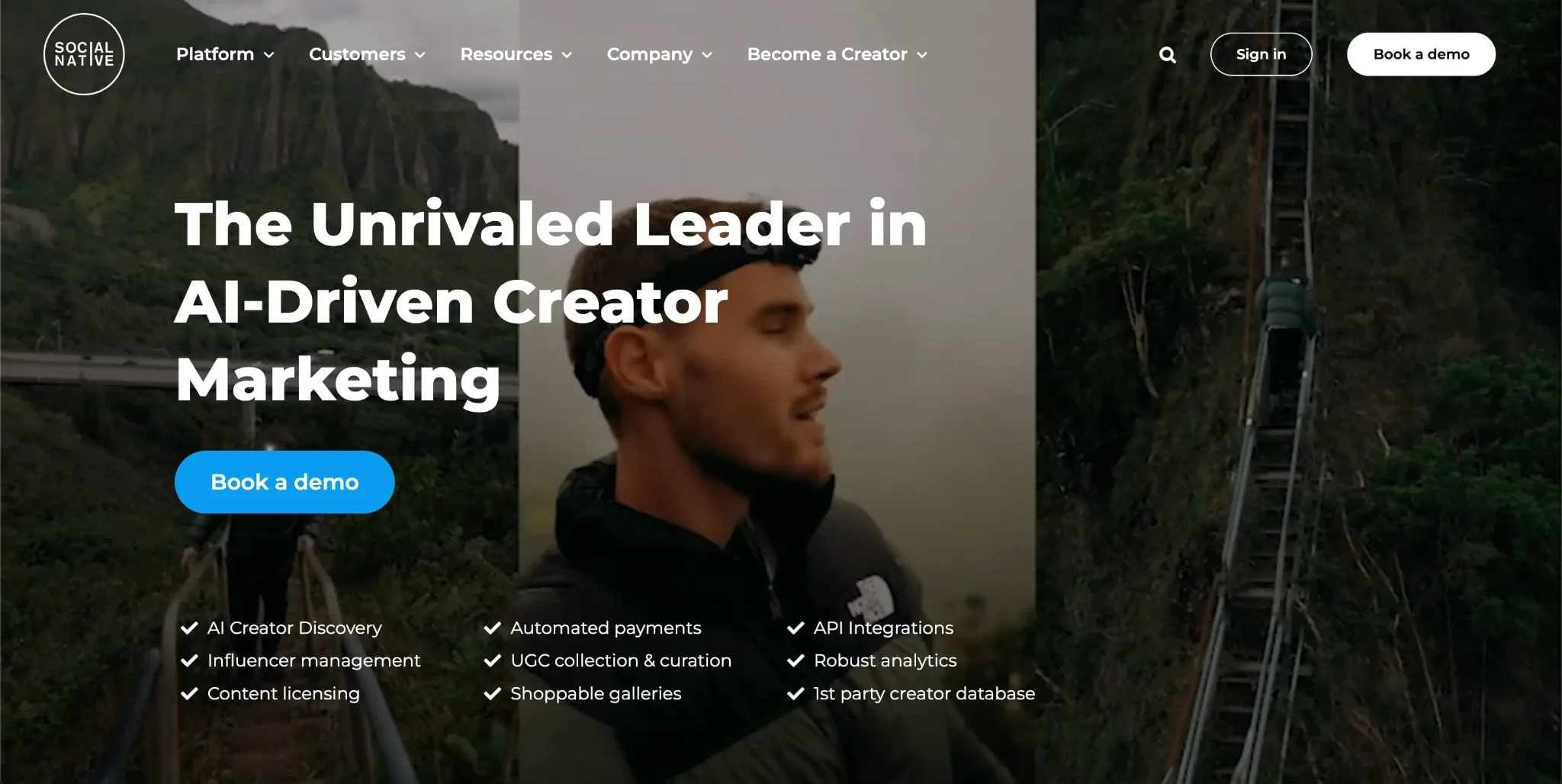
Olapic (now part of Social Native) does one thing very well. It collects customer photos and videos, handles rights requests, and turns that UGC into shoppable galleries for big consumer brands like L'Oréal and New Balance. The catch is that pricing is quote-based, it usually lands somewhere in the tens of thousands per year, and it comes with the long onboarding timeline and account-manager churn that reviewers keep flagging. For a lean DTC team, that's a lot of tool and a lot of budget.
Here's the good news. The market is full of platforms that cover the same jobs (sourcing creator content, collecting UGC, and managing influencer partnerships) at a fraction of the cost, and several are fully self-serve. So whether you want a simple marketplace for finding creators, a full influencer stack, or a pure UGC-video engine for paid social, there's a better-fit option below.
Let's get into the 10 best Olapic alternatives worth a look this year.
1. Afluencer
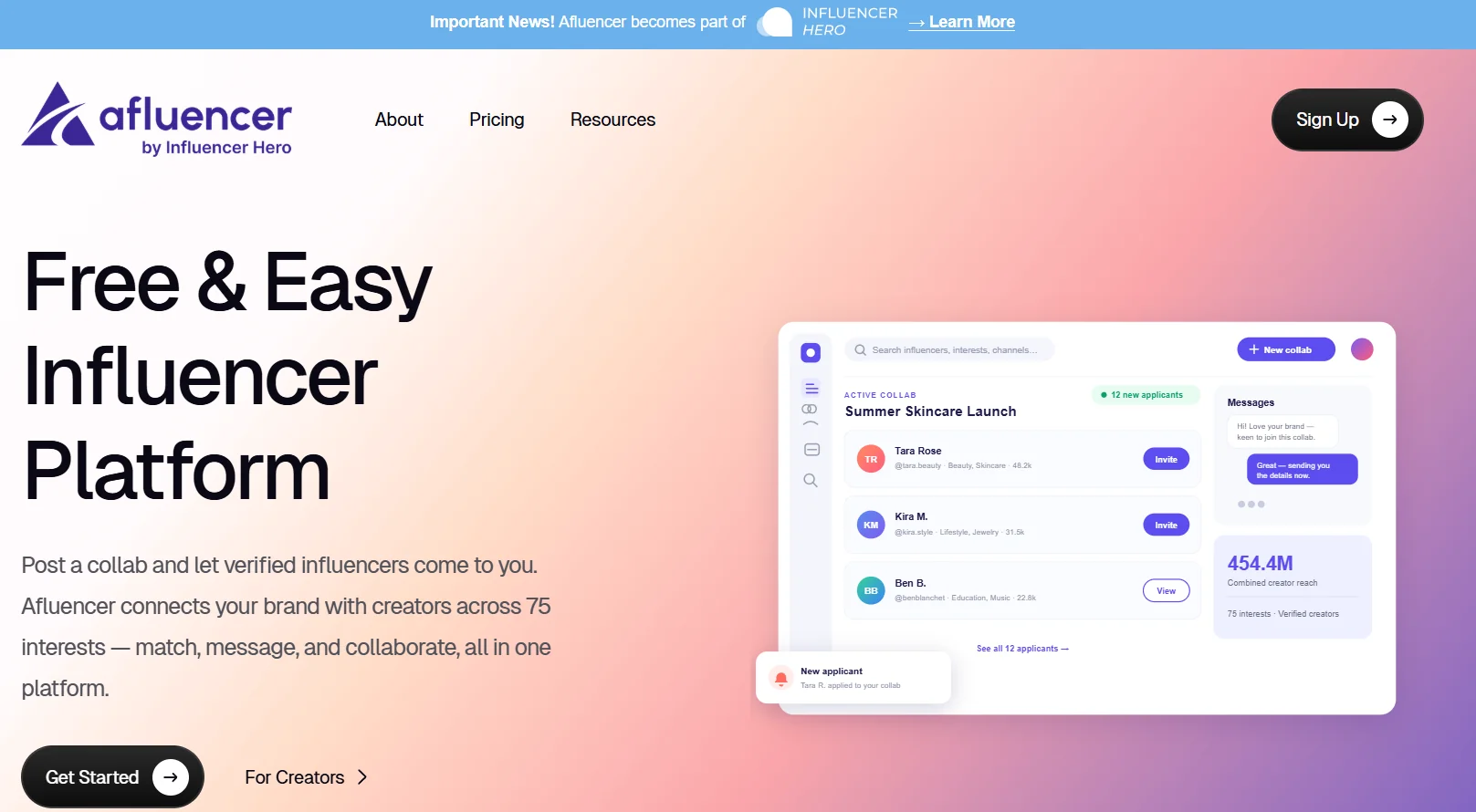
Afluencer flips the Olapic model on its head. Instead of paying for a big database and an enterprise contract, you post a Collab (a short campaign listing), and verified creators apply to work with you. That means you spend your time picking from interested creators rather than cold-emailing a list, which is a much faster way to build a content pipeline for a small or mid-sized brand.
It's built for exactly the brands that find Olapic overkill: DTC founders, Shopify merchants, and lean marketing teams who want UGC, gifting, and micro-influencer collabs without a six-figure commitment. Creators span 71 interest categories, from beauty and wellness to travel and food, so you can match to a niche instead of settling for whoever's in the database.
Where Olapic leans on scraping and rights requests, Afluencer leans on opt-in creators who already want to work with brands. That's a real difference when your goal is fresh, on-brand content you can actually license and reuse.
It also has an AI layer. AI creator matching through CreatorGPT pairs your brand with creators based on goals, style, and budget, so you get sharper recommendations without manually filtering for hours.
On pricing, Afluencer is one of the most accessible options here. Brand plans start at $49/month for the Marketplace tier, which includes 60 invitation credits, premium filters, and phone, email, and live chat support. From there, the Standard ($649/month) and Pro ($1,049/month) tiers unlock full influencer management for brands that want to scale.
2. Influencer Hero
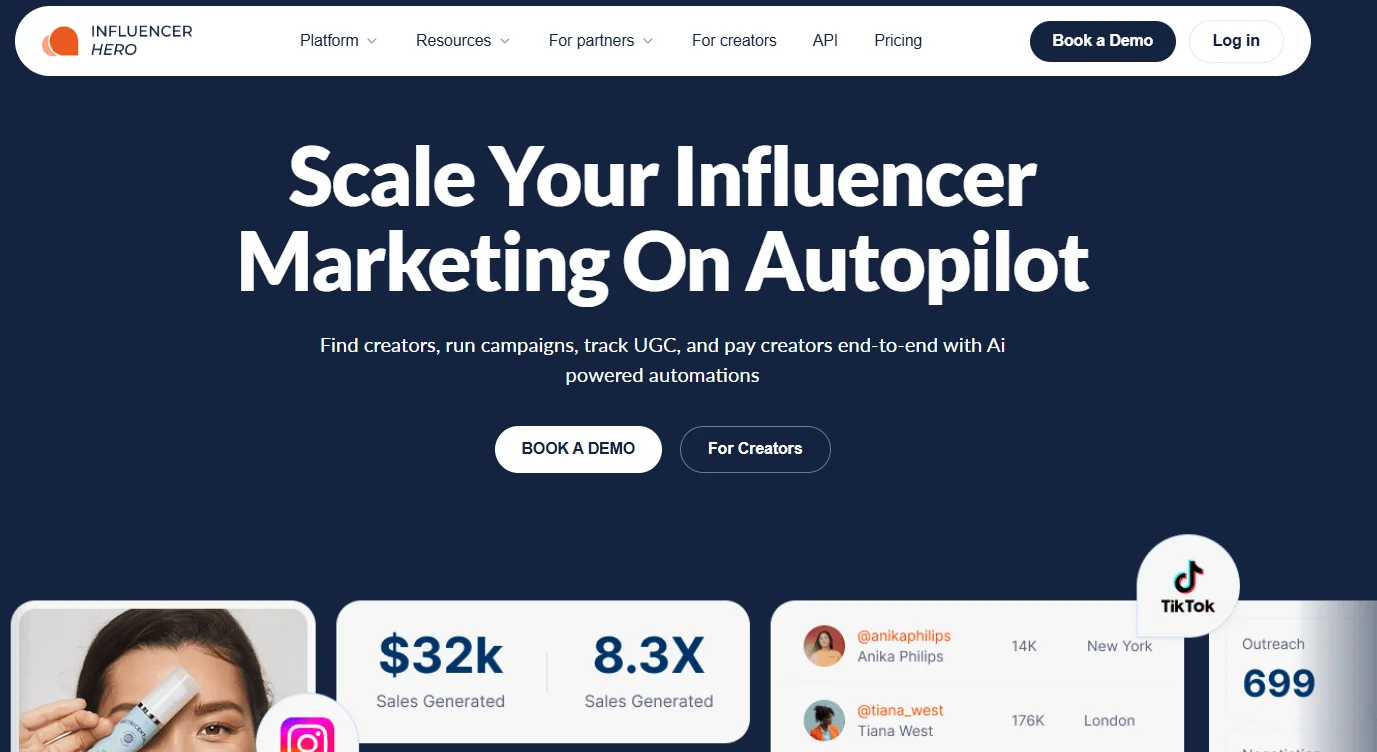
If Olapic feels like too much UGC tool and not enough influencer program, Influencer Hero is the best all-in-one platform most brands compare it against. It's a full operating system for creator marketing: discovery, outreach automation, a creator CRM, gifting and product seeding, affiliate tracking, UGC management, and ROI attribution, all in one dashboard.
That breadth is the point. Olapic is strong at collecting and displaying customer content, but it doesn't run your outreach, manage relationships, or tie creator activity back to revenue. Influencer Hero does all of that, which is why it lands well with mid-market and Shopify or ecommerce brands that have outgrown a single-purpose tool and want to stop stitching five apps together.
A few features stand out. The AI-assisted discovery searches creators across Instagram, TikTok, and YouTube with deep audience filtering. The automated email outreach and follow-ups mean you're not manually chasing every creator. And the ROI attribution links content and affiliate activity to actual sales, so you can prove the program pays for itself, which is exactly the reporting Olapic buyers usually miss.
Pricing is transparent and tiered. The Standard plan starts at $649/month for outreach to up to 1,000 creators, Pro runs $1,049/month for up to 5,000, and Business starts at $2,490/month for up to 10,000. It's built for brands ready to run a real, always-on influencer program, not for someone who just needs a handful of UGC clips this month.
3. Aspire

Aspire (formerly AspireIQ) is a word-of-mouth commerce platform that combines influencers, ambassadors, affiliates, and UGC in one place. It's a genuine Olapic alternative for enterprise and upper-mid-market brands, because it goes well beyond content collection into the full lifecycle: discovery, contracts, content approval, payments, affiliate tracking, and social ads.
It shines for brands running large, relationship-driven programs. Aspire's 1M+ creator marketplace supports both inbound applications and outbound search, and its ambassador and product-seeding tools make it easy to turn happy customers into a steady content engine. Household names like HelloFresh, Dyson, and Samsung use it to scale, and its gifting strategies tooling is a big reason why.
The trade-off is cost and commitment. Aspire's pricing starts around $2,000/month and typically requires an annual contract (roughly $24,000/year minimum), with custom quotes rather than public tiers. So while it solves more than Olapic does, it isn't cheaper, and if your only real need is high-volume UGC video, it's more platform than you'll use.
4. Insense
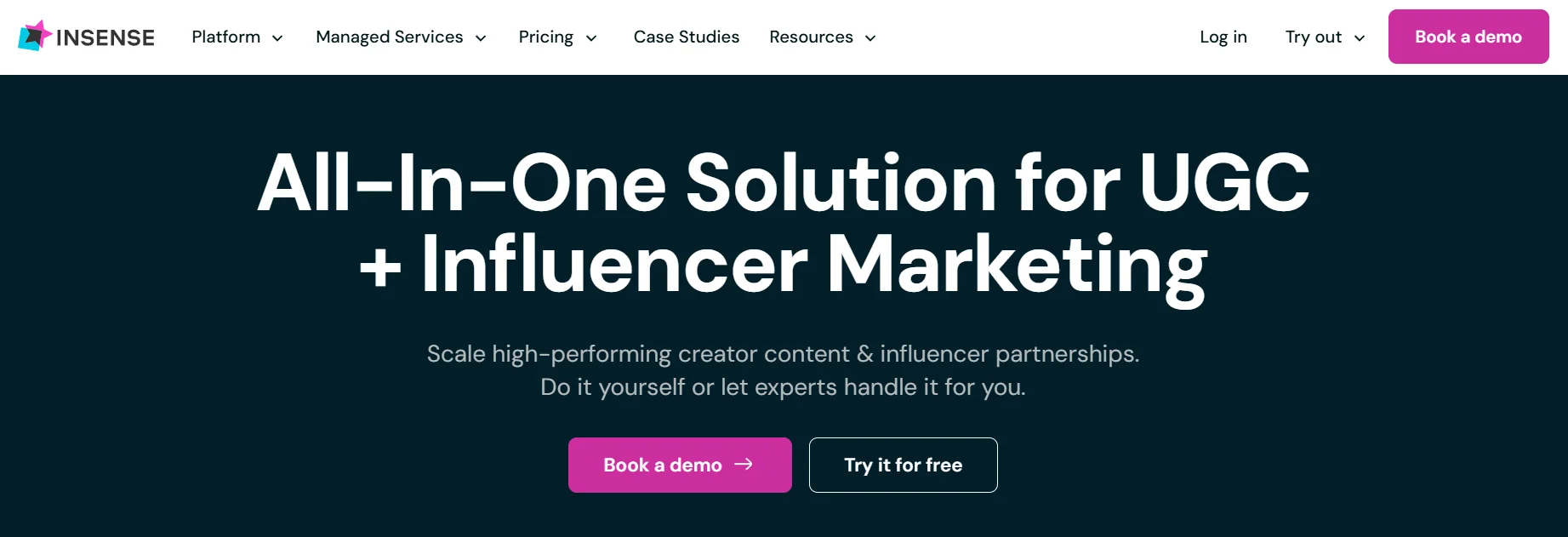
Insense is the pick for brands whose main goal is UGC for paid social. It connects you with vetted TikTok and Instagram creators, handles briefs and contracts, and pushes finished content straight into Meta Partnership Ads and TikTok Spark Ads. If you're leaving Olapic because you want ad-ready creator video, not just on-site galleries, this is a strong fit.
It's popular with DTC brands and Shopify stores running always-on creative testing. You can source UGC, run influencer posts, seed products, and manage affiliate collabs from one place, and you keep full usage rights on the content you commission. Product seeding is smooth too, which pairs nicely with running micro-influencer campaigns to build a library without paying flat content fees.
Pricing starts around $500/month for self-serve (billed quarterly), with managed service closer to $1,800/month. One honest caveat: creator payments aren't included in the subscription, and a 7 to 20% marketplace fee sits on top of each payment, so budget the full picture before your first campaign.
5. Yotpo
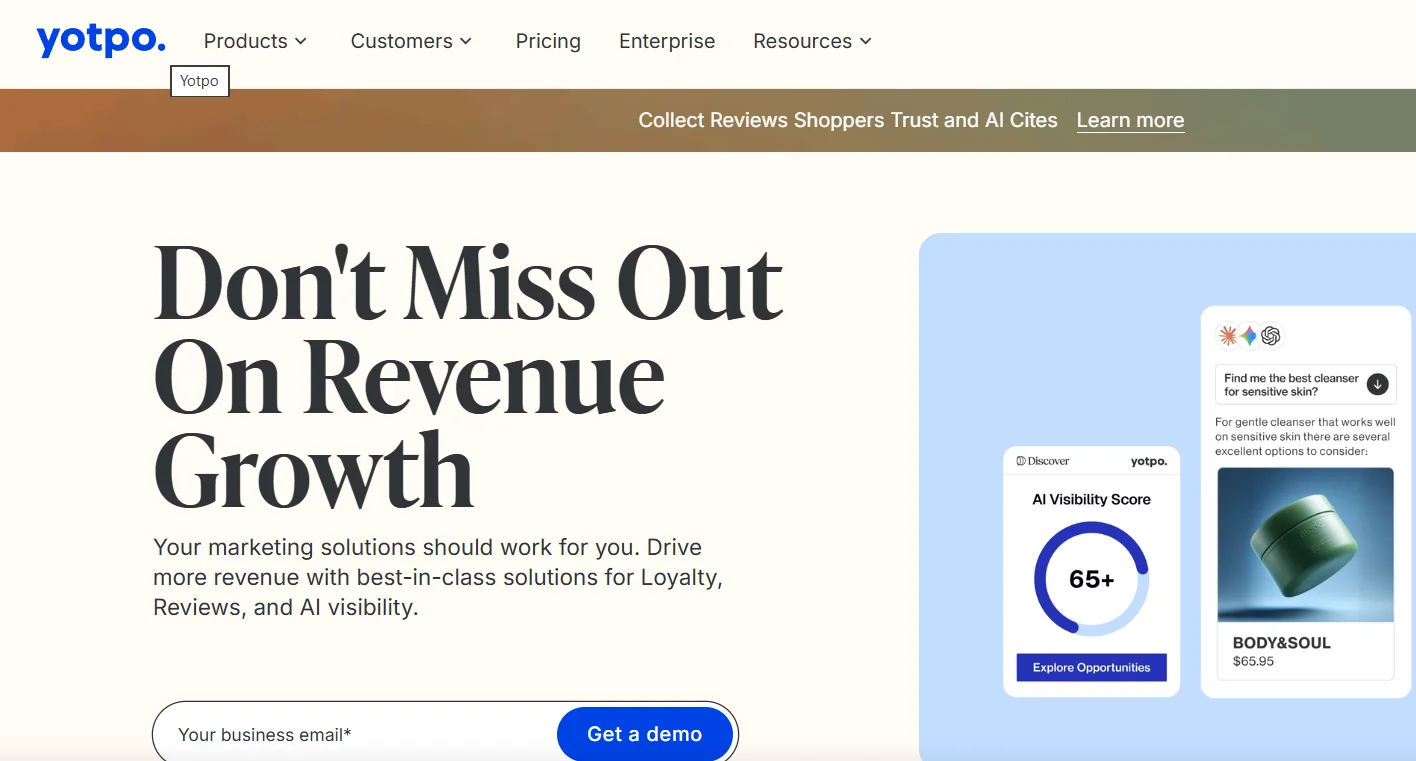
Yotpo comes at UGC from the reviews angle. It's an ecommerce retention platform that collects photo and video reviews, then displays that content across your product pages and marketing, with especially deep Shopify integration. For brands that mostly want authentic customer visuals tied to reviews (not a full influencer program), it's a lighter, cheaper Olapic substitute.
Where Olapic is quote-based and enterprise-first, Yotpo publishes real entry pricing. Reviews & UGC starts at $79/month on the Starter tier (up to 500 orders), with Pro at $169/month adding AI features and Google seller ratings. Visual UGC from social is available as a higher add-on.
The honest limitation is Yotpo's modular pricing. You pay separately for Reviews, Loyalty, and Visual UGC, so real-world implementations often climb into the $12,000 to $30,000/year range once you stack modules. It's great value if reviews are your core need, and pricey if you try to make it do everything.
6. Bazaarvoice
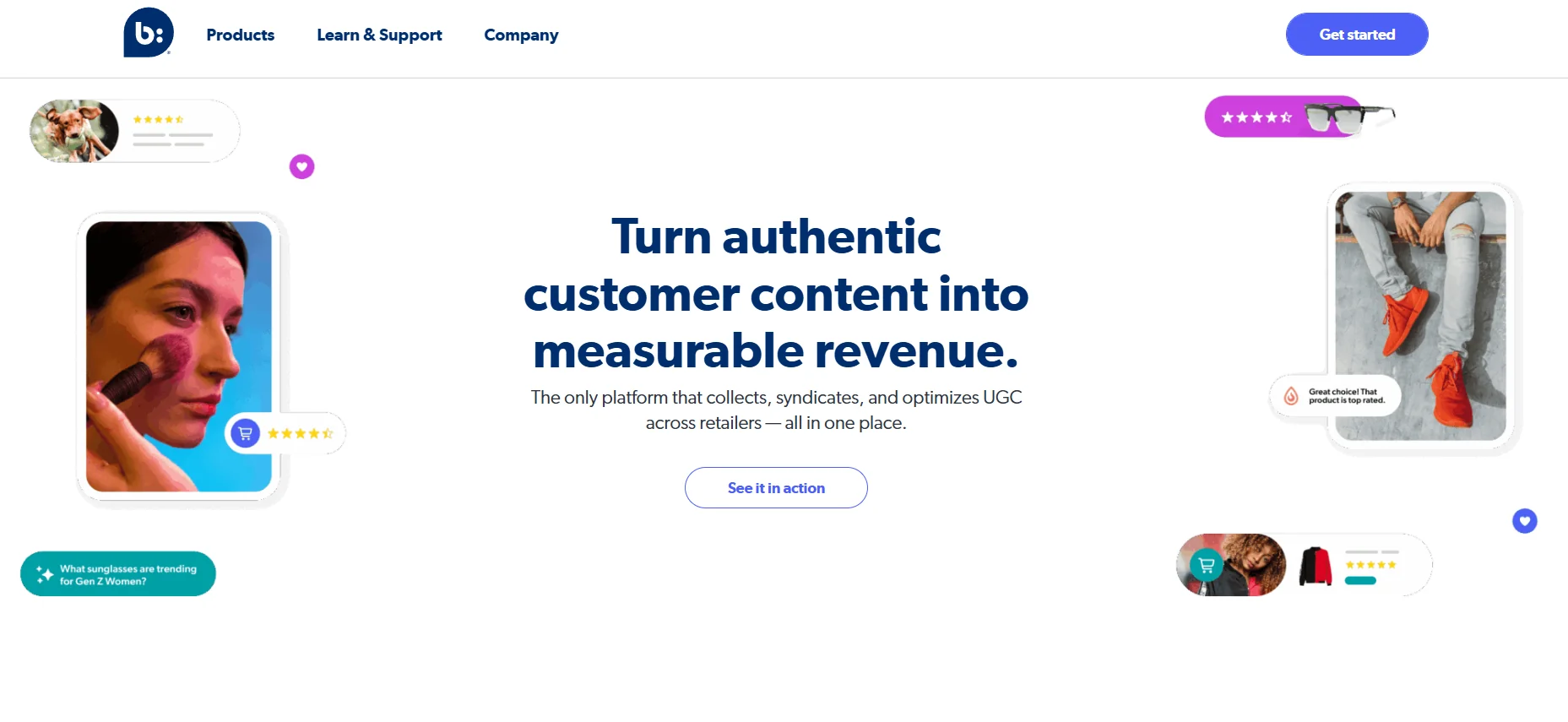
Bazaarvoice is the enterprise heavyweight for ratings, reviews, and UGC, and it's the most like-for-like Olapic alternative on this list for large consumer brands. Its edge is the retail syndication network: content you collect can flow out to major retailer product pages, not just your own site. It also owns Influenster, so product sampling campaigns are baked in.
It fits enterprise CPG and retail brands that want authentic content driving conversion across a wide distribution footprint. Reviews, visual UGC, Q&A, and sampling all live in one shopper-engagement suite, with the analytics to match.
Like Olapic, Bazaarvoice is quote-based, generally starting north of $1,000/month and climbing with volume. The honest caveat is that it's enterprise-only and review-centric, so if you're a smaller brand or your priority is short-form creator video for ads, this is more infrastructure than you need.
7. Pixlee TurnTo

Pixlee TurnTo, now part of Emplifi, blends social UGC, influencer marketing, and ratings and reviews into one community-driven commerce platform. It's a close conceptual match to Olapic: collect customer and creator content, curate it, secure rights, and publish shoppable galleries across your site, email, and in-store screens.
It works well for mid-market and enterprise brands that want UGC and influencer content tied to reviews and Q&A in a single tool. The shoppable galleries, image recognition, and product tagging make it easy to turn customer photos into conversion points, and it's a natural home for brands running ongoing influencer campaigns alongside their UGC.
Pricing is custom and quote-based, with no public tiers. The honest limitation shows up in reviews: several users flag contract lock-in and auto-renewal friction, plus pricing that can run higher than comparable UGC tools, so read the terms closely before you commit.
8. Flowbox

Flowbox is Europe's leading visual UGC platform, and after merging with Photoslurp and acquiring Dreaminfluence, it now pairs shoppable UGC with an influencer hub. It covers the full workflow: generate, collect, moderate, and distribute social content across the customer journey, with strong rights-request tools and AI product recognition.
It's a smart Olapic alternative for medium and large brands, especially in Europe, that want a cost-effective way to scale content and match with creators in one place. Integrations with Shopify, Magento, WooCommerce, and others make it straightforward to drop galleries onto product pages.
Pricing is request-only, so you'll need a demo to get a number. The honest caveat: Flowbox openly says it isn't built for small brands with low traffic or tight budgets, so it fits best once you have real volume to work with.
9. Billo
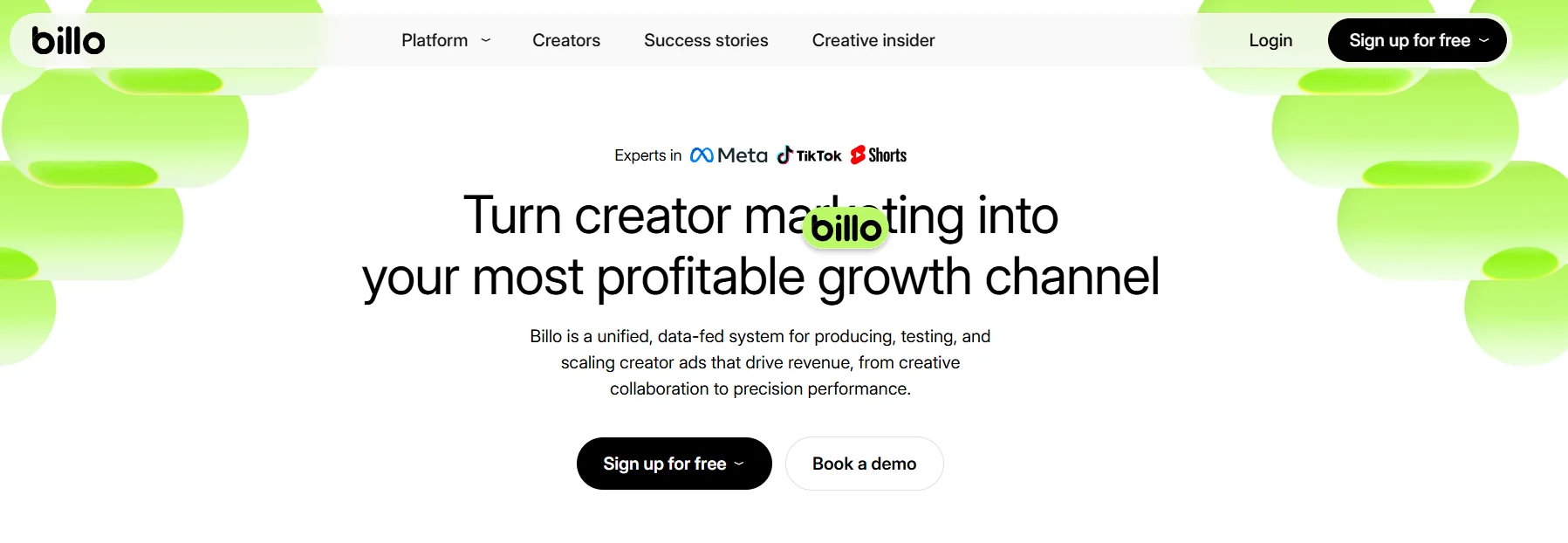
Billo is the budget-friendly, pay-as-you-go option. It's a UGC video marketplace with 5,000+ creators who produce short-form content for TikTok, Instagram, and Facebook ads. There's no mandatory subscription, so it's ideal for brands that want ad-ready video without the enterprise machinery Olapic wraps around it.
The model is refreshingly simple. You brief a video, creators produce it, and you buy in packs. Billo's CreativeOps layer even surfaces performance benchmarks like ROAS and hook rate to guide which briefs and creators to scale, which is handy when you're testing creative fast.
Pricing starts around $99 per video, which makes it easy to sanity-check what creator content should cost against typical influencer rates before you commit to a bigger platform. The honest limitation: Billo is a video-production engine, not a full UGC-display or influencer-management suite, so you'll pair it with other tools if you need galleries, reviews, or relationship management.
10. True Loyal (Formerly TINT)
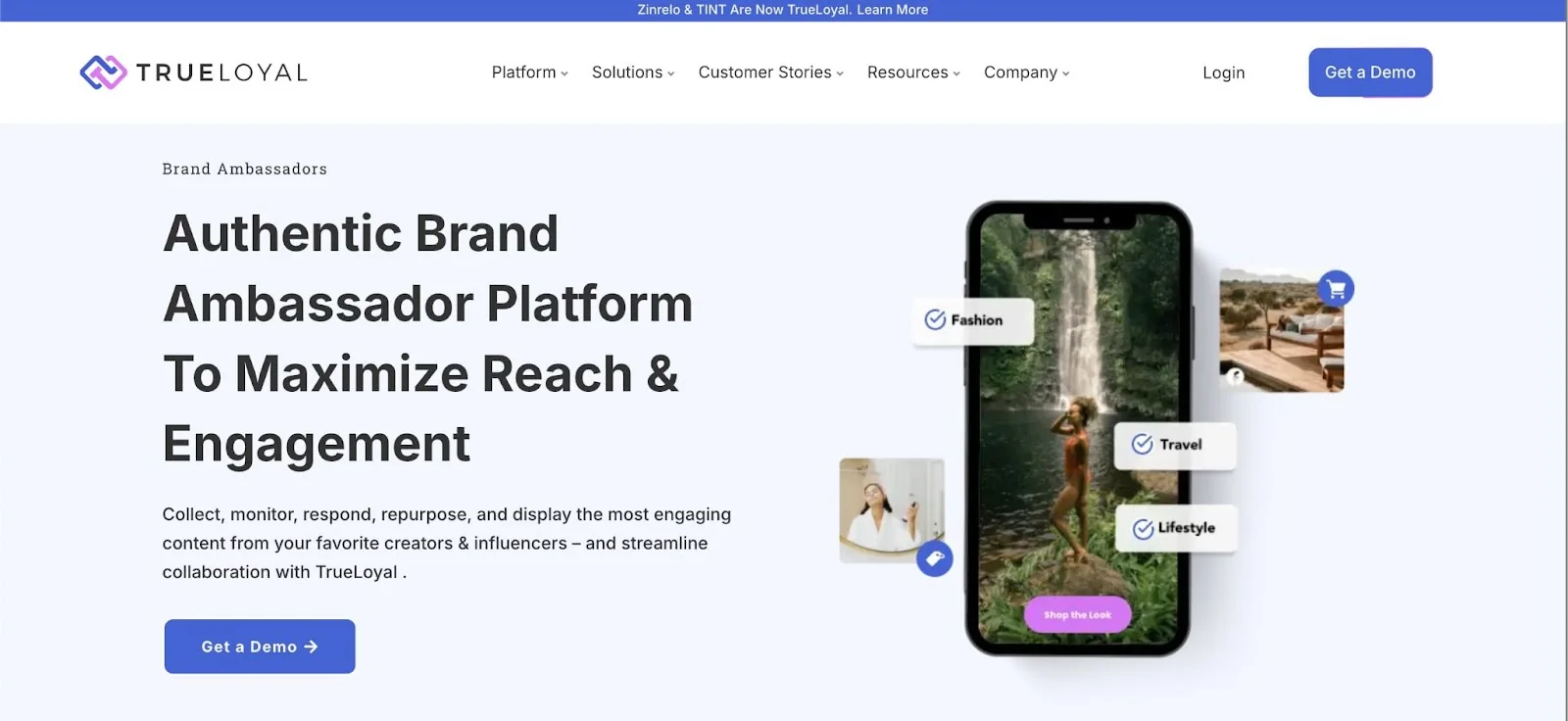
True Loyal (Formerly TINT) rounds out the list as a UGC and community platform with a strong experiential and events angle. It collects content from social channels with keyword, date, and engagement filters, then lets you moderate and distribute it across web, campaigns, and live displays. For brands that activate UGC at events or across community programs, it's a flexible Olapic alternative.
It suits marketing teams that want to source and showcase authentic content beyond the standard product-page gallery, including experiential activations where real-time UGC walls matter.
Unlike most enterprise UGC tools, TINT publishes entry pricing: a Starter plan around $99/month (1 user, 2 social connections) and a Growth plan at $499/month (2 users, 12 connections). The honest caveat is that costs rise as you add users and connections, and TINT leans more toward community and events than pure ecommerce conversion, so match it to how you actually plan to use UGC.
Which Olapic Alternative Should You Pick?
The takeaway is simple: you don't need the exact enterprise platform the Fortune 500 uses. The right Olapic alternative depends on your size, budget, and what you're actually trying to do with creator content.
If you mainly need on-site UGC and reviews, Bazaarvoice or Flowbox cover that ground at different price points. And if your real goal is a creator program (finding, gifting, managing, and attributing), a marketplace like Afluencer or an all-in-one like Influencer Hero will serve you better than a UGC-display tool ever could.
For most small and growing brands, the smartest first move is to skip the six-figure contract and start where creators come to you.