.svg)
.png)
- Afluencer vs HypeAuditor vs Influencer Hero: A Detailed Comparison
- Quick Comparison: Afluencer vs HypeAuditor vs Influencer Hero
- What Is Afluencer?
- What Is HypeAuditor?
- What Is Influencer Hero?
- Afluencer vs HypeAuditor vs Influencer Hero: Feature by Feature
- Pricing: What You'll Actually Pay
- Which Platform Is Right for You?
- The Bottom Line
Afluencer vs HypeAuditor vs Influencer Hero: A Detailed Comparison
Every influencer platform website says roughly the same thing. Find creators, run campaigns, track results. Then you get on a demo call and find out the tool does one of those three things really well and the other two barely at all.
Afluencer, HypeAuditor and Influencer Hero sit in the same category but solve genuinely different problems. Afluencer is a marketplace where brands post Collabs and creators apply. HypeAuditor is a data and vetting platform built on fraud detection. Influencer Hero is a full workflow tool that runs discovery, outreach, affiliate tracking and payments in one place.
This breakdown covers what each platform does well, where each one stops, what you'll actually pay, and how to match the tool to the stage your brand is at.
Quick Comparison: Afluencer vs HypeAuditor vs Influencer Hero
What Is Afluencer?
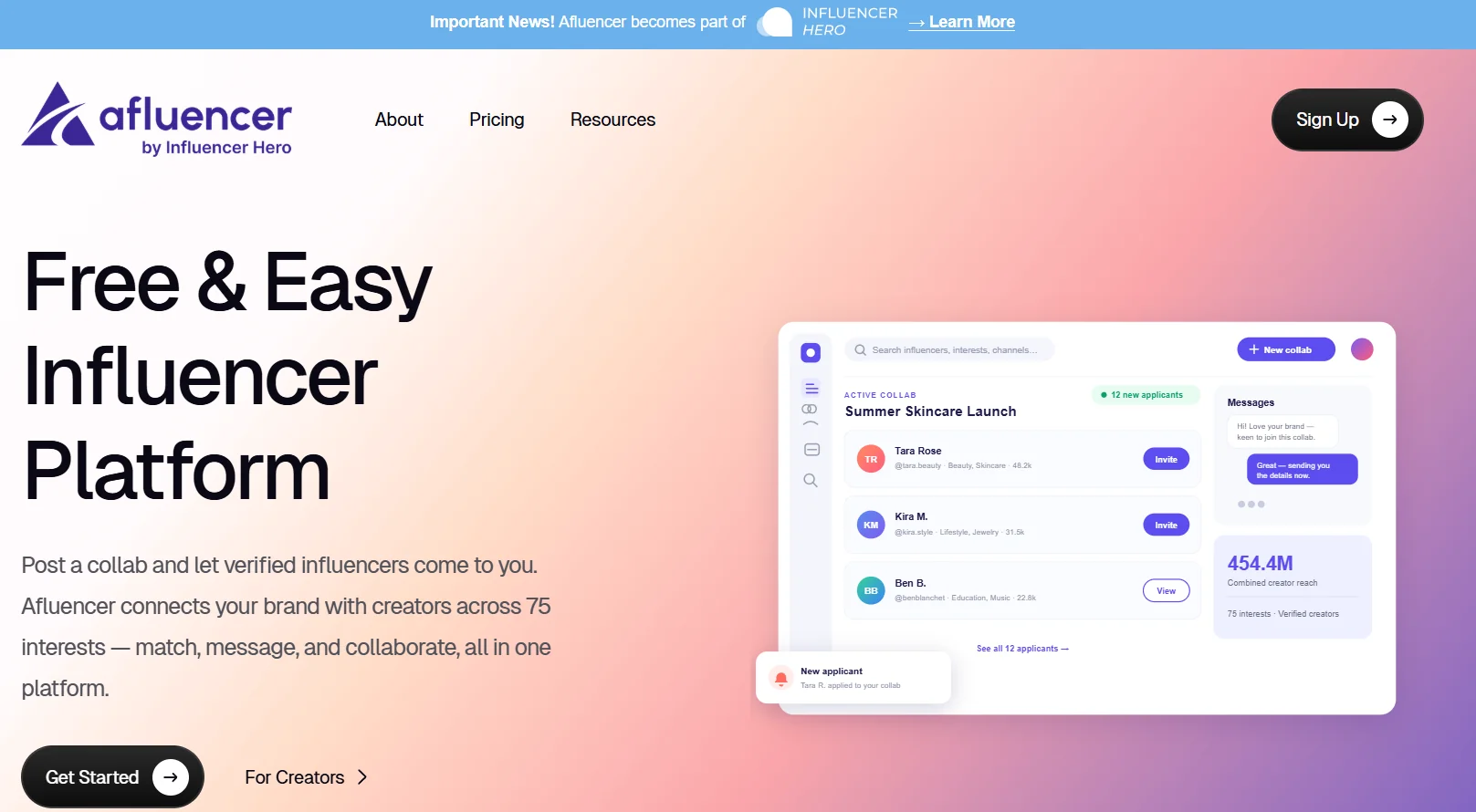
Afluencer is a creator marketplace. Brands post a Collab describing what they want, and verified creators apply to it. Instead of building a prospect list and chasing people who never asked to hear from you, you review applications from creators who already raised their hand.
The creator pool is smaller than a crawled database by design. Everyone on it opted in, filled out a profile and is actively looking for brand deals, so the response rate on invites is very different from cold outreach.
Brands mostly use it for gifting collabs, ambassador programs and content-for-product deals. It's built around simplicity rather than a full campaign stack.
A Marketplace Model That Removes Cold Outreach
The single biggest advantage here is intent. Creators applying to your Collab already know your brand and want the deal, which cuts the discovery and pitching stage almost entirely. That's especially useful if you're leaning on micro-influencers, where cold outreach volume gets painful fast.
Verified, Active Creators
Profiles are checked before they go live, so you're not sorting through inactive accounts or bought followers. You see follower counts, niches, platforms and past collabs in the application itself.
CreatorGPT for Briefs and Matching
Afluencer's AI tool, CreatorGPT, helps you write Collab briefs, sharpen your pitch and match with the right creator profiles. It's a practical time saver when you're posting several Collabs a month.
Where Afluencer Falls Short
There's no affiliate tracking, no automated payments and no deep analytics layer. Once you're running dozens of creators at once and need sales attribution per creator, you'll hit the ceiling of what a marketplace is designed to do.
Ready to test the channel without building a stack around it? Get started on A fluencer
What Is HypeAuditor?
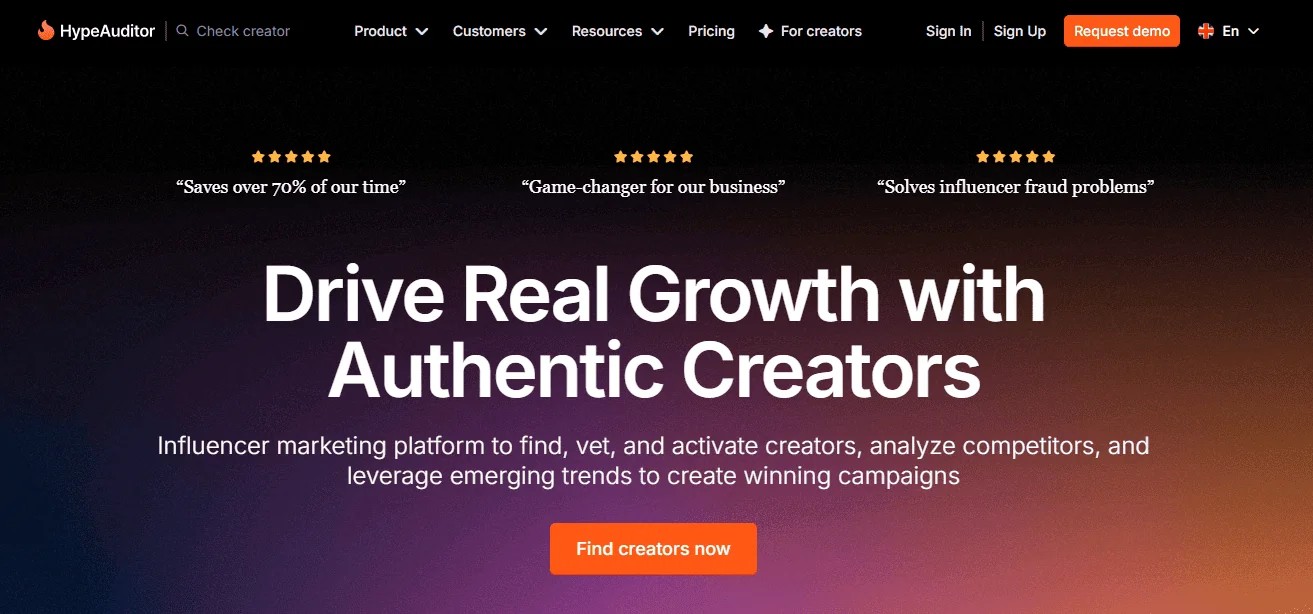
HypeAuditor started as a fraud detection tool for Instagram and grew into an end to end platform. The DNA is still analytics, and that's where it's strongest.
The database covers more than 220 million profiles across Instagram, TikTok, YouTube, X and Twitch, with over 35 metrics per creator including Audience Quality Score, audience overlap and authenticity scoring. Agencies and larger in-house teams use it to justify spend before a single dollar goes out.
It also ships campaign management, AI-assisted outreach, contracts and ecommerce integrations, so it isn't only a vetting tool anymore.
Audience Quality and Fraud Detection
This is the reason most teams buy it. Growth spike forensics, engagement pattern analysis and follower quality scoring catch inflated accounts before you pay them. If you've been burned by a creator with fake followers, this is the fix. It also makes finding the right influencer a data decision rather than a gut call.
Market and Competitor Analysis
Competitor benchmarking, ad spy and trend detection let you see which creators your competitors work with and where the category is heading. Very few platforms in this price range do this properly.
Ecommerce and Payouts
Native Shopify, WooCommerce and Magento integrations handle promo codes, affiliate links and product seeding, with PayPal payouts in 200+ countries.
Where HypeAuditor Falls Short
Pricing is partly public and mostly quote driven, which slows down evaluation. It also can't track Stories, and coverage thins out on nano and emerging platform creators, which matters if your strategy leans on smaller accounts.
What Is Influencer Hero?
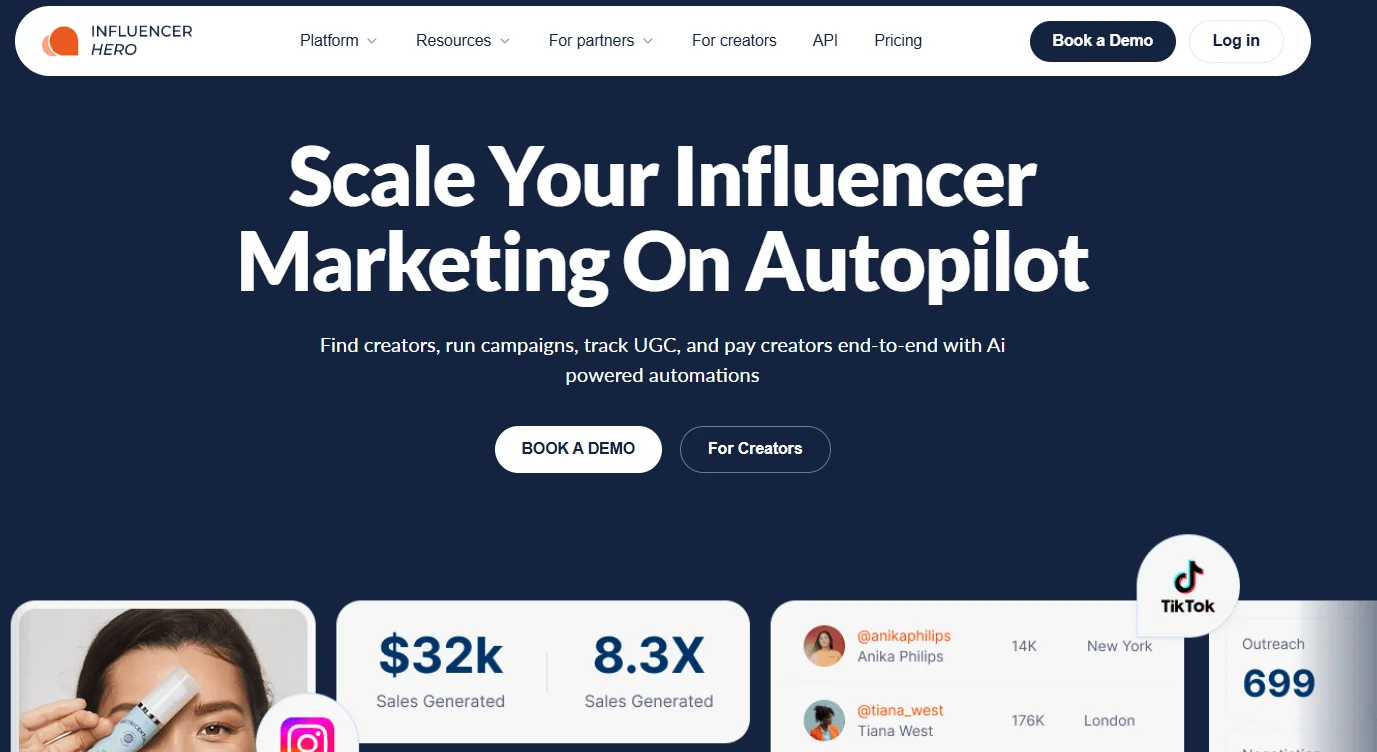
Influencer Hero is an all in one influencer marketing platform built for DTC brands, and it's part of the same family as Afluencer. It's the natural next step once a marketplace stops being enough.
The platform covers discovery, automated outreach, CRM, affiliate tracking, gifting and payments in one system. The point is that a creator moves from "found" to "paid commission on 14 sales" without leaving the tool or touching a spreadsheet.
It runs across Instagram, TikTok and YouTube, with AI matching, lookalike search, brand follower detection and a Chrome extension for vetting creators as you browse.
Outreach Automation That Runs Itself
You build multi step email sequences with automatic follow ups, personalization and reply detection. Instead of manually chasing 200 creators, the sequence does it and your inbox only lights up when someone answers. If you want to sharpen the messaging itself, these outreach techniques pair well with an automated setup.
Affiliate Links, Storefronts and Automated Payments
Every creator gets a trackable link or code, a personal storefront if you want one, and automated commission payouts. Sales attribution is per creator, so you know exactly who drove revenue instead of guessing from a spike in traffic.
A CRM Built for Volume
Pipelines, statuses, bulk actions and full conversation history sit in one place. Managing 300 creator relationships stops being a spreadsheet problem.
Where Influencer Hero Falls Short
It's a paid platform with no free tier, and the feature set takes some ramp up time. If you're running two collabs a quarter, you won't use most of what you're paying for.
Afluencer vs HypeAuditor vs Influencer Hero: Feature by Feature
Influencer Discovery
HypeAuditor and Influencer Hero both search large databases, but with different logic. HypeAuditor's filters are built around audience quality and demographics, while Influencer Hero's AI search finds lookalikes of creators who already performed for you and surfaces influencers who already follow your brand. Afluencer inverts the model completely: creators come to you, which is slower on volume but far higher on intent.
Outreach and Communication
Afluencer keeps it in app, so there's no email deliverability problem and no cold pitch to write. HypeAuditor gives you bulk email with open and click tracking. Influencer Hero goes furthest with automated sequences, timed follow ups and reply detection, which is what actually moves the needle when your list is in the hundreds.
Campaign Management and CRM
Afluencer tracks your Collabs and applications and stops there. HypeAuditor adds contracts, content approval and campaign organization. Influencer Hero adds a pipeline CRM with bulk actions, built for teams managing overlapping campaigns at once.
Tracking and Analytics
HypeAuditor is the strongest on pre campaign data and audience insight. Influencer Hero is the strongest on post campaign revenue: clicks, codes, orders and commissions per creator. Afluencer keeps reporting basic, which is fine early on when you're mostly learning whether reach or impressions should drive your goals in the first place.
Integrations
All three connect to Shopify. HypeAuditor adds WooCommerce and Magento. Influencer Hero adds WooCommerce, custom stores, Klaviyo, Zapier, Slack and DocuSign, which matters if the creator program needs to talk to the rest of your marketing stack.
Pricing: What You'll Actually Pay
Afluencer starts at $49/month for the Marketplace plan, with 60 invitation credits a month, premium filters and support included. Larger plans scale up reach outs, product shipping and creator payments. Full breakdown on the Afluencer pricing page.
HypeAuditor's Basic plan starts around $299/month billed annually, with a Pro tier reported near $499/month and enterprise pricing by quote. There's a limited free version and a set of free audit tools, but full trials are granted case by case rather than self serve, so a real evaluation usually means a paid plan.
Influencer Hero lists its pricing publicly: Standard at $649/month for up to 1,000 creators, Pro at $1,049/month for up to 5,000, and Business at $2,490/month for up to 10,000, plus custom and agency plans. No demo wall to see the number.
Here's the practical filter. If your total monthly influencer budget is $1,500, committing $300 to $650 of it to software leaves very little for the creators themselves. At that stage, starting on a $49/month marketplace and putting the rest into product and commissions gets you more actual campaigns.
Which Platform Is Right for You?
HypeAuditor earns its reputation on data. If your job involves defending creator spend to a CFO, vetting talent for clients, or benchmarking against competitors, nothing here replaces its audience quality scoring and market analysis. Teams that have been burned by inflated follower counts buy it for exactly that reason and stay.
Influencer Hero makes more sense when the bottleneck is workflow rather than data. If you need to contact hundreds of creators, keep every conversation in one CRM, hand out affiliate links, attribute sales creator by creator and pay commissions automatically, that whole chain runs end to end in one platform instead of four. It's the step up brands take once collabs turn into a real revenue channel. Curious how that workflow looks against your current setup? Book a demo with Influencer Hero.
And if you're earlier than that, Afluencer is where to start. Post a Collab, see who applies, run a handful of campaigns and learn what your creators and content actually look like before you invest in a bigger stack. Sign up on Afluencer and get your first Collab live this week.
The Bottom Line
These three tools answer three different questions: who should I work with, are they legit, and how do I run this at scale without drowning. HypeAuditor owns the vetting question, Afluencer owns the getting started question, and Influencer Hero owns everything that happens after a creator says yes.
Pick based on which question is currently costing you the most time. If it's still "how do I get creators in the door," start on Afluencer and move up when the volume demands it.
Frequently Asked Questions
<details class="ih-faq"><summary>What's the main difference between Afluencer and HypeAuditor?</summary><div class="ih-faq-a">Afluencer is a marketplace where creators apply to your Collabs, so discovery happens through inbound applications. HypeAuditor is a search and analytics platform where you find creators in a 220M+ profile database and vet their audience quality before reaching out. One saves you outreach work, the other saves you from bad partners.</div></details><details class="ih-faq"><summary>Which platform fits a brand running its first influencer campaign?</summary><div class="ih-faq-a">Afluencer, in most cases. At $49/month you can post a Collab, get applications from verified creators and learn what works without committing several hundred dollars a month to software before your first campaign has proven anything. Move up once the channel earns a bigger budget.</div></details><details class="ih-faq"><summary>Does HypeAuditor track affiliate sales?</summary><div class="ih-faq-a">Yes, through its Shopify, WooCommerce and Magento integrations. You can attach promo codes and affiliate links to creators and see sales, clicks and revenue in the campaign tab. Influencer Hero goes further with creator storefronts and automated commission payouts, but both handle basic sales attribution.</div></details><details class="ih-faq"><summary>Can I use Afluencer and Influencer Hero together?</summary><div class="ih-faq-a">Plenty of brands do. Afluencer brings in creators who applied to your Collabs, and Influencer Hero handles the outreach automation, CRM, affiliate links and payments once your roster grows past what manual management can handle. They're part of the same family, so the move up is a natural one.</div></details><details class="ih-faq"><summary>How much should I budget for an influencer marketing platform?</summary><div class="ih-faq-a">A useful rule is keeping software under a quarter of your total influencer budget. At $2,000/month, a $49 marketplace plan leaves room for real campaigns. At $10,000/month or more, a $649 platform that automates outreach and tracks revenue per creator pays for itself in hours saved.</div></details><script type="application/ld+json">{"@context":"https://schema.org","@type":"FAQPage","mainEntity":[{"@type":"Question","name":"What's the main difference between Afluencer and HypeAuditor?","acceptedAnswer":{"@type":"Answer","text":"Afluencer is a marketplace where creators apply to your Collabs, so discovery happens through inbound applications. HypeAuditor is a search and analytics platform where you find creators in a 220M+ profile database and vet their audience quality before reaching out. One saves you outreach work, the other saves you from bad partners."}},{"@type":"Question","name":"Which platform fits a brand running its first influencer campaign?","acceptedAnswer":{"@type":"Answer","text":"Afluencer, in most cases. At $49/month you can post a Collab, get applications from verified creators and learn what works without committing several hundred dollars a month to software before your first campaign has proven anything. Move up once the channel earns a bigger budget."}},{"@type":"Question","name":"Does HypeAuditor track affiliate sales?","acceptedAnswer":{"@type":"Answer","text":"Yes, through its Shopify, WooCommerce and Magento integrations. You can attach promo codes and affiliate links to creators and see sales, clicks and revenue in the campaign tab. Influencer Hero goes further with creator storefronts and automated commission payouts, but both handle basic sales attribution."}},{"@type":"Question","name":"Can I use Afluencer and Influencer Hero together?","acceptedAnswer":{"@type":"Answer","text":"Plenty of brands do. Afluencer brings in creators who applied to your Collabs, and Influencer Hero handles the outreach automation, CRM, affiliate links and payments once your roster grows past what manual management can handle. They're part of the same family, so the move up is a natural one."}},{"@type":"Question","name":"How much should I budget for an influencer marketing platform?","acceptedAnswer":{"@type":"Answer","text":"A useful rule is keeping software under a quarter of your total influencer budget. At $2,000/month, a $49 marketplace plan leaves room for real campaigns. At $10,000/month or more, a $649 platform that automates outreach and tracks revenue per creator pays for itself in hours saved."}}]}</script>