.svg)
.png)
.png)
- Ainfluencer vs Afluencer: A Detailed Comparison
- Quick Comparison: Ainfluencer vs Afluencer at a Glance
- What Is Ainfluencer?
- What Is Afluencer?
- Ainfluencer vs Afluencer: Feature by Feature
- Pricing: What You'll Actually Pay
- Scaling Beyond the Marketplace: Where Influencer Hero Fits
- Which Platform Is Right for You?
- The Bottom Line
Ainfluencer vs Afluencer: A Detailed Comparison
Two platforms, names one letter apart, and a search results page full of "reviews" written by people who never logged into either one. No wonder brands get stuck here.
Ainfluencer and Afluencer both let you find creators without paying a four-figure software bill, and both run on the same basic idea: post what you need, let creators come to you. That's where the similarity stops. One is a high-volume open marketplace with escrow payments and a database in the millions. The other is a smaller, hand-verified creator community that plugs into a full influencer platform once you outgrow the basics.
The right pick depends on whether you want the biggest possible pool of creators or the shortest possible path from "found someone" to "they actually posted." If you're still figuring out how the channel works at all, our 5 steps to get started with influencer marketing guide covers the groundwork first.
Here's the honest breakdown: what each platform does well, what it costs in 2026, and which one fits where your brand is right now.
Quick Comparison: Ainfluencer vs Afluencer at a Glance
What Is Ainfluencer?
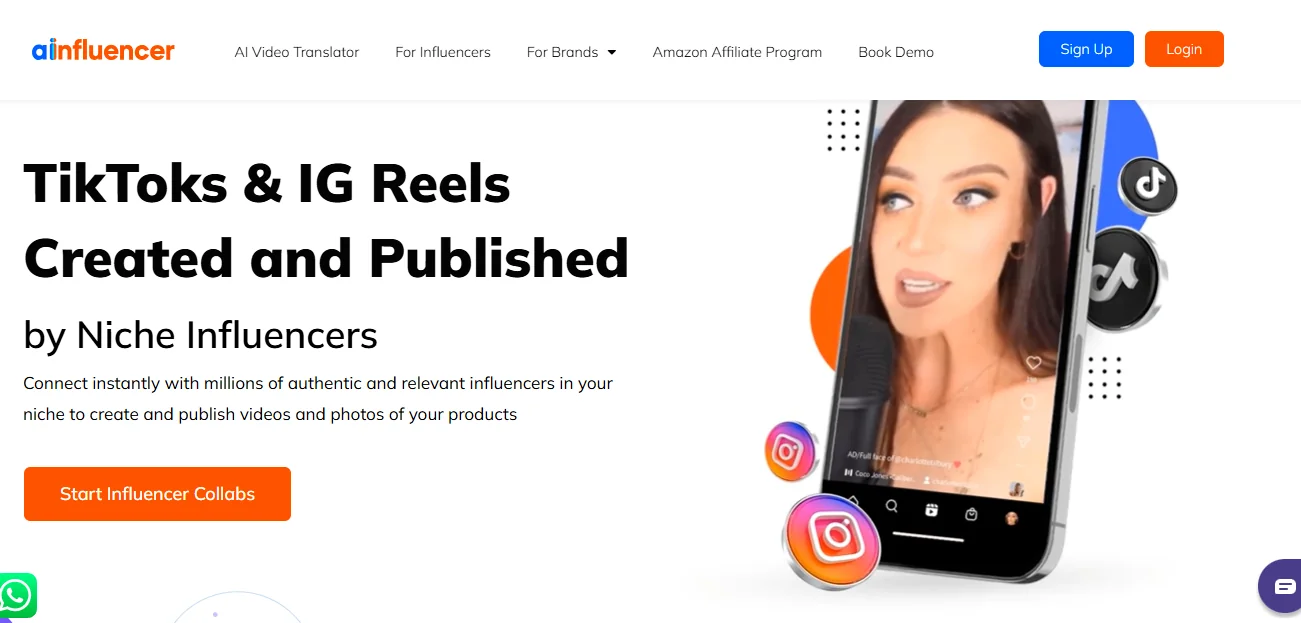
Ainfluencer is a Toronto-based influencer marketplace that launched in 2020 and built its whole model around removing upfront cost. Brands don't pay a subscription. You create an account, publish a campaign, and either wait for creators to apply or invite them directly. The platform connects brands with millions of influencers across Instagram, TikTok, and YouTube, and offers unlimited campaigns and proposals with no caps on invites.
The revenue model sits on the creator side. Rather than charging brands, the platform takes a fee from the influencer's payment after successful delivery, which means you can search, connect, post campaigns, and negotiate without paying anything upfront. That commission typically runs around 20% and funds the escrow system and support.
The workflow leans transactional. Find creators, negotiate in the inbox, fund the deal, approve the content, release payment. It's built for volume and speed rather than long-term relationship management.
AI-Powered Creator Matching
Ainfluencer's discovery layer suggests creators based on your campaign goals, audience, and content type instead of making you filter manually through endless profiles. Matching runs across millions of opt-in Instagram, TikTok, and YouTube creators by niche, audience, and engagement, with audience demographic data and reviewable collaboration history attached to profiles.
For a brand running its first campaign, that reduces a lot of guesswork. You're not staring at a blank search bar wondering what follower range to type in. If you want a framework for evaluating creators beyond what any tool surfaces automatically, our guide on how to find the perfect influencer walks through the criteria that actually predict campaign performance.
Escrow-Secured Payments
This is Ainfluencer's genuinely strong differentiator. Payment is held in escrow until delivery, with a resolution center for disputes. Money leaves your account only after the content lands and you approve it.
In a channel where "creator took the product and ghosted" is a common complaint, that structure removes real risk. For brands paying creators they've never worked with before, it's a meaningful protection that most subscription platforms don't offer natively.
Ecommerce-Native Integrations
Ainfluencer integrates with Amazon and Shopify for affiliate collaborations, plus automated fulfillment and tracking of gifted packages. Product seeding, affiliate links, and commission tracking all live in the same place, which matters if your program runs on gifting and commission rather than flat fees.
Where Ainfluencer Falls Short
The trade-off for a free, open, high-volume marketplace is quality control and workflow depth. A database of millions of self-registered profiles means more filtering on your end, and inactive or low-effort creators show up alongside the good ones. There's also no outreach automation, no proper CRM, and no content approval workflow, so once you're managing more than a handful of creators at once, the coordination happens in your inbox and a spreadsheet. Brands running ongoing programs tend to feel that ceiling fast.
What Is Afluencer?
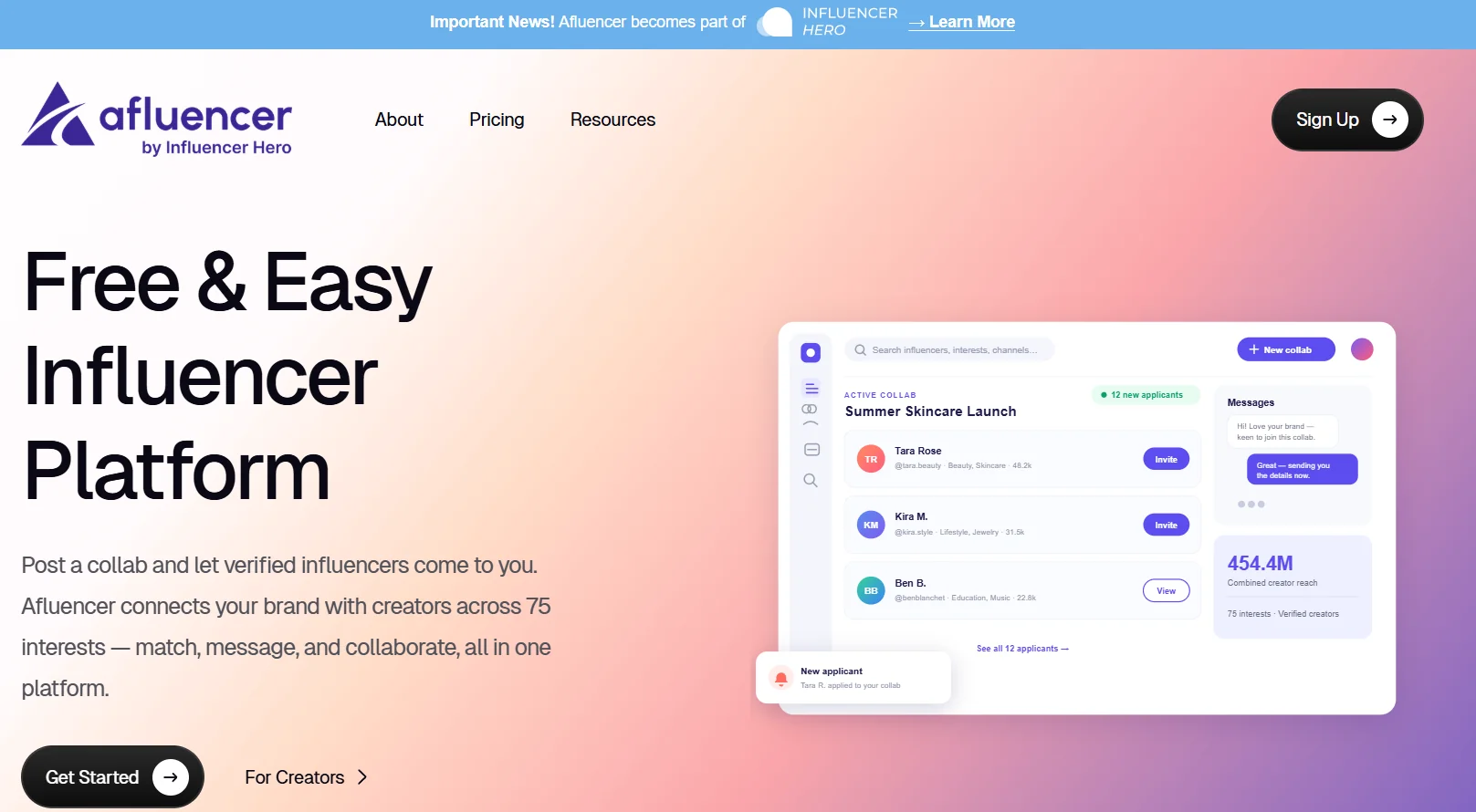
Afluencer takes the opposite approach to database size. Instead of indexing every public profile it can find, it runs a curated marketplace of creators who signed up specifically to work with brands. Every influencer is a real, verified Afluencer user, with no scraped names or numbers pulled from social media.
The mechanic is straightforward. You post a Collab describing your ideal partner, set your criteria for channel, interests, follower count, and demographics, and creators apply to you. You review applications, pick your matches, and message them directly in the app. Currently there are over 40,000 creators in the marketplace across beauty, fitness, fashion, tech, food, and more.
Afluencer is part of Influencer Hero, the all-in-one influencer marketing platform, which matters for the upgrade path. Brands on the Standard plan and above get access to the Influencer Hero platform for more sophisticated campaign management, so you're not migrating to a different tool when your program grows.
Inbound Applications Instead of Cold Outreach
The single biggest time sink in influencer marketing is messaging creators who never reply. Afluencer flips that. Creators see your Collab, decide they want it, and apply. Every conversation starts with someone who already said yes to the concept.
That changes your response rate math completely. Instead of a 5% reply rate on cold DMs, you're working from a pile of interested applicants. If cold outreach is still part of your mix, our 6 influencer outreach techniques guide covers what actually gets responses.
Manual Verification
Every creator on Afluencer is a verified user, not a scraped profile. That's a smaller pool by design, and it's the point. You're trading raw database size for the confidence that the person applying to your Collab is real, active, and reachable.
For brands leaning on micro and nano creators, where engagement quality beats reach every time, that verification does a lot of heavy lifting. Our breakdown of the benefits of working with micro-influencers explains why that tier tends to outperform on a per-dollar basis.
A Real Upgrade Path
Most starter platforms leave you stranded once you outgrow them. Afluencer's Standard plan opens up the Influencer Hero platform, so the same brand that started by posting one Collab can move into automated outreach, CRM, affiliate tracking, and payments without changing tools or rebuilding a creator list from scratch.
Where Afluencer Falls Short
The database is a fraction of the size of the big marketplaces, and that's a genuine limitation if you're hunting for a specific macro creator in a narrow niche. Afluencer is built around inbound applications, so if your strategy depends on proactively searching and pitching a named list of creators, the model works against you. The free tier for brands is a trial rather than a permanent free plan, which is a real difference from Ainfluencer's zero-cost structure.
Ainfluencer vs Afluencer: Feature by Feature
Influencer Discovery
Ainfluencer gives you scale and search. You filter a database in the millions with AI assistance, then invite whoever looks right. Afluencer gives you a filter that works in reverse. You describe your ideal partner and let matching creators self-select into your campaign.
Neither approach is objectively better. Search-first suits brands who know exactly which creators they want. Inbound suits brands who'd rather spend their time reviewing interested applicants than chasing uninterested ones. The key questions to ask when choosing an influencer marketing platform come down to which of those two problems is currently costing you the most hours.
Outreach and Communication
Both platforms keep messaging in-app, and neither offers true outreach automation. On Ainfluencer you invite creators and negotiate in a chat inbox. On Afluencer you message applicants directly once they've applied.
The practical difference is where the effort goes. Ainfluencer's model means more outbound invites. Afluencer's means more inbound review. Once your volume climbs past roughly 20 to 30 active creators, both start feeling manual, which is where a platform with drip sequences and automated follow-ups starts to earn its cost.
CRM and Campaign Management
Ainfluencer tracks campaigns and keeps a collaboration history with ratings, which is useful for deciding who to rehire. What it doesn't have is a relationship layer: no pipeline stages, no notes, no tagging, no way to see at a glance which creator is at which point in your workflow.
Afluencer's dashboard handles Collab management, and the Standard plan opens the Influencer Hero CRM for brands who need actual pipeline management. That's the meaningful split. If you're running one campaign at a time, neither gap hurts. If you're running four campaigns with 50 creators across three product launches, it hurts constantly.
Campaign Tracking and Analytics
Ainfluencer offers real-time analytics and performance tracking at a marketplace level, with affiliate tracking and Shopify integration for attribution on commission deals. Afluencer covers campaign basics, with deeper attribution living on the Influencer Hero side.
Worth naming honestly: neither free-tier experience gives you the kind of revenue attribution that ties a specific creator to a specific order without some setup. If proving ROI to a finance team is the immediate priority, that's a gap to plan around. It's also one of the most common brand mistakes in influencer marketing, assuming tracking will sort itself out later.
Integrations
Ainfluencer connects to Shopify, WooCommerce, and Amazon, with automated gifting fulfillment and shipment tracking. Afluencer offers a Shopify app and a BigCommerce app, with the wider integration stack available through Influencer Hero.
If Amazon is central to your business, Ainfluencer has the edge here. If you're a Shopify brand who'll eventually want Klaviyo, affiliate attribution, and UGC storage wired together, the Influencer Hero route covers more ground.
Pricing: What You'll Actually Pay
Ainfluencer is free for brands to use. There's no subscription or platform fee, and a service fee of roughly 20% is deducted from creator payouts to cover escrow and support. That's an unusually honest starting point, though it does mean creators may quote higher rates to absorb the cut. Ainfluencer also sells fully managed agency packages, but published figures vary widely between sources, from a few thousand per month up to five figures, so treat any number you find online as a starting point for a quote rather than a price.
Afluencer starts with a free trial for brands, then the Marketplace plan at $49 per month for 60 invitation credits, premium filters, and phone, email, and live chat support. Standard runs $649 per month and includes 1,000 monthly reach-outs, product send-outs, influencer payments, and Influencer Hero platform access. Pro is $1,049 per month with 5,000 reach-outs, a dedicated account manager, and three or more seats. On the creator side, the Micro plan is free forever, with Macro at $29 and Mega at $79 per month for creators who want more application credits and visibility.
Here's the practical math. If your entire influencer budget for the quarter is $3,000, committing $649 a month to software eats most of it before a single creator gets paid. Start at the $49 tier or on the free trial, run two or three Collabs, see what your response and conversion rates actually look like, and let the results decide whether the bigger plan is worth it. Platform cost should follow program traction, not lead it.
Scaling Beyond the Marketplace: Where Influencer Hero Fits
Afluencer is part of Influencer Hero, giving brands a practical next step when a marketplace alone no longer meets their needs. Starting with the Standard plan, you also get access to the full Influencer Hero platform.
That’s where things scale up for brands managing serious creator volume: AI-powered discovery across Instagram, TikTok, and YouTube; automated, multi-step outreach sequences sent from your own domain; a full creator CRM; gifting connected to your store; affiliate links that attribute sales to individual creators; and creator storefronts. In other words, it offers the end-to-end capabilities you’d typically find in enterprise influencer platforms, but with a stronger focus on driving revenue—not just measuring earned media value.
The buying experience is straightforward, too. Influencer Hero publishes its pricing: Standard is $649 per month, Pro is $1,049, and Business is $2,490. There’s no annual commitment required just to see what it costs. If you want to see how affiliate tracking and outreach automation could work with your store, book a demo with Influencer Hero.
Which Platform Is Right for You?
Ainfluencer deserves real credit for the escrow system. Holding funds until content is approved solves a problem that costs brands actual money, and doing it on a platform with zero subscription cost is a genuinely good deal for anyone running one-off UGC deals or testing the channel with a small budget. The Amazon integration is also a specific advantage that most influencer platforms simply don't have. If your business runs on Amazon and you're paying creators per deliverable, Ainfluencer is a serious option and the free structure means the only real cost is your time.
Afluencer makes more sense when the bottleneck is response rates rather than database size. Posting a Collab and reviewing applications from verified creators who already opted in is a fundamentally different workflow from searching a large database and hoping people reply. It also matters if you're building a roster you'll work with repeatedly rather than transacting one deal at a time. Brands earlier in the journey often find that the smaller-brand playbook works better with a hand-verified pool than a massive open one. You can sign up on Afluencer for free and post your first Collab before committing to anything. Our Afluencer 101 for brands guide walks through setup if you want to see the process first.
If your brand needs the full workflow though, neither marketplace model covers it. Automated outreach sequences, a proper influencer CRM, affiliate links and discount codes tracked to revenue, UGC storage, and Shopify attribution that ties creator activity to orders all sit on the Influencer Hero side. That's the layer that turns a series of individual collabs into a program you can forecast and report on. Curious how that plays out for your specific setup? Book a demo.
The Bottom Line
These two platforms solve different bottlenecks. Ainfluencer solves payment risk and cost of entry with escrow and a $0 platform fee. Afluencer solves the response-rate problem by putting verified creators in front of your Collab instead of putting you in front of an empty inbox. Brands who need outreach automation, affiliate attribution, and a CRM holding it together will outgrow both, and that's exactly what Influencer Hero is built for. The cheapest way to find out which one you actually need is to run a Collab and watch what happens: start free on Afluencer.
Frequently Asked Questions
<details class="ih-faq"><summary>Is Ainfluencer really free for brands?</summary><div class="ih-faq-a">Yes. There's no subscription or platform fee for brands. Ainfluencer takes a service fee of around 20% from the creator's payout once a deal completes, which funds escrow and support. Just keep in mind creators sometimes price that cut into their quoted rate.</div></details><details class="ih-faq"><summary>What's the main difference between Ainfluencer and Afluencer?</summary><div class="ih-faq-a">Database size and direction. Ainfluencer indexes millions of creators and you search and invite them. Afluencer has 40,000+ manually verified creators who apply to your Collab. One optimizes for scale, the other for creators who've already opted into working with brands.</div></details><details class="ih-faq"><summary>Which is better for small brands just starting out?</summary><div class="ih-faq-a">Both work at small scale. Ainfluencer costs nothing upfront, which suits one-off UGC deals. Afluencer's free trial and $49 Marketplace plan suit brands building a repeat roster. Post a Collab on Afluencer and run a test campaign on Ainfluencer, then compare your actual results.</div></details><details class="ih-faq"><summary>Do these platforms track affiliate sales?</summary><div class="ih-faq-a">Ainfluencer includes affiliate tracking with Shopify, WooCommerce, and Amazon integrations. Afluencer covers affiliate and payment features on Standard plans and above through Influencer Hero, which adds tracked links, discount codes, and revenue attribution tied back to individual creators.</div></details><details class="ih-faq"><summary>Can I use Afluencer and Influencer Hero together?</summary><div class="ih-faq-a">Yes, and that's the intended path. Afluencer is part of Influencer Hero, so Standard plans and up unlock the full platform with automated outreach, CRM, and attribution. You keep your creator relationships and add workflow on top instead of starting over somewhere new.</div></details><script type="application/ld+json">{"@context":"https://schema.org","@type":"FAQPage","mainEntity":[{"@type":"Question","name":"Is Ainfluencer really free for brands?","acceptedAnswer":{"@type":"Answer","text":"Yes. There's no subscription or platform fee for brands. Ainfluencer takes a service fee of around 20% from the creator's payout once a deal completes, which funds escrow and support. Just keep in mind creators sometimes price that cut into their quoted rate."}},{"@type":"Question","name":"What's the main difference between Ainfluencer and Afluencer?","acceptedAnswer":{"@type":"Answer","text":"Database size and direction. Ainfluencer indexes millions of creators and you search and invite them. Afluencer has 40,000+ manually verified creators who apply to your Collab. One optimizes for scale, the other for creators who've already opted into working with brands."}},{"@type":"Question","name":"Which is better for small brands just starting out?","acceptedAnswer":{"@type":"Answer","text":"Both work at small scale. Ainfluencer costs nothing upfront, which suits one-off UGC deals. Afluencer's free trial and $49 Marketplace plan suit brands building a repeat roster. Post a Collab on Afluencer and run a test campaign on Ainfluencer, then compare your actual results."}},{"@type":"Question","name":"Do these platforms track affiliate sales?","acceptedAnswer":{"@type":"Answer","text":"Ainfluencer includes affiliate tracking with Shopify, WooCommerce, and Amazon integrations. Afluencer covers affiliate and payment features on Standard plans and above through Influencer Hero, which adds tracked links, discount codes, and revenue attribution tied back to individual creators."}},{"@type":"Question","name":"Can I use Afluencer and Influencer Hero together?","acceptedAnswer":{"@type":"Answer","text":"Yes, and that's the intended path. Afluencer is part of Influencer Hero, so Standard plans and up unlock the full platform with automated outreach, CRM, and attribution. You keep your creator relationships and add workflow on top instead of starting over somewhere new."}}]}</script>