.svg)
.png)
10 Best Aria Alternatives in 2026
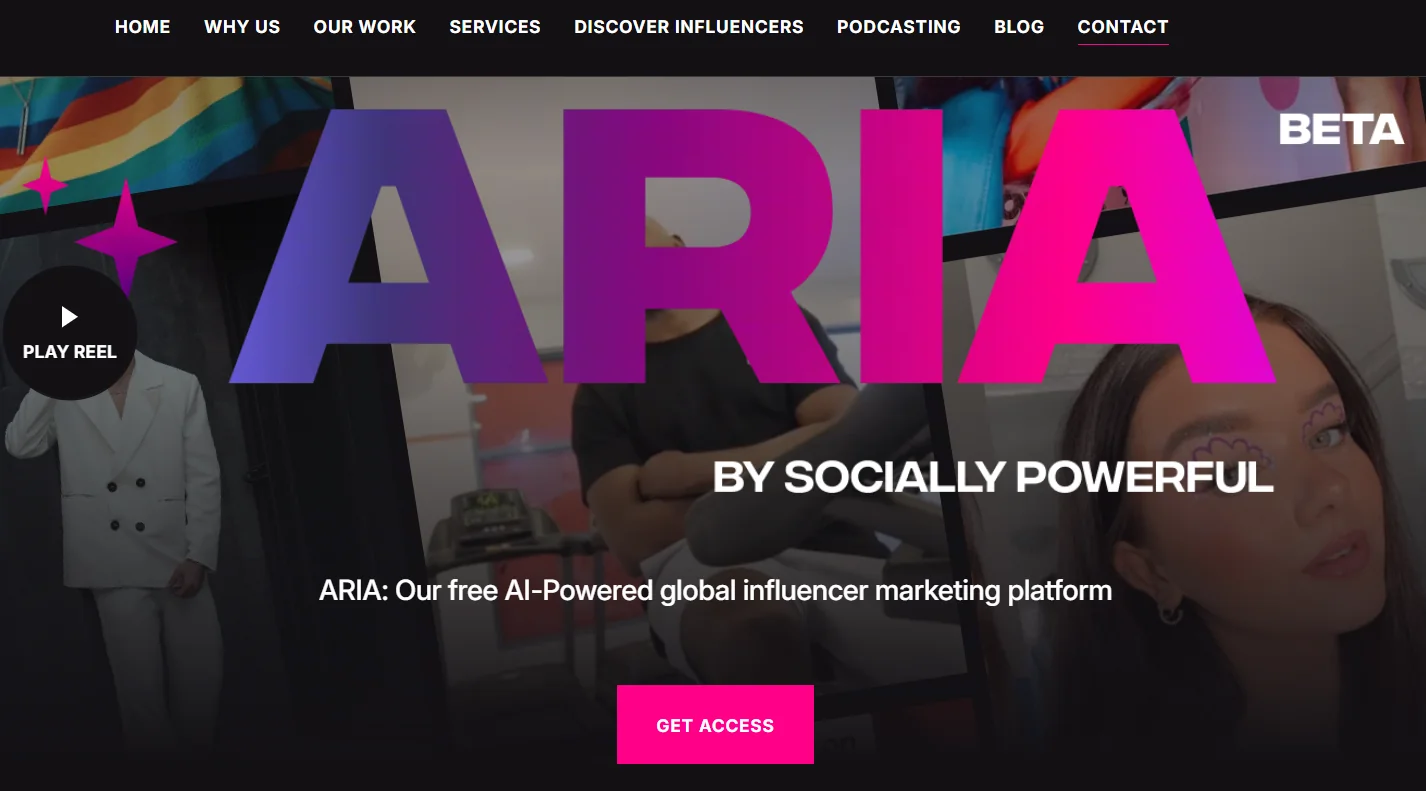
Most people searching for Aria alternatives in 2026 aren't unhappy with the search results. Aria, the AI-powered platform built by agency Socially Powerful, gives you free access to more than 200 million creator profiles, plus natural language search and visual matching that genuinely beat old-school filter dropdowns. You can type "curly haired mom in New York" instead of clicking through six filter menus. That part works.
The problem shows up right after you build your shortlist. Aria is discovery-first, and discovery is maybe 20% of the job. There's no creator CRM to manage a hundred conversations, no contract or brief workflow, no gifting logistics, no affiliate links, no payments, and no marketplace where vetted creators apply to your campaign. Aria is also free because it's the front door to an agency, so the natural next step is hiring Socially Powerful rather than running the program yourself.
Independent reviews are thin too, which makes it hard to pressure-test before you commit. So brands keep the free search and start shopping for the layer underneath it. The good news is that several influencer discovery tools now publish real prices instead of hiding behind a demo call.
Here are the 10 best Aria alternatives in 2026, with current pricing and honest limits. Let's get into them.
Best Aria Alternatives
1. Afluencer
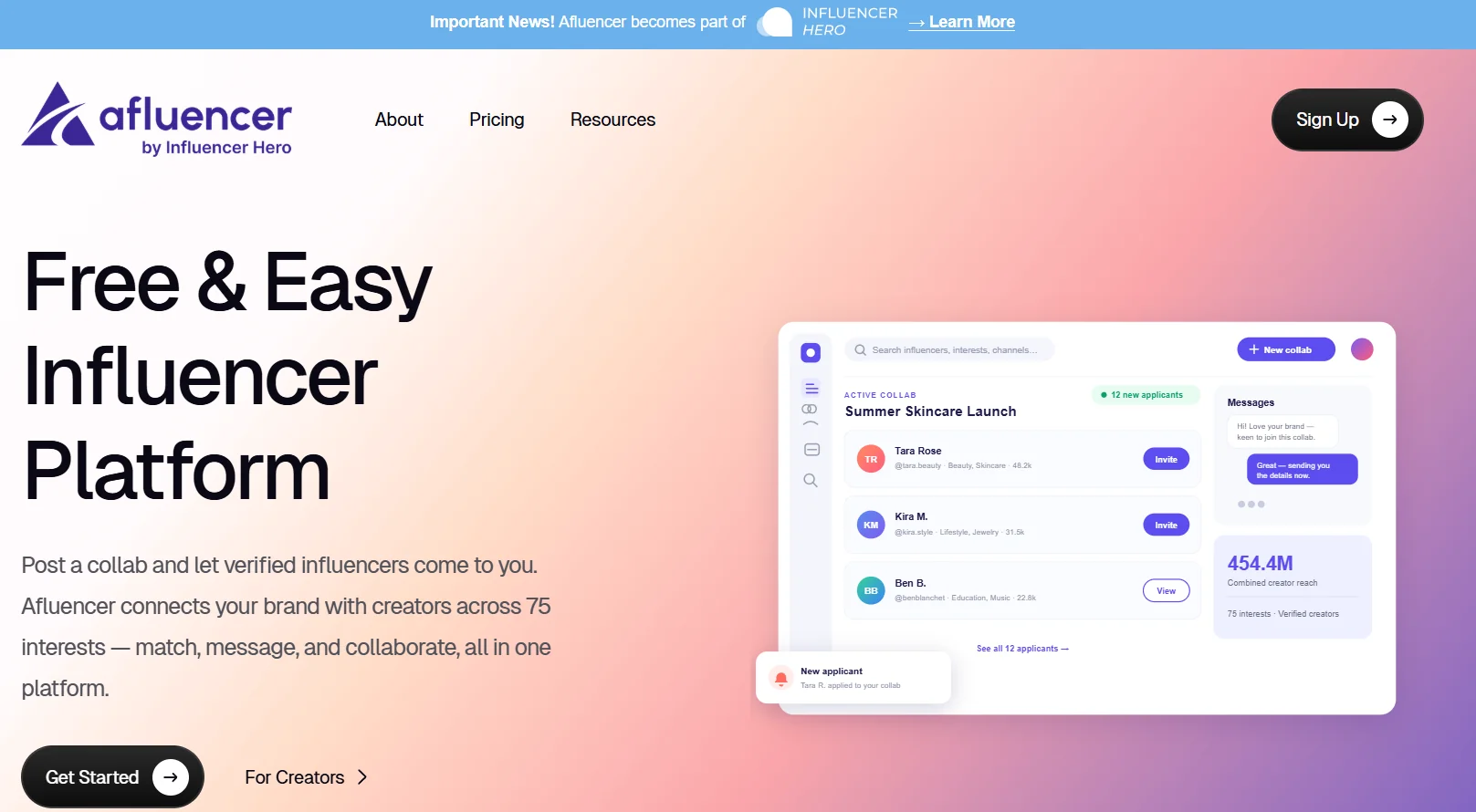
Afluencer flips the entire model Aria is built on. Instead of searching a giant database and hoping your cold email lands, you post a Collab and verified creators apply to you. Every applicant already wants to work with your brand, which removes the slowest and most demoralizing part of influencer marketing.
That matters a lot as an Aria alternative. Aria's pitch is scale: 200 million profiles, free. But a profile in a database isn't a partner. It's a stranger with a contact form. Afluencer's directory is smaller on purpose, made up of creators who opted in, verified their accounts, and are actively looking for brand deals across beauty, fitness, fashion, food, and tech.
The workflow is simple enough to run without training. Post a Collab, review applications, chat with creators inside the platform, and agree on terms. You can also search the directory and invite creators directly if you'd rather go outbound. For brands that mostly work with micro-influencers, it's usually faster than any search tool, because the shortlist builds itself while you sleep.
The AI layer speeds things up further. CreatorGPT handles strategy questions, campaign angles, and how to write a Collab that actually gets applications. The Afluencer Collab Finder matches creators to live opportunities, so both sides spend less time filtering.
Brand plans start at $49 a month on Marketplace, which covers 60 invitation credits a month, premium influencer filters, and support by phone, email, and live chat. Standard is $649 a month with 1,000 reach outs, product shipping, and influencer payments, and Pro is $1,049 with 5,000 reach outs, a dedicated account manager, and three or more seats. Full details sit on the Afluencer pricing page.
Afluencer is the ideal starting point for brands new to influencer marketing, but brands scaling to hundreds of creators with deep revenue attribution eventually need a heavier platform. If you need enterprise reporting and multi-brand management on day one, start further down this list.
2. Influencer Hero
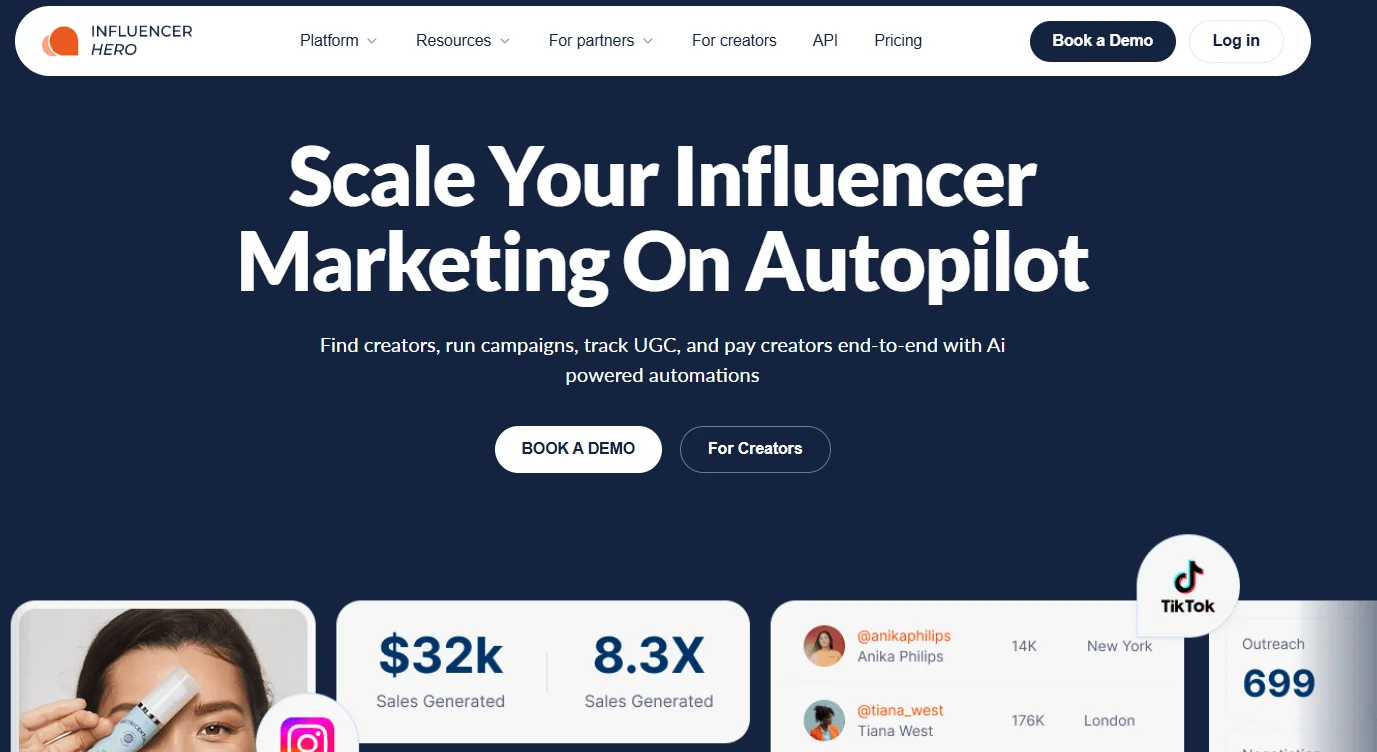
Influencer Hero is the answer for brands who like Aria's AI discovery but need everything that happens afterward in the same place. It combines creator search, a full CRM, automated outreach sequences, gifting and seeding, affiliate and commission tracking, UGC collection, and ROI attribution in one workflow.
The outreach engine is the standout. You build multi-step email sequences with automatic follow-ups, sent from your own domain so deliverability holds up, with WhatsApp available as a second channel. Reviewers consistently rate that automation above what most competitors offer, and it solves the exact gap Aria leaves open once you have a shortlist and no way to work it.
It also finds creators inside your existing customer and follower base, which tends to produce higher conversion rates than cold outreach to strangers. Shopify and WooCommerce integrations connect gifting and affiliate links straight to sales data, so the program reports in revenue instead of impressions.
Plans start at $649 a month for Standard, $1,049 for Pro, and $2,490 for Business, with discounts on quarterly and annual billing. Two caveats worth knowing up front: there's no free trial and plans carry a three-month minimum, and pricing is per brand, so agencies juggling several clients watch costs climb quickly. Some reviewers also find the search and filtering less polished than the outreach side.
If you want to see how the outreach automation, CRM, and attribution actually work on your own creator list before committing to a plan, you can book a demo and walk through the platform with the team first.
3. Modash

Modash is the closest thing to "Aria, but you can actually run the campaign." It indexes 350 million-plus creators across Instagram, TikTok, and YouTube, which is a bigger pool than Aria's, and layers on audience analysis, fake follower detection, verified email unlocks, an inbox for outreach, and post tracking once campaigns go live.
The reason it comes up so often in Aria comparisons is transparency. Modash publishes its prices, offers a 14-day free trial with no credit card, and doesn't lock you into a contract. You can test discovery quality against Aria side by side in an afternoon and decide for yourself.
Audience data is where it pulls ahead. Aria's strength is finding creators by look and vibe. Modash tells you whether that creator's followers are real, where they live, and how old they are, which is exactly the check you need before spending money. If you're sourcing Instagram influencers at volume, that verification step is what keeps budget away from bought engagement. Shopify brands also get sales attribution, so gifting and promo codes tie back to revenue.
Essentials runs $199 a month on annual billing or $299 monthly, and Performance is $499 annually or $599 monthly. Enterprise is custom. Watch the caps, though: each plan limits profile analyses, email unlocks, and tracked creators, so heavy discovery months push you up a tier faster than the headline price suggests. Outreach and contract management are also lighter than in a dedicated CRM.
4. HypeAuditor
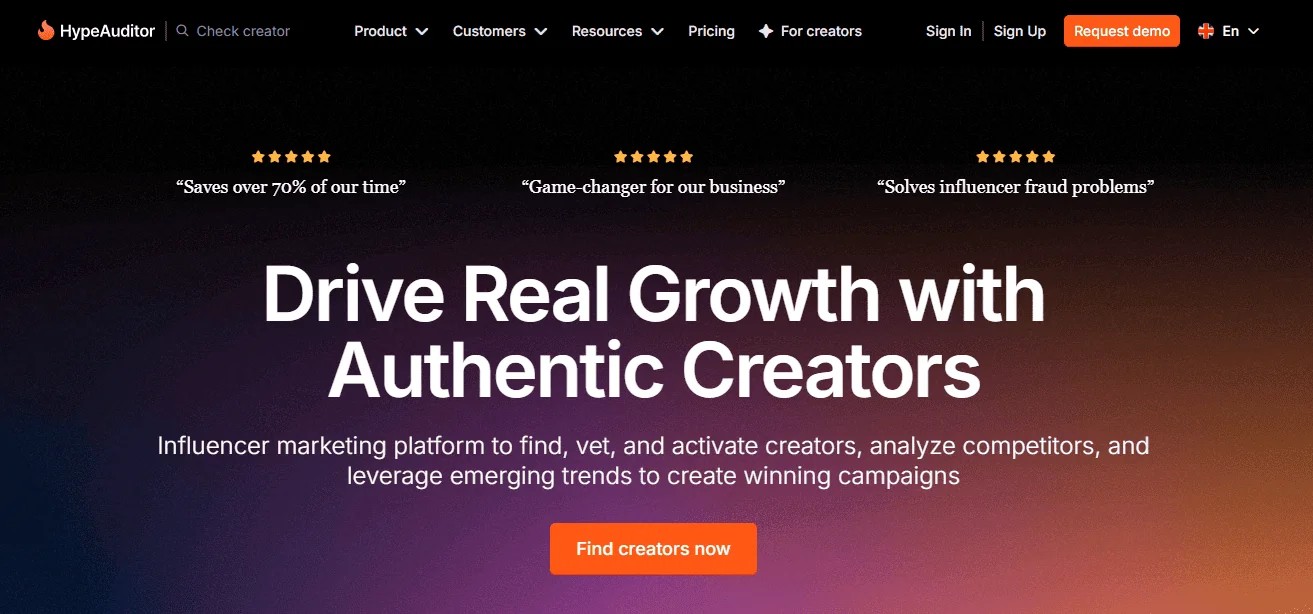
HypeAuditor is the pick when your real question isn't "who should I work with" but "is this creator's audience real." It covers 227 million-plus profiles with audience quality scoring, fake follower detection, and market benchmarks, and it's the tool agencies quote when they need third-party proof before signing off on a budget.
As an Aria alternative it holds a specific advantage: a free tier plus more than 40 free tools for quick influencer checks and audits. You can vet a shortlist you built in Aria without paying anything, which makes it an easy first stop rather than a replacement decision.
The fraud layer matters more than it sounds. AI discovery surfaces creators who look perfect and post beautifully, and some of them bought their engagement. HypeAuditor scores that risk before you send product or money, which is the single most expensive mistake in the channel.
Serious plans start around $299 a month billed annually, and full trials are granted case by case rather than self-serve. The honest limits: pricing sits behind a demo so quotes vary, and coverage thins out on nano creators and newer platforms. It's also analytics-first, so campaign management and payments aren't its strong suit.
5. GRIN

GRIN made the biggest pricing move in the category this year, and it changes the Aria conversation. The platform that used to require a sales call and a five-figure annual contract now runs self-serve, month to month, with a genuinely free plan. No card, no trial clock.
The 2026 model is usage-based. Every plan includes monthly credits for Gia, GRIN's AI operator, which handles sourcing, shortlisting, outreach, reporting, gifting workflows, and campaign setup. Free gives you 200 credits, Starter is $200 a month for 2,000, Growth is $500 for 7,500, Scale is $1,000 for 20,000, and Complete is $1,500 for 30,000. Growth and up also unlock GRIN Classic, the hands-on workspace, with capacity for 100, 250, or 500 active creators.
For DTC brands, the ecommerce plumbing is still the reason to buy. GRIN pulls product data from Shopify, automates seeding and shipping, generates affiliate links and discount codes with no take rate, and ties revenue back to individual creators.
Two honest limits. GRIN's native discovery has never been as deep as Modash or HypeAuditor, so plenty of teams still source creators elsewhere and import them. And credit-based billing means your bill moves with how much work the AI does, which takes a month or two of watching before you can forecast it confidently. You can set a hard cap, at least.
6. Collabstr
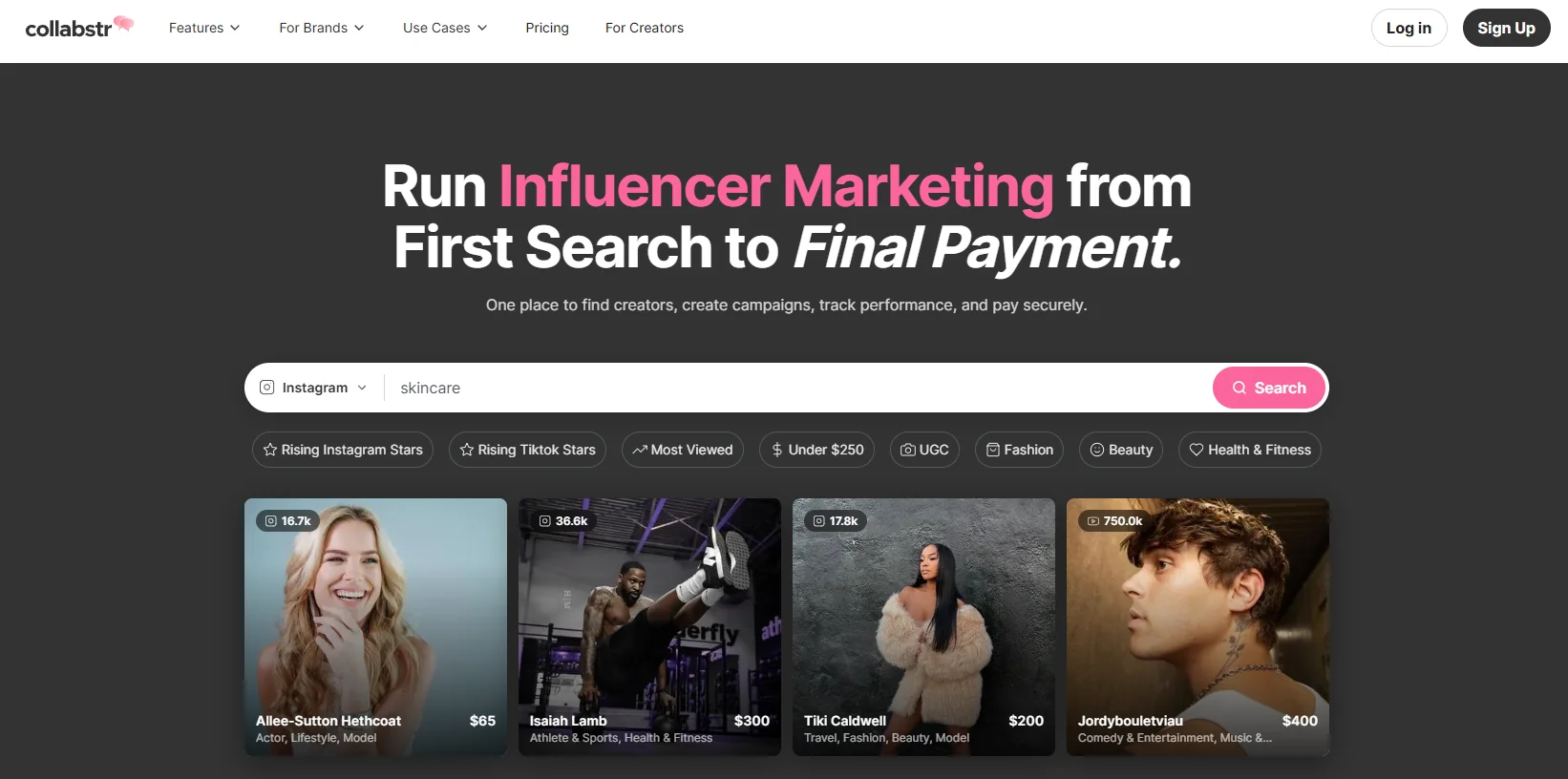
Collabstr works like a storefront for creators. You browse 1.1 million-plus vetted profiles, see each creator's listed rate right on their page, and book them the way you'd order anything else online. Payment sits in escrow until you approve the content.
That transparency is the direct answer to Aria's biggest workflow gap. Aria finds you a creator, then you start the awkward negotiation from zero. Collabstr shows you the price first, which cuts out most of the back and forth. If you've ever spent a week trading emails about influencer rates before agreeing on a number, this model saves real time.
It's especially good for UGC. Plenty of brands use it to order a batch of TikTok-style videos for paid ads rather than run an influencer campaign at all, and orders typically land in days.
Browsing and hiring are free, with roughly a 10% fee added at checkout on each booking. Paid subscriptions from around $299 a month unlock campaign posting, messaging at volume, and better analytics. The caveats: vetting is lighter than on analytics-led platforms, so screening portfolios is your job, and the transaction fee stacks up once you're spending real money each month. It's built for hiring creators one at a time, not for running an ongoing program.
7. Heepsy
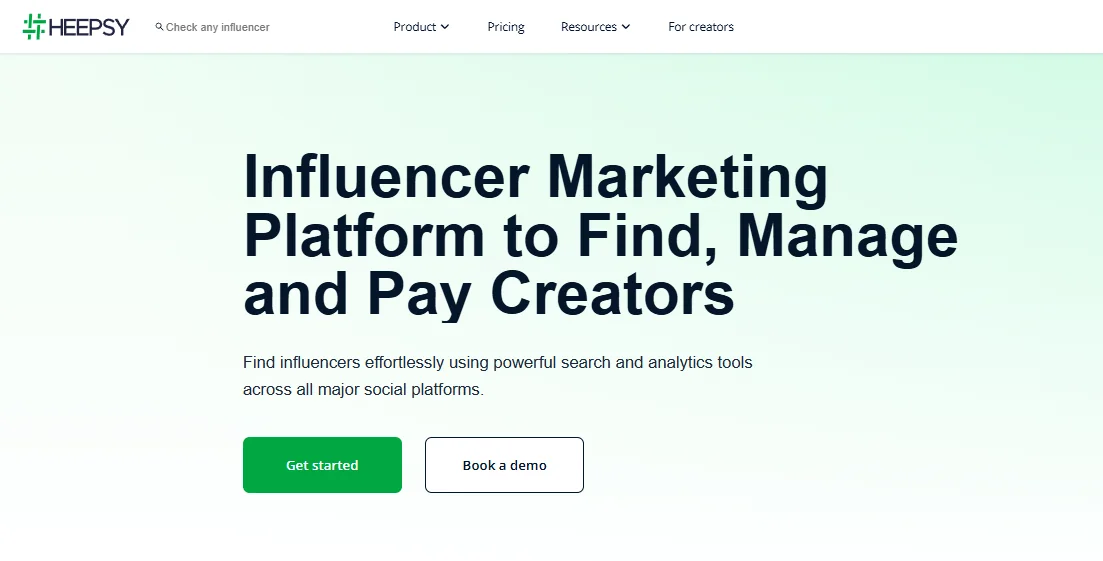
Heepsy is the budget entry point. It gives you searchable creator profiles across Instagram, TikTok, and YouTube with filters for location, niche, follower count, engagement rate, and audience demographics, plus a marketplace where creators apply to campaigns you post.
Brands come to it from Aria for one reason: they want paid-tool filtering without a paid-tool budget. There's a free plan for basic search, and paid tiers start around €69 (roughly $89) a month, with Plus near €149 and Advanced near €229. For a small team testing whether influencer marketing works at all, that's a low-risk step up from free.
Fake follower detection is built in, and the Shopify integration handles product catalogs and basic sales visibility.
The trade-off is real, though. At around 11 million profiles, Heepsy's database is a fraction of Aria's 200 million, so niche or non-English searches come up thin. Reviewers also flag aggressive feature gating, where basic filters and analytics sit behind higher tiers, and a commission on payments made through the platform. Check what your tier actually includes before you subscribe.
8. Upfluence

Upfluence is one of the oldest names in the category and still one of the strongest for brands that want influencer marketing tied directly to ecommerce data. Its standout feature is identifying creators already buying from you, then turning those customers into partners.
It's modular, which is unusual. You buy Search and Contact for discovery and outreach, Campaign Manager for briefs, affiliation, and product shipment, and Upfluence Pay for creator payments. If you only need discovery, you're not paying for a payments engine you'll never open, which is a fair answer to the "all-in-one is overkill" complaint.
The Shopify and Amazon integrations are among the best available, and the AI outreach assistant handles bulk personalization at a level Aria doesn't attempt.
Pricing isn't published. Third-party listings put the entry point around $478 a month per module, and demo-based quotes for a full stack commonly land above $1,200 a month once you add seats and onboarding. The bigger caveat is the 12-month minimum contract with no self-serve trial, which is a hard sell for anyone coming from a free tool and still proving the channel works.
9. Social Cat
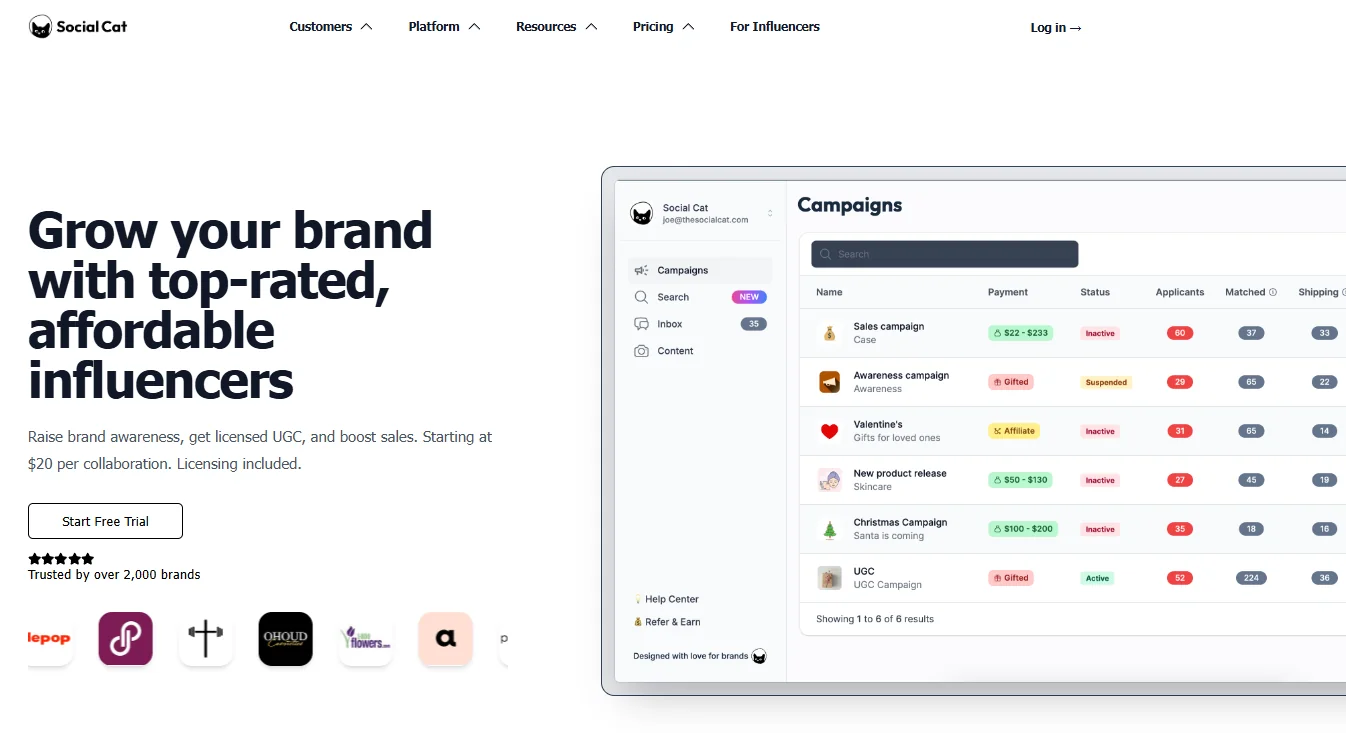
Social Cat is built for one job: getting small brands consistent content and coverage from micro and nano creators without a big budget. Creators apply to your campaign, you approve matches, you ship product, and content comes back with usage rights included.
The model is gifting-first, which makes it a practical alternative for brands that liked Aria's price and can't stomach a $600 software bill. Rather than paying for search, you're paying a small subscription and covering product cost. If you're already leaning on gifting platforms or barter collabs, the fit is obvious.
You can also search 500,000-plus vetted creators directly and invite favorites with one click, and there's a done-for-you managed option if you'd rather hand off the work.
Plans start at $99 a month for Essentials, then $199 for Performance and $299 for Pro, with no long-term contract. The limits are clear: creator collaborations are capped per month, starting at just five on the entry plan, coverage is mostly Instagram and TikTok, and there's no outreach automation or audience quality scoring. Some gifted creators also go quiet after receiving product, which is the standard risk of the model.
10. Aspire

Aspire sits at the enterprise end and combines outbound creator search with a large inbound marketplace, so creators apply to your briefs at scale. It covers ambassadors, affiliates, product seeding, UGC, and social ads amplification, and its agency services team can run the program if your team is stretched.
It's worth including because it's the closest structural match to what Aria's parent agency actually sells: software plus people. The difference is that Aspire's software works as a standalone system rather than as a lead-in to a retainer, and its marketplace scale means you get applications rather than cold contacts.
Pricing is quote-based and not published. Reported entry points cluster around $2,000 to $2,499 a month on an annual commitment, with onboarding fees on top and no free trial.
That's a serious commitment for a brand that landed here from a free tool, so treat this entry as context unless you're already running a mature program with dedicated headcount. Reviewers also mention friction around cancellation, so read the contract terms closely.
Which Aria Alternative Should You Pick?
You don't need the tool with the biggest database. You need the one that matches how your brand actually works. Aria proves that free discovery is now table stakes, and that's genuinely good for the industry. What it doesn't solve is everything that happens between "found a creator" and "content is live and driving sales," and that's the gap every tool on this list fills differently.
If you're a small or mid-size brand who wants creators reaching out to you instead of the other way around, start where the friction is lowest. Post a Collab, review who applies, and run a campaign with creators who already raised their hand. Brands scaling a bigger operation with affiliate links and payouts should also look at how their affiliate tools connect back to the platform they choose, because that's usually where costs hide.
Ready to stop searching and start collaborating? Chat with CreatorGPT for campaign strategy, or see plans and post your first Collab this week.