.svg)

.png)
10 Best CreatorIQ Alternatives in 2026 (Pricing, Features & Reviews)
If you are searching for CreatorIQ alternatives, you have probably hit the same wall most brands do: the price. CreatorIQ is a genuinely powerful enterprise platform, trusted by names like Sephora, Disney, and Nestlé. But it is built for Fortune 500 teams with seven-figure influencer budgets. Pricing is quote-only, starts around $30,000 a year, and locks you into an annual contract before you have proven a single campaign.
For most DTC brands, agencies, and growing ecommerce teams, that is a lot of platform (and a lot of money) for a job a leaner tool can do just as well. Add the learning curve and the multi-team setup, and it is easy to see why people go looking for something simpler, cheaper, or just better fit.
The good news? The market is full of strong options now, from free influencer marketing platforms to mid-market all-in-one suites to transparent creator marketplaces. Whether you want to find the right influencers without a sales call, run gifting campaigns on a budget, or get enterprise-grade analytics for less, there is a CreatorIQ alternative that fits.
Here are the 10 best CreatorIQ alternatives worth a look in 2026. Let's get into them.
1. Afluencer
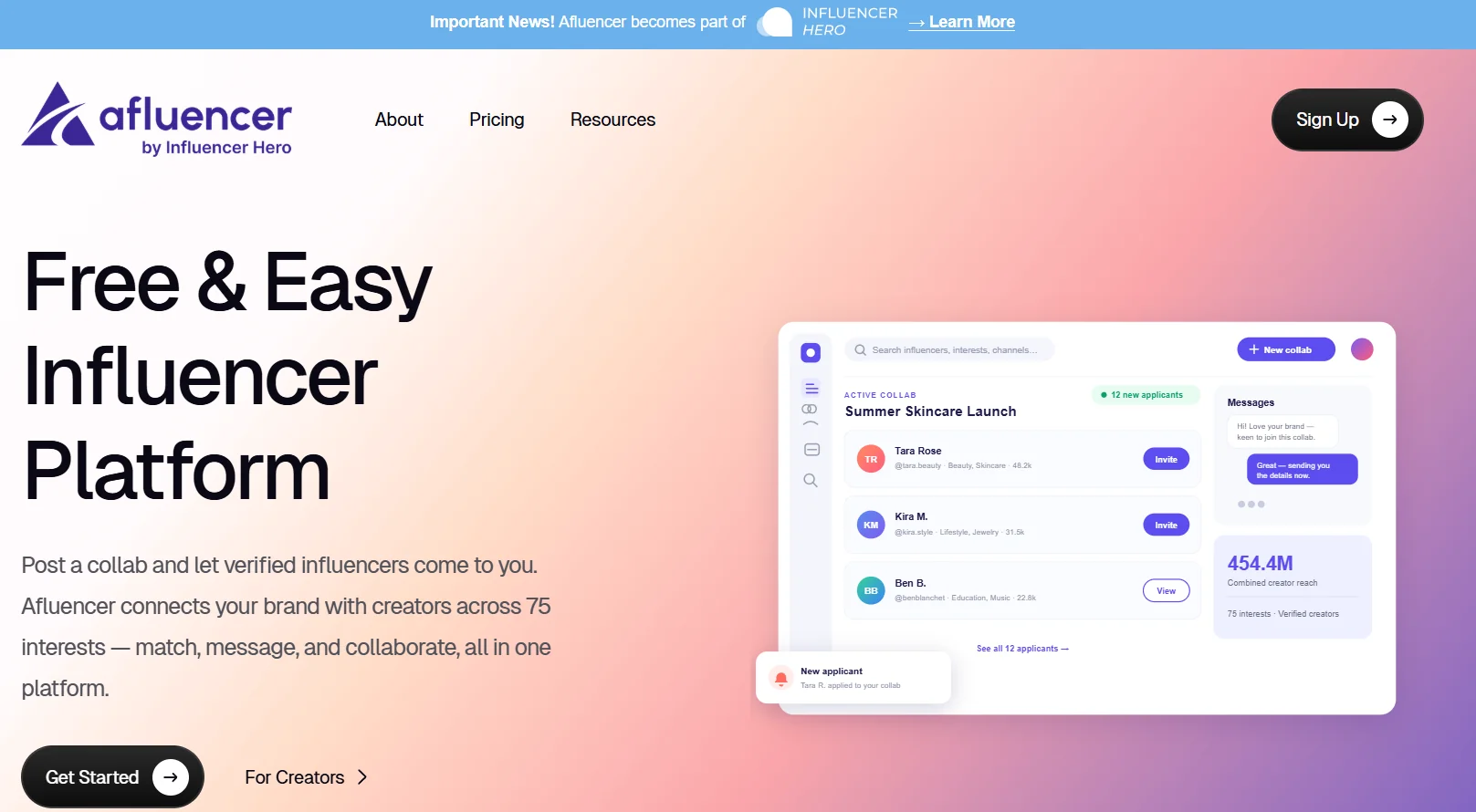
Afluencer is an influencer marketplace that connects brands with verified creators through a matchmaking-style platform. Instead of paying for a massive database and hunting through it yourself, you post a Collab, set your criteria (niche, location, follower count, platform), and let creators apply directly to you. The influencers come to you, not the other way around.
That flips the CreatorIQ model on its head. Where CreatorIQ is built for big teams managing global programs, Afluencer is built for brands who want results fast without a six-figure contract or a learning curve. It is especially popular with DTC and Shopify brands running gifting, product seeding, and micro-influencer campaigns, which is where a lot of the real ROI lives these days.
You can search the directory yourself or post a listing and review applicants, then message creators directly inside the app to coordinate posts, videos, or stories across Instagram, TikTok, YouTube, Facebook, and X. The whole thing is designed to feel like less work, not more. If you want a refresher on how gifting fits in, our guide to gifting strategies for influencer marketing breaks it down.
Pricing is where Afluencer really separates itself from CreatorIQ. Plans start at $49 a month, and there is a 30-day free trial so you can post a Collab, browse the directory, and start conversations before you commit. Higher tiers add more invites, listings, and visibility. No annual lock-in, no enterprise quote.
Afluencer also leans into AI. CreatorGPT acts as your strategy assistant for campaign ideas, pitch help, and budgeting, while the Afluencer Collab Finder matches creators to live opportunities so the right partnerships surface faster. Together they take a lot of the guesswork out of running a program.
One honest note: Afluencer is built around collabs and creator matchmaking, so if you specifically need deep enterprise governance, multi-market approval workflows, and EMV benchmarking across hundreds of seats, this is not that tool (and most brands do not need that anyway).
2. Influencer Hero
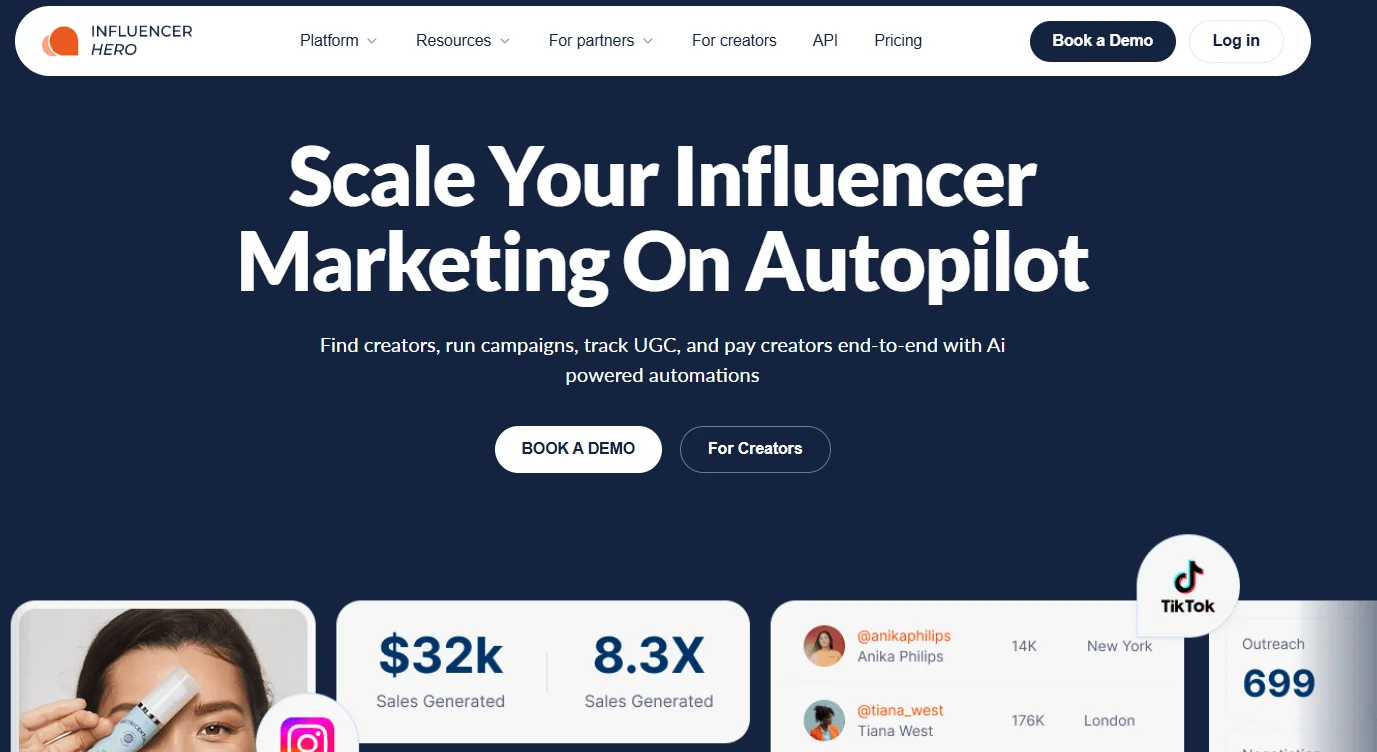
Influencer Hero is an all-in-one influencer marketing platform aimed squarely at DTC brands, ecommerce teams, and agencies that want to run discovery, outreach, CRM, gifting, affiliate, and ROI tracking from one dashboard. It is one of the closer feature-for-feature matches to CreatorIQ on this list, just without the enterprise-only price tag.
The standout feature is automated outreach. You build personalized email sequences with automated follow-ups, sent from your own domain for better deliverability, and the platform even generates a custom opening line based on a creator's last few posts. Bulk outreach scales to 5,000 reach-outs a month on Pro and 10,000 on Business, which is a real advantage if your program lives or dies by volume. The built-in CRM then stores full communication history, content, and payment status for every creator.
Discovery covers Instagram, TikTok, YouTube, and more, with fake-follower and bot detection baked in. There is also affiliate link and discount code tracking, UGC collection, and native integrations with Shopify, Klaviyo, and WooCommerce, so you can tie creator activity directly to sales.
Pricing starts at $649 a month for the Standard plan (up to 1,000 creator contacts), with Pro at $1,049 a month and Business at $2,490 a month. There is a three-month commitment rather than the full year CreatorIQ requires, and quarterly or annual billing brings the cost down. It is a fraction of CreatorIQ's entry point while covering most of the same workflow.
The honest caveat: there is no free plan or free trial, so you will book a demo and commit to a paid plan to get started. For brands who only need lightweight discovery, that entry price may be more than the job calls for. But for teams running a real program end to end, it is strong value.
3. GRIN

GRIN is one of the best-known names in the space and a natural CreatorIQ alternative for ecommerce brands. It bills itself as the creator management platform built specifically for ecommerce, and it shows in the feature set: deep Shopify integration, automated product seeding and fulfillment, discount codes, affiliate links, and a full sales-tracking reporting suite.
The reason brands pick GRIN over CreatorIQ usually comes down to focus. CreatorIQ is a broad enterprise operating system, while GRIN is laser-focused on DTC brands that ship physical products and want creators showing them off. Its CRM-style interface keeps discovery, content approvals, and relationship management in one place, and it handles the messy logistics of getting product into creators' hands. If product seeding is core to your strategy, our guide on how to send products to influencers pairs well with this kind of tool.
GRIN does not publish pricing publicly. Based on procurement data, starter deployments tend to land in the $30,000 to $50,000 a year range (roughly $2,200 a month and up), scaling well into six figures for enterprise. GRIN does offer a free trial, which is more than CreatorIQ gives you.
The catch worth flagging: GRIN typically requires a 12-month contract, and several reviewers have warned about a sales-heavy process and contracts that are hard to exit. Read the terms closely before you sign.
4. Modash

Modash is an end-to-end influencer marketing platform that has carved out a name as the go-to for Shopify brands. Where CreatorIQ feels heavy, Modash feels clean and approachable, which is exactly why a lot of mid-market teams switch.
Its biggest selling point is the database. Modash indexes 350+ million creator profiles across Instagram, TikTok, and YouTube, built from public data, which makes it one of the largest discovery pools on the market and great for global campaigns. AI-powered search lets you describe what you want in plain text or upload a reference image, and a "Find Your Fans" feature surfaces creators who already follow your brand. Content tracking captures live influencer posts (even Stories) automatically, without creators needing to sign up for anything.
Pricing is refreshingly transparent compared to the enterprise crowd. The Essential plan starts at $199 a month (billed annually) for up to 100 creator contacts, Performance runs $499 a month and unlocks the Shopify integration, and Enterprise is custom. There is also a free trial so you can test the discovery before paying.
The limitation: Modash focuses on Instagram, TikTok, and YouTube, with only limited support for other channels like X and Snapchat. If your campaigns lean on those platforms, factor that in.
5. Aspire

Aspire (formerly AspireIQ) positions itself as a word-of-mouth commerce platform, and it has served household names like HelloFresh, Dyson, and Samsung since 2014. It is a strong CreatorIQ alternative for brands that want a full influencer program plus a creator marketplace and the option of agency support.
The platform combines influencer search, a Creator Marketplace where creators apply to your campaigns, customizable relationship workflows, affiliate programs, and product seeding. Its reverse image search is a neat touch, surfacing creators whose content looks like your best-performing partners. Aspire also integrates with Shopify, so you can launch and track campaigns against real sales. Reviewers consistently praise its all-in-one feel and hands-on customer success team.
Like CreatorIQ, Aspire does not list pricing publicly. Third-party data points to a starting price somewhere around $1,000 to $2,499 a month, with custom enterprise plans above that. There is no free version or trial.
The honest drawback: pricing is opaque and sits at a higher tier that is not accessible to every brand, and a handful of reviewers have flagged inconsistent creator quality and limited support on disputes. It shines for mid-to-large brands with a dedicated budget, less so for first-timers testing the water.
6. Upfluence

Upfluence is an AI-powered creator marketing platform with a clever twist: it is built to turn your own customers into creators. Through integrations with Shopify, WooCommerce, Klaviyo, and Amazon, Upfluence can scan your customer and subscriber lists to find which of them already have an audience, then activate them. Since organic advocates are far more likely to accept a free collab, that is a genuinely cost-efficient angle CreatorIQ does not really offer.
Beyond that, you get the full workflow: discovery across a 12M+ creator marketplace powered by its Jaice AI, outreach, briefs, payments, affiliate tracking, and ROI reporting tied to revenue and AOV. It is a solid fit for DTC and ecommerce brands that want influencer marketing to behave like a measurable growth channel.
Upfluence uses modular, custom pricing, so you pay for the tools you actually need (search, campaign manager, payments, and add-ons). Reported entry points start around $478 a month, though many brands land higher depending on modules. There is no free plan, but Upfluence does offer a free Chrome extension and several free tools.
Two caveats: all influencer communication has to flow through Upfluence rather than your own inbox, and some users report the interface feels overwhelming at first and the influencer pool can feel limited in certain niches.
7. Collabstr
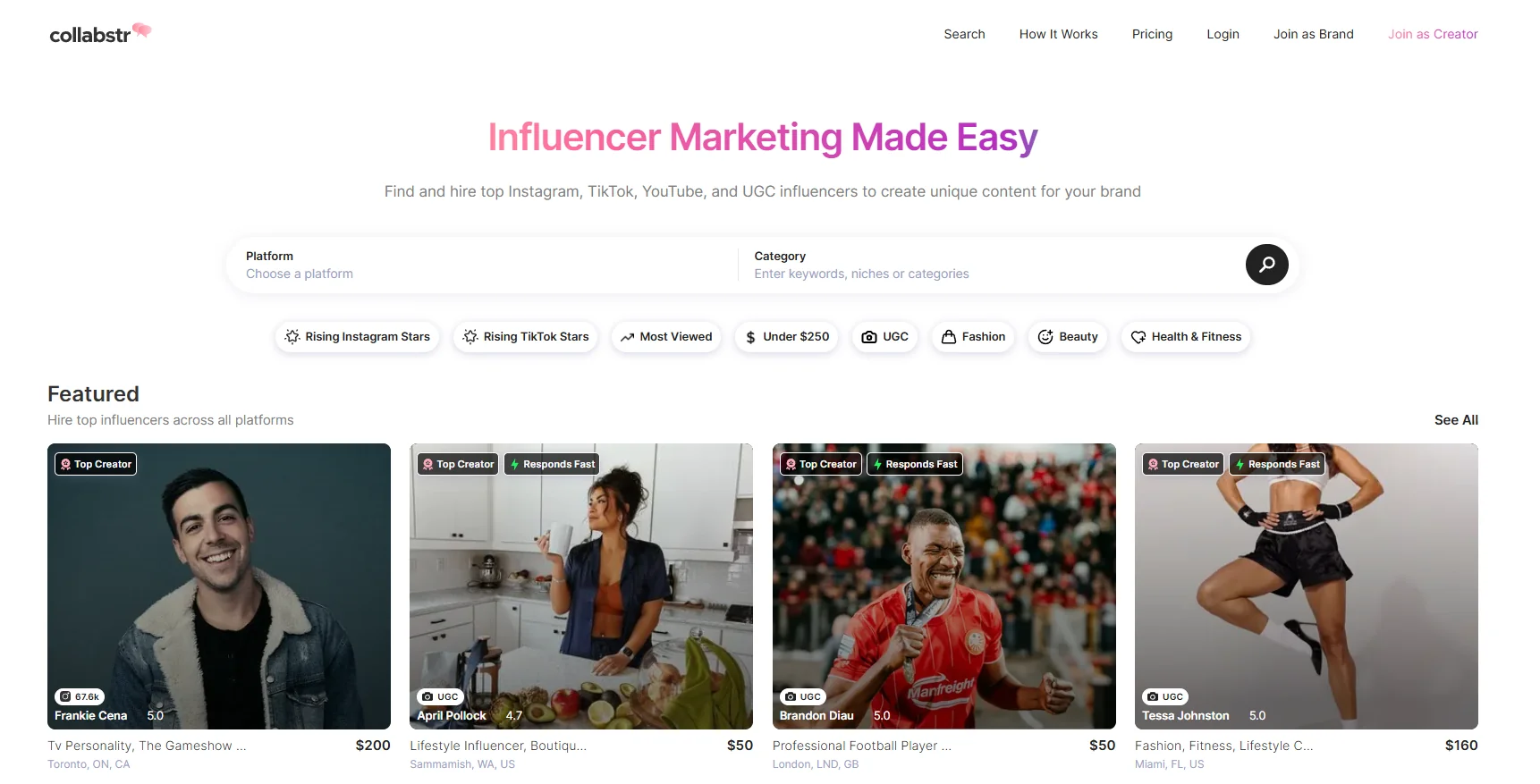
If CreatorIQ's enterprise complexity is exactly what you are trying to escape, Collabstr is the opposite end of the spectrum, and that is the point. It is a self-serve creator marketplace with 200,000+ vetted creators across Instagram, TikTok, YouTube, and UGC, where you browse, see transparent rates upfront, and book a creator in minutes with escrow protection on every deal.
The appeal is speed and zero commitment. There is no onboarding call, no annual contract, and no minimum spend. You search by platform, niche, follower count, location, and price, then hire instantly. For brands running one-off campaigns, seasonal pushes, or testing influencer marketing for the first time, it is the lowest-risk way to start. The UGC category is especially strong, with creators who specialize in ad-ready content.
Pricing has two layers: a free Basic plan ($0 with a 10% marketplace fee per transaction), and paid tiers up to $399 a month that lower the fee and add filtering and tooling. You can cancel anytime.
The trade-off is real, though. Collabstr is a booking engine, not a management platform. There is no Shopify integration, no affiliate or discount-code tracking, and no ROI dashboards. If you need to attribute sales or run a structured ongoing program, you will outgrow it, but as a fast, affordable entry point, few tools beat it.
8. HypeAuditor
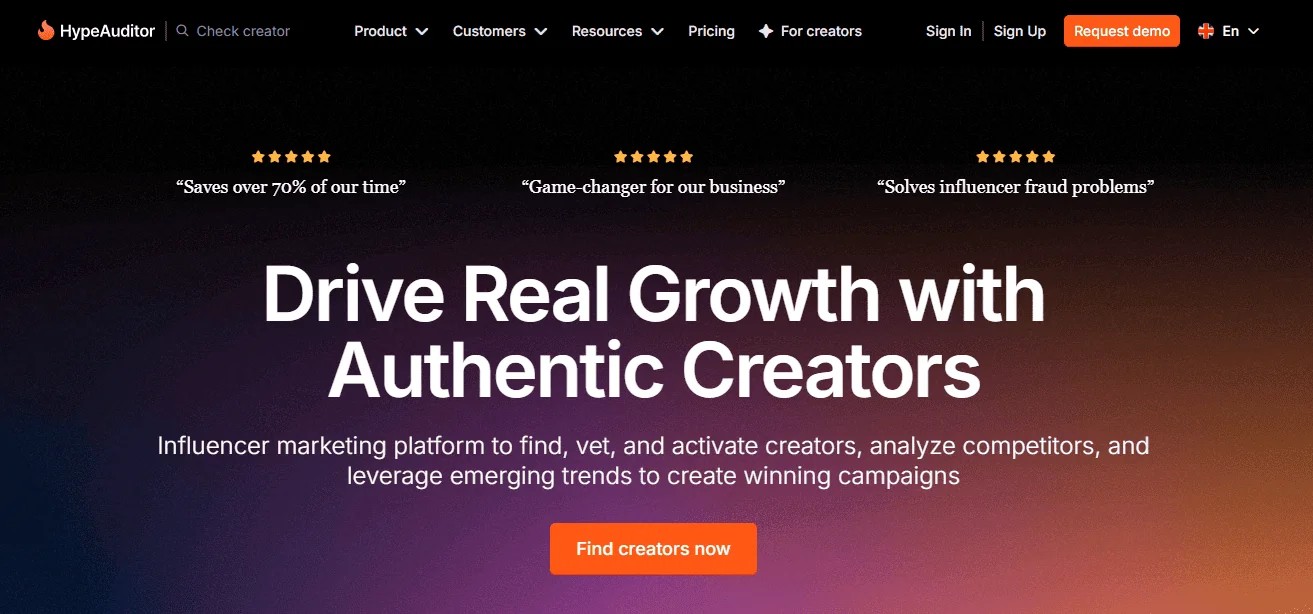
HypeAuditor is the CreatorIQ alternative to reach for when data accuracy and fraud detection matter most. Its whole reputation is built on audience quality scoring and catching fake followers, suspicious engagement, and bot activity before you spend a dollar. With a database of 227+ million creators across Instagram, TikTok, YouTube, and X, it covers discovery, analytics, CRM, and campaign management too, but the vetting is the star.
For brands that have been burned by inflated metrics (a common complaint, even from CreatorIQ users), HypeAuditor's authenticity checks are a real differentiator. You can validate a creator's audience, run competitor monitoring, and pull clean performance reports for stakeholders. Ecommerce stores on Shopify, Magento, and WooCommerce can also create affiliate links and distribute promo codes.
Pricing starts at $299 a month for the Basic plan (billed annually), with Pro around $499 a month, and it scales from there. Worth knowing: HypeAuditor's pricing is usage-based and sales-led, so what you actually pay depends on how much you search, how many reports you pull, and how deep your outreach goes. There is a free version to try first.
The honest limitation: because pricing scales with usage, costs can climb in ways that surprise teams, and some users still export data to spreadsheets for deeper analysis. It is best thought of as an intelligence layer first, execution tool second.
9. Traackr
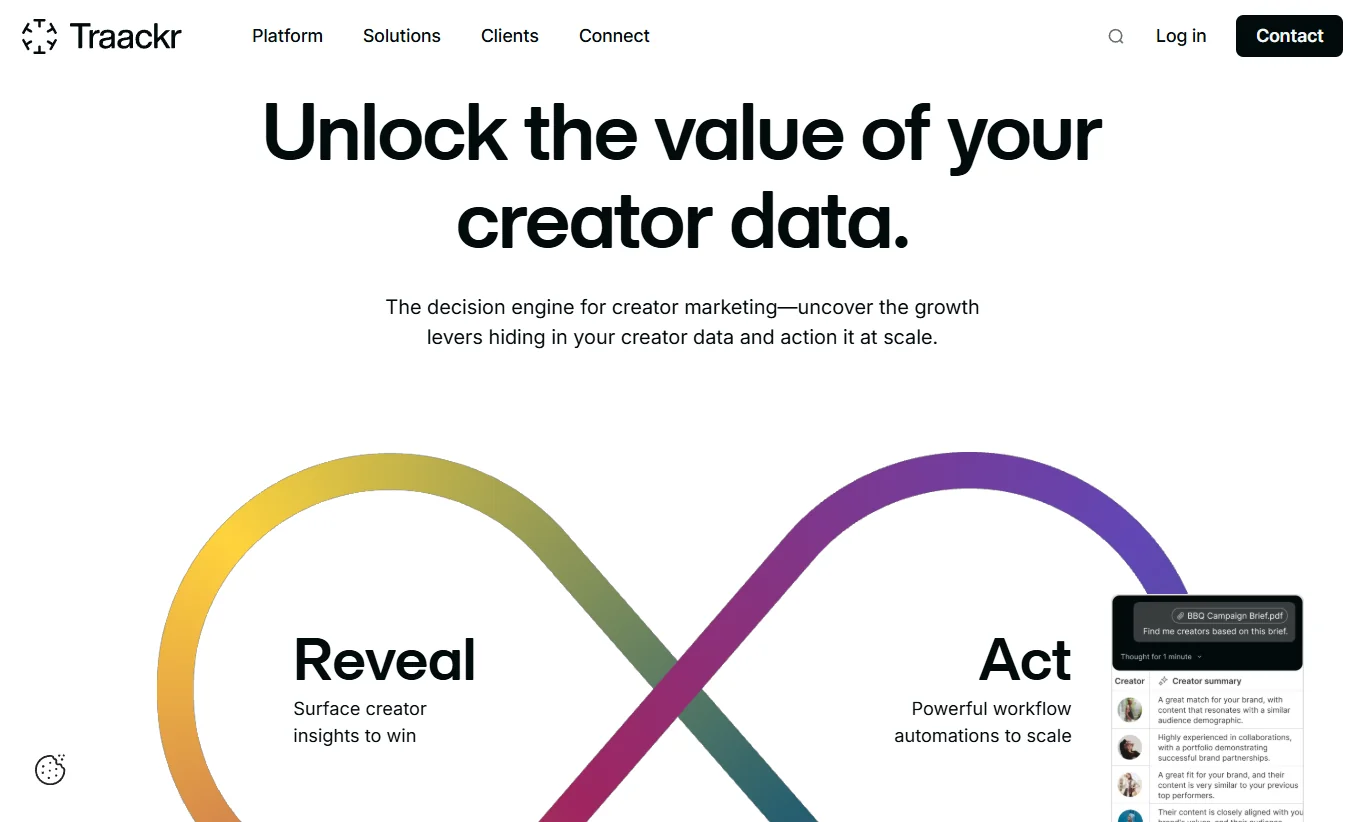
Traackr is the data nerd's CreatorIQ alternative. One of the oldest platforms in the category (it launched in 2008), it has positioned itself as the data-driven choice for large brands, particularly in beauty, with clients like L'Oréal and Tatcha. If your priority is measurement, benchmarking, and proving ROI over time, this is a serious contender.
Its strengths are in analytics. Traackr's Brand Vitality Score blends visibility, impact, and trust into a single metric, a built-in budget calculator estimates how much to invest per creator based on historical data, and efficiency dashboards track CPC, CPE, CPV, and cost per story view. Global performance benchmarking lets you compare your results against industry peers by vertical, region, and format. It also supports gifting, product seeding, and affiliate marketing.
Traackr uses enterprise custom pricing, generally landing somewhere in the $1,666 to $4,583 a month range (roughly $20,000 to $55,000+ a year) depending on scope. There is no free trial.
The caveats are worth weighing: Traackr is on the pricier end, its creator database is smaller (around 7 million) than discovery-first tools like Modash, and some users find the interface less intuitive. It is purpose-built for big, data-led programs, so smaller brands will likely find it more tool than they need.
10. Later
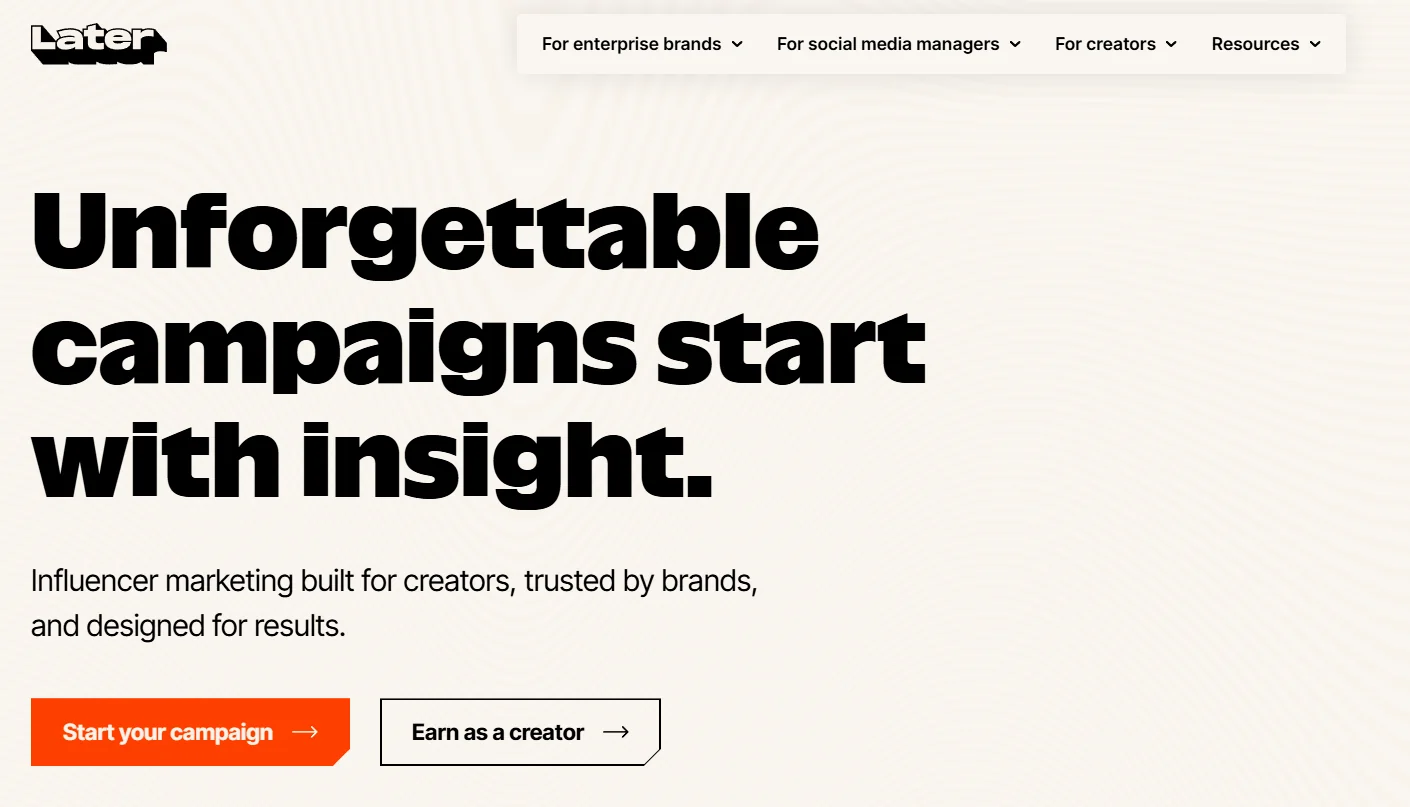
Later Influence rounds out the list as a strong pick for social-first marketing teams. After Later and Mavrck merged in 2024, the combined platform brought influencer marketing and social media management closer together, which is handy if your team already plans content and creator campaigns side by side.
Later Influence offers AI-powered influencer discovery across an index of 10+ million creators, end-to-end campaign workflows, real-time analytics, and an AI social listening tool for monitoring brand mentions. You can filter creators by 20+ criteria like location, niche, and follower count, and Later claims its creators are pre-vetted so you spend less time on background checks. For brands that want discovery and campaign management without the enterprise weight of CreatorIQ, it is an approachable option.
On pricing, Later Influence is quote-based and requires a demo to get started, so there is no public rate card. Note that the platform discontinued its free influencer search plan in 2025, so you will need a paid subscription to reach the database.
The limitations: the lack of transparent pricing makes it harder to compare at a glance, and because each creator profile does not show past collaboration performance, you get less insight into how a creator has actually delivered for other brands. Still, for social-led teams, the all-in-one angle is appealing.
Which CreatorIQ Alternative Should You Pick?
Here is the honest takeaway: you almost certainly do not need the exact enterprise platform that the world's biggest brands use. CreatorIQ is excellent at what it does, but most teams are paying for governance, scale, and complexity they will never touch. The right alternative depends on your size, your budget, and the channels you actually run.
If you want enterprise-grade analytics, Traackr and HypeAuditor deliver. If ecommerce and product seeding are your world, GRIN, Modash, and Upfluence are built for it. If you want a full program without the lock-in, Influencer Hero hits a strong middle ground. And if you want to skip the contracts entirely and start connecting with verified creators today, Afluencer lets you post a Collab and have creators apply to you in minutes.
For most growing brands, that simplicity wins. Post your first Collab, and let CreatorGPT help you build a strategy that actually fits your budget. No six-figure quote required.