.svg)

.png)
10 Best GRIN Alternatives in 2026
If you are reading this, you probably already know GRIN. It is one of the most established creator management platforms out there, built specifically for ecommerce and DTC brands that want to tie influencer activity straight to revenue.
GRIN goes deep on Shopify integration, product seeding, affiliate codes, and a 190M+ creator database, all in one dashboard. For a brand running an always-on program at scale, that closed loop is the whole appeal.
So why do brands look for GRIN alternatives? Cost is the big one. GRIN now publishes tiered plans on its own site, but trackers put those tiers from roughly $399/month up to $1,799/month, and enterprise deals are still widely reported around $2,000 to $2,500+/month on annual commitments.
That is a lot of platform for a small team. Reviews also flag annual contracts that are hard to exit, a discovery tool that has changed a few times, and onboarding that assumes you already have a dedicated influencer manager. None of that makes GRIN bad. It just means plenty of growing brands want something cheaper, more flexible, or easier to start.
Good news: there are strong options for every budget, whether you want a free way to find influencers, a discovery-first database, or a full campaign stack. We researched pricing and features fresh, and picked tools brands actually switch to. Let's get into them.
1. Afluencer
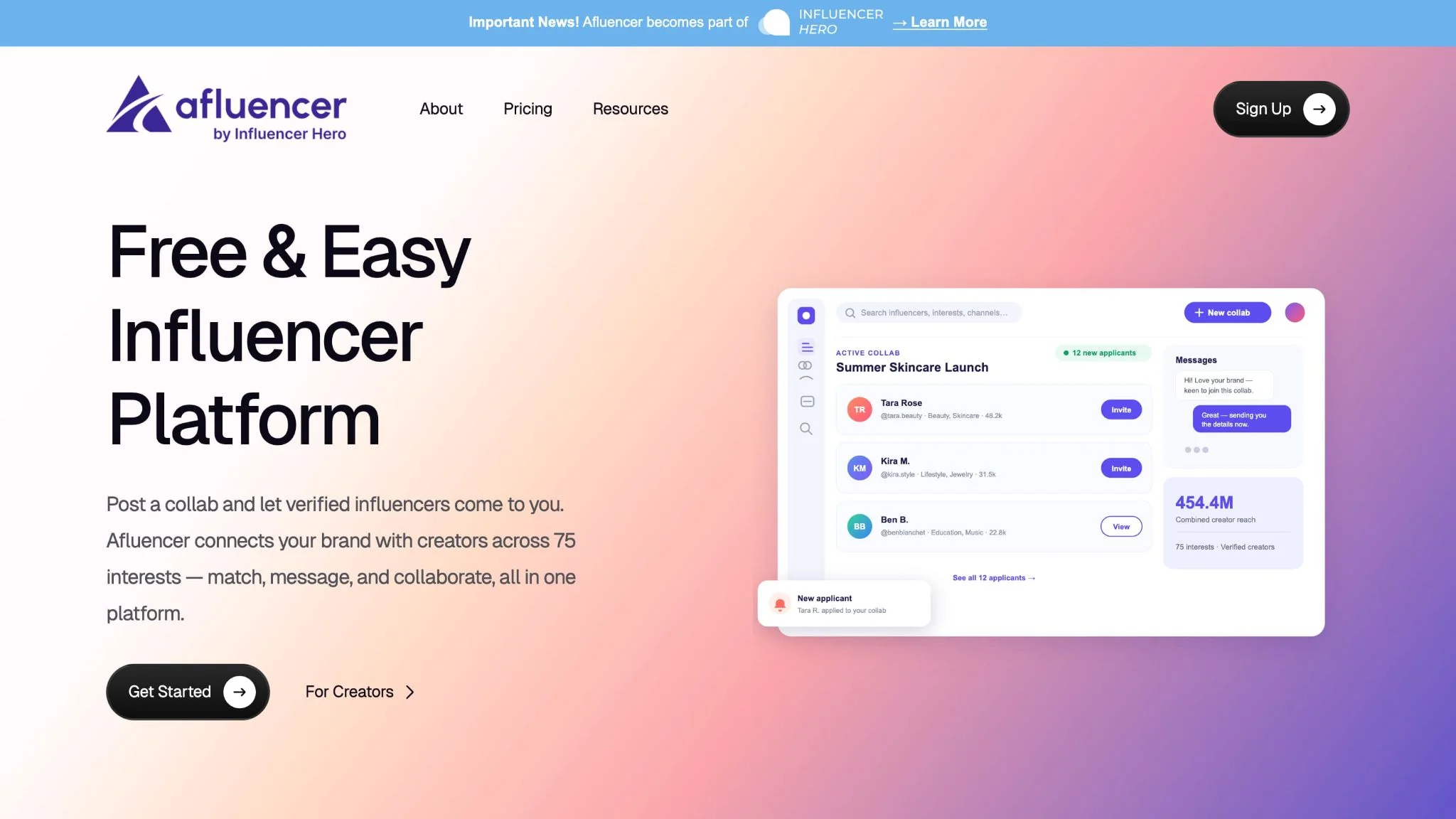
Afluencer flips GRIN's model on its head. Instead of paying for a giant database and doing all the outbound yourself, you post a "Collab" and verified creators apply to you.
That makes it a natural fit for DTC and Shopify brands that want creators without the enterprise price tag or the enterprise workload. You describe the campaign, set your criteria, and applications land in your inbox. No cold outreach required.
It is built around micro and nano creators, which is exactly the tier that converts best on gifting and product seeding. If you want to see how that plays out, our guide on ways to collaborate with influencers and creators breaks down gifting, paid deals, and affiliate setups.
Where GRIN assumes a big program, Afluencer meets you where you are. You can launch a gifting campaign, an affiliate push, or a paid Collab from the same place, and the micro-influencer gifting workflow takes minutes to set up.
Two AI tools make it faster. CreatorGPT acts as your strategy assistant for briefs, rates, and campaign ideas, and the Afluencer Collab Finder matches creators to your live opportunities so the right applications surface first.
On pricing, this is where the gap with GRIN gets obvious. Afluencer plans start at $49/month for Afluencer Marketplace (60 invitation credits, premium filters, full phone, email, and live chat support), then scale to Standard at $649/month (1,000 reach-outs, product send-outs, influencer payments) and Pro at $1,049/month (5,000 reach-outs, a dedicated account manager, 3+ seats), all billed monthly with no annual lock-in, plus a free trial to start.
The one honest catch: it is application-first, so if you want to hunt down specific big-name creators with heavy outbound, a database tool fits that better.
Chat with CreatorGPT for strategy and post your first Collab.
2. Influencer Hero
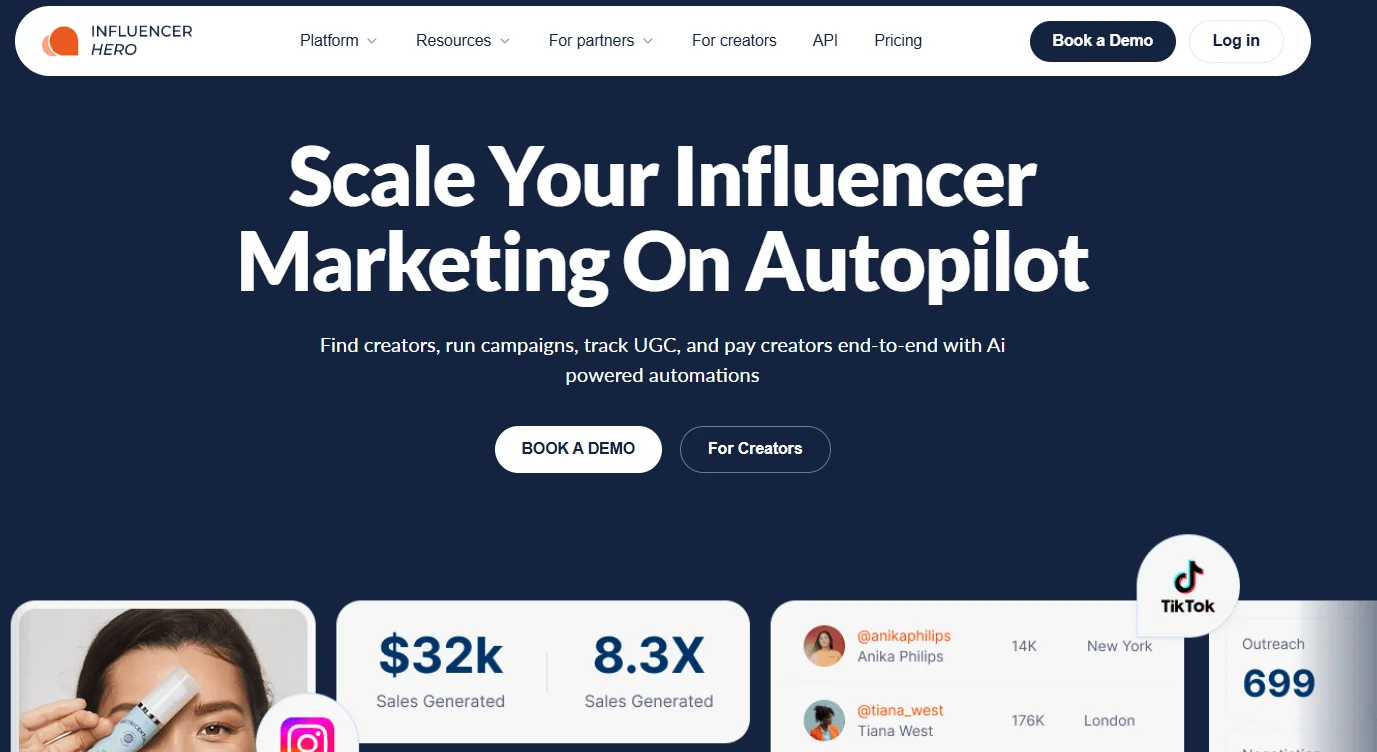
Influencer Hero is the closest thing on this list to a full GRIN replacement, built for D2C and ecommerce brands that want the entire program in one tool.
It bundles discovery across a 450M+ creator database, AI-personalized outreach with automated follow-ups, a full influencer CRM, gifting, affiliate tracking, UGC rights, and ROI attribution. It integrates with Shopify, WooCommerce, and Klaviyo, so you can tie creator activity to actual sales, which is the exact job most brands hire GRIN to do.
The outreach automation is a standout. You send sequenced emails from your own domain with follow-ups on autopilot, which is closer to sales automation than the manual outreach a lot of platforms still rely on.
Pricing is public and monthly, not annual: Standard runs $649/month (up to 1,000 creator contacts), Pro is $1,049/month, and Business is $2,490/month. The honest caveat is that there is no free trial and the entry plan carries a three-month commitment, so it is a real step up from a marketplace tool if you are just testing the channel.
3. Aspire
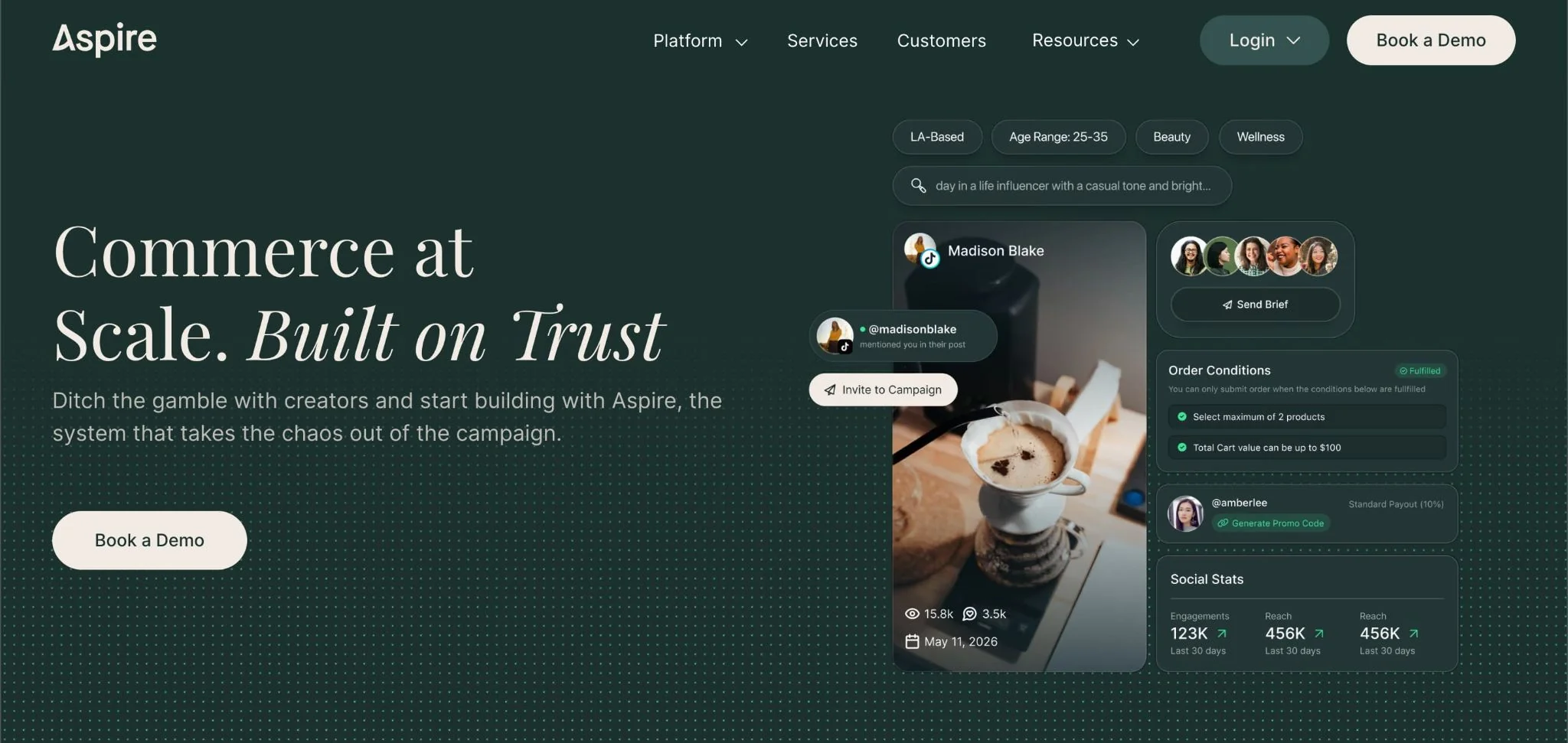
Aspire (formerly AspireIQ) is GRIN's most direct head-to-head competitor, aimed at mid-market and enterprise ecommerce brands running influencer marketing as a serious channel.
It covers the full lifecycle: discovery, a 1M+ creator marketplace where creators apply to your campaigns, outreach, content approval, affiliate tracking, and analytics. Household names like HelloFresh, Dyson, and Samsung use it, so it scales.
The reason a brand picks Aspire over GRIN usually comes down to its stronger ambassador and word-of-mouth commerce workflows, plus that inbound marketplace that reduces cold outreach. Content and affiliate tools are baked in rather than bolted on.
Pricing is custom and not published, but demo quotes consistently start around $2,000/month with a mandatory annual commitment, so roughly $24,000/year at the floor. That is the honest limitation: like GRIN, it is priced for established programs, and there is no easy month-to-month way to test it first.
4. Upfluence

Upfluence is an all-in-one platform best known for a feature GRIN fans tend to love: finding influencers hiding inside your own customer base.
Its Live Capture tool spots social reach among your site visitors and customers, then pipes anyone influential into your dashboard. Pair that with a searchable database of 9M+ profiles, deep Shopify, WooCommerce, and Klaviyo integrations, and a Jaice AI co-pilot that automates outreach and matching, and you have a strong customer-to-creator engine.
For ecommerce brands, that customer-to-creator angle is the real switch reason. You are recruiting from people who already buy from you, which usually beats cold outreach on conversion.
Pricing is custom and module-based, starting near $478/month per module but realistically landing around $1,276/month for a full license with a 12-month contract. The honest limitation mirrors GRIN's: annual commitment, opaque pricing, and a quote that only shows up after a demo.
5. Modash

If your main frustration with GRIN is paying enterprise money for discovery, Modash is the discovery-first alternative to look at.
It indexes a huge creator database (250M+ profiles across Instagram, TikTok, and YouTube) with detailed audience data and fake-follower checks. It also layers on campaign tools and a Shopify integration so you can run collabs, ship products, and track performance without stitching five tools together.
The switch reason is transparent, accessible pricing plus a genuinely useful free trial, which GRIN does not offer in the same way. You can test it before you commit.
Plans start at $199/month for Essentials (up to 100 creator contacts, billed annually) and $499/month for Performance (adds the Shopify integration and more contacts), with custom Enterprise pricing above that. There is a 14-day free trial. The honest caveat: Modash leans discovery-heavy, so it is lighter on the deep relationship-management workflows GRIN builds its whole product around.
6. Insense

Insense is the pick when your real goal is content, not a giant CRM. It is a UGC and creator-ads platform built for DTC and Shopify brands running paid social.
It gives you a vetted marketplace of 80,000+ creators, brief templates, automated contracts, and perpetual content rights, plus official Meta and TikTok partnerships. That means you can push approved UGC straight into Spark Ads and Meta Partnership Ads, and run TikTok Shop and seeding campaigns from the same dashboard.
Brands leave GRIN for Insense when the priority is a steady pipeline of ad-ready creator content rather than long-term relationship management at scale. It is faster to first content and less overhead.
Self-serve plans start around $500/month (billed quarterly at roughly $1,500), with managed packages running $2,800 to $4,200/month. The honest catch is the fee stack: creator payments are separate, and a 7% to 20% marketplace fee applies to each one, so the true budget sits well above the subscription line.
7. SARAL

SARAL positions itself directly against tools like GRIN, and its whole pitch is being the affordable, no-lock-in "InfluencerOS" for small and mid-size DTC brands.
It covers the full stack: a Chrome extension and 150M+ database for discovery, automated outreach from your own domain, a creator CRM, product seeding, affiliate links, and sales tracking. Setup takes 24 to 48 hours instead of the weeks that enterprise onboarding can eat.
The switch reason is transparency and flexibility. SARAL publishes pricing openly and skips the annual contracts and $25,000 upfront commitments that push brands away from heavier platforms in the first place.
The Starter plan runs about $3,600 per quarter (roughly $1,200/month) or $12,000/year, with unlimited influencers and users even on the entry tier, plus a free trial after an intro call. The honest limitation: the analytics and feature depth are not built for brands running complex multichannel programs, and billing is quarterly rather than true month-to-month.
8. Social Snowball
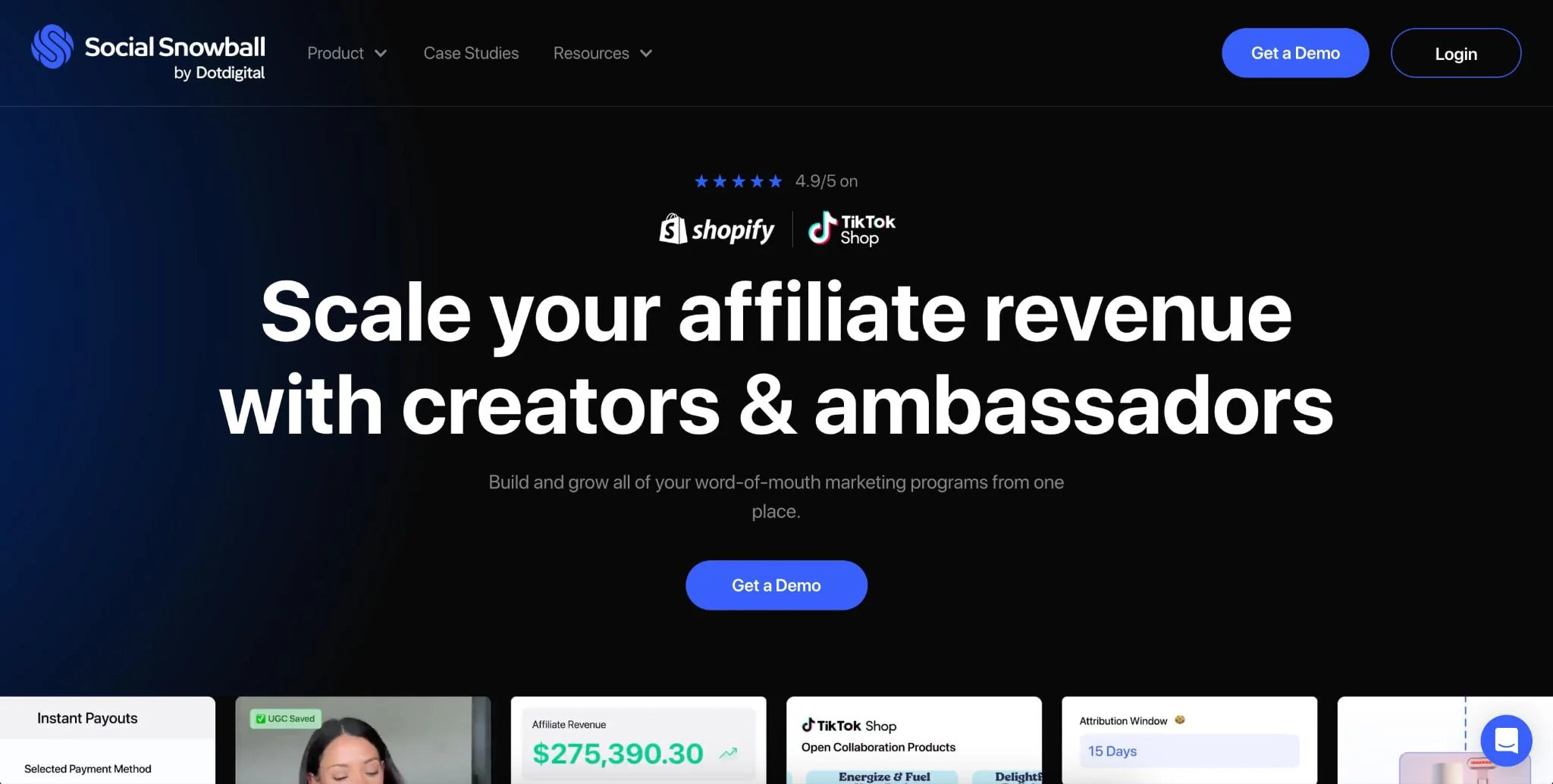
Social Snowball is a Shopify-native affiliate, referral, and ambassador platform, and it is a smart alternative if the part of GRIN you actually use is the affiliate and word-of-mouth side.
Its signature move is auto-enrolling every customer as an affiliate right after checkout, then managing payouts, tiers, and Safelinks (one-time codes that stop leaks to coupon sites). It also handles influencer management, Creator Search, and TikTok Shop, and it now sits under Dotdigital after a 2025 acquisition.
Brands switch here when they want to turn existing customers into a revenue channel without paying enterprise rates for a full suite. It does one lane, and does it well.
The Snow Day plan starts at $249/month plus 3% of affiliate-generated revenue, while Blizzard starts at $899/month with no commission. The honest limitation is twofold: it is Shopify-only, and that 3% cut on the entry plan quietly eats margin once your affiliate revenue scales.
9. CreatorIQ
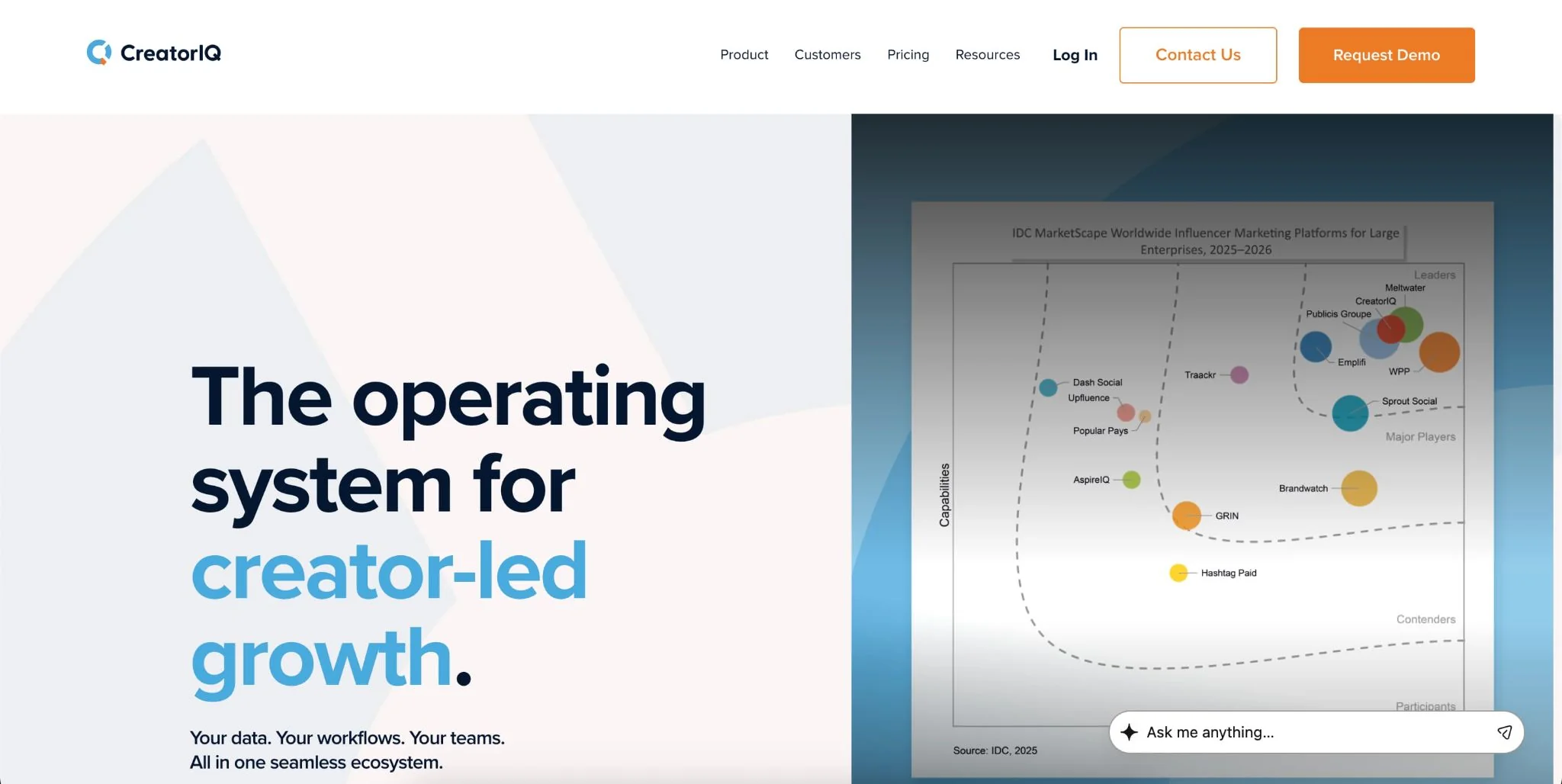
CreatorIQ is the alternative for brands leaving GRIN because they need something even bigger, not smaller. It is a true enterprise platform for large teams and agencies.
It offers a 6M+ creator database, deep audience segmentation, CRM-style relationship management, sophisticated API integrations, and the kind of reporting that keeps big stakeholders happy. Onboarding comes with a dedicated account manager and quarterly strategy sessions.
Brands pick it over GRIN when they are running high-volume, multi-market programs and need precision analytics and team collaboration at scale. It is the premium tier of this category.
Pricing reflects that. Plans reportedly start around $35,000/year and climb well into six figures for larger deployments, all on annual contracts. The honest limitation is obvious: this is enterprise-only pricing, so for most brands looking to spend less than GRIN, CreatorIQ is a step up in cost, not down.
10. Statusphere

Statusphere rounds out the list for brands that want the output of a big program without running it themselves. It is a fully managed micro-influencer platform focused on product seeding and UGC at scale.
You ship products, and its StevieOps AI plus in-house team handle creator matching, briefs, fulfillment, content review, rights, and reporting. The result is thousands of rights-ready posts you can repurpose across social, PDPs, and paid ads, with 1-click codes for Spark and Partnership Ads. Brands like Express and Kendo use it.
The switch reason is time. Where GRIN gives you tools and expects a dedicated manager, Statusphere runs the whole seeding operation so your team does not touch the logistics.
Pricing is customized and premium, with managed programs typically starting around $3,500/month and initial investments often quoted from about $10,000. The honest limitation is control: because creators opt in and the model is hands-off, you get less say over exactly who posts before content goes live, and it centers on gifting rather than full campaign management.
Which GRIN Alternative Should You Pick?
Here is the honest takeaway: you do not need the exact platform every big DTC brand uses. The right GRIN alternative depends on your size, budget, and which part of the workflow actually matters to you.
Want deep analytics and enterprise scale? Look at Aspire, Upfluence, or CreatorIQ. Just need content? Insense or Statusphere. Focused on affiliates? Social Snowball. Chasing affordable, flexible discovery? Modash or SARAL.
And if you would rather skip the big price tag and let verified creators come to you, Afluencer is the easiest place to start, at $49/month with a free trial to post your first Collab, and CreatorGPT on hand for strategy. Sign up for a free trial and see how fast the applications roll in.