.svg)


10 Best Influencer Marketing Platforms for 2026
Finding the right creators is the hardest part of any influencer campaign. You can spend days scrolling profiles, second-guessing follower counts, and chasing people who never reply. The right platform takes that grind off your plate, so your team can focus on the work that actually moves revenue.
What changed in 2026 is how these platforms find creators for you. Discovery has shifted from static databases and endless filters toward AI that reads your brief and returns a shortlist in seconds. Some tools lean into that conversational search, others double down on audience vetting, attribution, or managed campaigns. The differences matter, because the platform you pick shapes how fast you launch and how confidently you measure results.
We pulled together the ten platforms brands are actually using this year, from lightweight marketplaces to full enterprise suites. Each entry covers what it does, verified pricing where it is public, and who it fits best. If you are still mapping out your program, our guide on how to create an influencer marketing strategy pairs well with this list, and our roundup of tools to find influencers to promote products covers a few more options.
Ready to find the platform that fits your brand? Let's break them down one by one.
Quick Comparison: Influencer Marketing Platforms at a Glance
The Top 10 Influencer Marketing Platforms for 2026
These platforms range from free, inbound marketplaces to six-figure enterprise suites, so the goal here is fit, not just features. As you read, keep your own program in mind: your budget, your team size, and whether you want software you run yourself or a service that runs it for you. Let's get into it.
1. Afluencer + CreatorGPT
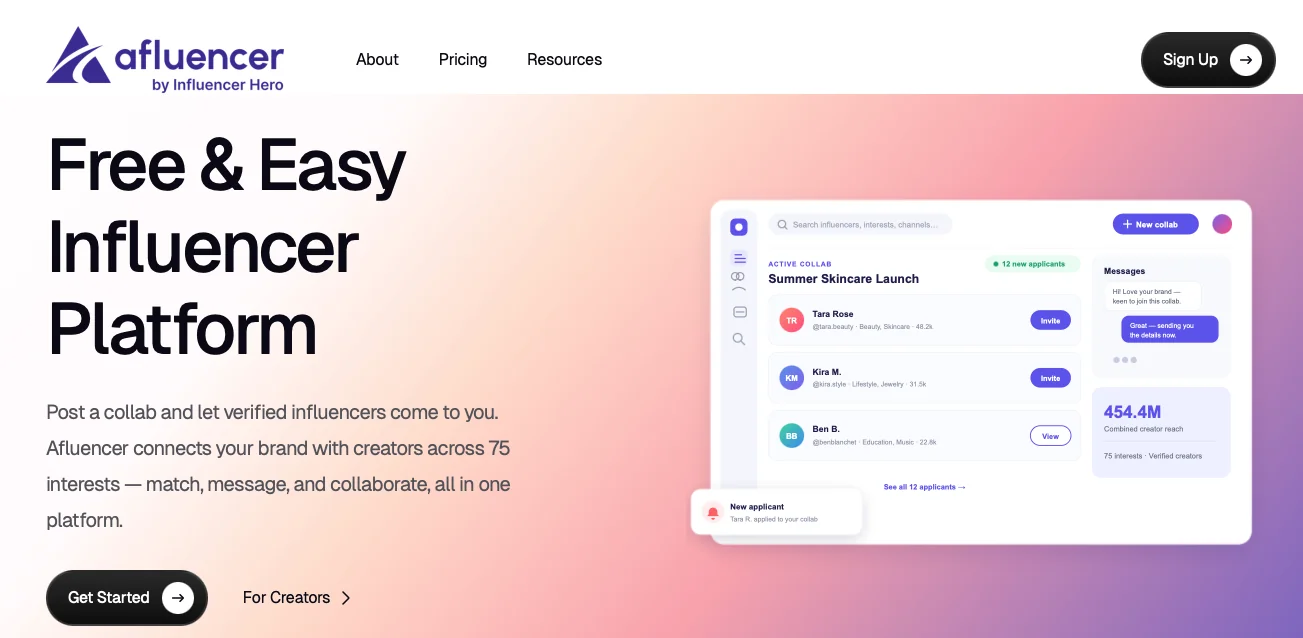
Afluencer is the influencer marketing platform where discovery starts with a conversation instead of a spreadsheet. Brands post a Collab describing what they want, and verified creators apply directly, so instead of cold-pitching strangers you review people who already raised their hand. That inbound model is what makes it a fast, low-friction way to source creators, especially for small and mid-sized brands that do not want to babysit a complex tool.
The numbers: Posting a Collab is free, and brands get a free trial to test the waters. Paid brand plans start at $49/month for the Marketplace tier, then move to Standard and Pro as your outreach and payment needs grow. Creators join free, so the supply side stays deep, with 20,000-plus creators across micro to macro tiers. See the full Afluencer pricing page for current tiers.
On top of the marketplace, Afluencer layers AI where it counts. CreatorGPT handles strategy and campaign advice, and the Afluencer Collab Finder matches you to live opportunities without manual filtering. It pairs naturally with a smart product gifting strategy, since gifted collabs are one of the easiest ways to get creators posting. If you want an affordable, inbound way to reach real creators, Afluencer is the easiest place to start. Chat with CreatorGPT for creator strategy, or try the Afluencer Collab Finder to get matched with live opportunities.
2. Influencer Hero
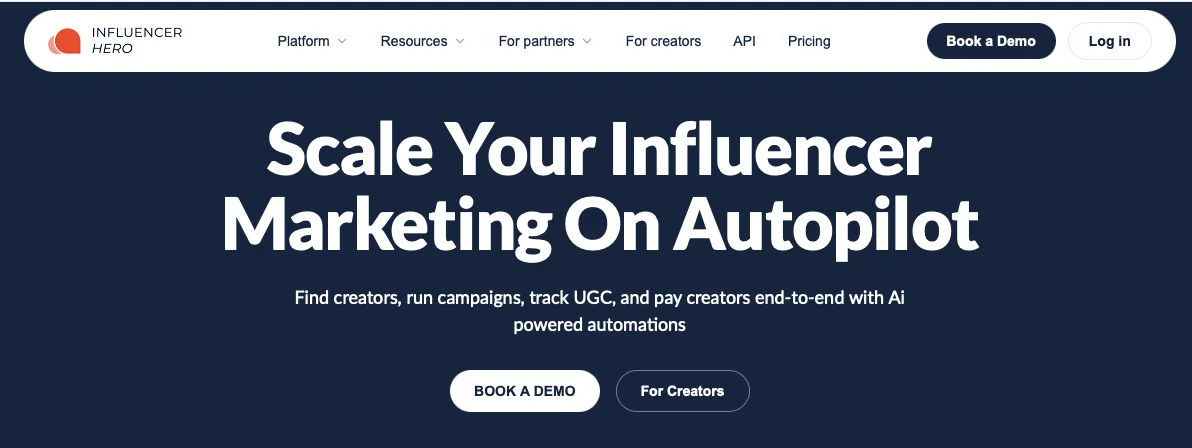
Influencer Hero is an all-in-one influencer marketing platform built for brands that want to run programs in-house without stitching together five different tools. It combines creator discovery, a CRM, automated outreach, gifting, affiliate management, and ROI attribution in a single workflow. That end-to-end coverage is its main draw, because your team can find a creator, message them, ship product, track the sale, and report on it without leaving the platform.
The numbers: Plans start at $649/month for Standard (one seat, 1,000 monthly reach-outs), then $1,049/month for Pro (three seats, 5,000 reach-outs, a dedicated account manager), and $2,490/month for Business (eight seats, 10,000 reach-outs, unlimited influencer payments, and UGC tracking). Agencies can get custom pricing. All plans carry a three-month minimum, and paying quarterly or annually cuts the monthly rate.
It is a particularly strong fit for mid-market and Shopify or ecommerce brands, thanks to native integrations and sales attribution that tie posts back to revenue. One honest caveat: the three-month commitment and a starting price near $649/month make it a heavier lift for very small brands testing influencer marketing for the first time, and the ROI and UGC tracking features sit on the top Business tier. For brands ready to scale a real program, though, it is one of the most complete stacks available.
3. Julius by Triller
Julius is an enterprise-grade discovery and vetting platform, now owned by Triller and enriched with HYPR's data. It indexes millions of influencer profiles and goes deep on audience demographics, so large teams can verify who a creator actually reaches before committing real budget. That rigor makes it a favorite for agencies, PR teams, and Fortune 500 brands that treat due diligence as non-negotiable.
The numbers: Julius is quote-based, with no public self-serve pricing. Third-party software listings put the starting point around $24,000/year, but treat that as an indicative floor rather than a confirmed rate, since Julius prices every deal by quote and offers demos on request.
Where Julius earns its keep is audience vetting across Instagram, YouTube, TikTok, and more, with demographic breakdowns that smaller tools cannot match. The trade-offs are real: reviewers note occasional data gaps, thinner micro-influencer coverage, and opaque, enterprise-only pricing that rules it out for most small brands. If your spend is large enough that a bad creator pick is expensive, Julius is built for you.
4. SARAL
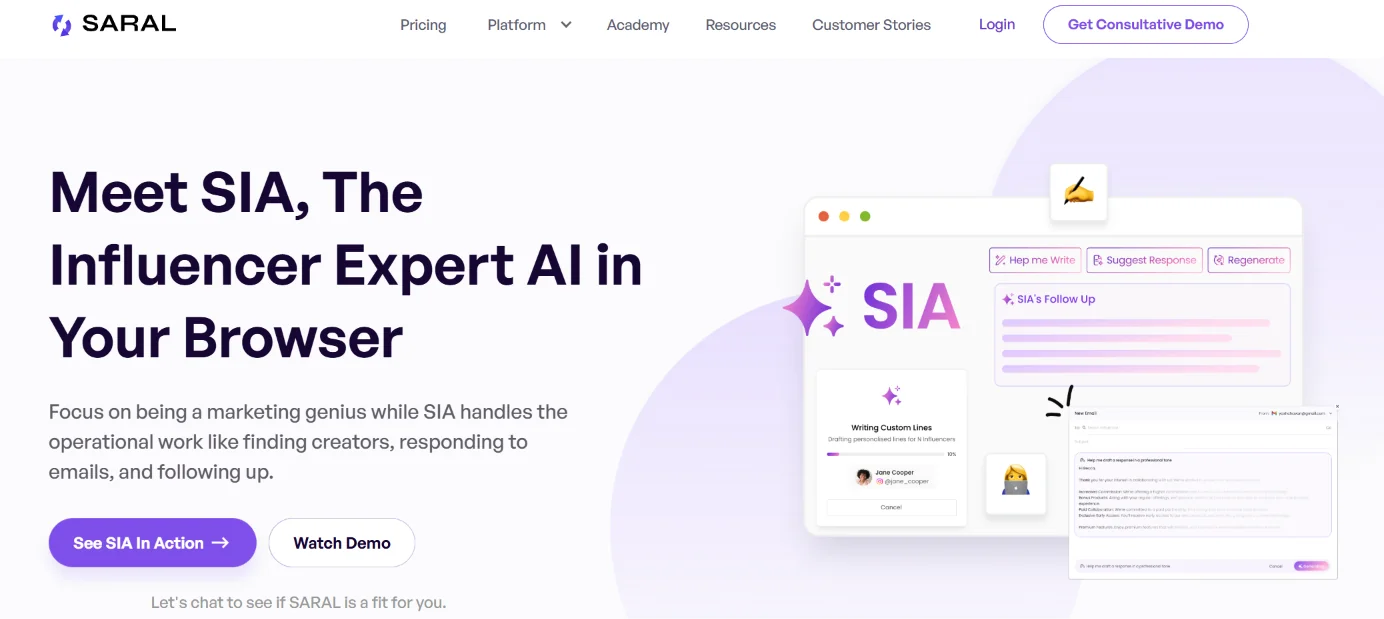
SARAL is an InfluencerOS for ecommerce brands that want to scale their influencer program and drive predictable revenue instead of running one-off campaigns. It brings the entire program into one place, from finding and reaching out to creators to managing relationships, sending products, tracking content, and measuring performance.
Its AI assistant, SIA , helps teams find relevant creators and lookalikes faster, while automated email sequences handle outreach and follow-ups. The CRM keeps creator relationships, conversations, products sent, and campaign activity organized as the program grows.
SARAL's Pulse feature handles what happens after creators start posting. Brands can track creator content and campaign performance, manage usage rights, and turn creator posts into Meta partnership ads. This gives teams a clearer view of which creators and content are working, so they can invest more in the partnerships that perform.
Best for: Ecommerce brands that want to turn influencer marketing into a scalable, repeatable growth channel and manage the full program from one place.
5. NeoReach

NeoReach is an enterprise platform that indexes 250 million-plus creators and layers on 40-plus search filters, AI audience analytics, and predictive insights. What sets it apart is the choice of engagement: you can license the software and run campaigns yourself, or hand the whole program to NeoReach's managed team. That flexibility makes it a strong pick for large brands that want serious data but do not always have the headcount to act on it.
The numbers: NeoReach is quote-based with no public pricing. Third-party estimates put self-serve SaaS access around $1,500/month on a 12-month minimum, with managed campaigns starting near $25,000 and enterprise annual contracts running well into six figures. As always with quote-based tools, the number that matters is the one in your own proposal.
The depth of data and the managed-service option under one roof are the real differentiators here. The downside is a high floor and a 12-month minimum that put it out of reach for SMBs and make it hard to evaluate without a sales call. If you have enterprise budget and want either power or a done-for-you team, NeoReach covers both.
6. Traackr
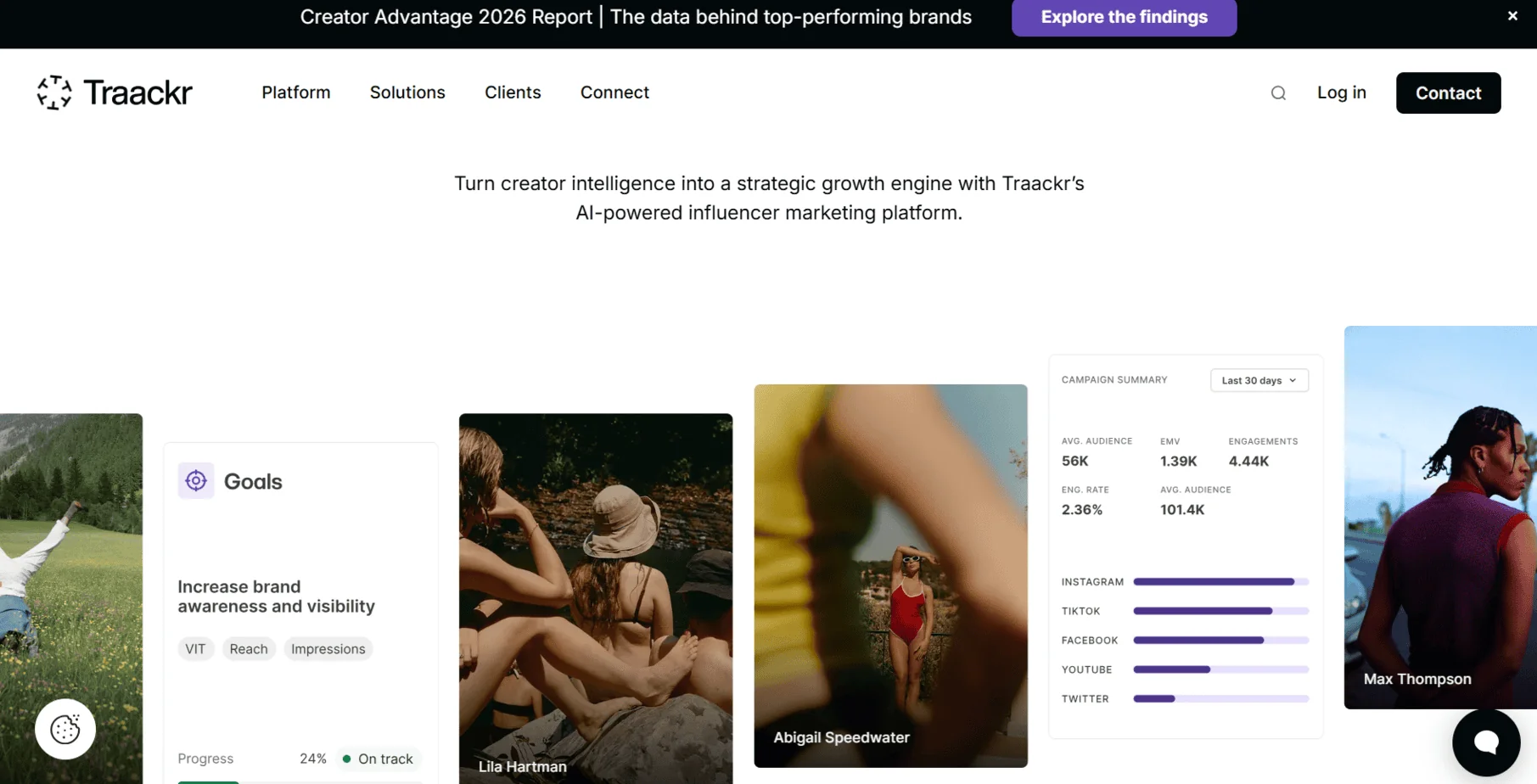
Traackr positions itself as the system of record for influencer marketing, built for global brands that need one consistent way to measure programs across markets. Its strengths are competitive benchmarking and full-funnel attribution, so multi-market teams can compare campaigns on standardized KPIs instead of arguing over mismatched spreadsheets. For a brand running influencer programs in a dozen countries, that governance is the whole point.
The numbers: Traackr sells annual contracts only and does not publish prices. Recent third-party estimates put the floor around $25,000/year, with higher tiers climbing past $50,000 depending on markets and seats. There is no monthly option, so this is a planned annual investment.
Because Traackr is a measurement and management system rather than a hands-on execution tool, it rewards teams that already have a program and want to run it with discipline. If you are looking to launch quickly or execute campaigns end to end, it is more infrastructure than you need. But for global enterprise teams that live or die by clean, comparable data, few tools do it better.
7. Aspire
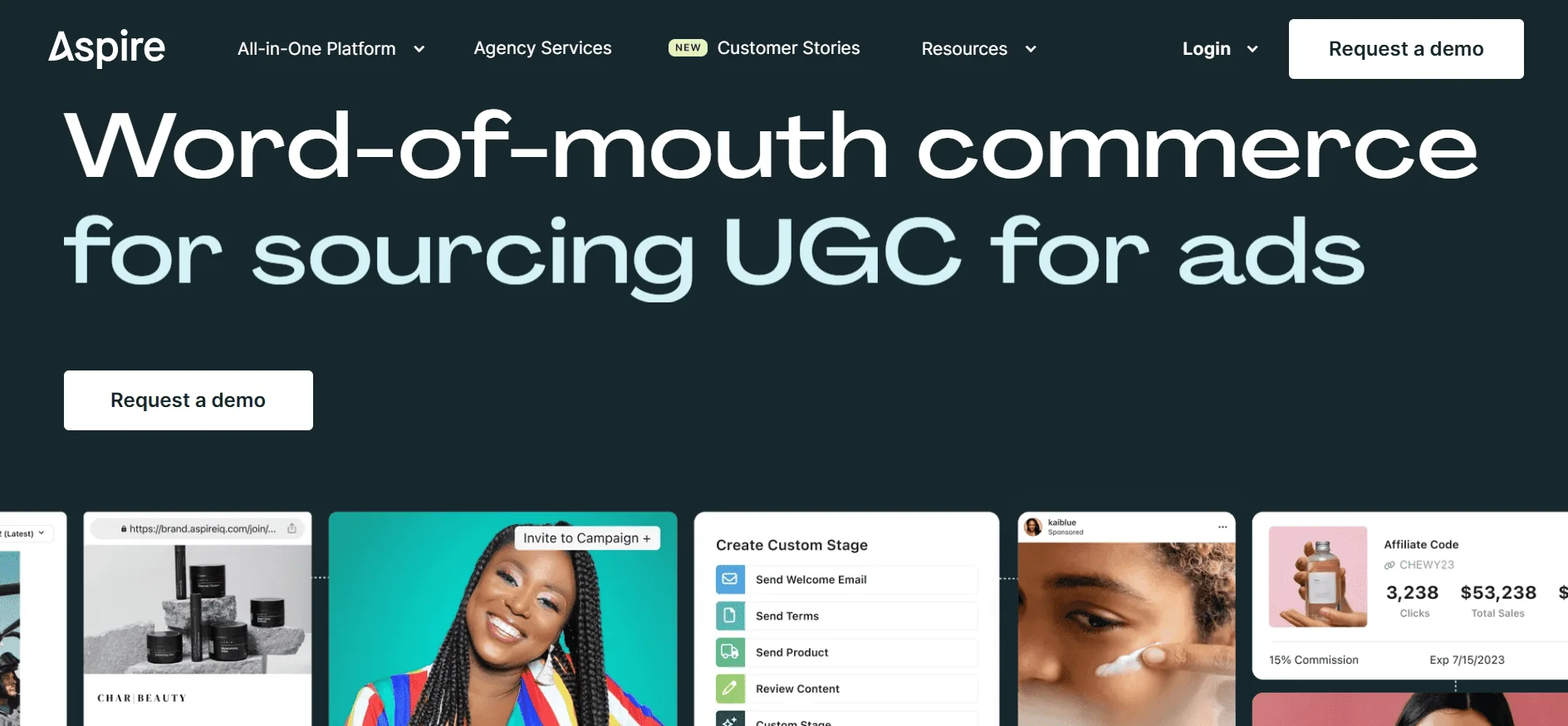
Aspire (formerly AspireIQ) is an all-in-one platform for ecommerce and DTC brands, spanning discovery, relationship management, and full campaign execution. Its sweet spot is long-term creator relationships rather than one-off posts, with CRM-style tools and ecommerce integrations for affiliate links, promo codes, and product seeding. Brands building an ambassador program tend to like how it keeps every creator relationship organized in one place.
The numbers: Aspire is quote-based and points you to a demo instead of a price page. Third-party estimates put entry pricing somewhere between $2,000 and $2,500/month, and there is no free trial, so you will go through sales before you can test it.
The relationship management and ecommerce workflows are what make Aspire stand out, especially for brands that want ongoing partnerships instead of transactional campaigns. The honest caveat is the lack of a free trial and a mid-to-high price floor, plus a heavy ecommerce orientation that fits DTC better than, say, a B2B or local brand. For DTC teams growing an ambassador roster, it is a proven choice.
8. Lefty
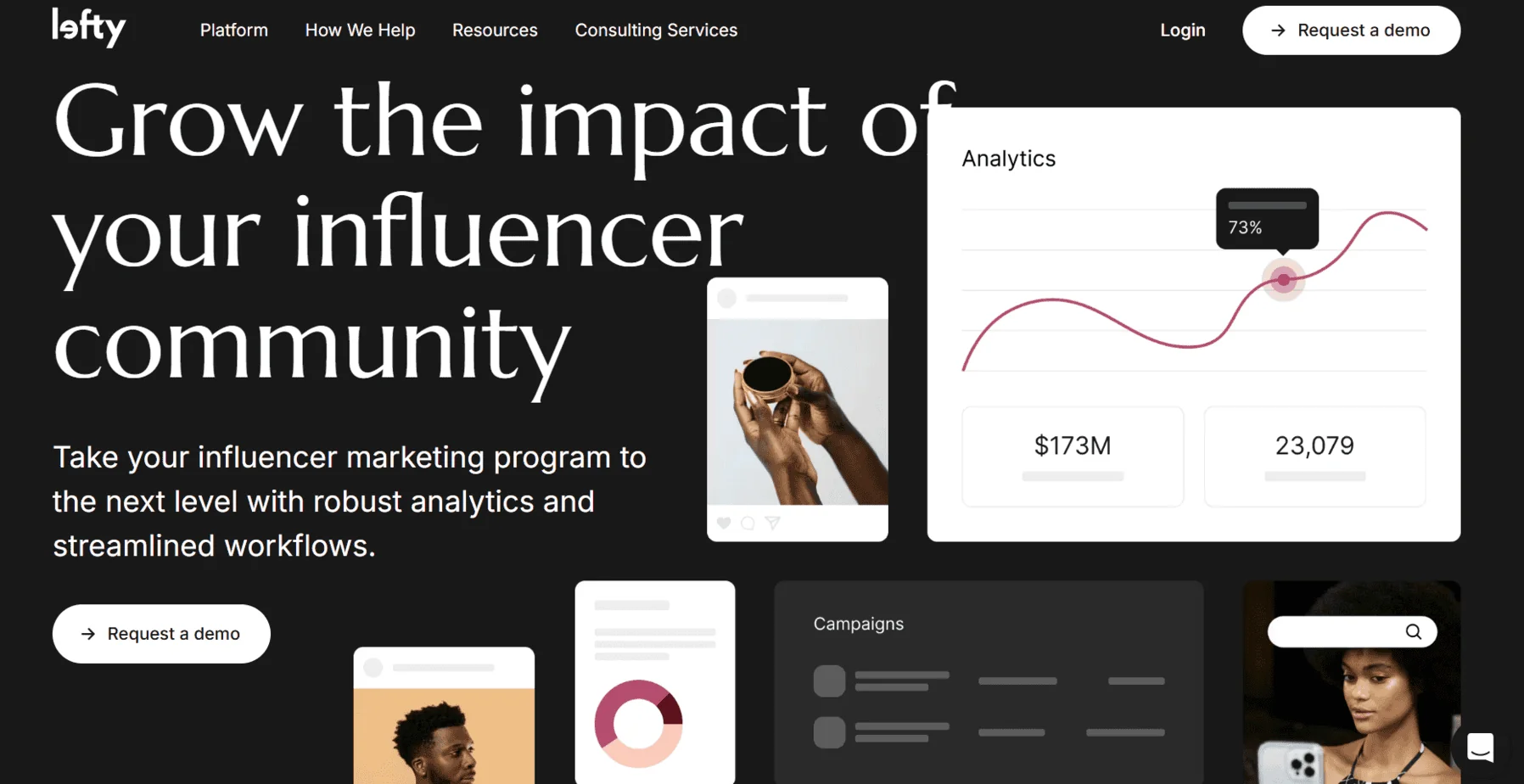
Lefty is a premium platform built for fashion, beauty, and luxury brands, and it counts luxury houses like Louis Vuitton and Ralph Lauren among its clients. Its calling card is Earned Media Value measurement and Brand Affinity matching, both tuned to the metrics luxury marketers actually care about. If your brand lives on aesthetics and earned coverage rather than click-through rates, Lefty speaks your language.
The numbers: Lefty prices by quote and routes you to a demo. The only figures floating around publicly are roughly €590 to €990/month from third-party sources, but Lefty itself does not publish tiers, so expect a custom proposal rather than a fixed rate.
EMV-centric analytics and brand-affinity matching are what separate Lefty from broader tools, giving luxury and beauty teams a measurement model that fits their world. The flip side is that this focus is niche by design, so it is less suited to performance-driven DTC brands, and the euro-denominated pricing is opaque. For fashion, beauty, and luxury brands, though, it is purpose-built.
9. Sideqik
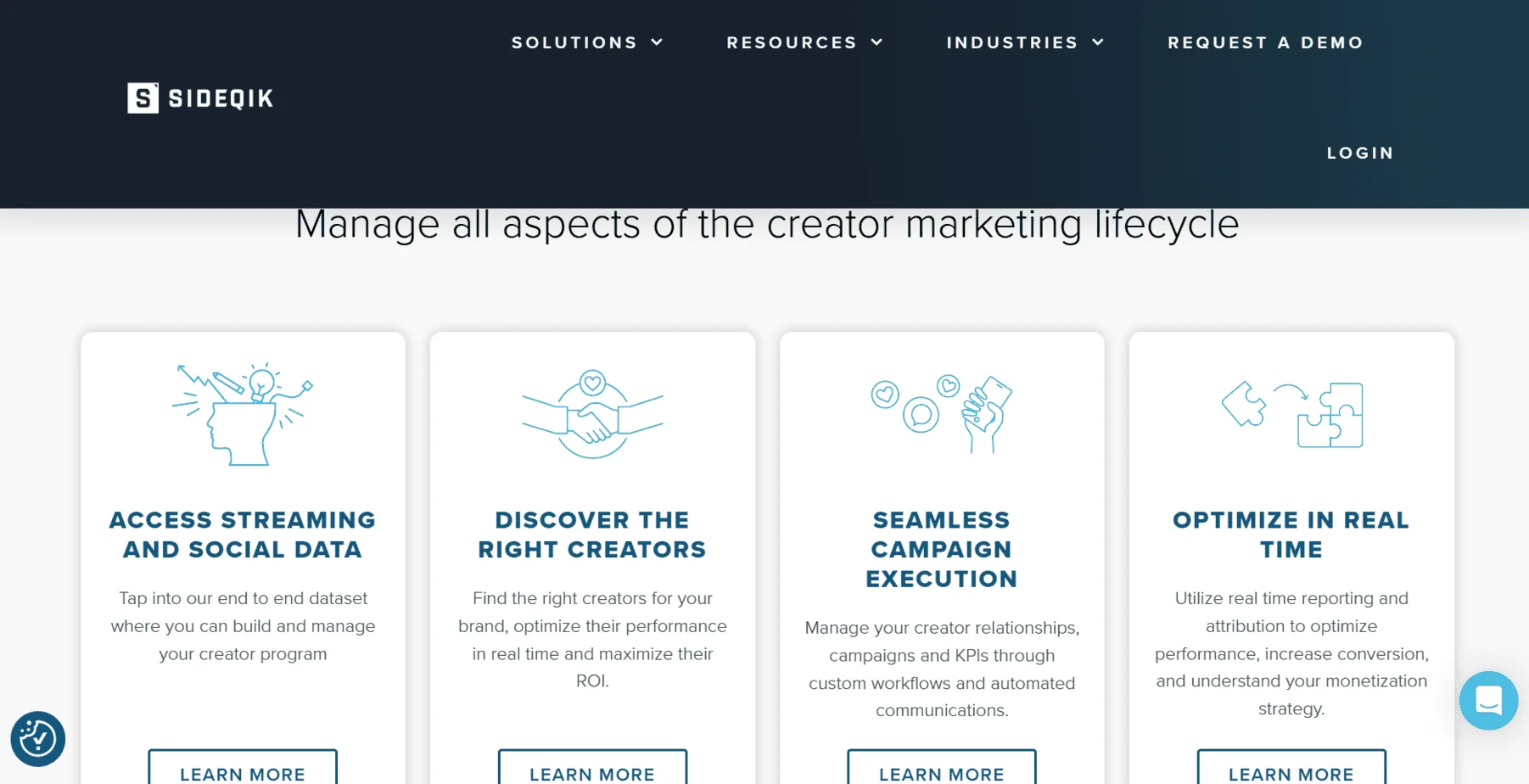
Sideqik is an enterprise platform specializing in gaming, esports, entertainment, and lifestyle, and as a GameSquare company it leans hard into live-streaming intelligence. It is designed for always-on programs rather than one-off campaigns, with AI-driven discovery and social listening that surface creators across Twitch, YouTube, and Discord. For brands chasing gaming and streaming audiences, that specialization is genuinely hard to replicate.
The numbers: Sideqik is quote-based, with tiers structured around how many creators you manage (roughly 25, 100, or 250) and how many seats you need. No dollar figures are public, so pricing comes through a sales conversation.
Its gaming and streaming focus, backed by GameSquare's data, is the standout reason to choose it. The caveats worth knowing: reviewers consistently flag a dated interface, the managed-creator caps can feel limiting even at the top tier, and the fully sales-gated pricing makes it hard to scope quickly. If gaming and esports are your world, Sideqik is one of the few platforms built specifically for it.
10. Emplifi

Emplifi (formerly Socialbakers) is a unified customer-engagement suite that folds influencer marketing into a much larger social platform covering publishing, community management, analytics, and customer care. Its pitch is consolidation: run influencer discovery, management, and ROI tracking in the same place you already handle social. For brands tired of juggling separate tools, that all-in-one positioning is the appeal, and newer Agentic AI workflows tie the pieces together.
The numbers: Emplifi publishes starting prices for its Social Marketing product, from $1,249/month (Essential) and $2,499/month (Advanced), while influencer marketing is sold as a paid add-on module priced by quote. So the influencer capability specifically is not a public number, and real-world spend often lands in the low thousands per month and up.
The unified suite is Emplifi's biggest strength and its biggest caveat at the same time. Influencer marketing is a secondary module inside a broad platform, so a brand buying primarily for creator campaigns pays for and navigates a lot of surrounding software. If you want influencer marketing to live alongside your wider social operation, it makes sense. If you want a dedicated creator tool, something more focused will serve you better.
How to Choose the Right Influencer Marketing Platform in 2026
There is no single best platform, only the best one for your situation. Run each option through these factors before you commit.
• Your budget and commitment Costs range from free (Afluencer) to six figures a year (Traackr, NeoReach). Decide whether you can commit to an annual contract or need something month-to-month, and get clear on your target creator spend first. Our breakdown of influencer marketing rates helps you set a realistic budget.
• Software vs. managed service Some platforms hand you the tools (Influencer Hero, Aspire), while others will run campaigns for you (NeoReach). Pick based on whether you have the team to execute in-house or would rather outsource it.
• Your industry A few platforms are built for specific verticals, like Lefty for luxury and beauty or Sideqik for gaming. If you are in one of those spaces, a specialist often beats a generalist.
• Discovery vs. full workflow Decide whether you just need to find creators or want end-to-end management with outreach, payments, and attribution. An all-in-one stack costs more but saves you from gluing tools together. If you are still learning the ropes, our guide to finding, vetting, and hiring micro-influencers is a good place to start.
• Pricing transparency Marketplaces like Afluencer and software like Influencer Hero publish real numbers, while most enterprise tools quote by deal. If you want to compare costs without a sales call, favor the transparent options.
The right answer depends on your budget, your team, and your goals. Match the platform to those three things and you will spend less time evaluating and more time running campaigns.
Final Thoughts
Influencer marketing platforms in 2026 span a wide range, from free marketplaces that connect you with creators in minutes to enterprise suites that measure global programs down to the last dollar. The shift toward AI-driven discovery means finding the right creators is faster than it has ever been, whatever your budget.
You do not need every option on this list. You need the one or two that fit how your brand actually works. A small DTC brand testing the waters and a global enterprise standardizing measurement should not be shopping for the same tool, and that is fine. Start with your budget and your team's capacity, and the shortlist gets short fast.
If you want the lowest-friction way to start, post a Collab on Afluencer and let verified creators come to you, or try our free influencer search tool to see who is out there. Chat with CreatorGPT for creator strategy, or use the Afluencer Collab Finder to get matched with live opportunities.