.svg)

.png)
10 Best Influencer Marketplaces for Brands in 2026
Hiring creators should take an afternoon, not a quarter. That's the whole promise of an influencer marketplace: you post what you need, creators come to you with their rates attached, and you book without a six-week software rollout or a sales call.
The problem in 2026 is that "marketplace" now covers wildly different products. Some are open marketplaces where creators apply to your brief. Others are UGC content shops where you buy videos like inventory. A few are free but locked to one sales channel. The pricing models differ just as much, so two platforms with the same sticker price can cost very differently once fees land.
Before you commit budget, it helps to know how the broader category splits, because a marketplace and a full marketing platform solve different problems. It also helps to have a plan for vetting creators, since open marketplaces put that job on you.
Below are the 10 best influencer marketplaces for brands in 2026, ordered from the most open and self-serve down to the most channel-specific. Let's break them down one by one.
Quick Comparison
The Top 10 Influencer Marketplaces for Brands in 2026
Every platform below lets creators and brands meet in one place, but the model underneath changes the math. Open marketplaces charge you for access. UGC marketplaces charge you per piece of content. Native marketplaces cost nothing upfront and lock you to one channel.
Prices are current as of 2026 and pulled from each platform's own pricing page. Let's get into it.
1. Afluencer
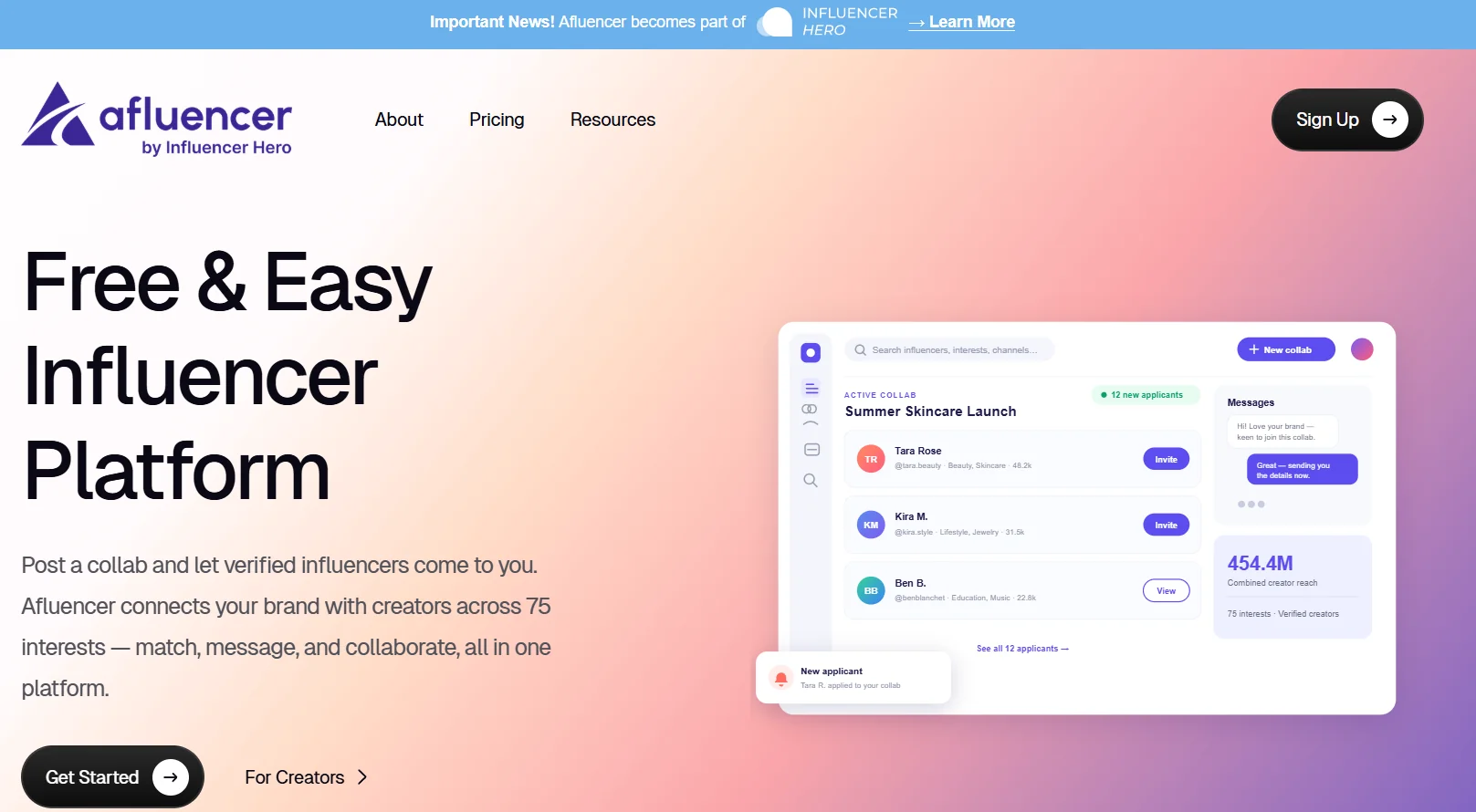
Afluencer runs on an application model, which flips the usual workflow. Instead of cold-messaging hundreds of creators and hoping for replies, you post a Collab, set your criteria, and verified creators apply to you. For small and mid-sized brands, that inbound flow is the fastest route from "we should try influencers" to a shortlist you can actually message. It covers Instagram, TikTok and YouTube, and works equally well for gifting, paid posts, and ambassador programs. If you're starting with product seeding, this walkthrough of a gifting campaign shows the setup end to end.
The numbers: The Afluencer Marketplace plan is $49/month and includes 60 invitation credits per month, premium influencer filters, and phone, email and live chat support. Two higher tiers, Standard at $649/month and Pro at $1,049/month, unlock the Influencer Hero platform for brands that outgrow the marketplace. Afluencer takes no cut of what you pay creators.
The trade-off is scope. Afluencer is built for brands getting started, so teams that want to scale to hundreds of creators with automated outreach and revenue attribution eventually move up. For everyone else, it's the cheapest serious entry point in this list.
Chat with CreatorGPT for campaign strategy, or use the Afluencer Collab Finder to get matched with creators who fit your brief.
2. Influencer Hero
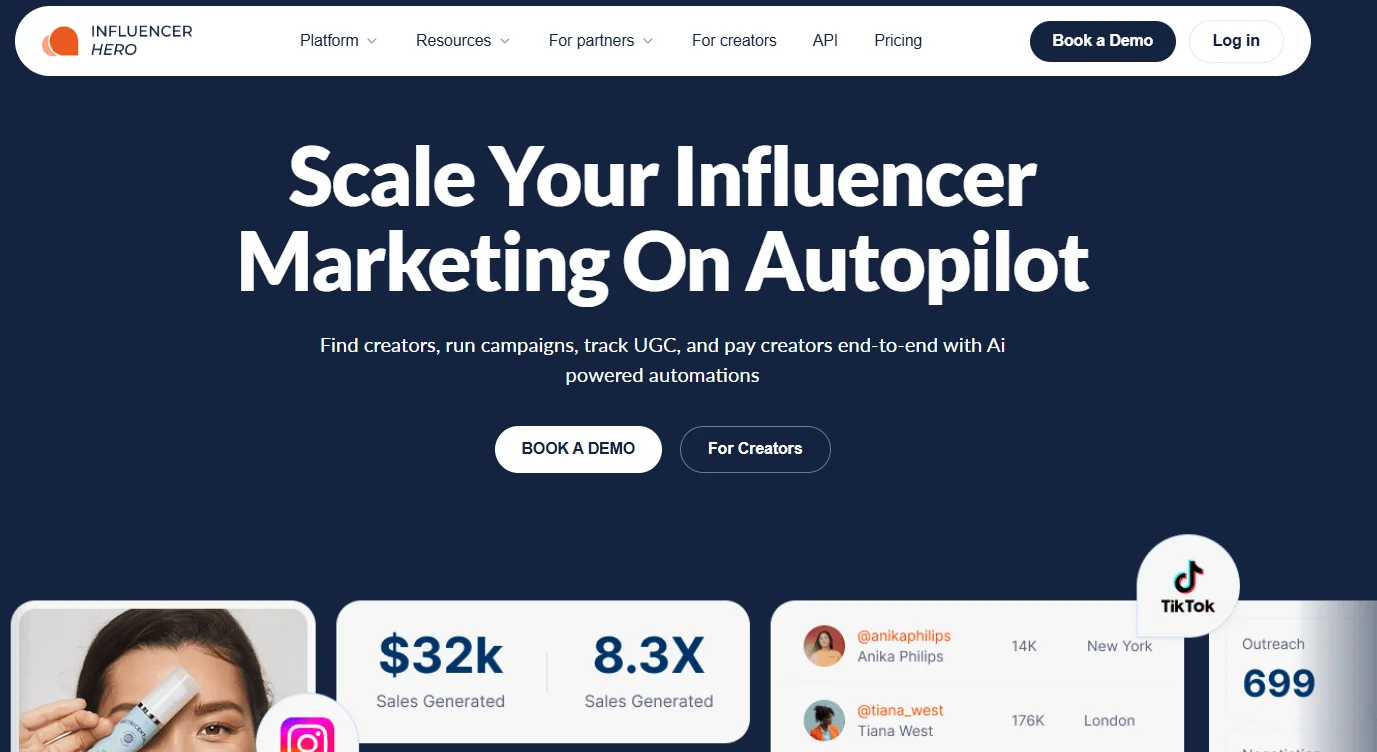
Influencer Hero sits at the other end of the spectrum: an all-in-one system rather than a booking counter. You get creator discovery across Instagram, TikTok and YouTube, automated outreach, a creator CRM, product gifting, affiliate links with payments, and ROI attribution tying content back to revenue. That last part is why ecommerce and mid-market brands pick it. Marketplaces tell you what a post cost, but this tells you what it earned.
The numbers: Standard is $649/month for up to 1,000 creator contacts, Pro is $1,049/month for up to 5,000, and Business is $2,490/month for up to 10,000. Pricing is published rather than quote-based, and there's no marketplace cut on creator payments.
The honest caveat: it's more platform than a brand booking two videos a quarter needs, and the entry price reflects that. If influencer marketing is a real channel with a real budget, the automation pays for itself. If it's still an experiment, start smaller. You can book a demo to see the workflow before committing.
3. Collabstr
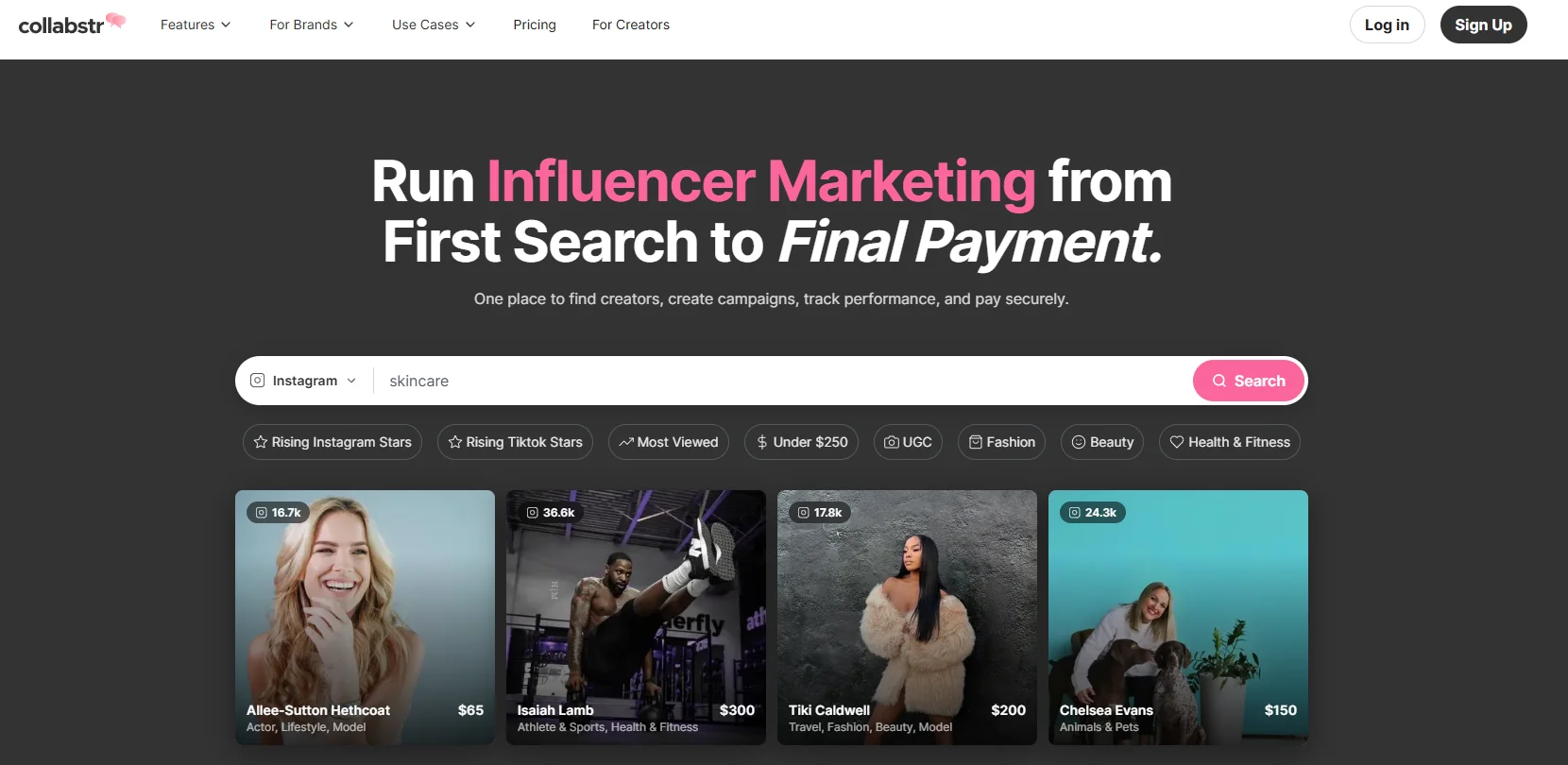
Collabstr is the closest thing the category has to a storefront. Creators list packages with prices attached, you browse 1.1 million-plus vetted profiles, and you book directly from a profile. Payment sits in escrow until you approve the work. For a brand that needs three TikTok videos this week, that removes negotiation entirely.
The numbers: The Free plan costs $0 with a 10% hiring fee on each order. Pro is $249/month billed annually and adds one campaign post per month, advanced filters and analytics on five posts. Premium is $333/month billed annually, with unlimited campaigns and a reduced 5% fee. Creators pay a separate 15% fee out of their payout.
Watch the fee stack. On the free plan you're paying 10% on top of every booking, so heavy spenders often find the subscription cheaper than it looks. Campaign posting is also paid-only, so the free tier is browse-and-buy rather than post-and-receive.
4. Insense
Insense is a UGC marketplace built specifically for paid social. It's an official Meta and TikTok partner, so creator whitelisting, Partnership Ads and Spark Ads run natively instead of through workarounds. Brands use it to keep a steady supply of ad creative coming in, not to build long-term creator relationships.
The numbers: A one-month Trial plan is $650 and carries a 20% marketplace fee. The Brand plan is $500/month billed quarterly at $1,500, with a 10% fee. The Agency tier drops the fee to 7%. Managed service starts around $1,800/month, and creator payments sit on top of every plan.
Budget for the full stack, not the sticker price. Between subscription, creator fees and the marketplace cut, a couple of active campaigns realistically run into the low thousands per month. The upside is genuine ad infrastructure that discovery-first tools don't offer.
5. JoinBrands
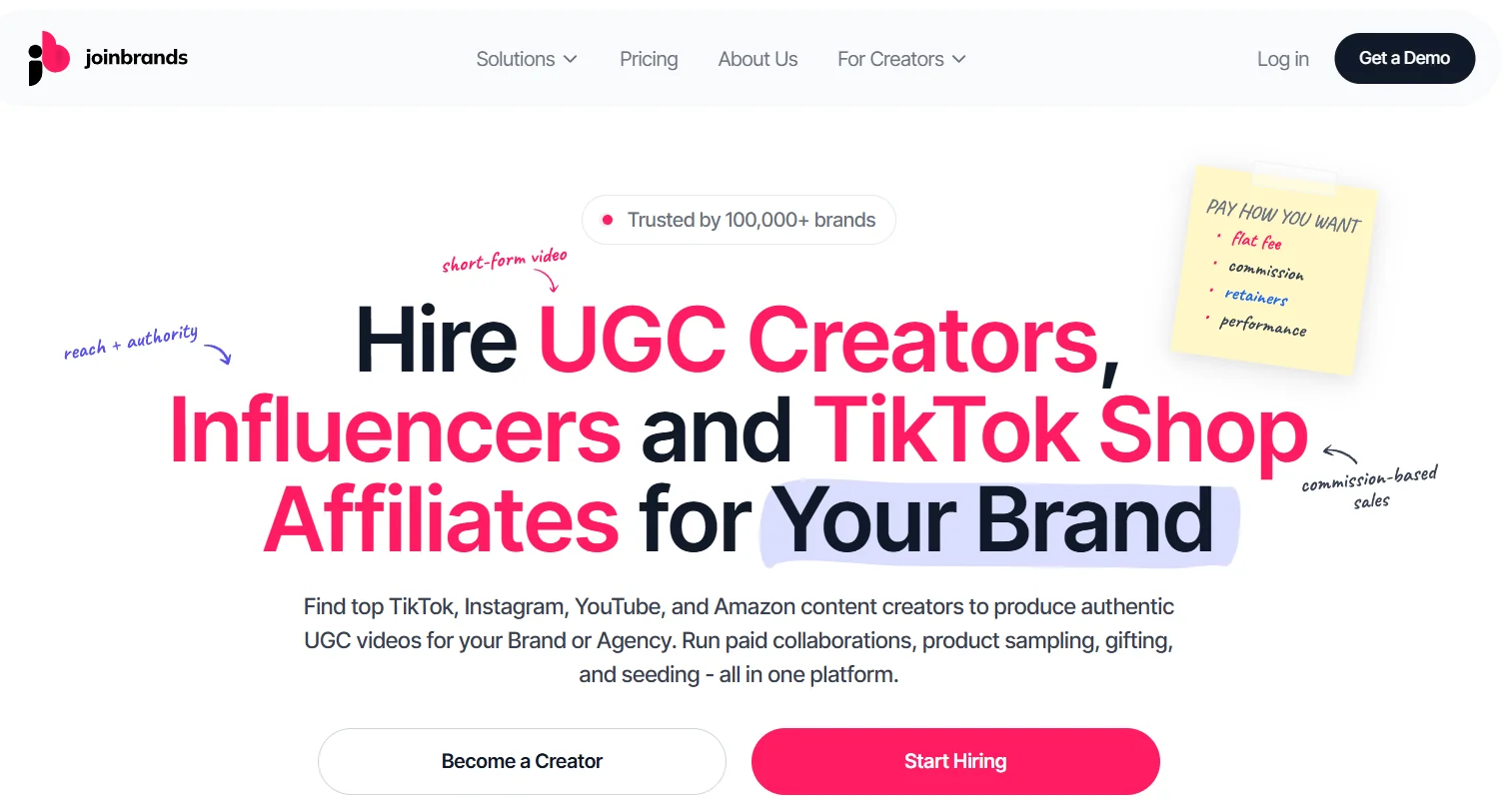
JoinBrands is a volume play. You post a job with a set price, creators apply, you pick, you ship product, and content comes back in roughly three to seven days. It covers UGC video, product photography, social posts and TikTok Shop affiliate campaigns, which makes it popular with Amazon sellers and DTC brands producing content at scale.
The numbers: Pricing has three layers. The plan is free, $99, $299 or $499 per month. The platform fee drops as you climb, from 15% down to 12%, 10% and 8%. On top of both, you set the per-job creator fee yourself, typically $25 to $60 for a straightforward UGC video.
That structure makes it cheap to test and harder to forecast. Below roughly 50 videos a month, the free plan usually wins on pure math. There's no CRM, no attribution, and no relationship layer, so it's a content supply line rather than an influencer program. If discovery is your actual gap, these influencer tools cover it better.
6. Billo
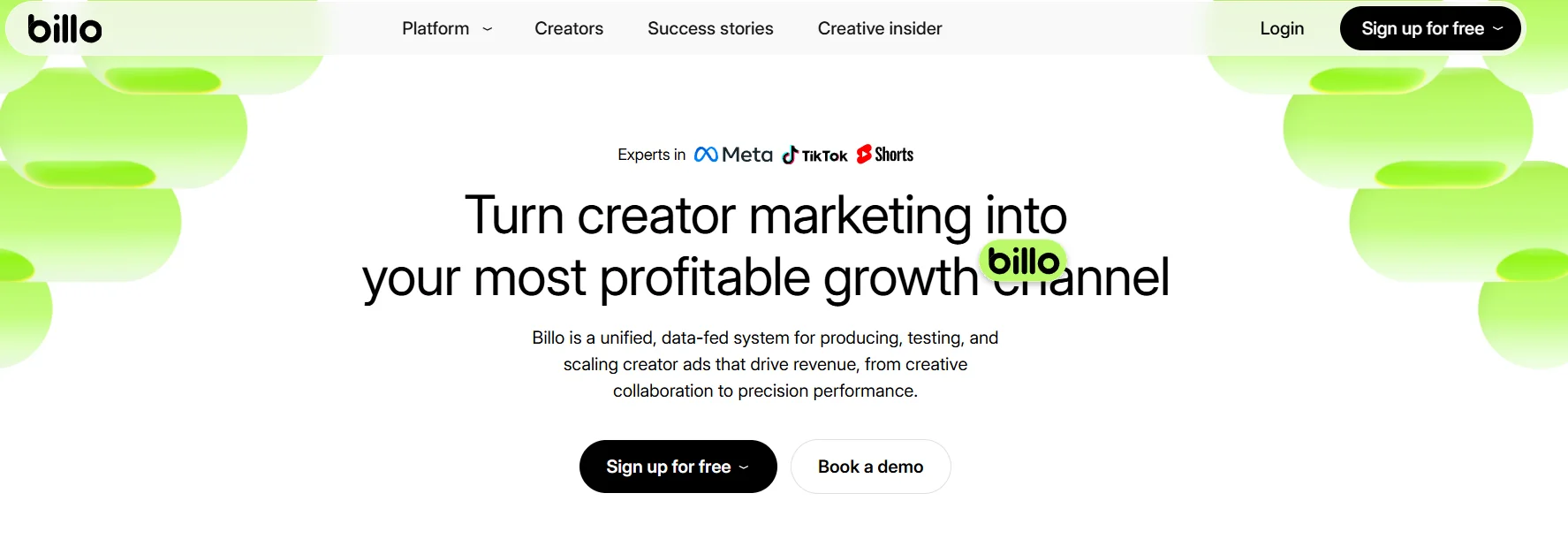
Billo strips the model down to one number per video. You post a brief, vetted creators apply, you pick one, and you get an ad-ready file back. Its CreativeOps layer benchmarks hook rate, CTR and ROAS against a large library of past ads, which is unusual for a marketplace at this price point.
The numbers: Pricing starts at $99 per video, bought through video packs rather than a subscription. Add-ons like premium creators or expedited delivery push the real cost closer to $150. The creator network sits above 5,000 profiles across the US, Canada, UK and Australia.
Turnaround is the thing to plan around. Because the model is passive and application-based, competitive niches can stretch past the advertised timeline. Build a buffer before a fixed launch date and it's one of the most predictable content sources here.
7. Social Cat
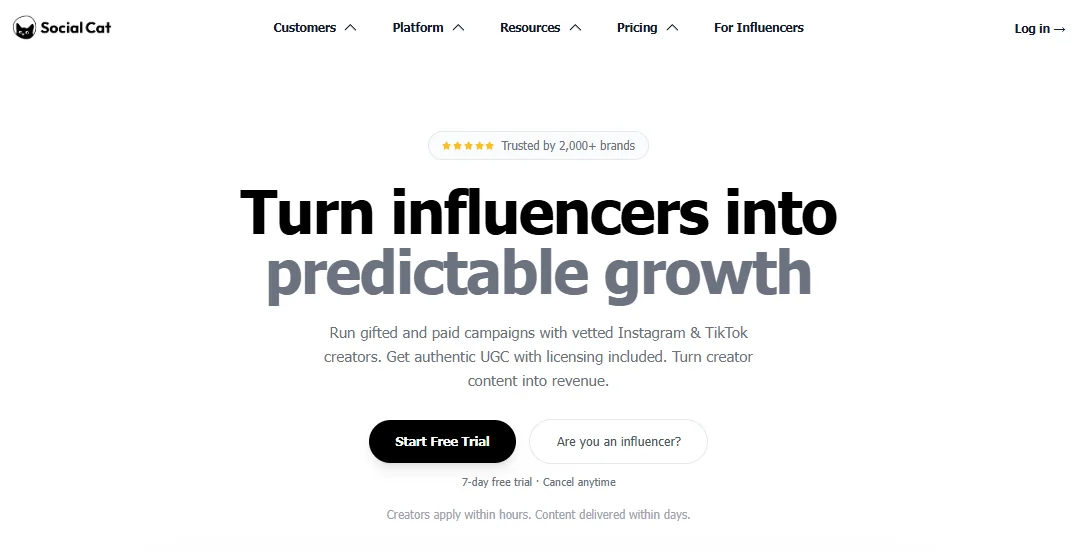
Social Cat is gifting-first and unapologetically small-brand. You list a product, micro creators on Instagram and TikTok apply, you send the item, and you get content back with usage rights included. Its network of 50,000-plus manually vetted creators skews to the 5,000 to 50,000 follower range, which is exactly where niche brands see the best engagement.
The numbers: Essentials is $99/month, Performance is $199/month, and Pro is $299/month at up to 30 creators, 500 invites and unlimited campaigns. There's no cut on creator payments, though you're covering product cost on every collaboration.
It stops short where measurement starts. There's no outreach automation, no affiliate attribution, and limited analytics, so Shopify brands that want revenue per creator will outgrow it. As a low-commitment way to keep authentic content flowing, though, it does the job cheaply.
8. Ainfluencer
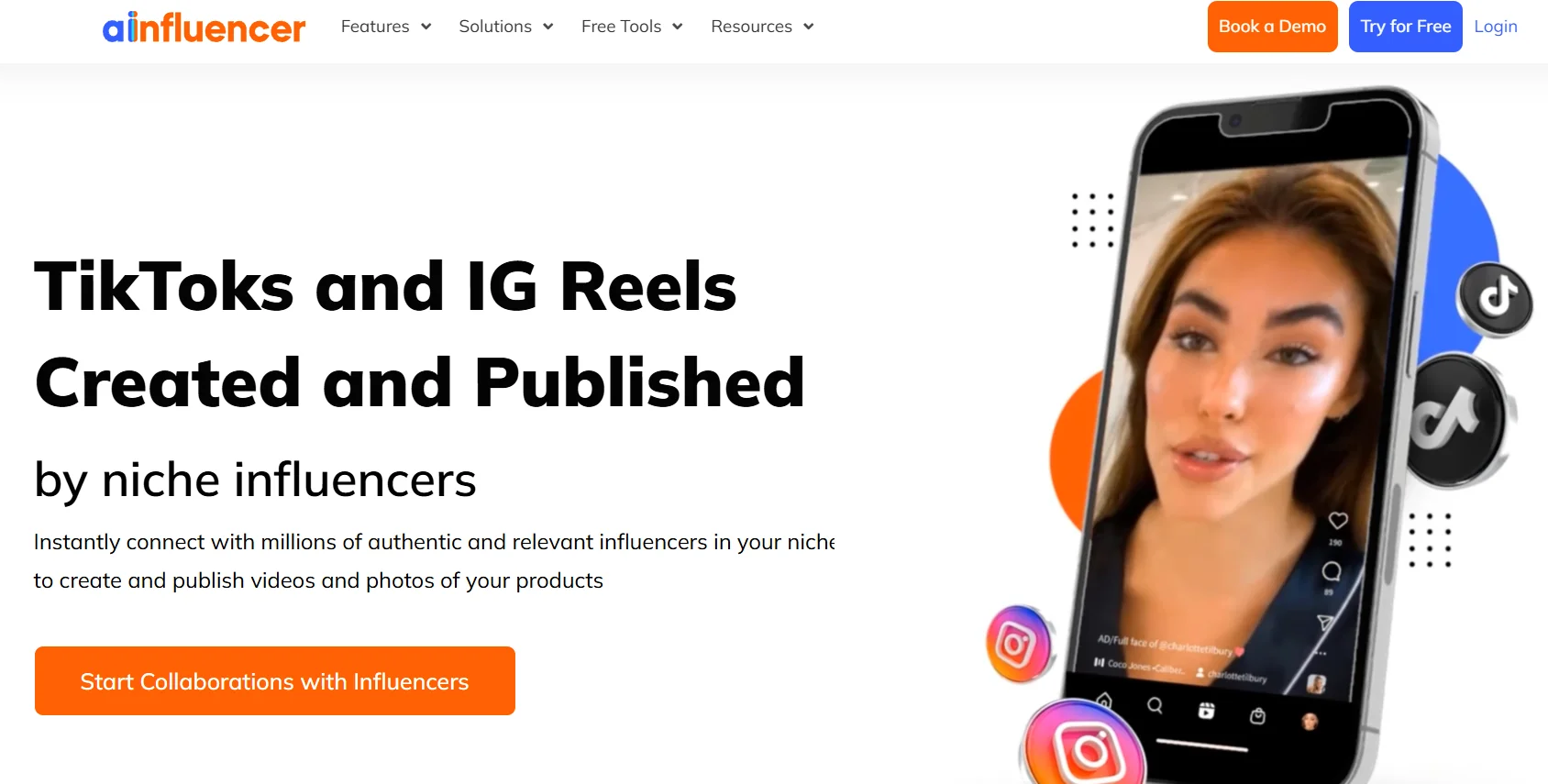
Ainfluencer is a DIY marketplace with an unusual revenue model: brands pay nothing. You post an ad, creators bid with their rates, and you negotiate in-app with escrow-secured payments. The platform earns its money from a commission on the creator's payout instead of a brand subscription.
The numbers: The self-service plan is $0 for brands, with access to 5 million-plus influencer profiles across Instagram, TikTok and YouTube, unlimited campaigns and in-app messaging. Fully managed packages jump to a different tier entirely, running from $7,999 to $29,999.
There's no middle ground between those two options, and the free tier is thin on analytics, reporting and workflow depth. Treat it as a zero-risk way to run early campaigns and learn what creators in your niche charge, not as the system you scale on.
9. Shopify Collabs
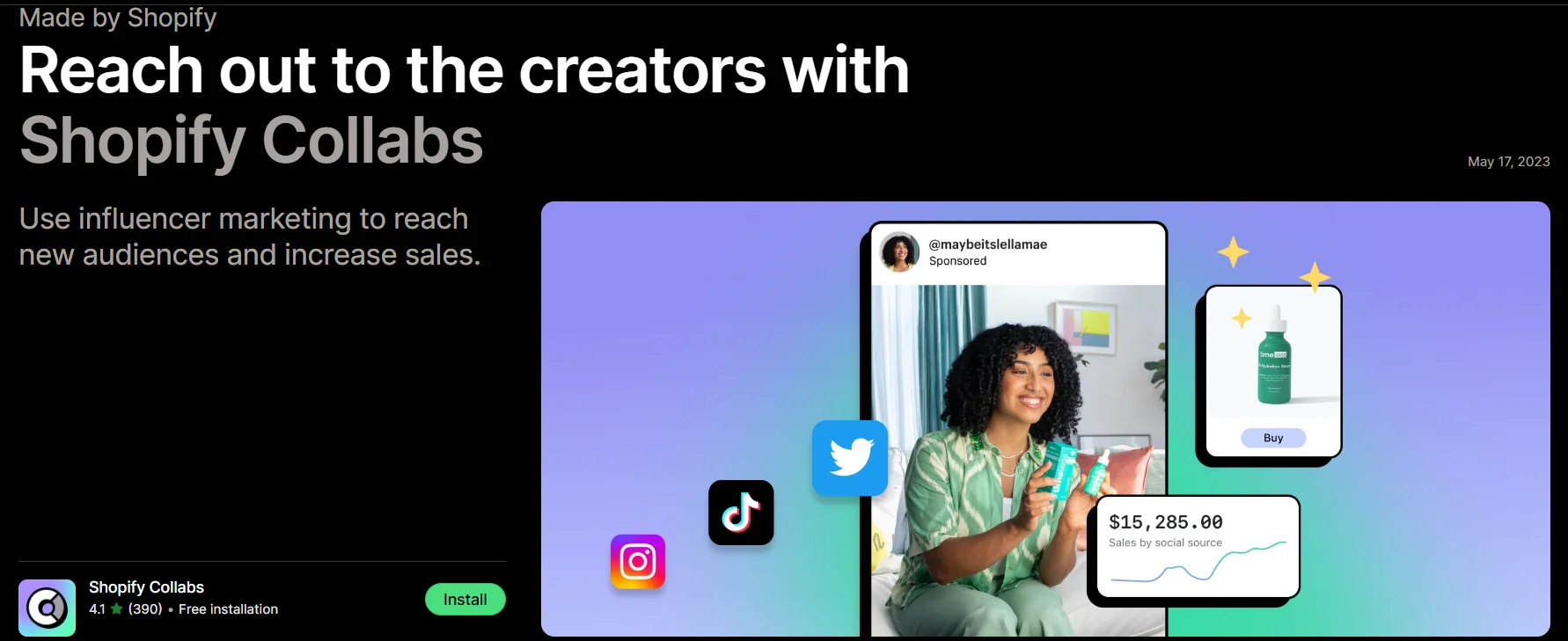
If your store runs on Shopify, Collabs is the lowest-friction option available. It lives inside your admin, handles creator recruitment through an application page, tracks affiliate links and discount codes, manages gifting, and pays commissions automatically through your Shopify bill. Attribution is native, so the sales data is trustworthy in a way third-party pixels rarely are.
The numbers: The app is free to install with no subscription. The only platform cost is a 2.9% processing fee on automatic commission payments, plus currency fees on cross-border payouts. Merchants need $10,000 in sales over the previous 12 months to appear in Collabs Network discovery, and creators must be in the US, Canada or the UK.
Discovery and vetting are the weak spots, and the geographic limits rule out plenty of markets. It's best treated as the affiliate rail underneath your program rather than the whole program, which is worth knowing before you build your affiliate strategy around it.
10. TikTok Creator Marketplace (Now TikTok One)
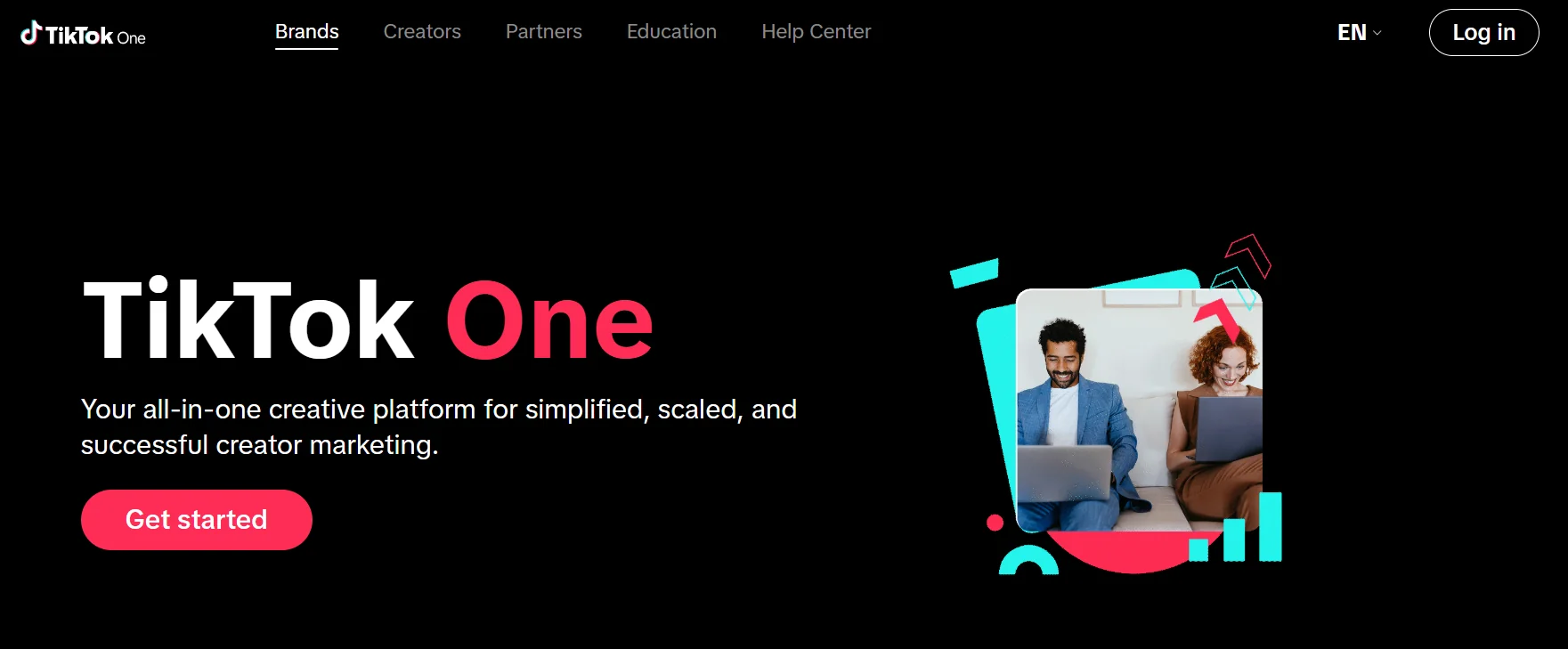
TikTok's official marketplace now lives inside TikTok One, alongside Ads Manager and the creative tools. Its real advantage is data: engagement rates, audience demographics and past campaign performance come straight from TikTok's backend, so you're not estimating from public follower counts. In 2026 it also added AI matching that recommends creators based on campaign goals.
The numbers: Access is free for brands with a TikTok Business account, with no minimum ad spend and no subscription. Creators need 10,000 followers, 100,000 video likes in the past 28 days, and recent posting activity to qualify. The marketplace operates in roughly 24 countries.
The limits are obvious: it's TikTok-only, there's no chat function, and the follower threshold excludes the nano creators who often convert best. As a free complement to a broader program, though, first-party data is hard to argue with.
How to Choose the Right Influencer Marketplace in 2026
The best marketplace depends on what you're actually buying: reach, content, or sales. Here's what to weigh before you commit.
- The fee model, not the sticker price A $0 plan with a 10% or 15% cut can cost more than a $249 subscription once you're spending real money on creators. Map your monthly creator spend first, then compare total cost at that volume.
- Content versus reach Platforms like Billo and JoinBrands sell you files for your ad account. Afluencer and Collabstr connect you with creators who post to their own audiences. Buying the wrong one is the most common and most expensive mistake in this category.
- Who does the finding Application-based marketplaces bring creators to you, which suits small teams. Search-first platforms give you control but need someone to run outreach. Be honest about how many hours a week your team really has.
- Whether you need attribution If you can't tie a post to revenue, you can't defend the budget. Marketplaces rarely include this, so check what reporting you actually get. Our roundup of analytics tools covers the options if your current stack falls short.
- Gifting versus paid Product seeding costs less and scales differently from paid placements, and not every platform handles it well. If gifting is your main play, compare dedicated gifting platforms before defaulting to a general marketplace.
- Commitment level Some platforms bill quarterly or annually. Others let you leave next month. Early in the channel, flexibility is worth more than a discount.
There's no single best influencer marketplace in 2026, and anyone claiming otherwise is selling something. The right pick is the one that matches your budget, your team size, and the specific gap in your current process.
Start With One, Not Five
Influencer marketplaces have made creator partnerships accessible to brands that could never afford an agency retainer or an enterprise contract. You can post a brief today and be reviewing applications tomorrow, for less than most teams spend on software they barely open.
You don't need all ten of these. Pick the one that solves your biggest bottleneck right now, run a real campaign through it, and let the results tell you whether to scale up or switch. Testing beats evaluating every time.
Post your first Collab on Afluencer and start getting applications from verified creators this week.