.svg)

.png)
- 10 Best Shopify Marketing Tools to Grow your Store in 2026
- The Best Shopify Marketing Tools for 2026
- 1. Afluencer
- 2. Klaviyo
- 3. Influencer Hero
- 4. RankControl
- 5. Privy
- 6. Smile.io
- 7. ReConvert
- 8. Triple Whale
- 9. Yoast SEO
- 10. AdRoll
- How to Choose the Right Shopify Marketing Tools
- Build a Stack That Actually Grows Your Store
10 Best Shopify Marketing Tools to Grow your Store in 2026
Your Shopify store is live. Traffic trickles in. Now what?
Marketing is what turns a storefront into a business. The problem is the Shopify App Store has thousands of tools, and stacking the wrong ones just slows your site and drains your budget. You don't need every app. You need one strong pick for each job.
This list covers the 10 best Shopify marketing tools for 2026, organized by the jobs a complete stack actually needs to do: bringing people in, converting them, keeping them, and measuring what worked. We researched current pricing and features for each. Let's get into it.
The Best Shopify Marketing Tools for 2026
A good stack is layered, not crowded. Start with the channels that build your audience, then add tools that convert, retain, and measure. Here's the leading option for each job, with honest pricing and who it fits.
1. Afluencer
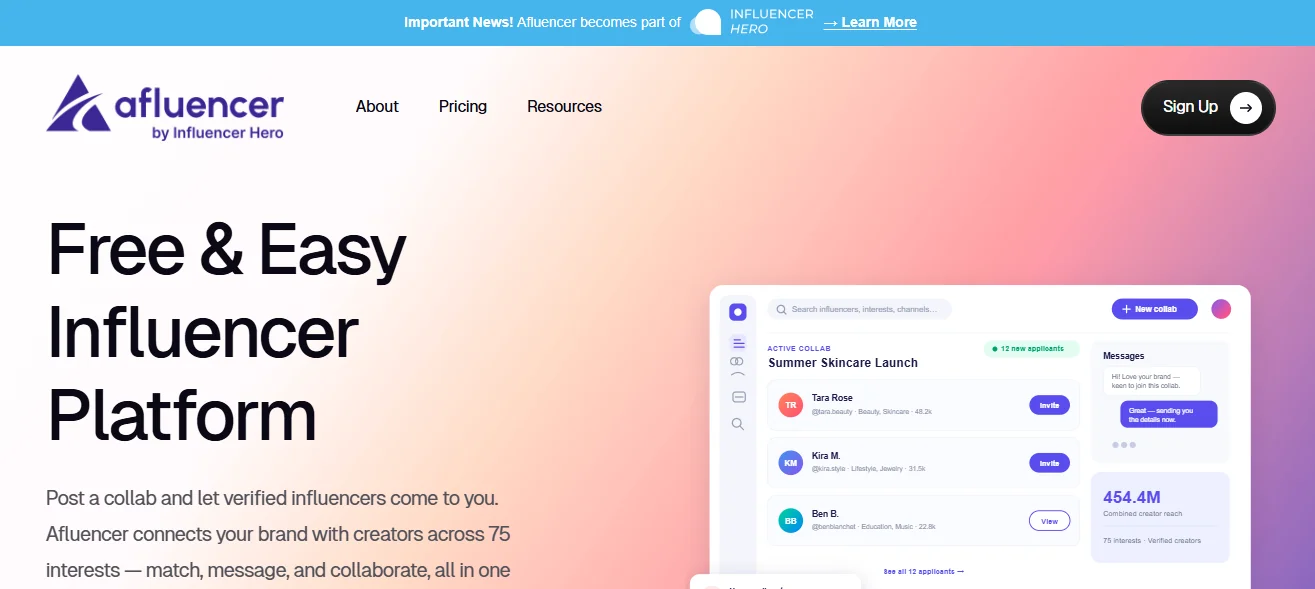
Creators are one of the highest-ROI channels a Shopify store can run, and most brands underuse them. Afluencer is where you plug in. It's a verified marketplace with 40,000+ opted-in influencers across 75 interests, so you post a Collab, creators apply, and you run gifting, affiliate, and paid campaigns from one dashboard.
The numbers: Afluencer starts at $49/month, which includes 60 invitation credits, premium creator filters, and phone, email, and live chat support. From there, plans run $649/month with 1,000 reach-outs, product send-outs, and influencer payments, and $1,049/month with 5,000 reach-outs and a dedicated account manager. Everything is month-to-month with no annual contract, and full details are on the Afluencer pricing page.
What makes Afluencer easy to start with is that creators come to you, so you skip cold outreach entirely. Two AI tools speed things up: CreatorGPT for strategy and metric guidance, and the Afluencer Collab Finder for matching. Want creators promoting your products without the enterprise price tag? Post a Collab on Afluencer, ask CreatorGPT where to begin, or run the Collab Finder to get matched.
2. Klaviyo
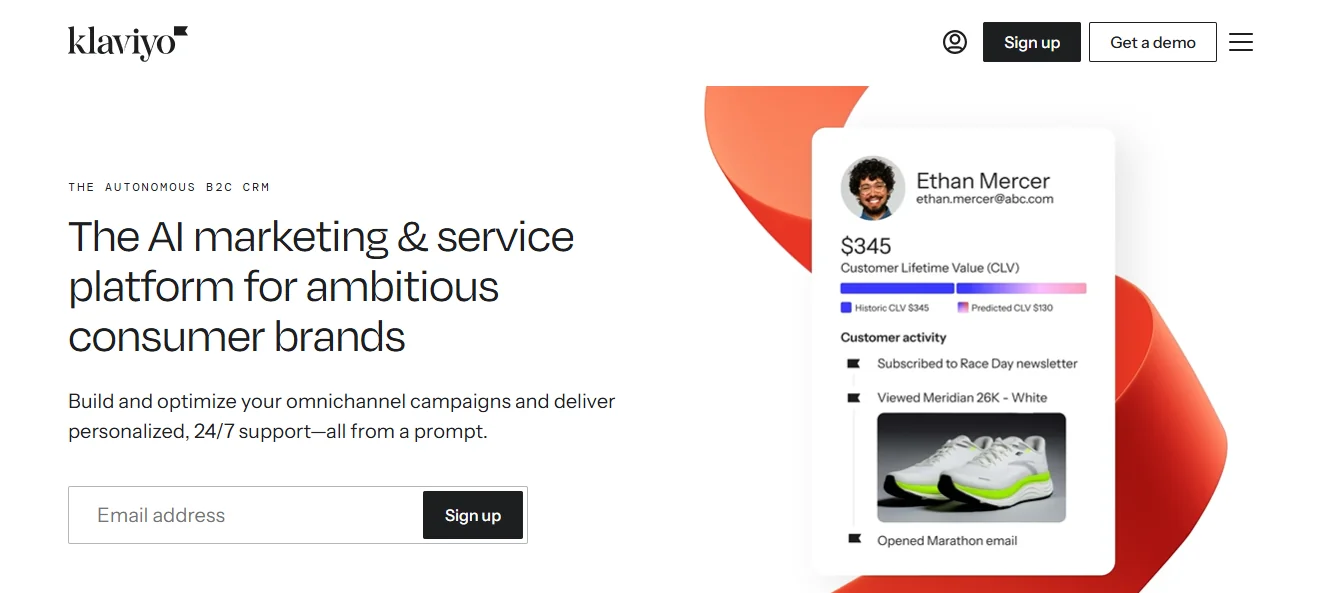
Email and SMS are still the highest-ROI owned channels for Shopify brands, and Klaviyo owns this category. It plugs into Shopify and pulls purchase and browsing data to power automated flows: welcome series, abandoned cart, post-purchase, and win-backs. Those flows often drive a third of a store's email revenue.
The numbers: The free plan covers up to 250 contacts, 500 monthly email sends, and 150 SMS credits. Paid email plans are reported to start around $20 to $45/month for small lists, and Email + SMS from roughly $35/month, scaling by your active-profile count. Verify the live slider before you budget.
Klaviyo's predictive analytics and deep Shopify integration are what set it apart from cheaper tools. The honest caveat: it bills by active profiles, so your cost climbs as your list grows whether you email those contacts or not, and SMS is billed separately on top. For a store built on lifecycle revenue, it earns the spend. Just keep your list clean.
3. Influencer Hero
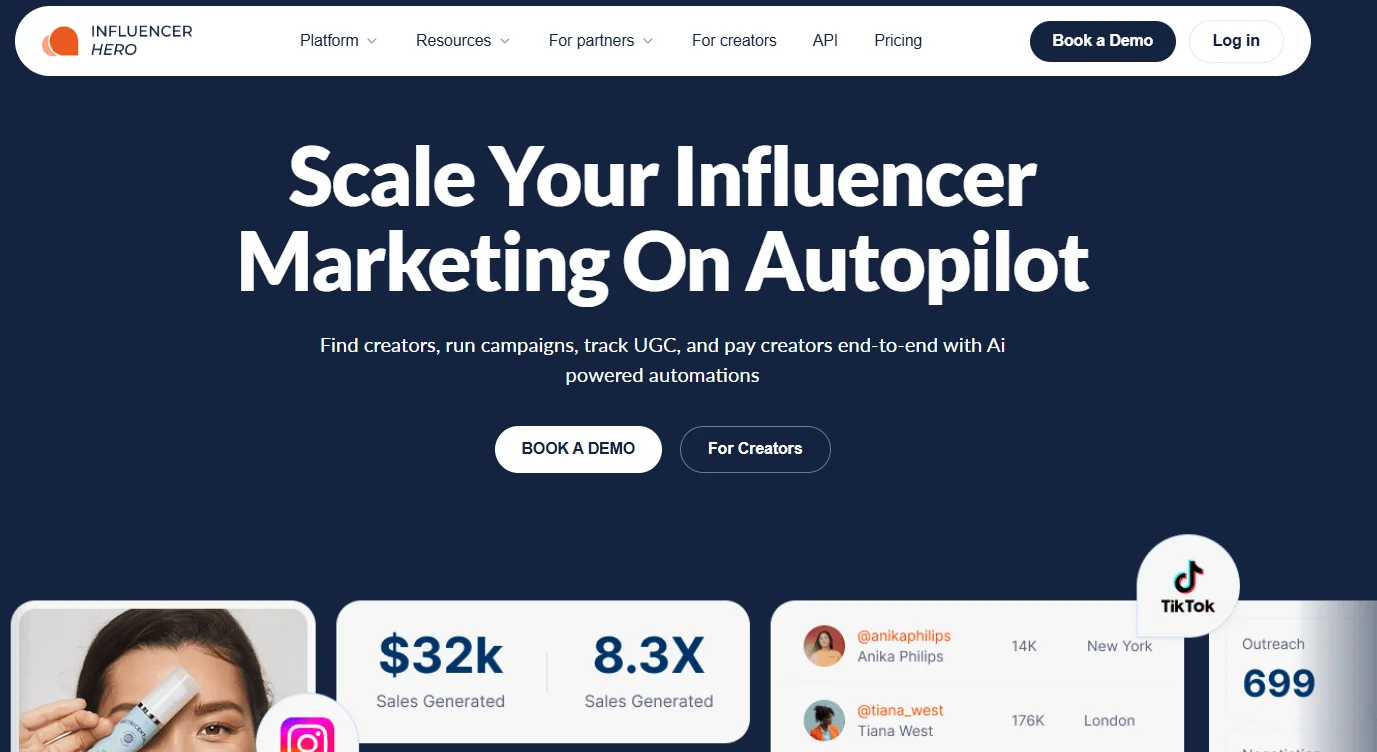
Once your creator program outgrows a spreadsheet, Influencer Hero is built to scale it. It's an all-in-one influencer platform covering Instagram, TikTok, and YouTube, with discovery, outreach automation, gifting, affiliate tracking, and ROI dashboards. What earns it a spot on a Shopify list specifically is how deeply it wires into your store.
The Shopify integration does three jobs. Gifting runs as real orders: you approve a creator, pick products, and the platform pushes the order into Shopify so it ships and tracks like any other, with fulfillment status visible without switching tabs. Affiliate tracking generates unique discount codes and links per creator directly in your store, so every sale attributes back to whoever drove it, with no manual code spreadsheet and no guessing when a code leaks. And attribution closes the loop by pulling order data back in, so you see revenue, orders, and AOV per creator against what that partnership cost you in product and commission.
Payouts run in the same place at a 0.4% fee, and the CRM holds each creator's history, so a gifting recipient who converts well can be moved onto an affiliate deal without re-entering anything. Discovery sits on a 450M+ creator database with fake-follower detection and lookalike search, so the top of the funnel is covered too.
The numbers: Pricing is public. Standard is $649/month for up to 1,000 creator contacts, Pro is $1,049/month, and Business is $2,490/month. Quarterly and annual billing come at a discount, and plans carry a three-month minimum.
The honest caveat is the entry price. For a store testing its first five creators, it's more platform than you need. For a brand running an always-on program where creator revenue shows up in Shopify reporting, that's exactly the trade-off it's built for. Book a demo to see the Shopify sync running on your store.
4. RankControl

Shoppers now ask ChatGPT and Google AI Mode what to buy, so ranking on Google alone isn't enough. RankControl is an AI SEO platform that tracks whether six AI engines cite your store or your competitors. Its AI content engine then writes and publishes brand-matched articles straight to your Shopify blog. When a page's rankings or AI citations drop, it flags the page for a rewrite.
The numbers: One all-inclusive plan starts at $400/month, with a 7-day free trial and two months free on annual billing. Managed backlinks and a dedicated strategist are optional add-ons.
What sets RankControl apart is that it finds the AI answers you're missing and then writes the pages to win them. Nothing goes live without your approval. The honest caveat: it costs more than most apps on this list, and backlinks cost extra. For brands that would otherwise hire an SEO agency, it's the leaner option.
5. Privy

Most first-time visitors leave without buying. Privy catches them. It's a list-growth and conversion tool with popups, flyouts, spin-to-win, free-shipping bars, and cart-saver automations, plus light email and SMS. For small stores that want to grow a list without a heavy platform, it's the easy on-ramp.
The numbers: The free plan covers up to 100 contacts. Paid plans are reported at $24/month (Convert, popups for up to 10,000 pageviews), $30/month (Starter, email for 1,500 contacts), and $45/month (Growth, email plus SMS). There's a 15-day trial. Pricing scales with pageviews and contacts, so confirm before you commit.
Privy is genuinely easy to use, with no developer needed and solid targeting. The honest caveat: reporting is light, cost scales with traffic, and if you already run Klaviyo the email features overlap. For a growing store that mostly needs popups and capture, it's a strong, affordable pick.
6. Smile.io
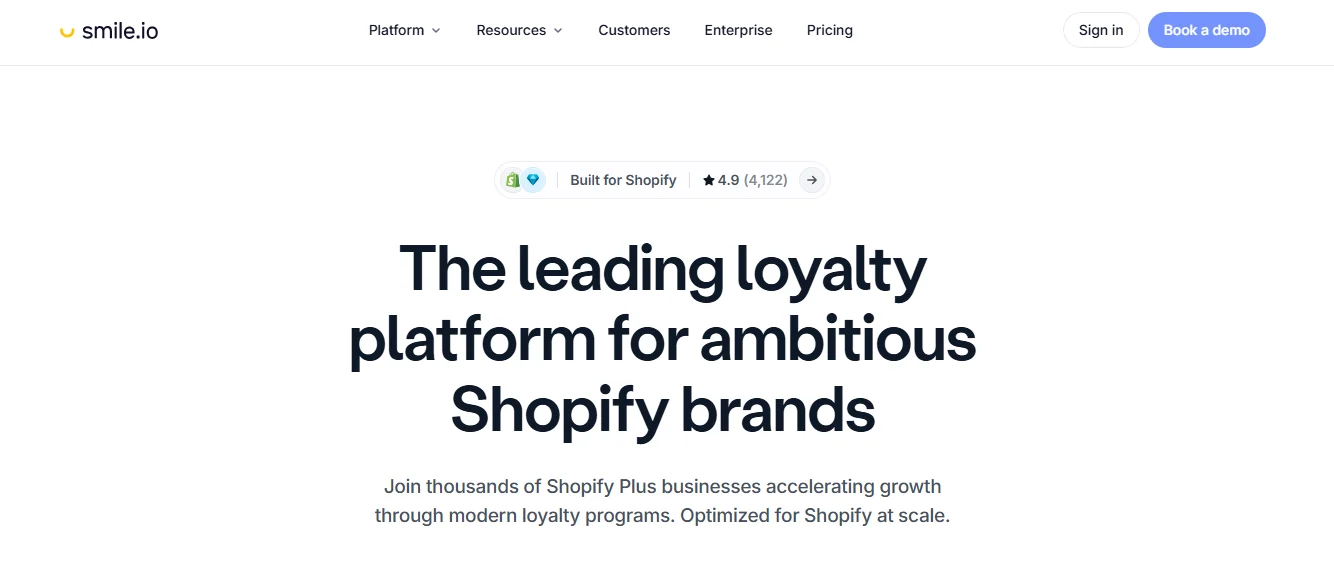
Keeping a customer is cheaper than winning a new one, and loyalty is how you do it. Smile.io is the most-installed Shopify loyalty app. It runs points, referrals, and VIP tiers with a branded loyalty page, and it goes live in under an hour. Repeat purchases are the payoff.
The numbers: The free plan covers up to 200 monthly orders with points and referrals. Paid tiers are reported at around $49/month (Starter, 500 orders), $199/month (Growth, 2,500 orders plus VIP tiers), and $999/month (Plus, API). Confirm the current tiers and order caps on the live page.
Smile.io's ecosystem, documentation, and Klaviyo integration make it a reliable default. The honest caveat: the jump from Starter to Growth is steep ($49 to $199 mainly to unlock VIP tiers), and order overages can push you into a higher tier faster than expected. For a store investing in retention, it's a clean, proven choice.
7. ReConvert

The best time to sell more is right after someone buys. ReConvert (now branded Upsell.com) builds upsells and cross-sells into your checkout and thank-you pages, with one-click offers that don't require re-entering payment details. It's a fast way to lift average order value with no extra ad spend.
The numbers: There's a free plan for smaller stores (up to 49 orders). Paid pricing is reported to start around $4.99/month and scale with your order volume or the upsell revenue the app generates. It carries a 4.9-star rating across 4,500+ reviews. Confirm the current tiers directly, since billing changed with the rebrand.
The drag-and-drop thank-you page builder and one-click upsells are the draw, and merchants report a 10 to 15% AOV lift. The honest caveat: the move to usage-based pricing after the Upsell.com rebrand caused some merchant confusion over charges, and your cost rises with volume. For post-purchase revenue, it's a category leader.
8. Triple Whale
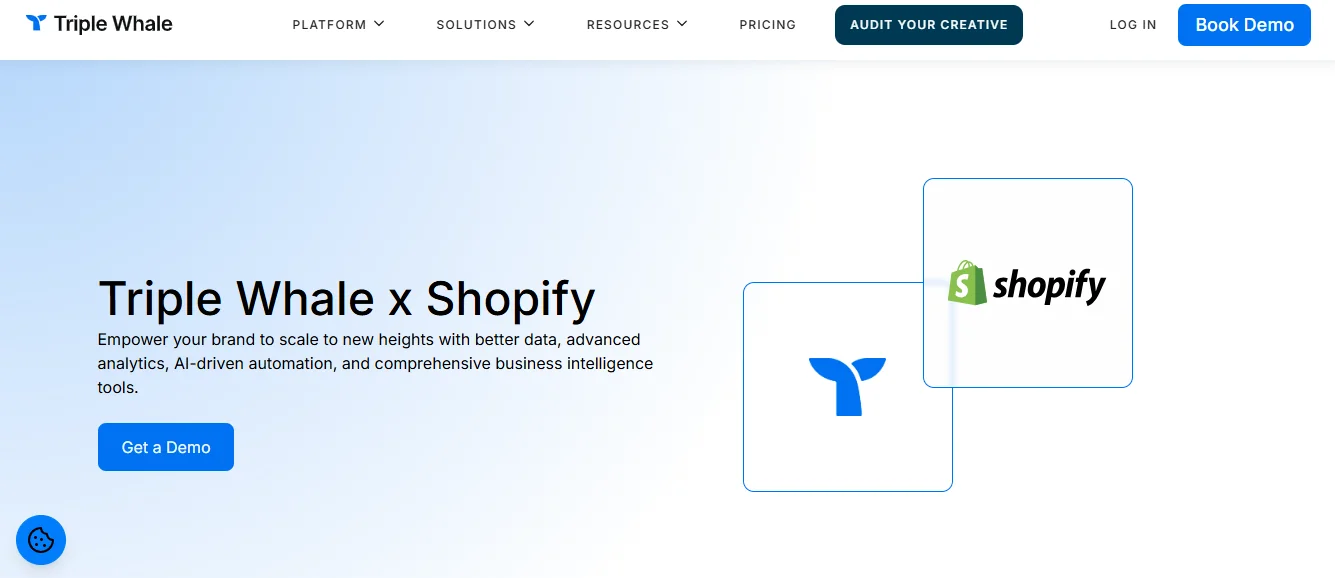
You can't optimize what you can't measure. After iOS privacy changes gutted platform attribution, Triple Whale became the go-to analytics layer for Shopify brands. Its first-party Triple Pixel ties revenue back to the channels and creatives that actually drove it, all in one dashboard with Moby AI on top.
The numbers: There's a free plan with basic tracking, the Triple Pixel, and first and last-click attribution. Paid plans are reported at roughly $179/month (Starter) and $259/month (Advanced) on annual billing, scaling with GMV above about $5M. Confirm current pricing on the live page.
Triple Whale's attribution and cohort analysis are best-in-class for DTC brands running real paid media. The honest caveat: it's Shopify-only, and it's hard to justify under roughly $1M in revenue or with low ad spend, where the data is nice but rarely actionable. For scaling brands measuring true influencer and marketing ROI, it pays for itself.
9. Yoast SEO
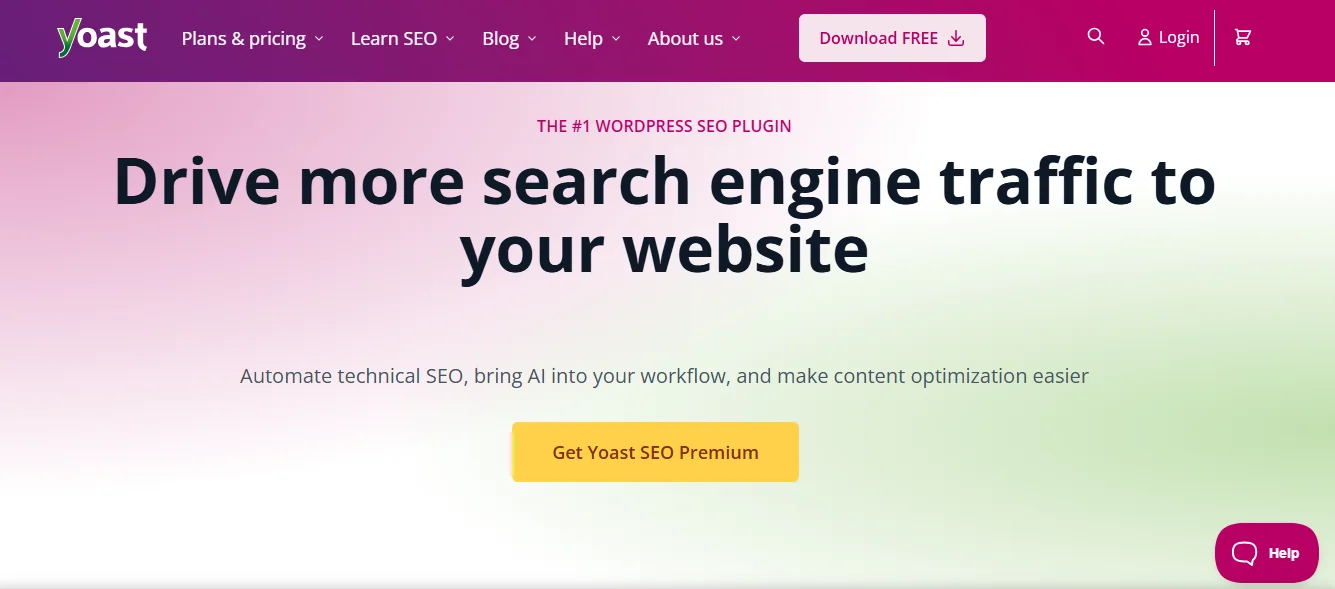
Paid traffic stops the day you stop paying. SEO compounds. Yoast SEO brings its trusted content-first methodology to Shopify, with real-time readability and SEO scoring, AI-generated meta titles and descriptions, structured data, and social previews. For content-driven stores, it takes the guesswork out of on-page SEO.
The numbers: Yoast SEO for Shopify is reported at $19/month flat, with a 14-day trial and no free plan. It integrates with review apps like Judge.me and Loox. Confirm the current price on the app listing.
Yoast's readability analysis and guided approach are genuinely useful, especially for stores investing in blogs and long product descriptions. The honest caveat: it started as a WordPress plugin, so its Shopify version is more narrowly focused on scoring, and strong Shopify-native alternatives like Avada SEO, Smart SEO, and Booster SEO all offer free plans. If brand familiarity matters to you, Yoast is a safe pick. If budget is tight, test a free option first.
10. AdRoll

Not everyone buys on the first visit. AdRoll follows them. It's a cross-channel retargeting and prospecting platform that serves display, social, and CTV ads to people who browsed but didn't convert, all managed from one dashboard with dynamic product ads pulled from your Shopify catalog.
The numbers: The self-service Ads plan has no platform fee, so you pay only for media, with a $5/day minimum. The Marketing & Ads Plus plan is reported at around $36/month and bundles email. Managed services kick in around $5,000/month in ad spend. Confirm current plans on the live page.
AdRoll's cross-channel reach and fast setup make it a solid option for mid-market brands that want retargeting without hiring a media buyer. The honest caveat: it takes a margin (reported around 10 to 20%) on top of your ad spend, and for many stores, running retargeting directly through Meta and Google is cheaper and more controllable. For brands running ads across several networks, the single dashboard has real value.
How to Choose the Right Shopify Marketing Tools
You don't need all ten. You need the right few for where your store is right now. Run through these before you install anything.
- Match the tool to your stage. New store? Start with low-cost, high-trust basics that capture leads and build proof (Judge.me, Privy, Afluencer at $49/month). Scaling with real revenue? Layer in retention, attribution, and program platforms (Smile.io, Triple Whale, Influencer Hero).
- Watch how pricing scales. Most of these tools charge by contacts, orders, pageviews, or GMV, not a flat fee. A $24/month app can become $300/month as you grow. Check the scaling tiers before you commit, not after.
- Avoid app overload. One app per job. Stacking two email tools, two review apps, or five popup apps creates conflicts and slows your site. Every app should earn its place with measurable lift.
- Cover the full journey. A strong stack spans acquisition, conversion, retention, and measurement. Look at what drives a successful campaign end to end, then fill the biggest gap first rather than piling onto what you already have.
- Measure incremental lift. Before you upgrade any plan, know exactly what the upgrade unlocks and how you'll measure the return. If you can't articulate it, you're not scaling. You're just accumulating tools.
Start lean, prove the ROI, and add tools as your store earns them. That beats installing a dozen apps and hoping.
Build a Stack That Actually Grows Your Store
The brands that win in 2026 aren't the ones with the most apps. They're the ones with an intentional, ROI-driven stack. Cover the core jobs (get discovered, convert, retain, measure), pick one strong tool for each, and cut anything that isn't pulling its weight.
Start where your store is. A new store gets the most from low-cost, high-leverage tools that build trust and an audience. A scaling store invests in retention and measurement. Either way, keep it lean and let the results tell you what to add next.
The easiest high-ROI channel to start with is creator marketing, and it costs less to test than most ad budgets. Get started on Afluencer to connect with 40,000+ creators, or ask CreatorGPT which campaign type fits your store. New to working with creators? Our guide on sourcing your first influencers is a good first step.
Frequently Asked Questions
<details class="ih-faq"><summary>What order should I add marketing tools in?</summary><div class="ih-faq-a">Follow the money. Reviews first, because social proof lifts conversion on the traffic you already have and costs almost nothing. Then email capture and flows, since abandoned cart and post-purchase automations recover revenue you've already paid to acquire. Then a creator or acquisition channel to bring in new traffic. Retention and attribution tools come last, once you have enough volume for the data to say something useful. Most stores do this backwards and buy analytics before they have anything to analyze.</div></details><details class="ih-faq"><summary>How many marketing apps does a Shopify store need?</summary><div class="ih-faq-a">Fewer than you think. The rule is one app per job: email, reviews, loyalty, and so on. Most growing stores run four to six marketing apps well. Stacking more than that creates conflicts, slows your site, and rarely improves results. Master a few before adding more.</div></details><details class="ih-faq"><summary>What marketing channel has the best ROI for Shopify stores?</summary><div class="ih-faq-a">Owned channels and creator marketing typically lead. Email and SMS (Klaviyo) consistently return strong ROI because you own the audience. Influencer and creator marketing is another high-ROI channel most brands underuse. Tools like Afluencer make it accessible by connecting you with creators from $49/month, so you can test the channel without a big software budget.</div></details><details class="ih-faq"><summary>Do I need a separate tool for influencer marketing?</summary><div class="ih-faq-a">If creators are part of your strategy, yes. General marketing apps don't handle creator discovery, outreach, or campaign tracking. A dedicated platform like Afluencer (for finding and running creator collabs) or Influencer Hero (for scaling a full program) manages the workflow that email or review apps can't.</div></details><details class="ih-faq"><summary>How much should a Shopify store spend on marketing apps?</summary><div class="ih-faq-a">It depends on your stage and revenue. A new store can run a capable stack for under $50/month using free plans and low-cost apps. As you scale past six figures, expect to invest more in retention, attribution, and creator tools. The key is tying every dollar to measurable lift, not installing tools by default.</div></details><script type="application/ld+json">{"@context":"https://schema.org","@type":"FAQPage","mainEntity":[{"@type":"Question","name":"What order should I add marketing tools in?","acceptedAnswer":{"@type":"Answer","text":"Follow the money. Reviews first, because social proof lifts conversion on the traffic you already have and costs almost nothing. Then email capture and flows, since abandoned cart and post-purchase automations recover revenue you've already paid to acquire. Then a creator or acquisition channel to bring in new traffic. Retention and attribution tools come last, once you have enough volume for the data to say something useful. Most stores do this backwards and buy analytics before they have anything to analyze."}},{"@type":"Question","name":"How many marketing apps does a Shopify store need?","acceptedAnswer":{"@type":"Answer","text":"Fewer than you think. The rule is one app per job: email, reviews, loyalty, and so on. Most growing stores run four to six marketing apps well. Stacking more than that creates conflicts, slows your site, and rarely improves results. Master a few before adding more."}},{"@type":"Question","name":"What marketing channel has the best ROI for Shopify stores?","acceptedAnswer":{"@type":"Answer","text":"Owned channels and creator marketing typically lead. Email and SMS (Klaviyo) consistently return strong ROI because you own the audience. Influencer and creator marketing is another high-ROI channel most brands underuse. Tools like Afluencer make it accessible by connecting you with creators from $49/month, so you can test the channel without a big software budget."}},{"@type":"Question","name":"Do I need a separate tool for influencer marketing?","acceptedAnswer":{"@type":"Answer","text":"If creators are part of your strategy, yes. General marketing apps don't handle creator discovery, outreach, or campaign tracking. A dedicated platform like Afluencer (for finding and running creator collabs) or Influencer Hero (for scaling a full program) manages the workflow that email or review apps can't."}},{"@type":"Question","name":"How much should a Shopify store spend on marketing apps?","acceptedAnswer":{"@type":"Answer","text":"It depends on your stage and revenue. A new store can run a capable stack for under $50/month using free plans and low-cost apps. As you scale past six figures, expect to invest more in retention, attribution, and creator tools. The key is tying every dollar to measurable lift, not installing tools by default."}}]}</script>