.svg)
.png)
10 Best ShopMy Alternatives in 2026
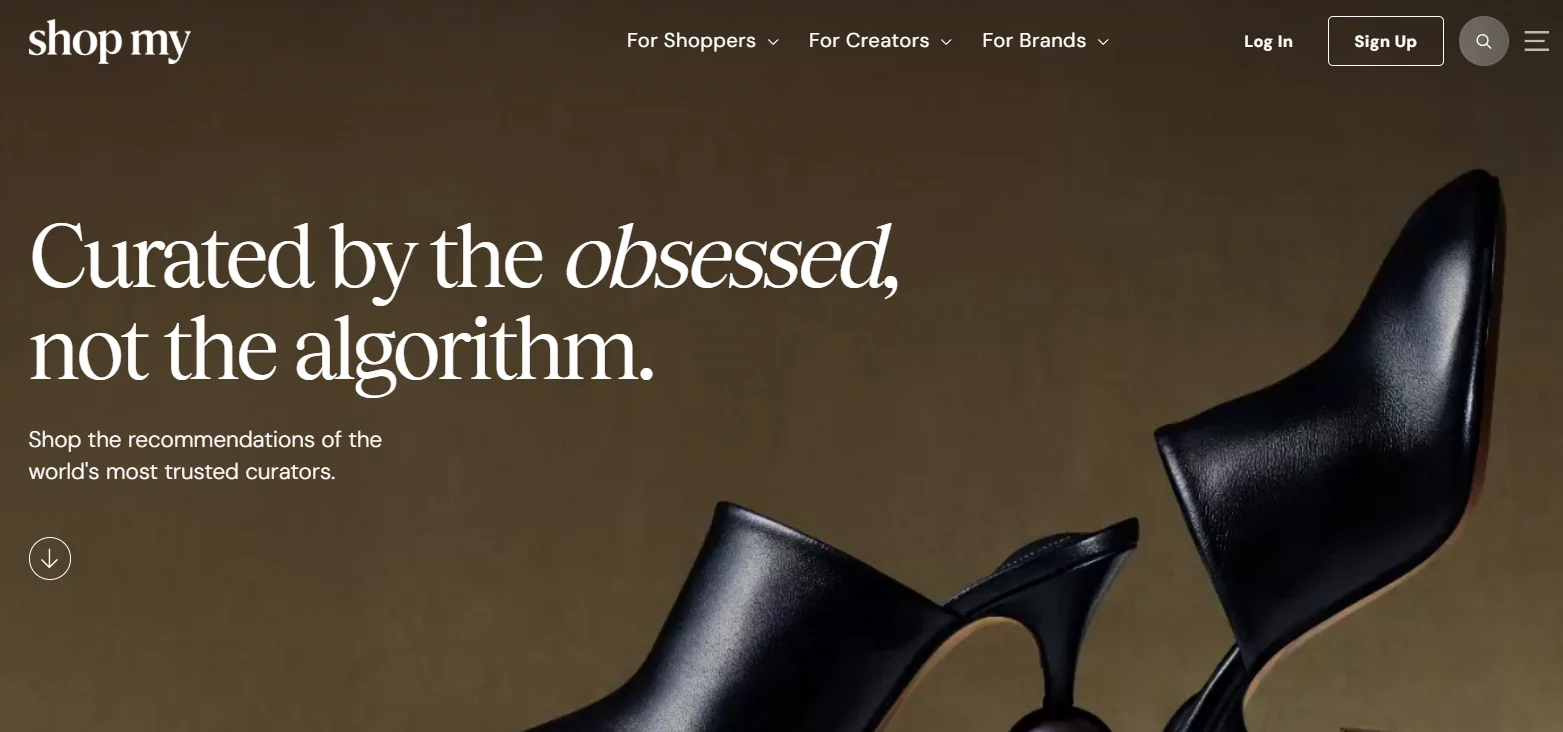
If you are weighing ShopMy alternatives, you already know what makes it good. ShopMy is the premium creator-commerce platform for fashion, beauty, and lifestyle, with clean storefronts, high-commission affiliate links to 50,000+ retailers, and slick gifting tools. Brands discover curated tastemakers, send product, and track sales back to revenue. It works, especially in its core niches.
So why do brands shop around? A few honest reasons. In 2026, ShopMy restructured its plans so bulk gifting is no longer the natural upgrade from the $399/month Affiliate tier. The next step up now prioritizes paid Opportunities, which nudges brands toward pay-to-play posts. Costs also stack: the subscription is just the start, with GMV fees, creator commissions, and Opportunities platform fees layering on top, so brands scaling up can land near $3,000/month before they have proven ROI. ShopMy is also niche-locked to premium fashion, beauty, and lifestyle, and very US-centric, so brands in tech, wellness, food, or other verticals often struggle to find aligned creators.
None of that makes ShopMy a bad platform. It just means plenty of brands want a gifting-first workflow without the pay-to-play push, broader niches, a cheaper entry, or full campaign management beyond affiliate links. The good news: there are strong options across every model, whether you want a free way to find influencers or a full creator-commerce stack. Let's get into them.
1. Afluencer
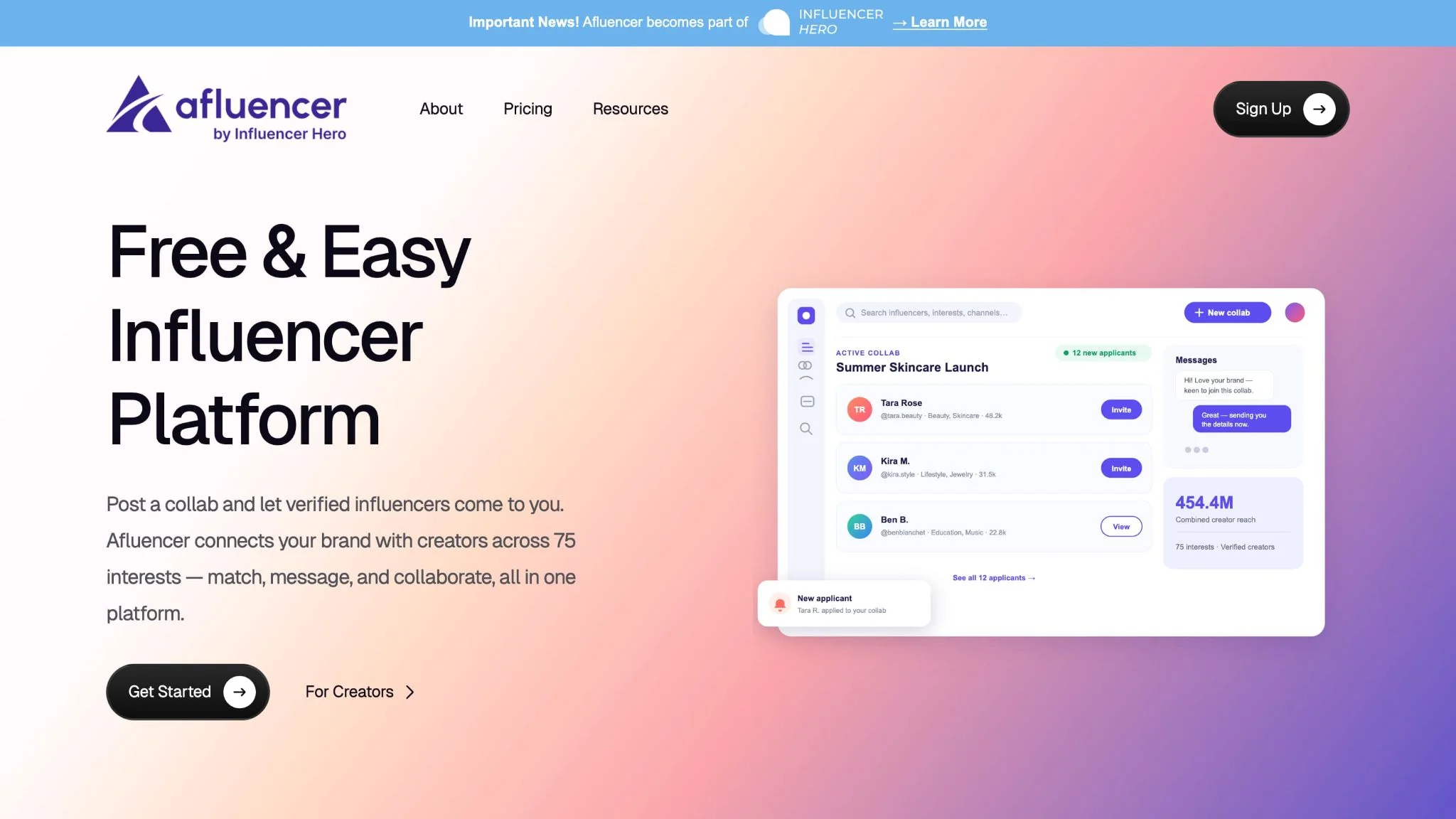
Afluencer flips ShopMy's model in a useful way. Instead of subscribing first and then hunting through a curated tastemaker network, you post a "Collab," verified influencers and micro-creators apply, and you pick the ones that fit. There is no platform fee before you have run a single campaign, which makes it a natural first move for small DTC and Shopify brands testing creator marketing.
The biggest contrast is the entry point. Afluencer starts at just $49/month with a free trial, so you can browse the network and start receiving applications on a light monthly plan. Compare that to ShopMy's $399/month Affiliate tier plus stacking GMV and Opportunities fees, and the gap matters for brands that want to prove the channel before committing budget.
It is also less niche-locked. ShopMy shines in premium fashion and beauty but thins out beyond that, while Afluencer covers a broad range of consumer categories including fashion, beauty, fitness, wellness, food, and lifestyle. You filter creators by niche, platform, audience size, engagement, and location, then invite the ones you want or let them come to you. New to this? The blog walks you through how to find an influencer to promote your brand without the overwhelm.
Afluencer leans into AI where it actually helps. CreatorGPT acts as your influencer marketing assistant, matching brands and creators by goals, style, and budget, and helping you shape strategy. The Afluencer Collab Finder pairs creators with your live opportunities automatically, so the right people surface instead of you digging.
Pricing seals it. Plans start at $49/month for Afluencer Marketplace (60 invitation credits, premium filters, full phone, email, and live chat support), then scale to Standard at $649/month (1,000 reach-outs, product send-outs, influencer payments) and Pro at $1,049/month (5,000 reach-outs, a dedicated account manager, 3+ seats), all billed monthly with no annual lock-in, plus a free trial to start.
The honest caveat: niche filtering is strongest in the main consumer categories, so very technical or B2B brands may find the pool thinner. For most consumer brands, a $49 entry point with a free trial is hard to beat.
2. LTK

LTK (formerly rewardStyle and LIKEtoKNOW.it) is ShopMy's most direct rival, and the obvious first stop for brands comparing creator-commerce platforms. Founded in 2011 and based in Dallas, it powers more than $6B in annual retail sales through a network of around 350,000 creators and 7,000+ retailers, with its own consumer shopping app that pulls in roughly 40 million monthly users. That shopper-facing app is the real differentiator: your creator content gets a home where people actually go to buy.
For brands, the LTK Brand Platform handles discovery, campaign management, gifting, and measurement, with AI-powered creator matching, Brand Profiles inside the app, and Quick Collabs for fast flat-fee activations. Commissions run roughly 5% to 25% by category, with fashion and beauty leading. If your brand sits squarely in fashion, beauty, or home and you want reach into a dedicated shopping audience, LTK is tough to beat.
On pricing, LTK does not publish current numbers, but its self-serve Connect tiers have been reported around $5,000/year (Launch) and $12,000/year (Pro), scaling to $35,000+/year for enterprise, all on annual commitments.
The honest caveat: the creator network is invite-only and curated, so you are working within LTK's roster rather than recruiting freely, and the platform is built around commerce and affiliate attribution. That means reporting outside its ecosystem (organic UGC, brand awareness, cross-platform tracking) is thin, and the annual commitment is a real lock-in compared to month-to-month tools.
3. Influencer Hero
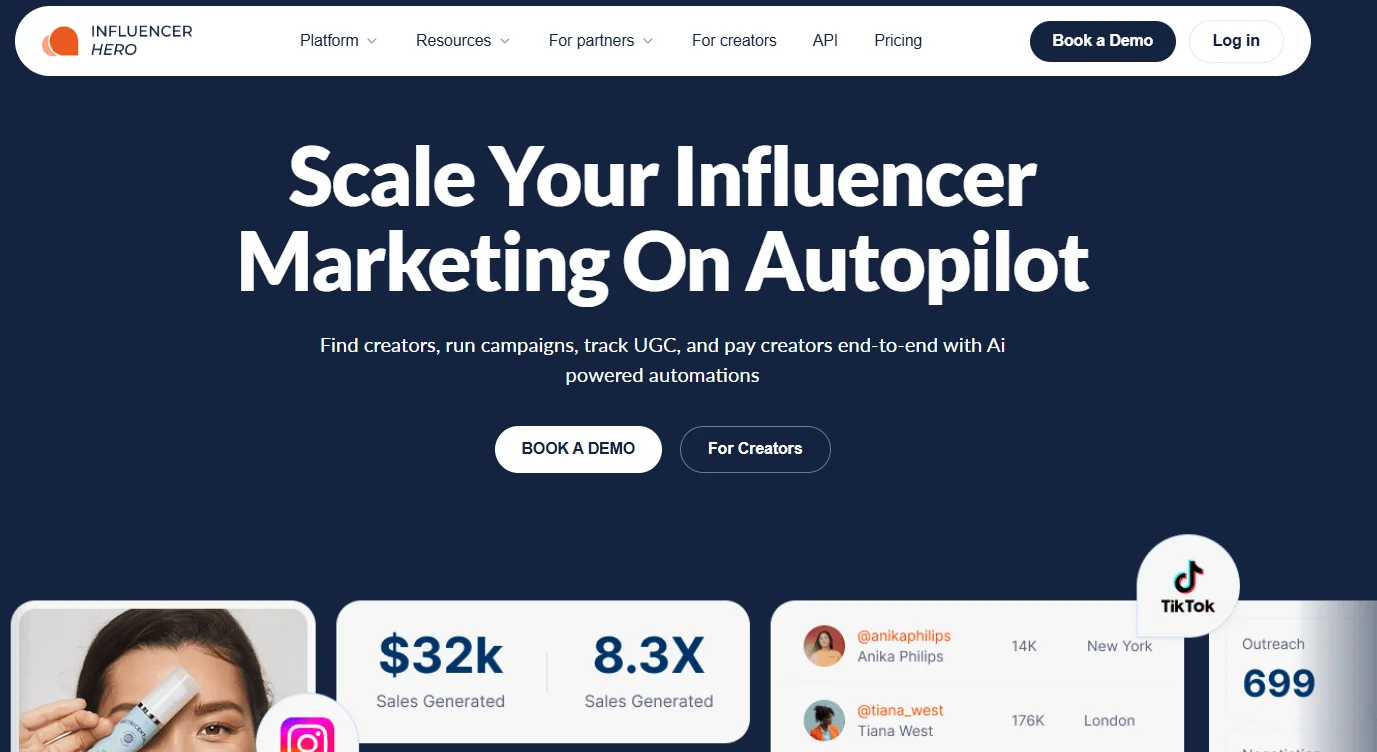
Influencer Hero is the pick for brands that want one platform to run the whole creator program, not just an affiliate layer. It combines discovery across a 300M+ creator database with outreach automation and email sequencing, an integrated CRM, gifting with Shopify and WooCommerce, affiliate and payment tracking, UGC rights management, and ROI dashboards that tie spend to revenue.
The contrast with ShopMy is the cost model and the scope. Where ShopMy stacks GMV fees and Opportunities charges on top of the subscription, Influencer Hero charges no GMV transaction fees, so your platform cost is predictable as you scale. And rather than leaning on a curated commerce network, it gives you outbound discovery and automation across eight platforms (Instagram, TikTok, YouTube, Facebook, Pinterest, Snapchat, X, and Twitch), which suits brands outside the fashion-and-beauty lane.
Reviewers rate it highly for ease of use and value, with a 4.8 on G2 and specific praise for the email automation. It fits mid-market and Shopify/ecommerce brands that would rather run discovery, gifting, affiliate, and reporting in one workspace than juggle separate tools.
Pricing starts at $649/month for Standard (up to 1,000 creator contacts a month), then Pro at $1,049/month (5,000 contacts) and Business at $2,490/month (10,000 contacts), with custom and agency tiers above. Plans bill monthly or annually.
The honest caveat: there is no free plan, so the $649 entry point is a real commitment that will feel steep for solo marketers or very small teams just starting out. If you are running regular campaigns, the automation earns its keep. If you are not there yet, it may be more platform than you need.
4. GRIN

GRIN is the creator management platform built specifically for ecommerce, and a strong fit if you like ShopMy's commerce focus but want to own the full program in-house. It centralizes creator discovery, outreach, relationship management, product seeding, affiliate tracking, content collection, and reporting, with deep native integrations into Shopify, WooCommerce, and Magento.
It shines for established D2C brands running large, always-on creator and ambassador programs with a dedicated team. The ecommerce integrations make gifting and revenue attribution feel native rather than bolted on, and the CRM-style interface keeps the whole operation in one place, which is more control than ShopMy's curated-network model gives you.
Pricing is custom and quote-based. Public estimates generally land in the low thousands per month (commonly cited around $2,000 to $2,500), with an annual contract billed monthly.
The honest caveat: between the price and the year-long commitment, GRIN is built for brands that have already outgrown lighter tools. Smaller or early-stage teams will find it expensive and heavier than the job calls for, especially next to ShopMy's $399 entry tier.
5. SARAL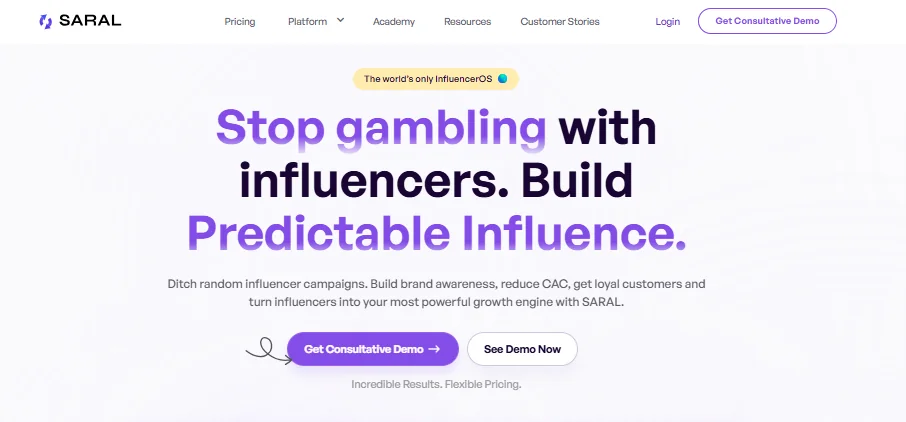
SARAL is a sharp pick for DTC brands that want ShopMy's affiliate and ambassador outcomes with more hands-on program control. It bills itself as an "InfluencerOS" and pulls discovery, outreach automation, a creator CRM, product seeding, native affiliate tracking, and performance reporting into one workflow. A Chrome extension lets you pull creator metrics straight from Instagram, TikTok, or YouTube while you browse, which feels closer to real prospecting than database digging.
It is built for brands that want to turn influencers into a repeatable, revenue-driving channel rather than one-off posts. The native cookieless affiliate tracking and discount-code generation mean you do not need a separate affiliate app, and the CRM replaces the spreadsheet chaos most growing programs drown in. Brands like Grüns, Spacegoods, and Obvi use it, and it holds a 4.8 on G2.
Pricing is published openly, which is rare here. Plans are tiered by how many creators you search and save, billed quarterly or annually with no annual lock-in, with entry commonly cited around $1,200/month (roughly $3,600 per quarter) and scaling toward $15,000/year for larger programs. A free trial is available after an intro call.
The honest caveat: the quarterly commitment is less flexible than a true monthly plan, so very early-stage brands just testing the channel may want something lighter first. Larger brands with mature, high-volume programs can also hit feature ceilings on analytics depth.
6. Modash

If ShopMy's curated, niche-specific network feels limiting, Modash hands you the opposite: more than 350M public creator profiles across Instagram, TikTok, and YouTube, indexed by crawling open data. You can find creators in any category or market, not just premium fashion and beauty, which is exactly the gap brands outside ShopMy's core niches run into.
It is built for DTC and ecommerce teams that want discovery, audience analysis, outreach, gifting, affiliate tracking, and payments in one place. The audience-quality data lets you screen for fake followers and demographic fit before reaching out, and Shopify integration on every paid tier keeps gifting and sales attribution clean.
Pricing is refreshingly transparent. Essentials runs $199/month on annual billing ($299 month-to-month) for up to 100 tracked creators, and Performance is $499/month annually ($599 monthly) for 250 creators. Enterprise is custom, starting around $14,700/year.
The honest limitation: monthly caps on profile analyses and email unlocks get used up faster than you expect during an active sourcing sprint, and because creators are indexed rather than opted-in, response rates depend entirely on your outreach. Brands off Shopify also lose some gifting and affiliate automation.
7. Shopify Collabs
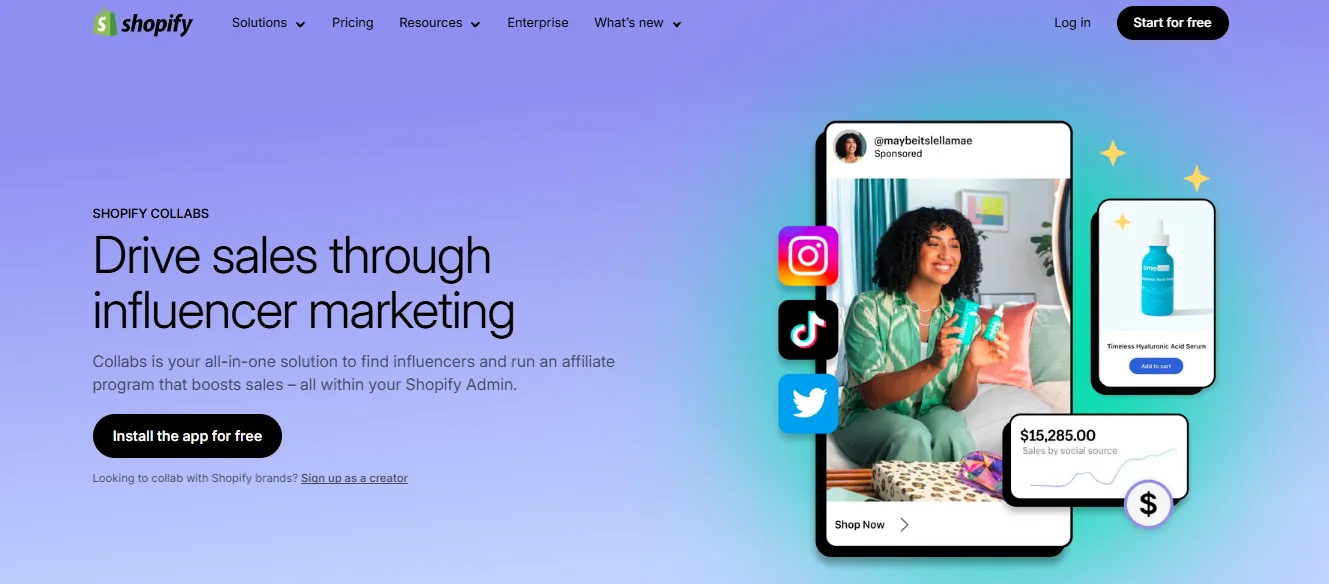
If you run on Shopify and mainly want ShopMy's gifting and affiliate mechanics without a monthly subscription, Shopify Collabs is the easiest swap. Built right into your Shopify admin (it started as Dovetale before Shopify acquired it in 2022), it lets you recruit creators, send product gifts, set commission structures, generate affiliate links and discount codes, and automate payouts, all without a third-party tool. Because it lives inside Shopify, sales attribution is native and accurate.
It fits Shopify merchants who want an open affiliate and gifting program where creators apply to you, plus the option to search the Collabs Network for outbound recruitment by platform, niche, follower range, and engagement. Commission setup is flexible (percentage, flat fee, or tiered), and payouts run automatically.
The pricing is the headline: the app is free to install, with no subscription. The only platform cost is a 2.9% fee on commission payouts (plus a possible currency-exchange fee), so you pay as creators drive sales.
The honest limitation: it is Shopify-only, and there are eligibility gates (merchants generally need $10,000+ in trailing sales to appear in the Network, and creators need 1,000+ followers in the US, Canada, or the UK). It is also affiliate-first, so you will not get the deep outreach automation, CRM, or cross-channel campaign management that a full platform offers.
8. Social Cat

Social Cat is the budget, opt-in option for brands that want ShopMy-style gifting and micro-creator collabs without the premium price or curation gates. You list gifted, paid, or affiliate campaigns and vetted micro and nano influencers apply, with content licensing included. Every creator is manually vetted and verifies their Meta and TikTok accounts, so you are not chasing unresponsive profiles.
It is purpose-built for small and medium product brands (skincare, fashion, food, supplements) that want a low-cost, hands-on way to seed content. The database sits around 500K creators, and the campaign builder takes about five minutes, which keeps the barrier to launching low compared to applying into a curated network.
Pricing is where it competes hardest. Essentials is $99/month and Pro is $299/month, both with usage rights across every tier.
The honest limitation: Social Cat covers Instagram and TikTok only, and it is deliberately light on advanced analytics, automation, and CRM, so you will not get ROI dashboards or affiliate attribution at ShopMy's level. It is a great starter and gifting engine, less of a commerce-tracking machine.
9. Aspire

Aspire (formerly AspireIQ) is the heavyweight here, aimed at mid-market and enterprise ecommerce brands running word-of-mouth commerce at scale. It pairs a 1M+ creator marketplace with discovery, campaign management, affiliate tracking, content management, and social ads, and supports both inbound discovery (creators apply to your campaigns) and outbound search.
It is a natural destination when ShopMy's affiliate-first scope is not enough and you want to run ambassador programs, product seeding, affiliate, and paid amplification together with serious automation. Brands like HelloFresh, Dyson, and Samsung use it. The Shopify and WooCommerce integrations and automated contracts, approvals, and payment flows are genuinely strong for teams managing dozens of creator relationships at once.
Pricing is custom and not published, but based on demos it starts around $2,000/month with an annual commitment, roughly $24,000 a year minimum, sometimes plus a one-time onboarding fee.
The honest limitation: that annual lock-in and entry price put it well out of reach for small brands, and there is no easy monthly option to test first. If you are running a lean program, Aspire is more platform than you need.
10. Collabstr
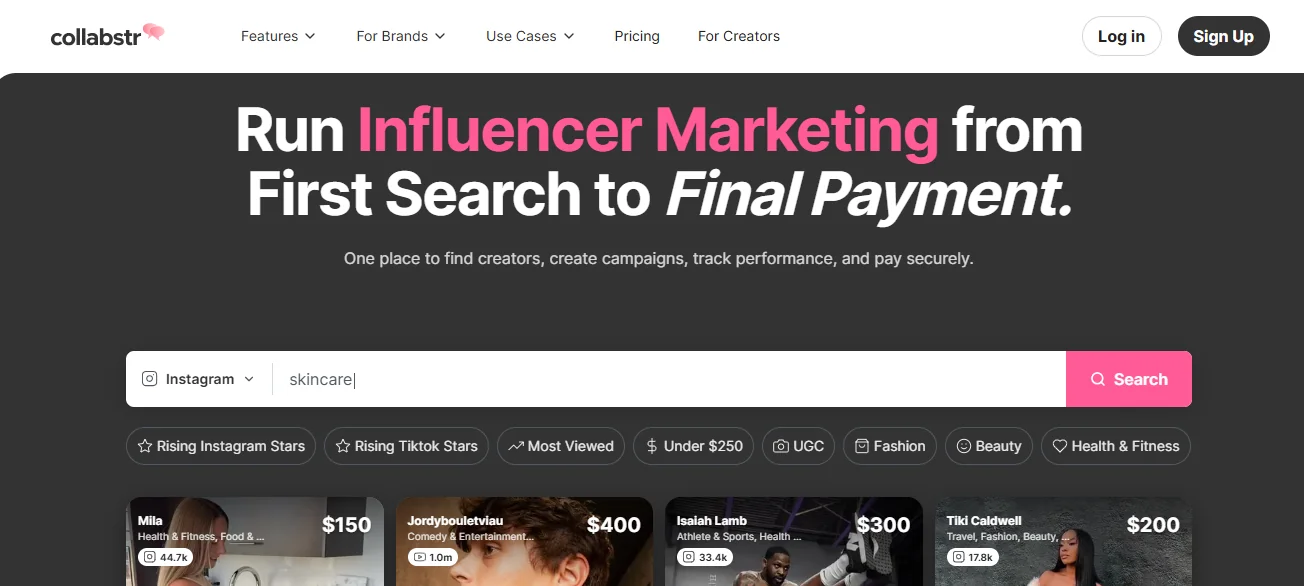
Collabstr is the pay-as-you-go marketplace, closer to "Fiverr for influencers." You browse creators, see their public pricing for a Reel or TikTok before you ever message them, and buy content packages directly. No subscription, no sales call, no annual contract. For brands that found ShopMy's subscription plus stacking fees frustrating, the transparency is the appeal.
You can search a pool of 200,000-plus vetted Instagram, TikTok, YouTube, X, Twitch, Amazon, and UGC creators by niche, location, follower count, and platform, then chat and pay through the platform with funds held in escrow until you approve the content. That escrow setup is reassuring if no-shows have burned you before, and UGC has become one of its fastest-growing use cases.
Pricing is genuinely simple: free to browse and search, and brands pay a 10% marketplace fee per transaction. There are no monthly fees.
The honest limitation: because it is transaction-based, Collabstr is built for one-off buys and quick content rather than long-running affiliate or ambassador programs. You will not find a CRM, commission tracking, or deep ROI attribution here. It is the fastest way to buy creator content, not a creator-commerce engine.
Which ShopMy Alternative Should You Pick?
Here is the honest answer: you do not need the exact platform everyone in beauty and fashion uses. You need the one that matches your niche, budget, and how you want to compensate creators. ShopMy is great for premium fashion and beauty brands running affiliate-driven creator commerce. Brands tend to leave when they want gifting-first workflows without the pay-to-play push (Afluencer, Social Cat, Shopify Collabs), broader niche coverage (Modash, Influencer Hero), a built-in shopping audience (LTK), or full program control (GRIN, SARAL, Aspire).
If you are a small or growing brand that wants to test creator marketing without a subscription or stacking fees, an opt-in marketplace is usually the smartest opening move. You post a Collab, verified creators apply, and you only scale spend once you see what works. That is exactly the model Afluencer is built around, and you can start with a free trial before committing to a plan.
Not sure where to start? Chat with CreatorGPT to map out a strategy, browse the full rundown of influencer marketing tools, or sign up free and post your first Collab today.