.svg)

.png)
GRIN vs Captiv8 vs Influencer Hero: A Detailed Comparison
Comparison shopping for influencer software is exhausting, mostly because almost every article you find is written by someone with a horse in the race. Feature tables get padded, prices get vague, and you finish reading with less clarity than you started.
So here's the straight version. GRIN, Captiv8, and Influencer Hero all promise to run your creator program end to end, but they were built for very different kinds of brands, and they price accordingly. If you're still working out what your program even needs, our guide on getting started with influencer marketing is a better first stop than any pricing page.
By the end of this you'll know what each platform charges in 2026, where each one genuinely leads, and where each one gets frustrating. No verdict, no scoreboard. Just enough detail to pick the one that matches your budget and your workflow.
Quick Comparison
What Is GRIN?
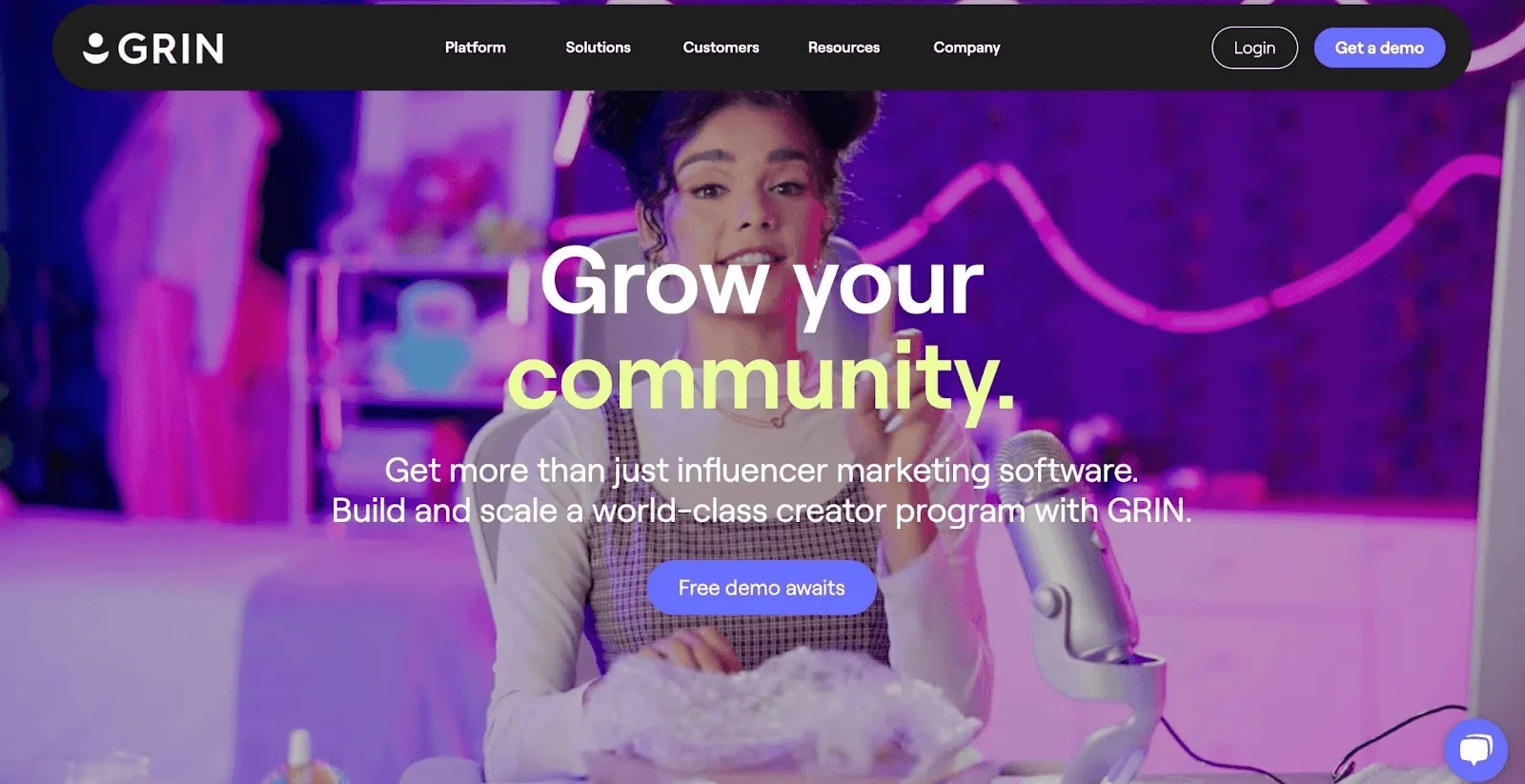
GRIN launched in 2014 and built its reputation on ecommerce. It's a creator management platform aimed squarely at DTC brands that already have a program running and want to stop managing it in spreadsheets and shared inboxes.
The workflow centres on the CRM. You import or recruit creators, move them through stages, brief them, ship product, track content, and pay them, all inside one system. In late 2025 GRIN also split its offering into GRIN Classic and a newer AI product, and published transparent pricing tiers, which is unusual in a category where most vendors hide behind a demo call.
Creator Discovery and Search
GRIN advertises a recruitment suite of 38M+ profiles with AI-powered search on Instagram, plus a landing page tool that turns your own customers into creator applicants. That second part is the more interesting one, since customers who already buy from you convert into partners far more reliably than cold prospects. If you're still building a shortlist from scratch, the fundamentals of finding influencers apply regardless of which tool you use.
Worth flagging: daily creator searches are capped by tier, from 10 per day on the trial up to 150 on Complete. Some reviewers have found the discovery side thinner than the CRM side.
Gifting and Affiliate Workflows
Product seeding is where GRIN is strongest. Inventory syncs from Shopify, creators order directly, and fulfilment gets tracked without anyone emailing a spreadsheet around. For gifting-led programs built on micro-influencer partnerships, that alone can justify the subscription.
Affiliate management starts on the Lite plan, but deep links and advanced conversion attribution only unlock on Growth at $1,149/month. Reviewers have consistently flagged affiliate link and code setup as clunkier than it should be.
Ecommerce Integrations
Shopify integration is available on every tier and is the feature users praise most often. Slack and Google Drive arrive on Essentials, API access on Complete. If your stack is Shopify-centric, GRIN slots in with very little engineering work.
Where GRIN Falls Short
The complaints cluster around two things: capacity limits that bite sooner than expected, and a learning curve that takes a few weeks to climb. Active creator capacity on Lite is small enough that a growing program can outgrow the entry tier fast, which turns a $399/month tool into a $699 or $1,149 one quicker than the pricing page suggests.
What Is Captiv8?
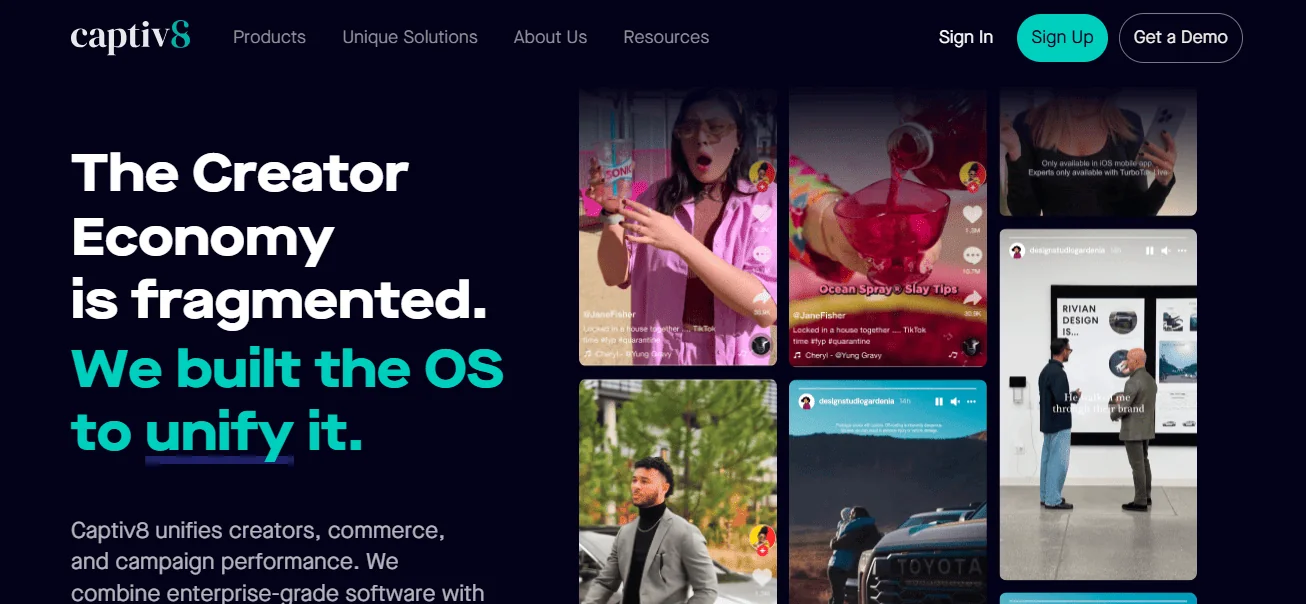
Captiv8 is the enterprise option in this comparison, and it doesn't pretend otherwise. Owned by Publicis Groupe and now aligned with Influential, it's built for large brands and agencies running multi-region, multi-team creator programs. Honda and Walmart are representative of the client base.
The platform covers discovery, contracting, content review, payments, social listening, and paid amplification. Everything runs through a demo call: no public pricing, no self-serve signup, no free trial.
AI Creator Discovery at Enterprise Scale
Captiv8 indexes 15M+ creator profiles across Instagram, TikTok, YouTube, Facebook, Pinterest, Snapchat, X, and Twitch, with 500+ filters. Its Influencer Velocity Index scores creators on predicted campaign performance rather than follower count, and a 2025 Perplexity partnership added natural language search, so you can ask which creators over-index with a specific demographic in a specific market and get a usable answer.
Analytics and Measurement Depth
This is the real reason brands pay for Captiv8. Real-time reporting covers engagement, impressions, EMV, and ROAS, with direct Looker Studio and Google Analytics integrations. For teams that need to defend spend to a CFO rather than a founder, that depth matters, and it's worth being clear internally on the difference between reach and impressions before you build dashboards around either.
Commerce and Affiliate Integrations
Shopify, Amazon, and TikTok Shop integrations power affiliate programs with real-time revenue tracking and commission management. The TikTok Shop module in particular is a genuine differentiator if commerce-driven creator campaigns are core to your strategy. It also sits in a higher tier and pushes the annual commitment up significantly.
Where Captiv8 Falls Short
Two structural issues. The contract is annual with no monthly option, so there's no cheap way to test the fit. And even happy reviewers describe an inefficient search workflow and a learning curve steep enough to need dedicated onboarding, which is why the $3,000 onboarding fee exists.
What Is Influencer Hero?
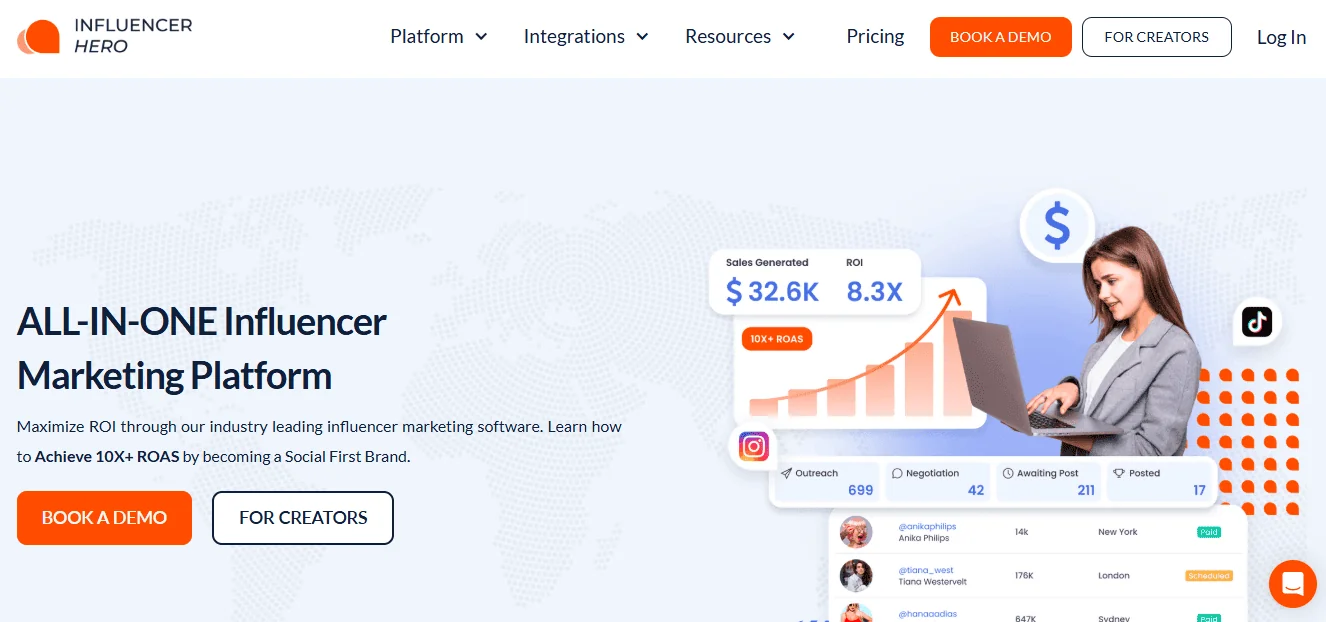
Influencer Hero is an all-in-one influencer marketing platform built for DTC brands, and it's now part of the Afluencer ecosystem. The positioning sits between GRIN's ecommerce focus and Captiv8's enterprise scale: full workflow coverage, public pricing, monthly billing.
The core idea is that outreach, CRM, affiliate tracking, payments, and UGC management belong in one system rather than four. Brands typically land here after outgrowing a marketplace tool and deciding an enterprise contract is more platform than they need.
Outreach Automation
Automated multi-step email sequences run from inside the platform, with personalisation and follow-ups handled for you. This is the part most brands underestimate: response rates live or die on sequencing and timing, and the outreach techniques that work manually are exactly the ones worth automating once volume climbs.
Creator application pages also feed inbound interest straight into the CRM, so recruitment isn't purely outbound.
CRM and Campaign Management
Every creator relationship sits in one pipeline with stages, tags, and full conversation history. Campaign briefs, content approvals, and deliverable tracking all live alongside it, so nobody has to reconstruct where a partnership stands from an email thread.
Affiliate Tracking and Payments
Affiliate links, discount codes, commission tracking, and creator payments are included rather than gated behind a premium tier or an add-on module. UGC gets detected automatically when a creator uses their link or code, which saves a lot of manual content hunting.
Where Influencer Hero Falls Short
At $649/month, it isn't the cheapest entry point in this comparison, and it's not the right call for a brand running two gifting collabs a quarter. It also doesn't try to match Captiv8 on social listening or enterprise-grade measurement, because that isn't the audience it's built for.
GRIN vs Captiv8 vs Influencer Hero: Feature-by-Feature Breakdown
Influencer Discovery
Captiv8 leads on raw filtering depth and natural language search, which is what you'd expect at enterprise pricing. GRIN's 38M+ database is larger on paper but capped by daily search limits per tier. Influencer Hero balances database access with search tools built around DTC use cases rather than agency reporting. All three beat manual Instagram influencer search, though that's a low bar.
Outreach and Communication
GRIN gives you an integrated inbox with sequences capped by tier (2 on Lite, 10 on Complete). Captiv8 handles messaging inside campaign workflows, which suits structured briefs more than high-volume prospecting. Influencer Hero is built for volume outreach, with uncapped sequencing logic as the default rather than a tier upgrade.
CRM and Campaign Management
GRIN's CRM is its strongest asset, with capacity limits from 150 records on the trial to 4,000 on Complete. Captiv8 handles multi-team, multi-region workflows that the other two aren't designed for. Influencer Hero covers the full DTC pipeline without seat and record ceilings arriving as fast.
Tracking and Analytics
Captiv8 wins on depth, plainly. Looker Studio and GA integrations plus EMV and ROAS reporting are enterprise-grade. GRIN's Report Builder unlocks at Growth. Influencer Hero focuses on the metrics DTC brands actually action: revenue per creator, code performance, content output.
Integrations
All three connect to Shopify. Captiv8 adds Amazon and TikTok Shop. GRIN adds Slack and Google Drive at Essentials, API at Complete. Influencer Hero covers Shopify plus the payment and affiliate infrastructure natively rather than through partners.
Pricing: What You'll Actually Pay
GRIN publishes its tiers: Lite at $399/month, Essentials at $699, Growth at $1,149, Complete at $1,799. Month-to-month, 30-day free trial, no contract. The catch is capacity, since active creator and CRM limits are what push you up a tier, not features alone.
Captiv8 starts at roughly $25,000/year plus a $3,000 onboarding fee, on an annual contract with no monthly option. Full enterprise bundles with storefront and affiliate modules run far higher. Nothing is published, so every number comes from a demo call.
Influencer Hero lists pricing publicly: Standard at $649/month, Pro at $1,049, Business at $2,490. Monthly billing, and affiliate tracking and payments are included rather than sold as modules.
Afluencer runs three paid tiers starting at $49/month, billed monthly with no lock-in.
Here's the practical bit. If your total influencer budget is $2,000/month, a $649 platform is a third of it before a single creator gets paid, and a $25,000 annual contract isn't a conversation. Software should be a fraction of what you spend on creators, not the other way round. Which is why testing the channel on a $49 marketplace tier first, then upgrading once the numbers justify it, is a sane sequence rather than a compromise.
Which Platform Is Right for You?
Captiv8 earns its price tag in a specific context. If you're running creator programs across multiple regions with several teams, need EMV and ROAS reporting your finance team will accept, and want TikTok Shop commerce attribution built in, very little else in the category matches that depth. GRIN, meanwhile, has done something genuinely useful by publishing its pricing, and its product seeding workflow is the best in this comparison for gifting-led Shopify programs. If those are your problems, those are your tools.
Influencer Hero makes more sense when your bottleneck is the workflow itself. If you're recruiting creators at volume, running sequences, tracking affiliate revenue per creator, paying people, and collecting UGC, and you'd rather not stitch four tools together or explain a capacity limit to your CFO every quarter, the full stack in one place is the point. The framing worth applying when choosing a platform is simple: which of these jobs are you doing manually today, and what does each hour cost you?
Curious how that plays out for your program? Book a demo with Influencer Hero.
If you're not at the paid platform stage yet, don't force it. Afluencer starts at $49/month, runs month-to-month, and lets you post a Collab and field applications from verified creators without committing to anything. It's the cheapest honest way to find out whether this channel works for your brand before you commit $649 or $25,000 a year to running it. Get started on Afluencer.
The Bottom Line
These three tools aren't solving the same problem: Captiv8 is solving enterprise measurement, GRIN is solving ecommerce gifting logistics, and Influencer Hero is solving the operational grind of running outreach, CRM, affiliate, and payments as one workflow. Pick based on which of those actually keeps you up at night. If none of them do yet, that's useful information too, and a $49/month Afluencer plan will tell you more about your creator program in 60 days than any demo call will. Start on Afluencer and let the results decide your next tier.