.svg)

.png)
Influencity vs Influencer Hero: A Detailed Comparison
Picking an influencer platform gets messy fast. Two tools can look nearly identical on a feature checklist, then feel completely different the moment you try to actually run a campaign with them. Influencity and Influencer Hero are a perfect example.
Both help you find creators and manage campaigns. But Influencity is built around discovery and audience analytics, while Influencer Hero is built around running the entire program end to end. That difference is the whole ballgame, and it decides which one is right for you.
This comparison breaks down what each platform does best, where each one leaves gaps, what the pricing actually looks like once you get past the sticker number, and how to match the tool to your brand's stage. Before you commit to anything, it helps to know which questions to ask any influencer platform so you don't pay for capacity you'll never use.
Here's the full picture.
Quick Comparison Table
What Is Influencity?
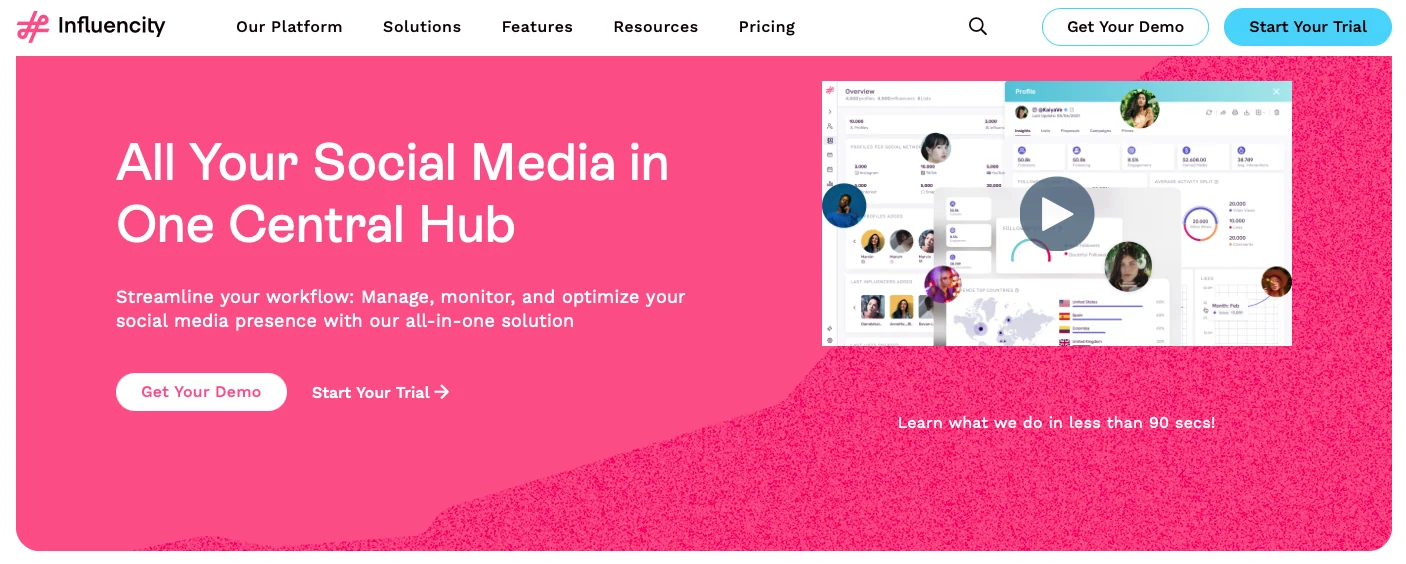
Influencity is a Madrid-based influencer marketing platform built around a huge creator database and seriously deep audience analytics. It's a discovery-and-research engine first, with campaign management layered on top. If your job is finding the right creators and proving their audience is real before you spend, this is the kind of tool that shines.
The database covers 200M+ creators across Instagram, TikTok, YouTube, and Twitch, and the platform is well-liked by agencies and research-led marketing teams. Influencity runs on an analysis-credit model: every plan gives you a set number of full creator reports per month, and that cap is really what you're buying at each tier. Here's where it earns its reputation.
AI-Powered Discovery
Influencity's search engine is its standout. You can filter creators across 50+ parameters (audience demographics, engagement rate, location, brand affinity, content topics), and the AI Assistant lets you describe what you want in plain language and pulls a shortlist back. For teams that spend hours building creator lists, this cuts real time.
It pairs well with a clear game plan for finding the right influencer for your niche.
Deep Audience Analysis
Every creator report digs into audience quality scoring, fake-follower detection, engagement benchmarks, and audience overlap between creators. If you've ever wanted to know whether two influencers are just reaching the same people twice, this is the tool that tells you. It's genuinely strong data for vetting.
Campaign Management and IRM
Beyond discovery, Influencity includes an Influencer Relationship Management module for organizing creators, tracking campaign progress, and pulling reports. Agencies juggling multiple client campaigns lean on this to keep everything in one place, especially when they're finding creators on Instagram at volume across different brands.
Where Influencity Falls Short
Influencity is front-of-funnel by design, so the operational side is thin. There's no automated outreach at scale, no affiliate tracking, no built-in payments, and no automatic UGC capture.
The analysis-credit caps also bite: on lower tiers you can burn through your monthly reports in a single vetting round. It's a fantastic tool for finding and analyzing creators, less so for running the whole campaign once you've found them.
What Is Influencer Hero?
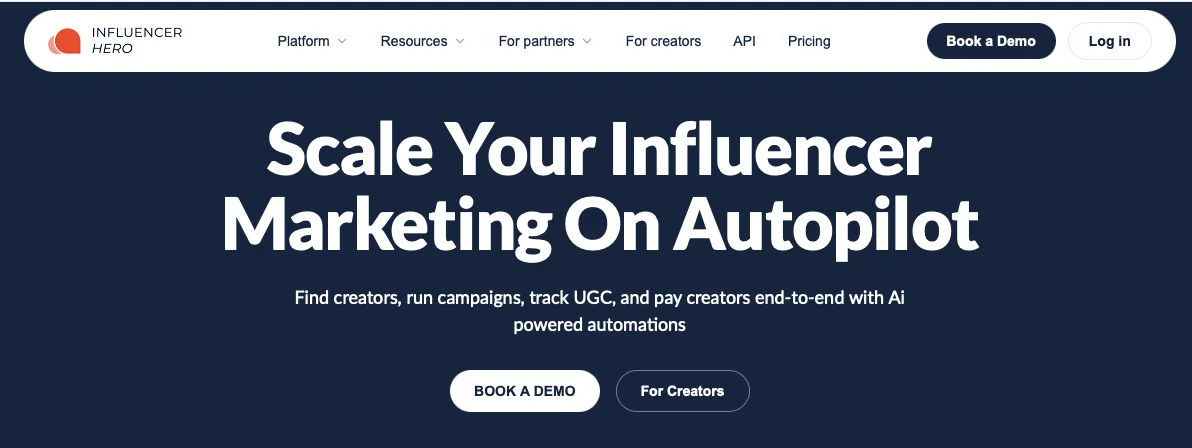
Influencer Hero flips the priority. Instead of leading with data, it leads with the workflow: discover creators, run automated outreach, manage the relationship, send product, track affiliates, pay everyone, collect the content, and attribute revenue, all inside one platform.
It's built for DTC brands that treat influencer marketing as an ongoing growth channel, not a quarterly experiment. Influencer Hero is also part of the Afluencer ecosystem now, sitting alongside Afluencer's free marketplace as the platform you scale into.
Discovery runs on a 450M+ creator database across Instagram, TikTok, and YouTube, with filters for niche, demographics, engagement, and location. But the reason brands stick around isn't the database size. It's the automation stacked on top, which turns proven outreach techniques into repeatable, hands-off sequences.
Outreach Automation
This is the feature users single out. You build multi-step email sequences, personalize them at scale, and track opens and replies without leaving the dashboard. For brands doing high-volume outreach, it replaces the manual send-and-chase routine that eats your week.
Affiliate Tracking and Payments
Influencer Hero handles affiliate links, discount codes, conversion tracking, and creator payouts natively. No stitching a separate affiliate app to a separate payment tool. That end-to-end attribution is exactly what DTC brands need to prove the channel actually drives sales, not just impressions.
UGC Collection and Storefronts
The platform automatically pulls creator posts into a content library you can reuse, and it lets you spin up creator storefronts. For brands that treat creator content as a paid-ad asset, that's a real workflow advantage, and it's one of the biggest gaps in discovery-only tools.
Where Influencer Hero Falls Short
There's no free plan, so it's a committed spend from day one. And if pure discovery depth is your single priority, a research-first tool like Influencity offers more analysis parameters and a credit model tuned for heavy vetting. Influencer Hero is optimized to run programs, not to be a forensic research lab.
Influencity vs. Influencer Hero: Feature-by-Feature Breakdown
Influencer Discovery
Both have strong discovery, but they're tuned differently. Influencity's edge is analysis depth and its AI Assistant for natural-language search, ideal when vetting quality is the priority. Influencer Hero's larger 450M+ database is built to shortlist fast and move straight into outreach.
If you want to interrogate an audience before committing, Influencity goes deeper. If you want to get from search to sent in one motion, Influencer Hero flows better.
Outreach and Communication
This is the clearest split. Influencity's IRM helps you organize and communicate, but it isn't built for automated outreach at volume. Influencer Hero treats outreach automation as a core job: sequences, personalization, and reply tracking baked in.
For a few curated invites, Influencity is fine. For outreach run as a numbers game, Influencer Hero is designed for it.
CRM and Campaign Management
Both keep creators and campaign statuses organized. Influencity's IRM is genuinely solid for agencies managing multiple client campaigns side by side. Influencer Hero's CRM is wired directly into outreach, affiliates, and payments, so a creator moves from "contacted" to "posted" to "paid" without you switching tools.
Whichever you choose, getting your program organized early is how you avoid the common mistakes that trip up brands scaling this channel.
Campaign Tracking and Analytics
Influencity's analytics are deep on the audience side: quality scores, benchmarks, and overlap analysis. Influencer Hero's tracking is built around revenue, with strong sales attribution through its affiliate system. Different questions again: Influencity answers "is this audience real and worth it?" while Influencer Hero answers "did this campaign actually make money?"
Integrations and Payments
Both integrate natively with Shopify. Influencer Hero adds Klaviyo and WooCommerce, plus native creator payments and affiliate handling.
Influencity connects to Shopify for e-commerce data but doesn't process creator payments or manage affiliate commissions in-platform. If getting money to creators without a separate tool matters, Influencer Hero covers it.
Pricing: What You'll Actually Pay
Influencity's Basic plan is reported to start around $168/month, with Professional near $348/month (unlimited analyses and the IRM module) and Business around $698/month for agencies. Enterprise is custom, and there's a 7-day trial but no free plan.
Worth noting: Influencity's public pricing page loads behind a sign-in now, and third-party sources disagree, so treat these as ballpark figures and confirm directly. The real cost driver is the analysis-credit cap. If you vet creators heavily, you'll likely need Professional, not Basic.
Influencer Hero's pricing is public: Standard starts at $649/month (1,000 monthly reach-outs, 1 seat), Pro is $1,049/month (5,000 reach-outs, 3 seats), and Business runs $2,490/month (10,000 reach-outs, unlimited seats), with Custom/Agency pricing above that. All plans require a 3-month minimum commitment, and quarterly or annual billing knocks 20% or 30% off. There's no free plan or trial.
Now the practical bit. If your total influencer budget is under $1,000/month, dropping $170–$649/month on software before you've paid a single creator is a big commitment. That math only works once you know the channel returns money.
Which is why testing for free first is smart, and why smaller brands often start with influencers through a free marketplace before graduating to paid tools.
Which Platform Is Right for You?
Influencity is genuinely excellent at the front of the funnel. If your priority is deep creator discovery and audience analysis (you want AI-powered search, granular filters, and forensic audience data before you spend, or you're an agency managing research across multiple clients), Influencity leads in that lane. Its analytics depth and IRM are real strengths, and plenty of teams get exactly what they need from it.
Influencer Hero makes more sense when your bottleneck isn't finding creators, it's running the program. If your brand needs to reach out at scale, automate follow-ups, manage affiliates, pay creators, capture UGC, and tie it all back to revenue, that full workflow works better in one place. It's built for DTC teams scaling outbound, where the operational layer matters more than raw database size.
Want to see whether that workflow fits how your team actually operates? Book a demo →
Not at the paid-software stage yet? That's completely fine, and honestly the right call if you're still validating the channel. Afluencer is free to start and connects you with active, verified creators who are already looking to collaborate.
Sign up on Afluencer for free, run a few collabs, and prove it works before you spend on a subscription. If you're brand new to all this, the 5 steps to get started with influencer marketing will get you moving.
The Bottom Line
Influencity and Influencer Hero win on opposite ends of the funnel: Influencity for finding and vetting creators with real analytical depth, Influencer Hero for actually running the campaign from outreach to payout to UGC. If you need that full operating layer in one place, Influencer Hero is worth a closer look.
And if you're not ready to pay for either, start free on Afluencer, get some wins on the board, then scale into whichever tool fits. Sign up on Afluencer for free and line up your first collab this week.