.svg)
.png)
Modash vs Afluencer vs Influencer Hero: A Detailed Comparison
Comparison shopping for influencer software is exhausting. Every platform claims to be all-in-one, every review site is running an affiliate deal, and the pricing pages are half demo walls. You end up with 14 tabs open and no clearer idea of what you're buying.
Modash, Afluencer and Influencer Hero come up constantly in the same searches, but they solve three different problems. Modash is a discovery and audience data tool. Afluencer is a marketplace where creators apply to you. Influencer Hero is a full workflow platform built for brands running programs at volume.
That distinction matters more than any feature checklist, because picking the wrong category costs you months. Below is what each one does well, where each one stops, what you'll actually pay, and how to match the platform to the stage your program is in. If you're still figuring out the basics before you buy anything, our guide on getting started is worth 10 minutes first.
Quick Comparison: Modash vs Afluencer vs Influencer Hero
What Is Modash?

Modash is a discovery-first influencer marketing platform built around a database of more than 350 million creator profiles across Instagram, TikTok and YouTube. Brands use it to search for creators by niche, location, follower count, engagement rate and audience demographics, then dig into each profile before reaching out.
The workflow is outbound. You define who you want, filter until you have a shortlist, check audience quality, unlock verified emails and start a sequence. Modash publishes its pricing openly, which already puts it ahead of most enterprise tools in this category.
It's a favorite with ecommerce and DTC teams that already know influencer marketing works for them and want better inputs going into every campaign.
Audience Data and Fake Follower Detection
This is where Modash genuinely leads. You get audience demographics, credibility scores and fake follower analysis on individual profiles, which means you can kill a bad partnership before you've spent a dollar on it. For brands that have been burned by inflated follower counts, that alone justifies the subscription.
Search Filters and AI Discovery
The filtering is deep. You can stack location, language, audience age, gender split, interests and engagement thresholds to get to a very specific creator profile, and the AI search layer lets you describe what you want in plain language. If discovery is your bottleneck, it's one of the strongest discovery tools on the market.
Verified Emails and Outreach Sequences
Modash surfaces verified contact emails and lets you run sequences from inside the platform, so you're not exporting lists into a separate email tool. It's real outreach functionality, not just a contact export.
Where Modash Falls Short
The limits show up once the campaign starts. Profile analyses, email unlocks and tracked creators are all capped per plan, so heavy usage pushes you into an upgrade fast. Campaign management, affiliate attribution and content workflows are thinner than the discovery side, and outreach-heavy or contract-heavy teams usually end up bolting on another tool.
What Is Afluencer?
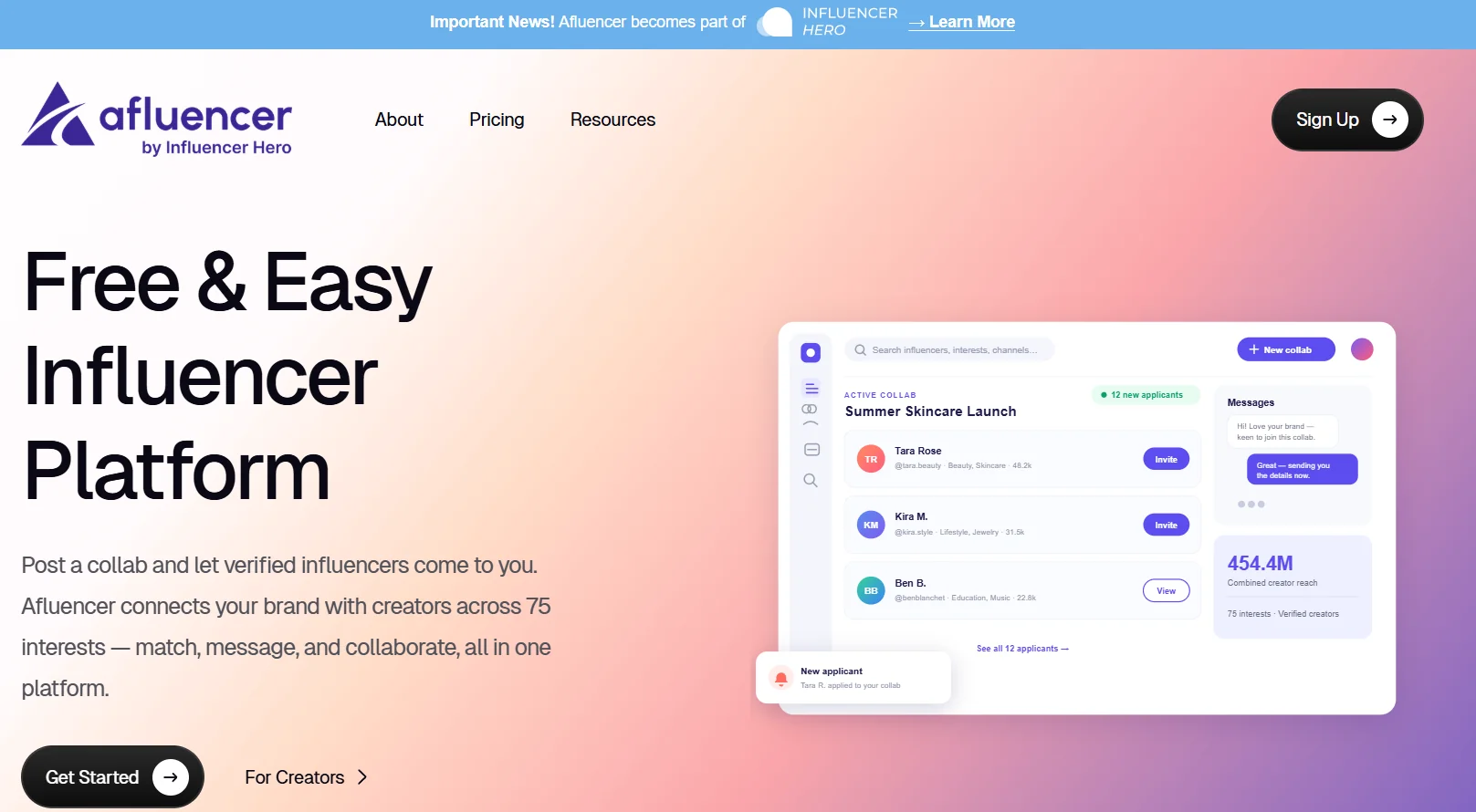
Afluencer flips the model. Instead of hunting creators down, you post a Collab describing what you want, and verified creators apply to you. You review applications, accept the ones that fit and message them directly in the platform.
That inbound approach removes the hardest part of early influencer marketing, which is cold pitching strangers who never reply. Everyone who lands in your inbox already raised their hand. Afluencer is part of the Influencer Hero family, so brands that outgrow the marketplace have a clear path forward rather than a migration project.
It's built for smaller DTC brands, Shopify merchants and founders who are running collabs themselves without a dedicated influencer manager.
Creators Apply to You
Posting a Collab takes minutes and the applications come with the creator's platforms, audience and content style attached. You're reviewing interested people instead of chasing uninterested ones, which changes your response rate math completely.
CreatorGPT for Strategy and Matching
CreatorGPT is Afluencer's AI assistant. You describe your brand, your goal and your budget, and it returns a shortlist plus campaign advice instead of a wall of filters. It's genuinely useful when you don't yet know what "the right creator" looks like for your product.
Verified, Active Creators
Every creator on the platform is verified, and the network skews toward nano and micro creators in the 1K to 100K range, which is exactly the tier most small brands should be working with. If you want the mechanics, we broke down how matching works behind the scenes.
Where Afluencer Falls Short
Afluencer is deliberately lightweight. There's no affiliate link tracking, no automated payment system and no UGC rights library, and discovery is limited to the creators inside the network rather than a global database. Once you're running dozens of partnerships a month and need attribution from post to purchase, you've outgrown a marketplace.
What Is Influencer Hero?
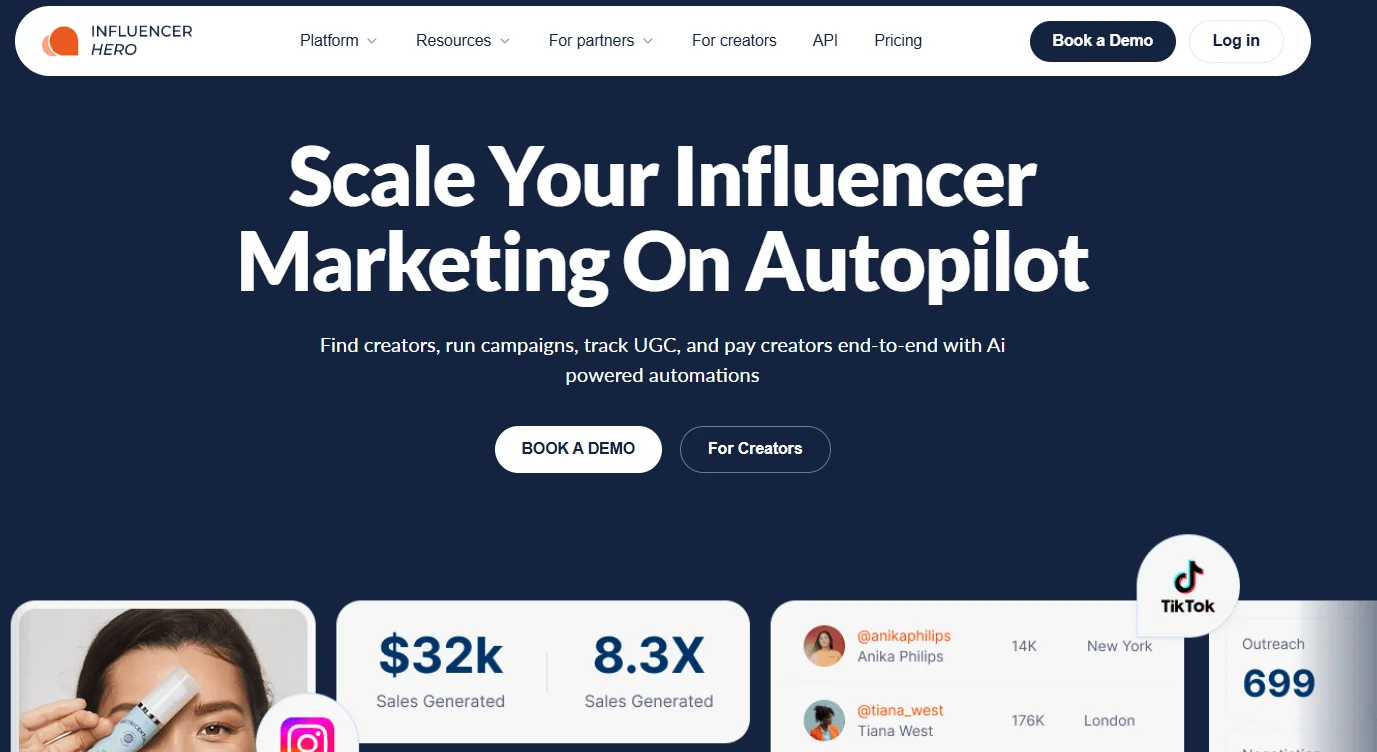
Influencer Hero is an all-in-one influencer marketing platform built for brands running influencer marketing as an actual revenue channel. Discovery, outreach, CRM, gifting, affiliate tracking, payments, UGC and reporting all sit in one system.
The database covers more than 450 million creators across Instagram, TikTok and YouTube, with AI matching, lookalike search, fake follower detection and a brand-follower search that finds creators already following your account. From there, everything moves into automated outreach sequences and a full CRM.
It's the platform DTC brands and agencies move to when spreadsheets, a discovery tool and a separate affiliate app stop holding together.
Automated Outreach That Actually Follows Up
You build multi-step email sequences with personalization and automatic follow-ups, and replies land in a shared inbox tied to each creator's record. Most of the response rate lift in influencer marketing comes from follow-ups nobody has time to send manually, which is why the outreach techniques that work are the ones you can automate.
Affiliate Links, Codes and Sales Attribution
Every creator gets a trackable link or discount code, and revenue is attributed back to them automatically. You can run commission structures, hybrid deals and pure affiliate programs, and see which partnerships actually drove sales instead of guessing from reach.
Automated Payments and Gifting
Product gifting connects to Shopify, WooCommerce and custom stores, so approved creators trigger orders without anyone touching the backend. Commission payouts and flat fees run through the platform too, which removes the PayPal spreadsheet most brands are quietly maintaining.
UGC Library and Reporting
Content collected from campaigns lands in a searchable library with usage rights attached, ready to push into paid social or email. Reporting ties content, clicks, codes and revenue together so you can report ROI in numbers your finance team accepts.
Where Influencer Hero Falls Short
The entry price is $649 per month and plans run on a minimum commitment, so it's a real investment rather than a test. There's more surface area to learn than a marketplace, and brands running two or three collabs a quarter won't use enough of it to justify the cost.
Feature-by-Feature Breakdown
Influencer Discovery
Modash and Influencer Hero both give you global databases and deep filters, with Modash leaning hardest into audience credibility data and Influencer Hero adding AI matching, lookalikes and brand-follower search on top of a larger index. Afluencer works differently by design, surfacing creators who applied to your Collab rather than everyone who exists. Outbound search wins on reach, inbound wins on intent.
Outreach and Communication
Afluencer keeps it simple with in-app messaging and invitation credits, which is fine at low volume. Modash gives you verified emails and sequences from the same screen you found the creator on. Influencer Hero goes furthest with automated multi-step sequences, follow-up logic and a shared inbox, which is what you need once you're contacting hundreds of creators a month instead of ten.
CRM and Relationship Management
This is the clearest gap between the three. Modash tracks campaigns but isn't a relationship system. Afluencer manages applications and conversations. Influencer Hero runs a proper creator CRM with pipeline stages, notes, history and tasks, so a repeat partner is a record with context rather than a name you half remember. That matters most for long-term ambassador programs, and our collaboration tips explain why repeat partners outperform one-off posts.
Tracking, Attribution and Analytics
Modash tracks posts, stories and some sales data through its Shopify integration. Afluencer keeps tracking basic and expects you to measure results on your own side. Influencer Hero connects affiliate links, discount codes, UGC and payouts into one reporting view, which is the difference between knowing a campaign performed and knowing which five creators generated the revenue.
Integrations
All three connect to Shopify. Modash keeps its integration list tight and focused on ecommerce data. Influencer Hero adds WooCommerce, custom stores, Klaviyo, Slack, Zapier, DocuSign and an API, which matters when influencer data has to flow into your email flows and reporting stack rather than sit in a silo.
Pricing: What You'll Actually Pay
Modash starts at $199 per month on annual billing, or $299 billed monthly, for the Essentials plan. Performance runs $499 per month annually or $599 monthly, and Enterprise is custom quoted. There's a 14-day trial, and usage caps on profile analyses, email unlocks and tracked creators are the thing to watch, because they drive upgrades faster than headcount does.
Afluencer starts at $49 per month on the Marketplace plan, which covers invitation credits, premium creator filters and support. Standard and Pro sit above it for brands that need higher outreach volume, product shipping and creator payments. It's the cheapest real entry point of the three by a wide margin, which is why so many brands run their first micro-influencer collabs there.
Influencer Hero publishes its pricing too. Standard is $649 per month for up to 1,000 creators, Pro is $1,049 for up to 5,000, and Business is $2,490 for up to 10,000, with Custom and Agency plans above that. The pricing reflects what's included, since discovery, outreach, CRM, affiliate tracking, payments and UGC would otherwise be three or four separate subscriptions.
Here's the practical math. If your entire influencer budget is $1,000 a month, spending $200 to $300 of it on discovery software before you've paid a single creator is a rough allocation. At that stage, starting at $49 on Afluencer keeps your money in the campaigns where it belongs.
Which Platform Is Right for You?
Give Modash real credit here. Its audience analysis and fake follower detection are best in class, and if your problem is that you keep partnering with creators whose followers aren't real or aren't yours, no amount of workflow automation fixes that. Modash fixes it. For a two or three person team whose single biggest gap is finding and vetting the right people, it's a strong, transparently priced pick.
Influencer Hero makes more sense when the bottleneck has moved past discovery. If you're running outreach at volume, managing repeat partners, paying commissions, tracking affiliate revenue and collecting UGC for paid social, those pieces need to live in one system or they stop reconciling. That's the specific case it covers end to end, and it's why brands tend to land there after outgrowing a discovery tool plus three add-ons.
Curious how that workflow looks against your current setup? Book a demo with Influencer Hero.
And if you're earlier than that, Afluencer is where to start. At $49 a month you can post a Collab, get real applications from verified creators and learn what actually converts for your product before committing to a platform built for scale. Test the channel first, then buy the software your results justify. See Afluencer plans and post your first Collab.
The Bottom Line
These three tools answer three different questions. Modash answers "who should I work with," Afluencer answers "how do I get creators to come to me," and Influencer Hero answers "how do I run all of this without five tabs and a spreadsheet."
Match the tool to the question you're currently stuck on, not to the longest feature list. If you're already past the testing phase and your program needs discovery, outreach, affiliates and UGC in one place, Influencer Hero is built for that. If you're not there yet, start on Afluencer and let the results tell you when to upgrade.