.svg)
.png)
10 Best Afluencer Alternatives in 2026
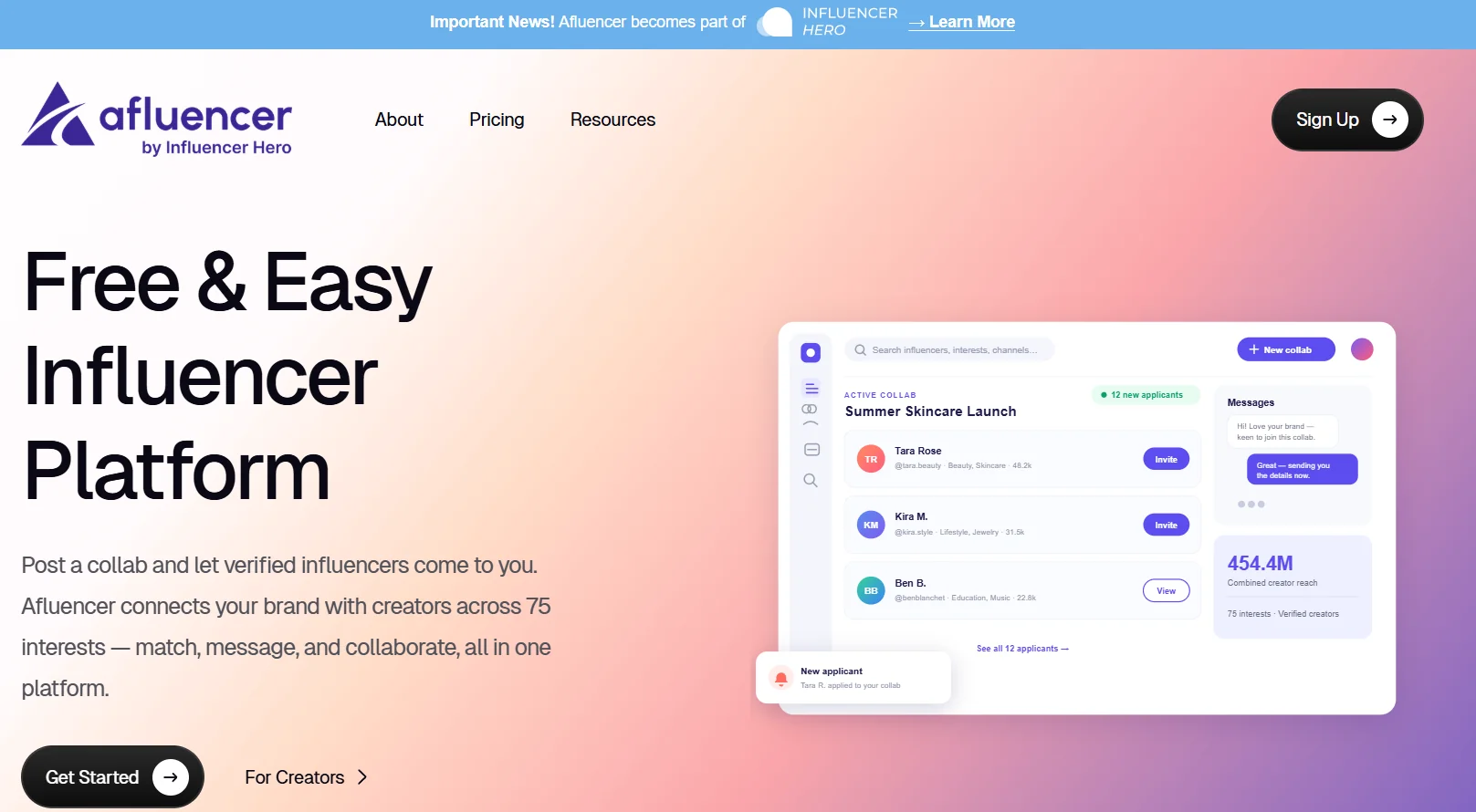
If you are researching Afluencer alternatives, you probably already know the pitch. Afluencer is an affordable creator marketplace where you post a "Collab" and verified creators apply to you.
That inbound model is its whole strength. There is no cold outreach and no giant database to dig through, which makes it a fast, low-cost start for DTC and Shopify brands, especially around micro and nano creators.
So why do brands look at other tools? Usually it comes down to reach and control. On the lower tiers you mainly receive applications rather than proactively search, invite credits are capped, and there is no public API.
None of that makes Afluencer a bad pick. It just means some brands eventually want a bigger database, outbound outreach automation, deeper affiliate and ROI attribution, or a specific channel. If that is you, the tools below cover every angle, from free marketplaces to full campaign stacks.
We researched pricing and features fresh for each one. Whether you want another way to find influencers through a marketplace or a full influencer collaboration suite, here are the best Afluencer alternatives worth a look this year. Let's get into them.
Prefer to keep it simple? Afluencer starts at just $49/month (with a free trial) and lets you post a Collab and get applications from verified creators, billed monthly with no annual lock-in. Chat with CreatorGPT for strategy.
1. Influencer Hero
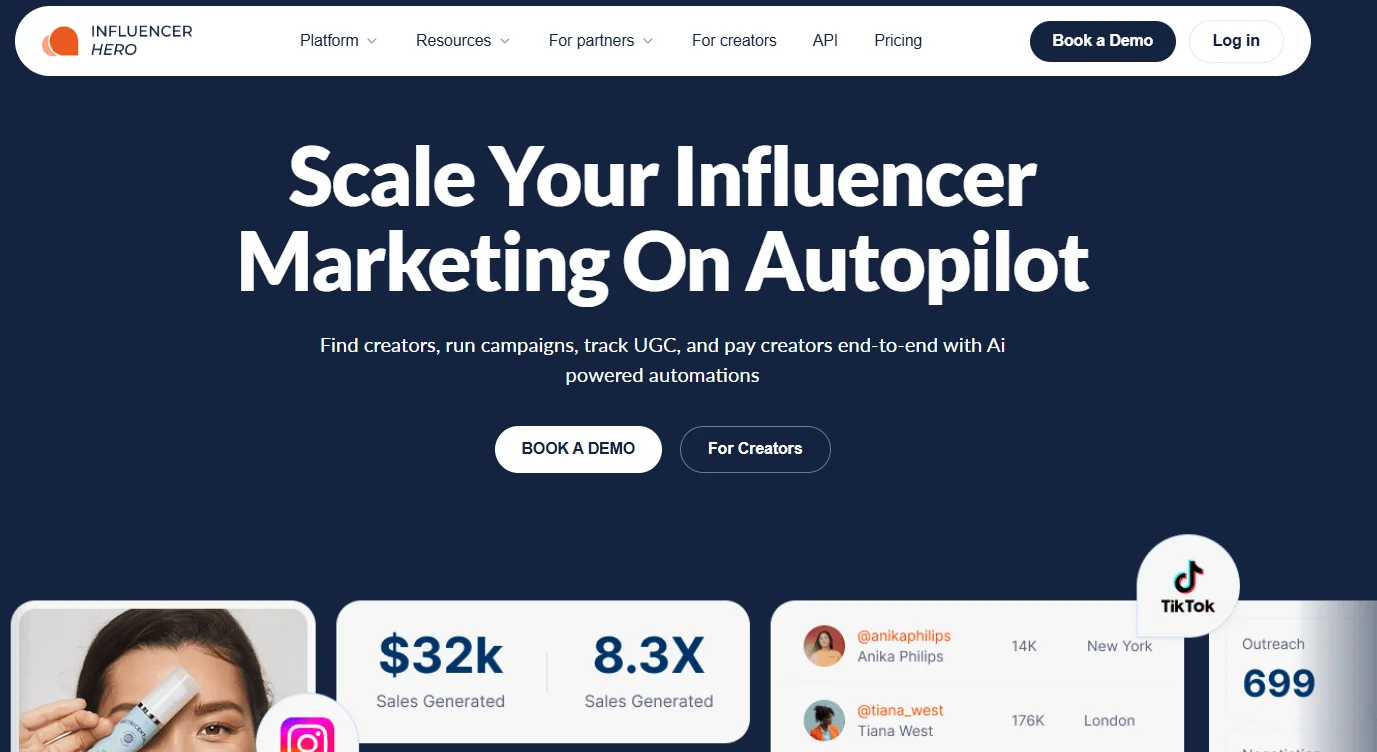
Influencer Hero is the natural next step once you outgrow Afluencer's marketplace, and the two are now part of the same family: Afluencer is now part of Influencer Hero. The path is simple: start on Afluencer to find creators and run your first gifted or paid Collabs, then move up to Influencer Hero when you want to manage full campaigns end to end, with the outbound discovery and automation the marketplace model does not offer.
It bundles discovery across a 450M+ creator database, AI-personalized outreach with automated follow-ups, a full influencer CRM, gifting, affiliate tracking, UGC rights, and ROI attribution. It integrates with Shopify, WooCommerce, and Klaviyo to tie creator activity to real sales.
The outreach automation is the standout. You send sequenced emails from your own domain with follow-ups on autopilot, which is closer to sales automation than the manual outreach most tools rely on.
Pricing is public and monthly: Standard is $649/month (up to 1,000 creator contacts), Pro is $1,049/month, and Business is $2,490/month. The honest caveat is that there is no free trial and the entry plan carries a three-month commitment, so it is a real step up in budget from a marketplace, but it is the same ecosystem you already started in, so graduating up is seamless. Explore more!
2. Collabstr
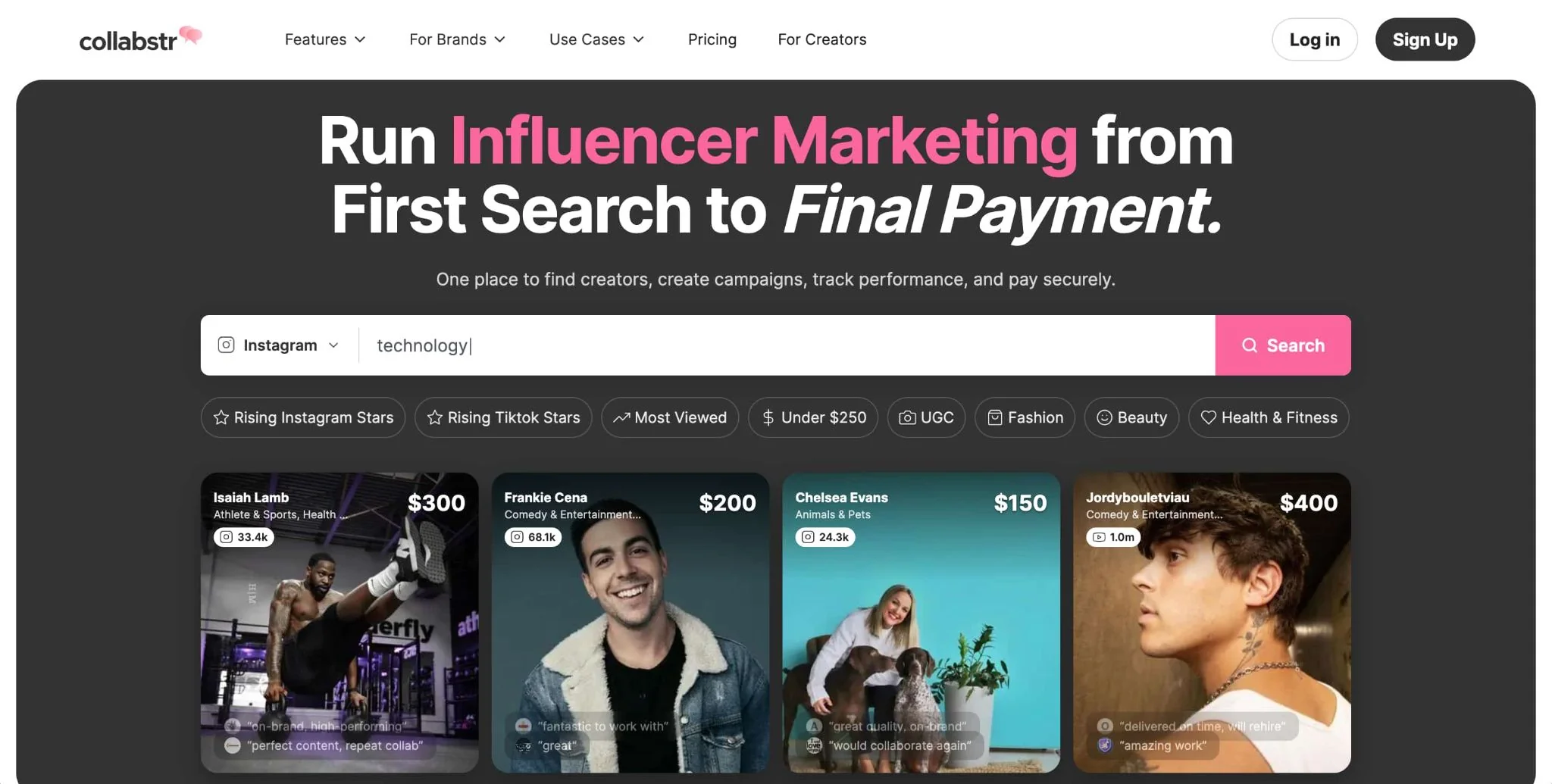
Collabstr is the most direct Afluencer alternative on this list, a self-serve marketplace where you browse, hire, and pay creators like items on a menu.
Every one of its 200,000+ vetted creators lists public rates, so you see the cost of a TikTok video or Reel before you reach out. Payments sit in escrow until you approve the content, which protects both sides.
You can also post a campaign and let creators apply, the same inbound flow Afluencer uses. It is strong for UGC and one-off collaborations, with the average deal landing under $200.
Browsing and hiring is free, with a 10% platform fee per order. Paid plans start at $249/month (Pro) for campaigns, advanced filters, and a reduced 5% fee. The honest catch: it is a transaction-fee marketplace with no deep CRM or ROI attribution, so heavy programs may outgrow it.
3. Shopify Collabs

Shopify Collabs is the natural alternative if you run on Shopify and mostly want affiliate-style creator partnerships.
Because it lives inside your Shopify admin, sales attribution is native. Creators apply through your custom application page (or you invite them), get unique links and discount codes, and payouts are handled automatically. Product gifting is built in too.
The switch reason from Afluencer is simple: zero upfront cost and clean, Shopify-native sales tracking that a standalone marketplace cannot match.
It is free to install, with a 2.9% fee on each commission payout you send. The honest limitation: it is Shopify-only, and the open-application model pulls in a lot of low-quality or irrelevant creators, with limited filtering to screen them. It is an affiliate layer, not a full influencer suite.
4. Modash

Modash flips Afluencer's inbound model into proactive outbound search, which is exactly what brands miss most when they outgrow a marketplace.
It indexes a huge creator database (250M+ profiles across Instagram, TikTok, and YouTube) with detailed audience data and fake-follower checks. On top of discovery, it adds campaign tools and a Shopify integration so you can run collabs and track performance.
Brands pick it when they want to hunt down specific creators by audience and vet them before outreach, instead of waiting for applications.
Plans start at $199/month for Essentials (up to 100 contacts, billed annually) and $499/month for Performance (adds the Shopify integration), with custom Enterprise pricing above. There is a 14-day free trial. The honest caveat: Modash is discovery-led, so it is lighter on the relationship and content-approval workflows an all-in-one tool includes.
5. Insense

Insense is the pick when your real goal is content, specifically UGC and creator ads for paid social.
It gives you a vetted marketplace of 80,000+ creators, brief templates, automated contracts, and perpetual content rights, plus official Meta and TikTok partnerships. You can push approved UGC straight into Spark Ads and Meta Partnership Ads, and run TikTok Shop and seeding campaigns from one place.
Brands move here from Afluencer when they need a steady pipeline of ad-ready creative rather than one-off social collabs.
Self-serve plans start around $500/month (billed quarterly at roughly $1,500), with managed packages from $2,800/month. The honest catch is the fee stack: creator payments are separate, and a 7% to 20% marketplace fee applies to each, so the true budget sits above the subscription.
6. SARAL

SARAL is a strong middle ground: affordable like a marketplace, but with the outbound automation Afluencer lacks.
It covers the full stack for small and mid-size DTC brands: a Chrome extension and 150M+ database for discovery, automated outreach from your own domain, a creator CRM, product seeding, affiliate links, and sales tracking. Setup takes a day or two, not weeks.
The switch reason is transparency plus outbound. You get published pricing and no annual lock-in, with real search and outreach on top of relationship management.
The Starter plan runs about $3,600 per quarter (roughly $1,200/month) or $12,000/year, with unlimited influencers and users even on the entry tier, plus a free trial after an intro call. The honest limitation: analytics and feature depth are not built for complex multichannel programs, and billing is quarterly rather than true month-to-month.
7. Social Snowball
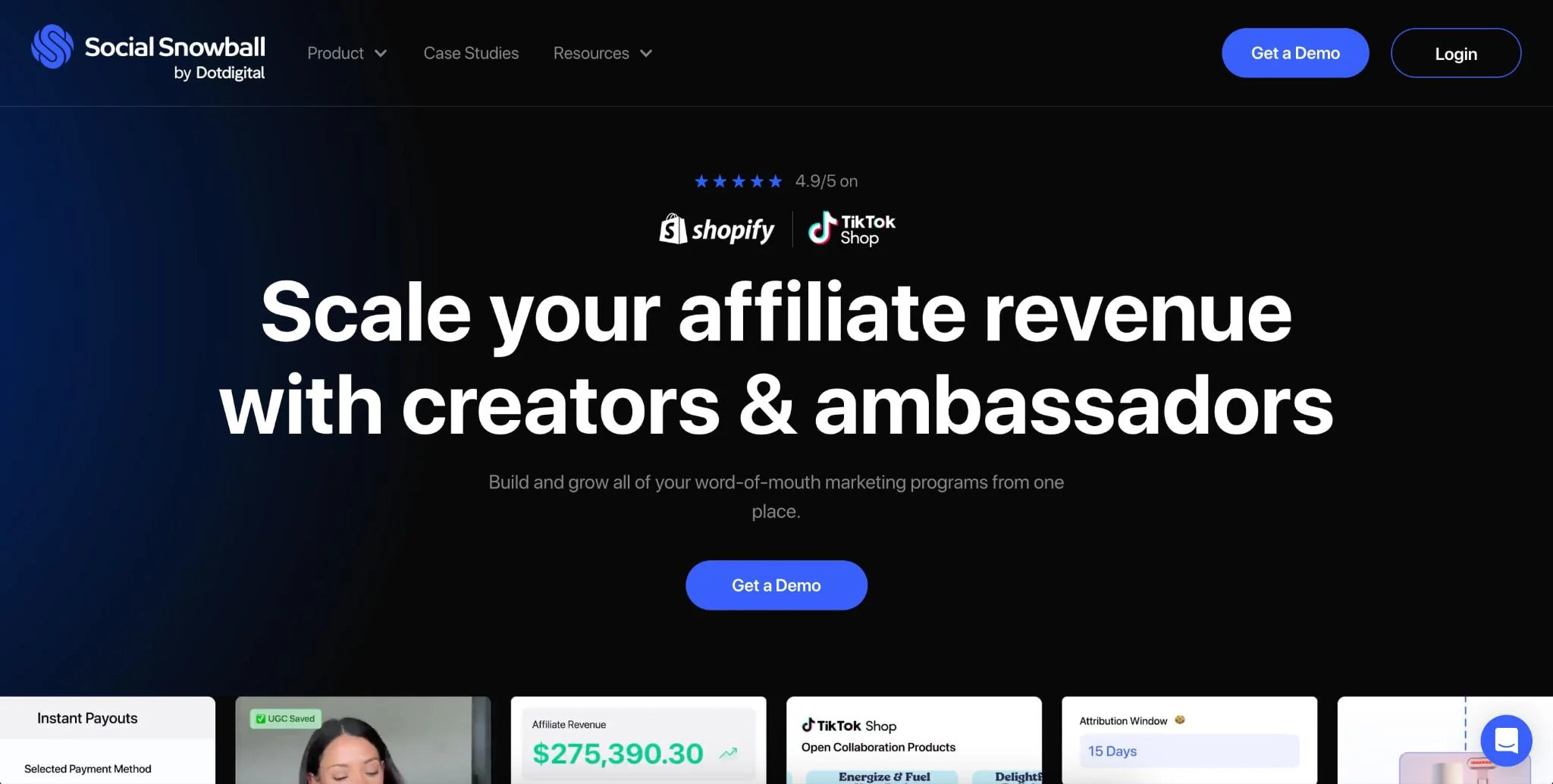
Social Snowball is the alternative when the part of creator marketing you care about is affiliates and referrals.
This Shopify-native platform auto-enrolls every customer as an affiliate right after checkout, then manages payouts, tiers, and Safelinks (one-time codes that stop leaks to coupon sites). It also handles influencer management, Creator Search, and TikTok Shop, and now sits under Dotdigital after a 2025 acquisition.
Brands switch here to turn existing customers into a revenue channel, something a discovery marketplace does not do.
The Snow Day plan starts at $249/month plus 3% of affiliate-generated revenue, while Blizzard starts at $899/month with no commission. The honest limitation is twofold: it is Shopify-only, and that 3% cut on the entry plan quietly eats margin as your program scales.
8. Heepsy

Heepsy is one of the cheapest ways to add proper search and vetting on top of the marketplace approach.
It offers an 11M+ creator database across Instagram, TikTok, and YouTube, with an audience-authenticity filter to flag fake followers. It also runs a creator marketplace (Moonio) where you post campaigns and creators apply, so you get both search and inbound in one tool. Our guide to finding micro-influencers pairs well with it.
Brands pick Heepsy when they want affordable discovery plus vetting without a big all-in-one price tag.
There is a free plan, then Starter at roughly $89/month, Plus at $249/month, and Advanced at $369/month. The honest limitation: the database is smaller than rivals, and key features like audience demographics and Shopify sales tracking are locked to higher tiers.
9. Creator.co

Creator.co is a marketplace-plus-affiliate platform that can also run campaigns for you, which sets it apart from a pure self-serve tool.
It combines a large opt-in creator community with a "Collaboration Hub" where brands post briefs and creators apply, plus discovery across 200M+ profiles and affiliate program tools. You can stay DIY or hand campaigns to a managed team.
Brands choose it over Afluencer when they want the marketplace model but also want done-for-you sourcing, negotiation, and management.
Pricing starts around $495/month for the self-serve plan (there is no free tier), with managed tiers running roughly $995 to $1,499/month. The honest limitation: it is pricier than a lean marketplace, and the strongest value sits in the managed tiers rather than the entry self-serve plan.
10. #paid
#paid rounds out the list as the premium, curated version of Afluencer's apply-to-collab model.
Brands post a brief and vetted creators "handraise" to work with you, so you review interested, on-brand creators instead of cold outreach. It layers on content approval, creator whitelisting for paid ads, analytics, and a strategy team, and works with names like Coca-Cola and Ikea.
Brands step up to #paid when they want the inbound marketplace feel with more curation, brand safety, and paid-media muscle.
Plans run $499/month (Just Content), $699/month (Grow, with whitelisting licenses), and $999/month (Advanced, with a customer success manager and deeper demographics). The honest limitation: it is priced for teams with real budgets, it skews US-focused, and creator rates are standardized rather than negotiable.
Which Afluencer Alternative Should You Pick?
The honest takeaway: the right tool depends on what pushed you to shop around in the first place. Afluencer's marketplace is hard to beat on price and simplicity for small and DTC brands, so make sure you actually need more before you switch.
Want proactive search and outbound? Modash, Heepsy, or SARAL. Focused on affiliates? Social Snowball or Shopify Collabs. Need content at volume? Insense. Running a full program with attribution? Influencer Hero. Want another curated marketplace? Collabstr, Creator.co, or #paid.
And if it turns out the simple, low-cost route still fits best, that is exactly where Afluencer shines. Lean on CreatorGPT for strategy and use a micro-influencer gifting campaign to test the waters. Start a free trial and see how fast the applications come in.
Start a free trial and see how fast the applications come in.