.svg)

.png)
10 Best Social Snowball Alternatives in 2026
Looking for the best Social Snowball alternatives in 2026? You are not alone. Social Snowball is one of the most popular affiliate and referral apps for Shopify brands, and for good reason. It turns customers into affiliates at checkout, its Safelinks stop discount codes leaking to coupon sites, and it makes bulk payouts painless. After its 2025 acquisition by Dotdigital, it now powers programs for thousands of DTC brands. So why do so many brands go shopping for something else?
The usual answer is the pricing model. Social Snowball's lower tiers charge a flat fee plus a percentage of affiliate revenue, and that cut climbs as your program scales. A brand doing serious affiliate revenue can end up paying thousands on top of the subscription before it moves to a commission-free flat plan. It is also Shopify-only, and it is affiliate-first, so it does not really handle influencer discovery, outreach, or full campaign management. If you run affiliate influencer marketing and want both sides in one place, that gap matters.
The good news is that the market is full of tools that fix one or more of those problems, whether you want a flat fee with no revenue share, a platform beyond Shopify, or a full influencer stack instead of a referral widget. Let's get into the best Social Snowball alternatives worth a look this year.
1. Afluencer
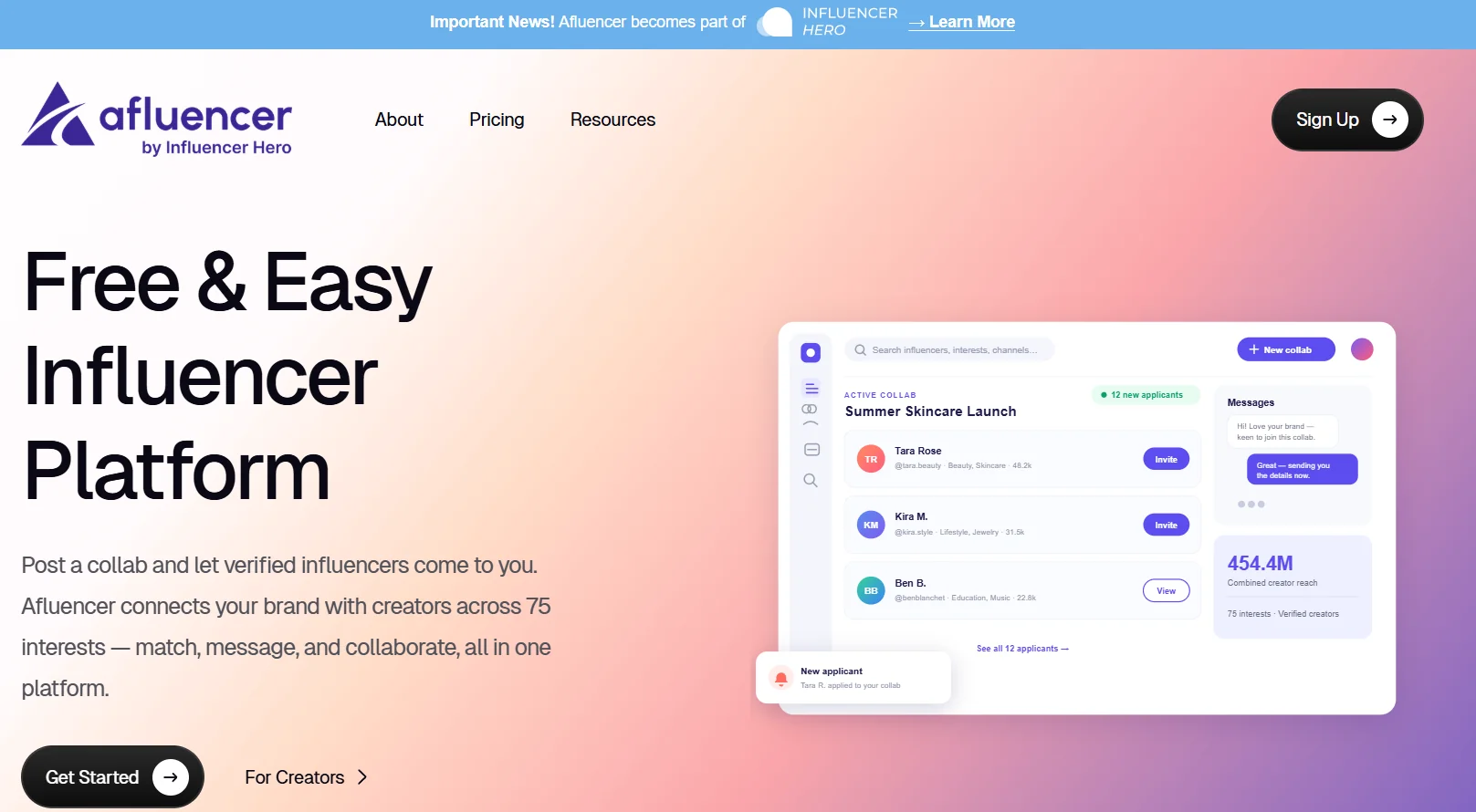
Afluencer flips the Social Snowball model on its head. Instead of turning your existing customers into affiliates, it helps you find brand-new creators to work with. You post a Collab, verified influencers and affiliates apply, and you build the partnership from there. For a brand that needs the discovery step Social Snowball skips, that is the whole point.
The platform is built for DTC brands, Shopify merchants, and agencies who want to source micro and nano creators without paying for a bloated database. Real-time messaging, personalized matches, and a simple application flow keep the process light. Categories like beauty, fashion, wellness, and lifestyle are especially well covered.
Here is the big difference against Social Snowball. Afluencer charges a flat monthly fee and never takes a percentage of your sales. So your costs stay predictable no matter how well your program performs. There is no revenue share stacking on top as you scale, which is exactly the math that pushes brands off Social Snowball's lower tiers.
Afluencer also leans into AI. CreatorGPT works as your influencer marketing assistant, matching brands and creators by goals, style, and budget, so the right partnerships find you faster. You can chat with CreatorGPT to map a strategy before you even post your first Collab.
On pricing, Afluencer no longer runs a free brand tier. Brand access now starts at $49/month on the entry Marketplace plan, with Concierge at $99/month and Boss at $199/month. All plans are month-to-month with no annual lock-in, and you can cancel anytime.
One honest caveat: the paid tiers cap your outbound invite credits, so Afluencer suits lower-volume gifting and micro-influencer collabs more than heavy outbound outreach. If your program is mostly inbound applications plus targeted invites, though, it is hard to beat at this price. Sign up, post a Collab, and let verified creators come to you.
2. Influencer Hero
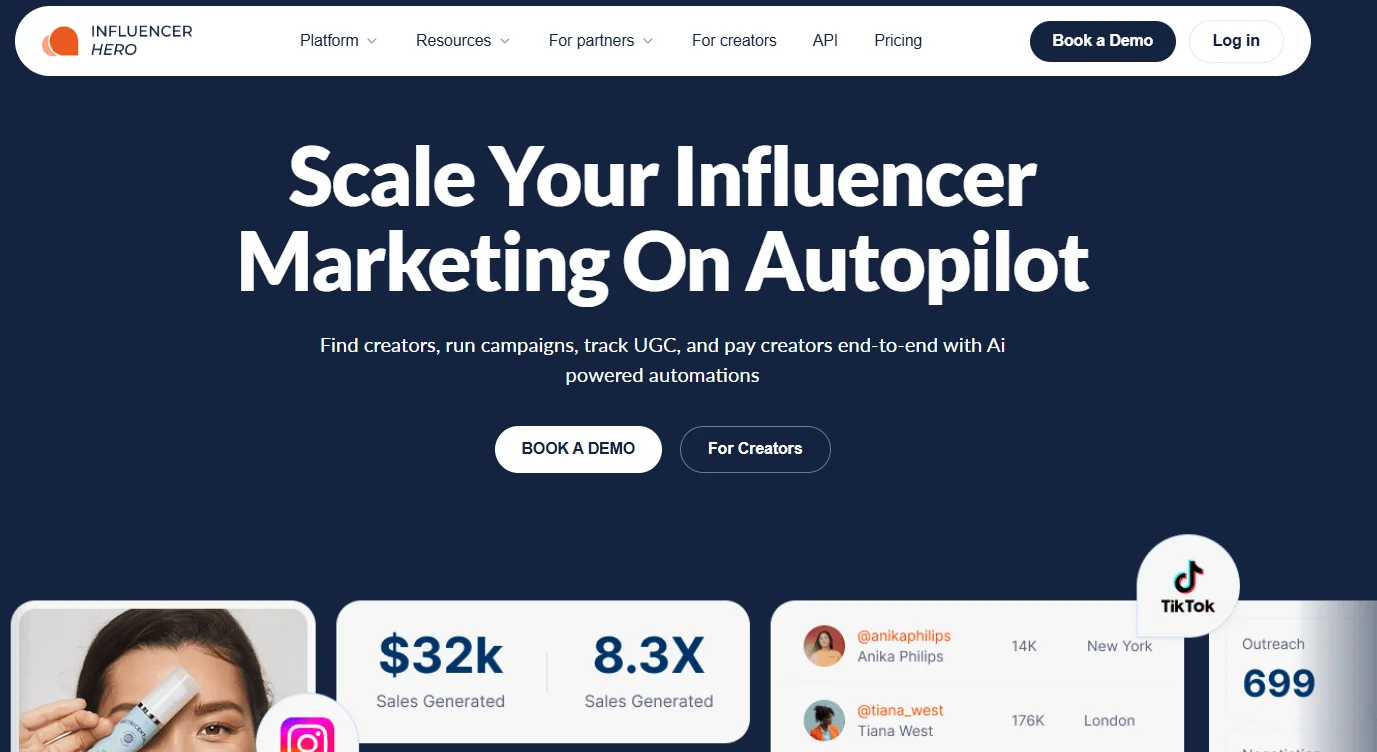
If Social Snowball's biggest gap is everything outside affiliate tracking, Influencer Hero is the tool that closes it. It is a true all-in-one platform that covers the full workflow: a global influencer database for discovery, a CRM to manage relationships, automated outreach, product gifting, affiliate and discount-code tracking, UGC collection, and ROI attribution. Instead of bolting a referral app onto a separate discovery tool, you run the whole operation from one dashboard.
That end-to-end depth is why it stands out for mid-market and Shopify or ecommerce brands. You can find creators, pitch them, ship product, track sales, and report on revenue without switching tabs. Outreach automation alone saves teams hours a week, and the attribution layer means you can actually prove which creators drive orders, not just likes.
Crucially, Influencer Hero charges a straight subscription with no percentage of your affiliate revenue on top. So unlike Social Snowball's lower tiers, your platform cost does not balloon as your program grows. Pricing is publicly listed rather than hidden behind a sales call, starting at $649/month across its Standard, Pro, and Business tiers.
The fair caveat: that entry point sits well above a $59 affiliate app, and it is more platform than a brand that only wants a simple customer-referral widget needs. But if you are running real influencer and affiliate programs side by side, it consolidates a stack that would otherwise cost more in separate tools.
3. Refersion
Refersion is the affiliate platform most people bump into when they outgrow a basic app. It powers programs for over 60,000 ecommerce brands, including Amika and ColourPop, and its first-party tracking is a genuine strength. It ties every click and conversion back to the right affiliate, even across devices.
The main reason to pick it over Social Snowball is reach beyond Shopify. Refersion supports Shopify, WooCommerce, BigCommerce, Magento, and more, so agencies and multi-platform brands are not boxed in. Setup is fast, and most Shopify stores launch in 10 to 15 minutes. It is also a natural fit if you want to entice influencers into a performance-based program rather than paying flat sponsorship fees.
Pricing starts at $39/month on the Launch plan plus 3% of affiliate-driven sales. The Scale plan runs $599/month plus 1%, or $479/month billed annually with 0% transaction fees for stores under $1M GMV.
The honest caveat: that entry-level 3% is the same revenue-share sting that sends brands away from Social Snowball in the first place. You only escape the percentage on the pricier annual Scale plan, so do the math on your volume before committing.
4. UpPromote
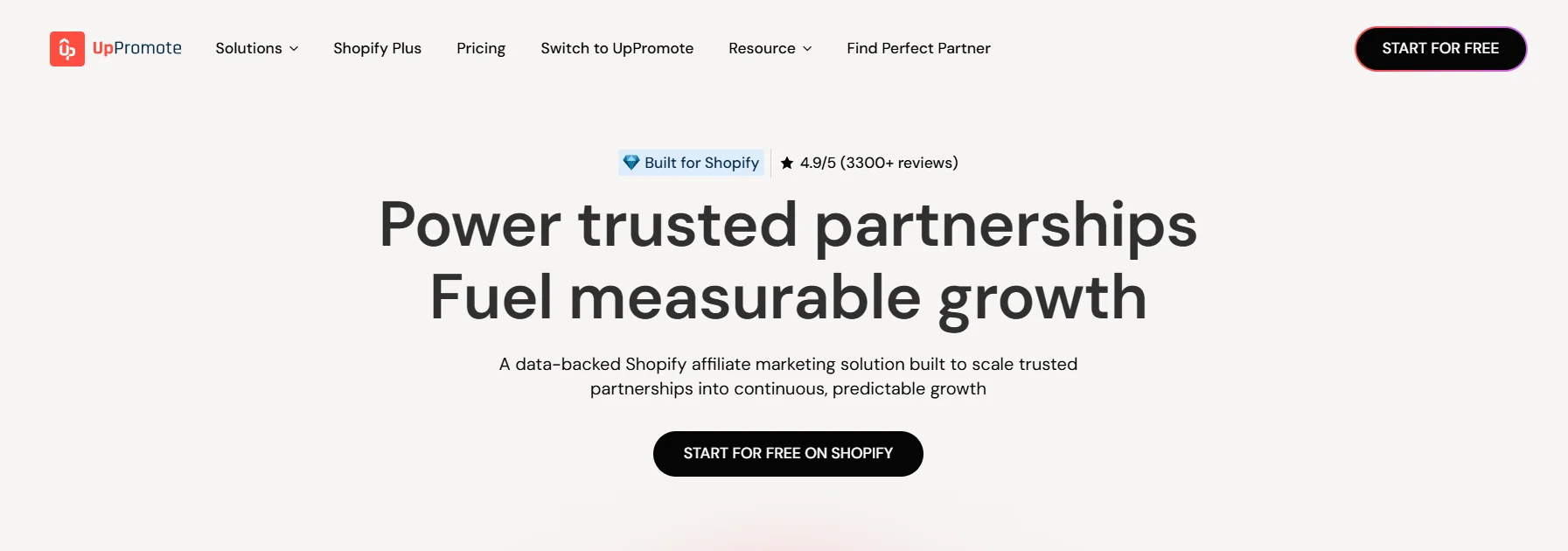
UpPromote is Shopify's most popular affiliate app, and it earns that spot by being easy and cheap to start. Small and mid-sized stores can spin up an affiliate or referral program without any technical help, then create links, track referrals, and automate payouts from a clean dashboard.
Against Social Snowball, the pull is a genuinely usable free plan plus a low paid entry point. It also throws in fraud detection across all tiers, MLM support, and product gifting to send affiliates welcome packages. If you are still learning the ropes, our affiliate program tips pair well with a tool this beginner-friendly.
Paid plans start at $29.99/month plus 2% of successful referral sales, scaling up as your volume grows. The free plan covers one program with link and coupon tracking, though it caps referral reviews and blocks marketplace listing.
The limitation to flag: UpPromote is built exclusively for Shopify, so it is a non-starter if you sell elsewhere. And like Social Snowball, it handles affiliates only, so you still need a separate tool for influencer discovery and campaign management.
5. GoAffPro
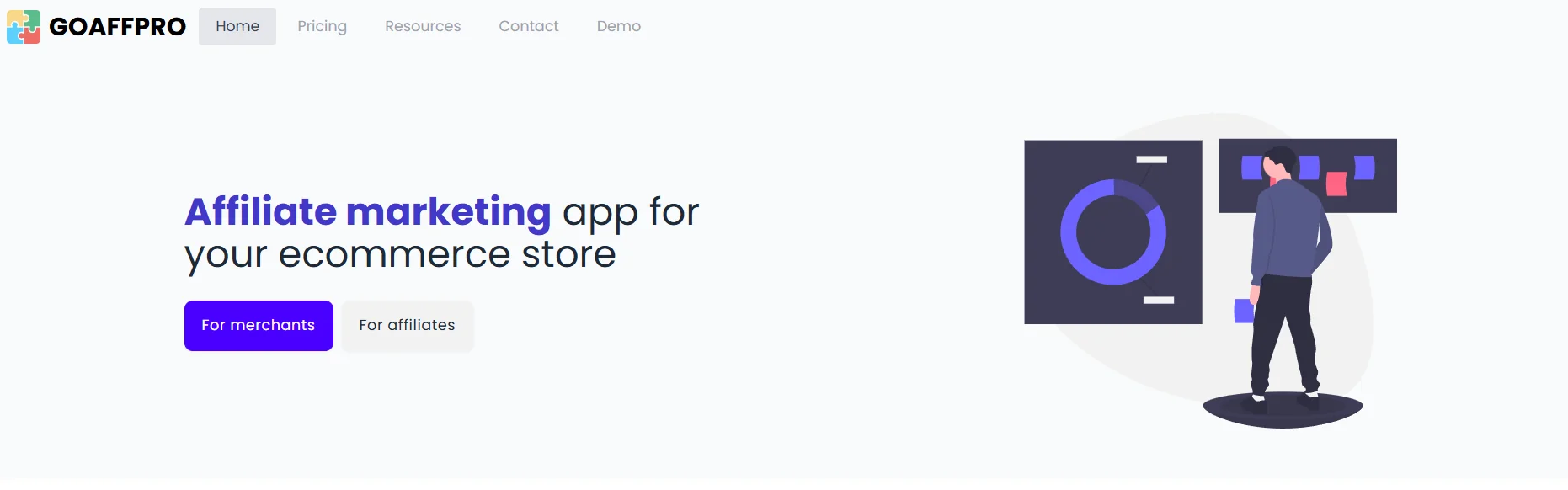
GoAffPro is the budget pick, and it punches above its price. It offers a free plan plus a single premium tier, and it packs in more configuration than most cheap apps, including multi-level networks, commission boosters, target bonuses, and automatic coupons.
Two things make it a real Social Snowball alternative. First, it supports far more than Shopify, including WooCommerce, BigCommerce, Wix, Magento, Squarespace, and Webflow. Second, its premium plan is a flat fee with no percentage of your sales, which sidesteps the revenue-share problem entirely.
Pricing could not be simpler: a free plan for new or small stores, and a premium plan at $29/month that unlocks the full feature set.
The trade-off is polish and depth. The interface feels more utilitarian than Social Snowball's, and you will not get the same white-glove onboarding or dedicated support. For a lean brand that wants affiliate tracking without the fees, though, the value is hard to argue with.
6. Tapfiliate

Tapfiliate sits in the gap between free DIY tools and enterprise platforms that cost thousands a month. It works for ecommerce, SaaS, dropshipping, and subscription brands, and it is built to launch without a developer. You can be tracking affiliates within about 30 minutes of signing up.
Its standout answer to Social Snowball is a flat fee with no revenue share. You pay a set monthly price and keep 100% of your affiliate revenue, which makes forecasting far easier as you scale. Server-to-server tracking also holds up better than cookie-based attribution when shoppers click from in-app browsers. If you want a head start on recruiting partners, Afluencer's guide on how to promote your program is a useful companion read.
Plans start at $89/month on the Essential tier, with Pro at $149/month adding custom domains, team members, and 0% transaction fees. Enterprise is custom-quoted.
The honest limitation: there is no permanent free plan, only a trial, so the entry price is higher than a freemium app. A few reviewers also note you need to actively use the feature set to get your money's worth.
7. GRIN

GRIN is a creator management platform built specifically for ecommerce, and it goes far deeper on the influencer side than Social Snowball ever tries to. It handles discovery across a large creator database, relationship management, product seeding, affiliate and discount codes, content tracking, and revenue reporting, all tied back to your store data.
For brands that live and die by attributable revenue, that closed loop is the appeal. GRIN connects each creator's activity to real sales through its ecommerce integrations, so you see who drives orders rather than just engagement. It is a strong fit for established fashion, beauty, and tech brands running always-on programs.
Pricing has shifted toward published tiers, reportedly starting around $399/month for a lighter plan and scaling toward roughly $1,799/month for the top tier, though higher-volume deployments are still custom-quoted and can run much more.
The caveat is real: GRIN has a reputation for annual contracts and a steeper commitment than a small brand needs. If you just want a simple customer-referral program, it is overkill, both in features and in cost.
8. Aspire

Aspire (formerly AspireIQ) is a community-led influencer marketing platform, and it shines at ambassador programs run at scale. It combines creator discovery, campaign workflow, affiliate and sales tracking, and ecommerce integrations, so brands can manage large rosters of advocates in one place.
Where Social Snowball keeps things lightweight, Aspire leans into structure. It is designed for brands that want to nurture ongoing relationships with creators and turn them into long-term ambassadors, not just process referral payouts. The campaign tooling and reporting are built for teams managing serious volume.
On pricing, Aspire is custom and demo-based rather than self-serve. Public figures are not published, and industry sources put entry somewhere around $2,000/month, so it targets mid-market and enterprise budgets.
The obvious limitation: there is no transparent entry price and no quick self-serve signup. You have to book a demo and negotiate, which makes it a slower, bigger commitment than installing an app.
9. Roster

Roster is arguably the closest philosophical match to Social Snowball on this list. It is a Shopify-native ambassador marketing platform built to turn passionate customers into advocates, then recruit, engage, reward, and measure them from one hub. If the customer-into-affiliate model is what drew you to Social Snowball, Roster does the same job with an ambassador twist.
The platform focuses on word-of-mouth at scale. You can run social campaigns and actions, collect UGC, mass-update discount codes, and pay ambassadors through Venmo or PayPal, all synced with Shopify. Reviewers consistently praise how self-serve and organized it makes affiliate and ambassador management. It pairs naturally with the kind of ambassador programs brands use to build a loyal creator community.
Pricing is handled through the Shopify App Store with a free trial available, but Roster does not publish flat public rates, so you will confirm your cost through the app or a quick conversation.
The limitations worth noting: it is Shopify-only, the public review base is still relatively small, and the feature set is narrower than the full end-to-end suites. For a focused ambassador program, though, it is clean and well-built.
10. Impact.com

Impact.com is the enterprise end of the spectrum. It is a full partnership platform connecting brands with a marketplace of 250,000-plus vetted partners, and it handles affiliate, influencer, referral, and partner programs with cookieless tracking, contract automation, and fraud monitoring.
If your program has outgrown a single app and you need partnerships across publishers, creators, and networks, Impact.com has the depth. It integrates across Shopify, BigCommerce, WooCommerce, Salesforce, HubSpot, and more, which suits complex tech stacks that simpler tools cannot serve.
Pricing scales hard. A Shopify Starter plan runs $30/month or 3% of revenue, whichever is higher, plus a 2.5% transaction fee. The Essential plan starts at $500/month, and Pro or Enterprise begins around $2,500/month.
Here is the honest catch: those stacked transaction fees can make the revenue-share math worse than Social Snowball's at scale, and setup often takes weeks with developer help. It is powerful, but it is built for enterprise budgets and teams, not lean DTC brands.
Which Social Snowball Alternative Should You Pick?
The truth is that you do not need the exact tool every other Shopify brand uses. The right Social Snowball alternative depends on your size, your budget, and whether you are running affiliates, influencers, or both. If the revenue-share model is your pain point, flat-fee tools like Tapfiliate, GoAffPro, or Afluencer solve it cleanly. If Shopify-only is the blocker, Refersion and Impact.com open up other platforms. And if you need discovery and campaign management on top of affiliate tracking, a full suite makes more sense than a referral widget.
For most brands new to creator sourcing, Afluencer is the easiest place to start. It gives you the discovery step Social Snowball skips, a flat monthly price with no cut of your sales, and an AI assistant to match you with the right creators.
Ready to move? Sign up with Afluencer, post your first Collab, and let the right creators come to you.