
.svg)

.png)
10 Best Influencer Marketing APIs in 2026
At some point every serious creator program hits the same wall. You need influencer data somewhere a dashboard cannot reach: inside your CRM, your internal tool, your client portal, or the product you are actually building.
That is the job an influencer marketing API does. Instead of exporting CSVs and stitching them together, you query creator profiles, audience demographics, engagement history, and campaign performance programmatically, then use the response however you want.
The catch is that "we have an API" means very different things depending on who says it. Some providers sell a pure data feed. Others bolt read-only access onto a platform subscription. A few give you write access so your software can trigger real campaign actions. Picking wrong costs you months, so it helps to know how the main influencer marketing platforms actually structure their developer offering.
So we compared ten providers with verified 2026 pricing, checking what each one is built for rather than what its homepage claims. Some are discovery engines, some are enrichment layers, and some are full platforms with endpoints attached.
Let's break them down one by one.
Quick Comparison: Influencer Marketing APIs at a Glance
The Top 10 Influencer Marketing APIs in 2026
The ranking below runs from the most complete offering down to the most specialized. A pure data feed and an enterprise suite both count as an influencer marketing API, but they solve different problems and bill in completely different ways.
We ordered them by how much of the creator lifecycle each one covers programmatically. Read the "best for" line before the price, because the cheapest option is rarely the right one when the data shape does not match your use case.
1. Influencer Hero
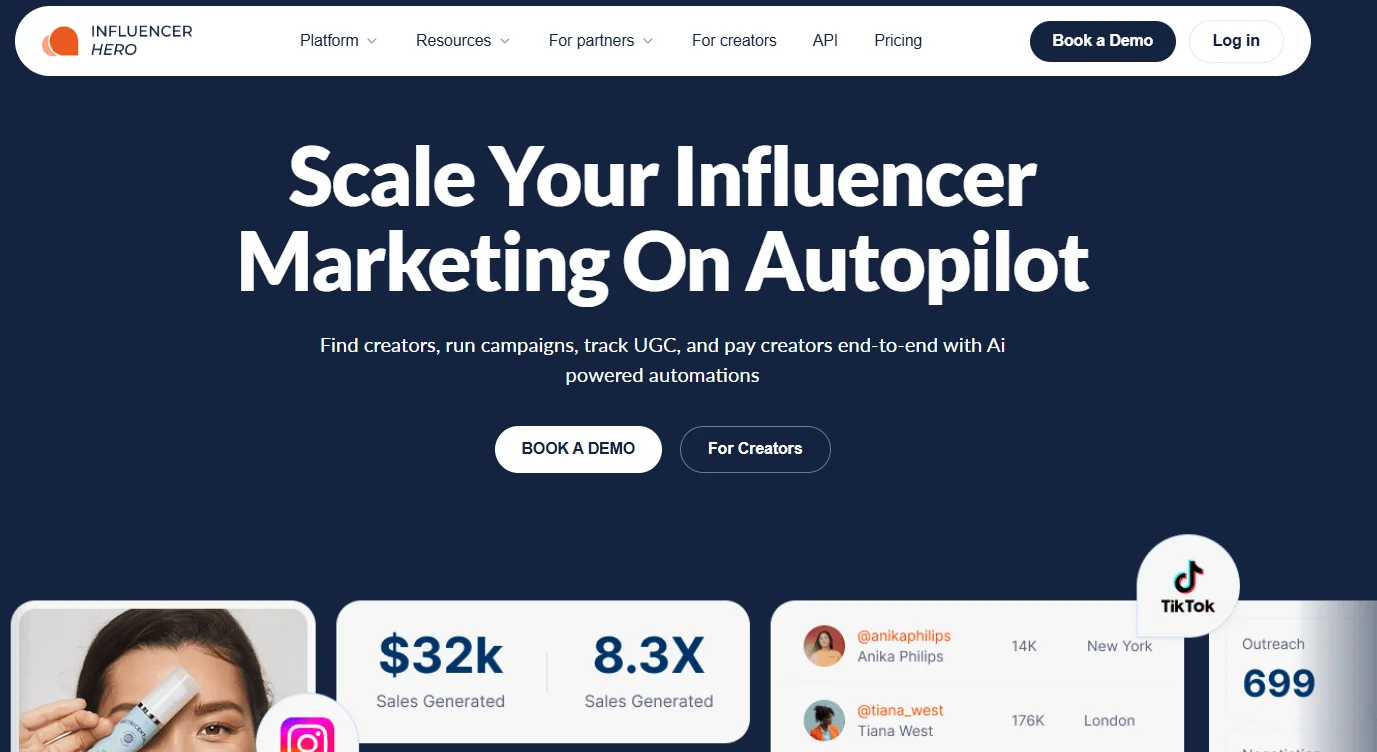
Most providers on this list sell you one slice of the creator lifecycle. Influencer Hero sells the whole thing through a single REST integration, which is why it takes the top spot for teams building real products rather than research scripts.
The API splits into discovery endpoints for programmatic search and filtering, and raw endpoints for live profile metrics, content information, and activity signals. You can query creator profiles across Instagram, TikTok, and YouTube, and pull performance metrics, audience demographics, content insights, campaign history, and lookalike matches. Crucially, it also exposes the commercial layer: affiliate tracking, gifting workflows, and ROI attribution that discovery-only APIs simply do not have endpoints for.
The numbers: API pricing is usage-based and scoped to your data access needs, with enterprise plans covering SLAs, webhooks, and custom endpoints. The underlying platform plans are publicly listed at $649/month for Standard, $1,049/month for Pro, and $2,490/month for Business. Documentation is clear enough that most teams start building within hours.
Pricing isn't a black box. Influencer Hero publishes its rates on a dedicated API pricing page, so you can check what each tier includes and roughly what you'd pay.
For everyone else, that breadth is the entire point. You can find a creator, message them, ship product, track the sale, and report on it without leaving your own stack. Book a demo to scope your use case.
2. influData Social API
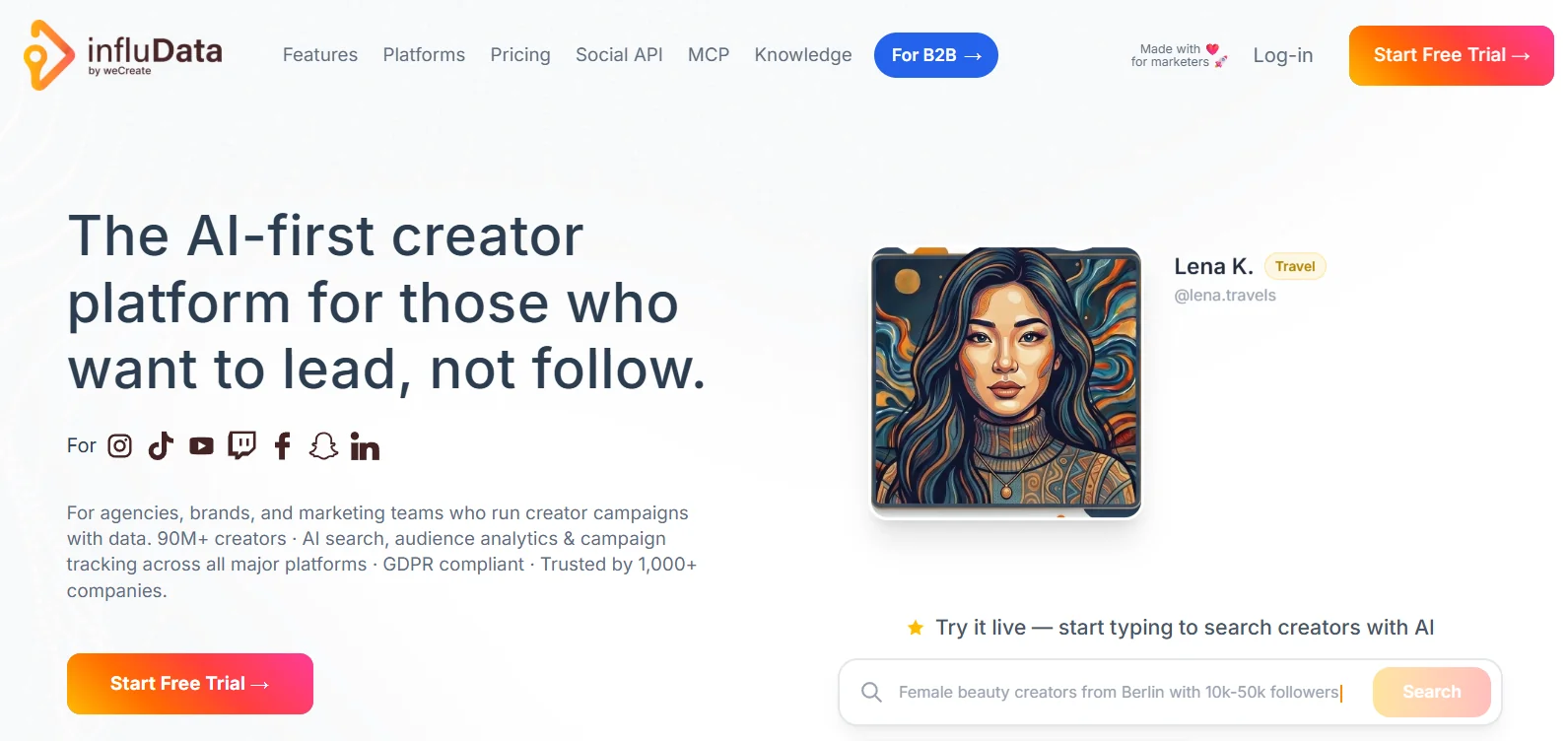
influData is the rare option here that was clearly built for the person doing the integration, not the person approving the invoice. You can have a working API key before anyone at the company knows you tested it.
One REST endpoint set covers 90M+ creator profiles across Instagram, TikTok, YouTube, and Snapchat, with the same parameters and response shape on every platform. You get profile lookups with follower, engagement, and growth metrics, discovery search filtered by keyword, category, country, language, follower range, and audience demographics, plus content data with captions, hashtags, mentions, and cursor pagination for incremental syncs.
In-depth audience reports add age, gender, location, language, and real-people analysis, which is what you want if you are building your own vetting logic rather than borrowing someone else's influencer search tool.
The numbers: the trial key is self-serve and free, 250 requests valid for 14 days, no payment details and no sales call. Most calls cost one request from your budget, and an in-depth audience report counts as 20. Production keys come with monthly volume bundled into influData plans, burst rates up to 25 requests per second, and bulk enrichment of up to 100 creators per call. High volume moves to a standalone data agreement.
The trade-off is scope. This is creator data, not campaign operations, so outreach, contracts, gifting, and payouts still live in whatever you build or buy on top of it.
3. Modash

Modash is the search engine of this category. Its index covers more than 380 million creator profiles across Instagram, TikTok, and YouTube, and the API uses authentication-free REST rather than OAuth, so you query any public profile without waiting on creator consent.
The product splits in two. The Discovery API returns analyzed, aggregated data for programmatic vetting, audience demographics, and lookalike search. The Raw API returns live unfiltered data such as recent posts, comments, and follower lists, which suits real-time monitoring or feeding content straight into a language model.
The numbers: Discovery API starts at $16,200/year for 3,000 credits per month. Raw API starts at $10,000/year for 40,000 requests per month. Both require an annual commitment, and there is no monthly or pay-as-you-go option. Unused Discovery credits roll over while the contract is active, and unit costs fall as volume climbs, reaching roughly $0.45 per Discovery credit and $0.02 per Raw request. Platform access is billed separately from $299/month.
The limitation is scope. Modash gives you reads, not writes, so you cannot trigger outreach or gifting through it. Add the annual contract and it is a serious commitment for an early-stage team.
4. InsightIQ (Phyllo)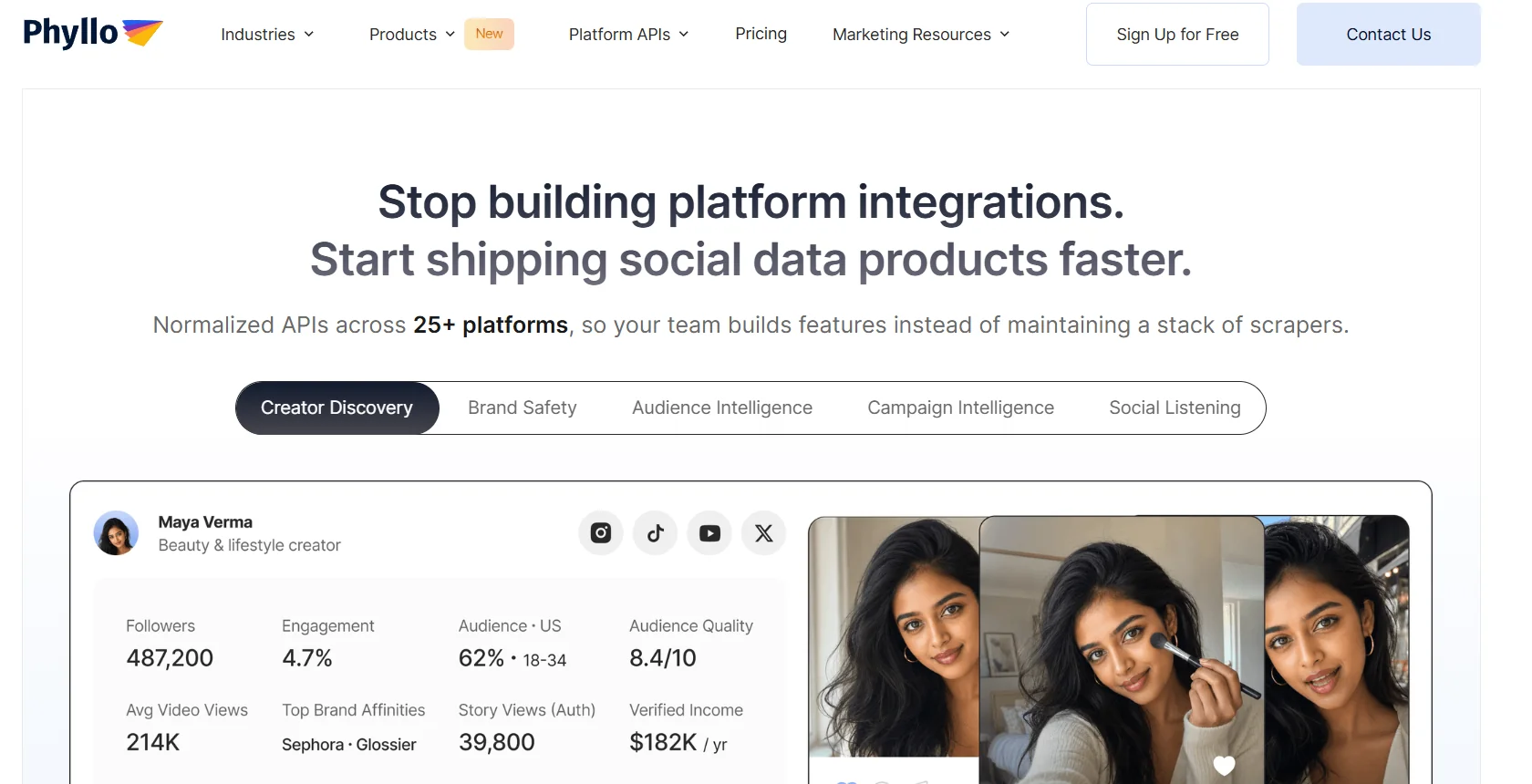
InsightIQ, still widely known as Phyllo, makes the opposite architectural bet to Modash. Creators connect their own accounts through OAuth, and your product then reads verified first-party data through one normalized schema.
That unlocks numbers no scraped database can reach: private analytics, story-level metrics, and creator earnings. It also solves the maintenance problem, because the integration layer absorbs platform-side changes instead of leaving your engineers to patch broken connectors every quarter. Coverage spans 20-plus social and creator platforms from the first tier.
The numbers: Pricing starts at $199/month with usage-based scaling and no annual commitment at the entry level. Enterprise volumes go through sales. Support runs 24/7 with a named account manager and a stated 3 to 6 business-hour response window.
The obvious constraint is consent. If a creator has not connected their account, InsightIQ has nothing to return, which makes it useless for cold prospecting. Most sophisticated products pair it with a public discovery API rather than choosing between the two.
5. Influencers.club
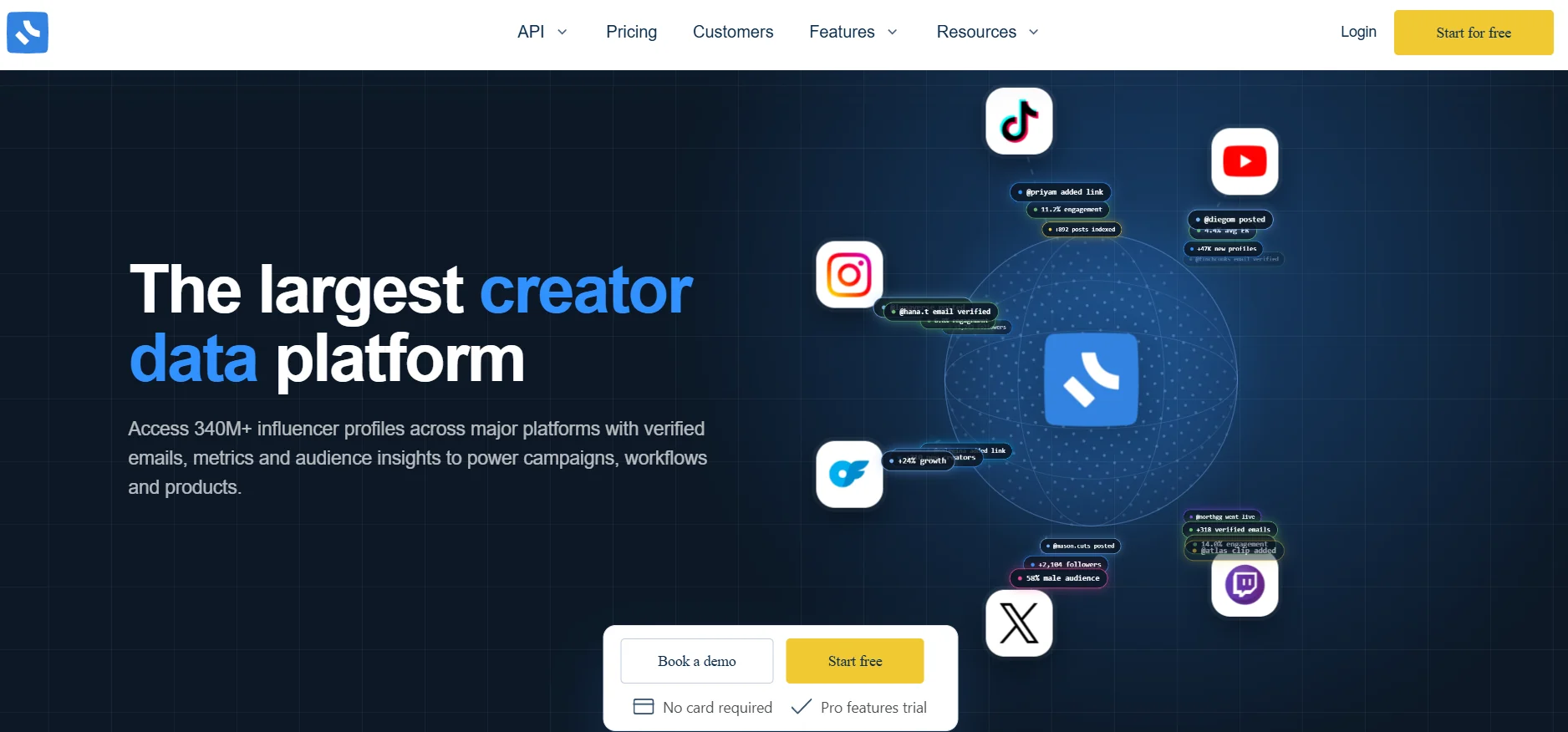
If your bottleneck is contact data rather than analytics, this is the sharpest tool on the list. Influencers.club indexes more than 340 million creators across 47 platforms, and email enrichment sits in the core API instead of behind an upgrade.
You query by handle or email and get back profile metrics, verified emails with status flags, and over 40 additional data points. Stats are fetched live when you request them rather than served from a stale cache. The enrichment endpoints are also priced by depth, so a lookup that only needs an email costs a fraction of a full analytics call.
The numbers: Paid plans start at $249/month for a base credit quota, and every new account gets 10 free credits plus Pro features so you can test before committing. Billing is credit-based, and monitoring runs at 0.3 credits per creator per day.
Just know what you are buying. This is a pure data layer with no CRM, no outreach sequencing, no gifting automation, and no reporting. It is a building block, and it expects you to build the rest.
6. HypeAuditor
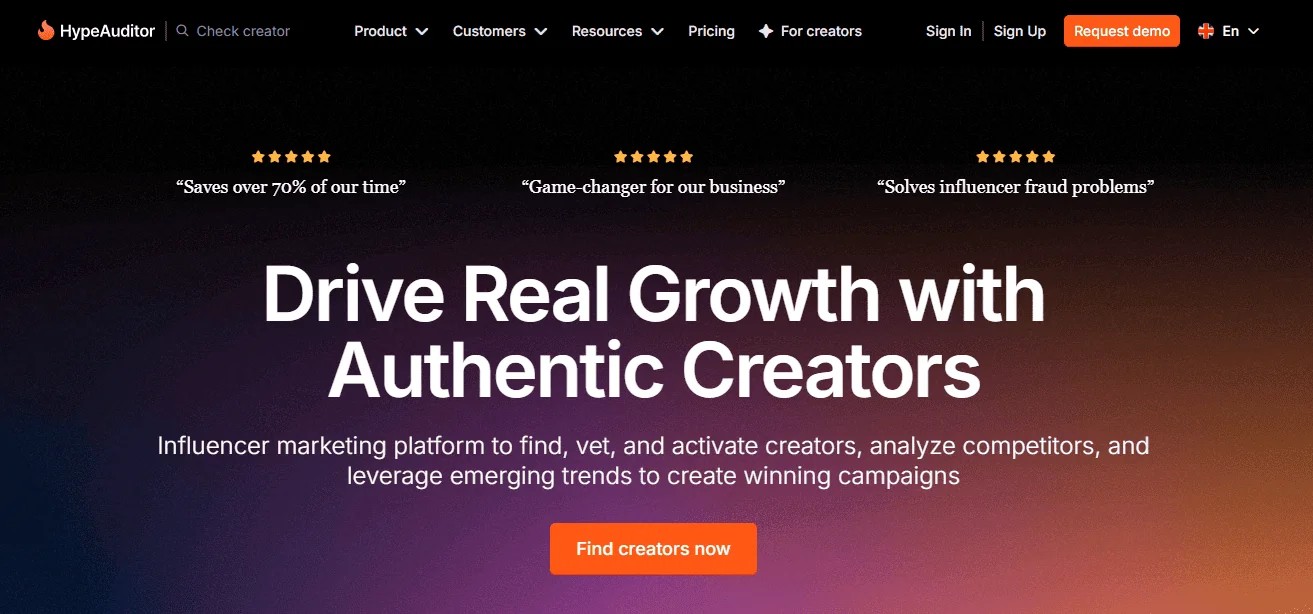
HypeAuditor built its name on catching fake followers, and its API reflects that focus. Rather than dumping profile basics, the endpoints emphasize audit score, audience credibility, demographic quality, and suspicious activity estimates.
Responses come back as structured JSON covering creator profiles, audience composition, engagement history, and fake follower percentage. If influencer fraud is a genuine budget risk for you, automating that screening step before contracts get signed is worth real money. It pairs naturally with manual vetting workflows, and our guide to Instagram influencer tools covers where that fits in a wider process.
The numbers: The Basic plan starts at $299/month billed annually, with a Pro tier reported around $499/month and custom quotes above that. Pricing is usage-based, so the bill climbs with creator reports, unlocked emails, active campaigns, seats, and API access specifically.
Commercial transparency is the weak spot. API access is an add-on negotiated through sales, so budgeting upfront is harder than with credit-based competitors.
7. EnsembleData
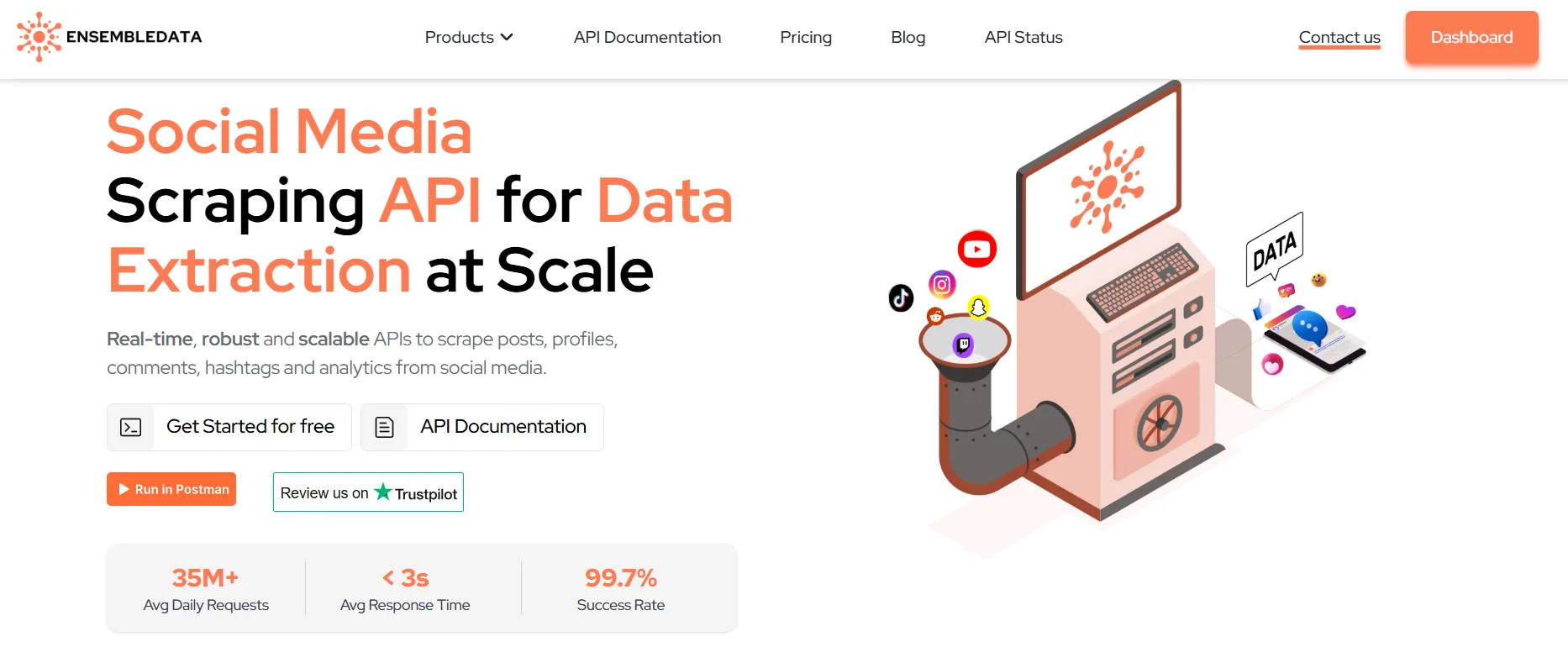
EnsembleData is the pick when you want raw social data and a predictable invoice. It has been running since 2020 and covers eight networks under one key: TikTok, Instagram, YouTube, Threads, Reddit, Twitch, X, and Snapchat.
Everything is fetched in real time, typically in under five seconds, and there are no rate limits because capacity scales with demand. Python, JavaScript, and Bash SDKs ship officially, which shortens the path from docs to first working call. Coverage across TikTok in particular makes it a common backbone for TikTok creator tools built by smaller teams.
The numbers: Billing runs on daily units, where a simple call costs 1 unit and heavier endpoints cost more. A free trial gives 50 units per day. Paid tiers start at $100/month for 1,500 units per day and scale to $1,400/month for 50,000. Failed requests caused by internal errors are not charged.
Two caveats. Daily units reset every 24 hours and do not carry over, so bursty workloads waste capacity. And this is raw data only, with no vetting or audience-quality layer on top.
8. CreatorDB
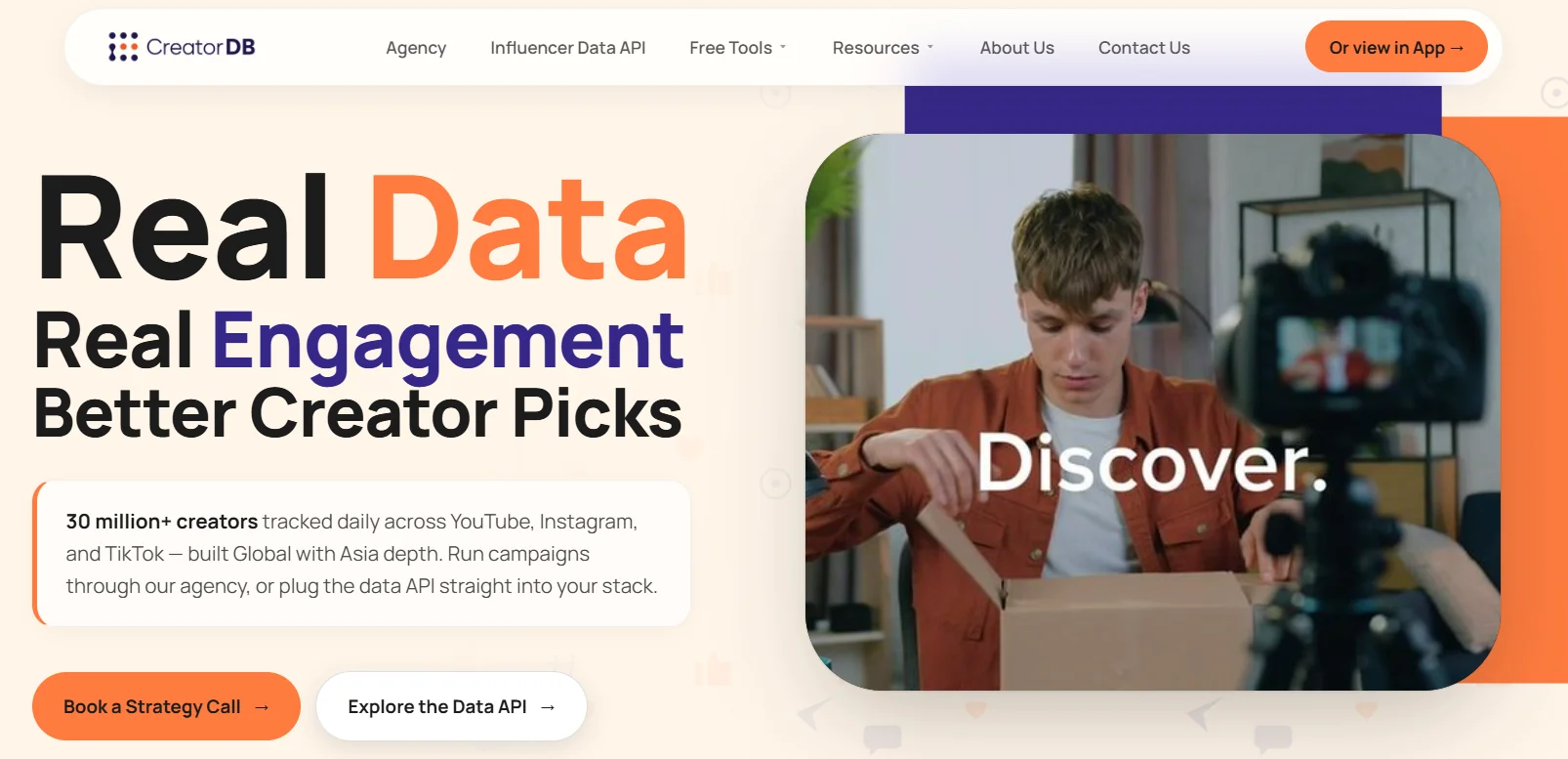
CreatorDB competes on depth rather than volume. Its index sits around 30 million creators, well under the 300-million-plus players, but each profile carries up to 245 data points including audience demographics, verified emails, and up to four years of history.
The differentiator is the sponsorship graph. You get a brand directory, sponsor search, per-brand creator pools, brand performance data, and cost-per-video estimates as core endpoints. That makes competitive analysis and pitch preparation genuinely easy, since you can see which creators a rival brand already works with. Engagement is also measured against active followers rather than raw counts, and natural-language search means no SDK is required.
The numbers: CreatorDB does not publish a rate card. Access is application-based rather than instant self-serve, so you request access and get pricing scoped to your volume.
The trade-offs follow from the strategy. A smaller index means thinner coverage on long-tail nano creators, and the application step slows you down if you wanted to test something this afternoon.
9. Ayrshare
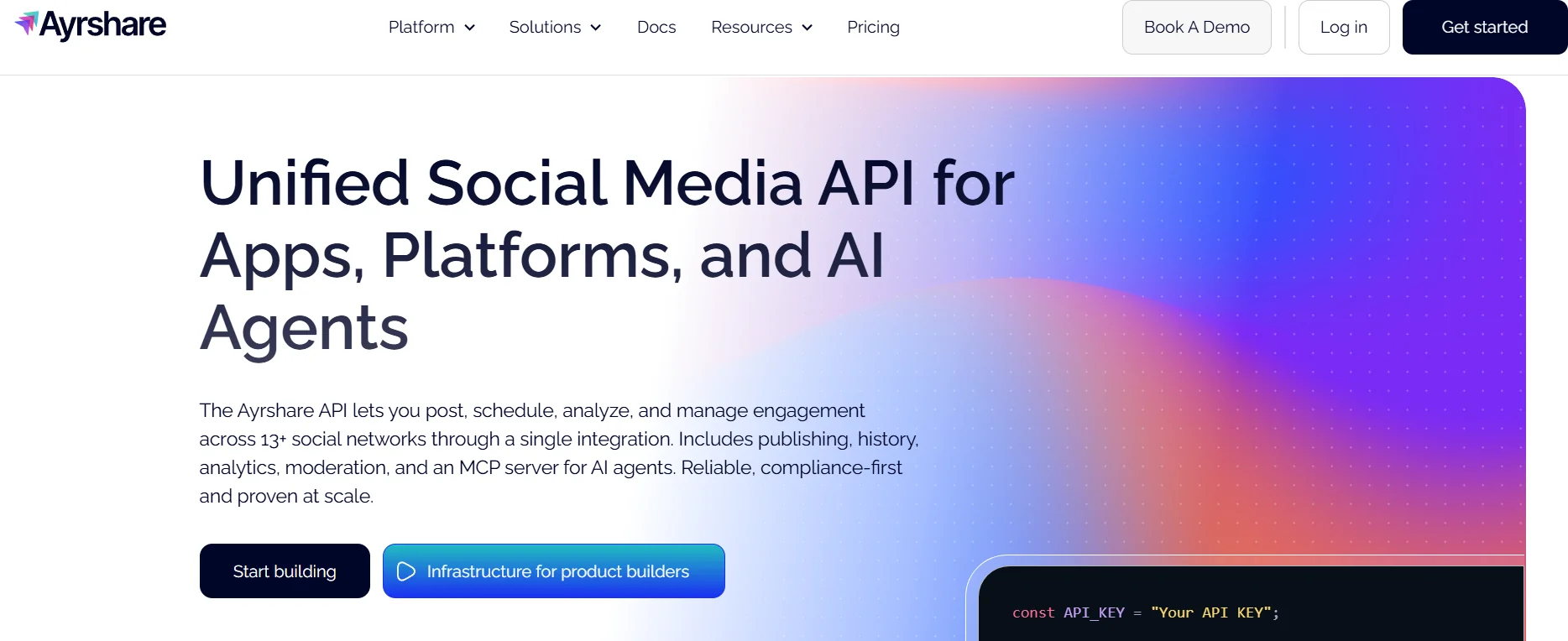
Ayrshare does a different job to everything above it, and that is exactly why it belongs here. The others read data about creators. Ayrshare writes on their behalf.
It handles publishing, scheduling, analytics, comments, and DM moderation across 13-plus networks including TikTok, Instagram, LinkedIn, YouTube, Pinterest, Threads, and Bluesky. Built multi-tenant from day one, it manages social accounts for thousands of end users under a single API. A shipped MCP server lets AI agents post and pull analytics natively, and a History API gives those agents past posts so they match a brand's voice from the first draft.
The numbers: Premium is $149/month for one social profile, Launch is $299/month for up to ten, and Business is $599/month with 30 profiles included, then tiered overage above that. Enterprise pricing is custom. Launch comes with a 28-day trial, and annual prepayment lowers the effective rate.
The billing unit matters more than the price. You pay per profile, not per call, so a profile posting twice a month costs the same as one posting fifty times. That is a bargain for active accounts and expensive for dormant ones.
10. CreatorIQ
CreatorIQ sits at the enterprise end, and its API reflects that. Integration is a contract feature rather than a product you buy, aimed at global brands connecting creator data to existing CRMs, warehouses, and BI tools.
The platform covers discovery across its indexed profiles, campaign management, performance analytics, creator payments, and compliance through direct social platform integrations. EMV tracking via Tribe Dynamics and white-label agency tooling come in the same contract. For programs spanning regions, agencies, and approval layers, that governance is the actual product.
The numbers: CreatorIQ publishes nothing. Contracts are quote-only and annual, and third-party procurement data puts entry deals roughly in the $25,000 to $60,000 per year range, with higher tiers well beyond that. API access and integration support are associated with higher-tier contracts rather than the entry point.
So this only makes sense at a specific scale. There is no monthly option and no self-serve trial, and implementation takes planning rather than an afternoon. Below enterprise volume, almost everything above it delivers better value per dollar.
How to Choose the Right Influencer Marketing API in 2026
Do not start with a feature checklist. Start with the job you need done, because these providers only look similar until you try to build something.
- The job, not the category Discovery, enrichment, monitoring, and publishing are four different products. Modash finds creators, Influencers.club enriches them, EnsembleData watches them, and Ayrshare posts for them. Buying the wrong one wastes a quarter.
- Public data or consented data Public APIs query anyone but only see what the platform shows publicly. Consent-based APIs like InsightIQ see private metrics and earnings, but only after a creator connects. Many mature products run both at different funnel stages. Either route means holding personal data on creators, and if any of them are in the EU, the General Data Protection Regulation (GDPR) sets the rules for how you collect, store, and process it. Dedicated software can make GDPR compliance easier to meet and prove.
- Reads versus writes Most providers here are read-only. If you want your software to trigger outreach, gifting, or affiliate payouts, you need a full-stack API rather than a data feed, and that narrows the field fast.
- How the billing unit behaves Credits, requests, daily units, and connected profiles all scale differently. Model your actual usage pattern before comparing headline prices, especially if your traffic is bursty. Whatever you pick, make sure you can still measure campaign ROI once the data lands in your system.
- Time to first working call Self-serve keys and free credits let you validate in an afternoon. Annual contracts and application forms push that out by weeks. For an early-stage build, that difference usually matters more than data volume.
- Coverage versus depth A 380-million-profile index sounds better than 30 million until you need 245 data points per creator. Decide which one your feature actually depends on, then buy for that. Plenty of teams also layer AI marketing tools on top of whichever data source they land on.
There is no single best API here, and any list claiming otherwise is selling something. The right pick depends on what you are building, how fast you need it live, and whether creator data is your product or just an input to it.
Where to Start Building
The creator data layer matured fast, and 2026 is the first year where a small team can ship a real influencer product without negotiating an enterprise contract first. Entry points from $100 to $299 a month cover most early builds comfortably.
You do not need to evaluate all ten. Narrow by the job you need done, shortlist two providers that do it, then test both with real queries before anyone signs anything. Most of them will hand you trial credits if you ask.
And if it turns out you needed creators rather than code, start there instead. Post a Collab on Afluencer and let verified creators come to you, or chat with CreatorGPT to plan the campaign first.