.svg)

.png)
10 Best Influencer UGC Tools for Brands in 2026
Finding creators who make scroll-stopping UGC is the hardest part of any campaign. The shooting, the licensing, the payments, the chasing. It eats your week.
UGC also outperforms polished brand ads, so the pressure to produce more of it keeps climbing. The right tool takes the grind off your plate. It sources creators, manages briefs, locks in usage rights, and handles payments in one place.
That is exactly what a good UGC tool should do, and the gap between the best and the rest is wider than it looks. If you want the bigger picture first, our start-to-finish guide on user-generated content covers the strategy side.
This list runs from the most accessible starting points to the enterprise-grade options, so you can self-select fast. Some are pay-per-video marketplaces. Others are full operating systems. A few are built for brands sourcing UGC at serious scale.
Ready to find the tool that fits your budget and your content volume? Let's break them down one by one.
The Top UGC Tools That Get You Creator Content Faster
Every tool below sources real creators and ad-ready content. What changes is the model: per-video, subscription, credits, or a flat marketplace fee. That difference decides which one is cheapest at your volume.
Match the model to how many videos you actually ship per month, not your aspirational count. Here are the ten worth your shortlist.
1. Afluencer
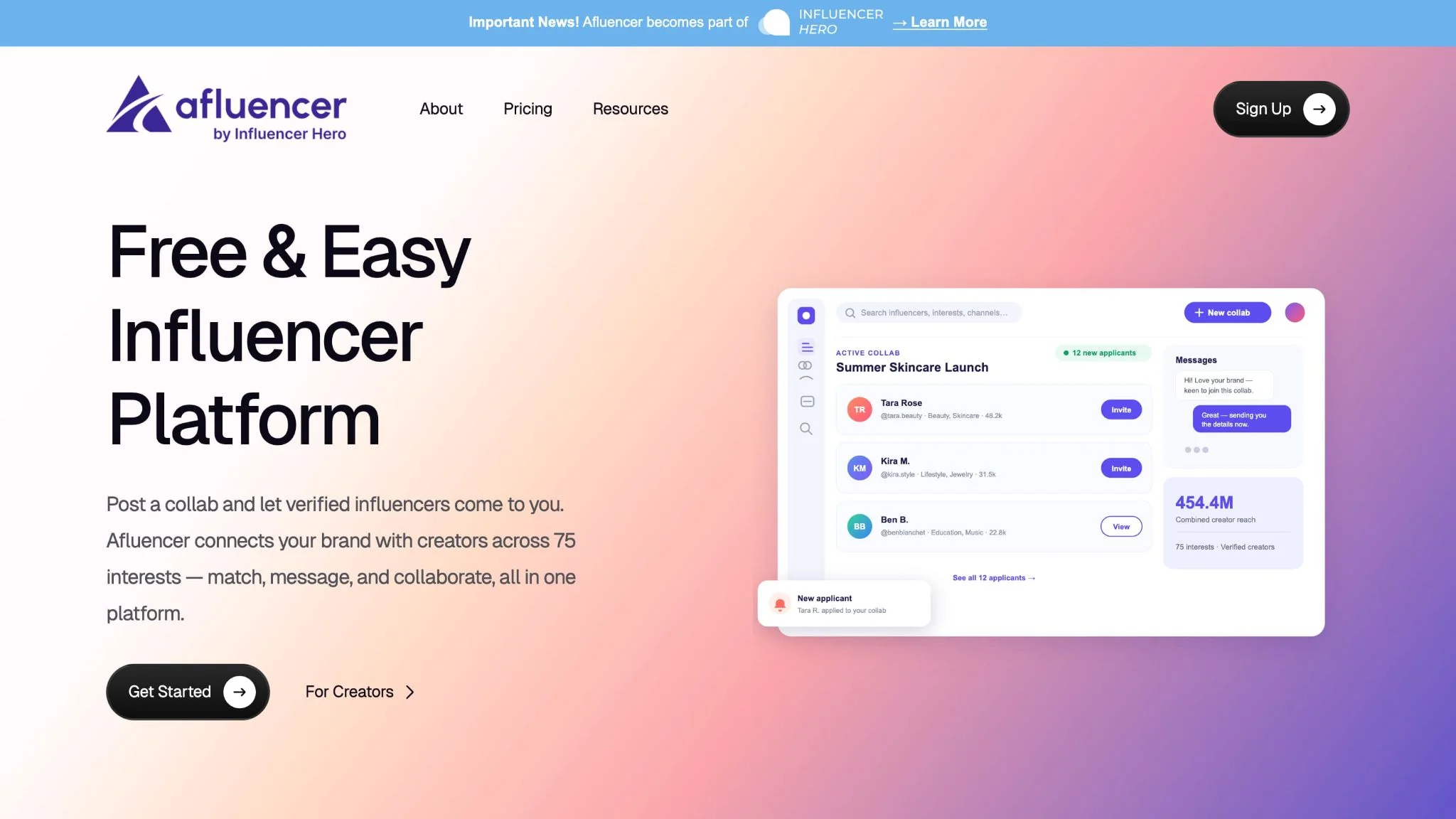
Afluencer is an application-based marketplace where you post a "Collab" and verified creators apply to you. No cold outreach, no scrolling profiles for hours. You set the criteria, they come to you.
That model makes it one of the easiest ways to source UGC and micro-influencer content without a big team or a big budget. It works especially well for DTC and ecommerce brands testing creator content for the first time.
The numbers: Afluencer starts with a genuinely usable free brand plan. Paid tiers run VIP at $49/month, Concierge at $99/month, and Boss at $199/month, all billed monthly with no annual lock-in.
You can also lean on Afluencer's AI tools. CreatorGPT handles creator strategy and campaign advice, while the Afluencer Collab Finder matches you with live opportunities.
Gifting is one of the fastest ways to generate UGC here, and our guide to running a micro-influencer gifting campaign walks through the exact setup. Chat with CreatorGPT for strategy, or post your first Collab on Afluencer to start collecting applications today.
2. Billo

Billo is the go-to for brands that just want ad-ready video, fast. You post a brief, creators produce it, and most orders land in roughly 5 to 7 days. No subscription required to get started.
Its Billo IQ feature builds an automated brief straight from your product URL, then pairs it with creators optimized for ROAS and CTR. The pool runs 5,000+ vetted creators, and revision rounds are baked into the price.
The numbers: Billo starts at $99 per video, with platform fees included and creators paid through the platform. Some 2026 pricing nudges closer to $120 per video as demand rises, so budget around that mark.
Billo suits brands shipping a steady flow of paid social video without the overhead of building a creator roster. If you want clean, predictable per-video costs, it is hard to beat.
3. Influencer Hero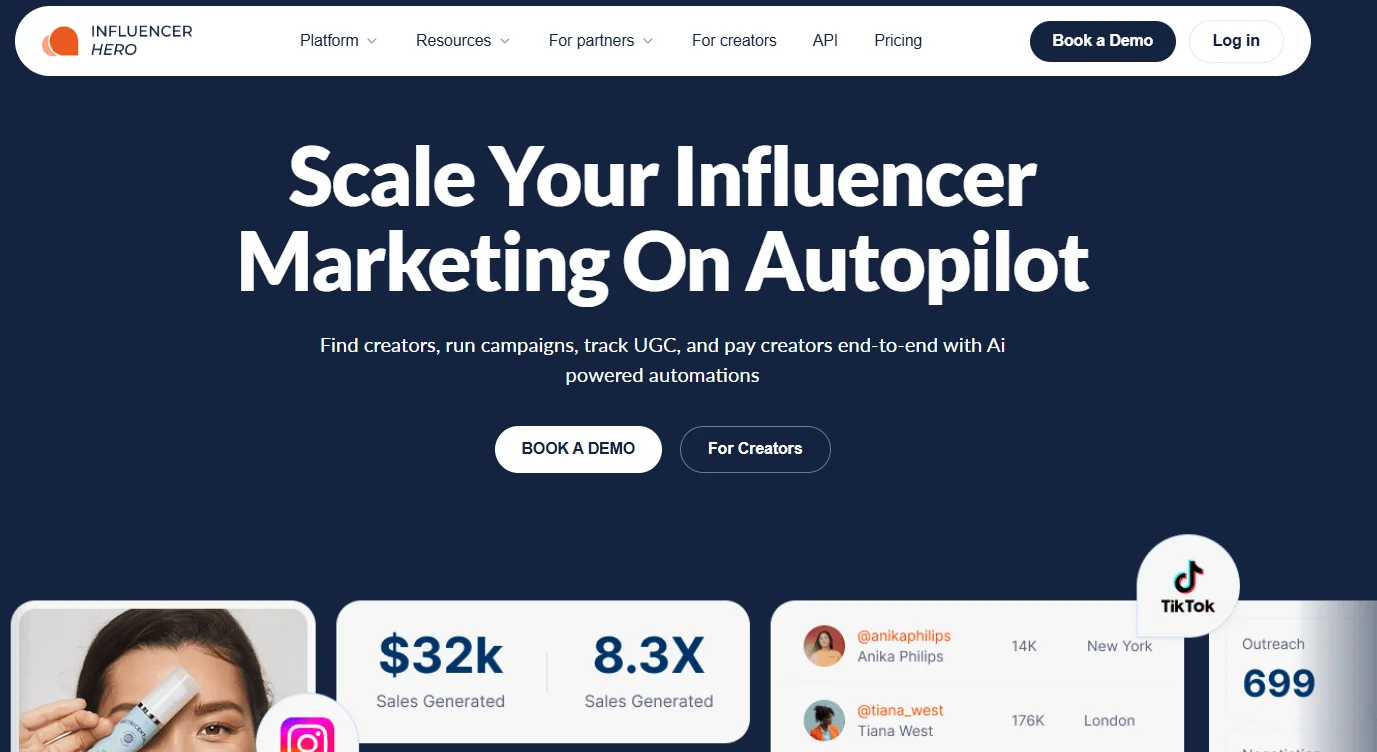
Influencer Hero is the most complete platform on this list. It is not a one-trick UGC marketplace. It is a full operating system for an ongoing creator program.
You get discovery across a 450M+ creator database, automated email outreach, a built-in CRM, gifting workflows, affiliate and discount-code tracking, a UGC content library, and ROI attribution. Native Shopify, WooCommerce, and Amazon integrations tie posts back to revenue.
That depth makes it a strong fit for mid-market and ecommerce brands running performance-driven programs, where UGC is one piece of a larger machine.
The numbers: Influencer Hero starts at $649/month on monthly contracts, with no free trial (you can book a demo). API access sits on higher tiers.
One honest caveat: the entry price runs higher than a discovery-only or pay-per-video tool, and it is more platform than a brand that only wants a handful of UGC videos really needs. If your goal is the full workflow rather than one-off clips, that scope is the point.
4. Insense

Insense is built for performance marketers who want UGC and the ad workflow in one place. Its standout is the direct line into TikTok Spark Ads and Meta Partnership Ads, so content moves from creator to ad account without file transfers.
The marketplace holds 20,000+ vetted creators, and you keep full usage rights on everything you commission. Product seeding and affiliate campaigns run through the same hub.
The numbers: The Brand plan runs $500/month, billed quarterly at $1,500, with the Agency plan at $800/month quarterly. Creator payments sit on top (UGC videos start around $100), plus a marketplace fee of 7% to 20% depending on plan.
Plan for those creator costs and fees before your first campaign, since they stack onto the subscription. For brands scaling paid social on Meta and TikTok, that integration depth earns its keep.
5. Trend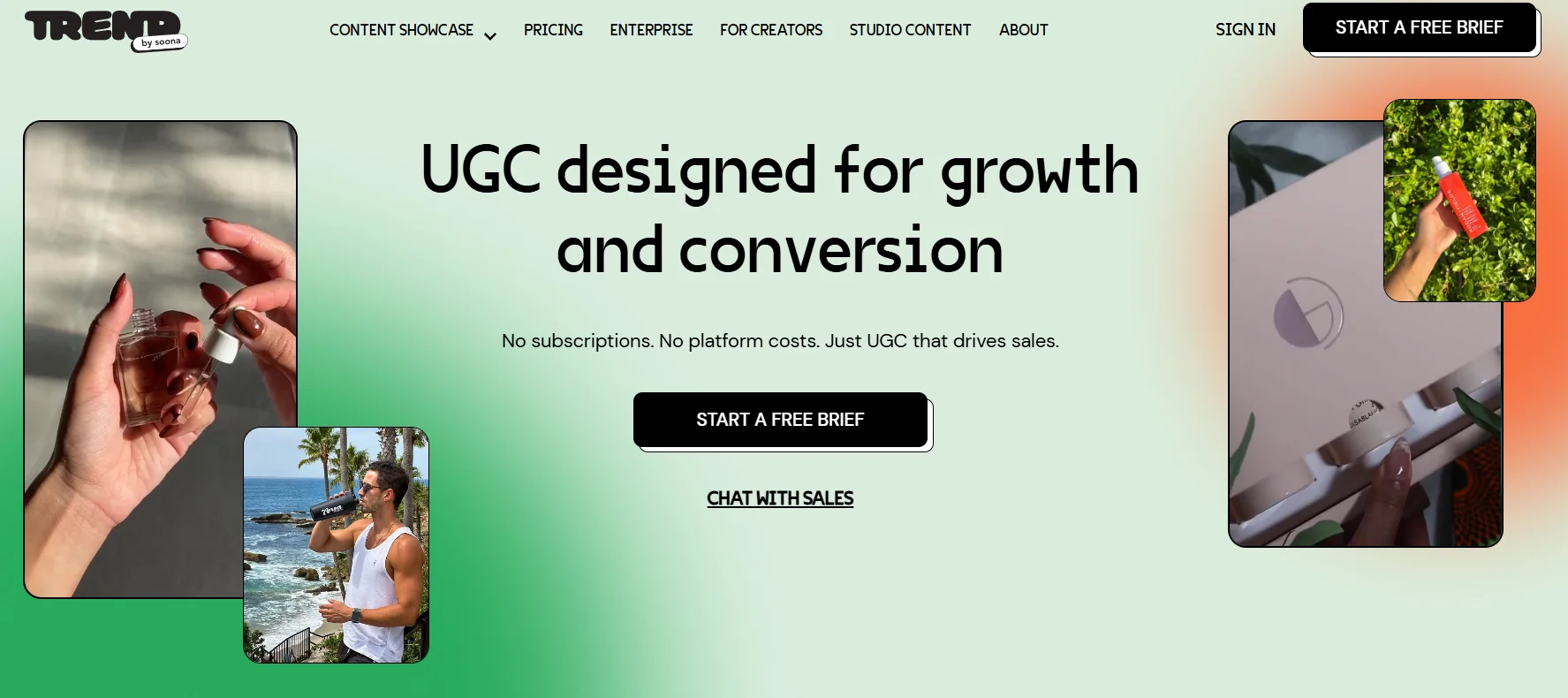
Trend (by soona) covers something most UGC marketplaces skip: high-quality photography alongside video. You can run a video campaign or a product-photo campaign from the same balance, which adds real flexibility.
Creators are pre-vetted, you keep content rights in perpetuity, and there are no software fees or contracts. The network sits around 10,000 creators.
The numbers: Trend runs on a credit system. Creator Credits cost $9.16 each, hiring a creator costs 20, 40, or 60 credits by skill level, and each delivers 5 photos or 2 videos. UGC starts at $110 per video, with a typical $500 minimum credit purchase.
That minimum makes Trend better suited to brands with a real content budget rather than a one-video test. If you need polished photo and video from one source, it is a smart pick.
6. JoinBrands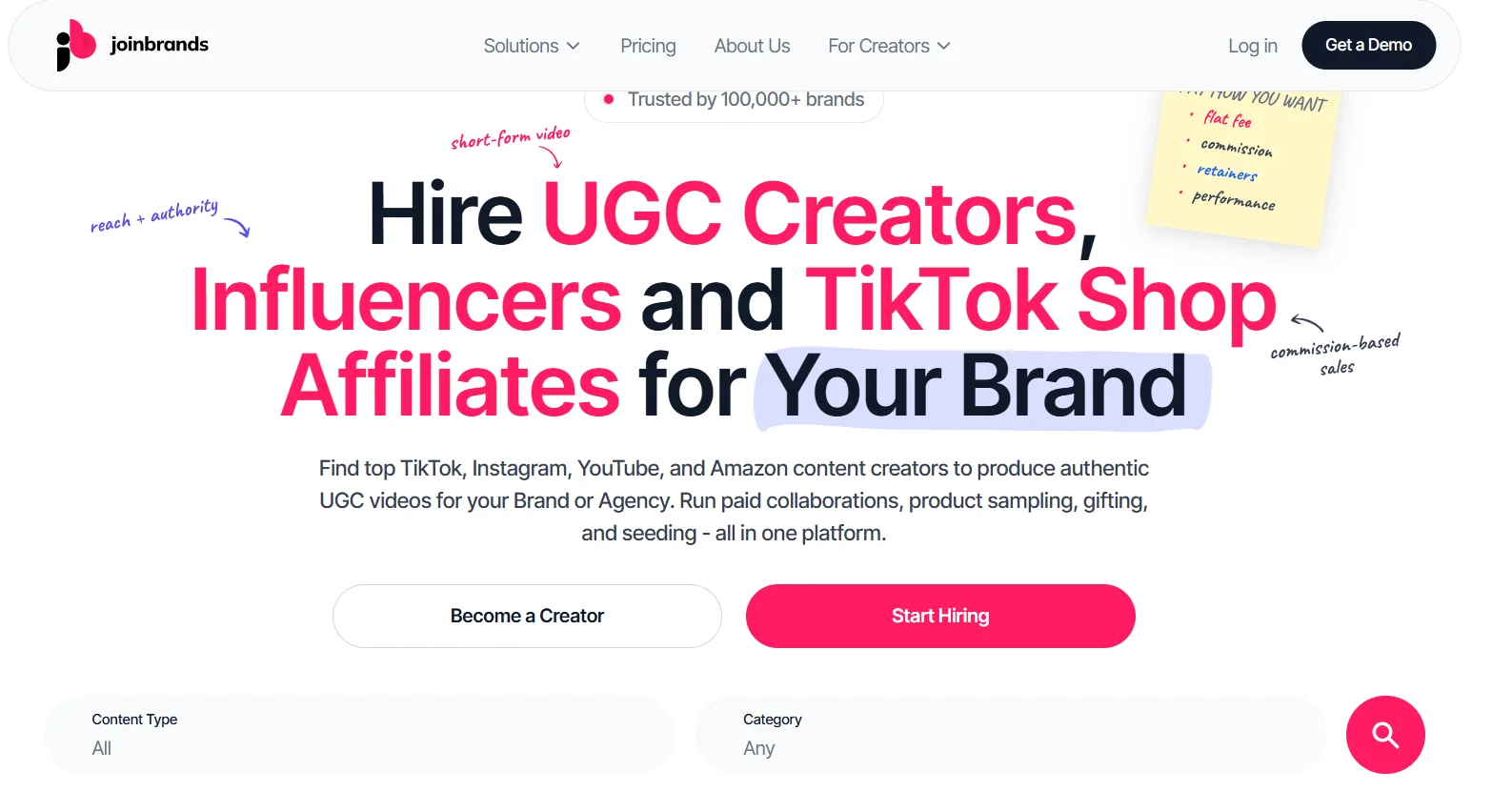
JoinBrands leans into volume and affordability. It runs one of the largest active creator networks (4M+), so filling a high-volume campaign across niches happens fast. Spark codes and Partnership Ad codes generate automatically for every video.
It covers UGC video and photo, TikTok Shop, Amazon shoppable videos, gifting, and seeding, which makes it flexible for agencies juggling multiple clients.
The numbers: JoinBrands has a free pay-as-you-go plan plus Pro at $299/month and Max at $499/month. Platform fees drop as you upgrade, from 15% on the free plan down to 8% on Max, and paid plans include monthly rollover credits. Creator rates typically run $100 to $5,000+ per project.
If you run high content volume and want the lowest possible platform fee, the Max tier pays for itself. It is a practical agency workhorse.
7. Influee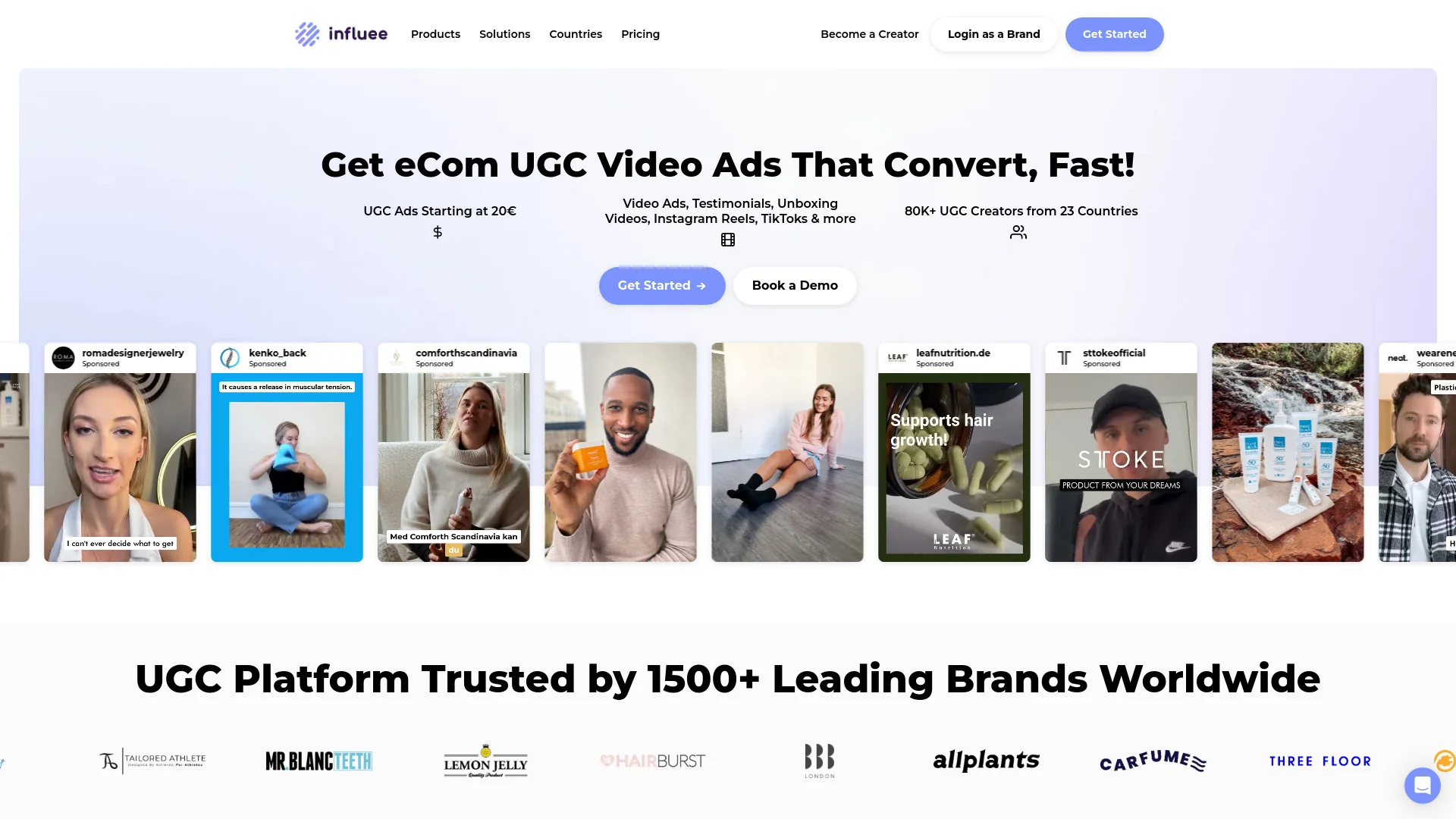
Influee is the strongest pick for brands that need UGC across multiple languages and markets. Its network spans 100,000+ creators across 20+ countries, so localized content for Europe and English-speaking markets is easy to source.
It also bundles AI tooling like its Magic Script feature, a built-in video editor, and unlimited revisions, which keeps revision costs from creeping up on you.
The numbers: Influee keeps pricing refreshingly simple with a flat 10% marketplace fee on creator payments. No tiered fee structure, no hidden charges, no surprises.
For brands scaling multilingual or global campaigns, that transparency plus the creator reach is the draw. You always know what a campaign will cost.
8. Collabstr

Collabstr is the best low-commitment way to test UGC as a channel. There is no required subscription, so you can search 940,000+ vetted creators and place an order without committing to a monthly fee first.
Every creator profile shows pricing, engagement, and audience data up front, and payments stay in escrow until you approve the work. That removes a lot of the risk from a first creator hire.
The numbers: The free Basic plan charges a 10% hiring fee per order, and the Premium plan drops that to 5% while adding campaigns and analytics. UGC videos run roughly $50 to $1,000 depending on the creator.
If you want to evaluate creator content before investing in heavier tools, Collabstr is the natural starting point. Our guide to finding and vetting micro-influencers pairs well with it.
9. Cohley
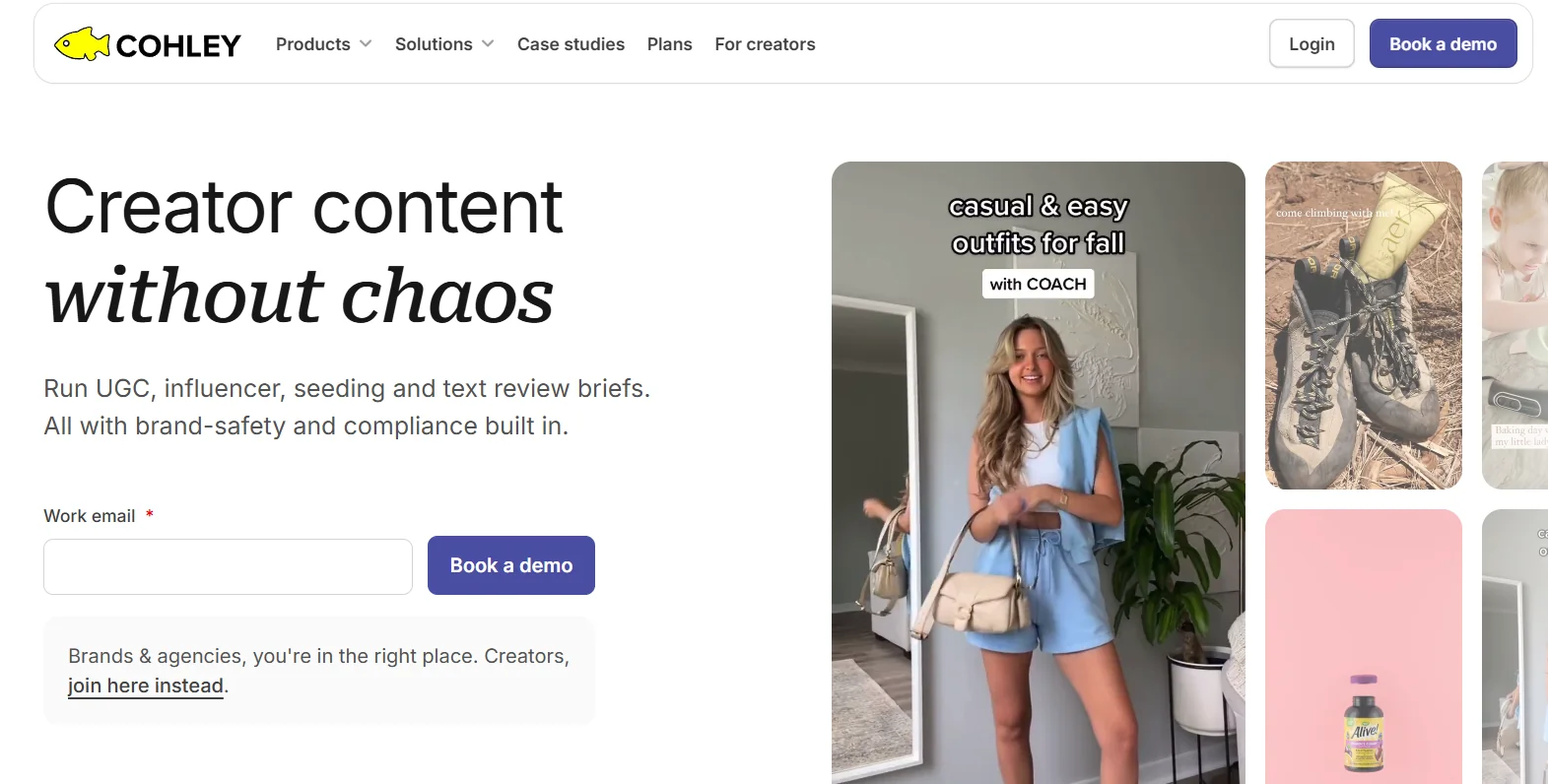
Cohley is a content-engine play for bigger brands. Beyond UGC video and photo, it generates reviews and a steady pipeline of assets for paid social, product pages, and email, all from a vetted creator network.
The pull here is content variety and managed workflows in one platform. It is built for teams that need different asset types optimized for Instagram, TikTok, and Amazon at the same time.
The numbers: Cohley uses custom, enterprise-style pricing rather than public tiers, so you book a call for a quote. Plan for a higher commitment than a per-video marketplace.
For mid-market and larger brands that want UGC plus reviews under one roof, Cohley earns the look. Smaller brands testing the waters will likely find it heavier than they need.
10. Bazaarvoice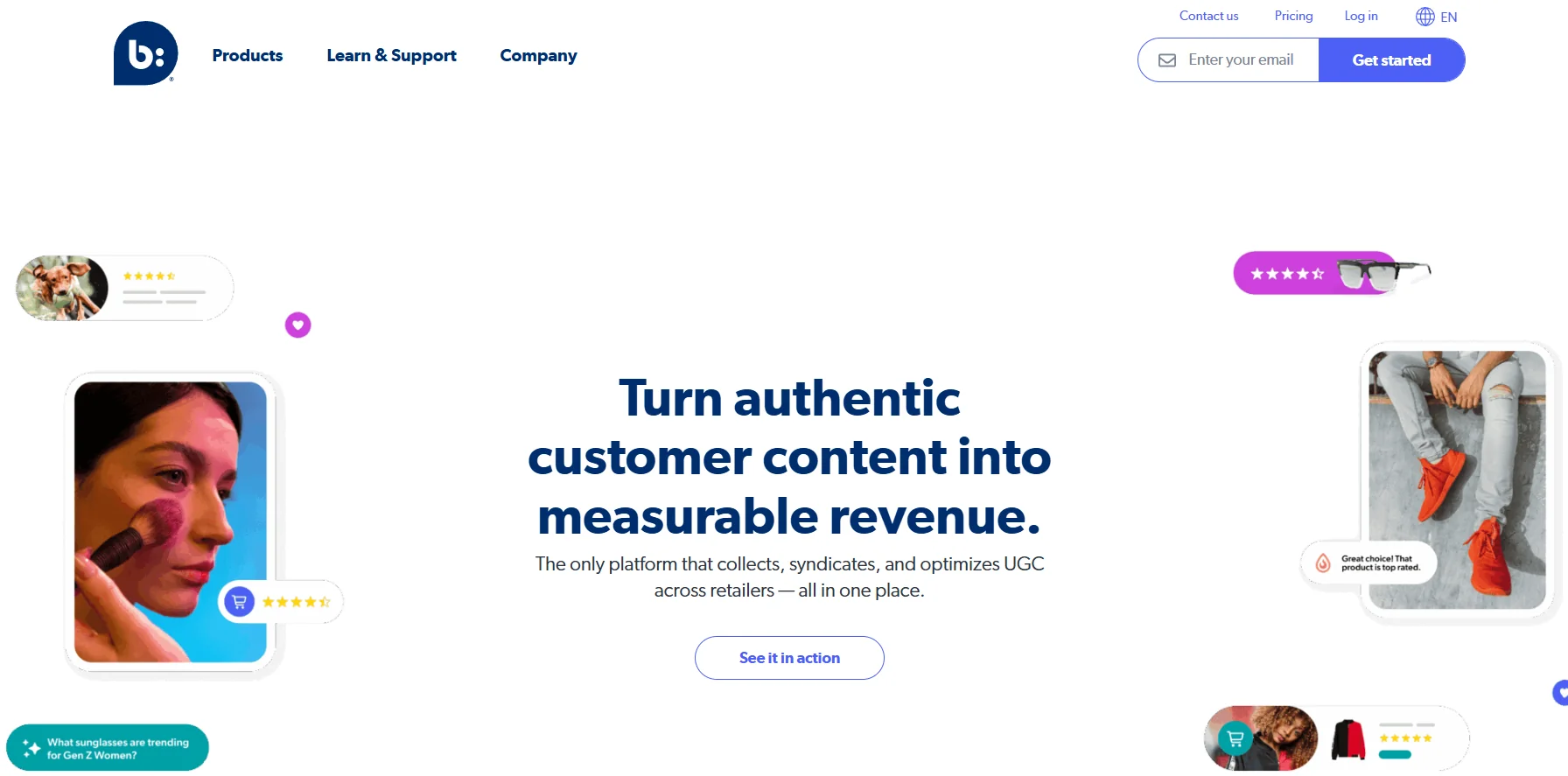
Bazaarvoice is the enterprise heavyweight for ratings, reviews, and visual UGC. Its real edge is a syndication network that pushes content across major retail partners like Walmart and Target, not just your own site.
Collect a review or photo once, then distribute it everywhere shoppers buy. Strong moderation and authenticity tools keep quality high as your content library scales globally.
The numbers: Bazaarvoice runs on custom enterprise pricing with no public tiers. Expect an enterprise-level investment and setup.
One honest caveat: it is not practical or affordable for most small to mid-size brands. For large brands running UGC and reviews across a retail footprint, though, the syndication reach is unmatched.
How to Choose the Right UGC Tool in 2026
There is no single "best" tool here. The right fit depends on your volume, your budget, and what you actually do with the content. Run through these factors before you commit.
- Your monthly content volume Pay-per-video (Billo, Collabstr) wins under 10 videos a month. Subscriptions and credits (Insense, Trend, JoinBrands) win above 20, where per-video pricing gets expensive fast.
- Video, photo, or both Most marketplaces do video well. If you also need polished product photography, Trend covers both from one balance, which saves juggling tools.
- Where the content runs Pushing UGC straight into paid ads? Insense and JoinBrands auto-generate Spark and Partnership Ad codes. Building social proof across retail pages? Bazaarvoice and Cohley are built for that.
- How much workflow you need A pure UGC buyer wants a clean marketplace. A brand running an ongoing program (discovery, CRM, affiliate, ROI) gets more from a full stack like Influencer Hero.
- Your budget and commitment level Free entry points (Afluencer, Collabstr, JoinBrands) let you test without risk. Enterprise tools demand a quote and a real commitment, so match the spend to your stage.
Still deciding between creator tiers? Our breakdown of what a micro-influencer is and how to find them helps you pick the right creators once you have your tool.
Start Sourcing UGC That Actually Converts
UGC is no longer a nice-to-have. It is the creative that stops the scroll and earns the click, and 2026 gives you more ways than ever to source it without a studio or an agency retainer.
You do not need every tool on this list. You need the one or two that match your volume, your budget, and where your content runs. Start small, test what converts, then scale the winners.
Start exploring collabs on Afluencer today. Chat with CreatorGPT for creator strategy to start collecting UGC this week.