.svg)
.png)
.png)
10 Best Insense Alternatives in 2026
Most brands searching for Insense alternatives are not unhappy with the content. They are unhappy with the bill. Insense sells access first and content second, so a Brand plan bills $1,500 per quarter before a single creator gets matched, creator payments come out of a separate budget, and a marketplace fee of 7% to 20% lands on top of every payout depending on your tier.
To be fair, Insense earns its reputation. It is one of the few platforms that covers UGC, influencer posts, product seeding, Meta Partnership Ads, TikTok Spark Ads and affiliate in a single workflow, with a managed service for teams who want to hand the whole thing off. Its creator pool sits north of 70,000 across 35+ countries, and content usually lands inside two weeks.
The friction shows up elsewhere. Reviewers consistently flag a real learning curve, creator quality that varies enough to need active vetting, and analytics that lean toward audience demographics instead of direct sales attribution. If you want to know which specific video drove revenue, you are pulling that out of Ads Manager, not Insense. So if your team is small, your volume is lumpy, or your finance lead keeps asking why the platform costs money in a month with zero videos, another tool probably fits better.
The good news is that this category has split into very different pricing models. Some charge per video with nothing up front. Some run gifting programs for the cost of the product. Some do the whole influencer program, not just the content. Our roundup of UGC tools for brands covers the wider field, and this list narrows it to the ten that genuinely replace Insense.
Let's get into them.
Top Insense Alternatives in 2026
1. Afluencer
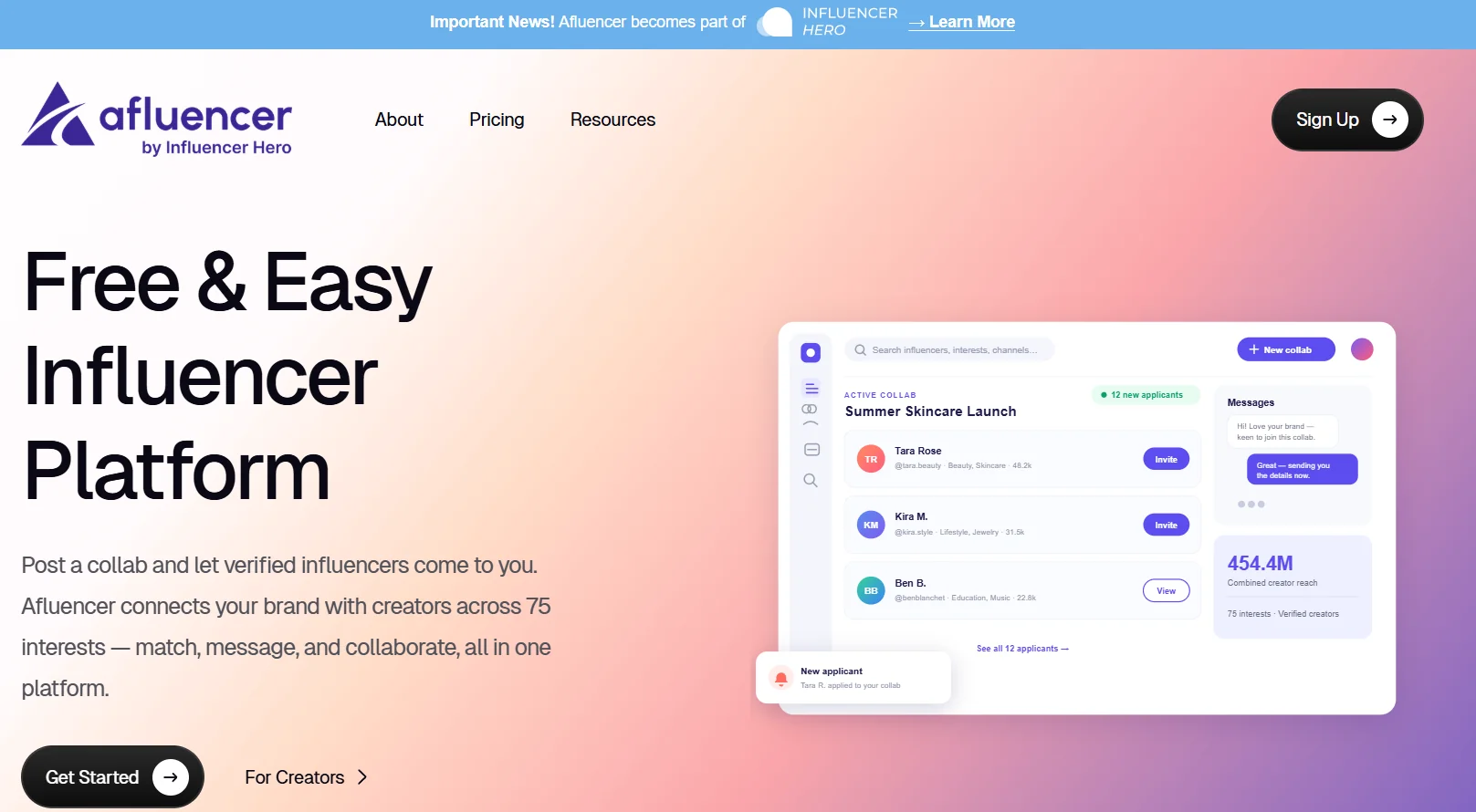
Afluencer flips the sourcing model. Instead of buying access to a database and briefing strangers, you post a Collab describing what you want, and verified creators apply to you. For brands who mostly need steady UGC and micro-influencer content, that inbound motion removes the slowest part of the job.
It is the natural first stop for anyone leaving Insense over cost structure. There is no quarterly minimum, no marketplace fee stacked on creator payments, and no requirement to fund a content budget before you see who is interested. You post, creators raise their hand, and you pick.
The platform is built around product-based brands. Shopify and BigCommerce apps handle the store side, creators skew nano and micro across Instagram and TikTok, and gifting-first collabs are the default rather than an upsell. If seeding is a big part of your program, our guide to influencer gifting platforms is worth reading alongside this.
Afluencer also leans on AI. CreatorGPT works as a strategy assistant for campaign planning, brief writing and match logic, and the Collab Finder points creators toward live opportunities that fit them.
Pricing is where the positioning gets clear. The Afluencer Marketplace plan is $49 per month and includes 60 invitation credits, premium influencer filters and phone, email and live chat support. From there, the Standard plan at $649 per month and the Pro plan at $1,049 per month open up the Influencer Hero platform, with 1,000 and 5,000 monthly reach outs, product send outs, influencer payments, a dedicated account manager and multiple seats. The logic is simple: for brands just getting started, Afluencer is the ideal choice, and for brands that want to scale and work with a lot of creators, Influencer Hero is the one to move to.
On a quick note, Afluencer is a marketplace, not a paid-ads pipeline. There is no one-click Partnership Ads request or Spark code workflow like Insense has, and because applications are inbound, you still vet. Niche coverage is strongest in beauty, fashion, wellness and lifestyle, so very technical categories take more digging.
Ready to test it? Sign up and post your first Collab.
2. Influencer Hero
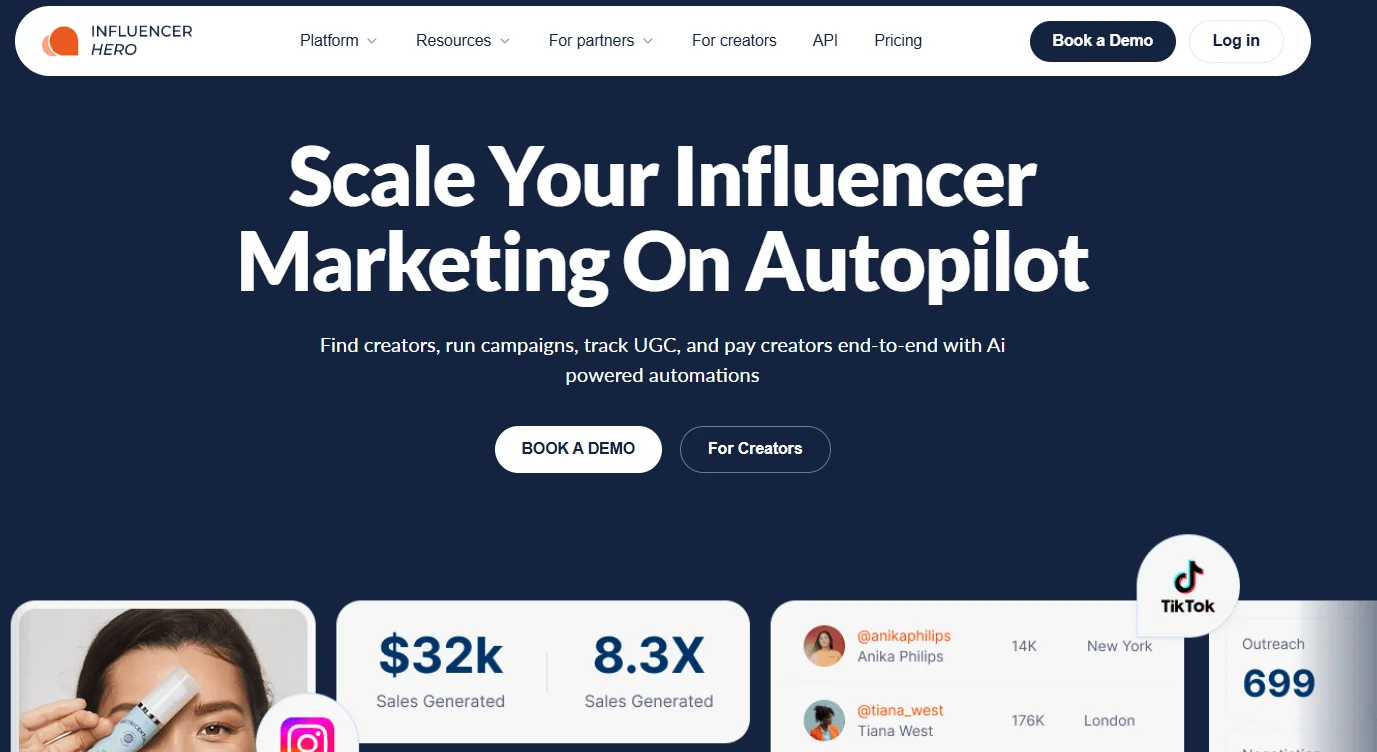
Influencer Hero is the pick for brands who want everything Insense does with content, plus the layer Insense is weakest at: proving the content made money.
That is the head-to-head worth understanding. Insense is a content engine. Influencer Hero is an operating system that includes the content engine. It covers UGC collection and AI UGC search, product gifting with native Shopify and WooCommerce integrations, affiliate links, automated influencer payments, creator storefronts, and sales attribution that ties a specific post back to revenue. Where Insense hands you demographic reporting and points you at Ads Manager, Influencer Hero reports on ROI inside the platform.
The rest of the stack is built for teams running an ongoing program rather than a content order. Creator discovery runs across Instagram, TikTok and YouTube with fake-follower detection and lookalike search, outreach is automated with personalized sequences and follow-ups, and a full CRM tracks every creator relationship, deliverable and payment in one place. It suits mid-market and ecommerce brands who have outgrown buying videos one campaign at a time.
Pricing is published, which is rare in this tier. Standard is $649 per month with 1,000 monthly reach outs and a single seat, Pro is $1,049 per month with 5,000 reach outs, three seats and a dedicated account manager, and Business is $2,490 per month with unlimited influencer payments and UGC tracking. Custom and agency plans exist for larger programs. All plans carry a three-month minimum, and quarterly or annual billing cuts the rate by 20% and 30%.
The caveat is fit, not quality. The entry price sits well above a per-video platform, the three-month minimum is a real commitment, and UGC tracking lives on the Business tier. A brand that just wants twelve videos this quarter is buying more platform than it needs.
Want to see it before you commit? Book a demo with Influencer Hero.
3. Billo
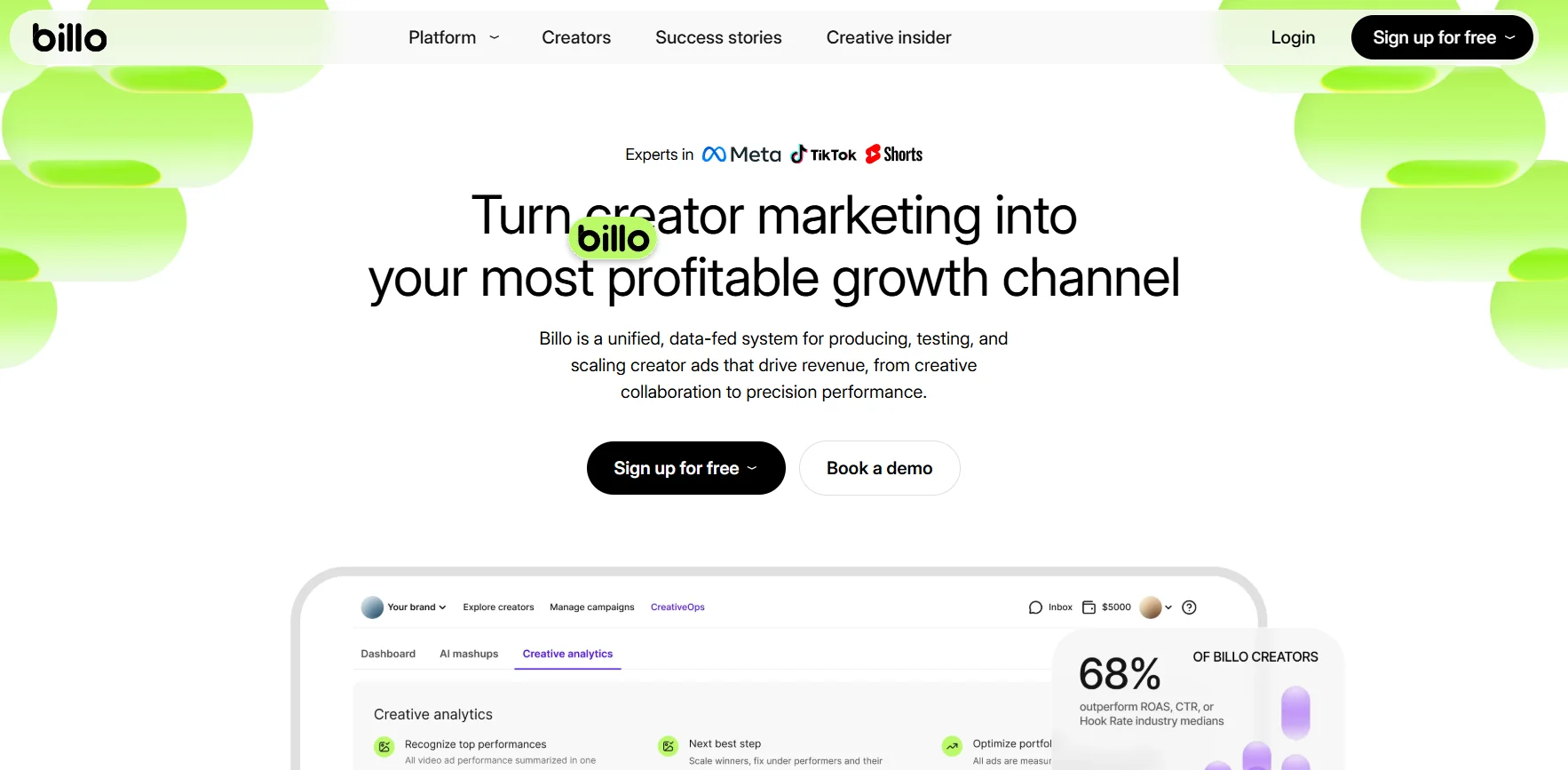
Billo is the cleanest answer to the "why am I paying for access" complaint. You order a video, you pay for that video, and nothing bills you in a month when you order nothing.
Its network sits at 5,000+ vetted creators, mostly US-based, and the workflow is deliberately simple: write a brief, ship product, get a finished video back in roughly 7 to 12 business days. For teams that want a handful of hero assets for a launch instead of a rolling content calendar, that is a much better shape than a quarterly subscription.
Billo has also added an optional CreativeOps layer with AI scripts and ad variations, which turns footage you already have into fresh cuts without briefing new talent. It is useful, but it moves Billo back into subscription territory if you take it.
Pricing starts at $99 per video with platform fees bundled in, so there is no separate percentage on creator payments. CreativeOps runs at $0, $300 per month on a launch price that renews at $500, or $900 for enterprise.
The trade-off is speed and category range. A week and a half per video is slow if you are testing weekly, there is no product seeding campaign type, and per-video costs climb faster than a marketplace floor once you pass roughly 20 videos a month.
4. JoinBrands
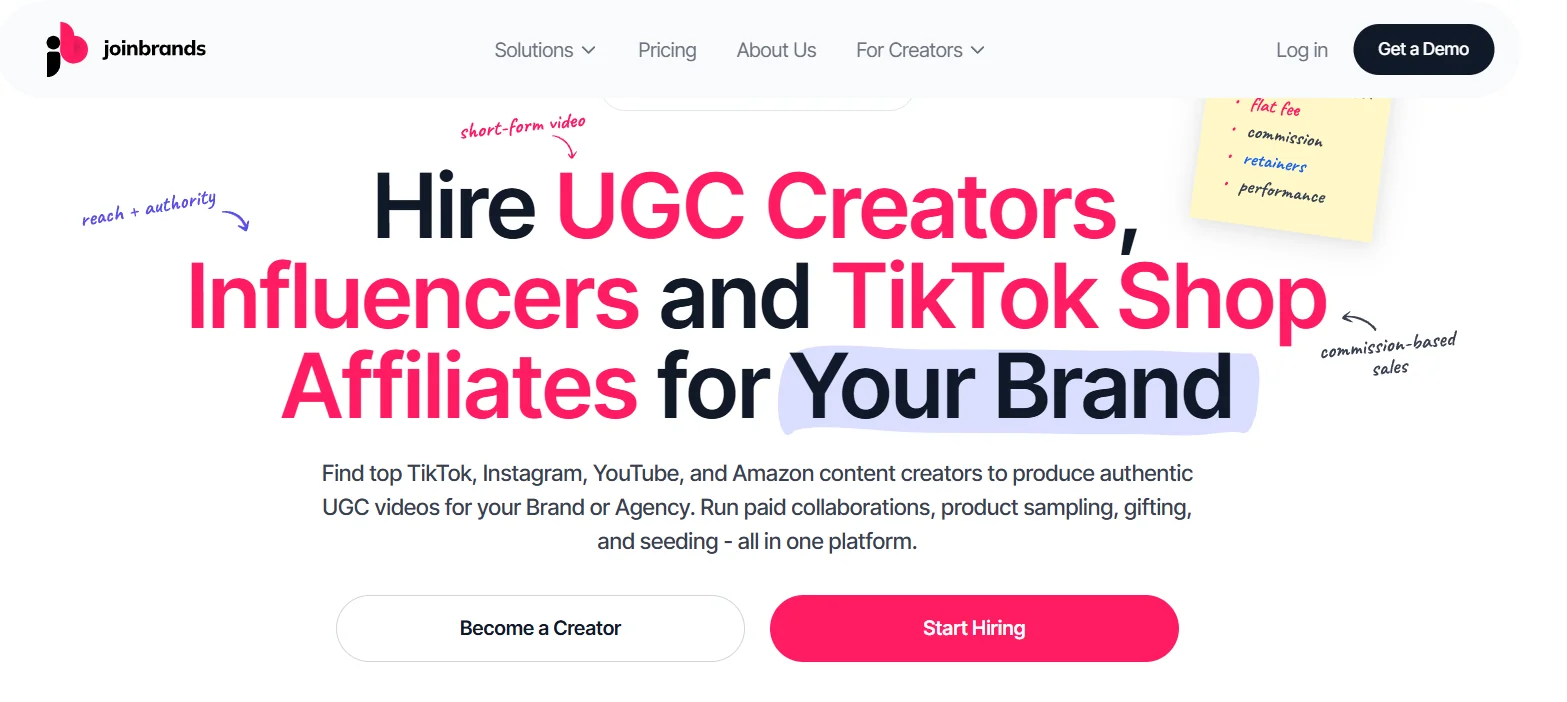
JoinBrands is the cheapest realistic entry point on this list, and it is the most transparent about how it makes money. The subscription is optional. The platform fee is not.
Brands post jobs, set their own creator payout, and pay a percentage on each payment. That percentage runs 15% on the free tier and drops to 12%, 10% and 8% as you climb. UGC videos are listed from $25, TikTok Shop is integrated directly, Spark codes come through with completed TikTok campaigns, and full licensing is included.
Against Insense, the math is blunt. Twelve videos at the $25 floor on the free plan costs $300 in creator payments plus $45 in fees, with no subscription and no quarterly lock. That is the entire reason brands switch.
Paid tiers are $99, $299 and $499 per month and mostly buy you a lower fee plus monthly credits. They only pay for themselves at volume, roughly above $2,300 per month in creator spend for the first tier, so most brands should stay free until they clear that. If payouts and commissions are a big piece of your program, our roundup of affiliate payment tools covers the wider stack.
The limitations are real. Creators are concentrated in the US, Canada, UK, Australia and Germany, revisions are capped by plan, and raw footage is not standard. Quality varies more than on a curated marketplace, so budget time for vetting.
5. Influee
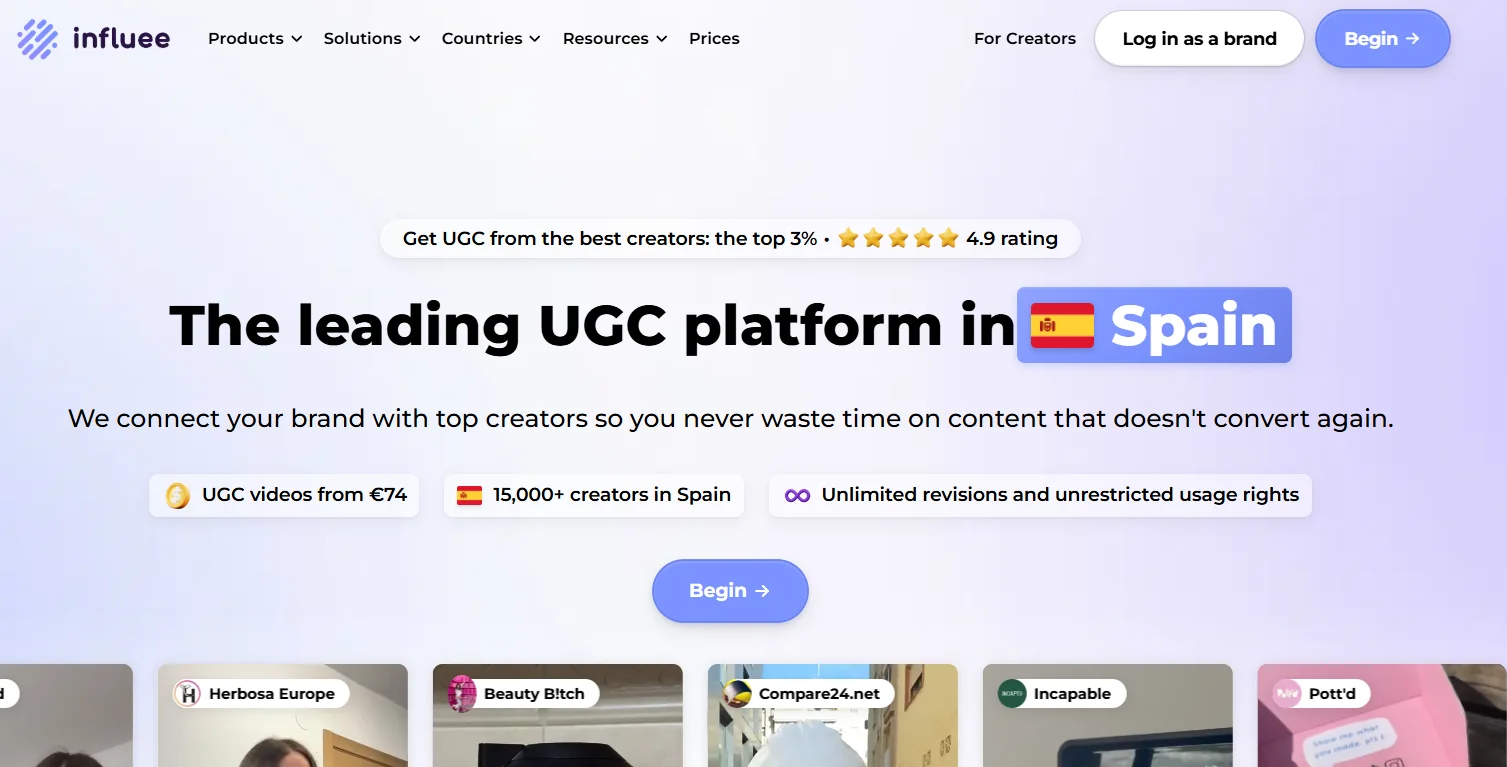
Influee runs the same shape as Insense, subscription first and creator payments second, at noticeably friendlier numbers. If you like the Insense model but not the Insense invoice, this is the closest swap on the list.
Plans meter creator collaborations rather than videos, which matters because one creator can deliver several assets inside a single slot. Starter is $229 per month for up to 10 collaborations, Basic is $529 for up to 25, Pro is $999 for up to 50, and Enterprise is custom. A flat 10% payment fee applies on every tier, so you are not paying 20% just because you are new.
The standout is transparency. Influee publishes its own marketplace average, listing a 30-second US UGC video at around $57, which is the one number most platforms in this category leave to your imagination. Budgeting a test month becomes arithmetic instead of guesswork.
Creator coverage is deep across European markets, which helps brands running localized campaigns that a US-heavy roster cannot serve.
The caveat is the same one that pushed you off Insense: creator payments still sit outside the subscription, so a quiet month still costs $229. Collaboration caps also bite if you run many small briefs rather than a few large ones.
6. soona UGC (formerly Trend)
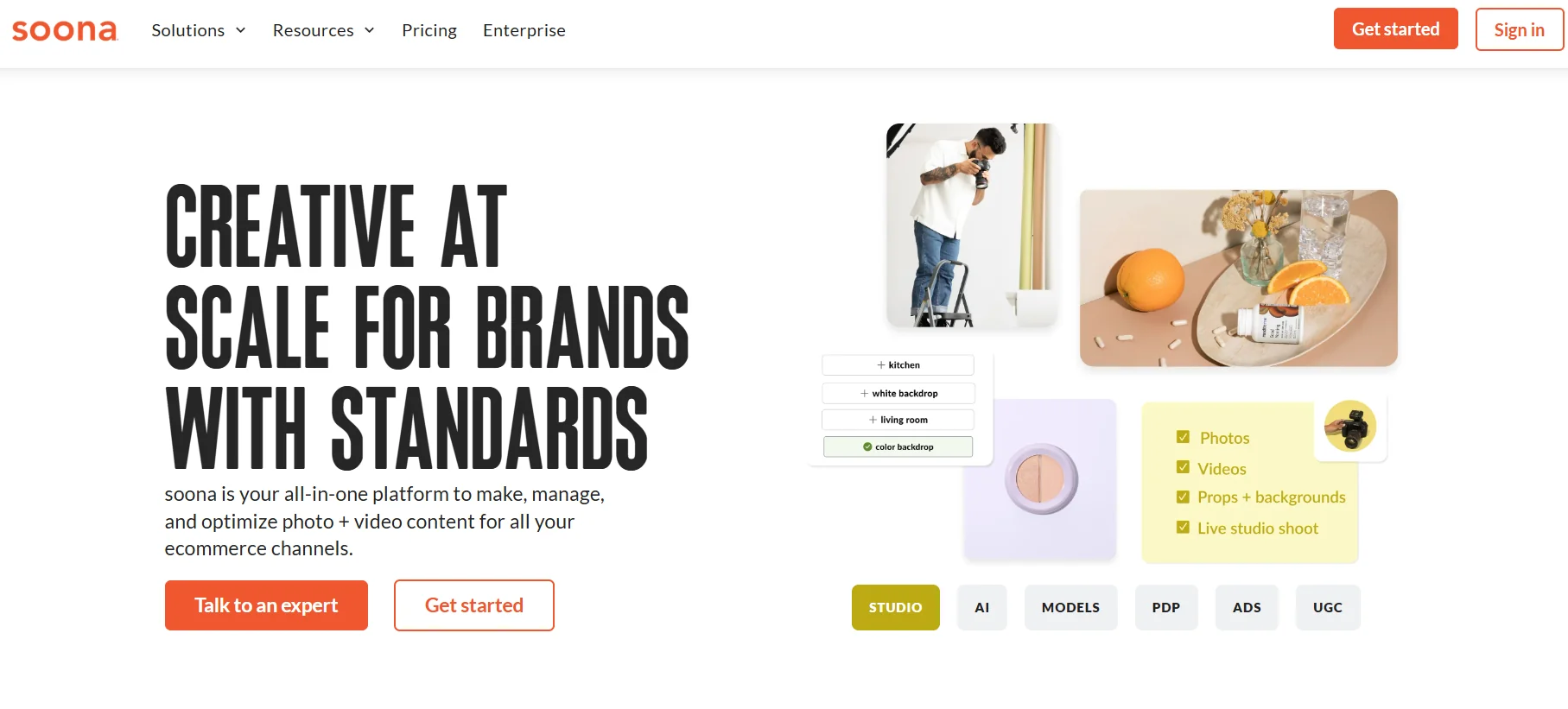
If a comparison still lists Trend as a standalone marketplace, it is out of date. soona acquired Trend.io in 2023 and folded it into a product called soona UGC, announced in late April 2026, with existing Trend brands keeping access to their campaigns and content through the end of the year while they convert.
What makes it a genuine Insense alternative is the bundling. soona is a content studio first, so photography and creator video come out of the same process. Brands that need PDP images, lifestyle stills and short-form video usually run two vendors for that. Here it is one.
Pricing starts at $89 per video, with a $149 studio pass per booking that a membership waives. So there is an access fee, but it attaches to a booking rather than to a calendar month, which is the opposite of Insense's quarterly floor.
The honest caveat is the transition itself. The product is newer than the brand behind it, and reviews of "Trend" that you find online describe a platform that no longer exists in that form. Treat older comparisons carefully and test with a single booking before you plan a quarter around it.
7. minisocial
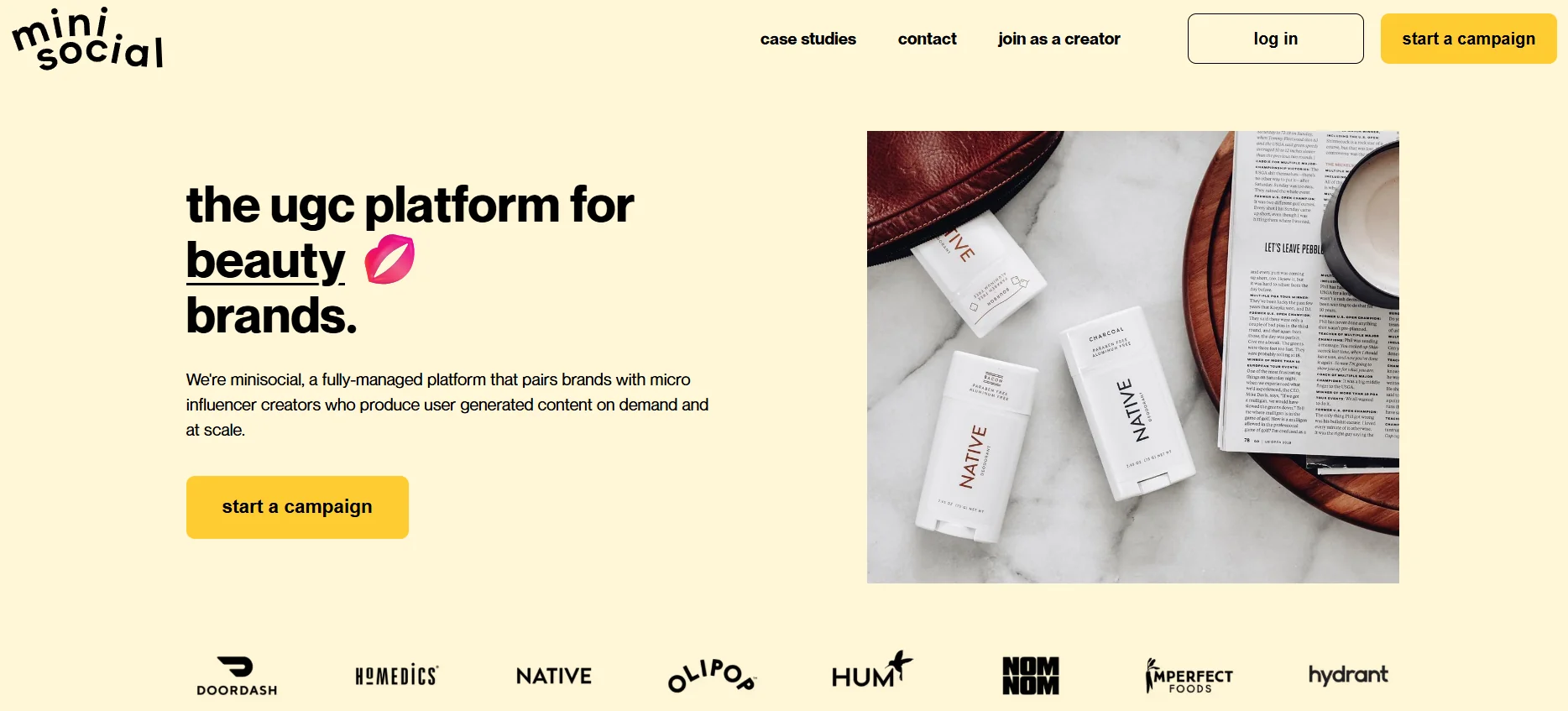
minisocial is the pick for brands who liked the idea of Insense's managed service but not the idea of paying a subscription to access it.
Every campaign is fully managed. You brief once, minisocial sources and vets micro-influencer creators, invites them in, coordinates shipping and delivers the content back to you. The model is two-pronged on purpose: creators post to their own audiences and you keep fully licensed photo and video assets, so a single campaign covers reach and content library at the same time.
Because it is project-based, there are no long-term commitments and no monthly fee running in the background. You pay based on how many creators you activate.
Projects start at $3,000 for a campaign of 10 creators. That works out cleanly per asset once you count the organic posts, but it is a real floor.
The limitation is obvious from that number. $3,000 is a lot for a first test, and the project structure means you do not get an always-on program you can dip into weekly. It suits scheduled launches better than continuous creative testing.
8. Social Cat
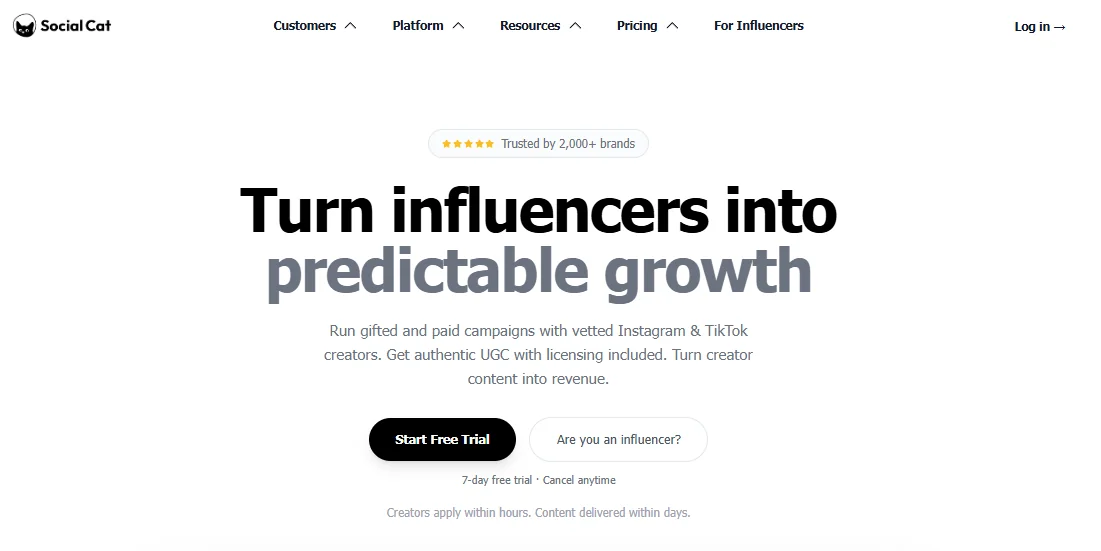
Social Cat is built for the brand Insense openly says it is not for: the one under $20K a month that cannot justify a platform fee on top of creator payments.
The model is gifting-first. You list what you will send, vetted micro-influencers apply, you approve, ship, and get content back. There is no cash creator fee in the standard flow, so your content cost is essentially product cost plus subscription. Content usage rights are included on all plans, which means you can run what you get as ads without a separate negotiation.
Coverage focuses on Instagram and TikTok with micro and nano creators, and the network sits around 50,000 manually vetted profiles. There are no contracts, so you can leave whenever.
Pricing is $99 per month for Essentials, $199 for Performance and $299 for Pro, scaling by how many creator matches you get.
Two honest caveats. Gifted-only means some creators go quiet after the product ships, so build slippage into your forecast. And there is no outreach automation or affiliate tracking, so once you are past roughly 15 to 30 creators a month, the manual work starts eating the savings. Our list of Social Cat alternatives covers where to go next.
9. Cohley
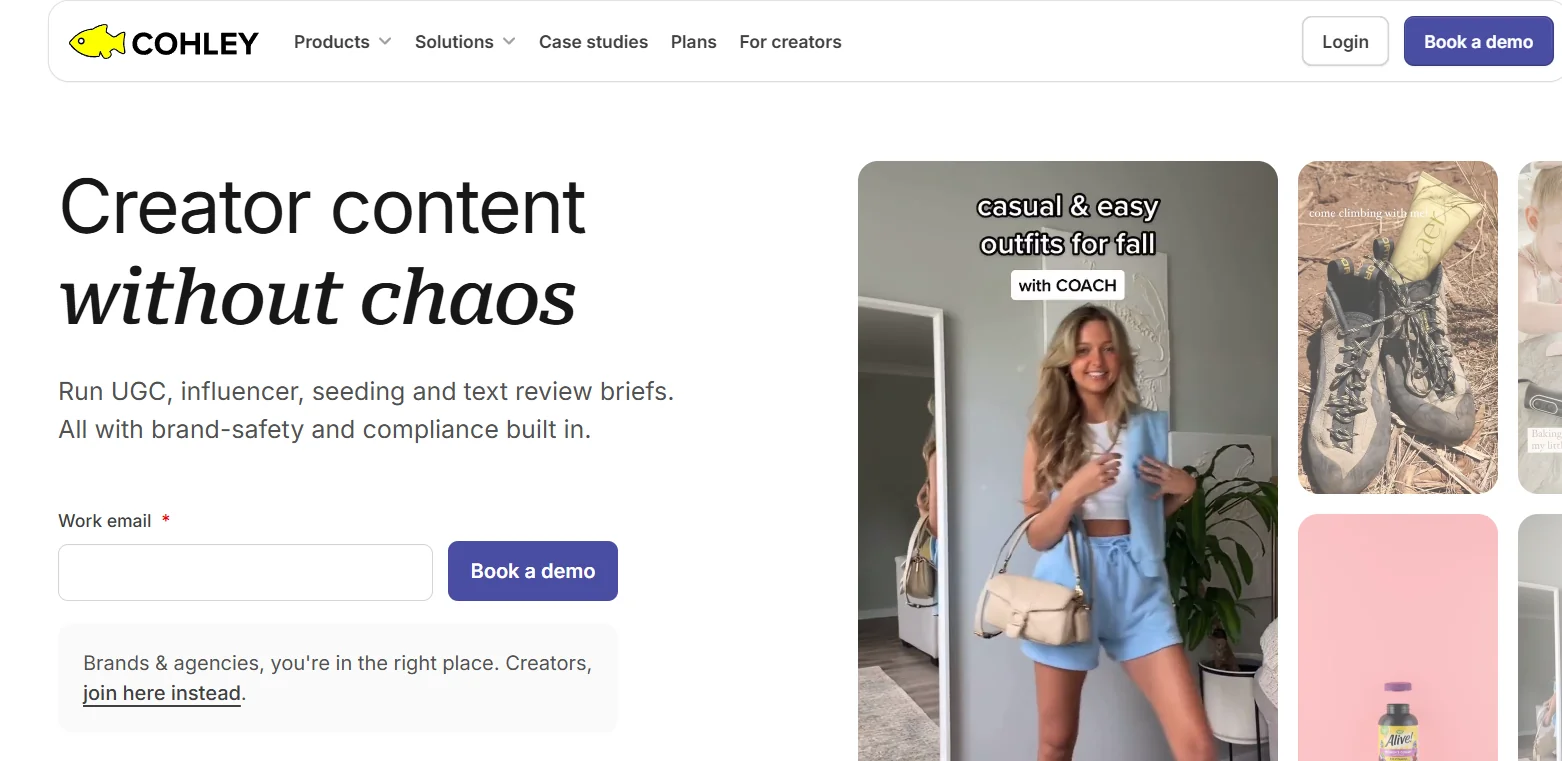
Cohley sits at the premium end of the category, and it is the right call when phone-shot UGC is not enough. Its creator pool includes professional photographers and videographers alongside standard UGC creators, so you can commission polished product photography and iPhone-style video from the same platform.
Where it separates from Insense is distribution beyond paid social. Cohley integrates with Shopify, BigCommerce and the ratings and reviews stack including Bazaarvoice, PowerReviews and Yotpo, so content flows onto product detail pages, into email and into retailer listings rather than living only in Ads Manager. Brands launching with a new retailer lean on it heavily for exactly that reason.
Usage rights, brand-safety review and campaign analytics are built in, and there is real hand-holding during onboarding.
Pricing is not published. Cohley scopes each customer individually, annual contracts are the norm, and third-party comparisons put per-asset costs in the $200 to $500+ range depending on creator tier.
The caveat writes itself. No public pricing plus an annual commitment makes this the wrong tool for a brand testing the channel. It is aimed at mid-market and enterprise teams with a content budget already approved.
10. Aspire

Aspire is the pick when the real problem is not "where do I buy videos" but "how do I run a creator program." It covers discovery, a marketplace where creators apply to your campaigns, outreach automation, briefs and approvals, affiliate programs and payments, with particularly deep Shopify integration.
Against Insense, the difference is time horizon. Insense is optimized for producing assets fast. Aspire is optimized for long-running ambassador programs with multiple stakeholders, recurring product sends and structured deliverables. Fashion, beauty and consumer goods brands make up a lot of its base for that reason.
Pricing is quote-based and not published on the site. Third-party sources put the entry point somewhere around $2,300 to $2,499 per month, typically on a 12-month contract, and there is no free trial. If you want the full picture, our Aspire alternatives breakdown compares it against the rest of the market.
It is the biggest commitment on this list, and that is the caveat. You go through a sales conversation, you sign annually, and you need someone internally who owns the program. Brands that just want content will find it heavy.
Which Insense Alternative Should You Pick?
There is no single winner here, because Insense's problem was never features. It was the shape of the bill. So start there. If your volume is lumpy or you are still testing the channel, buy per asset with Billo, soona UGC or JoinBrands and skip the subscription entirely.
If you run several briefs in parallel every month, a subscription marketplace like Influee earns its keep through a lower fee percentage. If you want the content and the ROI reporting in one place, Influencer Hero is the upgrade path.
For most small and growing brands, the simplest move is the one that costs the least to try. Afluencer starts at $49 per month, lets creators come to you instead of the other way around, and does not charge a percentage on anything you pay a creator. That makes it a low-risk place to build a content pipeline before you commit to a bigger platform, and when your program outgrows it.
The Standard and Pro plans open up Influencer Hero without you having to migrate anywhere. Whichever route you take, get your process right before you scale spend. Our guide to influencer outreach tools is a good next read, and if you are ready to start now, post a Collab and let creators apply.