.svg)
.png)
10 Best LTK Alternatives in 2026
Most brands searching for LTK alternatives are not frustrated with the creators. They are frustrated with the terms. LTK Connect sells on annual contracts, and third-party pricing data puts Connect Launch around $5,000 per year, Connect Pro around $12,000, Connect Scale near $35,000, and the managed LTK Optimize tier above $50,000. Creator commissions sit on top of all of it.
Then there are the caps. Entry plans limit how many creators you can send offers to each month, and campaign spend is capped by tier. The bigger constraint is structural: LTK is a closed, opt-in network, so you cannot proactively search and vet creators who have not already joined it.
To be fair, LTK earned its position. The shopper app and its curated creator base drive real purchase intent, especially in fashion, beauty, and home. That combination of inbound shopper traffic and a vetted network is genuinely hard to replicate, and plenty of brands renew happily.
But if you want to own your creator relationships, work outside one network, or start without a five-figure commitment, there are better fits. The list below splits roughly into two camps: marketplaces where creators come to you, and platforms where you run the workflow yourself. Which one you need depends on your team size, your budget, and whether you already have an influencer marketing strategy in place.
Here are the 10 best LTK alternatives worth a look this year.
Top LTK Alternatives in 2026
1. Afluencer
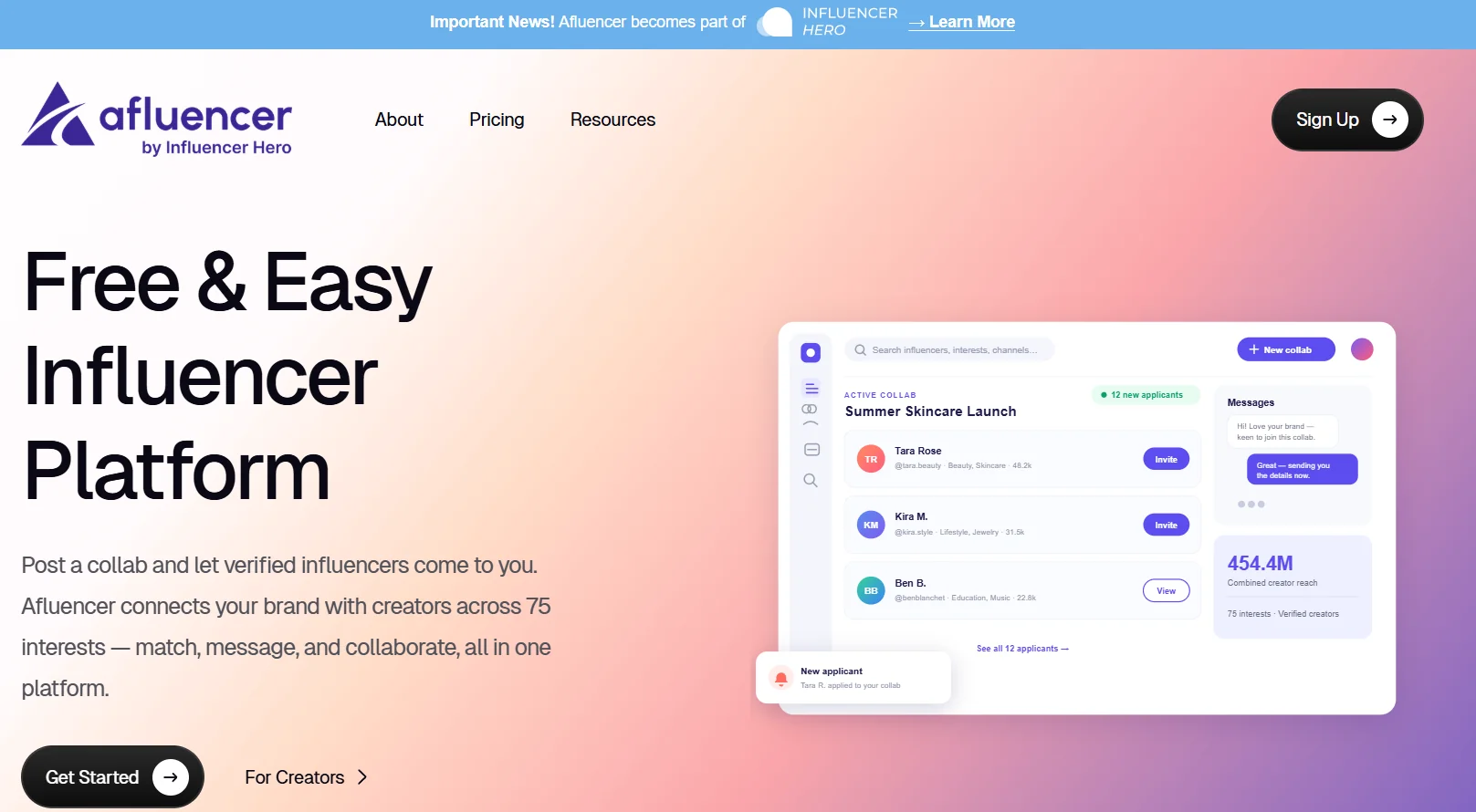
Afluencer is a creator marketplace built around a simple idea: instead of cold-pitching strangers, you post a Collab describing what you want, and verified creators apply. You review people who already raised their hand, which cuts the slowest part of influencer marketing out of the process.
That inbound model is the cleanest answer to LTK's biggest limitation. LTK gives you access to its network, but only on its terms and only within its caps. On Afluencer you set the offer, the commission structure, and the eligibility rules, then talk to creators who opted into your specific campaign. No monthly creator-offer limit dictates how fast you can move.
The creator base skews micro and nano, which is exactly where affiliate and gifting economics work best. You can filter by niche, audience size, location, and social channel, then invite matches directly or let applications come to you. For beauty, fashion, wellness, and lifestyle brands, the category coverage is strong.
Afluencer also layers AI where it saves real time. CreatorGPT handles campaign strategy, offer structuring, and outreach advice, and the Afluencer Collab Finder matches creators to live opportunities without manual filtering.
On pricing, brand plans start at $49 per month for Marketplace, which includes 60 invitation credits a month, premium creator filters, and phone, email, and live chat support. Standard runs $649 per month and Pro $1,049 per month as your outreach volume and payment needs grow. The positioning is deliberate: for brands just getting started, Afluencer is the ideal choice, while brands that want to scale and work with a lot of creators are better served by a full platform like Influencer Hero.
The honest limitation is scope. Afluencer is built for sourcing and collaborating, not for deep sales attribution or enterprise-grade reporting. If your entire program depends on tracking every dollar back to a specific post, you will want a platform with heavier attribution built in.
Ready to start? Post your first Collab on Afluencer and let creators come to you.
2. Influencer Hero
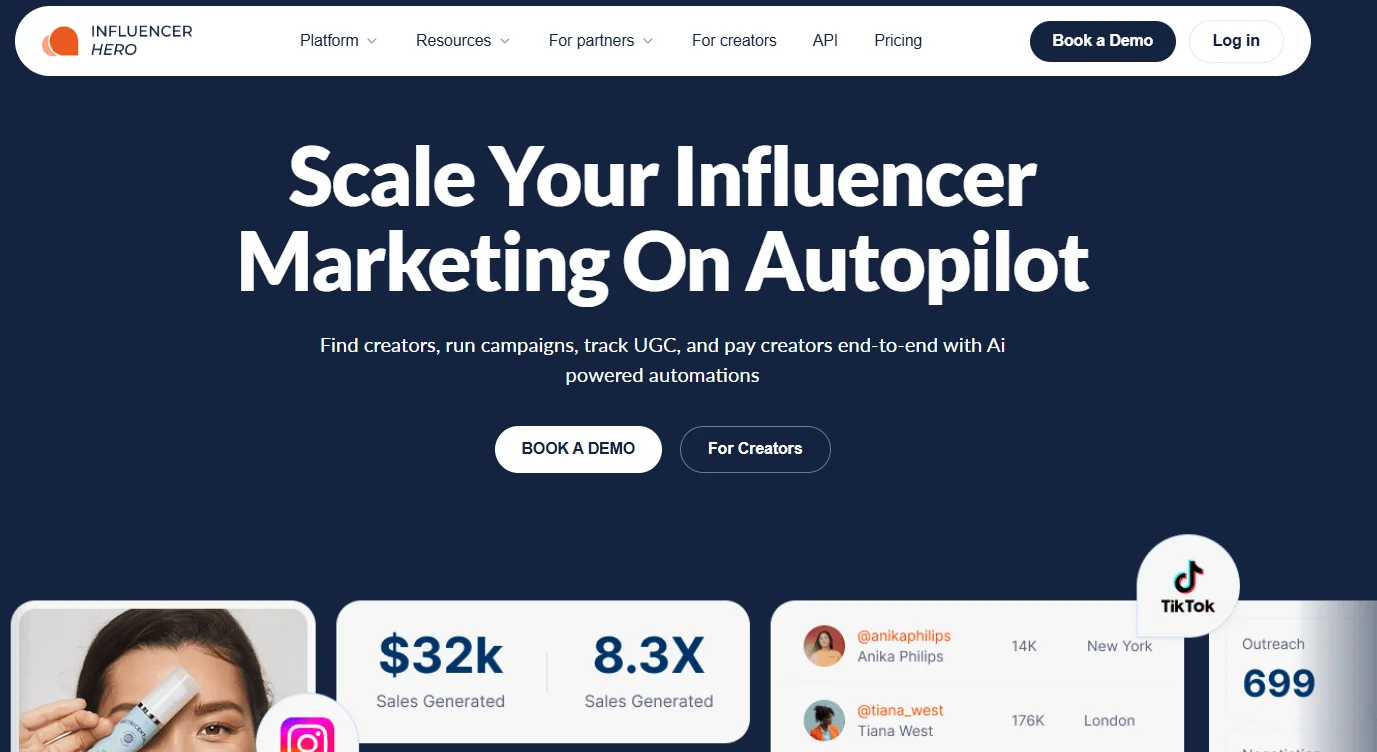
Influencer Hero is an all-in-one influencer marketing platform for brands that want to run creator commerce in-house instead of renting access to someone else's network. It covers discovery, outreach automation, CRM, gifting, affiliate management, and ROI attribution in one system, with creator search across Instagram, TikTok, and YouTube.
The affiliate side is where it competes with LTK directly. Influencer Hero generates trackable affiliate links and unique discount codes per creator, automates commission payouts, and ties attributed sales back to individual posts through native Shopify and WooCommerce integrations. The revenue stays attributed to you, and so does the customer data, which is the part LTK keeps on its side of the wall.
Outreach is the other big gap it closes. LTK caps how many creators you can pitch each month by tier. Influencer Hero runs automated email sequences with AI-personalized openers, and higher plans support outreach to thousands of creators a month. Fake-follower detection, lookalike search, and a Chrome extension round out the vetting side.
The company behind Influencer Hero also runs Creator Hero, a separate product built for the creator side of the equation. It is the closest thing here to what the LTK app actually does for influencers: a drag-and-drop storefront where creators curate products, publish shoppable collections, and earn commission on every sale, with a brand directory to pull products from and a dashboard tracking clicks, revenue, and top sellers. Payouts are automated.
Pricing on Influencer Hero is public, which is refreshing in this category. Standard is $649 per month, Pro is $1,049 per month with more seats and a dedicated account manager, and Business is $2,490 per month. All plans carry a three-month minimum, and quarterly or annual billing lowers the monthly rate. Creator Hero is priced separately and on the creator side, with a free tier and paid plans above it.
Book a demo with Influencer Hero if you want to see the affiliate and attribution side against your current LTK setup.
3. ShopMy
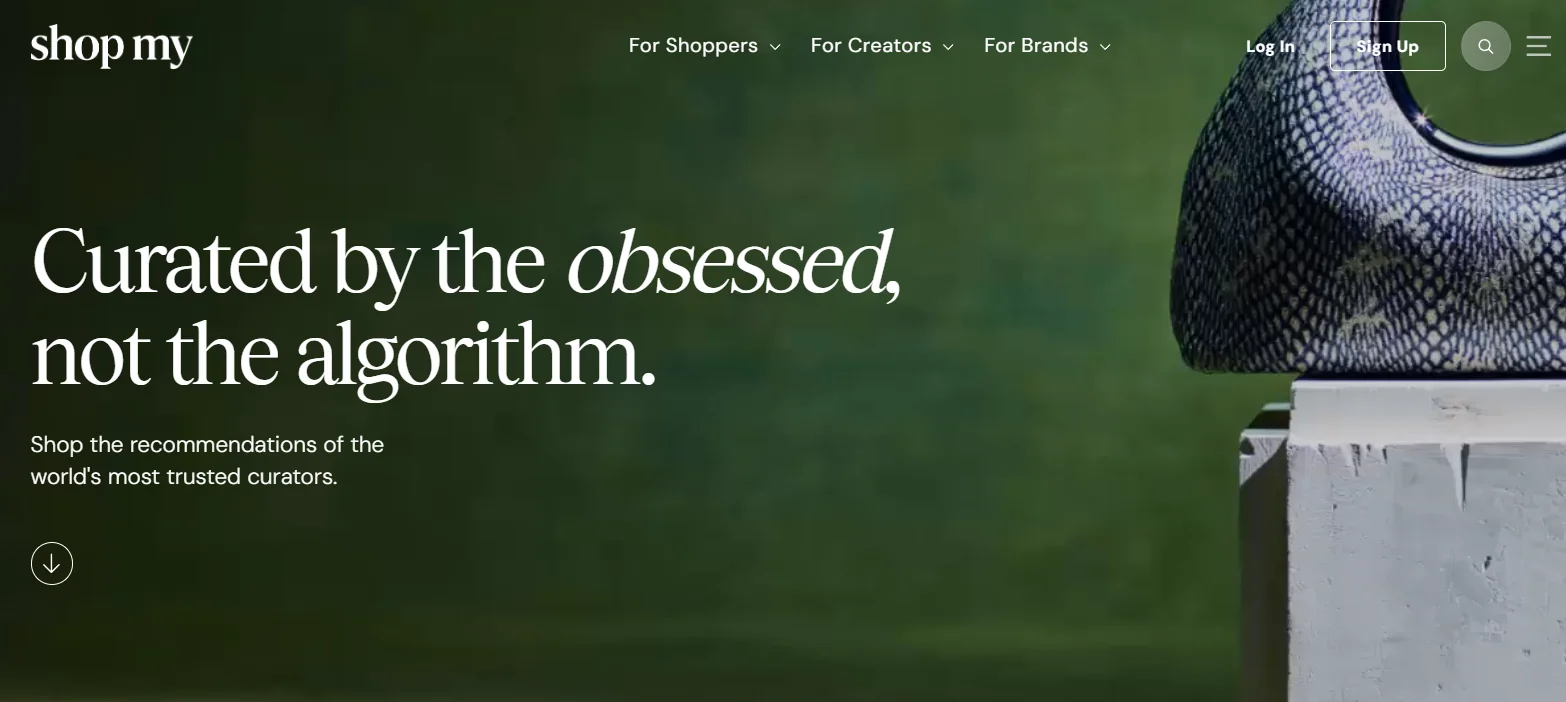
ShopMy is the closest philosophical match to LTK on this list. Creators build curated storefronts, brands plug into the network, and commissions flow from creator-driven sales. Fashion, beauty, and lifestyle brands make up most of the roster, which is the same territory LTK dominates.
The reason brands switch is access and price. ShopMy's entry plan starts at $399 per month, versus a five-figure annual commitment on LTK Connect. Its Lookbooks feature also handles gifting properly: brands build campaigns that sync with Shopify inventory and auto-place zero-dollar orders, and creators pick what fits their aesthetic instead of receiving a random box. That approach pairs well with structured affiliate influencer partnerships where the creator relationship starts with product and grows into commission.
Watch the fee stack, though. ShopMy charges up to 2.9% of GMV on affiliate sales from direct brand partnerships and around 3.9% on subaffiliate sales routed through networks like Rakuten and CJ. Full access climbs to roughly $2,799 per month and above, and everything between the floor and the ceiling is quote-based. At $50,000 a month in creator-driven sales, the percentage fee alone outruns the subscription.
4. Aspire

Aspire, formerly AspireIQ, runs a creator marketplace where influencers apply to your campaigns, plus a full management layer on top. If what you actually like about LTK is inbound creator interest, Aspire delivers that without limiting you to one closed shopper ecosystem.
For ecommerce brands, the feature set lines up well against LTK: affiliate program management, promo code tracking, product seeding workflows, a content library with usage rights, and a strong Shopify integration. It holds a 4.6 out of 5 on G2 across 140-plus reviews, and its client list leans toward established consumer brands like Keurig, Samsung, and Dyson.
Pricing is quote-based and not cheap. Capterra lists a starting price around $2,499 per user per month, and third-party reporting puts real contracts near $2,300 per month with a 12-month commitment and an annual minimum in the high $20,000s. There is no free trial. So Aspire solves LTK's network problem but not its budget problem, which makes it a fit for brands with an existing program rather than teams testing the channel.
5. Shopify Collabs
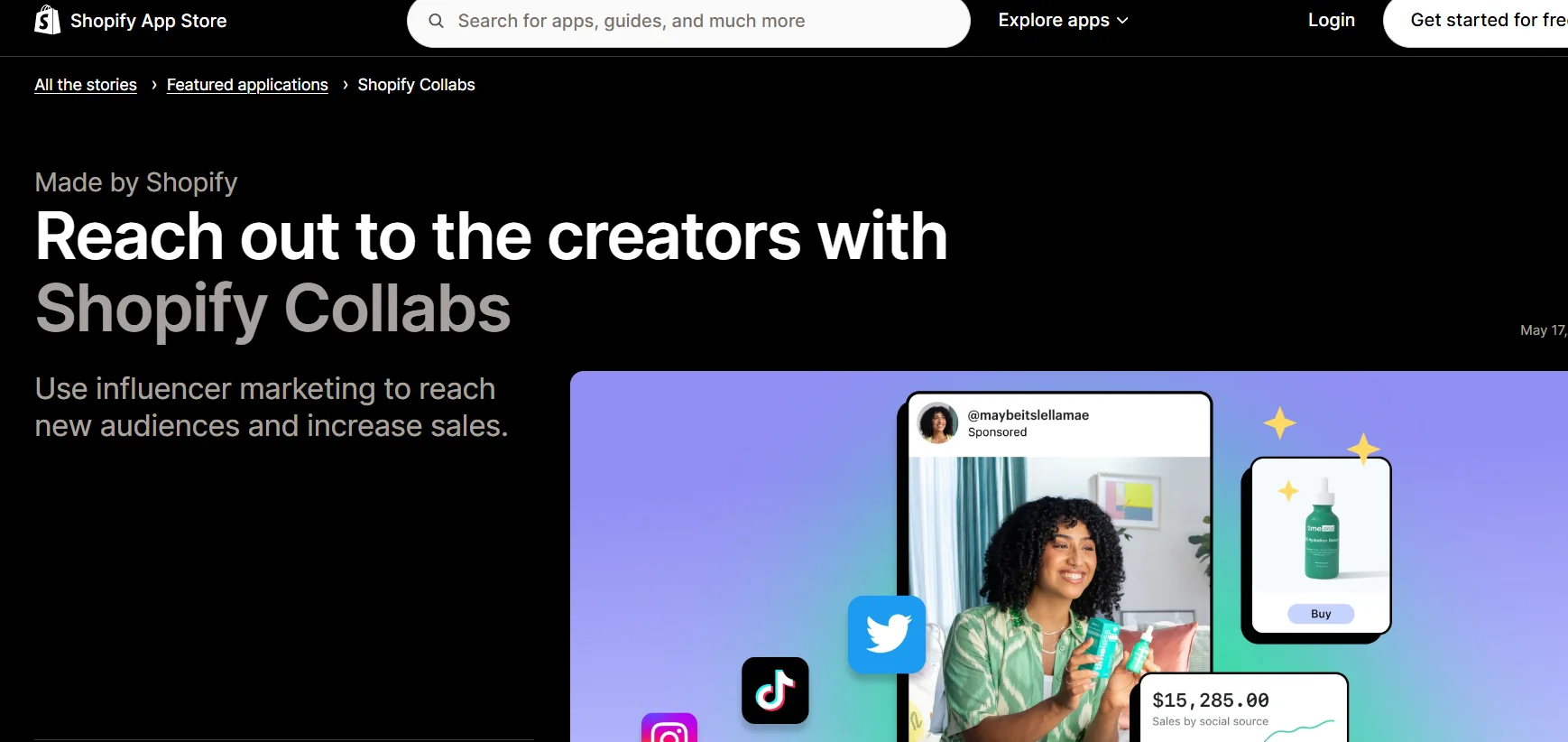
If you sell on Shopify, Collabs is the lowest-friction way to run affiliate-style creator partnerships. It lives inside your Shopify admin, so gifting, discount codes, commission tracking, and payouts all sit next to your product and order data instead of in a separate tool.
The cost model is the opposite of LTK's. There is no subscription and no annual contract. Shopify charges a 2.9% processing fee on every automatic commission payout, which means you pay only when a creator actually drives a sale. For a brand paying out $10,000 a month in commissions, that is $290. Eligibility is straightforward too: an active non-dropshipping store, a completed Collabs profile, and roughly $10,000 in trailing 12-month sales to appear in the Collabs Network. Once you know how to find influencers worth recruiting, the setup takes an afternoon.
The trade-off is depth. Discovery is limited compared to a dedicated platform, creators must be based in the US, Canada, or the UK to access the Discover page, and there is no standalone API. It is a strong starting point rather than a program you scale to hundreds of creators on.
6. impact.com
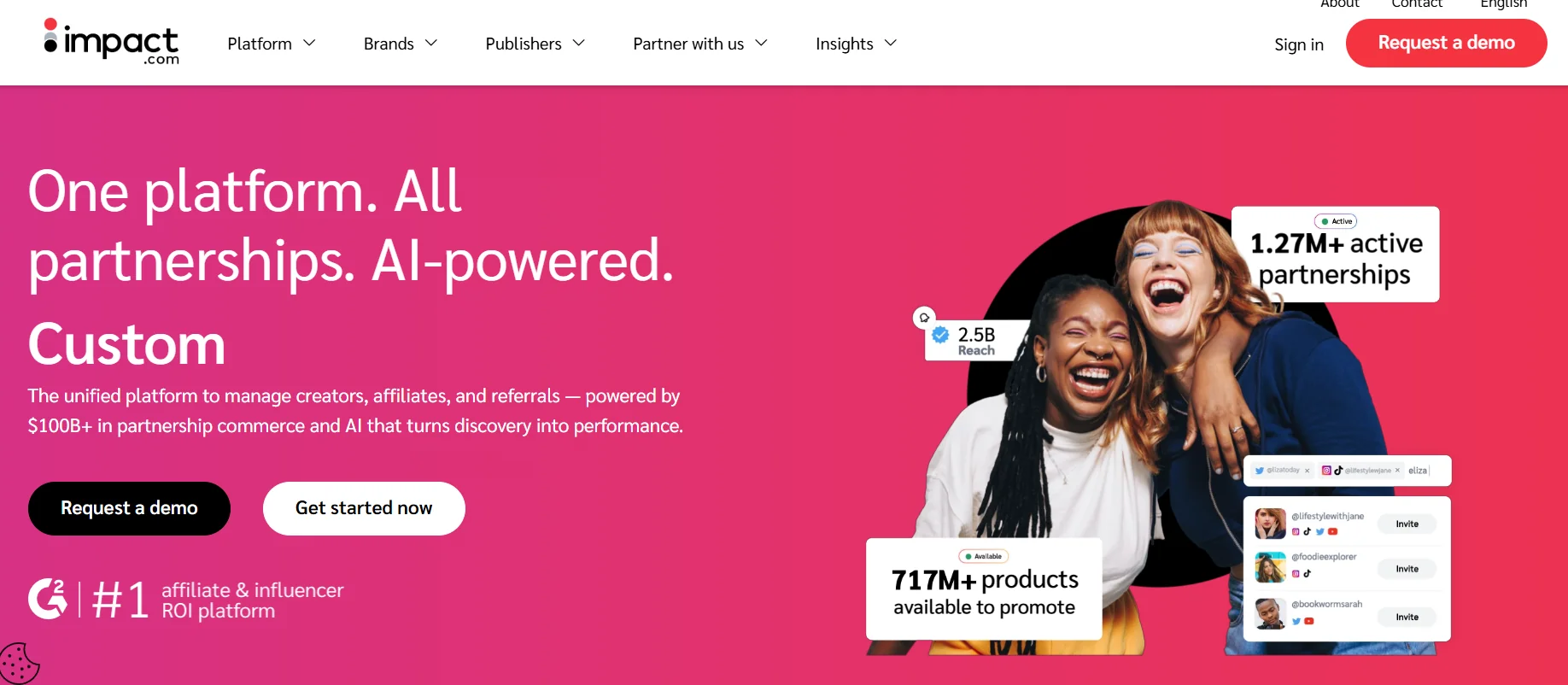
impact.com is a partnership management platform rather than a creator app, and that is precisely why brands leaving LTK end up on it. It handles affiliates, publishers, creators, and referral partners in one system, with proper contract management, tracking, and payout infrastructure behind it.
For brands that treat creator commerce as one channel inside a larger partnerships program, that consolidation matters. You get cross-device tracking, fraud protection, and a marketplace of vetted publishers and creators, plus reporting that finance teams actually accept.
Published tiers start at $30 per month on Starter, structured as $30 or 3% of monthly affiliate revenue, whichever is higher. Essential sits around $500 per month and Pro around $2,500, with enterprise scoped custom. A 2.5% transaction fee applies to every partner-driven sale on top of the subscription.
The honest limitation is complexity. impact.com is built for partnership teams, and small brands routinely find the setup heavier than the results justify in year one. If you just want creators posting and selling, this is more machinery than you need.
7. Modash

Modash exists to solve the exact thing LTK will not let you do: search and vet creators freely. Its database covers 350 million-plus creator profiles across Instagram, TikTok, and YouTube, with audience demographics, engagement data, and fake-follower signals available before you ever reach out.
That makes it the natural pick for brands that want to build shortlists on their own criteria instead of accepting whoever happens to be inside a network. Campaign tracking collects posts and Stories automatically, and the Shopify integration connects creator activity to sales data on every tier.
Essentials runs $199 per month on annual billing, or $299 monthly, and covers two seats, 300 profile analyses, 150 email unlocks, and 100 tracked creators. Performance is $499 per month annually and adds affiliate management, creator payments, and 250 tracked creators. Enterprise starts around $14,700 per year.
Two things to know. Affiliate management is not included on Essentials, so commerce-focused brands start at Performance. And the usage limits bite faster than the sticker price suggests once your team does heavy discovery.
8. LoudCrowd
LoudCrowd is built for DTC brands that want to win creator commerce revenue back from third-party platforms. Its core product is white-labeled Creator Storefronts that live on your own ecommerce site, so creators curate product bundles, pull in their Instagram and TikTok content, and earn commission without sending shoppers to a marketplace you do not control.
That is a direct answer to the LTK model. Instead of your customers shopping inside someone else's app, the transaction and the first-party attribution stay on your domain. Sony, Crocs, and boohoo are on the client list, and the platform also handles product seeding, discount codes, UGC rewards, and payouts. It works nicely alongside tactics you would use to entice influencers into a performance-based program.
LoudCrowd restructured its pricing into a modular suite in 2026. The floor is now $999 per month per product on annual contracts, with volume moving you into custom tiers. That is a real barrier for smaller brands, since the old $99 entry tier is gone. If you are not already running a meaningful creator-affiliate program, the floor will outrun the return.
9. Social Snowball
Social Snowball is an affiliate, referral, and influencer platform built for Shopify brands, with one clever mechanic at its center: every customer who buys automatically becomes a potential affiliate, complete with a referral link and a ready-made share message.
For brands that liked LTK's performance model but not its gatekeeping, that flips the equation. Instead of applying for access to a creator network, you turn your existing customer base into one. Unlimited affiliates, automated payouts across multiple methods, and fraud and code-leak protection come standard, and setup takes hours rather than weeks.
Snow Day starts at $249 per month plus 3% of affiliate-generated revenue. Blizzard starts at $899 per month with no commission fee, which becomes the cheaper option once you clear roughly $22,000 a month in affiliate revenue. Enterprise is custom quoted with the revenue share usually negotiated away.
The limitation is discovery. Social Snowball manages and pays affiliates well, but it will not help you find new creators. Most brands pair it with a discovery tool or a marketplace.
10. Levanta
Levanta is the pick for brands whose creator revenue does not live on their own site. It runs one affiliate and creator program across Amazon, Shopify, and Walmart, which is a channel mix LTK simply does not cover.
The Amazon angle is the real differentiator. Levanta tracks conversions on direct seller relationships and helps enrolled sellers qualify for Amazon's Brand Referral Bonus, which returns an average 10% on sales driven by off-Amazon traffic. Brands can set commissions at the product level, recruit from Levanta's marketplace or invite outside creators, send samples, and automate monthly payouts. If you are already thinking about how to promote your affiliate program to creators, the multi-marketplace coverage is a genuine advantage.
Pricing has moved toward quote-based, with the current pricing page routing to sales. Recent public reporting describes a standard tier around $150 per month plus a 5% fee on affiliate sales and a Gold tier at $750 per month where the fee drops to 3.5%, typically on a termed annual contract.
The common complaint is timeline. Several reviewers report thin returns in the first six months, and low-margin or niche products struggle to attract affiliates once commissions and platform fees are stacked.
Which LTK Alternative Should You Pick?
You do not need the platform everyone in your category uses. You need the one that matches your size, your channels, and how much of the workflow you actually want to own. If LTK's shopper app is driving real inbound revenue for you, keep it. If you are paying five figures a year for capped creator offers inside a closed network, that math deserves a second look.
For brands early in the channel, start where the barrier is lowest and the creators come to you. Afluencer's Marketplace plan runs $49 per month, and posting a Collab puts your offer in front of verified creators who apply directly instead of ignoring your cold emails. Once your program grows past a few dozen creators and you need attribution, outreach automation, and payouts in one place, that is the point to move up to a full platform.
Still narrowing the field? Our roundup of the best influencer marketing platforms breaks down the wider category by budget and use case.