.svg)
.png)
10 Best Popular Pays Alternatives in 2026
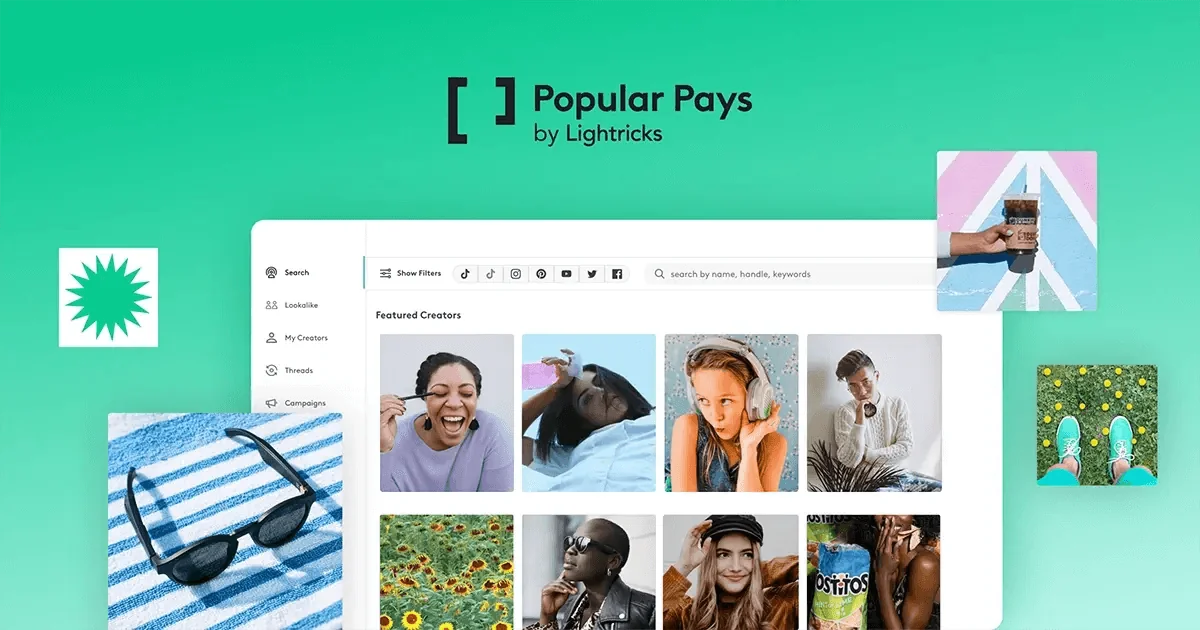
Most brands start looking for Popular Pays alternatives for one of two reasons: the price, or the fact that you cannot see the price until you sit through a demo. Popular Pays, now part of Lightricks, does not publish a pricing page. Third party sources consistently put its self serve tier at around $999 per month, with a custom quoted Enterprise plan on top of that. For a brand that mainly needs a steady flow of creator content, that is a big commitment to make before you have seen a single deliverable.
The friction shows up elsewhere. Its creator database sits around 100,000 profiles across Instagram, TikTok, Facebook and YouTube, which is small next to discovery focused tools. Audience data stays fairly basic, so vetting for fake followers takes extra work. And if you only need a handful of videos a month, you are paying platform fees for capacity you never touch. Whether you find influencers yourself or lean on a marketplace, there are cheaper ways to get there, especially if you work with smaller creators. Our micro-influencer guide breaks down why that tier tends to punch above its follower count.
Here are the 10 best Popular Pays alternatives to look at this year, from marketplaces you can start with today to full stacks built for scale.
Top Popular Pays Alternatives in 2026
1. Afluencer
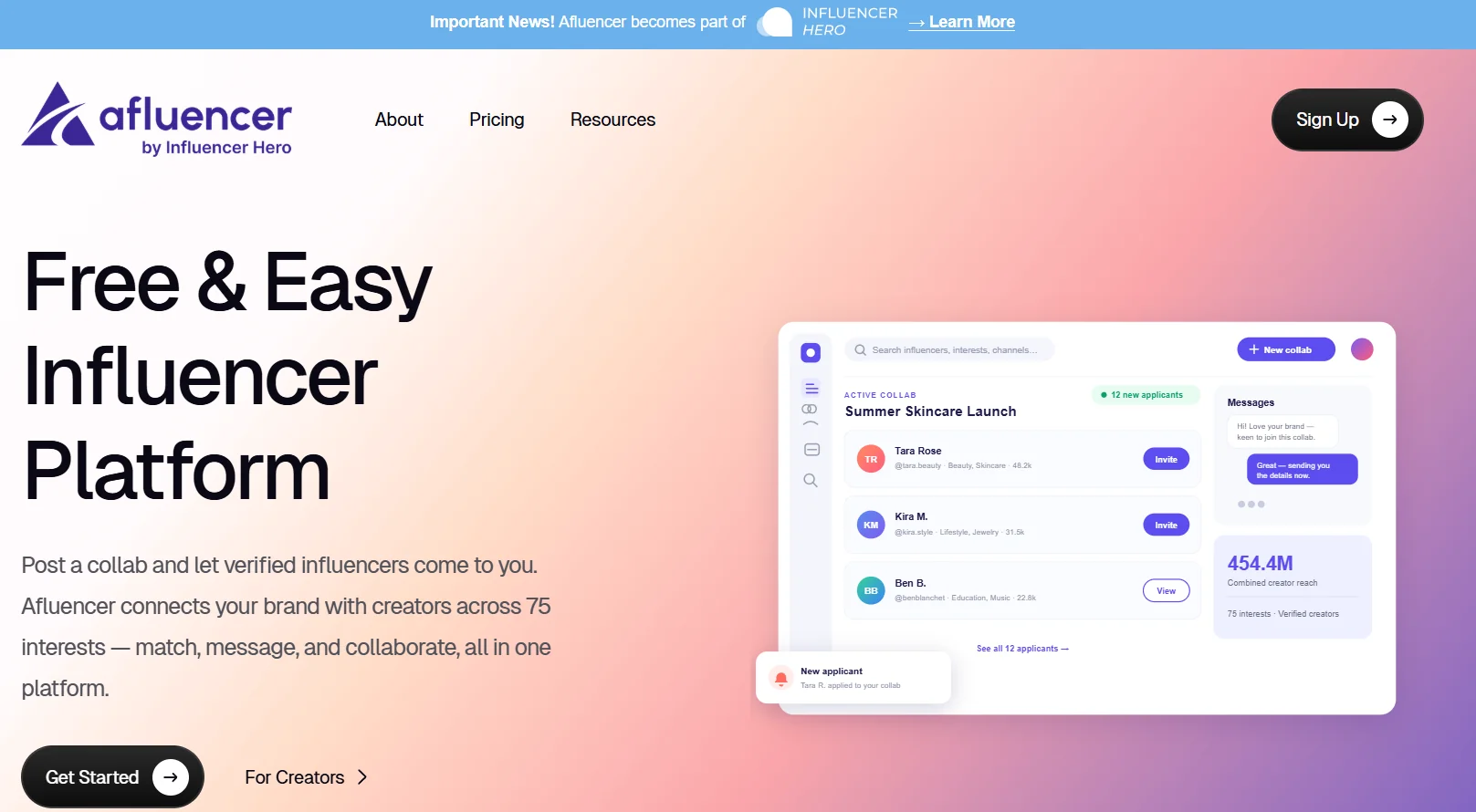
Afluencer flips the sourcing model. Instead of paying for access to a database and then chasing creators, you post a Collab describing what you need, and verified influencers and UGC creators apply to it. You review who raised their hand, check their profile and engagement, and start the conversation from there.
That is the core reason it works as a Popular Pays alternative. Popular Pays asks you to commit to a platform contract before you know how many creators will actually be a fit for your niche. On Afluencer, the applications tell you that in the first week. Filters for niche, location, platform, follower count and engagement narrow things down, and the Instagram integration matches your account with creators whose audience actually overlaps with yours.
It is built for the brands that traditional platforms overlook: DTC and Shopify sellers, small teams, and anyone running gifting or seeding campaigns rather than six figure influencer programs. You can ship product, collect content, and reuse it across your channels without hiring a campaign manager to run it.
On pricing, Afluencer starts at $49 per month on the Marketplace plan, which includes 60 invitation credits a month, premium influencer filters and support by phone, email and live chat. From there, the Standard plan at $649 per month adds 1,000 reach outs, product shipping and influencer payments, and the Pro plan at $1,049 per month moves you up to 5,000 reach outs, a dedicated account manager and three or more seats.
The positioning is deliberate: for brands just getting started, Afluencer is the ideal choice, and brands that want to scale and work with a lot of creators are better served by Influencer Hero.
Two AI tools speed the whole thing up. CreatorGPT answers strategy questions and returns creator suggestions from Afluencer's own directory instead of generic advice, and the Collab Finder matches creators to live opportunities so your post gets in front of the right people faster.
The honest limitation: Afluencer is a sourcing and collaboration platform, not an enterprise analytics suite. If you need deep audience forensics, multi brand reporting or a managed content team, you will outgrow it. For everyone else, you can see the plans and post your first Collab the same day.
2. Influencer Hero
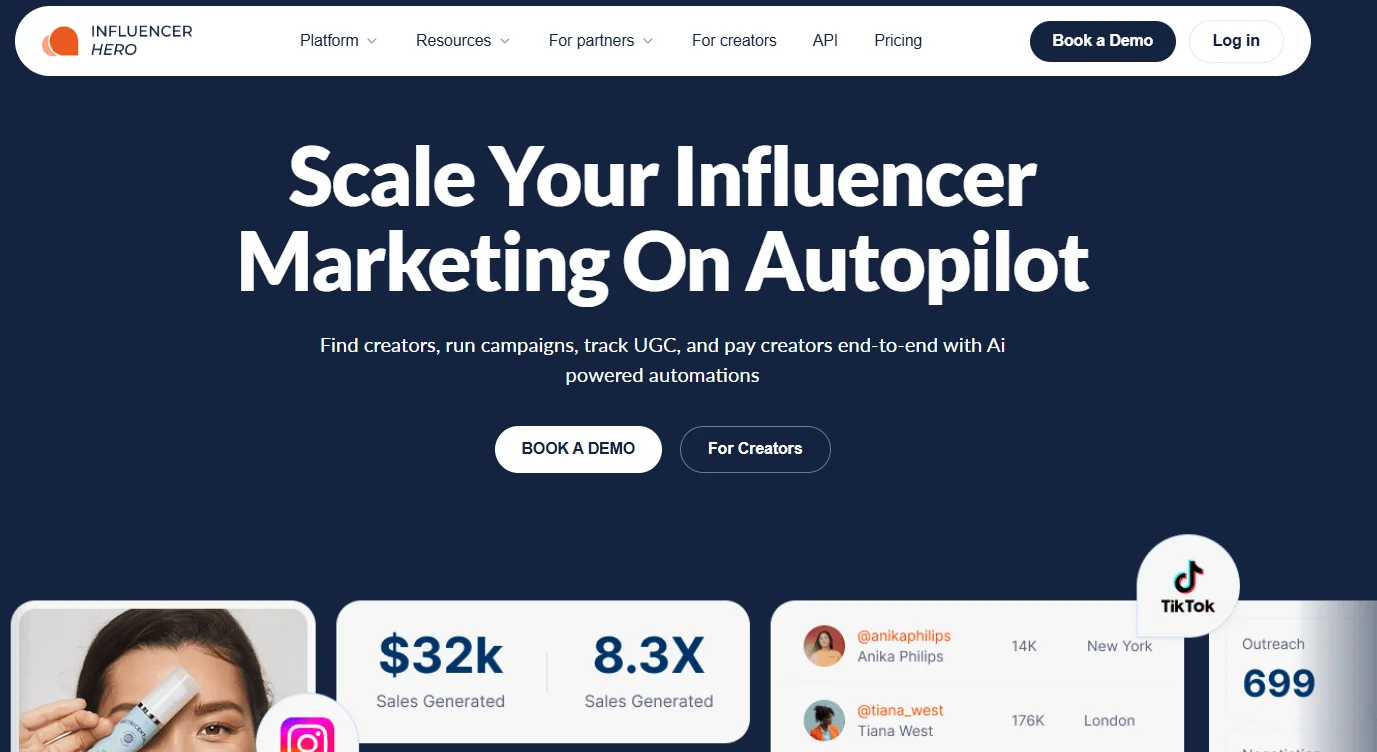
Influencer Hero is the pick for brands that want everything Popular Pays does around content, plus the discovery and outreach layer it does not really cover. It runs across Instagram, TikTok and YouTube, and it is built for DTC and ecommerce teams scaling past a few campaigns a quarter.
Where it competes most directly with Popular Pays is content. Influencer Hero collects UGC automatically, stores it in a searchable library with AI powered UGC search, and keeps usage rights attached to each asset, so your paid social team can pull creator content without chasing anyone for permission. Product gifting runs through native Shopify and WooCommerce integrations, so seeding, order sync and shipping are handled inside the platform rather than in a spreadsheet.
The rest of the stack is where the gap widens. Discovery includes fake follower detection, lookalike search, brand follower detection, AI matching and a Chrome extension for vetting profiles on the fly. Outreach is automated with AI personalized emails and follow ups. A built in CRM tracks every conversation, and affiliate links, automated creator payments and ROI attribution close the loop from content to revenue.
Pricing is public, which is a real contrast with Popular Pays: Standard at $649 per month, Pro at $1,049 per month and Business at $2,490 per month, with custom and agency plans above that. No sales call required to see a number.
The caveat is that it is a lot of platform. There is no free trial, and if you only want six UGC videos a quarter, most of what you are paying for will sit unused. If you are running an ongoing creator program, though, it consolidates four or five tools into one. Book a demo to see how it maps to your workflow.
3. Insense
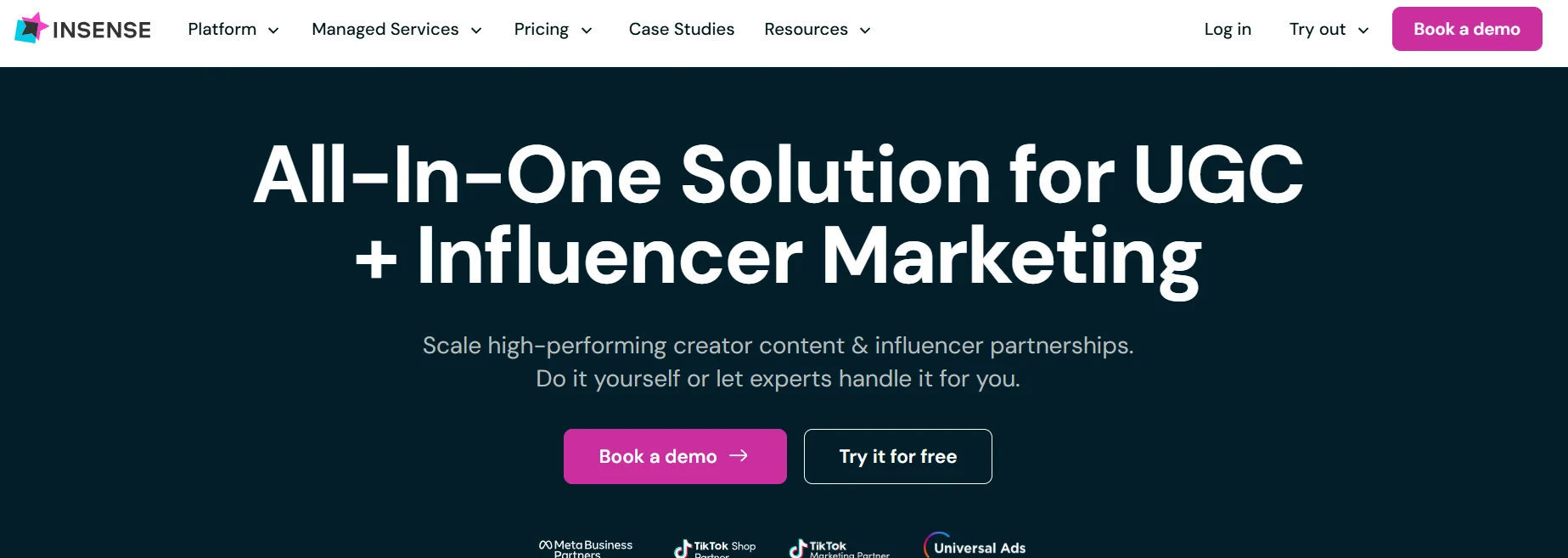
Insense is the closest thing to Popular Pays for brands whose real goal is paid social creative. You brief a campaign, creators apply, and you license the content for ads, including whitelisting and Spark Ads from the creator's own handle. The Shopify integration handles product seeding and bulk shipping, which matters once you are sending units to dozens of creators.
It works as an alternative because it is more transparent about what you get at each tier, and because the ad licensing side is stronger. Brands running creative testing at volume get more usable variations per dollar than they typically do from a managed content service.
Pricing runs from a $650 one month trial, then self serve plans from $500 per month billed quarterly, or roughly $400 per month billed annually. Managed service packages start around $1,800 to $2,800 per month depending on output.
The catch is stacked costs. Creator payments sit outside your subscription, and Insense adds a marketplace fee of 7% to 20% on every payment depending on plan. There are also no month to month plans outside the paid trial, so budget the full picture before you sign.
4. Billo
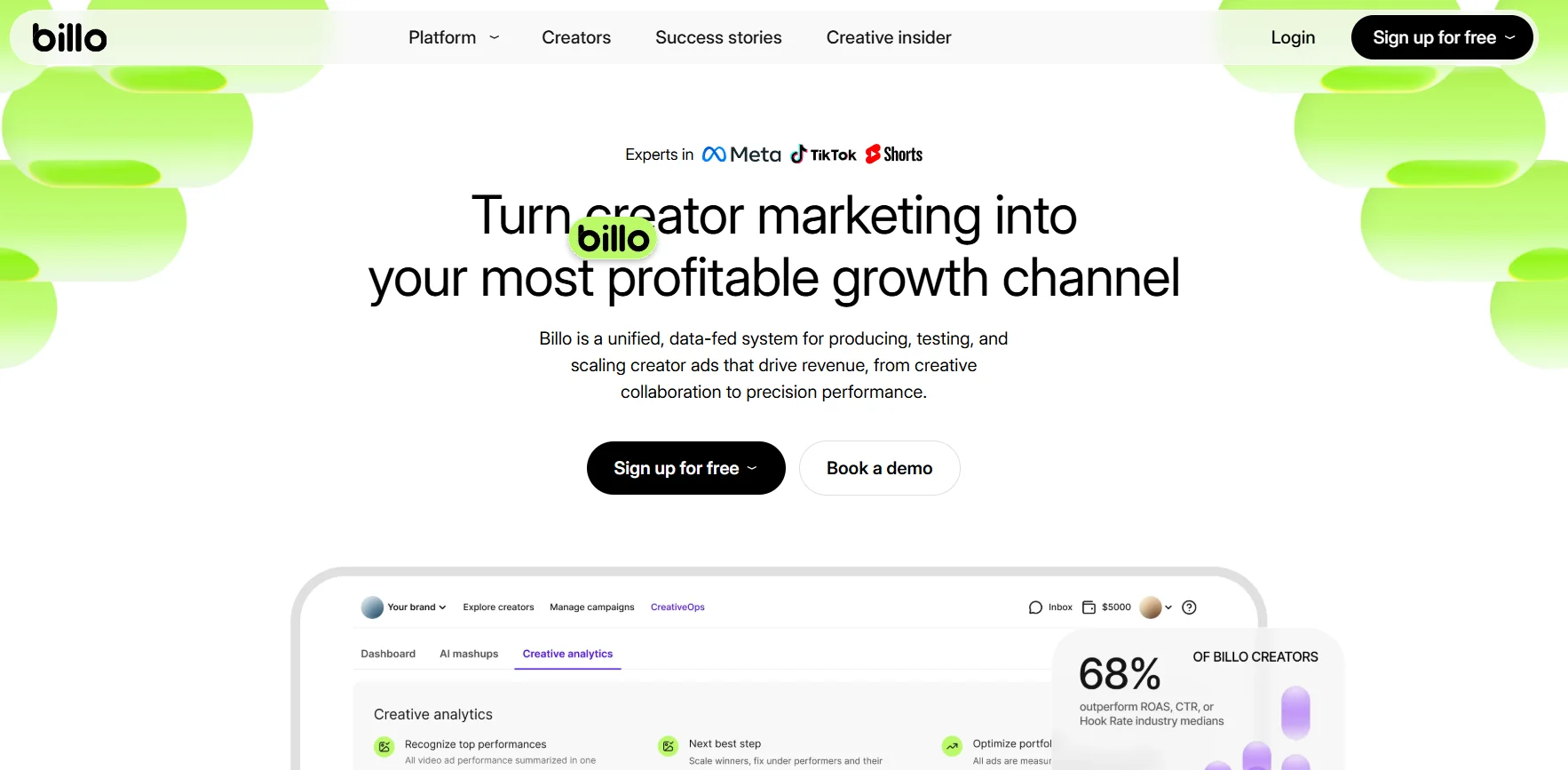
Billo strips the model down to one thing: short form product video, paid for per video. You submit a brief, ship the product, and get TikTok style content back from a vetted pool of creators across the US, Canada, the UK and Australia. No subscription, no seats, no annual commitment.
That makes it the cleanest answer to a $999 per month platform fee. Video pricing starts around $99, so a brand testing creator content for the first time can spend a few hundred dollars instead of committing to a year. It pairs well with product seeding, since you can fill gaps with paid deliverables when organic gifting does not produce enough assets.
The trade off shows up at volume. Per video pricing that looks cheap at five videos gets expensive at fifty, and add ons like rush delivery push the effective cost closer to $150 per asset. Billo also will not help you run an influencer program: creators produce content for you, they do not post it to their own audiences.
5. Trend.io
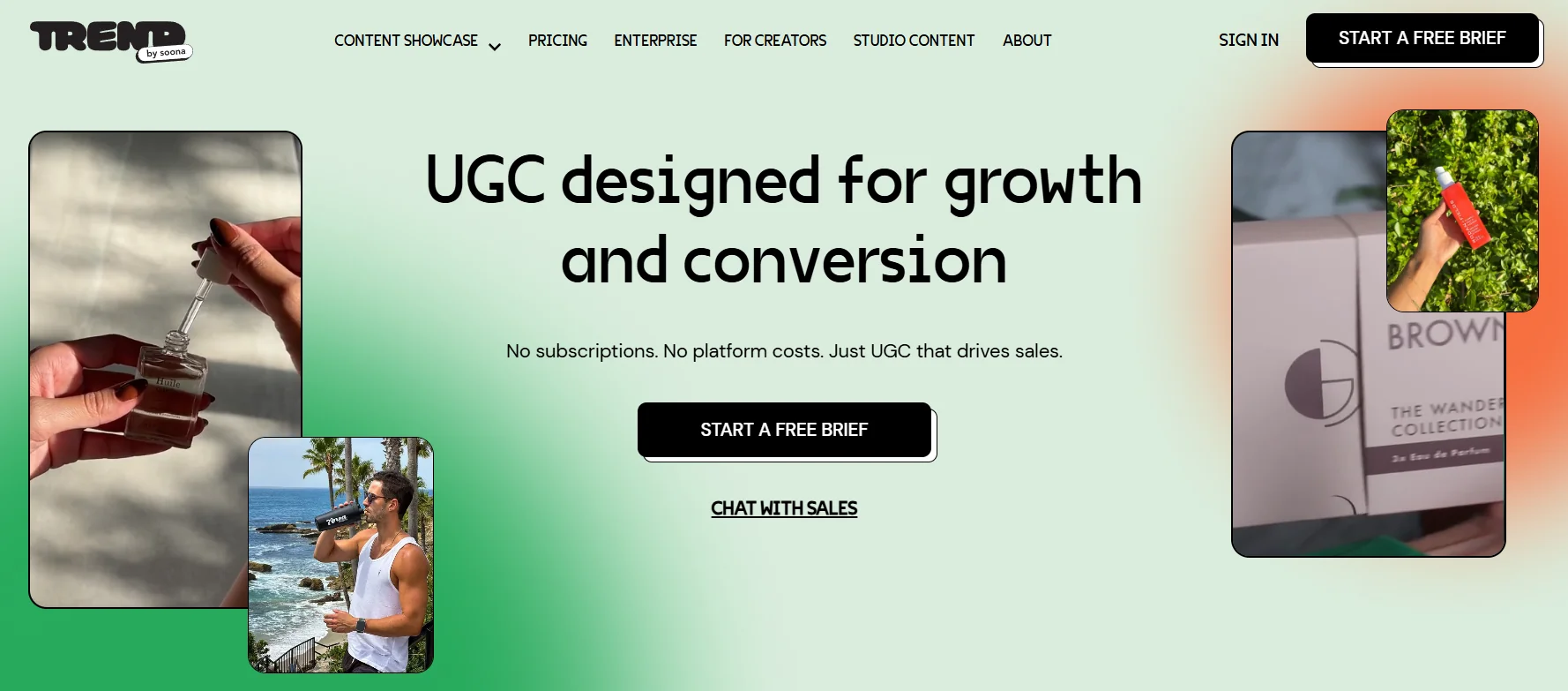
Trend.io sits between a marketplace and a managed service. You post a brief, creators apply, and the platform curates who reaches you, so vetting takes less of your week than it would on an open marketplace. Content quality is consistently one of its strongest reviewed traits, and you keep full rights to reuse videos and photos across ads, email and product pages.
For brands leaving Popular Pays, the appeal is the pricing model. There is no subscription. Packages start around $500 for roughly six videos or fifteen photos, and you buy more when you need more. Lifestyle, fashion and home brands tend to get the most out of the creator pool.
The limitation is flexibility. Packages are fixed, that $500 entry point functions as a minimum spend, and rates skew toward smaller creators, so negotiating with established influencers is harder here than on a direct marketplace. If you are also running gifting, our walkthrough of a gifting campaign covers how to keep both channels feeding the same content library.
6. Aspire

Aspire, formerly AspireIQ, is the enterprise option on this list for brands that want a large creator marketplace plus workflow automation. Creators apply to your campaigns, and the platform handles briefs, approvals, affiliate tracking and paid amplification through its social ads integrations. Aspire also runs its own agency services if you want campaigns managed for you.
It replaces Popular Pays for teams that liked the managed model but wanted more creator volume and better campaign infrastructure behind it. The UGC library and image search tools are genuinely strong once your program produces content at scale.
Pricing is where it gets frustrating. Aspire does not publish rates, and reported contracts for mid market programs run upward of $15,000 per year on an annual commitment. If your reason for leaving Popular Pays was demo gated pricing, Aspire will feel like the same problem in a different wrapper.
7. GRIN

GRIN is the ecommerce operations pick. It integrates deeply with Shopify, WooCommerce, BigCommerce and Adobe Commerce, so product seeding, order creation, discount codes and creator payments run through your actual store data instead of a parallel system. Contracts, content approvals and reporting all live in one place.
The big change is pricing. GRIN moved to transparent self serve tiers in early 2026, ending its demo only model. Published plans run from $399 to $1,799 or more per month, month to month, with a 30 day free trial. Compared with a quoted $999 per month for Popular Pays, you can see exactly what you are buying and test it first.
The limitation is that GRIN is a workflow engine more than a content marketplace. It will not hand you a curated pool of creators who apply to your brief, so someone on your team still owns sourcing and outreach. Higher tiers also climb quickly once you add seats and features.
8. Modash

Modash solves the single biggest weakness people cite in Popular Pays: creator data. Its database covers more than 250 million profiles across Instagram, TikTok and YouTube, with audience demographics, engagement and fake follower analysis on every profile. If your last campaign underperformed because a creator's audience was not what it looked like, this is the fix.
Pricing starts at $199 per month for Essentials, with a 14 day free trial and no annual contract. That makes it the cheapest serious way to vet creators before you spend on content.
It is also the narrowest tool here. Modash does not include contracts, content approval flows or licensing, so you manage those over email and external documents. It also covers three platforms only, so LinkedIn, Twitch and Pinterest programs need something else. Many brands pair it with a marketplace rather than treating it as a replacement.
9. Collabstr
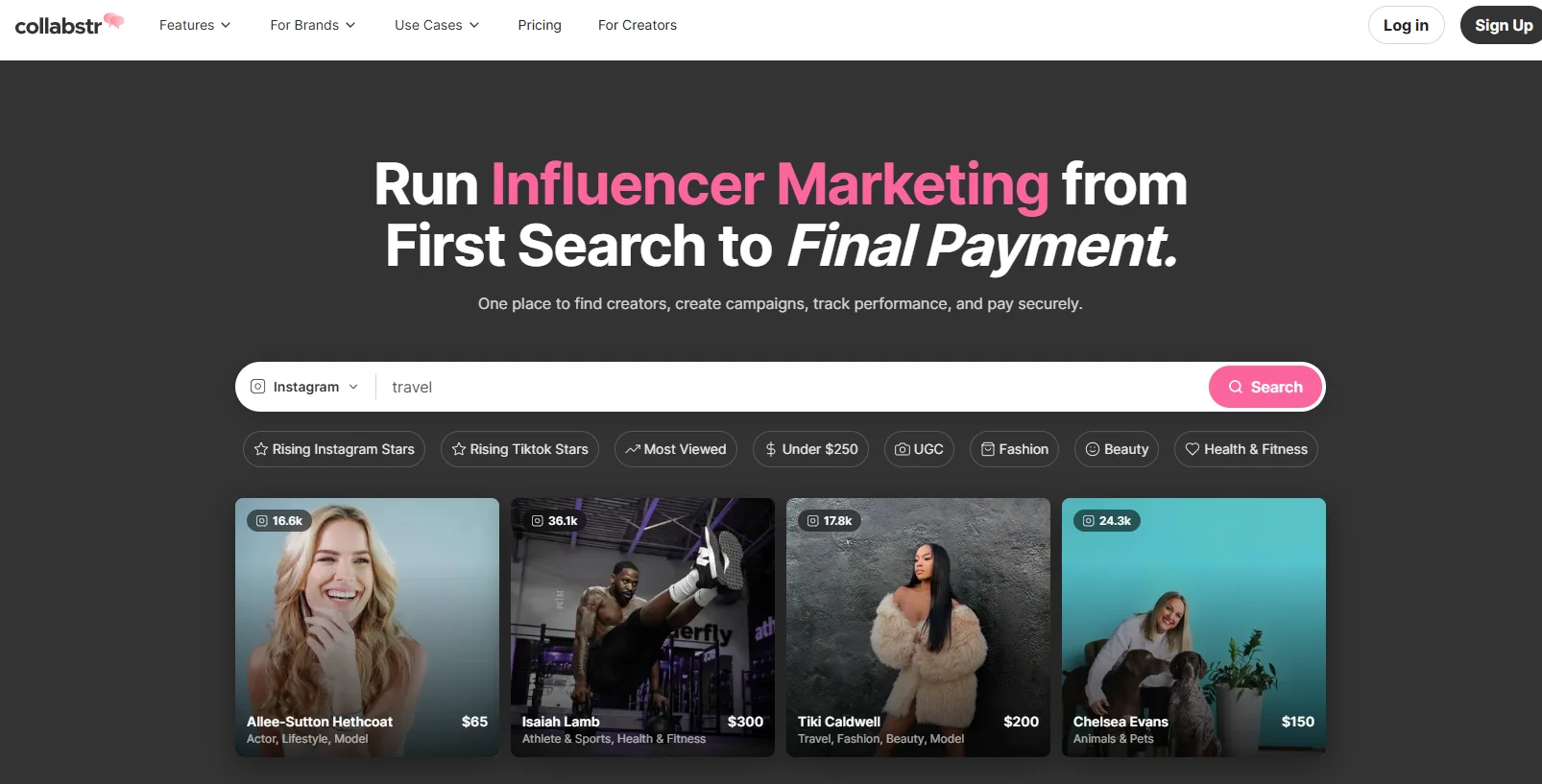
Collabstr works like a freelance marketplace for creators. You browse profiles across Instagram, TikTok, YouTube and LinkedIn, see each creator's self set price and portfolio, and book them directly. No brief matching delay, no bidding, no sales call.
Against Popular Pays, the pitch is transparency. You know the exact cost of every deliverable before you commit, and rates span a wide range, roughly $50 to $1,000 or more per deliverable depending on the creator. Browsing is free, so you can size a campaign budget in an afternoon. If you are still mapping the landscape, our roundup of influencer discovery tools is a useful companion.
The trade off is that you do all the vetting. There is no curation layer, so quality varies creator to creator, and campaign management stops at messaging and booking. For five creators that is fine. For fifty, the admin adds up fast.
10. Cohley
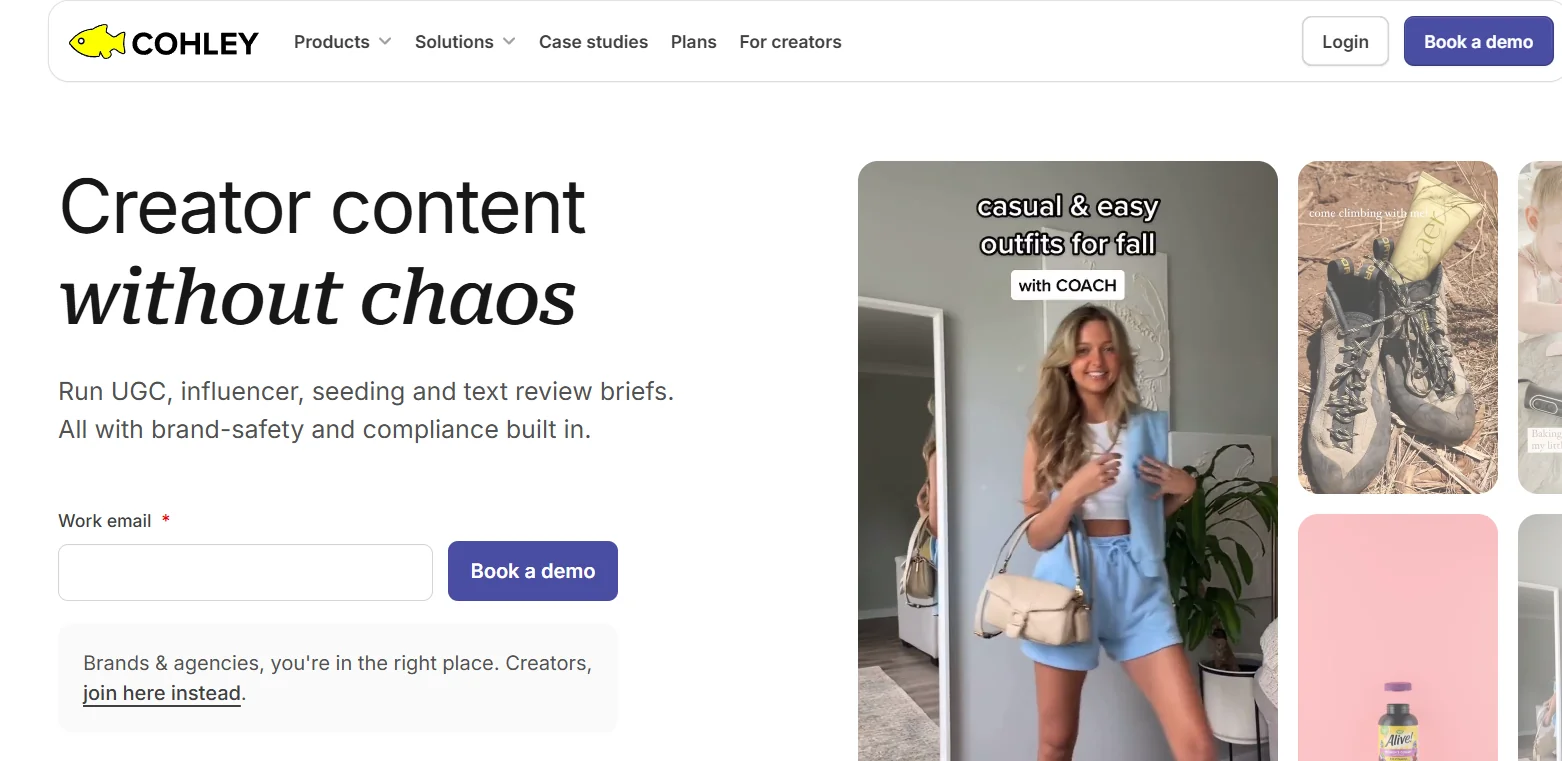
Cohley is the most philosophically similar platform on this list. It is a content engine first, connecting brands with vetted creators, photographers and videographers to produce photos, video and written reviews, then pushing those assets into ecommerce channels through integrations with Shopify, BigCommerce, Bazaarvoice, PowerReviews and Yotpo.
Brands pick it over Popular Pays when they need higher production quality and content that feeds product detail pages, not just social. Usage rights, brand safety review and dedicated strategists are built into the model, which clears most enterprise procurement hurdles.
Pricing is custom and not published, with reported per asset costs around $200 to $500 or more and annual contracts as the norm. So if you are leaving Popular Pays because of cost and opacity, Cohley solves the quality problem but not the budget one. It fits enterprise and larger mid market brands, not early stage teams.
Which Popular Pays Alternative Should You Pick?
There is no single replacement for Popular Pays, because Popular Pays bundles two different jobs: sourcing creators and producing content. Once you separate them, the decision gets easier. If you need ad creative on a budget, Billo or Trend.io will get you there for a fraction of a platform contract. If you need better creator data, Modash costs less than a fifth of what you were paying. And if you need the whole program in one place, Influencer Hero or GRIN covers it with pricing you can actually see.
For brands earlier in the journey, the smartest move is usually to start smaller than you think. Post a Collab on Afluencer, see who applies in your niche, run a gifting campaign, and build a content library before you sign anything annual. Ask CreatorGPT what your first campaign should look like, then get your Collab live and let creators come to you.
Once your program outgrows that and you are managing dozens or hundreds of creators, Influencer Hero is the natural next step. If Instagram is your main channel, our guide on how to find influencers on Instagram is a good place to start.