.svg)

.png)
- 10 Best Influencer Reporting Tools in 2026
- The Top 10 Influencer Reporting Tools for Brands in 2026
- 1. Afluencer
- 2. Influencer Hero
- 3. Modash
- 4. GRIN
- 5. HypeAuditor
- 6. Keyhole
- 7. Traackr
- 8. Later
- 9. CreatorIQ
- 10. Sprout Social
- How to Choose the Right Influencer Reporting Tool in 2026
- Turn Your Campaigns Into Numbers You Can Defend
10 Best Influencer Reporting Tools in 2026
Reach and likes look great in a screenshot. They don't answer the one question your boss actually asks: did this make money?
That's what a reporting tool is for. It replaces the spreadsheet-and-screenshot scramble with automated dashboards that tie each creator to real clicks, conversions, and revenue. Done right, it turns "the campaign felt successful" into a number you can defend, which is the whole point of learning how to measure influencer ROI.
We compared the top 10 on price, what they actually measure, and who they fit. The list runs roughly from accessible all-in-one platforms to specialized enterprise measurement suites. Let's break them down one by one.
The Top 10 Influencer Reporting Tools for Brands in 2026
Reporting tools split into a few camps. Some bundle measurement into a full campaign platform. Others are dedicated analytics suites built to benchmark and prove ROI. A few live inside broader social management software. Here's where each one fits and what it costs.
1. Afluencer
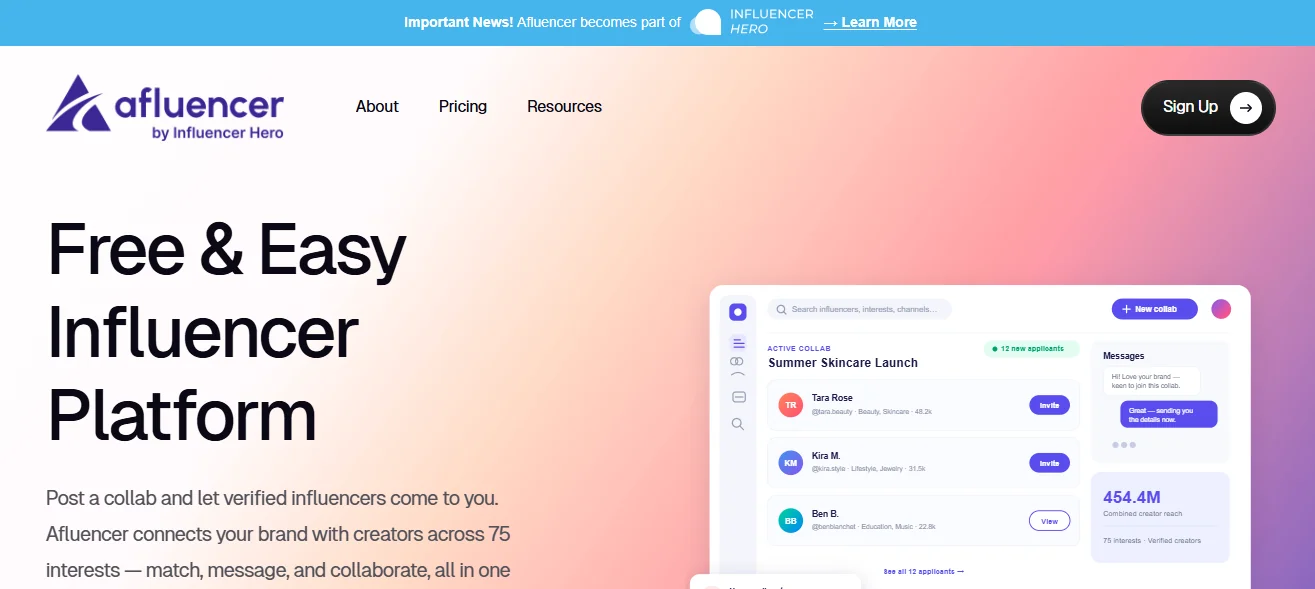
Afluencer keeps your reporting where your campaigns already live. It's a verified creator marketplace with 40,000+ opted-in influencers across 75 interests, and its dashboard tracks every collab, application, message, and relationship in one place. For brands that want to run and measure campaigns without stitching tools together, that single view is the draw.
The numbers: The brand plan is free, with no credit card and no commitment. You get the creator directory, unlimited Collab posts, unlimited applicants, and campaign tracking built in. Paid tiers are reported at around $49/month (VIP), $99/month (Concierge), and $199/month (Boss) for more outreach and management tools. Confirm current pricing on the live page before you budget.
Afluencer's edge for reporting is context: because creators apply to you and communicate in-platform, your campaign activity and results sit together instead of scattered across inboxes and sheets. Two AI tools help you plan and read performance: CreatorGPT for strategy and metric guidance, and the Afluencer Collab Finder for matching. Ready to run measurable campaigns without the spreadsheet? Start free on Afluencer, chat with CreatorGPT for what to track, or try the Collab Finder to get matched fast.
2. Influencer Hero
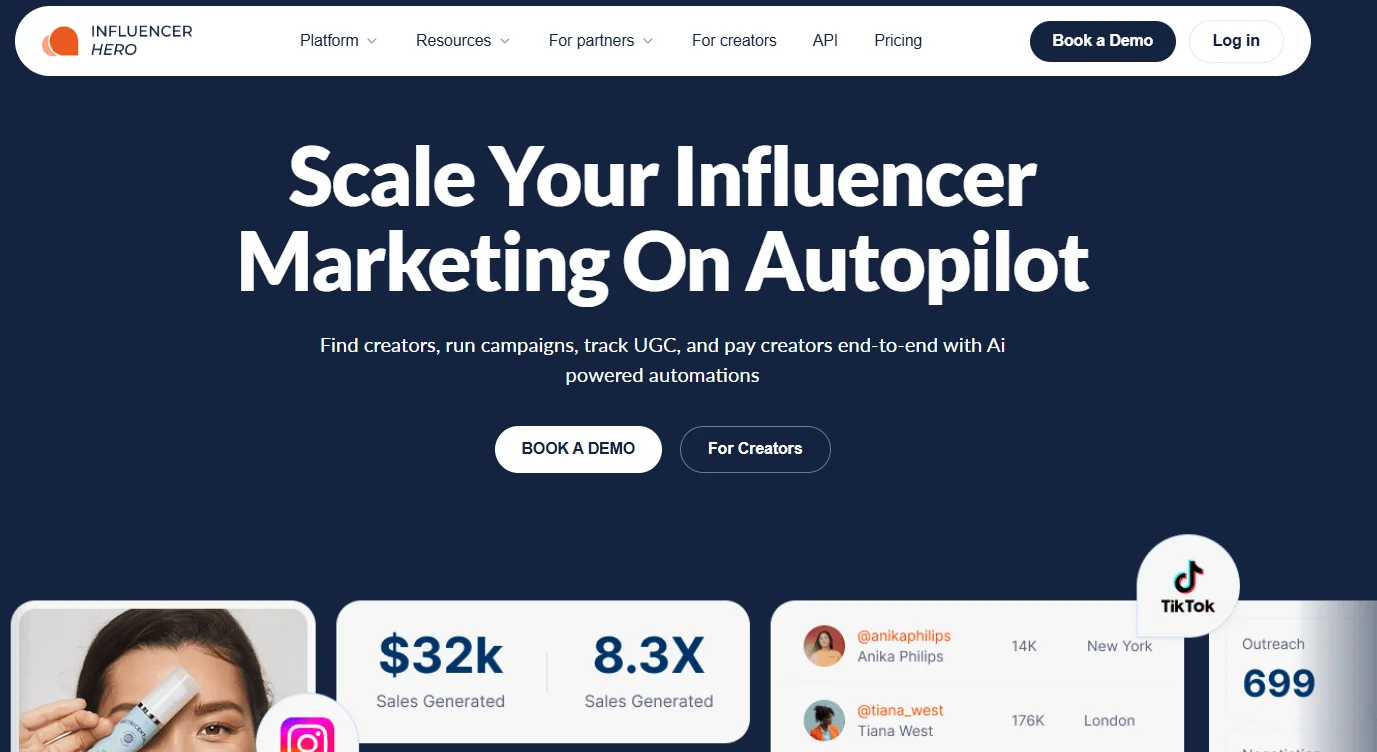
Influencer Hero connects spend to revenue, not just engagement. It's an all-in-one platform across the major social channels, and its reporting layer ties each creator and campaign to clicks, conversions, and sales through native Shopify and WooCommerce integrations — part of a broader library of 45+ platform integrations. For brands that want attribution built into the workflow rather than stitched together after the fact with UTM spreadsheets, it's a strong pick.
The numbers: Standard starts at $649/month (up to 1,000 creator contacts), Pro at $1,049/month, and Business at $2,490/month. All plans carry a 3-month minimum commitment, and there's no free plan or self-serve trial — you book a demo to get pricing confirmed and start. Verify current rates directly before budgeting, as tiers and caps shift.
Reporting strength: per-creator and per-campaign ROI dashboards, with affiliate links, promo codes, and revenue attribution live from the entry-level Standard plan — not gated behind a higher tier. If all you need is a measurement layer bolted onto influencer relationships you already manage elsewhere, this is more platform (and more cost) than that buyer needs. But for teams running creator marketing as an actual revenue channel — where attribution decides which creators get rebooked — that's the trade they're making on purpose.
3. Modash

Modash pairs a huge discovery database with solid campaign tracking. It indexes 350M+ profiles across Instagram, TikTok, and YouTube, then monitors content and ties creator activity to sales through its Shopify integration. For mid-market brands that want to find, track, and measure in one place, it's a practical fit.
The numbers: Modash publishes pricing, which is rare here. Essentials starts at $199/month on annual billing ($299 monthly), Performance runs $499/month annually ($599 monthly), and Enterprise is custom. There's a 14-day free trial with no card required. Confirm figures on the live pricing page.
Modash's reporting covers content monitoring, engagement, and Shopify sales tracking, which is plenty for most growing programs. The honest caveat: it's discovery-first, so its dashboards are lighter than a dedicated analytics suite built purely for measurement. If you want big discovery plus everyday tracking at a transparent price, it delivers.
4. GRIN

GRIN is built for ecommerce, and its reporting reflects that. It connects creator activity directly to store revenue through Shopify, WooCommerce, and Magento, so you see which influencers drove actual sales, not just impressions. For DTC brands that live and die by attributable revenue, that closed loop is the point.
The numbers: GRIN now lists tiers reported at $399/month (Lite), $699/month (Essentials), and $1,149/month (Growth), plus custom enterprise contracts that third-party sources put around $25,000/year and up. There's a 30-day free trial. Since figures vary by source and deployment, confirm directly with GRIN.
The reporting suite covers real-time campaign performance, a Report Builder on higher tiers, sales tracking, and social listening. The honest caveat: reviewers flag that you can't fully customize which metrics you collect and report, and the full feature set gets expensive. For revenue-focused DTC reporting, though, GRIN is purpose-built. It also handles affiliate and discount-code tracking natively.
5. HypeAuditor
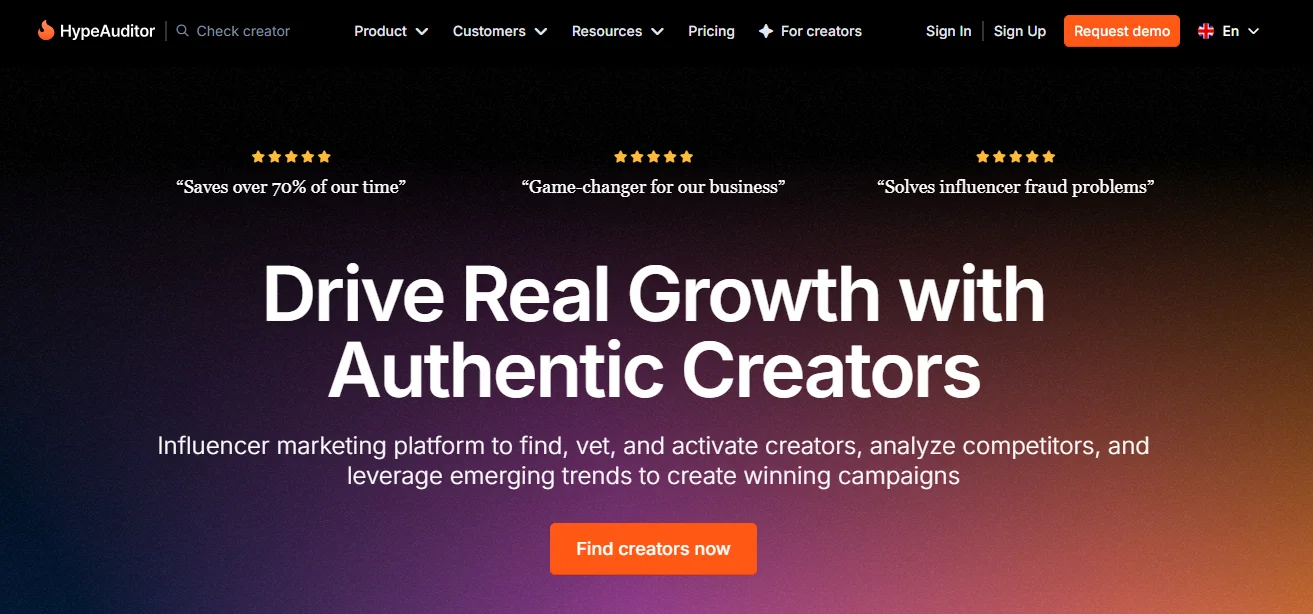
HypeAuditor is known for fraud detection, but its reporting is a real strength. It offers 35+ analytics reports, campaign tracking, EMV, competitor benchmarking, and white-label reporting that agencies use to present polished results to clients. When you need to prove audience quality and campaign impact in one deck, it's hard to beat.
The numbers: Pricing is mostly sales-led. Third-party sources report Basic around $299/month billed annually and Pro around $499/month, with Enterprise quoted on request. There's a limited free version plus free tools. Because the public page is largely a demo request, confirm your real cost directly.
The white-label reporting and audience-quality data make HypeAuditor a favorite for agencies and vetting-focused teams. The honest caveat: pricing is opaque and usage-metered, so limits vary plan to plan, and the tool leans more toward analysis than campaign execution. For client-ready reports backed by strong data, it's excellent.
6. Keyhole

Keyhole is the real-time specialist. It tracks hashtags, keywords, and campaigns as they happen, with share-of-voice, sentiment analysis, influencer identification, and one-click reports. For live events and time-sensitive launches where you need numbers now, it's built for exactly that.
The numbers: Plans are reported at $179/month (Professional, 3 trackers), $539/month (Corporate, 10 trackers), and $999/month (Enterprise, unlimited trackers). There's a 14-day free trial but no free plan. Confirm current pricing on Keyhole's site, since a tracker is any account, hashtag, or keyword you monitor.
Keyhole's real-time dashboards and shareable reports make campaign measurement fast and clear. The honest caveat: it's analytics-only, so there's no scheduling, outreach, or CRM, and it skips Pinterest and LinkedIn. Tracker limits also push cost up quickly as you monitor more. For hashtag-driven campaign tracking, it's one of the sharpest options.
7. Traackr
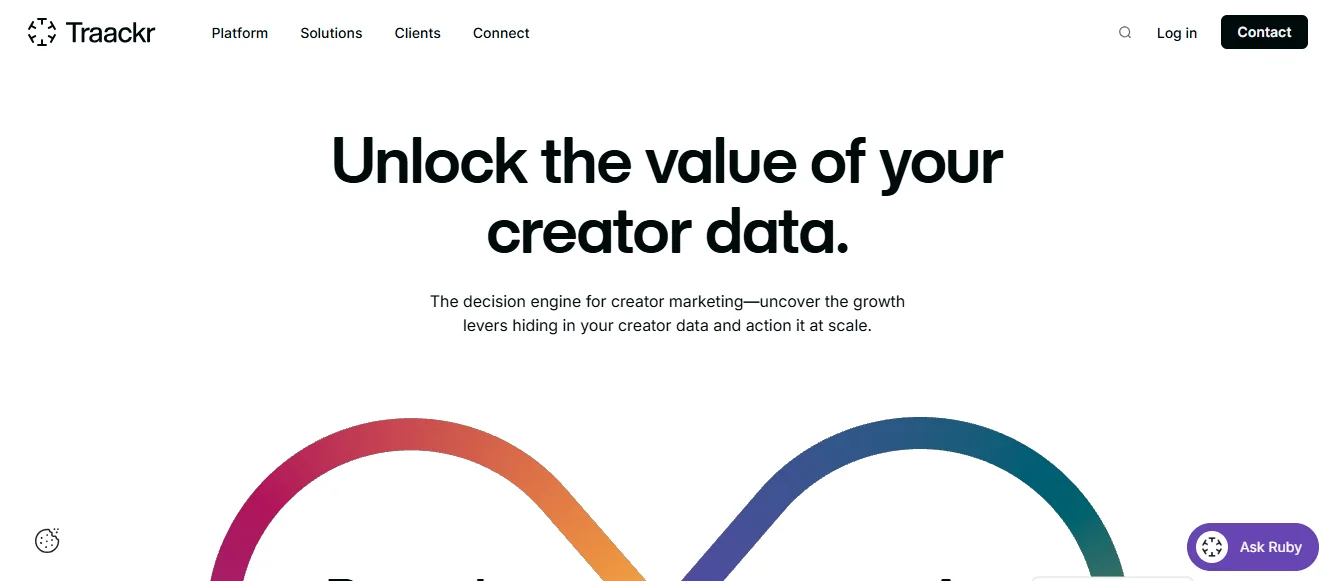
Traackr is the enterprise measurement standard. Its signature Brand Vitality Score (VIT) benchmarks your influence against competitors across earned, owned, and paid content, giving leadership a number that's harder to dismiss than raw engagement. For global teams that need standardized KPIs, it's a system of record.
The numbers: Pricing is quote-only, and it's enterprise-level. Third-party sources report roughly $25,000/year for the entry Growth plan, about $32,500/year for Standard, and $55,000+/year for Plus, with industry benchmarking as an add-on near $8,000/year. There's no free trial. Confirm scope and cost directly.
Traackr's spend-efficiency metrics (cost per engagement, cost per view) and competitive benchmarking are best-in-class for proving ROI to executives. The honest caveat: the cost and learning curve are hard to justify unless you run programs at scale. For enterprise teams reporting to a C-suite, it earns its place.
8. Later
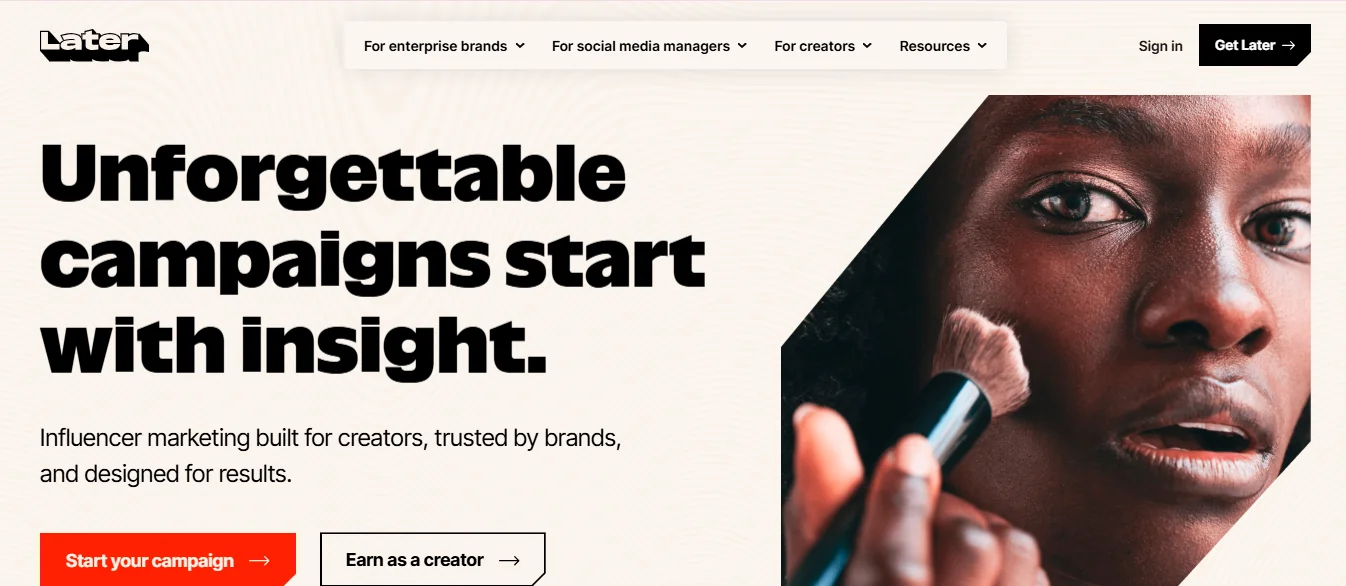
Later Influence (formerly Mavrck) pairs campaign management with strong analytics, now inside the wider Later ecosystem. It pulls near real-time authenticated performance data directly from social network APIs, so your impressions, engagement, and rates update on a rolling basis rather than a one-time snapshot. For teams that want influencer reporting connected to social management, it fits neatly.
The numbers: Pricing is quote-only. Third-party sources report annual contracts in the range of roughly $28,500 to $60,000, plus a reported onboarding fee around $5,000. There's no free plan. Confirm the current quote and terms directly.
Later Influence's reporting depth, draft review, and content management make it a solid end-to-end analytics home. The honest caveat: it works with opted-in creators only, which limits the discovery pool, and some users report occasional reporting bugs. For brands wanting analytics unified with social and content workflows, it's a natural fit.
9. CreatorIQ

CreatorIQ is the enterprise reporting heavyweight. It layers standardized metrics, EMV tracking, white-label dashboards, and governance on top of a 20M+ creator index across six platforms. When creator marketing spans multiple sub-brands, regions, and stakeholders, it centralizes all of it into one reporting system.
The numbers: Pricing is quote-only and steep. Procurement data reports entry contracts starting around $30,000 to $36,000/year, climbing to $50,000 to $90,000+ for larger programs. There are no monthly plans and no free tier, and every deal is annual. Confirm scope and cost directly.
CreatorIQ's standardized measurement suite makes cross-brand benchmarking consistent, which is exactly what large organizations need for leadership reporting. The honest caveat: some users find discovery data less polished than the analytics, and the pricing prices out most DTC and mid-market brands. It fits best above roughly $1M in annual influencer spend.
10. Sprout Social
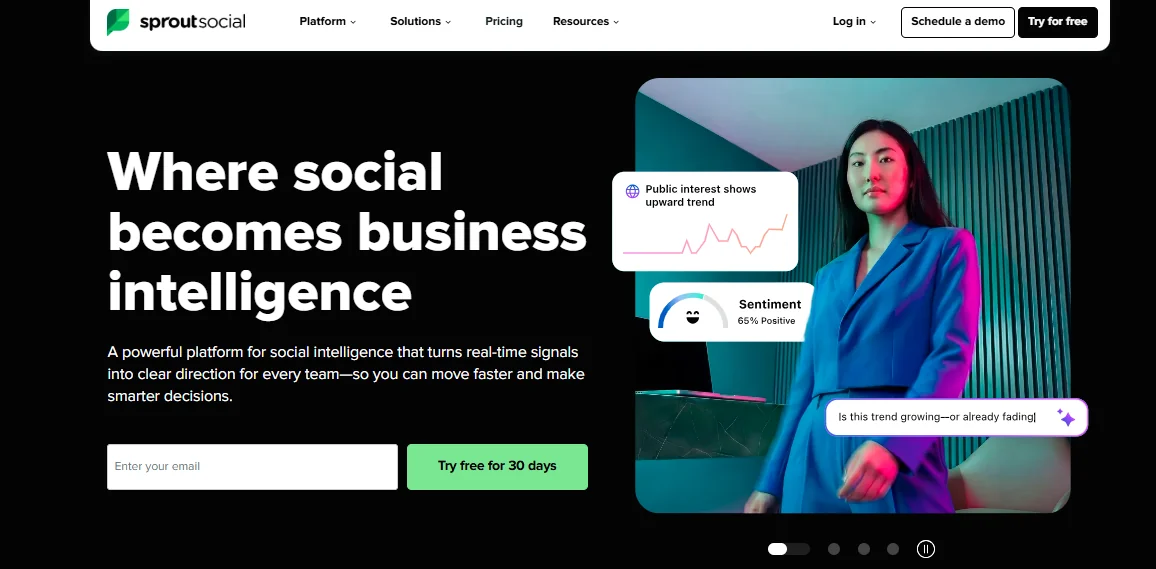
Sprout Social puts influencer reporting inside a full social media suite. Following its acquisition of Tagger Media, it offers an influencer marketing module for discovery, campaign management, and ROI measurement, all sharing a dashboard with your publishing and listening. For teams already running Sprout, adding influencer reporting is a natural extension.
The numbers: Sprout uses per-seat pricing, reported at roughly $199 to $249/seat/month (Standard), $299 to $399 (Professional), and up to $499 (Advanced), with custom Enterprise. The influencer marketing module and social listening are separate add-ons. There's no free plan, but a trial is available. Confirm current pricing and add-on costs directly.
The upside is one unified view of organic social and influencer performance, which makes cross-functional reporting easier. The honest caveat: you're paying for a whole social suite, per seat, and the most relevant modules cost extra on top. If influencer reporting is your only need, it's a lot of platform. For teams already on Sprout, it's convenient and cohesive.
How to Choose the Right Influencer Reporting Tool in 2026
The best reporting tool depends on what you're measuring and who you're reporting to. Run through these before you commit.
- What you actually need to prove. Chasing direct sales? Prioritize revenue attribution and ecommerce integrations (Influencer Hero, GRIN, Modash). Reporting awareness to leadership? Benchmarking and EMV tools (Traackr, CreatorIQ, HypeAuditor) tell that story better.
- Attribution over vanity metrics. The tools worth paying for connect reach, engagement, and conversions to a specific creator, not just a campaign total. Make sure it tracks per-influencer performance, ideally through affiliate links, promo codes, and UTMs.
- Real-time vs. wrap-up reporting. Running live launches or event campaigns? Keyhole's real-time tracking earns its keep. Reporting after the fact to stakeholders? A dashboard-and-export tool matters more than live speed.
- Your budget and team size. Free and mid-market tools (Afluencer, Modash, Keyhole) fit lean teams. Enterprise suites (Traackr, CreatorIQ, Later Influence) mean five-figure annual contracts and dedicated headcount to use them well.
- Standalone or all-in-one. Almost no one buys a pure reporting product. Decide whether you want measurement bundled into a campaign platform, or a specialist analytics layer on top of your existing campaign workflow.
- Client-ready outputs. Agencies should weigh white-label reporting and one-click exports (HypeAuditor, GRIN) heavily. A polished, branded report you can hand a client is worth real money in retention.
Most brands don't need the priciest suite. Pick the tool that proves the metric your leadership actually cares about, at a price your program can justify today.
Turn Your Campaigns Into Numbers You Can Defend
The reporting tool you pick decides whether influencer marketing looks like a cost or a channel. The market splits into all-in-one platforms with tracking built in, specialist analytics suites that benchmark and attribute, and social tools that fold reporting into a wider dashboard. All of them beat guessing.
You don't need the most expensive suite. You need the one that proves the metric your leadership cares about, at a price your program can justify right now. Start accessible, prove the ROI, and scale into heavier tooling only when the manual work starts costing you.
Ready to run campaigns you can actually measure? Start free on Afluencer and track every collab in one dashboard. Chat with CreatorGPT to figure out which metrics matter for your goals, or try the Afluencer Collab Finder to get matched with creators fast. New to this? Our guide on finding influencers for free is a good next step.
Frequently Asked Questions
<details class="ih-faq"><summary>What is an influencer reporting tool?</summary><div class="ih-faq-a">An influencer reporting tool tracks and measures how creator campaigns perform, turning scattered metrics into clear dashboards. It captures reach, engagement, clicks, conversions, and revenue, then ties them to specific influencers. The best tools connect all three levels (awareness, engagement, and sales) so you can prove ROI instead of guessing at it.</div></details><details class="ih-faq"><summary>How do you measure influencer marketing ROI?</summary><div class="ih-faq-a">Start with clear goals, then attribute results to each creator using affiliate links, unique promo codes, and UTM parameters. Add up your full spend (fees, product, tools), then compare it to tracked revenue or your target metric. Reporting tools automate this by connecting creator activity to sales, which removes the manual spreadsheet work.</div></details><details class="ih-faq"><summary>What's the best free influencer reporting tool?</summary><div class="ih-faq-a">Afluencer's free brand plan includes campaign tracking inside its dashboard, so you can run and monitor collabs at no cost. Most dedicated analytics suites don't offer a free tier, though Modash and Keyhole include free trials, and HypeAuditor has a limited free version. For a genuinely free starting point with tracking built in, Afluencer is the easiest.</div></details><details class="ih-faq"><summary>What metrics should I track for influencer campaigns?</summary><div class="ih-faq-a">Track metrics that match your goal. For sales, watch conversions, revenue, and cost per acquisition. For awareness, track reach, impressions, and EMV. For engagement, look at likes, comments, saves, and engagement rate. Treat EMV as a rough comparison, not revenue, and always measure per creator so you know who to rebook.</div></details><details class="ih-faq"><summary>Which reporting tool is best for small brands?</summary><div class="ih-faq-a">Small and DTC brands usually get the most from accessible, all-in-one options. Afluencer's free plan and Modash's transparent $199/month entry both include tracking without a huge contract. Keyhole works well if real-time campaign measurement is your focus. Enterprise suites like Traackr and CreatorIQ are overkill until you're running programs at serious scale.</div></details><script type="application/ld+json">{"@context":"https://schema.org","@type":"FAQPage","mainEntity":[{"@type":"Question","name":"What is an influencer reporting tool?","acceptedAnswer":{"@type":"Answer","text":"An influencer reporting tool tracks and measures how creator campaigns perform, turning scattered metrics into clear dashboards. It captures reach, engagement, clicks, conversions, and revenue, then ties them to specific influencers. The best tools connect all three levels (awareness, engagement, and sales) so you can prove ROI instead of guessing at it."}},{"@type":"Question","name":"How do you measure influencer marketing ROI?","acceptedAnswer":{"@type":"Answer","text":"Start with clear goals, then attribute results to each creator using affiliate links, unique promo codes, and UTM parameters. Add up your full spend (fees, product, tools), then compare it to tracked revenue or your target metric. Reporting tools automate this by connecting creator activity to sales, which removes the manual spreadsheet work."}},{"@type":"Question","name":"What's the best free influencer reporting tool?","acceptedAnswer":{"@type":"Answer","text":"Afluencer's free brand plan includes campaign tracking inside its dashboard, so you can run and monitor collabs at no cost. Most dedicated analytics suites don't offer a free tier, though Modash and Keyhole include free trials, and HypeAuditor has a limited free version. For a genuinely free starting point with tracking built in, Afluencer is the easiest."}},{"@type":"Question","name":"What metrics should I track for influencer campaigns?","acceptedAnswer":{"@type":"Answer","text":"Track metrics that match your goal. For sales, watch conversions, revenue, and cost per acquisition. For awareness, track reach, impressions, and EMV. For engagement, look at likes, comments, saves, and engagement rate. Treat EMV as a rough comparison, not revenue, and always measure per creator so you know who to rebook."}},{"@type":"Question","name":"Which reporting tool is best for small brands?","acceptedAnswer":{"@type":"Answer","text":"Small and DTC brands usually get the most from accessible, all-in-one options. Afluencer's free plan and Modash's transparent $199/month entry both include tracking without a huge contract. Keyhole works well if real-time campaign measurement is your focus. Enterprise suites like Traackr and CreatorIQ are overkill until you're running programs at serious scale."}}]}</script>