.svg)

.png)
10 Best GetSaral Alternatives Worth Switching To in 2026
GetSaral alternatives keep landing on the radar of DTC brands that loved the "Influencer OS" pitch but balked at the bill. SARAL's cheapest plan is $12,000/year, and you pay quarterly or annually upfront. For a small brand still testing whether influencer marketing will stick, that's a heavy first commitment.
To be fair, SARAL earns its fans. It holds a 4.7 on G2, and most users praise how simple it is to find creators, run outreach, and replace spreadsheet chaos with a clean CRM. The friction shows up elsewhere. Plans cap how many influencers you can save each month, active partnerships are limited per tier, and reviewers repeatedly flag buggy Gmail integrations and delayed email sync. There's also no built-in creator marketplace, so discovery leans on real-time public search instead of a pool of creators who already want to work with brands. Agencies juggling multiple clients tend to outgrow it fast.
So if you want monthly billing, a marketplace where creators come to you, or simply a cheaper way in, the good news is the market is full of options. Some are lightweight discovery tools, some are full end-to-end suites, and a few flip the model entirely. We've checked current pricing on every one and woven in a real reason brands switch. Whether your priority is influencer rates that fit a lean budget or a smoother gifting campaign workflow, there's a fit here.
Let's get into the best GetSaral alternatives worth a look this year.
1. Afluencer

Afluencer flips SARAL's whole workflow. Instead of searching public data and cold-emailing creators, you post a "Collab" (a campaign brief with your niche, follower, platform, and location criteria), and verified creators apply to you. For brands tired of chasing people who never reply, that inbound model is a genuinely different way to work.
It's built for small DTC brands, Shopify merchants, and lean teams running gifting, micro-influencer, and ambassador programs. You set the criteria, review applicants with their engagement metrics already attached, and message your top picks to coordinate the deal. No outreach sequences to babysit, no database to mine.
Where SARAL prices like a mid-market tool, Afluencer starts at zero. The free brand plan is genuinely usable, not a countdown trial. You can publish a Collab, receive unlimited applications, and message creators without paying a cent. That makes it one of the lowest-risk ways to test influencer marketing on this list, which is exactly where a lot of SARAL-curious brands actually are.
Afluencer also leans on AI to take the busywork out. CreatorGPT acts as a strategy assistant for campaign ideas, creator-fit questions, and outreach planning before you ever post. And the Afluencer Collab Finder matches creators to live opportunities, so the right people surface faster on both sides of the marketplace.
The honest caveat: Afluencer is a marketplace, not a full analytics-and-attribution suite. If you need deep ROI dashboards, multi-brand agency workspaces, or a 300M-creator search database, you'll outgrow it. It also skews toward core niches like beauty, fashion, wellness, and lifestyle, so very niche categories can find thinner coverage. For its target user though, a small brand that wants collabs without overhead, it's hard to beat.
Paid tiers stay friendly too: VIP at $49/month, Concierge at $99/month, and Boss at $199/month, all billed monthly with no annual lock-in and cancel anytime. In the meantime, feel free to browse some gifting strategies.
2. Modash

Modash is the discovery specialist. Its headline feature is a 350M+ creator database across Instagram, TikTok, and YouTube, with sharp filters for audience demographics, engagement quality, and fake-follower detection. SARAL's real-time search is fine for niche hunting, but Modash gives you a much bigger, more filterable pool when discovery is your bottleneck.
It's a focused tool rather than a full suite. You get discovery, an email finder with verified contacts, audience analysis, and native Shopify tracking. Brands that already have affiliate and UGC tooling and just need a stronger top-of-funnel engine tend to love it.
Pricing is also more accessible than SARAL at entry. Modash Essentials runs $199/month on annual billing or $299/month monthly, and Performance is $499/month annual. A 14-day free trial needs no credit card. The trade-off: because it's discovery-led, you'll still need other tools for gifting logistics, CRM stages, and affiliate payouts.
3. Influencer Hero
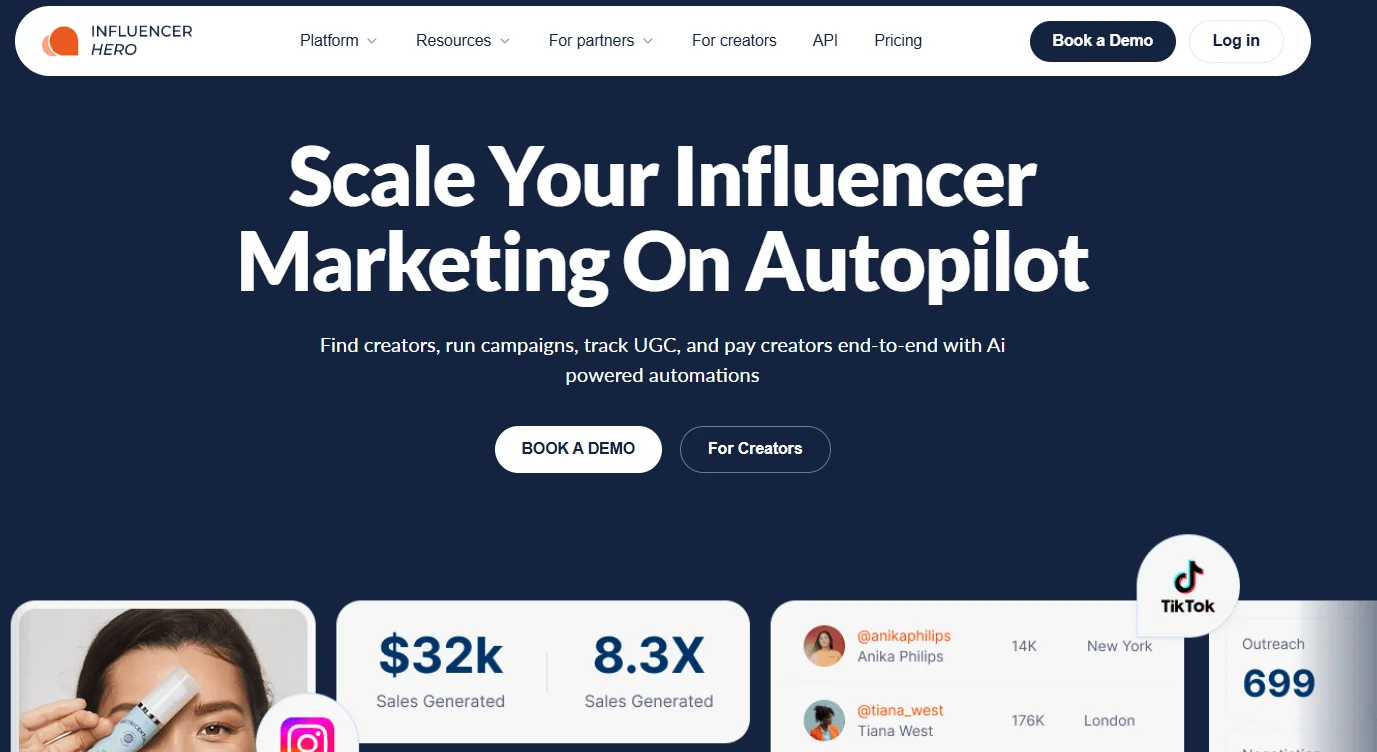
Influencer Hero is the closest thing on this list to a true all-in-one replacement for SARAL. It covers discovery, AI-powered outreach, CRM, gifting, affiliate tracking, UGC capture, and ROI reporting in one dashboard, and it's purpose-built for Shopify, WooCommerce, and Magento brands. The discovery side pulls from a 450M+ creator database, which dwarfs SARAL's search layer.
It's a strong fit for mid-market and ecommerce teams that want the full creator lifecycle in one place instead of bolting a separate affiliate or UGC tool onto a discovery platform. Reviewers consistently call out fast onboarding, AI outreach personalization, and a dedicated account manager from day one. Ratings sit high on both G2 and Capterra.
Pricing starts at $649/month for the Standard plan (1 seat, 1,000 reach-outs), with Pro at $1,049/month and Business at $2,490/month. Monthly billing is available, and there's no forced annual lock-in. The honest caveat: that entry price is well above the cheapest tools here, so a brand that only needs lightweight discovery or a simple marketplace will be paying for depth it won't use. For brands ready to run a serious end-to-end program, though, it's one of the most complete SARAL alternatives going.
4. GRIN

GRIN is one of the more established creator-management platforms, built for DTC brands running structured ambassador programs at scale. In 2026 it moved to public tiered pricing, which makes it far easier to compare than its old demo-only days. The platform covers creator search, CRM, ecommerce integrations, content rights, and creator payments, including 1099 processing on higher tiers.
The biggest win over SARAL is flexibility. GRIN bills month-to-month and lets you cancel anytime, so there's no quarterly or annual upfront. Lite starts at $399/month (15 creators), then Essentials $699, Growth $1,149, and Complete $1,799 as your roster grows.
The catch is those creator caps. Lite's 15-creator limit is tight, so brands managing larger rosters climb the tiers quickly, and the cost stacks. Still, for a Shopify brand that wants built-in payments and transparent pricing, GRIN is a credible step up. If you're weighing it against the marketplace route, this GRIN or Modash alternative breakdown is worth a read.
5. HypeAuditor
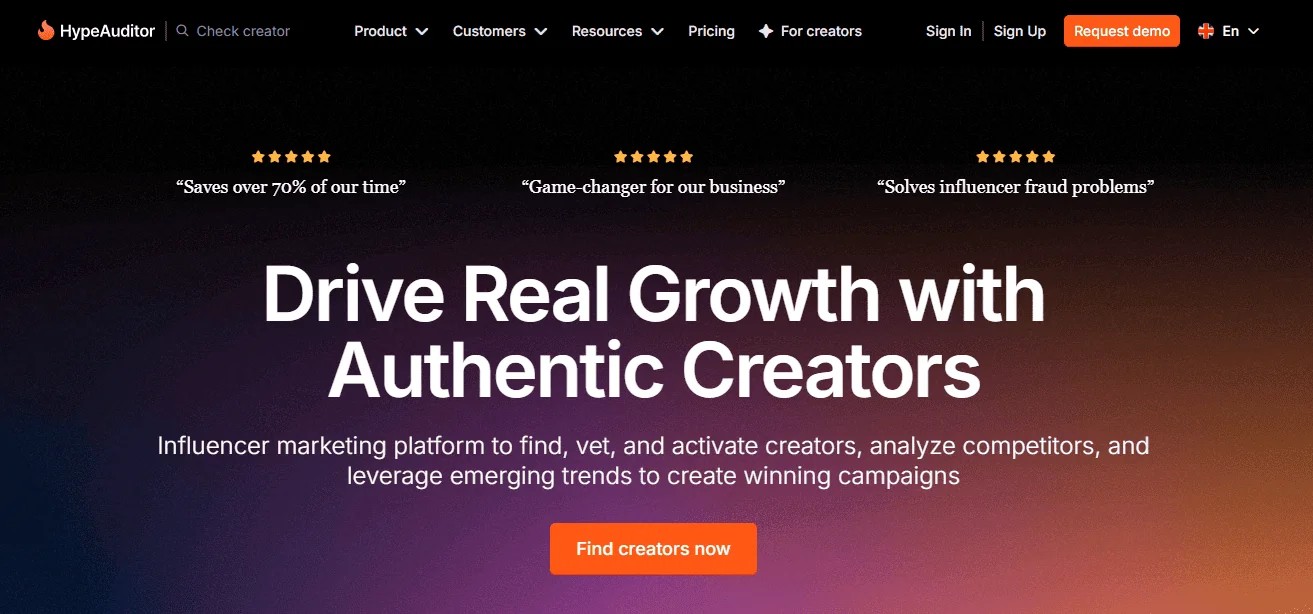
HypeAuditor is the audience-authenticity pick. Its strongest feature is AI-driven fraud detection and audience-quality scoring, which makes it popular with brands that put bigger budgets behind fewer creators and need to validate an audience before signing. It also handles discovery, campaign management, and CRM, with ecommerce integrations for Shopify, Magento, and WooCommerce.
This is where it beats SARAL outright. SARAL doesn't offer the same depth of bot detection or audience-quality analysis, so if you're paying creators on a sponsored basis and care about legitimacy, HypeAuditor's vetting is more rigorous. There are also 40+ free standalone tools for quick influencer checks.
Pricing starts at $299/month on annual billing for the Basic plan, with Pro at $499/month and custom enterprise tiers above that. The honest limitation: full feature access pushes you into the higher tiers, and the platform leans more toward analysis and vetting than hands-on gifting or relationship workflows.
6. Aspire

Aspire (formerly AspireIQ) positions itself as a word-of-mouth commerce platform covering ambassadors, influencers, affiliates, customer advocates, and UGC under one roof. It powers programs for high-growth names like HelloFresh and Dyson, and its optional agency-services layer is a real differentiator for brands that want managed support alongside the software. Its database is reported at 170M+ creators.
It suits mid-market and larger DTC brands running multi-channel programs with budget to match. A Creator Marketplace handles inbound applications, and the workflows flex across ambassador, affiliate, and seeding campaigns. G2 reviews are strong, especially around campaign execution.
Pricing is custom, with Capterra listing a starting point around $2,499/month, and an annual commitment is standard. There's no free trial. The downsides versus SARAL are the lack of public pricing and the inability to test before you commit, both of which slow down a quick evaluation. This is a tier-up alternative, not a like-for-like swap.
7. Influencity
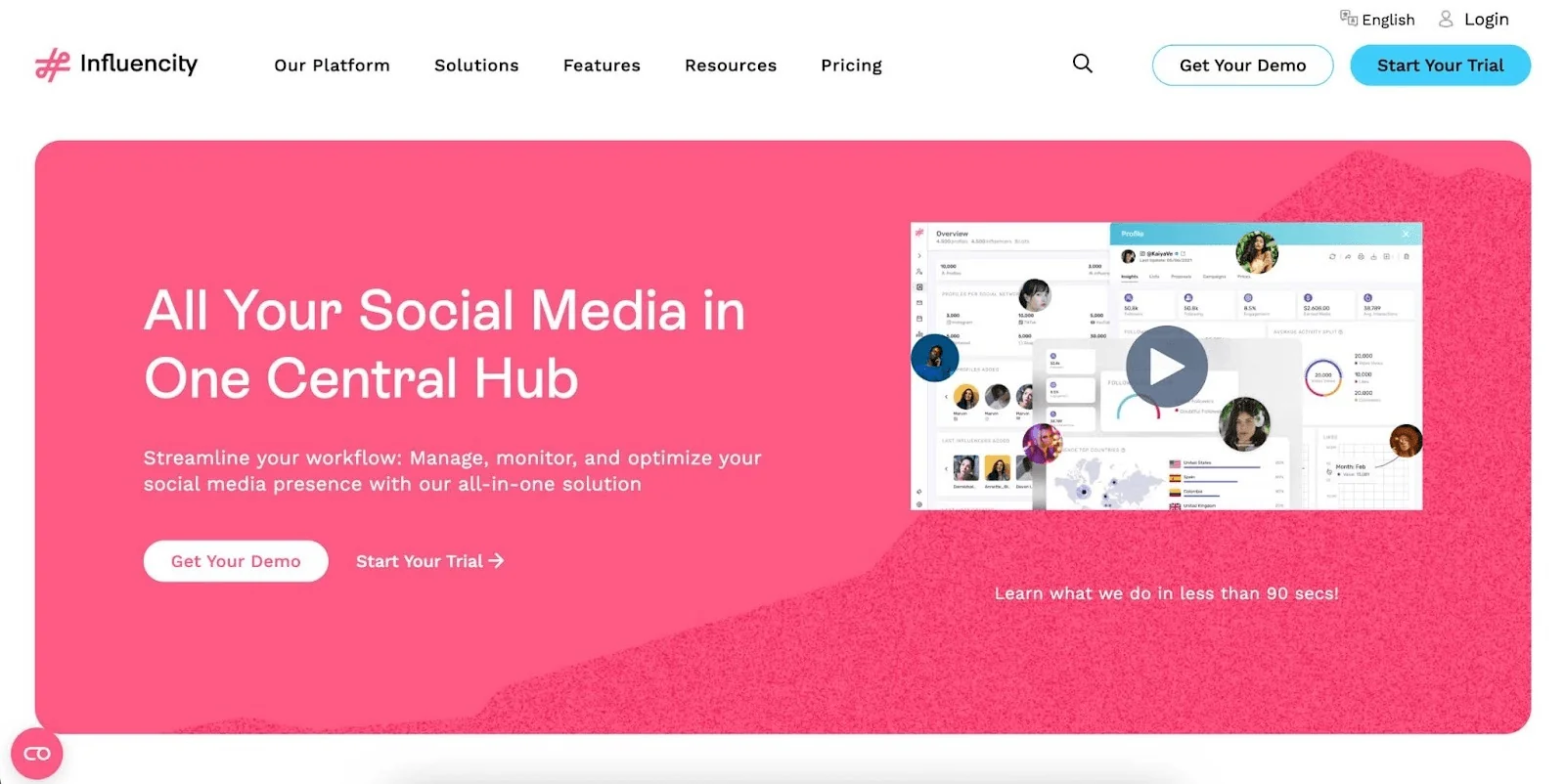
Influencity is an all-in-one platform built around a 200M+ creator database with strong filters and an integrated CRM. It targets mid-sized teams that want structured campaign management without enterprise pricing, and it offers monthly billing with no annual commitment, plus a Shopify integration for ecommerce attribution.
The pull over SARAL is mostly about price and flexibility. Entry plans start at $148/month, dramatically below SARAL's roughly $1,000/month-equivalent floor, and the month-to-month structure makes it easy to test. Plans scale up to around $698/month across four tiers, and there's a free trial.
The trade-off is usage limits on the lower tiers, like a capped number of profile analyses per month, so active campaign teams may scale up faster than they'd like. For a mid-sized brand that wants a broad database and real reporting without a big upfront, it's a solid middle ground.
8. Heepsy

Heepsy is one of the most accessible entry-level discovery tools out there. It focuses on creator search and audience analytics across Instagram, TikTok, and YouTube, with plans built around how many influencer profiles you can analyze each month. It's a clean fit for small brands and freelancers running lightweight programs without needing full CRM or affiliate tooling.
The appeal against SARAL is simple: cost. Heepsy is one of the cheapest starting points on this list, well below SARAL's pricing floor, with entry plans around $49/month and higher tiers unlocking thousands of profile analyses. A free trial lets you test the search engine first.
The honest limitation is scope. Heepsy is mostly a discovery and vetting tool, so it doesn't cover the end-to-end outreach, gifting, and affiliate workflow SARAL pitches. For first-time testers, that focus is a feature, not a bug.
9. #paid

#paid (said "Hashtag Paid") takes a different route from most tools here. It runs as a curated, opt-in creator marketplace where creators apply to your brief instead of getting cold-contacted from a database. The platform handles brief distribution, content approval, payment, and reporting, with brand-safety vetting built in.
That model is the whole reason it's a SARAL alternative. If cold outreach feels inefficient or off-brand, #paid starts every collaboration with mutual interest, which tends to produce smoother, more on-brand partnerships. Creator whitelisting for paid social is available on higher tiers.
Pricing starts around $449/month per Capterra, with annual contracts common and custom pricing on higher tiers. The downside: standardized rates leave less room to negotiate, and the curated pool is smaller than a discovery-database platform. For brands that value a hand-raised, brand-safe model over volume, that's a fair trade.
10. Later

Later Influence (formerly Mavrck) is the influencer arm of Later, the social media management platform. It's built for social-first brands that want content scheduling and influencer programs living in connected tools. It supports discovery, campaign management, and reporting, with deep ties to Later's scheduling workflow and strong UGC capture.
For brands already running their content calendar on Later, that integration is a workflow advantage SARAL can't match. It's also a more established product with a much larger review base (4.5/5 on G2 across hundreds of reviews), which signals broad SMB usage.
Pricing is custom with no public tiers, available through a demo, and annual commitments are common. The main downside versus SARAL is that lack of public pricing, which slows down an early evaluation. If your team already lives inside Later, though, the connected workflow makes it an easy shortlist add.
Which GetSaral Alternative Should You Pick?
There's no single best SARAL replacement, because the right one depends entirely on your size, budget, and how you like to work. Modash and HypeAuditor win on discovery and audience vetting. GRIN and Influencer Hero cover full end-to-end DTC programs. Aspire and #paid suit brands ready for managed or curated models. Heepsy and Influencity are the low-cost entry points.
And if SARAL's high upfront price was your dealbreaker, monthly billing alone might be the deciding factor. For small DTC brands and Shopify merchants that want collabs without the overhead, a marketplace model is often the simplest path.
Afluencer lets you post a Collab for free and have verified creators come to you, which sidesteps both SARAL's price tag and its cold-outreach grind. Brush up on some collaboration tips, then sign up for a free trial and post your first campaign, or chat with CreatorGPT to map out your strategy first.