
.svg)

.png)
- 10 Best Social Commerce Tools for Brands in 2026
- The Top Social Commerce Tools That Turn Scrolls Into Sales
- 1. Afluencer
- 2. Influencer Hero
- 3. Tolstoy
- 4. Videowise
- 5. Firework
- 6. Bazaarvoice
- 7. Yotpo
- 8. Bambuser
- 9. Collabstr
- 10. Later
- How to Choose the Right Social Commerce Tool in 2026
- Start Building Your Social Commerce Stack
10 Best Social Commerce Tools for Brands in 2026
Your customers discover, decide, and buy without ever leaving their feed. That shift is the whole game now, and the brands winning it have the right tools behind the scenes.
Social commerce is on track to top $2 trillion in 2026, and short-form video drives a huge slice of it. If you are still pushing shoppers off-platform to a slow product page, you are leaking sales at every step.
The good news: you do not need a dev team to fix that. The right social commerce tool sources creator content, makes your videos shoppable, builds social proof, and tracks what actually converts.
This list runs from creator-sourcing platforms to shoppable video and social proof, so you can find the piece your funnel is missing. Some help you sell inside social apps. Others bring that scroll-and-shop feel onto your own store.
Ready to turn followers into buyers? Let's break them down one by one.
The Top Social Commerce Tools That Turn Scrolls Into Sales
Social commerce splits into a few jobs: sourcing creator content, making it shoppable, proving it with reviews, and selling live. The best stack covers the gaps you actually have, not every box on the list.
Match each tool to your real bottleneck, whether that is content, conversion, or trust. Here are the ten worth your shortlist.
1. Afluencer
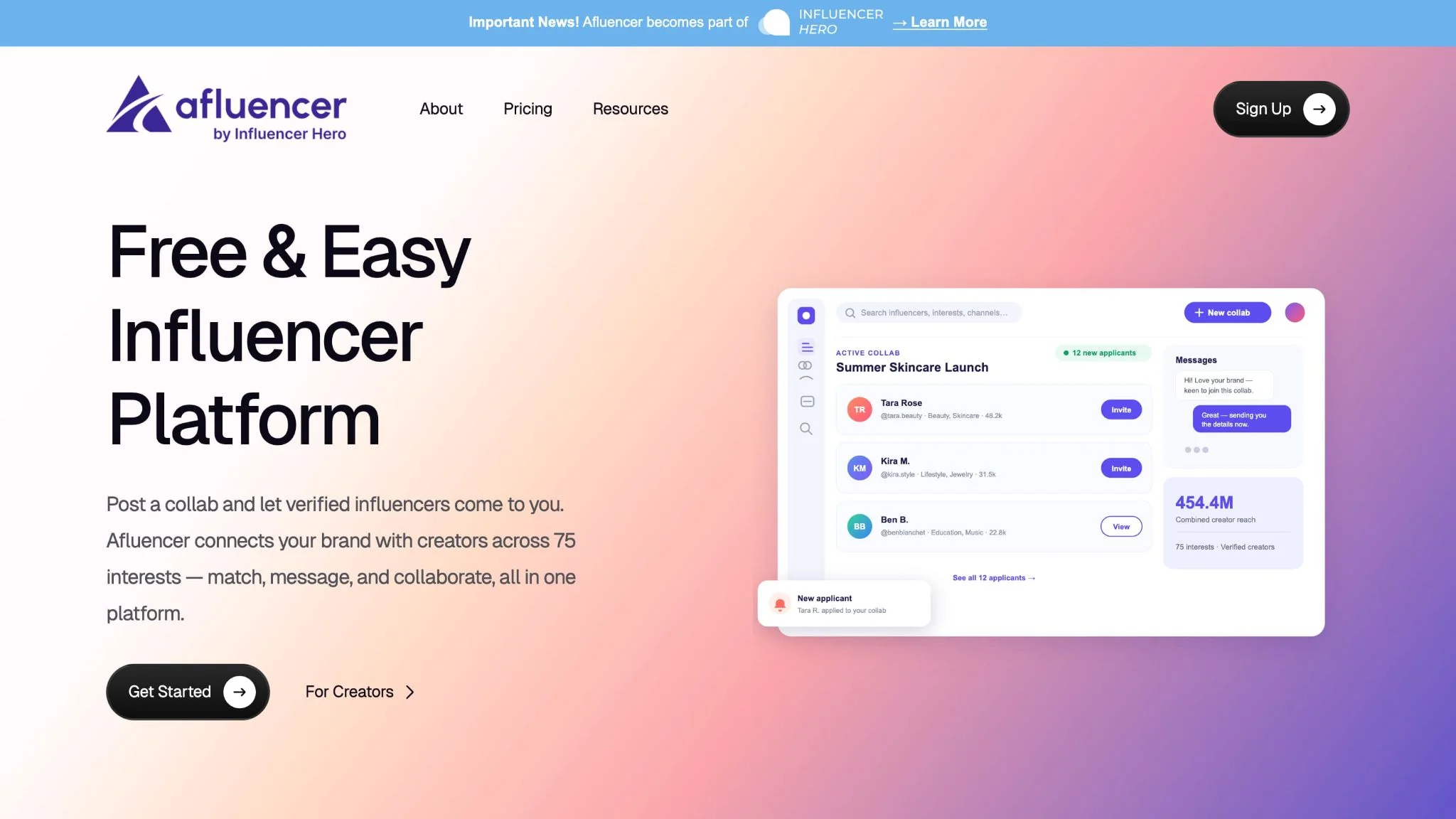
Social commerce runs on creator content, and Afluencer is where you source it. You post a "Collab," verified creators apply, and you pick the ones that fit your brand and your sales goals.
That application-based model removes the cold outreach entirely. It works especially well for DTC and ecommerce brands that need a steady flow of authentic posts to fuel TikTok, Instagram, and shoppable campaigns.
The numbers: Afluencer starts with a usable free brand plan. Paid tiers run VIP at $49/month, Concierge at $99/month, and Boss at $199/month, all billed monthly with no annual lock-in.
It also bundles AI tools that speed the whole thing up. CreatorGPT handles creator strategy and matching, while the Afluencer Collab Finder pairs you with live opportunities.
Gifting is one of the fastest ways to generate sales-driving content, and our guide to effective gifting strategies shows how. Chat with CreatorGPT for strategy, or post your first Collab on Afluencer to start sourcing content today.
2. Influencer Hero
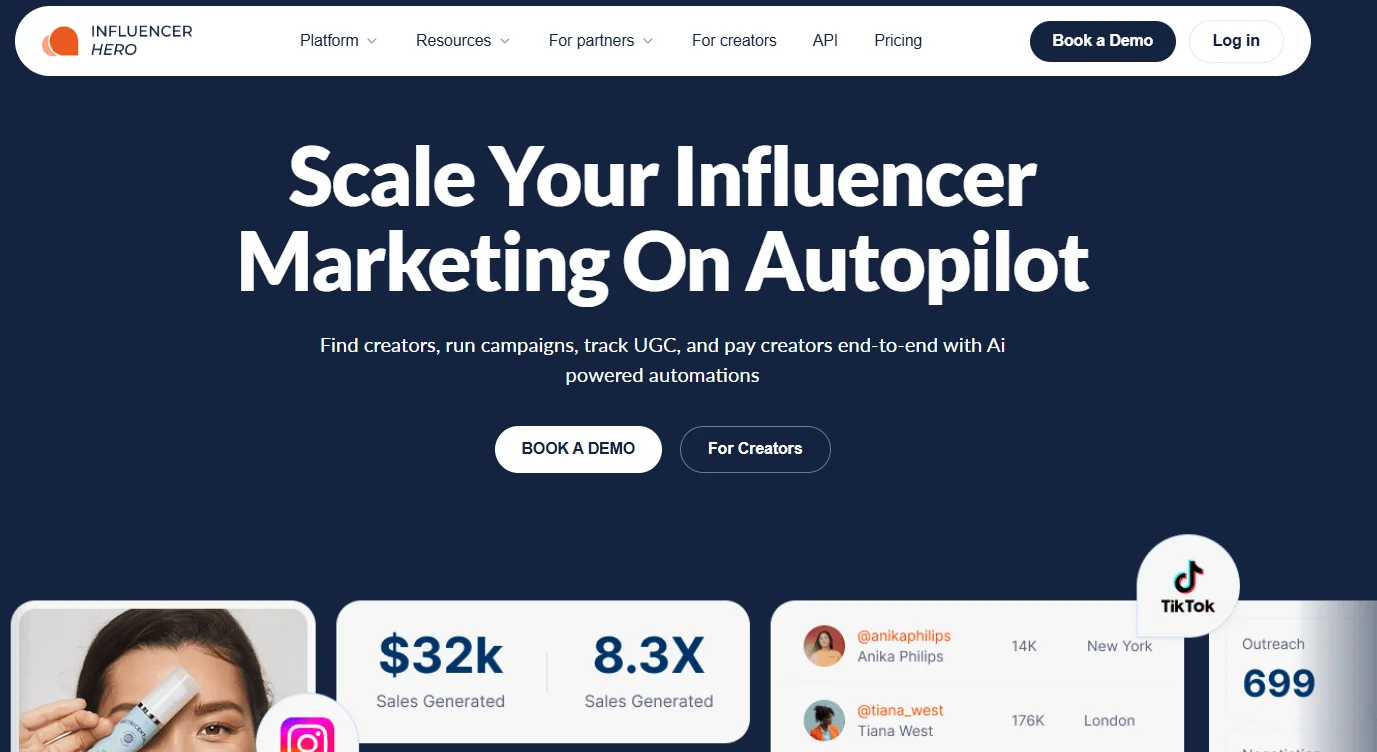
Influencer Hero is the most complete platform here for tying social content back to revenue. It is a full operating system for creator-driven commerce, not a single-feature widget.
You get discovery across a 450M+ creator database, automated outreach, a CRM, gifting, affiliate and discount-code tracking, a UGC library, and ROI attribution. Native Shopify, WooCommerce, and Amazon integrations connect posts to actual sales.
That depth makes it a strong fit for mid-market and ecommerce brands running performance-driven social commerce programs at scale.
The numbers: Influencer Hero starts at $649/month on monthly contracts, with no free trial. You can book a demo to see the full stack, and API access sits on higher tiers.
One honest caveat: the entry price runs higher than a single-purpose social commerce app, and it is more platform than a brand that only wants shoppable widgets really needs. If you want the full creator-to-revenue workflow, that scope is the point.
3. Tolstoy
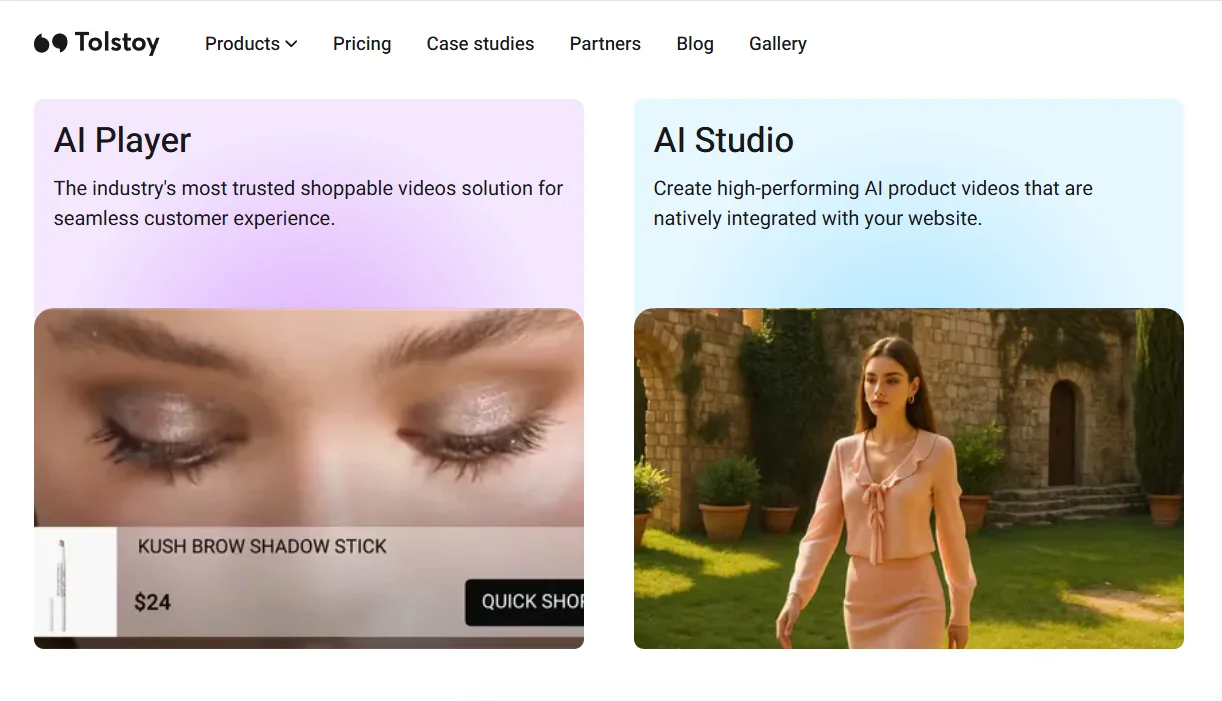
Tolstoy brings the social-style video feed straight onto your store. Its AI Player drops swipeable, shoppable video onto product pages and collections, so shoppers get that TikTok scroll without leaving your site.
It also handles interactive, branching video and quizzes that guide buyers to the right SKU. The Shopify integration is deep, and it imports your existing TikTok and Instagram content with little fuss.
The numbers: Tolstoy's Player product runs Plus at $19/month, Pro at $199/month, and Max at $499/month, plus per-impression usage charges of $10, $7, or $5 per 1,000 video views by tier.
Watch that impression billing during high-traffic seasons, since costs can climb fast. For brands that want an easy, affordable on-ramp to shoppable video, though, Tolstoy is one of the simplest places to start.
4. Videowise
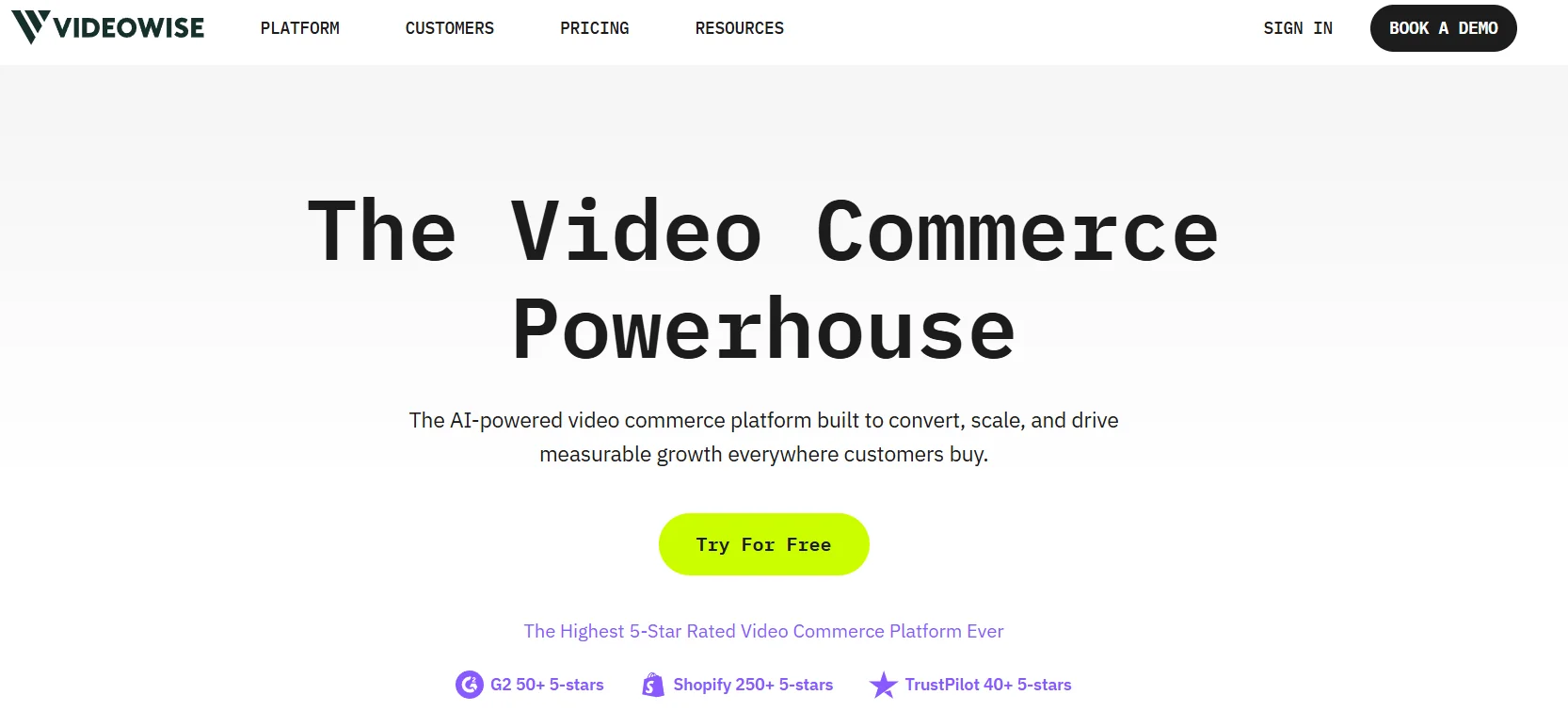
Videowise is the Shopify-native pick for brands that want video everywhere and the analytics to prove it works. It powers shoppable carousels, stories, PDP galleries, live shopping, and UGC management from one dashboard.
Its AI tools auto-clip long videos and UGC into shoppable feeds, and revenue attribution is more granular than most. Brands report strong conversion lifts on video-engaged sessions because the player renders outside your theme code, so page speed holds.
The numbers: Videowise base plans start around $299/month, which puts it a step above budget SMB widgets.
One honest caveat: it is built for mid-market and enterprise Shopify brands, so smaller stores testing the waters may find it heavier than they need. For brands scaling video as a real revenue channel, the analytics depth earns the price.
5. Firework
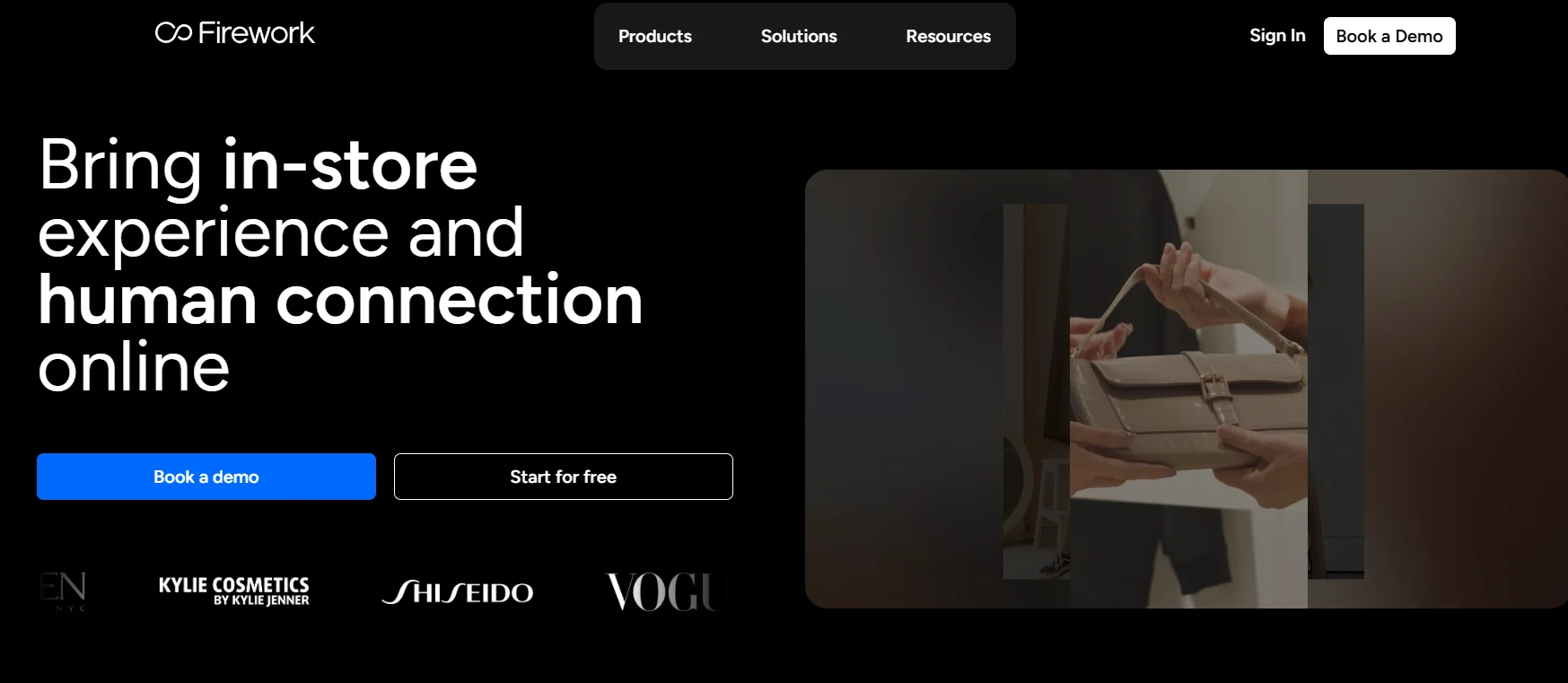
Firework is the enterprise heavyweight of social commerce video. It treats video as infrastructure, generating shoppable content straight from your product feed with AI and deploying it across thousands of SKUs.
Its real edge is reach beyond Shopify. It supports Salesforce Commerce Cloud, SAP, BigCommerce, and headless builds, plus livestream events and one-to-one virtual shopping across web, email, and retail media.
The numbers: Firework uses custom enterprise pricing, so you book a call for a quote. Plan for an enterprise-level investment and onboarding.
One honest caveat: it is overkill for brands under roughly $20M GMV, where the price-to-feature ratio favors lighter tools. For large retailers and CPG brands running video across many channels, though, it is built exactly for that scale.
6. Bazaarvoice
Bazaarvoice is the social proof engine for brands that sell across retail. Its standout is a syndication network that pushes your reviews and visual UGC to 1,750+ retail partners like Walmart and Target, not just your own site.
Collect a review once, then distribute it everywhere shoppers buy. Strong moderation, sampling programs, and authenticity tools keep quality high as your content scales globally.
The numbers: Bazaarvoice uses custom enterprise pricing with no public tiers. Implementation fees commonly run $10,000 to $50,000+, with annual platform fees on top.
One honest caveat: it is not practical or affordable for most small to mid-size brands. For large brands syndicating UGC across a retail footprint, the network reach is unmatched.
7. Yotpo
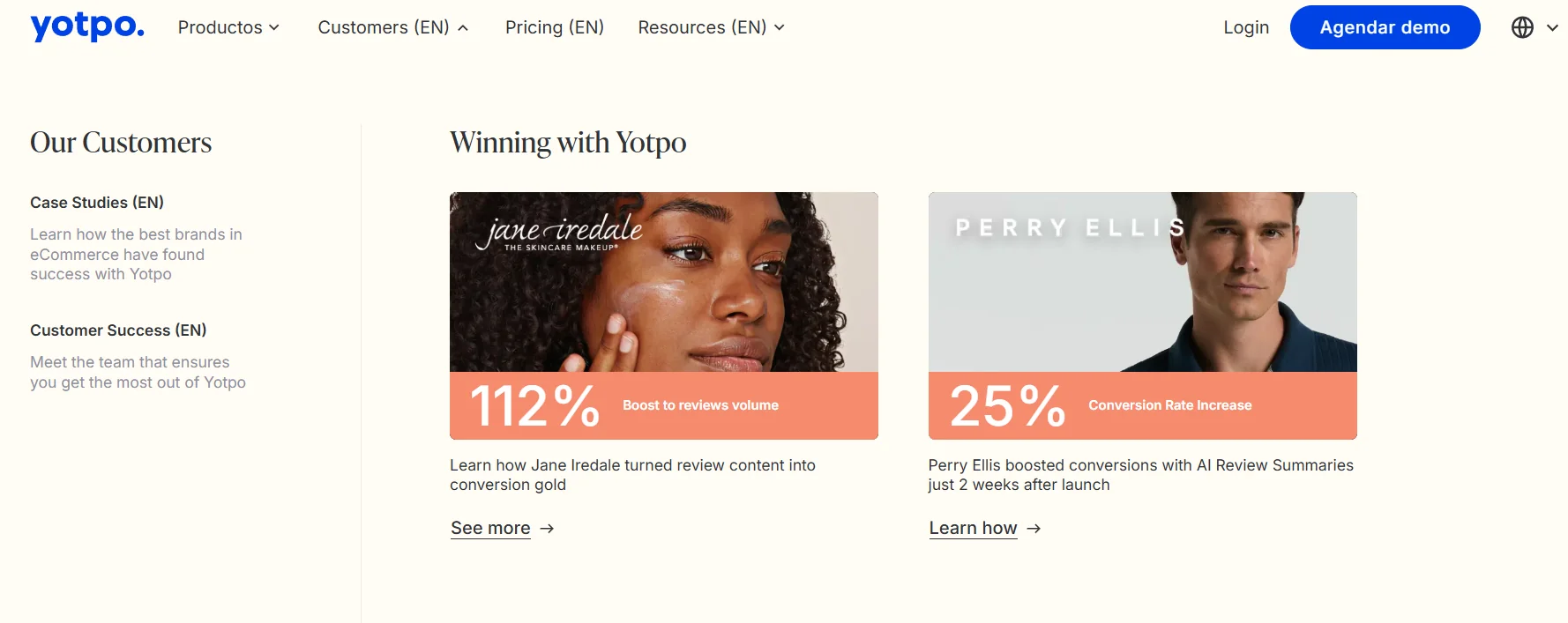
Yotpo is the DTC-friendly alternative for reviews and visual UGC. It bundles reviews, loyalty, referrals, and SMS in one connected platform, so you can turn customer content into repeat purchases.
The Shopify integration is plug-and-play, and its syndication reaches Google, Meta, TikTok Shop, and retail partners like Target. Photo and video reviews feed straight into on-site galleries that build buyer confidence.
The numbers: Yotpo has a free plan capped at 50 orders. The Reviews Pro plan starts at $79/month, the Premium tier runs $699+/month, and loyalty or SMS modules stack on top.
One honest caveat: modular pricing climbs fast once you add modules, and brands needing only reviews may find it more than they need. For DTC brands wanting social proof plus retention in one tool, it is a solid fit.
8. Bambuser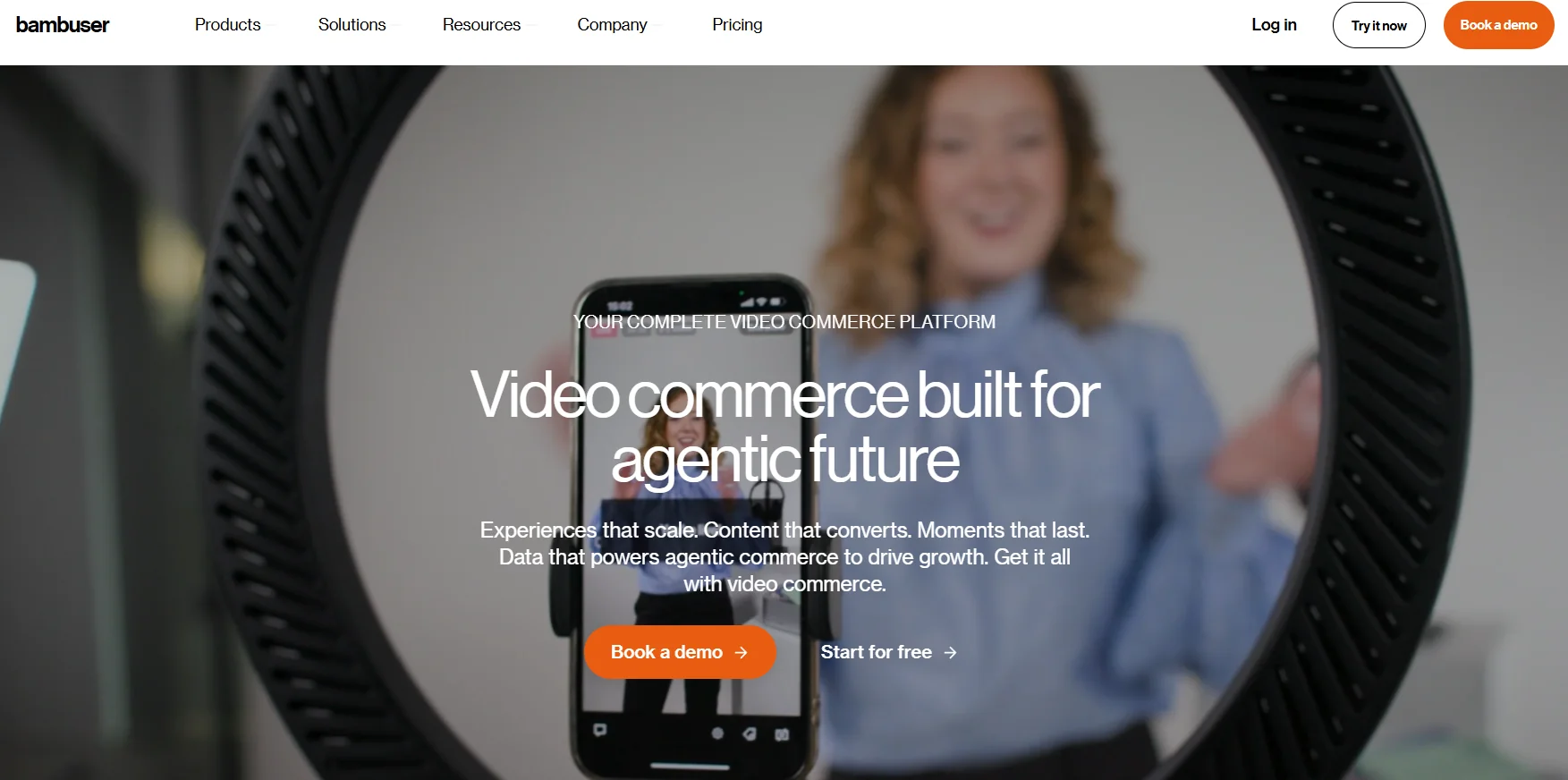
Bambuser is the go-to for brands building a live shopping strategy. It pioneered livestream commerce, and it still leads for one-to-many shopping events and one-to-one video consultations.
You can broadcast shoppable live video on your website, apps, and social channels, with real-time chat and limited-time offers driving urgency. It spans fashion, beauty, electronics, and homeware, not just one vertical.
The numbers: Bambuser uses custom pricing, with deployments generally starting around $126/month for roughly 50,000 monthly visitors and scaling from there.
One honest caveat: live shopping demands production resources and planning that many smaller DTC teams do not have yet. If real-time selling is central to your strategy, Bambuser is the reference platform.
9. Collabstr
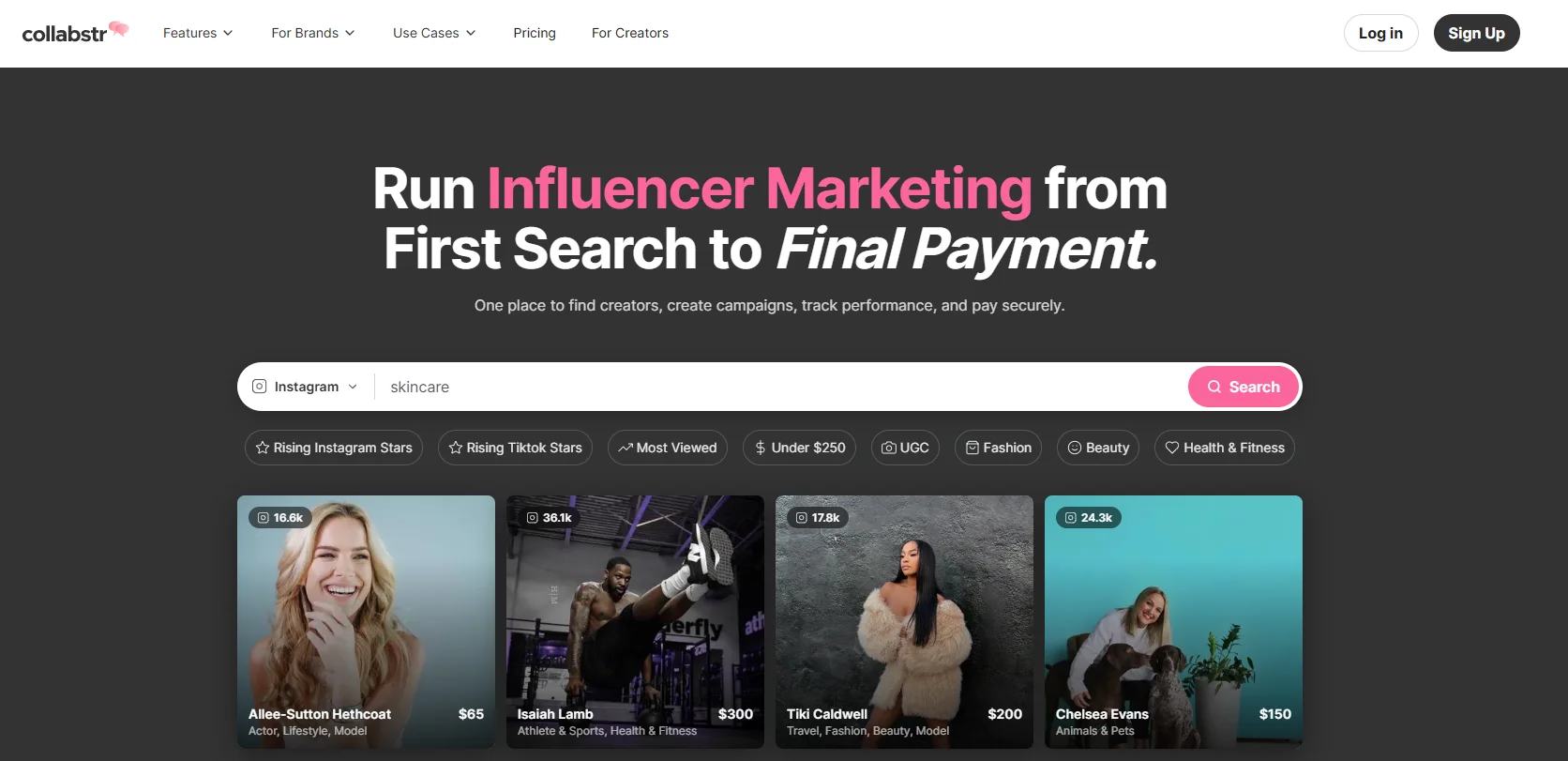
Collabstr is the lowest-commitment way to source social commerce content. There is no required subscription, so you can search 940,000+ vetted creators and place an order without a monthly fee first.
Every profile shows pricing, engagement, and audience data up front, and payments sit in escrow until you approve the work. That removes the risk from a first creator hire and keeps your content pipeline moving.
The numbers: The free Basic plan charges a 10% hiring fee per order, and the Premium plan drops that to 5% while adding campaigns and analytics. Creator content typically runs $50 to $1,000 per order.
For brands that want to test creator content as a channel before investing in heavier tools, Collabstr is the natural starting point. Our breakdown of how to find and vet creators pairs well with it.
10. Later
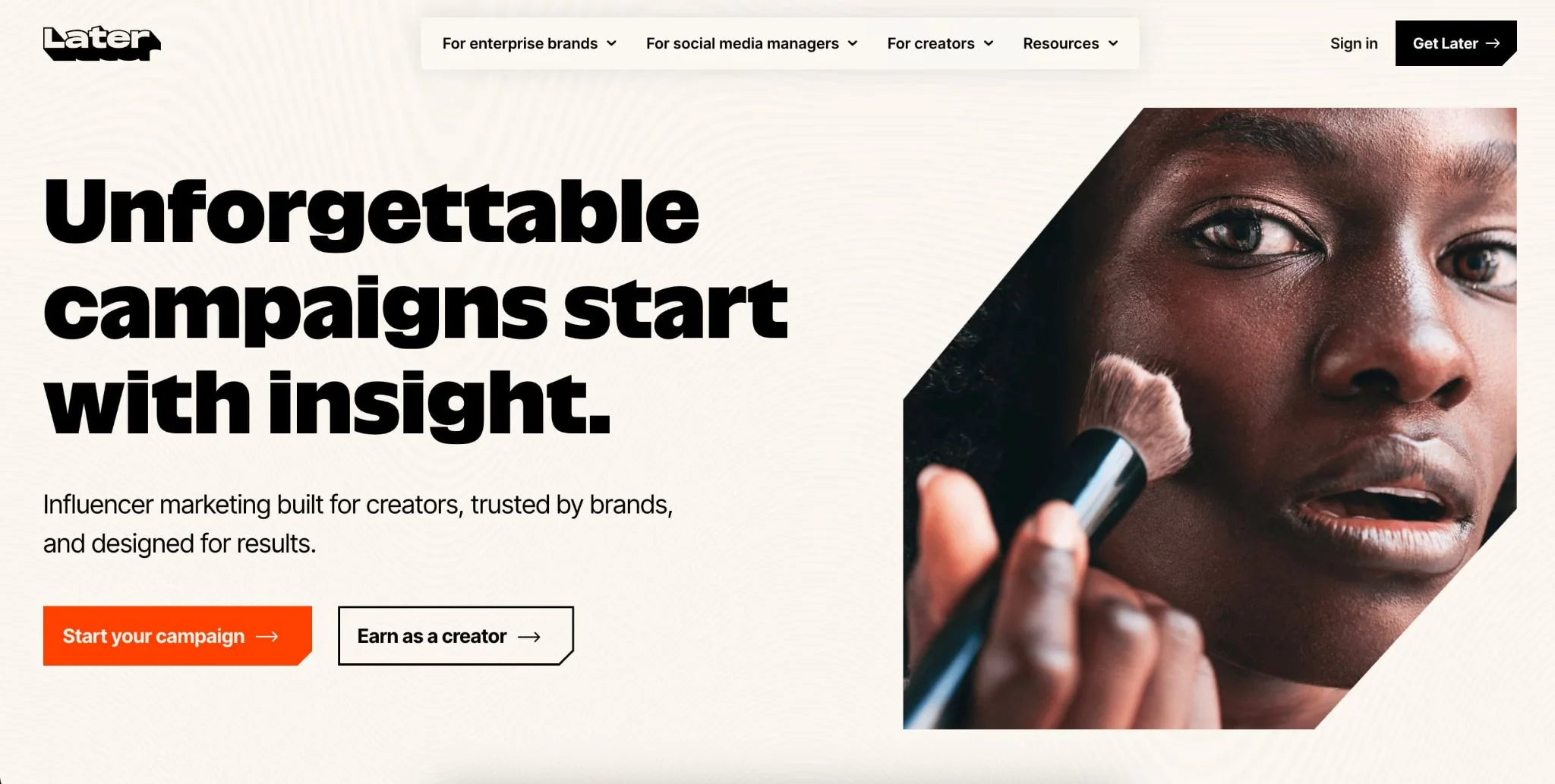
Later ties the content and commerce sides together. It started as an Instagram scheduler and grew into a social media management and link-in-bio platform built to route social traffic toward purchases.
Its Link in Bio tool turns your profile into a shoppable landing page, so every post and Reel can funnel followers to product pages. Scheduling, analytics, and a visual content calendar keep your social commerce engine running on a lean team.
The numbers: Later offers a limited free plan, with paid plans starting around $25/month and scaling by users and posting volume.
One honest caveat: Later handles distribution and link routing, not native in-app checkout, so pair it with the shoppable tools above. For brands that want to keep content velocity high and drive social traffic to buy, it is an affordable backbone.
How to Choose the Right Social Commerce Tool in 2026
There is no single "best" tool here. The right fit depends on your bottleneck, your platform, and your budget. Run through these factors before you commit.
- Your biggest bottleneck Short on content? Start with a sourcing tool like Afluencer or Collabstr. Traffic not converting on-site? A shoppable video tool like Tolstoy or Videowise is the fix. Trust gap? Reviews tools like Yotpo close it.
- Where you sell Shopify-native brands get the smoothest setup from Videowise or Tolstoy. Selling across Walmart and Target too? Bazaarvoice and Firework support that retail footprint.
- Live or always-on Always-on shoppable video covers most brands first. Add live shopping with Bambuser only once you have the production capacity to run real-time events.
- Your budget and stage Free and low-cost entry points (Afluencer, Collabstr, Later, Tolstoy) let you test without risk. Enterprise tools demand a quote and a real commitment, so match the spend to your stage.
- How it connects to revenue A pure content tool fills your feed. A full stack like Influencer Hero ties discovery, affiliate, and ROI together so you can prove what social commerce actually earns.
Once your tools are set, the creators you pick decide the results. Our 11 proven ways to collaborate with influencers covers the formats that turn social content into sales.
Start Building Your Social Commerce Stack
Social commerce is no longer a side channel. It is where discovery, trust, and checkout now collide, and 2026 gives you more ways than ever to win that moment without a huge team or budget.
You do not need every tool on this list. You need the one or two that fix your real gap, whether that is content, conversion, or proof. Start small, test what moves revenue, then scale the winners.
Start sourcing collabs on Afluencer today. Chat with CreatorGPT for creator strategy, or explore our start-to-finish guide to user-generated content to fuel your social commerce content this week.
Frequently Asked Questions
<details class="ih-faq"><summary>What is a social commerce tool?</summary><div class="ih-faq-a">It's software that helps brands sell through social media and social-style experiences. Some source creator content, some make your videos shoppable, some collect reviews, and others handle live shopping or link-in-bio routing.</div></details><details class="ih-faq"><summary>How much do social commerce tools cost in 2026?</summary><div class="ih-faq-a">It ranges widely. Sourcing tools like Afluencer and Collabstr have free entry points, shoppable video starts around $19 to $299/month, and enterprise platforms like Firework and Bazaarvoice use custom quotes that run into five figures a year.</div></details><details class="ih-faq"><summary>What's the difference between a social commerce tool and a social network?</summary><div class="ih-faq-a">Social networks like TikTok and Instagram are where shopping happens. Social commerce tools are the enabling software behind the scenes that source content, make it shoppable, prove it with reviews, and tie it back to revenue.</div></details><details class="ih-faq"><summary>Which social commerce tool is best for a small brand on a budget?</summary><div class="ih-faq-a">Start free or cheap. Afluencer lets you source creator content with a free plan, Collabstr needs no subscription, and Tolstoy starts shoppable video at $19/month. Test the channel before paying for heavier tools.</div></details><details class="ih-faq"><summary>Do I need shoppable video if I already use social media?</summary><div class="ih-faq-a">If shoppers leave your site to figure out how to buy, yes. Shoppable video keeps discovery and checkout in one place, which cuts friction and lifts conversion on the product pages where buyers actually decide.</div></details><script type="application/ld+json">{"@context":"https://schema.org","@type":"FAQPage","mainEntity":[{"@type":"Question","name":"What is a social commerce tool?","acceptedAnswer":{"@type":"Answer","text":"It's software that helps brands sell through social media and social-style experiences. Some source creator content, some make your videos shoppable, some collect reviews, and others handle live shopping or link-in-bio routing."}},{"@type":"Question","name":"How much do social commerce tools cost in 2026?","acceptedAnswer":{"@type":"Answer","text":"It ranges widely. Sourcing tools like Afluencer and Collabstr have free entry points, shoppable video starts around $19 to $299/month, and enterprise platforms like Firework and Bazaarvoice use custom quotes that run into five figures a year."}},{"@type":"Question","name":"What's the difference between a social commerce tool and a social network?","acceptedAnswer":{"@type":"Answer","text":"Social networks like TikTok and Instagram are where shopping happens. Social commerce tools are the enabling software behind the scenes that source content, make it shoppable, prove it with reviews, and tie it back to revenue."}},{"@type":"Question","name":"Which social commerce tool is best for a small brand on a budget?","acceptedAnswer":{"@type":"Answer","text":"Start free or cheap. Afluencer lets you source creator content with a free plan, Collabstr needs no subscription, and Tolstoy starts shoppable video at $19/month. Test the channel before paying for heavier tools."}},{"@type":"Question","name":"Do I need shoppable video if I already use social media?","acceptedAnswer":{"@type":"Answer","text":"If shoppers leave your site to figure out how to buy, yes. Shoppable video keeps discovery and checkout in one place, which cuts friction and lifts conversion on the product pages where buyers actually decide."}}]}</script>