.svg)

.png)
- Top 10 Influencer Marketing Software Tools in 2026
- The Best Influencer Marketing Software Platforms Right Now
- 1. Afluencer
- 2. GRIN
- 3. Influencer Hero
- 4. Modash
- 5. Aspire
- 6. Upfluence
- 7. CreatorIQ
- 8. HypeAuditor
- 9. Influencity
- 10. Later Influence
- How to Choose the Right Influencer Marketing Software in 2026
- Final Thoughts
Top 10 Influencer Marketing Software Tools in 2026
Influencer marketing software has gone from nice-to-have to non-negotiable. Running creator campaigns on spreadsheets and DMs falls apart the moment you scale past a handful of partners. The right platform handles discovery, outreach, contracts, payments, and reporting in one place, so your team spends time on strategy instead of admin.
The catch is that "influencer marketing software" covers a huge range. Some tools are full enterprise suites built for Fortune 500 brands with seven-figure budgets. Others are lean, affordable platforms for a DTC brand running its first campaign. Picking the wrong tier means either overpaying for features you will never touch or outgrowing a tool in three months.
Budget is only half the decision, too. You also need to know whether a platform actually executes the work, like automating outreach and follow-ups, or just centralizes data and leaves the manual lifting to you. That gap is where a lot of brands get burned.
So we compared ten of the best influencer marketing platforms in 2026, across every tier, with verified pricing. Whether you want a free way to find influencers or an enterprise suite to run hundreds of creators, there is a fit here. Let's break them down one by one.
The Best Influencer Marketing Software Platforms Right Now
1. Afluencer
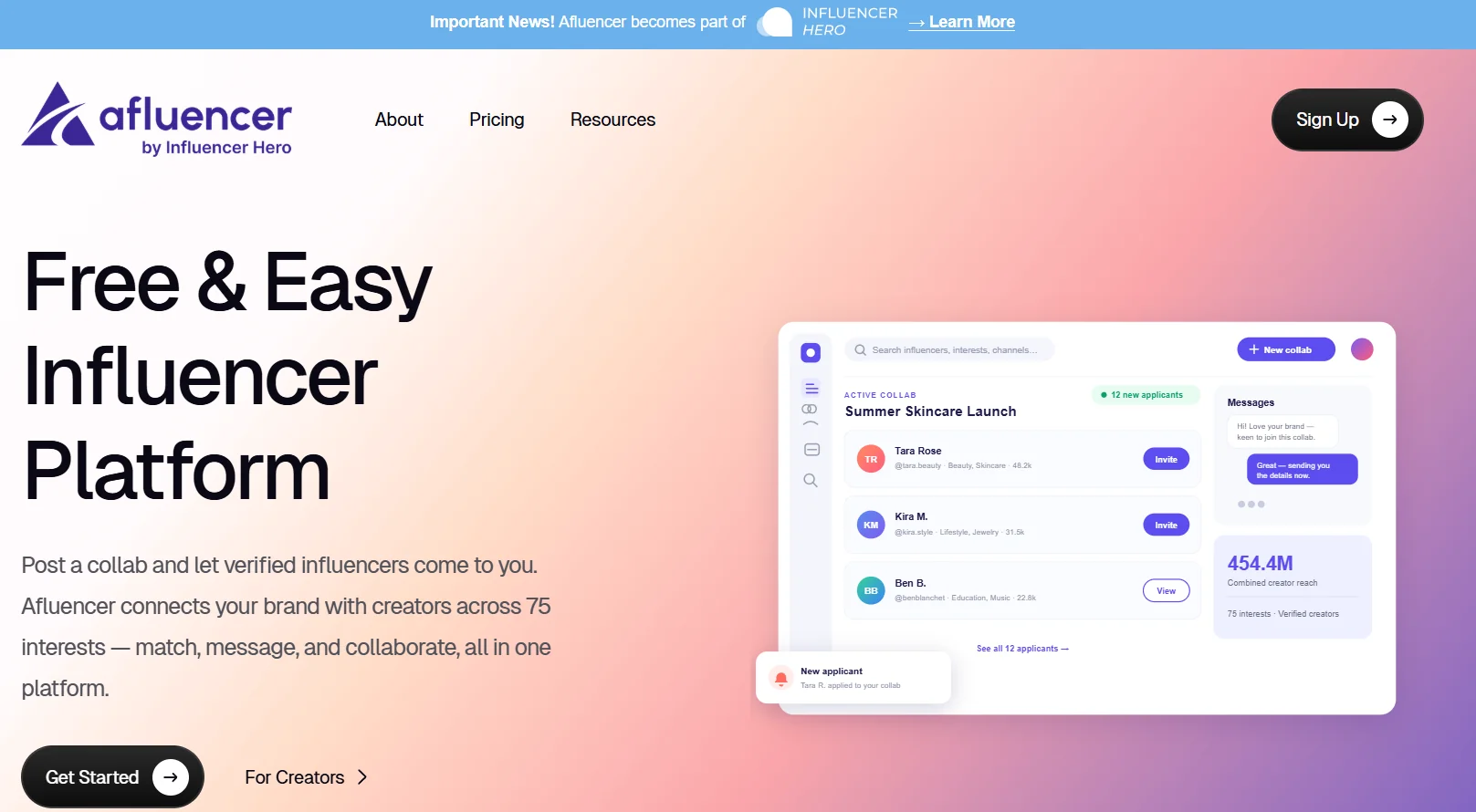
Afluencer takes a different approach to influencer marketing software. Instead of paying for a database to search, you post a Collab describing your campaign, and verified creators apply to you.
You can also search and filter the database directly by niche, platform, and audience size. That inbound model removes the slowest part of any campaign, sourcing and vetting creators, because interested influencers come to you already opted in and matched to your brand.
The numbers: Afluencer's brand plans start at $49/month on the Marketplace tier, which covers posting Collabs and receiving creator applications. Standard runs $649/month and Pro $1,049/month for higher volume and advanced filters. Billing is monthly, so there is no annual contract to sign before you see results.
The AI layer sets it apart. CreatorGPT helps you write your Collab and pick the right creators, while the Afluencer Collab Finder matches you with live opportunities in your niche. If you want a low-risk way to start influencer marketing before committing to expensive software, this is the easiest place to begin.
See how AI influencer matching with CreatorGPT works, or use the Afluencer Collab Finder to get matched with creators ready to promote your brand.
2. GRIN

GRIN is one of the most established all-in-one platforms for DTC and ecommerce brands. It connects to your Shopify store and handles the full lifecycle: discovery, outreach, product seeding, content management, payments, and ROI reporting. Social listening catches when creators post, and the deep Shopify integration ties every partnership back to actual sales. For brands running structured creator programs, the workflow depth saves real hours each week.
The numbers: GRIN restructured to transparent tiered pricing in 2026, a notable shift from its old annual custom quotes. Plans run Lite at $399/month (15 creators), Essentials at $699 (100), Growth at $1,149 (200), and Complete at $1,799 (400 creators plus API). It also added a 30-day free trial and month-to-month billing.
GRIN fits brands that have outgrown manual campaigns and want one system for everything. It is not the cheapest, but the all-in-one depth justifies the price once your program scales past a handful of creators.
3. Influencer Hero
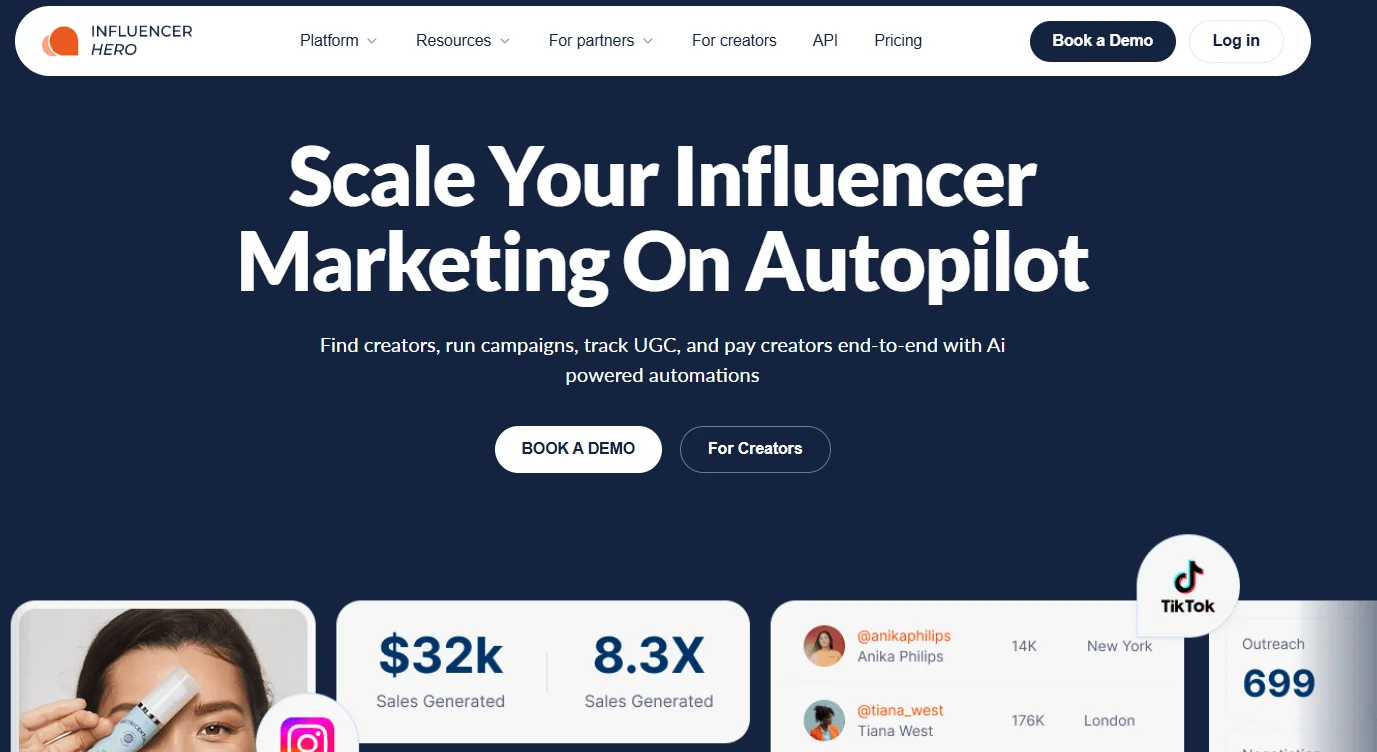
Influencer Hero is an all-in-one influencer marketing platform: discovery, outreach automation, CRM, gifting, affiliate tracking, and UGC storage in one dashboard. Its standout is the outreach engine. You build email sequences that send from your own domain with automatic follow-ups, so sourcing turns into hundreds of personalized pitches without manual work. The CRM then stores every creator's history, content, and payment status in one profile.
Influencer Hero also integrates with over 40 platforms and tools. From E-commerce to Social Media, Contract Management, and communication tools, this integrations will help you to automate your influencer marketing campaigns, boosting positive results.
It suits mid-market DTC and Shopify brands that want discovery and execution under one roof.
The numbers: The Standard plan starts at $649/month and covers up to 1,000 creator contacts. Pro is $1,049/month (5,000 contacts) and Business is $2,490/month (10,000 contacts). Quarterly and annual billing come at a discount.
One honest caveat: there is no free trial, the entry plan carries a 3-month minimum, and pricing is per brand, so agencies juggling several clients pay more. For a single brand committed to scaling, the automation and CRM depth are hard to beat at this price.
4. Modash

Modash pairs the largest creator database here with a clean management workflow. You search 250 million-plus profiles, filter by audience demographics and engagement, unlock verified emails, run outreach, and track content, all in one tool. Built-in fake-follower detection flags inflated accounts before you spend a dollar, and the Shopify integration ties campaigns to revenue. It covers Instagram, TikTok, and YouTube in a single platform.
The numbers: Essentials starts at $199/month billed annually, or $299/month monthly, with a real 14-day free trial and no credit card required. Performance runs $499/month annually for larger teams, and Enterprise is custom.
Modash is the strongest pick when discovery volume matters but you still want full campaign management. The main limit to watch is the monthly search-page allowance, but for most in-house teams it is generous enough not to feel it.
5. Aspire
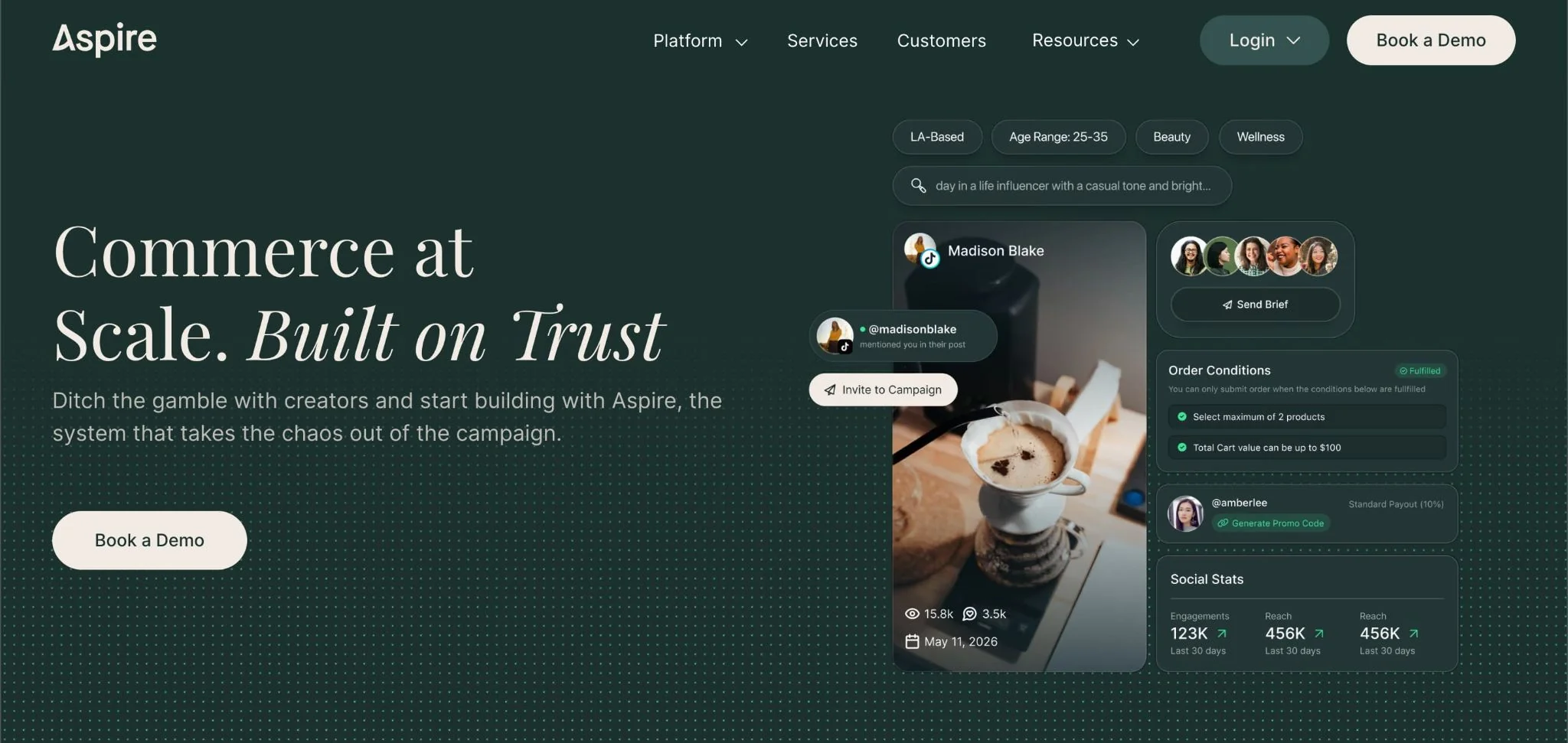
Aspire (formerly AspireIQ) is a full word-of-mouth commerce platform used by major DTC names. It bundles discovery, a creator marketplace where influencers apply to your campaigns, gifting, content approval, affiliate programs, and reporting. The breadth is the point: it is built to run ambassador programs, affiliate, and one-off campaigns from a single system, with award-winning agency services if you want help executing.
The numbers: Aspire uses custom pricing with no public tiers. Third-party estimates put entry around $1,000/month with annual contracts, and Capterra lists pricing as high as $2,499/month. You will need a demo to get a real quote.
Aspire is a robust, enterprise-leaning option for established brands running creator programs at scale. The cost and feature depth can be more than a smaller brand needs, so it pays off most for teams already managing multiple programs at once.
6. Upfluence

Upfluence is an all-in-one platform with a unique angle: it finds influencers inside your own customer base. By syncing purchase and social data, it surfaces buyers and subscribers who already have reach, then lets you gift, pay, or run affiliate deals with them. It also runs standard discovery and connects to Shopify, WooCommerce, and BigCommerce for full revenue attribution.
The numbers: Upfluence uses custom modular pricing with no public page. G2 lists entry around $478/month for a single search-and-contact module, while fuller suites commonly land near $2,000/month. Every plan requires a 12-month contract through sales.
Upfluence is a powerful pick for brands that want to turn loyal customers into creators with deep attribution baked in. Just know the 12-month commitment and modular add-ons mean costs can climb as your needs grow.
7. CreatorIQ
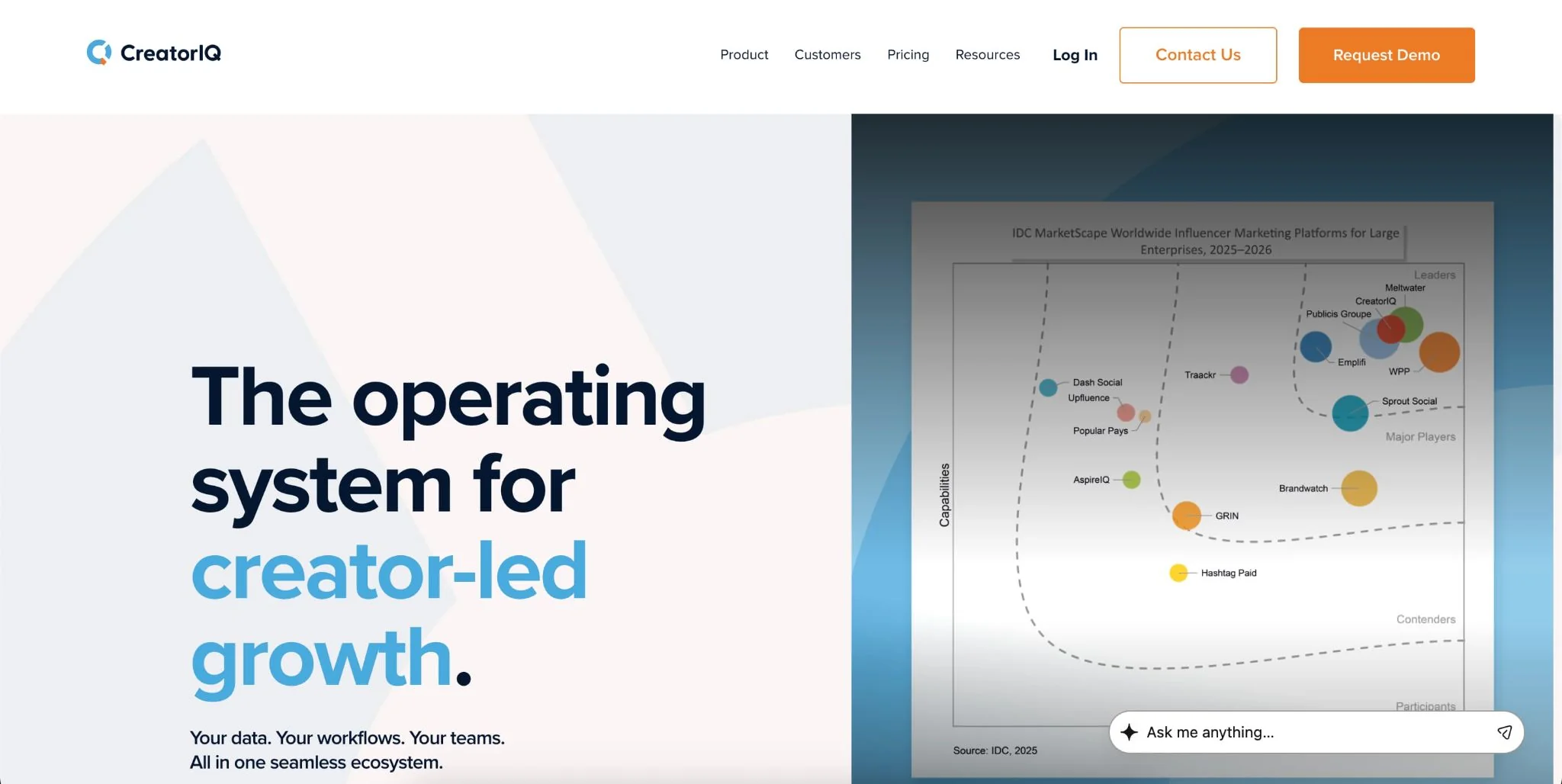
CreatorIQ is the enterprise standard, used by Disney, Sephora, Unilever, Nestlé, and more than 1,300 global brands. It is a full-stack platform built for scale: creator discovery across a massive index, campaign management, creator CRM, real-time analytics, compliance, brand safety, and white-labeling for agencies. If you are running a seven-figure creator program with a dedicated team, this is the category leader.
The numbers: CreatorIQ does not publish pricing. Based on procurement data, annual contracts typically start around $30,000 and run to $90,000 or more, with a median near $39,250. There are no monthly plans, and a sales call plus annual commitment are required.
CreatorIQ is the right call for large enterprises that need governance and reporting at scale. For most growing brands it is overkill: the price, multi-week onboarding, and the fact that it centralizes data rather than automating outreach make it a poor fit below the enterprise tier.
8. HypeAuditor
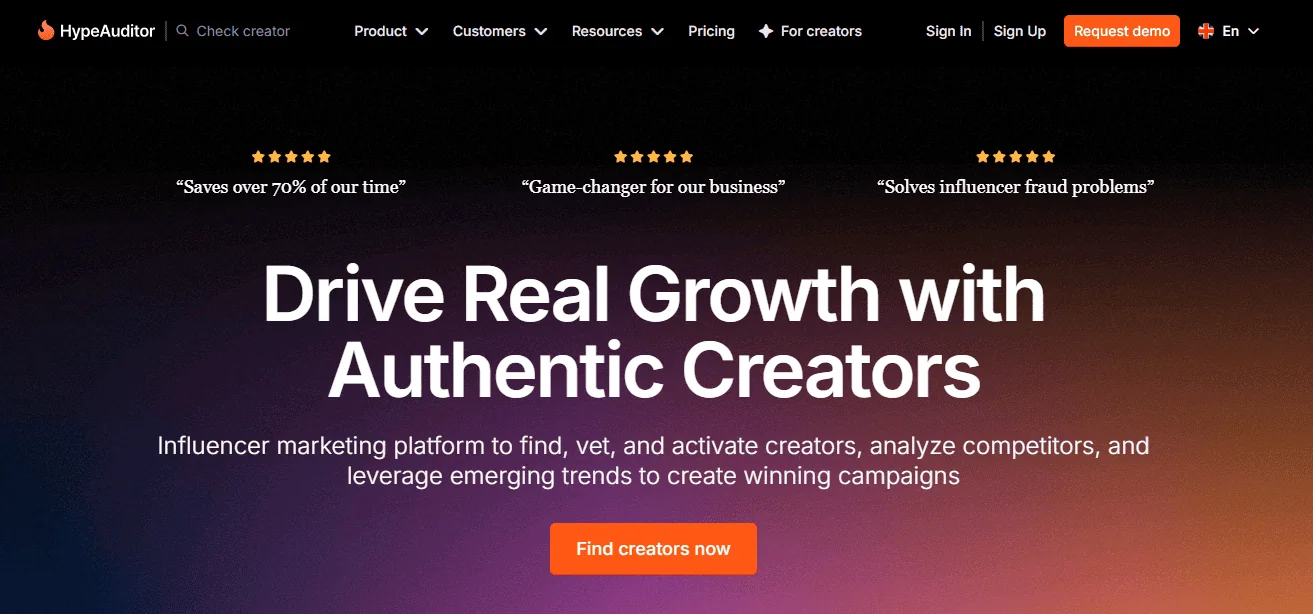
HypeAuditor is an analytics-first platform built around trust. Its claim to fame is fraud detection: every creator gets a quality score, and you can vet audiences across 35-plus metrics to confirm followers and engagement are real. On top of that sits a full CRM with discovery across a 227 million-plus database, campaign management, and reporting. For teams that screen heavily before committing budget, the data depth is the draw.
The numbers: The Basic plan starts at $299/month billed annually, with custom quotes above that. Pricing is usage-based, so heavy search and reporting volume pushes the cost up. Advanced filters like AI Search and lookalikes unlock on higher tiers.
HypeAuditor is the pick when audience authenticity is your top concern and you want analytics-grade vetting inside a management tool. The trade-off is cost: it sits at the premium end, and the entry tier limits the best discovery filters.
9. Influencity

Influencity is a discovery and relationship platform that punches above its price. You search 200 million-plus profiles with 30-plus filters, run fake-influencer detection, get cost predictions, and manage campaigns with reporting. It does not charge per influencer, so you can analyze and organize as many creators as your plan limits allow. That makes it a strong fit for brands and small agencies running several campaigns at once.
The numbers: Basic starts at $168/month with month-to-month billing and a 7-day free trial, one of the more accessible entry points among the big-database platforms. Professional runs $318 to $398/month and adds users, more profile analyses, and reporting.
Influencity works best for mid-market teams that want serious discovery and management data without enterprise pricing. Just know it is a search-and-campaign tool, not a social scheduler, so you will pair it with other software for content.
10. Later Influence
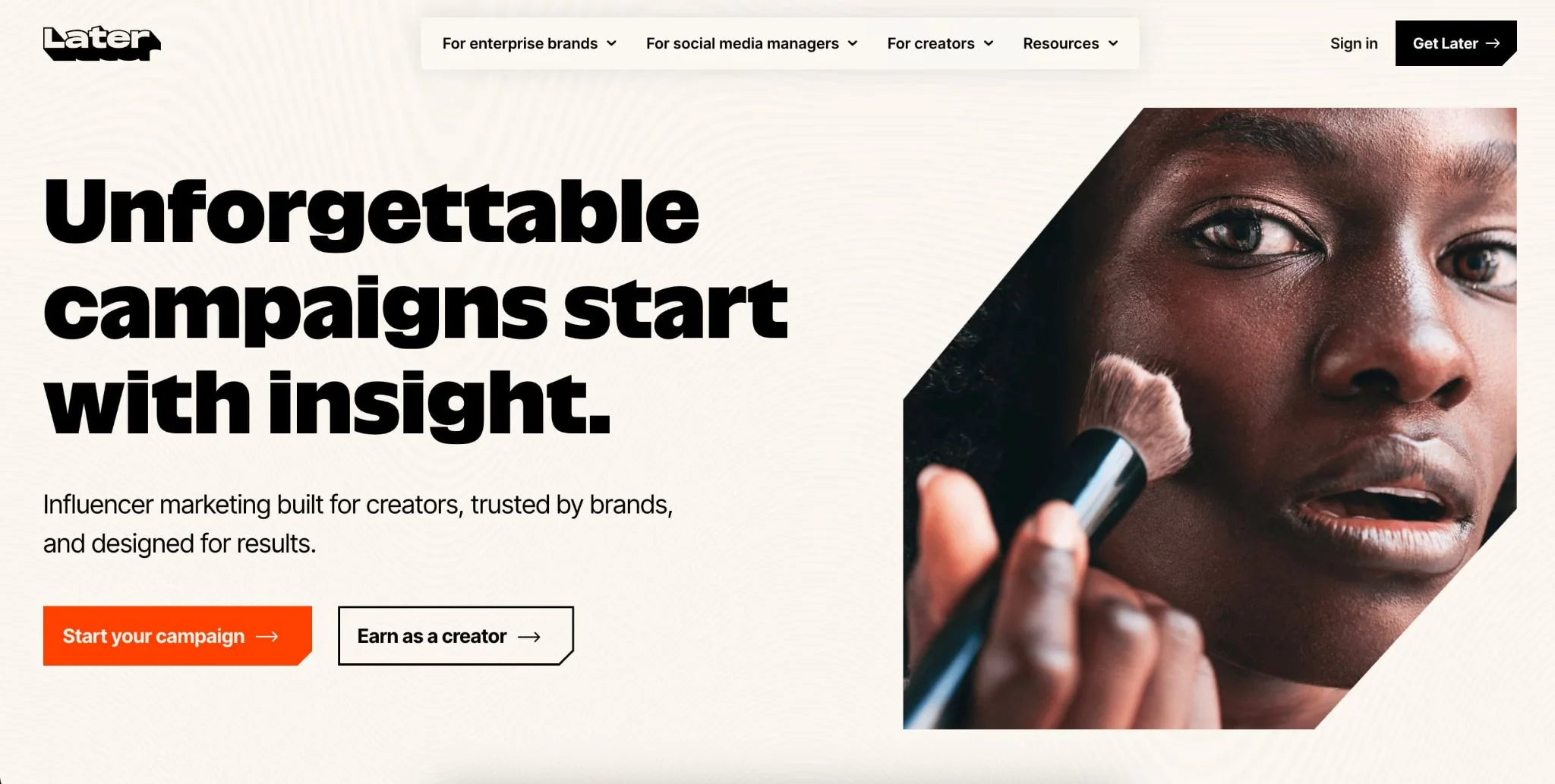
Later Influence, formerly Mavrck, is an enterprise platform now part of the unified Later ecosystem alongside Later Social and Mavely. It runs end-to-end campaigns with AI-powered discovery, integrated workflows, real-time analytics, and AI social listening to monitor brand mentions. A standout feature is influencer activation at checkout, which turns customers into advocates. Its Influencer Index is built on opted-in creators, which keeps data clean. It is trusted by brands like Gillette, Dunkin', and P&G.
The numbers: Later Influence uses custom subscription pricing based on your needs, so you will need a demo for a quote. The Influencer Index covers 10 million-plus opted-in creators across major platforms.
Later Influence fits established brands that want campaign management plus social listening in one system. The honest trade-offs are the opted-in-only index, which is cleaner but smaller than scraped databases, and a learning curve some users flag while getting set up.
How to Choose the Right Influencer Marketing Software in 2026
There is no single best platform here, only the best fit for your scale, budget, and workflow. Use these factors to self-select.
- Match the tier to your program Entry points range from free to $30,000 a year. A brand running its first campaign and a Fortune 500 team should not be on the same tool. Be honest about your scale before you buy.
- Execution versus data Some platforms automate outreach, follow-ups, and payments. Others just centralize data and leave the work to you. Decide whether you want the software to do the work or organize it.
- All-in-one or point solution A full suite saves tab-switching but costs more. If you only need discovery, a leaner tool will do. Buying a suite you will not fully use wastes budget.
- Inbound versus search Some teams want to search and filter. Others would rather have creators apply, and it helps to understand how the right creators get matched to your brand before committing.
- Total cost, not sticker price Factor in contract length, per-brand pricing, and creator payments on top of the subscription. Also set realistic creator rate expectations so your software and campaign budgets line up.
Match two or three of these to your situation and the shortlist gets short fast.
Final Thoughts
The best influencer marketing software in 2026 is not the one with the most features. It is the one that fits how your team actually works. The platforms above each solve a different version of the problem, from free inbound sourcing to enterprise programs running thousands of creators.
You do not need all ten. You need the one or two that match your budget, your bandwidth, and whether you want software to execute the work or just organize it. Start where you are, and upgrade when you outgrow it.
Ready to run your first campaign without a big software commitment? Post your first Collab on Afluencer, see how AI influencer matching with CreatorGPT speeds up the process, or use the Afluencer Collab Finder to get matched with creators today.
Frequently Asked Questions
<details class="ih-faq"><summary>What is influencer marketing software?</summary><div class="ih-faq-a">It is a platform that replaces the spreadsheets and DMs most brands start with. The full suites handle discovery, outreach, contracts, product seeding, payments, and ROI reporting in one system, while lighter tools focus on one part of that, usually discovery. The distinction that matters most is whether a platform executes the work or just centralizes the data.</div></details><details class="ih-faq"><summary>How much does influencer marketing software cost in 2026?</summary><div class="ih-faq-a">Entry points run from $49/month for Afluencer up to roughly $30,000 a year for CreatorIQ. In between, Influencity starts at $168/month, Modash at $199/month, HypeAuditor at $299/month, GRIN at $399/month, Upfluence around $478/month, Influencer Hero at $649/month, and Aspire near $1,000/month. Later Influence and CreatorIQ are custom-quoted through sales.</div></details><details class="ih-faq"><summary>What is the best influencer marketing platform for a small brand?</summary><div class="ih-faq-a">Start where the commitment is lowest. Afluencer runs from $49/month with monthly billing and an inbound model, so creators apply instead of you building a list. Influencity at $168/month and Modash at $199/month are the next step up if you want a big searchable database, and both bill month to month.</div></details><details class="ih-faq"><summary>Do influencer marketing platforms automate outreach or just organize data?</summary><div class="ih-faq-a">It varies, and it is the single biggest thing to check on a demo. Influencer Hero and GRIN automate outreach sequences, follow-ups, and payments, while enterprise systems like CreatorIQ mostly centralize data and reporting and leave execution to your team. Ask specifically what the software does on its own versus what someone on your side still has to do manually.</div></details><details class="ih-faq"><summary>Do I need an all-in-one platform or just a discovery tool?</summary><div class="ih-faq-a">Depends on where the bottleneck is. If finding creators is the hard part, a discovery-led tool like Modash or Influencity is enough. If you are losing time to outreach, contracts, shipping, and payouts, an all-in-one suite like Influencer Hero, GRIN, or Aspire earns its price back, and paying for a suite you only use for search does not.</div></details><script type="application/ld+json">{"@context":"https://schema.org","@type":"FAQPage","mainEntity":[{"@type":"Question","name":"What is influencer marketing software?","acceptedAnswer":{"@type":"Answer","text":"It is a platform that replaces the spreadsheets and DMs most brands start with. The full suites handle discovery, outreach, contracts, product seeding, payments, and ROI reporting in one system, while lighter tools focus on one part of that, usually discovery. The distinction that matters most is whether a platform executes the work or just centralizes the data."}},{"@type":"Question","name":"How much does influencer marketing software cost in 2026?","acceptedAnswer":{"@type":"Answer","text":"Entry points run from $49/month for Afluencer up to roughly $30,000 a year for CreatorIQ. In between, Influencity starts at $168/month, Modash at $199/month, HypeAuditor at $299/month, GRIN at $399/month, Upfluence around $478/month, Influencer Hero at $649/month, and Aspire near $1,000/month. Later Influence and CreatorIQ are custom-quoted through sales."}},{"@type":"Question","name":"What is the best influencer marketing platform for a small brand?","acceptedAnswer":{"@type":"Answer","text":"Start where the commitment is lowest. Afluencer runs from $49/month with monthly billing and an inbound model, so creators apply instead of you building a list. Influencity at $168/month and Modash at $199/month are the next step up if you want a big searchable database, and both bill month to month."}},{"@type":"Question","name":"Do influencer marketing platforms automate outreach or just organize data?","acceptedAnswer":{"@type":"Answer","text":"It varies, and it is the single biggest thing to check on a demo. Influencer Hero and GRIN automate outreach sequences, follow-ups, and payments, while enterprise systems like CreatorIQ mostly centralize data and reporting and leave execution to your team. Ask specifically what the software does on its own versus what someone on your side still has to do manually."}},{"@type":"Question","name":"Do I need an all-in-one platform or just a discovery tool?","acceptedAnswer":{"@type":"Answer","text":"Depends on where the bottleneck is. If finding creators is the hard part, a discovery-led tool like Modash or Influencity is enough. If you are losing time to outreach, contracts, shipping, and payouts, an all-in-one suite like Influencer Hero, GRIN, or Aspire earns its price back, and paying for a suite you only use for search does not."}}]}</script>