.svg)
.png)
- Influencity vs Afluencer: A Detailed Comparison
- Quick Comparison: Influencity vs Afluencer at a Glance
- What Is Influencity?
- What Is Afluencer?
- Influencity vs Afluencer: Feature by Feature
- Pricing: What You'll Actually Pay
- Scaling Beyond the Marketplace: Where Influencer Hero Fits
- Which Platform Is Right for You?
- The Bottom Line
Influencity vs Afluencer: A Detailed Comparison
Two platforms, two completely different ways of working. Influencity hands you a database of hundreds of millions of creator profiles and expects you to go find the right ones. Afluencer flips it: you post a Collab, and verified creators apply to you.
Neither approach is wrong. They just suit different teams, different budgets, and different amounts of time. Most of the comparison content out there skips that part and hands you a feature checklist, which tells you nothing about whether you'll actually use the thing you're paying for. If you're still mapping the wider category, our roundup of influencer marketing platforms covers where each type of tool fits.
Here's what you get below: how each platform works day to day, where each one genuinely earns its price, what they cost in 2026, and where the honest limits are on both sides.
Quick Comparison: Influencity vs Afluencer at a Glance
What Is Influencity?
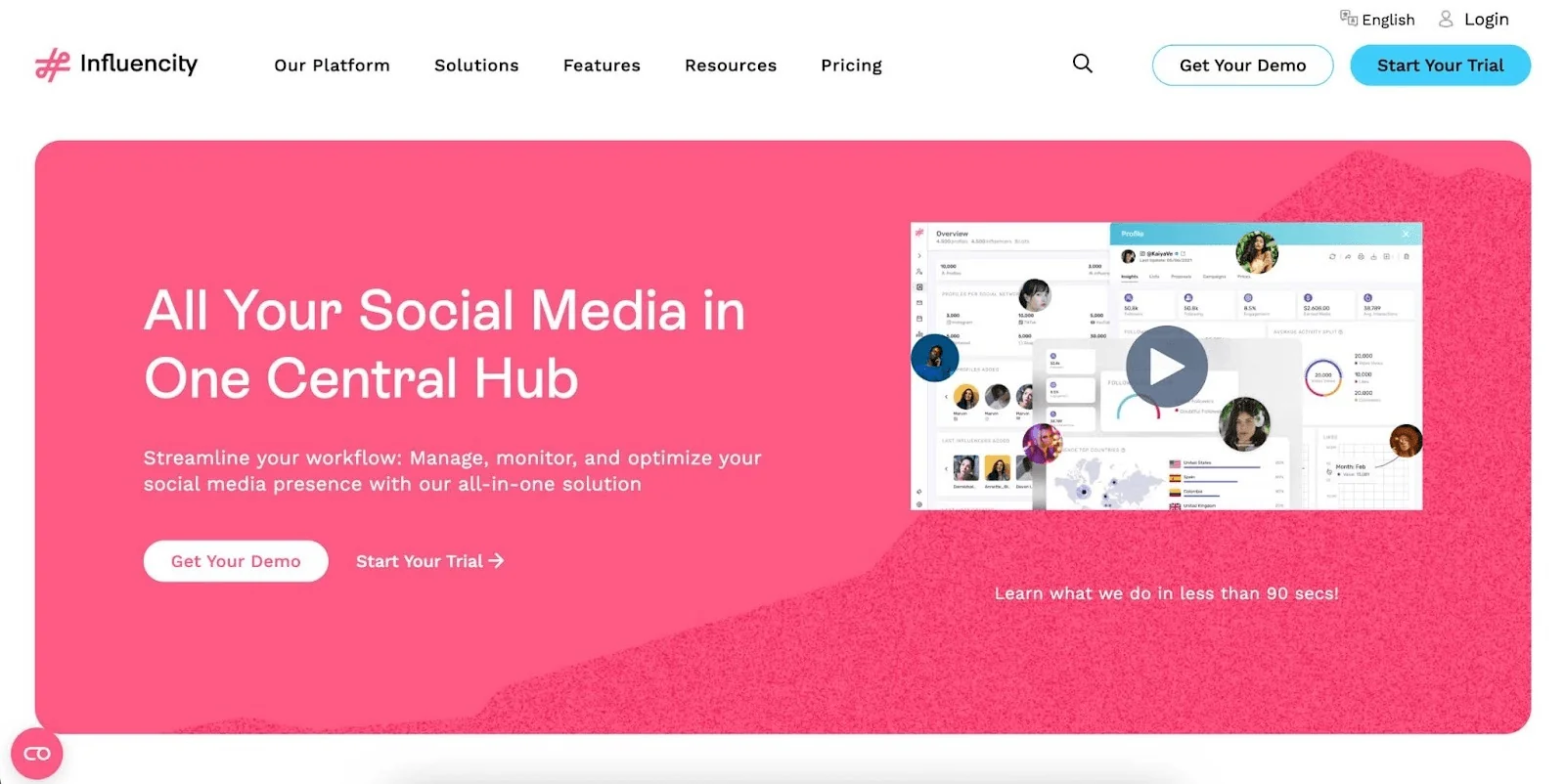
Influencity is a Spanish-built influencer marketing platform that runs on data. It indexes more than 300 million public creator profiles across Instagram, TikTok, YouTube and Twitch, then gives you 30-plus filters to cut that pool down to a shortlist you can actually work with.
The workflow is search-first. You describe who you want, filter by audience demographics, engagement, growth rate and location, audit the profiles for fake followers, then move the keepers into the IRM (Influencer Relationship Management) hub to manage outreach and campaigns. Agencies like Havas and Dentsu use it, and so do brands like Samsung and Kellogg's, which tells you a lot about who it was designed for.
Over the past couple of years it has also expanded well past influencer marketing, adding social media management and social listening modules to the same subscription.
Deep Audience Data and Vetting
This is Influencity's strongest card. You get audience age, gender, location, interests and authenticity scores on any profile, plus fake follower detection and audience overlap between creators on your list so you're not paying twice to reach the same people.
The AI assistant is a real time-saver too. You describe what you're after in plain language and it fills the filters for you, which cuts the learning curve on a tool that has a lot of knobs to turn.
Outreach and Campaign Management
Once you have a shortlist, Influencity handles email outreach, recruitment landing pages that let creators come to you, product seeding through your store, and multi-currency creator payments. It's a genuine end-to-end flow rather than a database with a contact button, which puts it ahead of most influencer outreach tools in the same price band.
Reporting and Social Listening
Campaign Reports pull performance data at post, creator and campaign level, and the Monitoring module tracks mentions, hashtags and competitor activity in real time. If you care about proving reach and EMV to a client or a CMO, the reporting depth stands up well against dedicated influencer marketing analytics tools.
Where Influencity Falls Short
The credit system is the thing people complain about. Every plan caps how many profiles and posts you can analyze each month, so heavy research months mean upgrading or buying more capacity. Affiliate links, commission tracking and creator storefronts also sit outside the product, so if your influencer program is meant to drive trackable revenue rather than reach, you'll be adding another tool.
What Is Afluencer?
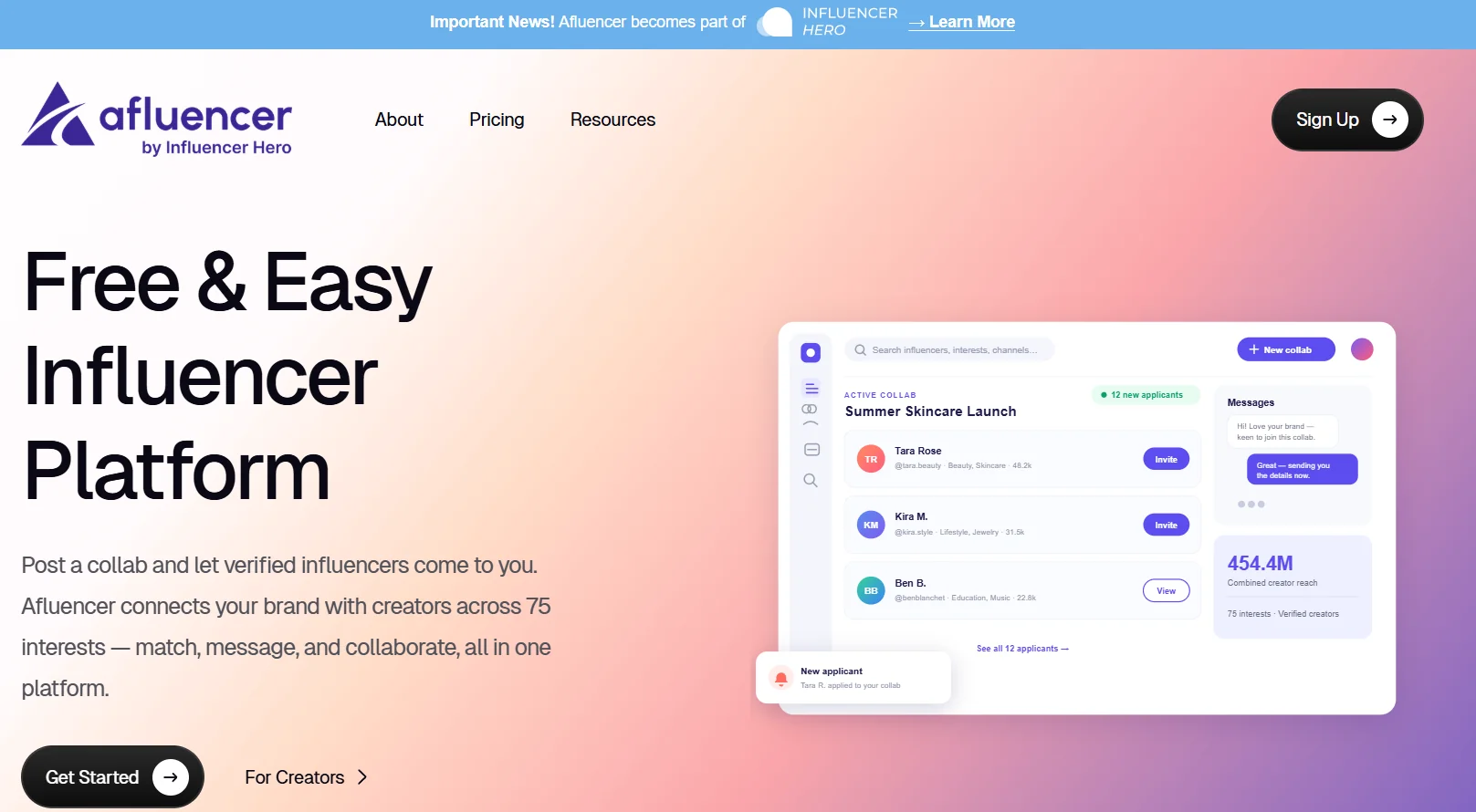
Afluencer works the other way around. Instead of searching a database and pitching strangers, you post a Collab describing what you want, and verified creators on the platform apply to it. Everyone who lands in your inbox has already raised their hand, which changes the entire tone of the conversation.
The creator side is verified and active across Instagram, TikTok, YouTube, Facebook and X, and it skews micro and nano. That's the sweet spot for gifting campaigns, ambassador programs and product launches where authenticity matters more than raw reach. Afluencer is also part of Influencer Hero, the all-in-one platform, which matters later when you outgrow the marketplace.
Creators Apply to You
The inbound model kills the worst part of influencer marketing, which is cold outreach that never gets answered. You set the terms up front, whether that's a flat fee, gifted product, affiliate commission or a hybrid, and only motivated creators apply. Brands that would otherwise spend weeks finding micro-influencers get applications in days.
Search and Invite When You Want To
Inbound isn't the only lever. Premium filters let you search the creator pool directly and send invitation credits to the people you want, so you can run both motions at once: post a Collab for volume, invite selectively for the creators you really want.
AI Matching With CreatorGPT
CreatorGPT handles the strategy side, from campaign angles and commission structures to which creator profiles fit your brand. The Collab Finder does the matching in the other direction, surfacing live opportunities to creators so your Collab reaches people who are already looking.
Built for Shopify and BigCommerce Brands
Afluencer ships native Shopify and BigCommerce apps, so gifting and product send-outs run against your real store instead of a spreadsheet. For a DTC brand doing its first serious round of creator collabs, that's usually the fastest path from setup to first post.
Where Afluencer Falls Short
You're working with a curated community of creators, not a 300 million profile index, so if you need a very specific niche in a very specific country you may not find them here. The audience analytics are lighter than a data-first tool too. Afluencer is built to connect you with real creators quickly, not to run forensic audience analysis before every deal.
That's exactly the point where brands move up to Influencer Hero, which is included from Afluencer's Standard plan. It puts a 450M+ creator database across Instagram, TikTok and YouTube behind the same account, so you keep the inbound Collabs and add the search depth and vetting data the marketplace doesn't cover on its own.
Influencity vs Afluencer: Feature by Feature
Influencer Discovery
Influencity gives you scale and precision: hundreds of millions of profiles, 30-plus filters and audience data on anyone with a public account, whether or not they've heard of you. Afluencer gives you intent: a smaller pool of verified creators who are actively looking for brand deals. Scale is more powerful. Intent converts faster. Which one you need depends on whether your bottleneck is finding creators or getting them to reply.
Outreach and Communication
Influencity runs on email sequences and recruitment pages, which is the right setup when you're contacting people cold at volume. Afluencer keeps everything in-app, with direct messaging between you and creators who already applied. One is a pipeline. The other is a conversation.
Campaign Management and CRM
This is where the gap is widest. Influencity's IRM tracks relationships, statuses, budgets and deliverables across campaigns, with forecasting before you spend. Afluencer manages Collabs and applicants well, but it isn't trying to be a CRM. If you're juggling 50 creators across three campaigns and two markets, you'll feel that difference quickly.
Tracking and Attribution
Both platforms report on content performance. Neither is built around commission-based revenue attribution, so if you want creator-specific discount codes, affiliate links and sales tied back to individual creators, you're looking at a dedicated stack. Our roundup of affiliate payment tools breaks down what that layer actually needs to do.
Integrations
Influencity connects to your ecommerce store for seeding and pays creators in multiple currencies. Afluencer's Shopify and BigCommerce apps put Collabs and creator management inside the store you already run. For a Shopify-first DTC brand, Afluencer's integration is the more native experience.
Pricing: What You'll Actually Pay
Influencity's Basic plan starts at roughly $168 per month, with Professional around $348 and Business around $698, plus custom Enterprise pricing. Annual billing brings the effective monthly cost down, and every plan comes with a 7-day trial. Just watch the analysis credits: the entry tier is tight if you're evaluating a lot of profiles.
Afluencer's brand pricing starts at $49 per month for the Marketplace plan, which covers 60 invitation credits a month, premium influencer filters and phone, email and live chat support. Above that sit the Standard plan at $649 per month and the Pro plan at $1,049 per month, which unlock outreach at volume, product send-outs and influencer payments.
Now do the budget math. If your total monthly influencer spend is $1,000, committing $348 of it to software before a single creator gets paid is a third of your program. Starting at $49 and putting the difference into product and creator fees usually produces more content in your first quarter than a heavier tool you're only half using.
Scaling Beyond the Marketplace: Where Influencer Hero Fits
Afluencer is part of Influencer Hero, and that relationship is the practical answer to what happens when the marketplace stops being enough. From the Standard plan and up, you get access to the Influencer Hero platform itself.
That's the step up for brands running outreach at real volume: AI-powered discovery across Instagram, TikTok and YouTube, automated multi-step outreach sequences sent from your own domain, a full creator CRM, gifting tied to your store, affiliate links with sales attribution, and creator storefronts. It's the piece both Influencity and the Afluencer marketplace leave on the table, which is revenue tracked back to individual creators rather than reach and impressions.
Pricing is public: Standard at $649 per month, Pro at $1,049 and Business at $2,490. If you want to see how the affiliate and attribution side would work with your store, book a demo with Influencer Hero.
Which Platform Is Right for You?
Influencity is the right call when creator selection is the hard part of your job. If you're an agency reporting to clients, or a brand launching in five countries and needing audience data to justify every pick, the database depth and audience analytics do work that a marketplace simply can't. The social listening and reporting modules add real value if brand tracking sits in the same team.
Afluencer makes more sense when your bottleneck is response rate, not shortlist size. Post a Collab, get applications from creators who already want to work with brands like yours, ship product, get content. It's the fastest route from zero to a working creator program at $49 a month, and it's a sensible way to learn what your brand actually needs before you commit to heavier software.
If you're building something ongoing rather than campaign by campaign, look at how the two models handle ambassadors: our guide to brand ambassador platforms covers what changes when creators become long-term partners.
And when the program grows past what a marketplace covers, the upgrade path is already there. Sign up on Afluencer to start, then move onto the Standard plan when you need Influencer Hero's outreach automation, CRM and affiliate attribution behind it.
The Bottom Line
Influencity solves a research problem. Afluencer solves a recruitment problem. If you already know how to find creators and just need them to say yes, the marketplace model gets you there for a fraction of the cost.
Start where your program actually is. Sign up on Afluencer and post your first Collab this week.
When outreach volume, CRM and revenue attribution become the things holding you back, Influencer Hero is one plan away.
Frequently Asked Questions
<details class="ih-faq"><summary>What's the main difference between Influencity and Afluencer?</summary><div class="ih-faq-a">Influencity is search-first software: you filter a database of 300 million-plus profiles and reach out. Afluencer is a marketplace: you post a Collab and verified creators apply to you. One is built for finding creators, the other for getting them to respond.</div></details><details class="ih-faq"><summary>Which platform is better for small DTC brands?</summary><div class="ih-faq-a">For most small DTC brands, Afluencer fits the stage better. At $49 a month you get verified creators applying to your Collabs plus Shopify and BigCommerce integration. Influencity earns its higher price once audience vetting and multi-market reporting become part of the job.</div></details><details class="ih-faq"><summary>Does Influencity track affiliate sales?</summary><div class="ih-faq-a">No. Influencity covers discovery, outreach, seeding, payments and reporting, but commission tracking and creator storefronts sit outside the platform. For revenue attributed to individual creators, you'll need an affiliate layer like the one built into Influencer Hero.</div></details><details class="ih-faq"><summary>Can I use Afluencer and Influencer Hero together?</summary><div class="ih-faq-a">Yes. Afluencer is part of Influencer Hero, and the Influencer Hero platform is included from Afluencer's Standard plan and up. Plenty of brands source creators through the marketplace and run outreach, CRM and affiliate tracking in Influencer Hero.</div></details><details class="ih-faq"><summary>Does Afluencer work with Shopify?</summary><div class="ih-faq-a">Yes. Afluencer has native Shopify and BigCommerce apps, so you can post Collabs, review applicants and handle product send-outs against your real store data. That makes gifting campaigns much easier to run than managing addresses and orders in a spreadsheet.</div></details><details class="ih-faq"><summary>Tagged In:</summary><div class="ih-faq-a">influencity, afluencer, influencer marketing platforms, platform comparison, influencer hero</div></details><script type="application/ld+json">{"@context":"https://schema.org","@type":"FAQPage","mainEntity":[{"@type":"Question","name":"What's the main difference between Influencity and Afluencer?","acceptedAnswer":{"@type":"Answer","text":"Influencity is search-first software: you filter a database of 300 million-plus profiles and reach out. Afluencer is a marketplace: you post a Collab and verified creators apply to you. One is built for finding creators, the other for getting them to respond."}},{"@type":"Question","name":"Which platform is better for small DTC brands?","acceptedAnswer":{"@type":"Answer","text":"For most small DTC brands, Afluencer fits the stage better. At $49 a month you get verified creators applying to your Collabs plus Shopify and BigCommerce integration. Influencity earns its higher price once audience vetting and multi-market reporting become part of the job."}},{"@type":"Question","name":"Does Influencity track affiliate sales?","acceptedAnswer":{"@type":"Answer","text":"No. Influencity covers discovery, outreach, seeding, payments and reporting, but commission tracking and creator storefronts sit outside the platform. For revenue attributed to individual creators, you'll need an affiliate layer like the one built into Influencer Hero."}},{"@type":"Question","name":"Can I use Afluencer and Influencer Hero together?","acceptedAnswer":{"@type":"Answer","text":"Yes. Afluencer is part of Influencer Hero, and the Influencer Hero platform is included from Afluencer's Standard plan and up. Plenty of brands source creators through the marketplace and run outreach, CRM and affiliate tracking in Influencer Hero."}},{"@type":"Question","name":"Does Afluencer work with Shopify?","acceptedAnswer":{"@type":"Answer","text":"Yes. Afluencer has native Shopify and BigCommerce apps, so you can post Collabs, review applicants and handle product send-outs against your real store data. That makes gifting campaigns much easier to run than managing addresses and orders in a spreadsheet."}},{"@type":"Question","name":"Tagged In:","acceptedAnswer":{"@type":"Answer","text":"influencity, afluencer, influencer marketing platforms, platform comparison, influencer hero"}}]}</script>