.svg)
.png)
.png)
10 Best Brandwatch Influence Alternatives in 2026
If you're looking for Brandwatch Influence alternatives, the reason is probably the quote. Brandwatch Influence is a capable platform. It indexes 65M+ creators, pays them out in 120+ currencies, and plugs creator data into one of the deepest social listening suites on the market. Carlsberg, Toyota, the BBC and Henkel all run on it. But nothing about the price is published, every deal is an annual contract, and reported mid-market figures for the Influence module alone land between $20,000 and $45,000 a year. Enterprise deployments climb past $150,000.
The second reason is structural. Brandwatch didn't build its influencer tools. It bought them, acquiring Paladin in March 2022 and rebranding it as Influence. That's why the module sits inside a consumer intelligence suite rather than at the centre of the product. If your main job is discovering creators, running outreach and shipping campaigns, you end up paying for a listening platform to get an influencer tool. Plenty of teams would rather buy the influencer tool.
Good news: the options in 2026 range from $49 a month to full enterprise suites, and several publish their pricing openly. If you're still shaping your program before picking software, our guide on how to create an influencer marketing strategy pairs well with this list, and our roundup of the best influencer marketing platforms covers a wider slice of the market.
Top Brandwatch Influence Alternatives in 2026
1. Afluencer
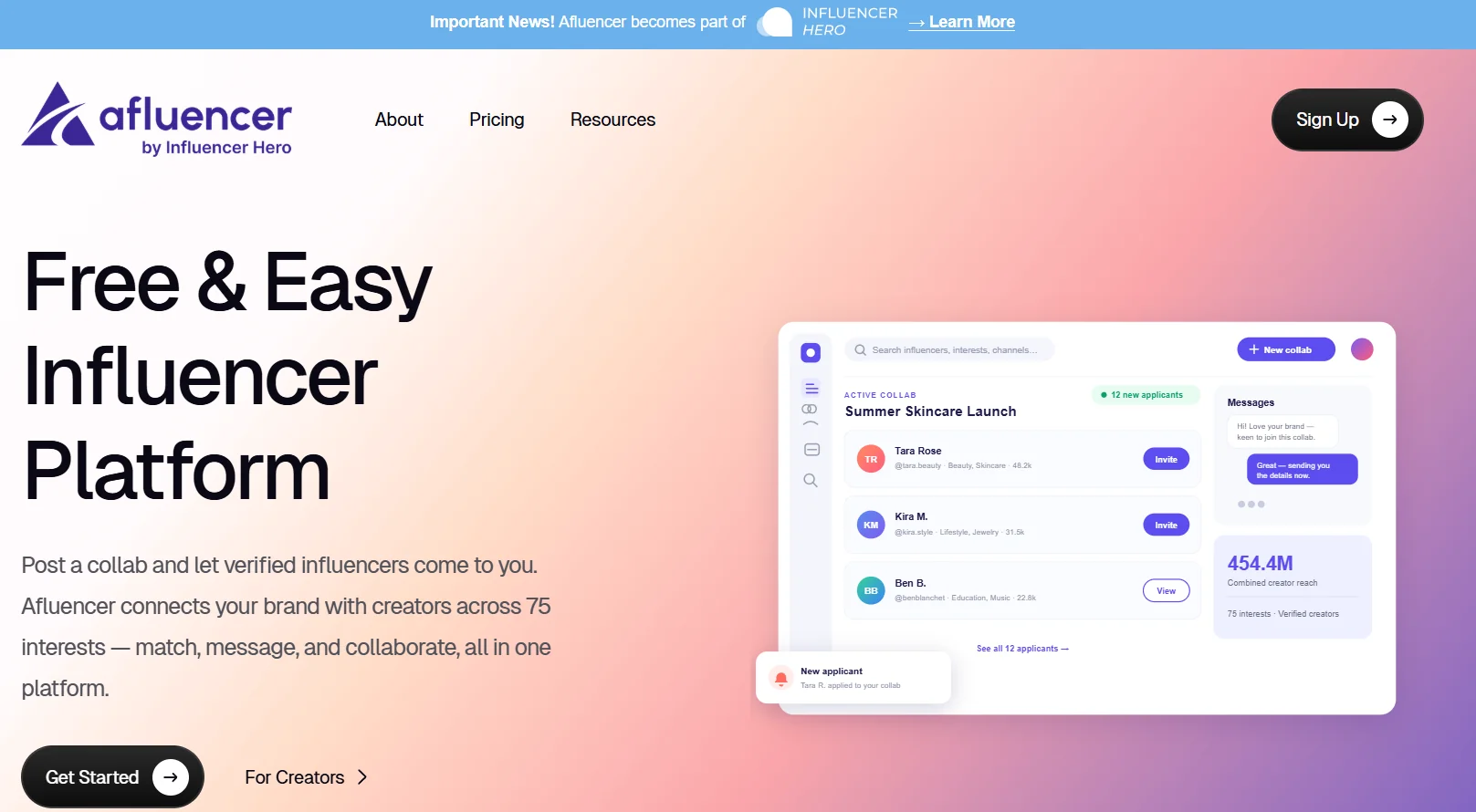
Afluencer is the opposite of an enterprise suite, and that's the point. You don't book a demo, sit through a discovery call and wait for a quote. You post a Collab, and verified creators apply to you. The whole loop can happen in an afternoon.
That inbound model solves the problem most Brandwatch refugees actually have. Enterprise discovery tools give you a giant index and leave you to cold-email your way through it. Afluencer flips it. Creators come to your campaign already interested in your product, and you pick from people who raised their hand. For gifted collabs and ambassador programs, that self-selection does more for reply rates than any filter combination will.
The creator side is free, so supply stays deep. You'll find micro through macro across Instagram, TikTok, YouTube, Facebook and X, with verified follower and engagement data on every profile. Filters cover location, niche, follower count, platform and demographics, so a wellness brand in Chicago isn't wading through gaming creators in Manila. You message everyone directly inside the app, which is more than a lot of pricier platforms offer.
The AI tools are included rather than sold as modules. CreatorGPT handles campaign strategy, brief writing and pitch feedback, and the Afluencer Collab Finder matches you to live opportunities without manual filtering. Neither costs extra, which is a notable difference from suites where every capability is its own line item.
Pricing is published and it's the widest gap on this list. Brands get a free trial and can post a Collab for free. Marketplace runs $49 a month with 60 invitation credits and premium filters. Standard is $649 a month, adding 1,000 reach outs, product send outs and influencer payments. Pro is $1,049 a month with 5,000 reach outs, a dedicated account manager and extra seats.
A year on Marketplace costs less than a single month of most enterprise Influence contracts. If you want more on structuring the program itself, our guide to influencer programs for brand ambassadors is a useful companion.
The honest caveat: Afluencer isn't built for enterprise measurement. There's no social listening, no competitive benchmarking, no multi-market brand health dashboard. If your CMO wants share-of-voice reporting alongside creator campaigns, you'll need something heavier. If you just want creators posting about your product without a $25,000 commitment, start here.
Chat with CreatorGPT about your campaign, or start a free trial and post your first Collab.
2. Influencer Hero
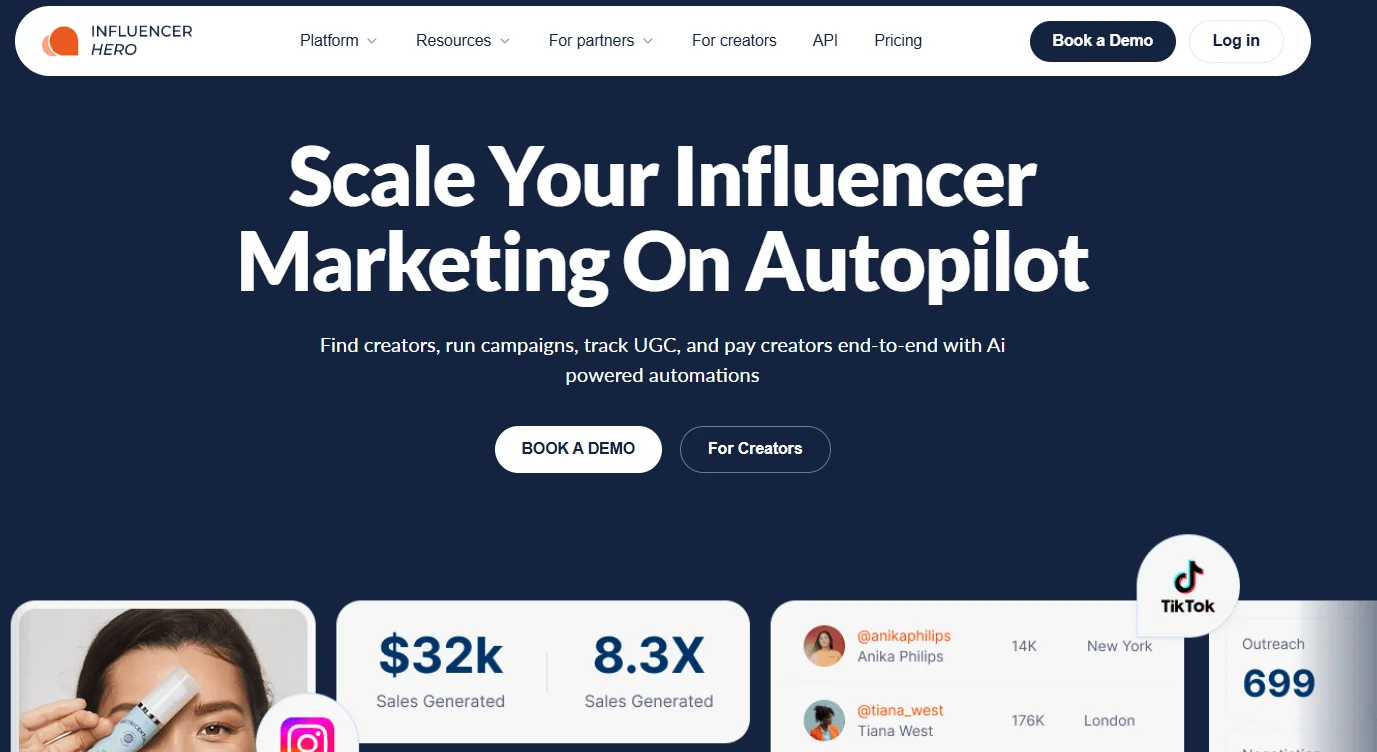
Influencer Hero is the all-in-one pick for brands that want to run programs in-house without an enterprise contract. It covers discovery, outreach automation, creator CRM, gifting, affiliate tracking and ROI attribution in a single dashboard, which is roughly the Influence feature set without the listening suite wrapped around it.
Discovery is the strongest argument for switching. The database spans 450M+ creator profiles across Instagram, TikTok, YouTube, Facebook, Pinterest and X, which is meaningfully deeper than Brandwatch's 65M index. Reviewers also single out the email automation as one of the best in the category, and the platform holds a 4.8 on G2. For a team whose real bottleneck is outreach volume rather than analytics depth, that trade is worth making.
It's built around ecommerce, so it ties creator activity to actual revenue instead of reach estimates. If you struggled to justify an enterprise renewal because you couldn't prove ROI, that attribution layer is the reason to look.
Pricing is published. Plans start at $649 a month, dropping to $454 a month on annual billing, with higher tiers to $2,490 a month and custom pricing above that. There's a three-month minimum rather than a year, which is a real difference when you're testing a platform. Worth knowing: subscriptions are priced per brand, so agencies running several client accounts should model the full cost first. It's also more platform than a discovery-only buyer needs.
You can book a demo with Influencer Hero to see the outreach automation and ROI tracking on your own campaigns.
3. Influencity
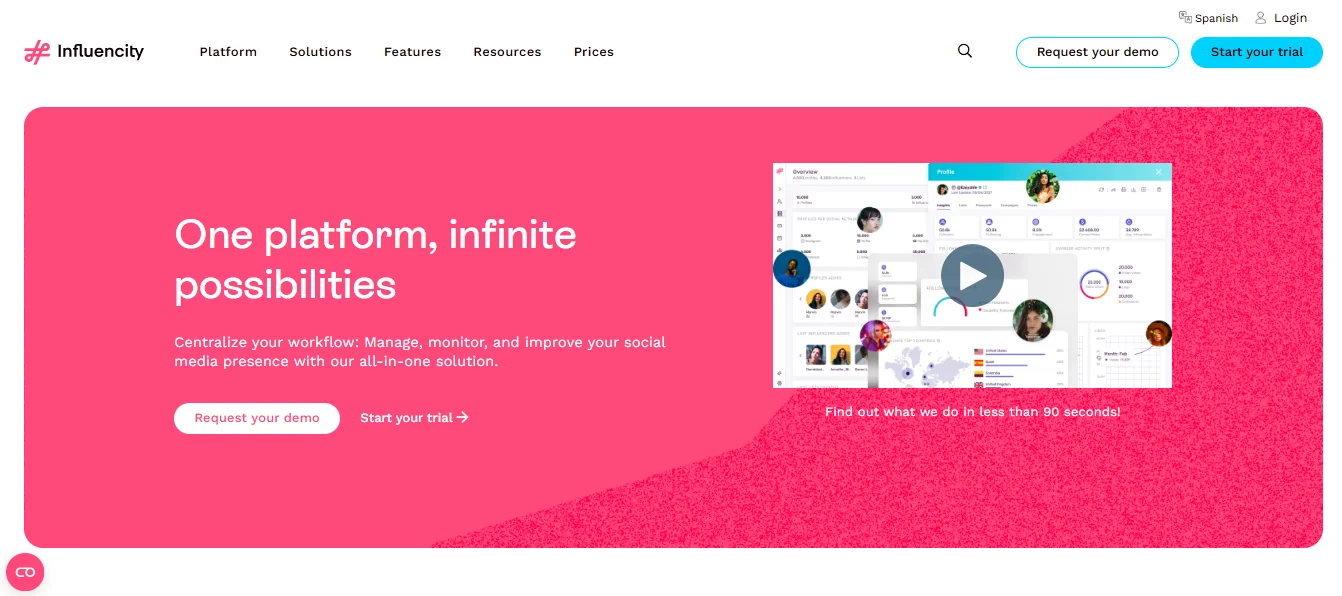
Influencity is the closest like-for-like swap on this list if what you valued in Brandwatch was breadth. It covers influencer marketing, social media management and social listening in one platform, so you're not giving up the consumer intelligence layer to escape the price tag.
The discovery engine indexes 200M+ creator profiles across Instagram, TikTok, YouTube and Twitch, with audience analytics that hold up against tools costing several times more. Around that sits an influencer CRM, campaign management, seeding with ecommerce integration, payments in multiple currencies and campaign reporting. Havas, Dentsu, WPP, Samsung, Kellogg's and Netflix all use it, so it's credible for agencies handling enterprise clients.
The pricing model is the pitch. All plans are billed month to month with no long-term commitment, there's a 7-day free trial on every tier, and you can cancel from account settings without a sales conversation. Third-party sources put the entry tier around $168 a month, Professional in the $348 range and Business near $698, with custom Enterprise pricing above that. Confirm your own numbers, since the tiers load dynamically on their pricing page.
The catch is credits. Lower plans cap monthly profile analyses tightly enough that a serious vetting round burns through them fast, and there's no permanent free plan. Cost climbs with usage rather than staying flat.
4. HypeAuditor
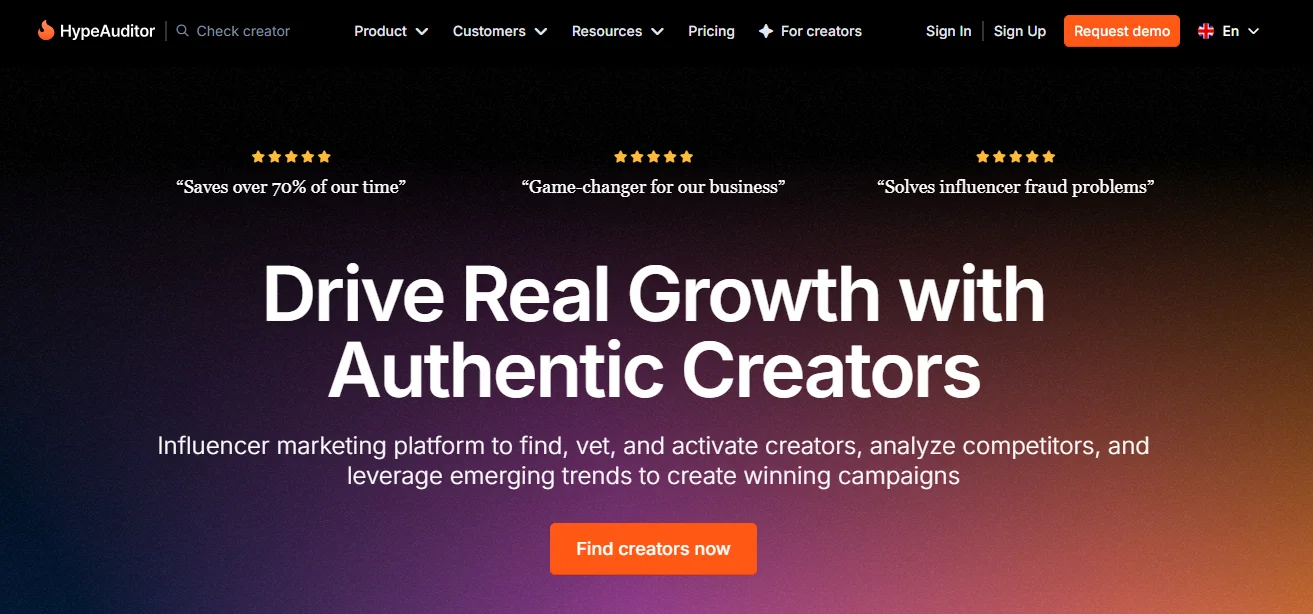
HypeAuditor built its reputation on fraud detection, and that's still why brands pick it. Growth-spike forensics, engagement-pattern analysis and follower-quality scoring catch the inflated accounts that quietly eat influencer budgets. If your reason for leaving Brandwatch is that you want rigorous creator vetting rather than a full consumer intelligence stack, this is the sharper tool.
It's not just an audit product anymore. Every plan includes discovery, analytics, a built-in influencer CRM and campaign management, so you can run a program end to end. Higher tiers unlock AI search, the Account Quality Score filter, lookalike search, landing pages for inbound recruitment and the ability to spot creators inside your existing customer base.
Pricing is semi-published, which is more than most of this list manages. The Basic plan starts at $299 a month billed annually, Pro sits around $499 a month annually, and Enterprise is quote-only. There's also a limited free version plus a large set of free tools, so you can pressure-test the data quality before paying anything.
The structure is the thing to watch. Tiers don't differ much by feature, they differ by limits, so two teams on the same plan can hit wildly different ceilings. Costs rise as you add seats or lift caps, and the best rates reportedly need a two-year commitment. Reviewers also treat its reach and earnings estimates as modelled guesses rather than facts, which is fair.
5. Traackr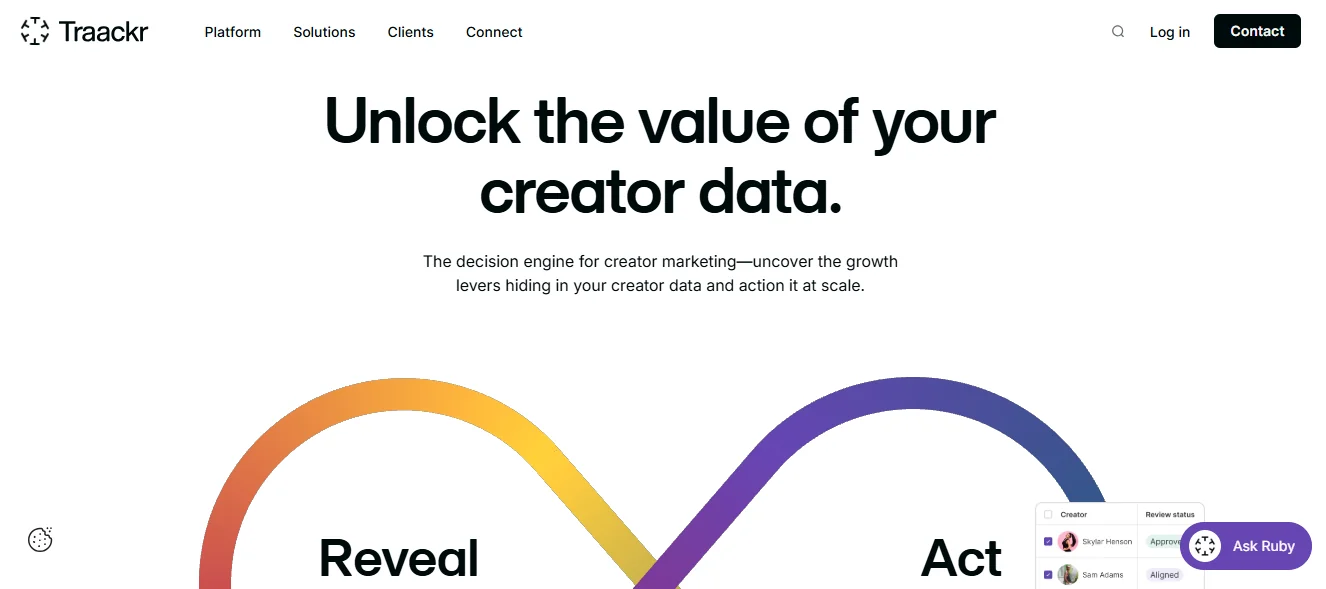
Traackr is the alternative for teams that liked Brandwatch's measurement rigour but want a platform built for creators from the ground up. It's been running since 2008 and it's strongest in beauty, fashion and CPG, where compliance and brand safety matter as much as reach.
Its signature is the Brand Vitality Score, which measures your brand's impact relative to competitors across earned, owned and paid influencer content. Add global discovery across 7M+ profiles on 13 platforms with 15+ filter criteria, and you've got the closest thing on this list to board-level influencer reporting. For multi-market programs that need standardised measurement, it does the job Brandwatch's listening layer was doing, just aimed properly at creators.
Pricing is quote-based and annual only, with no monthly billing at any tier. Third-party reports put the Growth plan around $25,000 a year with a three-user minimum, Standard near $32,500, and higher tiers to $55,000 or more. Industry benchmarking, arguably the reason to buy Traackr at all, is an add-on running roughly $8,000 a year on top.
So it's not the escape from enterprise pricing that some of this list offers. It also isn't an outreach engine: email sequences, follow-ups and bulk personalisation are not its strength, and reviewers consistently mention weeks of setup before you get full value.
6. CreatorIQ
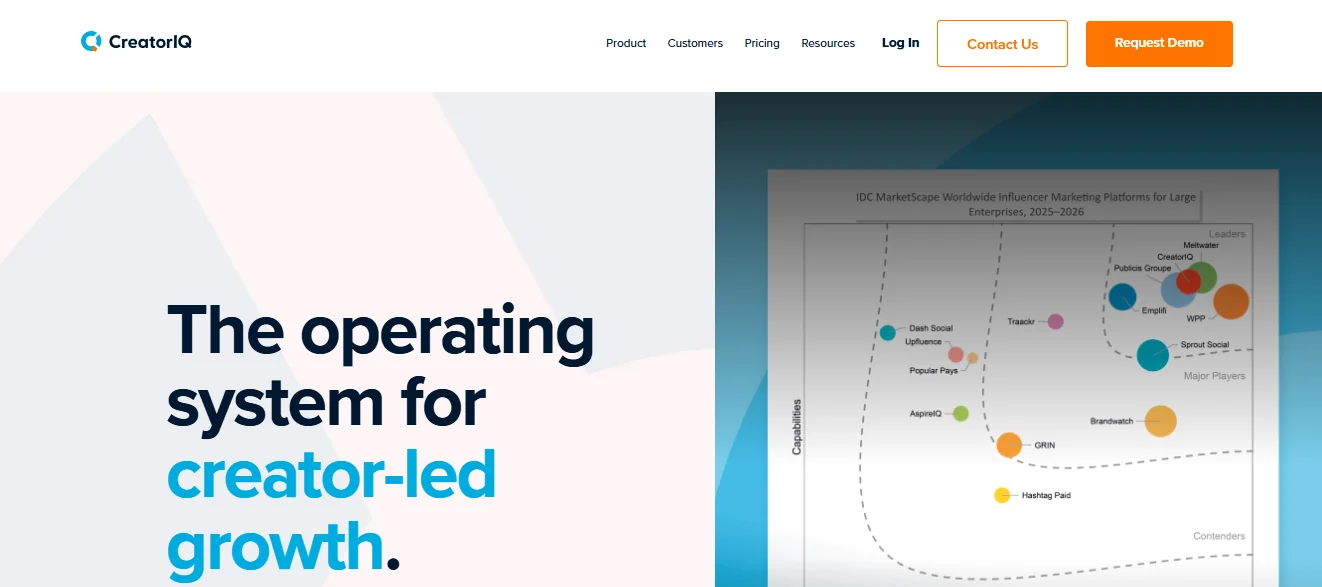
CreatorIQ is where brands go when they want the enterprise tier done properly. Disney, Unilever, Sephora, Google and LVMH are on the client list, alongside more than 1,300 global brands, and the analytics and reporting are widely rated best in class.
Compared to Brandwatch Influence, the difference is focus. CreatorIQ is a creator marketing platform first, not a listening suite with a creator module attached. It handles discovery across 20M+ indexed profiles, campaign management, content approvals, creator payments and compliance through direct social platform API integrations. Support is a genuine strength, and it holds up under the scale that breaks lighter tools.
Pricing is quote-only with no public rate card. Reported entry contracts run roughly $25,000 to $60,000 a year, with figures around $2,350 a month circulating from demo quotes and higher tiers well beyond that. Every contract is annual, with no monthly option and no self-serve free trial.
Two honest limitations. Onboarding commonly runs six to eight weeks, so this isn't a fast switch. And several reviewers find discovery weaker than the analytics, with creator stats that fluctuate more than they'd like. If your problem with Brandwatch was cost, this won't fix it. If your problem was that the influencer tooling felt secondary, it will.
7. Later
Later Influence is the platform formerly known as Mavrck, rebranded in January 2024 after Mavrck and Later merged. It's now the enterprise influencer product inside Later, sitting alongside Later Social and the Mavely creator commerce platform.
It's a close structural match for Brandwatch Influence and often a better one for advocacy programs. The 10M+ Influencer Index is built on opted-in creators rather than scraped profiles, which improves data accuracy and willingness to work with you, though it narrows the pool. Around that you get AI-powered discovery, automated workflows, contracting, communications, payments and real-time analytics, plus integrations across Meta, TikTok, X, LinkedIn, YouTube, Snapchat and Pinterest.
Its original strength was brand advocacy and referral programs at scale, and that's largely intact. Reviewers praise having contracting, campaign management, communications and payment in one place, and it carries a 4.5 on G2 from over 400 reviews.
Pricing is quote-only with no public tiers and no monthly billing, which means you're swapping one sales call for another. Some reviewers also feel the interface has aged, and creators have complained about non-negotiable contract terms on the platform side. Worth weighing if your program depends on creator goodwill.
8. Meltwater

Meltwater is Brandwatch's most direct competitor, and the two have almost identical shapes. Both are media intelligence suites. Both bought their influencer capability rather than building it, in Meltwater's case acquiring Klear in 2021 and folding it into the main brand in April 2024. If your reason for switching is the module structure rather than the vendor, this won't solve much.
If your reason is data, though, it's a real upgrade on one axis. The Klear database indexes 30M+ creator profiles with the proprietary True Reach metric, which estimates how many people actually see a creator's content rather than how many follow them. For teams whose whole complaint is inflated reach numbers, that's a meaningful difference. Meltwater serves over 27,000 corporate customers across 120+ countries, so the reporting scales.
Cost is the familiar story. Nothing is published, everything is annual, and buyer data puts total contracts between $15,000 and $150,000 a year with a median near $25,000. The influencer module typically adds $10,000 to $25,000 annually on top of the base platform, and year-one totals climb further once implementation and training land.
The honest read: Meltwater makes sense if you already own a contract for PR or media monitoring and want creator management under the same vendor. Buying it purely for influencer marketing is paying for a suite to get a module, which is the exact thing you were trying to escape.
9. Sprout Social
Sprout Social's influencer product is the rebuilt Tagger platform, acquired in August 2023 for $140 million and folded into Sprout's wider social suite. Like Brandwatch, it puts creator data in the same environment as your publishing, listening and reporting workflows.
Agencies rate it well for client work specifically. Reviewers highlight sourcing creators against client demographics, monitoring campaigns live, and pulling dashboards and performance reports that clients can actually read. The brand safety filters cut real time out of vetting, and it handles local and regional creator sourcing better than several bigger names.
Pricing works in two parts, which is the thing to understand before you book a demo. Sprout's core plans run $79 to $399 per seat per month billed annually, and the Influencer Marketing module is a separate purchase with custom pricing on top. There's a 30-day trial for the core platform, but not for the influencer module.
Two caveats worth taking seriously. Long-time users report that some Tagger capabilities were rolled back after the acquisition and that the interface got less friendly. And multiple reviewers have been caught by an auto-renewal clause, since contracts renew automatically and cancellation notice is due at least 30 days ahead. Put a reminder in your calendar 60 days out if you sign.
10. Captiv8
Captiv8 rounds out the list as the enterprise option with the strongest commerce story. It reaches 15M+ creators across 120+ regions, and clients include Amazon, Walmart, Honda, Kraft Heinz and Johnson & Johnson.
It covers the full lifecycle: discovery, outreach, contracting, content review, payments and reporting. The Influencer Velocity Index scores creators on momentum and brand relevance, which is a genuinely different lens from follower-based filtering. Reporting integrates with Looker Studio and Google Analytics, and the TikTok Shop and affiliate modules are a real differentiator for commerce-driven programs. Multi-team collaboration is strong, with in-platform review and approval built for large marketing organisations.
Pricing starts around $25,000 a year on an annual contract, plus a $3,000 onboarding fee, with no free plan or free tools. Storefront and affiliate capabilities sit behind higher tiers that push the number considerably further, and full enterprise bundles run well past $250,000 a year.
The recurring complaint in reviews is support: delayed replies, unclear guidance and slow resolution, plus occasional payment processing issues. For a platform at this price point, that's a fair thing to press on during the sales process.
Which Brandwatch Influence Alternative Should You Pick?
Brands leave Brandwatch Influence for two different reasons, and they lead to opposite answers. If the problem was that influencer marketing felt like a bolt-on to a listening suite, the fix is a purpose-built platform, which points to CreatorIQ, Traackr or Later Influence. If the problem was the quote, almost nothing on the enterprise end of this list will help, and Influencity, HypeAuditor or Influencer Hero are the honest options.
There's also a third group, and it's bigger than the category admits. Plenty of teams sitting through enterprise demos don't need a system of record. They need creators posting about their product this month. If that's you, Afluencer costs less per year than most of these platforms cost per month, and there's no sales call between you and your first campaign.
Start your free trial and post a Collab, or talk to CreatorGPT first if you want a second opinion on the brief.