.svg)
.png)
10 Best Captiv8 Alternatives in 2026 (Pricing, Features & Reviews)
If you are searching for Captiv8 alternatives in 2026, you are probably running into the same wall most brands hit: the price. Captiv8 is a genuinely powerful enterprise platform with a 15M+ creator database, social listening, and deep analytics. But it does not publish pricing, quotes reportedly start in the low thousands per month, and most plans come with a semi-annual or annual commitment. For a small or mid-sized brand, that is a lot of tool and a lot of money before you have run a single Collab.
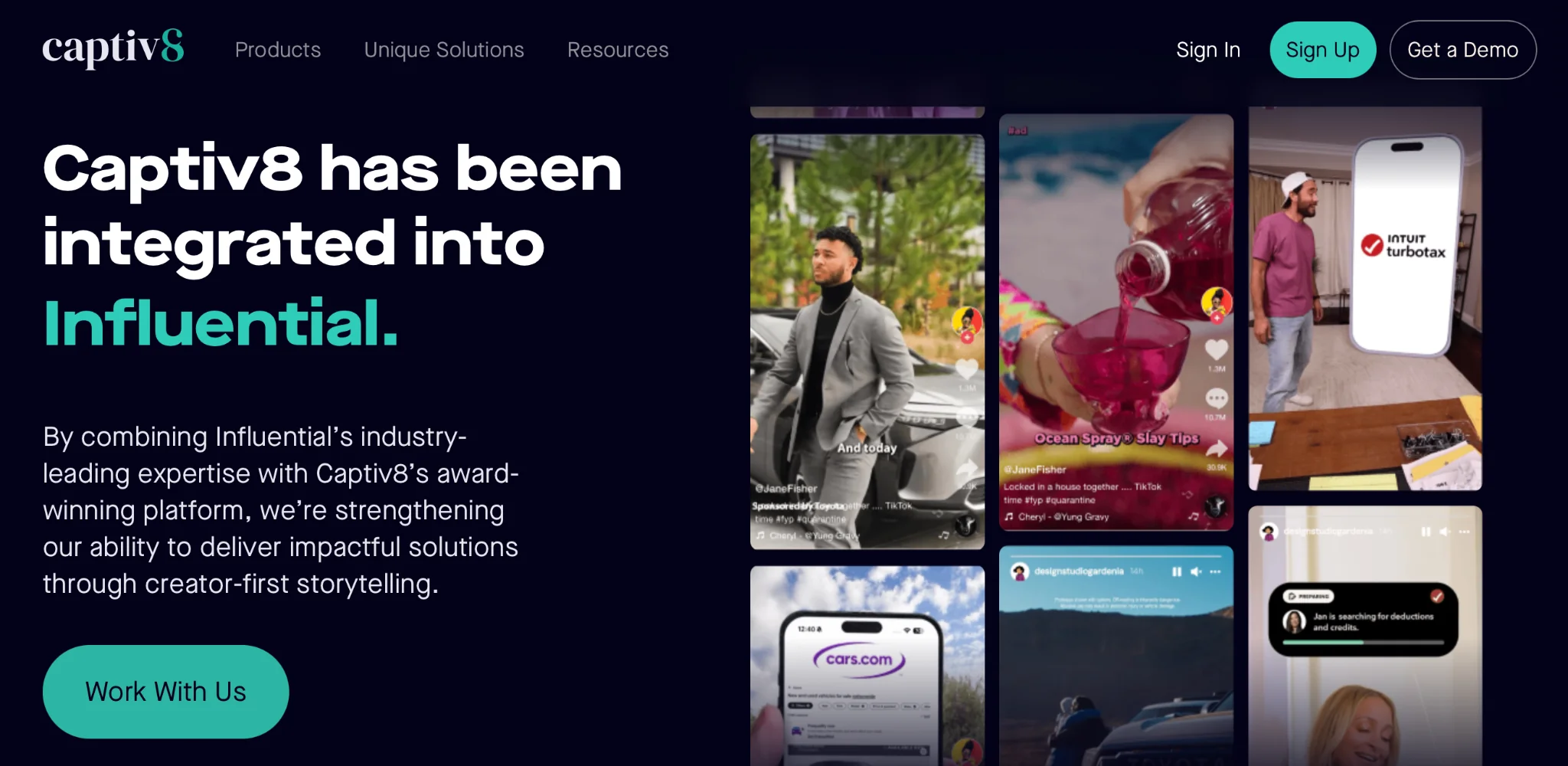
There is also a fresh wrinkle. Publicis acquired Captiv8 in 2025 and folded it into Influential, so the product is now "Influential powered by Captiv8." Integrations like that tend to shift roadmaps, pricing, and support, and that uncertainty alone sends plenty of brands shopping around.
The good news: you do not need an enterprise contract to run a strong influencer program. The alternatives below cover everything from low-cost creator marketplaces starting around $49 a month to full all-in-one platforms, so you can match the tool to your actual budget and team size instead of overpaying for features you will never touch. If you want a broader view first, our roundup of influencer marketing tools is a good companion read.
Let's get into the best Captiv8 alternatives worth a look this year.
1. Afluencer
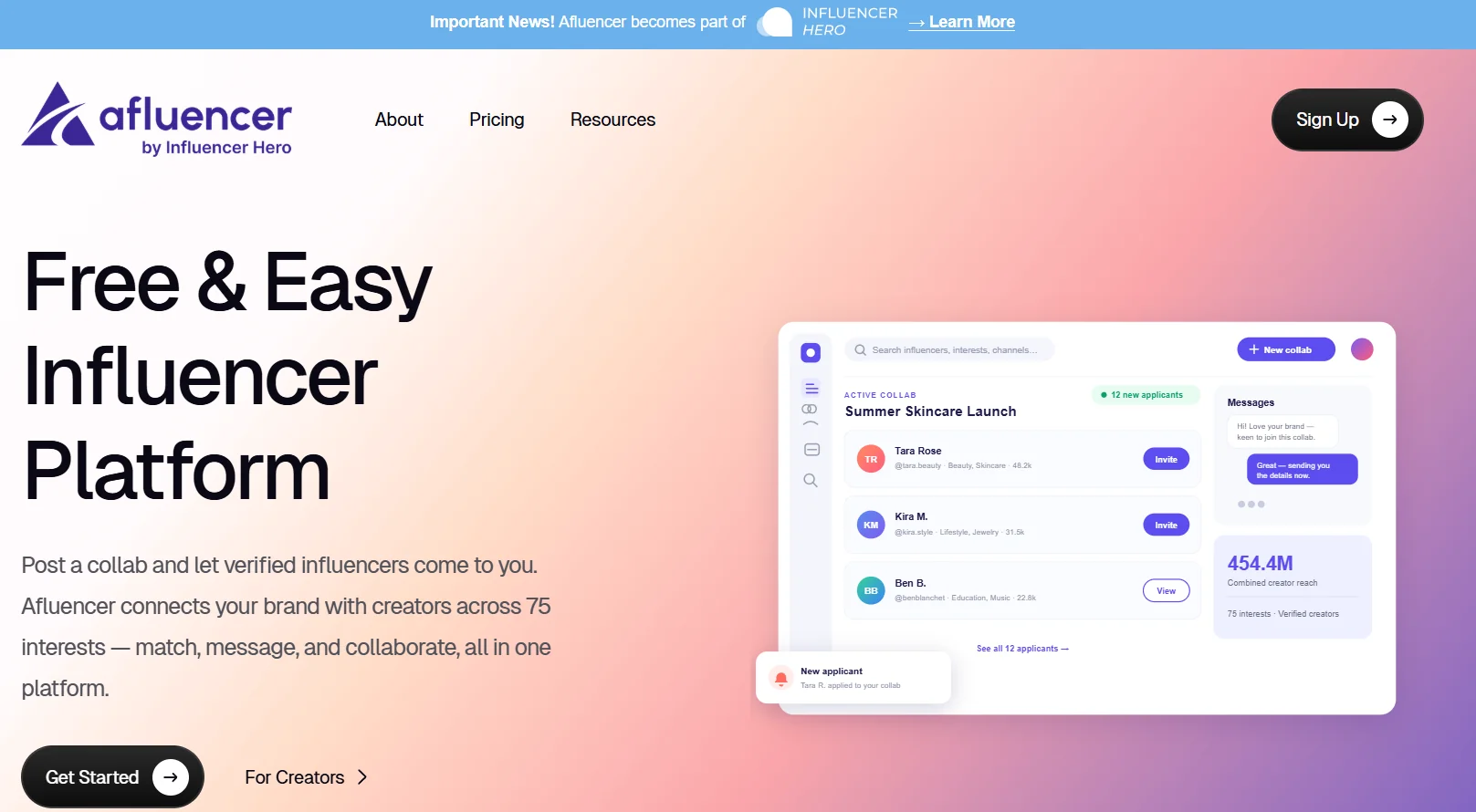
Afluencer flips the Captiv8 model on its head. Instead of paying for access to a giant database and then digging through it yourself, you post a Collab (basically a job description for the partnership you want) and verified creators come to you. You set the niche, follower range, platform, and budget, then review applications from creators who actually want to work with your brand.
That makes it a natural fit for DTC and Shopify brands, especially ones leaning on micro and nano creators. Captiv8 is built for big teams running multi-market programs. Afluencer is built for the brand that wants to launch a campaign this week without onboarding calls or a contract.
Pricing is where the gap is widest. Afluencer paid tier starts at roughly $49 per month. Everything is month-to-month with no long-term lock-in, so the contrast with Captiv8's custom enterprise quotes is hard to ignore.
It also handles the parts brands actually spend time on: gifting, affiliate-style commission Collabs, and direct messaging once you accept a creator. If product seeding is part of your plan, our guide on how to send product to influencers walks through the whole flow inside the app.
On the AI side, Afluencer leans into two tools. CreatorGPT acts as an influencer marketing assistant for strategy, briefs, and creator advice, and the Collab Finder matches creators to live opportunities so the right people see your campaign faster.
The honest caveat: Afluencer is a marketplace, not a heavy analytics suite. If you need competitor benchmarking and enterprise-grade social listening, this is not that. For most brands chasing efficient, relationship-driven creator marketing, that is a feature, not a bug.
2. GRIN

GRIN is one of the strongest like-for-like swaps if you came to Captiv8 for serious campaign infrastructure but you are specifically a DTC or ecommerce brand. It is built around the creator lifecycle: discovery, CRM, product gifting, affiliate links, content collection, and revenue attribution, all wired into Shopify and WooCommerce.
The reason brands pick GRIN over Captiv8 usually comes down to ecommerce depth. GRIN automates product seeding and ties creator activity back to actual sales, which is exactly what a performance-focused store wants. Captiv8 leans more into reach, social listening, and big-brand measurement.
Pricing is custom and not cheap. Plans generally run from around $2,500 to $10,000 per month, and you commit to a full year paid monthly. So while GRIN is a cleaner fit for ecommerce, it does not solve the "I want to avoid a big contract" problem. If your program is mature and Shopify-centric, the spend can pay for itself. If you are still testing the channel, it is a lot.
3. Influencer Hero
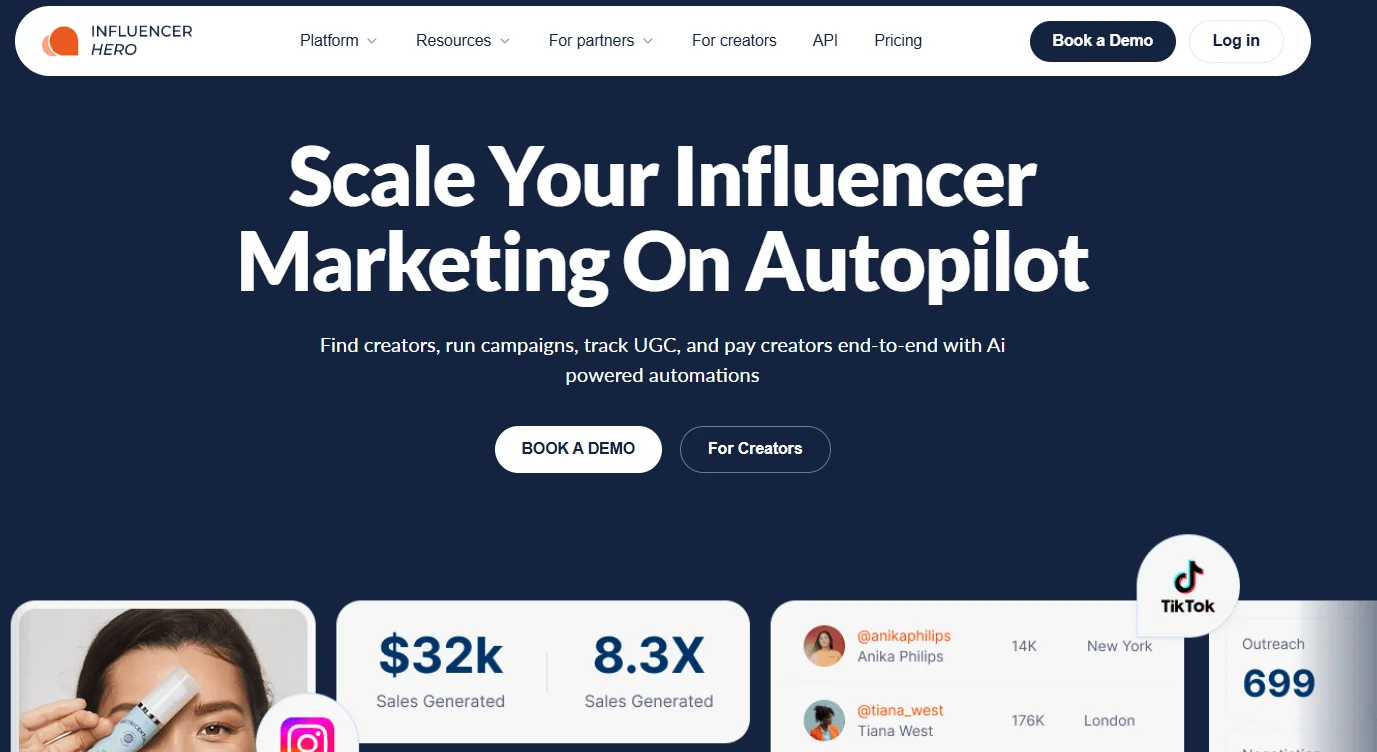
Influencer Hero is an all-in-one platform aimed squarely at D2C and ecommerce brands that want to run discovery, outreach, CRM, gifting, affiliate, and ROI tracking from one place. Its standout is outreach automation: drip email sequences sent from your own domain, automated follow-ups, and even an AI-generated personalized line based on a creator's recent posts. For teams doing bulk outreach, that is a real time-saver, and reviewers consistently call it out as a strength.
It covers Instagram, TikTok, YouTube, Facebook, Pinterest, Snapchat, X, and Twitch, and integrates with Shopify, Klaviyo, and WooCommerce. The built-in CRM keeps each creator's full history (messages, content, payments) in one profile, which is the kind of organization Captiv8 users expect but at a more mid-market scale.
Pricing starts at $649 per month for the Standard plan (up to 1,000 creator contacts), $1,049 for Pro (5,000), and $2,490 for Business (10,000), with custom agency pricing above that. There is a 3-month minimum commitment and no free trial.
The honest caveat: pricing is per brand, so agencies juggling multiple clients can watch costs climb, and a few reviewers found the search and filtering less polished than the outreach engine. For a single growing brand that wants automation without enterprise pricing, it is a strong middle ground between a marketplace and a tool like Captiv8.
4. CreatorIQ
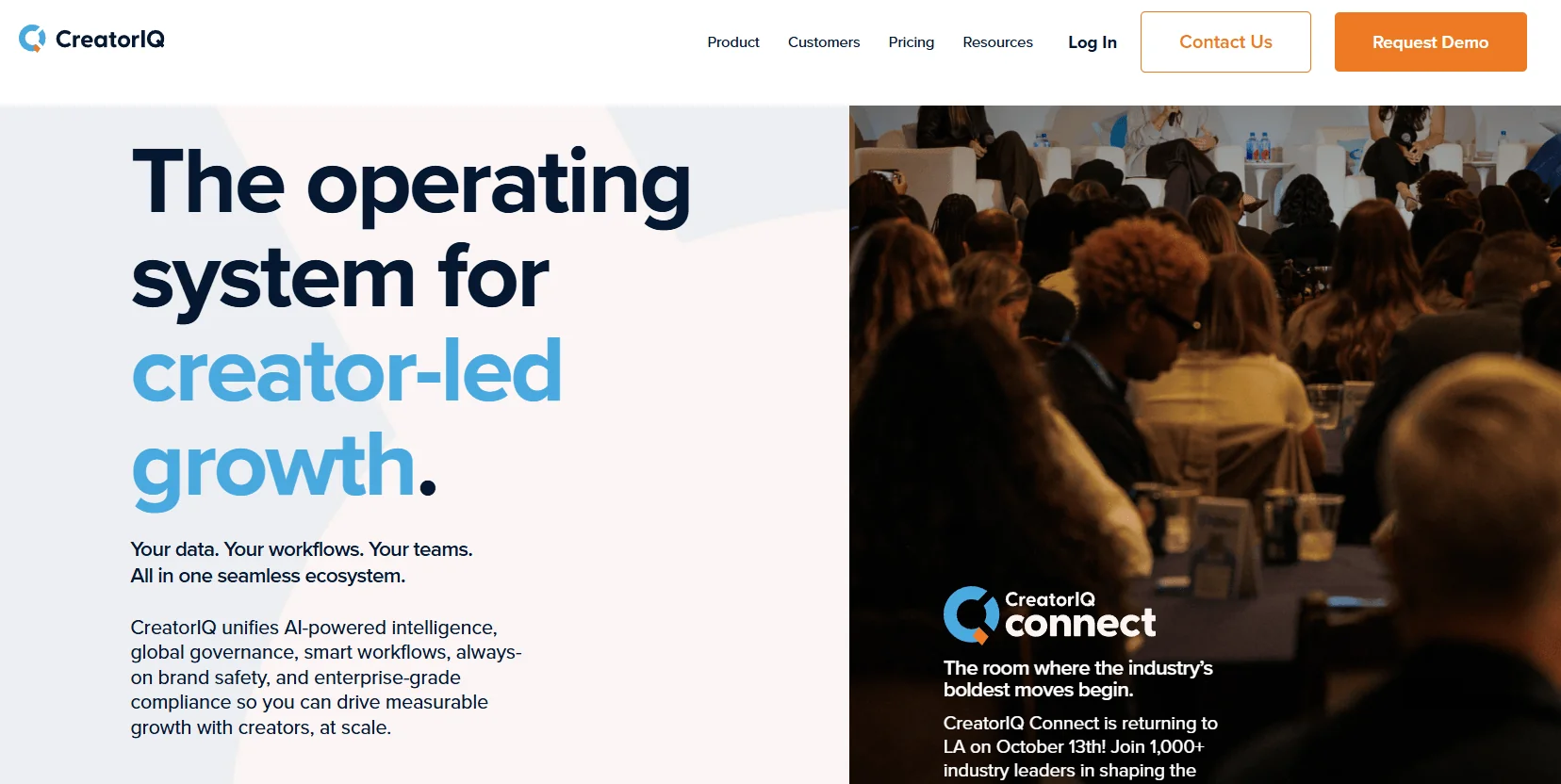
CreatorIQ is the alternative for brands that actually do want enterprise muscle, just from a different vendor. It is one of the most established platforms for large organizations running global, always-on creator programs, with a 6M+ influencer database, deep reporting, complex approval workflows, and dedicated account management with quarterly strategy sessions.
Brands switch from Captiv8 to CreatorIQ (and the other way) when it comes down to roadmap fit, data depth, or who gives the better demo. Both sit at the top of the market. So this is not the pick if your goal is to spend less.
CreatorIQ pricing reflects that: plans reportedly start around $35,000 per year and scale to roughly $200,000 per year for the largest deployments. If you are a small or mid-sized brand who landed here because Captiv8 felt like overkill, treat this entry as context, not a shortlist item. If you are an enterprise weighing two heavyweights, it absolutely belongs in the conversation.
5. Modash

Modash is the answer to one of the most common Captiv8 complaints: you cannot see the price. Modash publishes its plans, offers a 14-day free trial, and lets you actually test discovery before committing. Its database is enormous (it claims coverage of effectively every creator on Instagram, TikTok, and YouTube above a follower threshold), and the search filters are clean and fast.
The discovery and audience data are the draw here. If your main reason for using Captiv8 was finding and vetting creators, Modash does that core job at a fraction of the cost and with far less complexity.
Plans start at $199 per month (billed annually) on Essential for up to 100 creator contacts, $499 per month on Performance (which adds the Shopify integration and more contacts), and custom Enterprise pricing above that. The trade-off versus an all-in-one is workflow depth: Modash is excellent at discovery and monitoring, but it is lighter on the full gifting-to-payment campaign machinery that platforms like GRIN or Influencer Hero bundle in. For discovery-led teams, that focus is the point.
6. Upfluence

Upfluence is a modular, ecommerce-friendly platform built around a 12M+ creator marketplace and its Jaice AI matching engine. You buy the modules you need (discovery, campaign management, affiliate, payments) rather than one giant bundle, and it integrates deeply with Shopify, WooCommerce, and Klaviyo so you can surface creators who already buy from you.
That "find creators inside your own customer base" angle is a real differentiator from Captiv8. Brands that want influencer marketing to behave like a measurable growth channel, with promo codes, ROI dashboards, and creator payments handled in-platform, tend to like Upfluence's setup.
Pricing is custom and modular, reportedly starting around $478 per month for a single module, though real-world deployments often land in the four figures once you add seats and modules. The big catch: Upfluence requires a 12-month minimum contract and only offers a demo rather than a true free trial, and support quality gets mixed reviews. So you get flexibility in features but not in commitment.
7. Aspire

Aspire (formerly AspireIQ) is a full-service influencer platform that handles discovery, outreach, content management, campaign tracking, and creator payments. It pairs a large 170M+ influencer database with a built-in creator marketplace, so you can either search proactively or post a brief and let creators apply, a workflow that will feel familiar if you liked the application side of things.
The reason brands choose Aspire over Captiv8 is usually breadth at a slightly more accessible tier, plus nice touches like reverse image search to find creators similar to your best performers. It is a solid fit for mid-sized brands with a dedicated influencer budget and a content-heavy program.
Pricing is not public, but plans reportedly start around $1,000 per month and scale with custom enterprise tiers. There is no free plan or free trial, so the entry point is still four figures. One practical limitation: creator payments go out via PayPal in US dollars, which can mean conversion fees for international creators. Worth checking if your roster is global.
8. Influencity
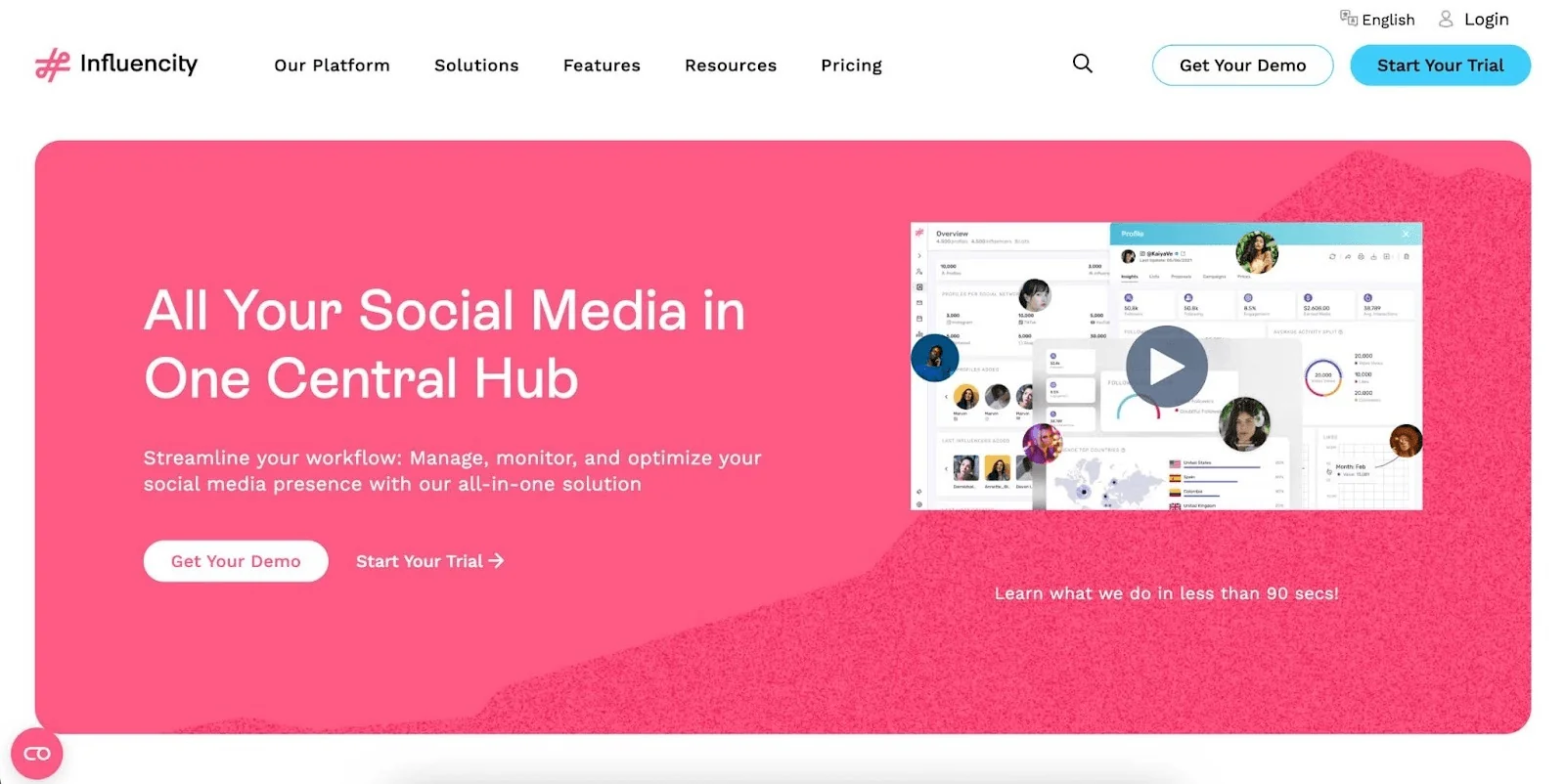
Influencity is built for mid-sized marketing teams that want structure without enterprise pricing. It covers discovery, a visual CRM with lists and tagging, and reporting, giving you an organized workflow across multiple campaigns. Think of it as the tidy, data-driven option between a lightweight marketplace and a heavyweight like Captiv8.
It is a fair alternative when your team has outgrown spreadsheets but is nowhere near needing Captiv8's social-listening and competitor-tracking firepower. Pricing starts at roughly $3,816 per year, which works out to a much lower monthly entry than the enterprise platforms while still giving you real campaign organization.
The honest limitation: automation is lighter than tools like Influencer Hero or Upfluence (more manual follow-up, fewer automated sequences), and it is less specialized for DTC ecommerce than the Shopify-native platforms. For a structured mid-market team, though, it is an easy, affordable workflow upgrade.
9. Heepsy

Heepsy keeps things deliberately narrow. It is a discovery-and-recruitment tool for finding creators on Instagram, TikTok, and YouTube, with niche, location, engagement, and audience filters. If Captiv8 felt like ten products you did not need, Heepsy is the opposite: one job, done affordably, with transparent pricing.
You can run limited searches for free, and paid plans start around $69 to $89 per month and climb to roughly $369+ for higher tiers with lists, outreach, and marketplace access. For a smaller team that just needs to build good creator shortlists and handle the rest manually, that is a genuinely budget-friendly way in.
The trade-off is obvious from the price: Heepsy does not include built-in payments or end-to-end campaign management, and its database is smaller than the enterprise giants. Treat it as a sharp discovery tool, not a full Captiv8 replacement. Pair it with your own outreach and a simple influencer marketing budget plan and it punches above its weight.
10. Collabstr
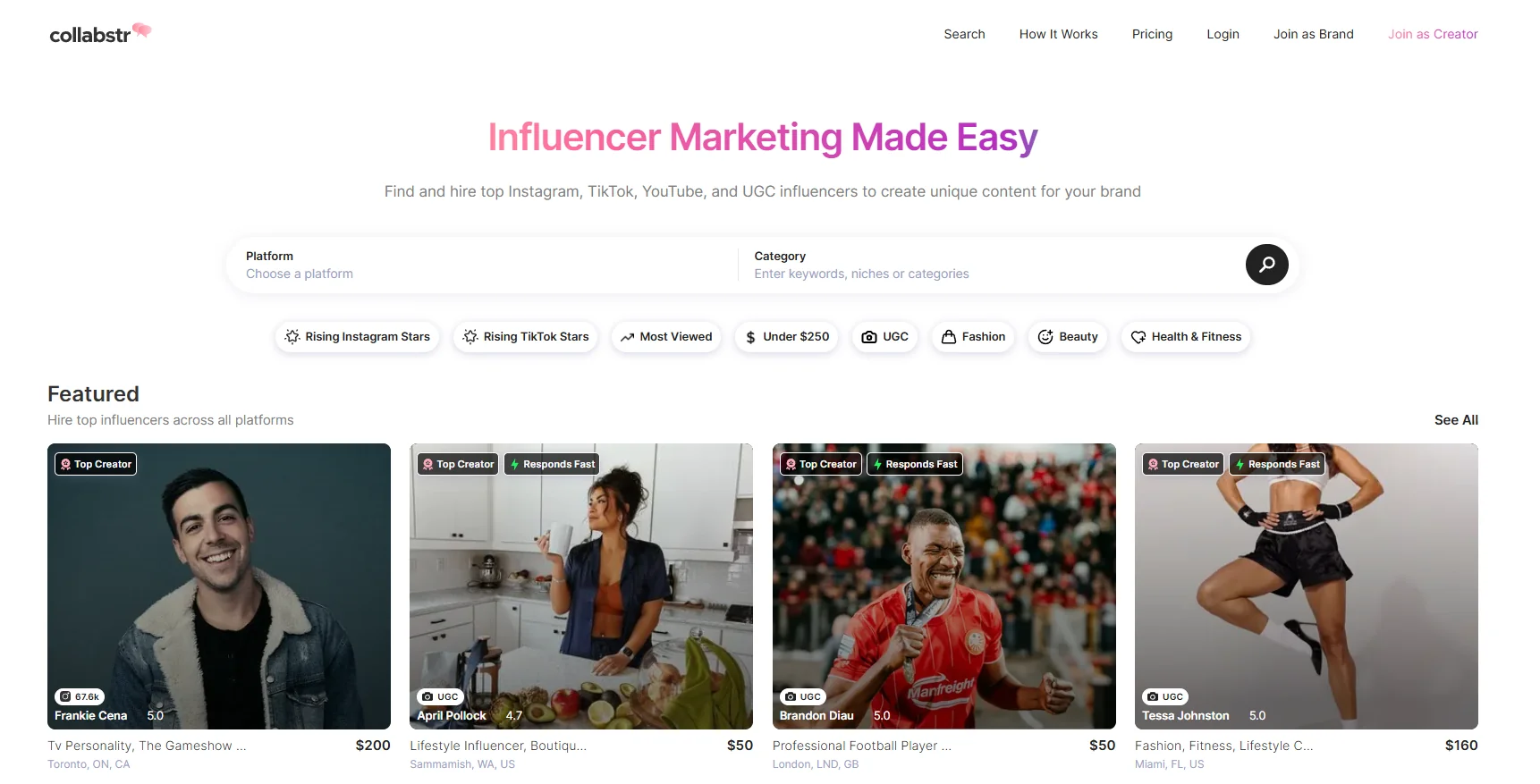
Collabstr is the most accessible pick on this list and the cleanest break from Captiv8's model. There is no subscription at all. You browse a marketplace of 350,000+ vetted creators, see their rates upfront, hire directly, and pay per collaboration, with funds held in escrow until you approve the content. Collabstr takes a commission on each transaction.
That structure is ideal for brands focused on UGC and micro-influencer content, or anyone testing the channel for the first time without wanting to commit to software. It is fast, transparent, and friction-free, which is the exact opposite of a custom enterprise quote and an onboarding process.
The limitation is depth. Collabstr is transactional, so you will not find advanced discovery filters, audience analytics, or a relationship CRM for nurturing creators over time. For one-off campaigns, seasonal pushes, and building a UGC library, that simplicity is the selling point. For an ongoing, relationship-led program, you will eventually want something with more structure. For more on building those longer partnerships, see our guide on ways to collaborate with influencers and creators.
Which Captiv8 Alternative Should You Pick?
The takeaway from the intro still holds: you do not need the exact platform the biggest brands use. Captiv8 is excellent at what it does, but its enterprise pricing and commitments make it the wrong tool for most small and mid-sized teams. The right alternative depends on your size, budget, and channels, not on who has the flashiest demo.
If you are an enterprise weighing heavyweights, CreatorIQ and GRIN deserve a look. If you want all-in-one automation at mid-market pricing, Influencer Hero, Upfluence, or Modash fit the bill. And if you want to launch fast, keep costs low, and let creators come to you, Afluencer is built exactly for that. Post a Collab, review applications from verified creators, and scale up only when you are ready.
For a deeper dive into running creator campaigns on Shopify specifically, our guide on Shopify influencer marketing is a great next step.