.svg)
.png)
10 Best Fohr Alternatives in 2026
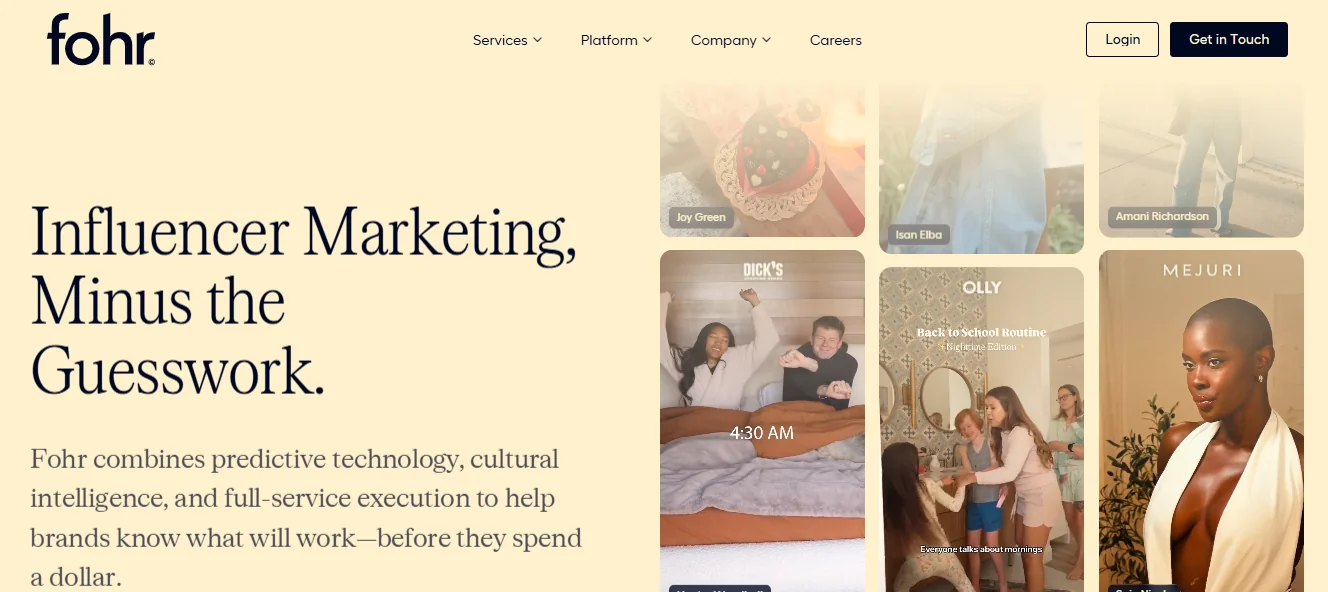
Fohr has a decent claim to being the first influencer marketing platform in the world. It launched in 2013, has run more than 5,000 campaigns, and sits on $80M+ of influencer payout data across a network of 180,000 opted-in creators. If you run gifting programs or ambassador activations in fashion, beauty or lifestyle, it's a serious tool with a long track record.
The reason people search for Fohr alternatives is the entry ticket. Reported pricing starts around $20,000 a year for the self-serve tier, on an annual contract, with no monthly option to test the thing first. Everything above that is quoted per service model, and there are four of them: self-serve Discovery, the Ambassador Management Platform, managed services and fully custom builds. You can't compare a price list because there isn't one.
There's a structural quirk worth knowing too. Creators have to sign up with Fohr directly before you can see their metrics, which keeps the network clean but also caps who you can reach at whoever has already joined. Against discovery platforms indexing hundreds of millions of profiles, 180,000 is a curated pool, not a market.
That's a feature if you want vetted quality and a limitation if you want reach. If you're still working out which model fits, our guide on how to create an influencer marketing strategy is a good starting point, and our roundup of the best influencer marketing platforms covers more of the field.
Here are the ten alternatives worth a look this year.
Top Fohr Alternatives in 2026
1. Afluencer
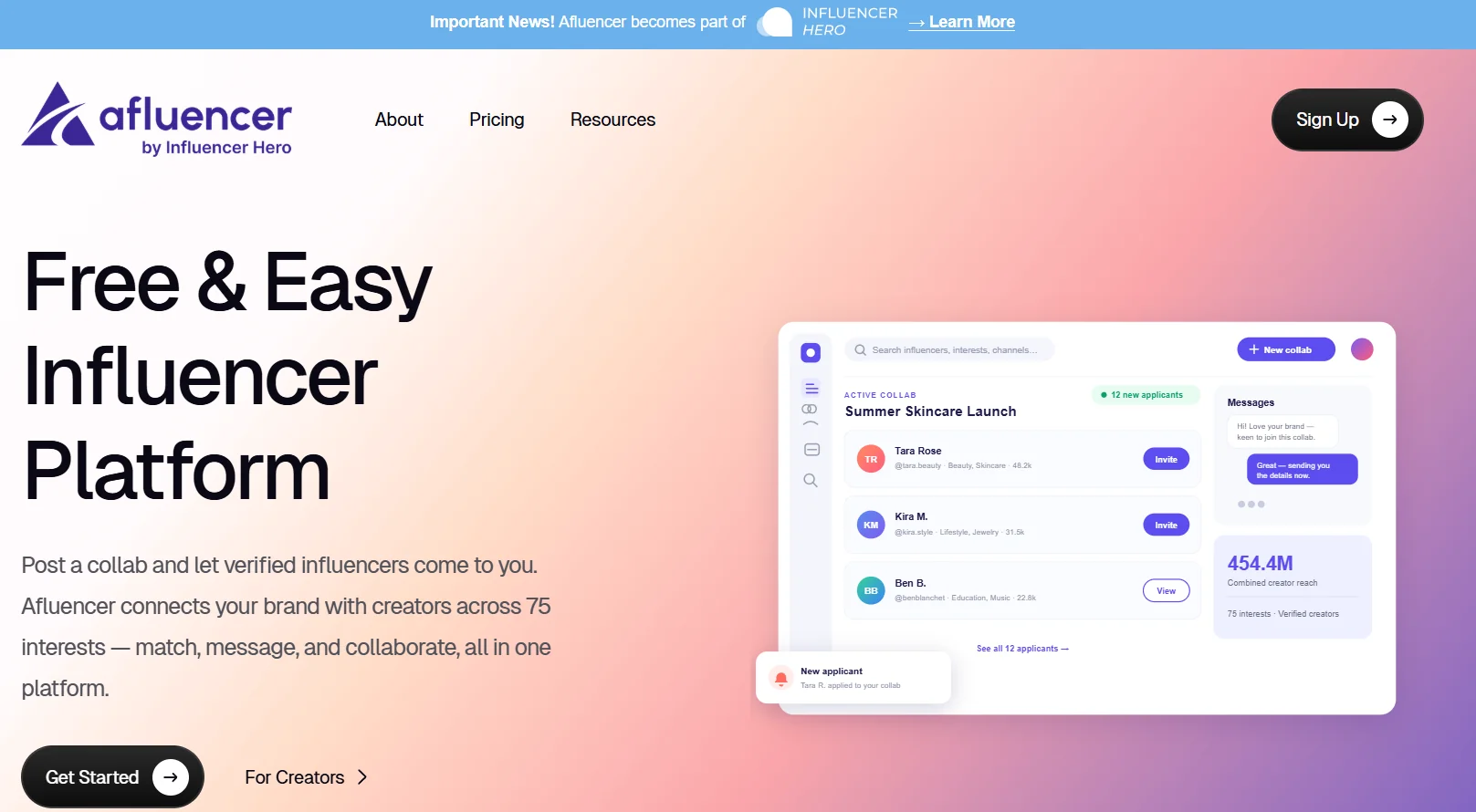
Afluencer runs on the same core idea as Fohr, which is why it's the natural first stop. Both are opt-in networks where creators have already raised their hand. The difference is what it costs to get in and how fast you can start.
On Afluencer you post a Collab and verified creators apply to it. There's no sales process, no scoping call across four service models, and no $20,000 commitment before you know whether the channel works for your product. You review who applied, check their verified follower and engagement data, and message them directly in the app to agree on deliverables. First campaign live the same week is normal, not exceptional.
Creators join free, so supply stays deep across micro to macro on Instagram, TikTok, YouTube, Facebook and X. Filters cover location, niche, follower count, platform and demographics. Like Fohr, everyone in the pool has opted in, so you're not cold-emailing strangers and hoping. Unlike Fohr, there's no minimum spend gating access to them.
For the ambassador side specifically, this is where Fohr's AMP product competes and where the price gap gets uncomfortable. Fohr builds you a custom-branded microsite with an application flow and metrics dashboard, quoted separately on top of the platform. Afluencer gives you recurring collabs with creators you've already worked with, in the same interface you used to find them. Our guide to influencer programs for brand ambassadors covers how to turn one-off sends into something that repeats.
The AI tools are included, not quoted. CreatorGPT handles strategy, briefs and pitch feedback, and the Afluencer Collab Finder surfaces live opportunities without manual filtering.
Pricing is published. Free trial for brands plus a free Collab post. Marketplace is $49 a month with 60 invitation credits and premium filters. Standard is $649 a month with 1,000 reach outs, product send outs and influencer payments. Pro runs $1,049 a month with 5,000 reach outs, a dedicated account manager and extra seats.
The honest caveat: Fohr's managed services and custom technology tiers do things Afluencer doesn't. If you want an agency running your program or a bespoke platform built around your business, that's a real product and this isn't it. If you want to run campaigns yourself without a five-figure floor, start here.
Ask CreatorGPT about your campaign, or start a free trial and post your first Collab.
2. Influencer Hero
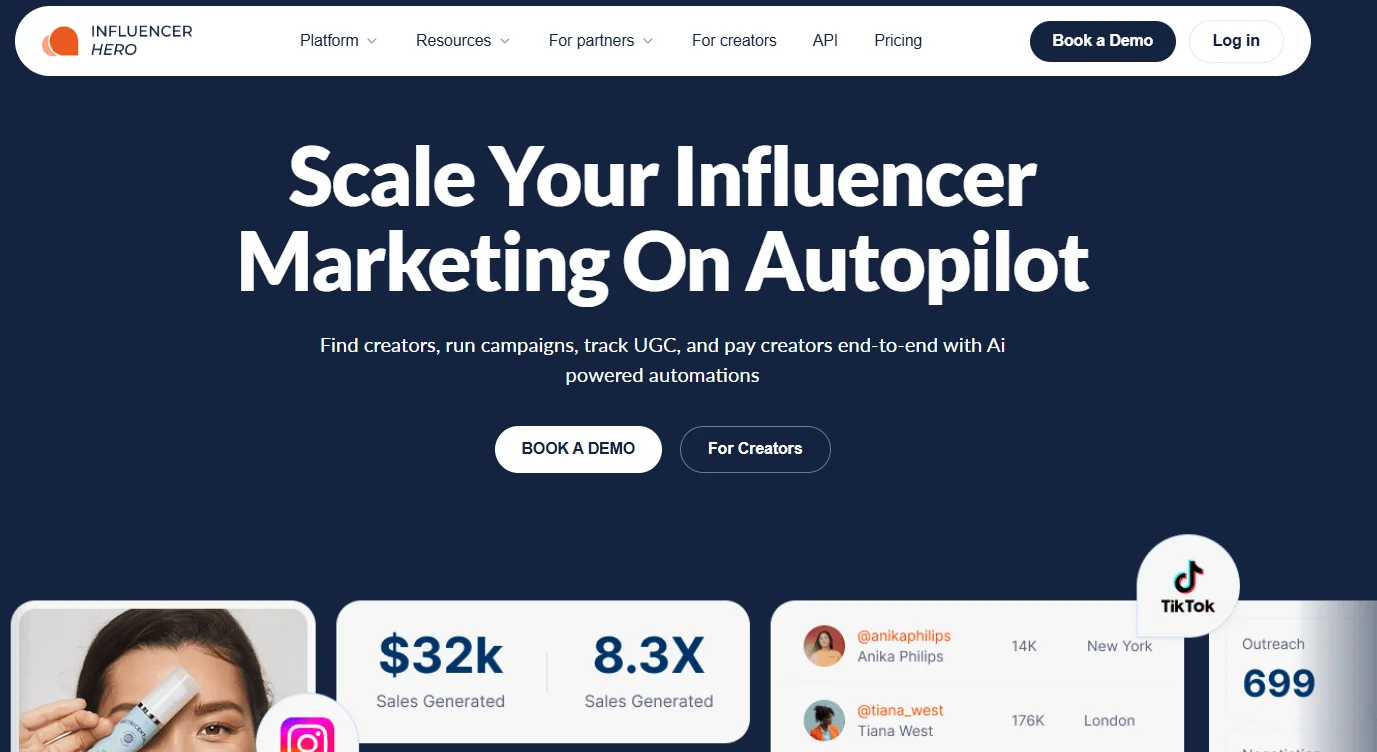
Influencer Hero is the all-in-one option for teams that want Fohr's breadth without the agency-hybrid pricing. Discovery, outreach automation, creator CRM, gifting, affiliate tracking and ROI attribution live in one dashboard rather than in four separately quoted service models.
The discovery gap is the headline. Fohr's opted-in network is 180,000 creators. Influencer Hero indexes 450M+ profiles across Instagram, TikTok, YouTube, Facebook, Pinterest and X. Those aren't the same thing, and neither is strictly better, but if your campaigns keep failing to find the right niche creator inside a curated pool, the bigger index solves that. Reviewers also single out the outreach automation as one of the strongest in the category, with personalised sequences included from the entry plan. It holds a 4.8 on G2.
It's built for ecommerce, so creator activity ties back to revenue rather than reach estimates. For brands that struggled to justify a $20K renewal on impressions data, that attribution layer is the argument.
Plans start at $649 a month, or $454 on annual billing, up to $2,490 and custom above. There's a three-month minimum rather than a year. Subscriptions are priced per brand, so agencies with multiple clients should model the total first, and it's more platform than a discovery-only buyer needs.
You can book a demo with Influencer Hero to see the gifting and attribution workflow run against your own store.
3. ShopMy
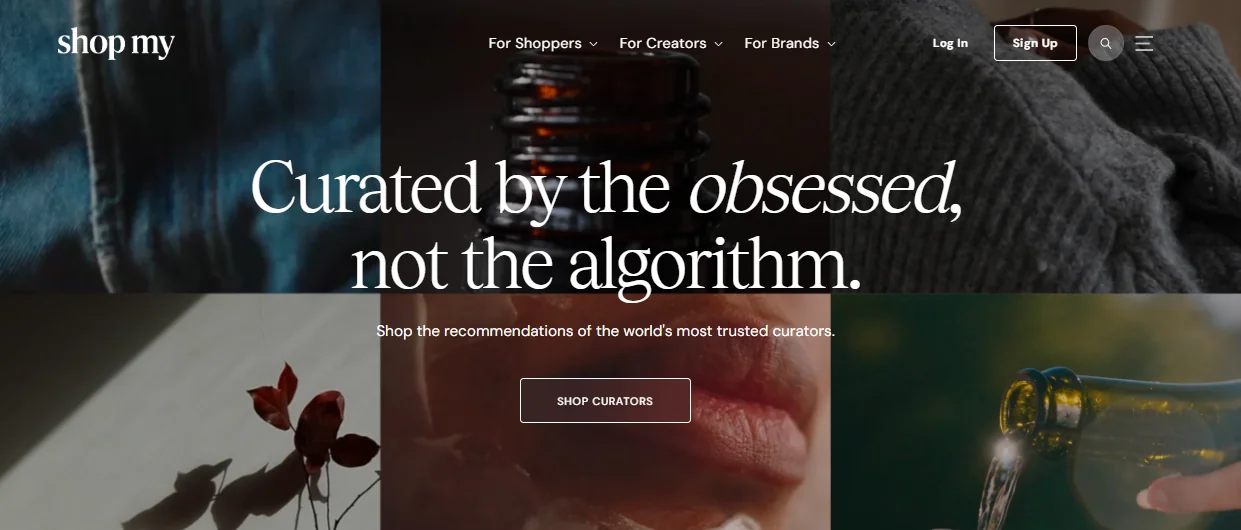
ShopMy is the most direct competitor to Fohr on this list. Both are New York companies serving fashion, beauty and lifestyle brands with gifting and creator programs. The difference is that ShopMy is affiliate-first, so the entire model runs on creators earning commission from storefronts rather than flat campaign fees.
That changes the maths in a useful way. Creators build curated shops, generate commissionable links, and get paid when their audience buys. Brands run gifting through Lookbooks and paid activations through Opportunities, with performance visible against actual sales. It has tracked over $1B in GMV, and average revenue per direct brand customer landed around $67,000 a year in 2025, so the brands using it properly are using it hard.
Entry pricing is $399 a month, which is a fraction of Fohr's floor and the reason it shows up in every comparison. Full platform access with discovery, advanced analytics and campaign management runs to roughly $2,799 a month, and everything between is quote-based depending on which features you switch on.
Model the fee stack before you commit, because the subscription is half the bill. ShopMy takes up to 2.9% of GMV on direct affiliate sales, around 3.9% on subaffiliate sales through networks like Rakuten and CJ, facilitation fees on gifted product value, and a 15% platform fee on Opportunities campaigns. Creator commissions of 10% to 30% sit on top of all of it. It's also weak outside beauty and fashion, and light on advanced campaign management compared to a full suite.
4. LTK
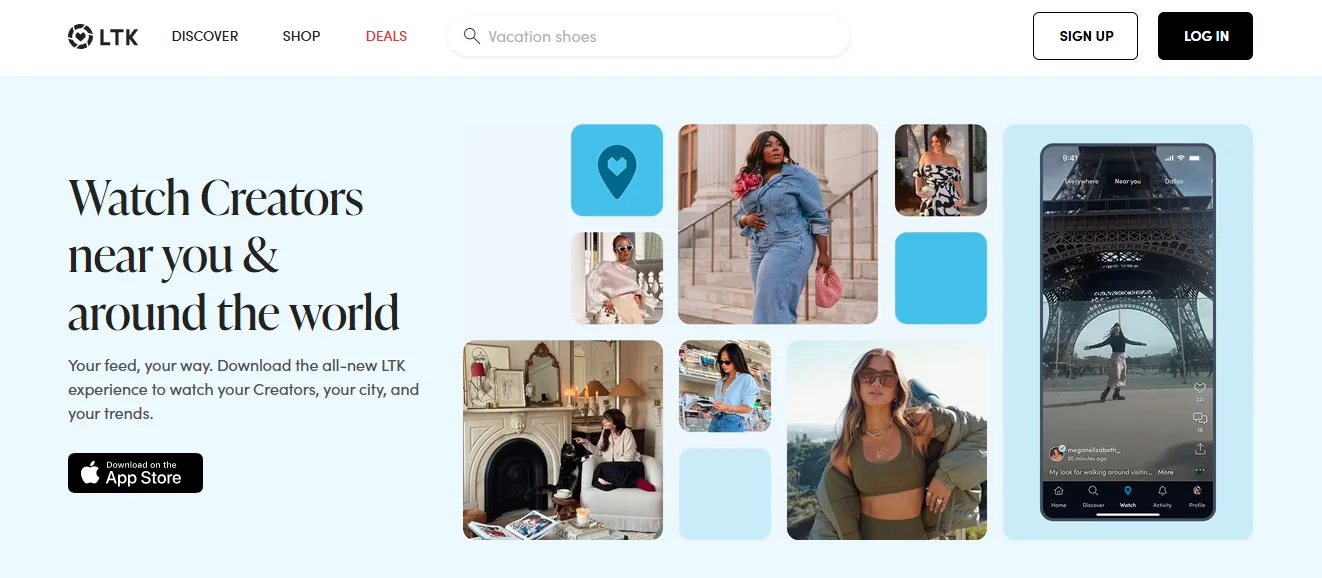
LTK, formerly rewardStyle, is the biggest creator commerce network in the space and the closest thing to Fohr with a consumer audience attached. Its 200,000+ curated creators reach 40 million monthly shoppers through the LTK app, driving roughly $4.1 billion in trackable annual sales across 100+ countries.
That consumer app is the whole differentiator. Content your creators produce doesn't just live on their feeds, it gets surfaced to people who opened an app specifically to shop. For fashion, beauty and home brands, that's a distribution channel Fohr can't offer.
Pricing is tiered and annual, with no monthly option. Connect Launch starts around $5,000 a year, covering up to 10 creator collaborations a month and campaign investment up to $25,000 annually. Connect Pro sits near $12,000. LTK Optimize, the fully managed white-glove tier, starts at $50,000 and up. Some agreements carry a one-time onboarding fee, so ask.
The Launch tier being a quarter of Fohr's floor is the reason it makes this list. The caveats are that the creator network is invite-only and skews heavily to lifestyle, fashion and beauty, the ten-collab monthly cap on the entry tier is restrictive, and the annual commitment means the same "can't test it first" problem you had with Fohr.
5. #paid
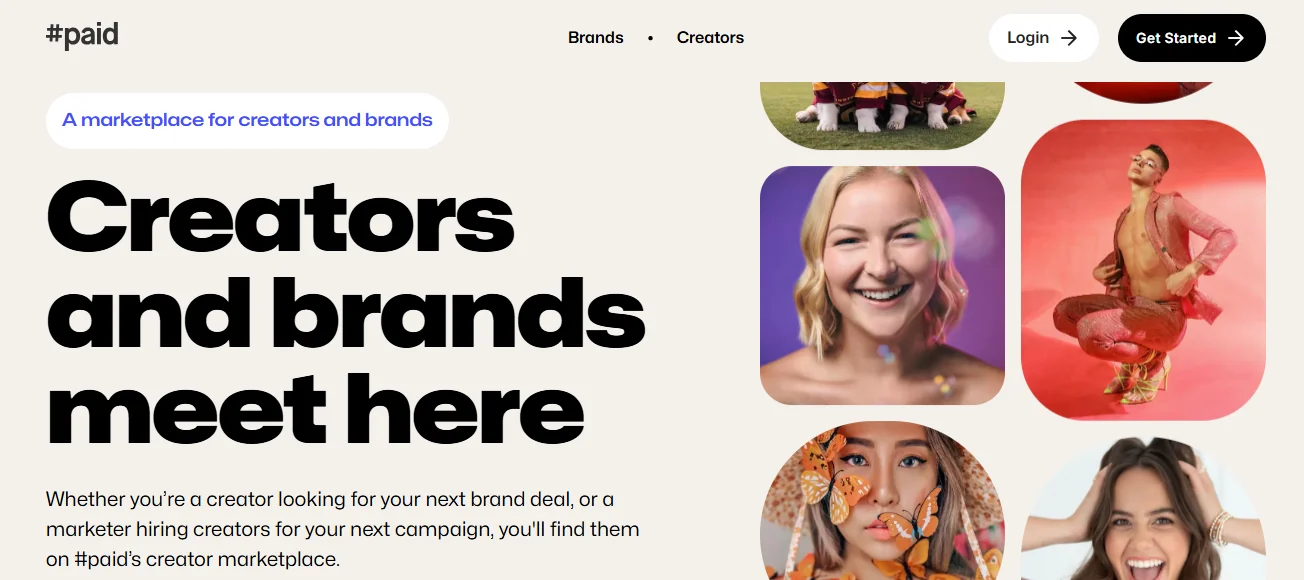
#paid, from Toronto's Hashtag Paid, is built on a mechanic it calls Handraise, and it's the closest philosophical match to Fohr on this list. Rather than searching a database, you post a campaign brief and creators who are already fans of your brand raise their hand. You pick from people with genuine affinity rather than people who match a filter.
For gifting and ambassador work, that self-selection matters. It's the same logic behind Fohr's opted-in network, applied at the campaign level. Around it sits real-time collaboration with creators, content pre-approval before anything publishes, usage rights across channels, campaign analytics and fraud detection. It has a strategic partnership with Pinterest, and the client base skews mid-to-large brands.
Pricing runs on monthly and annual subscriptions with custom quotes, and third-party listings put the entry point around $449 a month. Costs are largely driven by cost per engagement with each creator, at standardised rates you can't negotiate.
Reviewers are consistent about the trade-offs. Advanced filtering and search are weaker than competitors, which makes precise discovery harder. It leans heavily on its own matching system, so you get less manual control over who ends up on your campaign. And it's positioned for mid-to-large budgets, so smaller brands find it expensive relative to what they use.
6. TRIBE
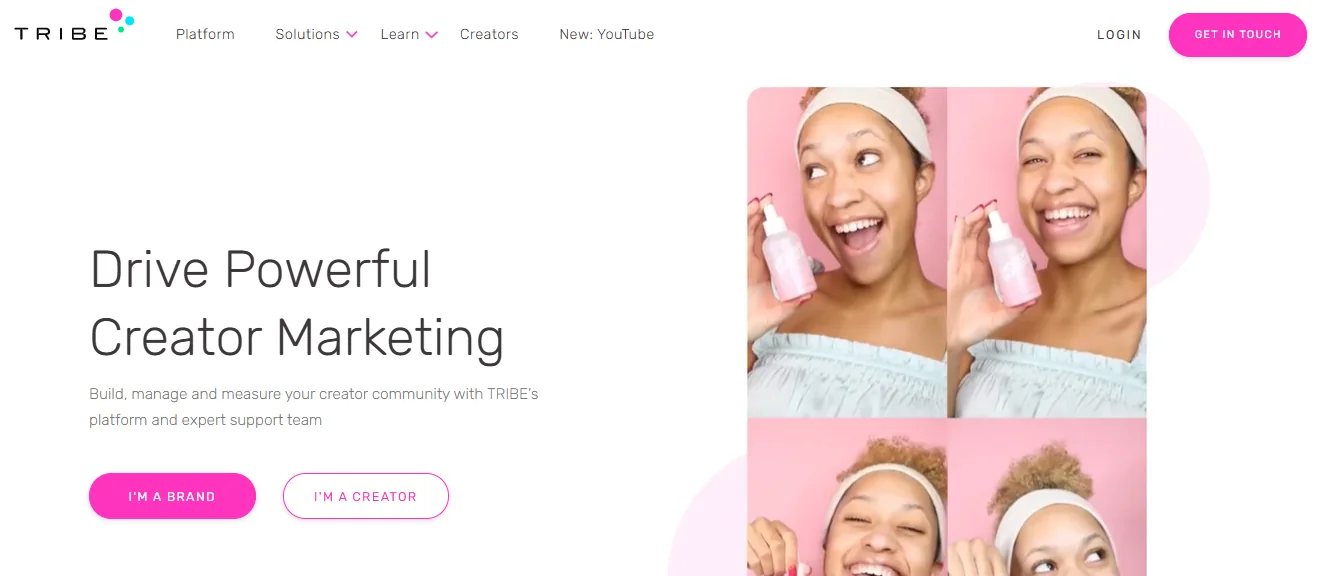
TRIBE, founded in Australia in 2014, inverts the normal workflow. Instead of briefing creators and waiting, you post a brief and creators submit content they've already made. You browse finished posts, buy the ones you like, and skip the back and forth entirely.
For brands that mainly want content rather than relationships, that's genuinely faster. Its 70,000+ opt-in creator network spans Instagram, TikTok, Pinterest, Facebook and X, and the content can be licensed for social ads, digital ads and ecommerce pages rather than just organic posts. If Fohr's appeal was a vetted network that comes to you, TRIBE delivers that with a shorter path to assets in hand.
Pricing is percentage-based rather than subscription-first. TRIBE charges a fee on campaign spend: 20% in the US and UK, 30% in Australia, with card processing fees listed separately. Paid campaigns can run on either a campaign activation fee or an annual subscription, but neither amount is published.
Two things to press on before signing. Default rights duration and included revision counts aren't publicly disclosed, which makes recurring production costs hard to forecast. And creators have long complained about content being rejected after it's already been produced, which is a structural consequence of the buy-what-you-see model. Worth understanding if creator goodwill matters to your program.
7. Collabstr
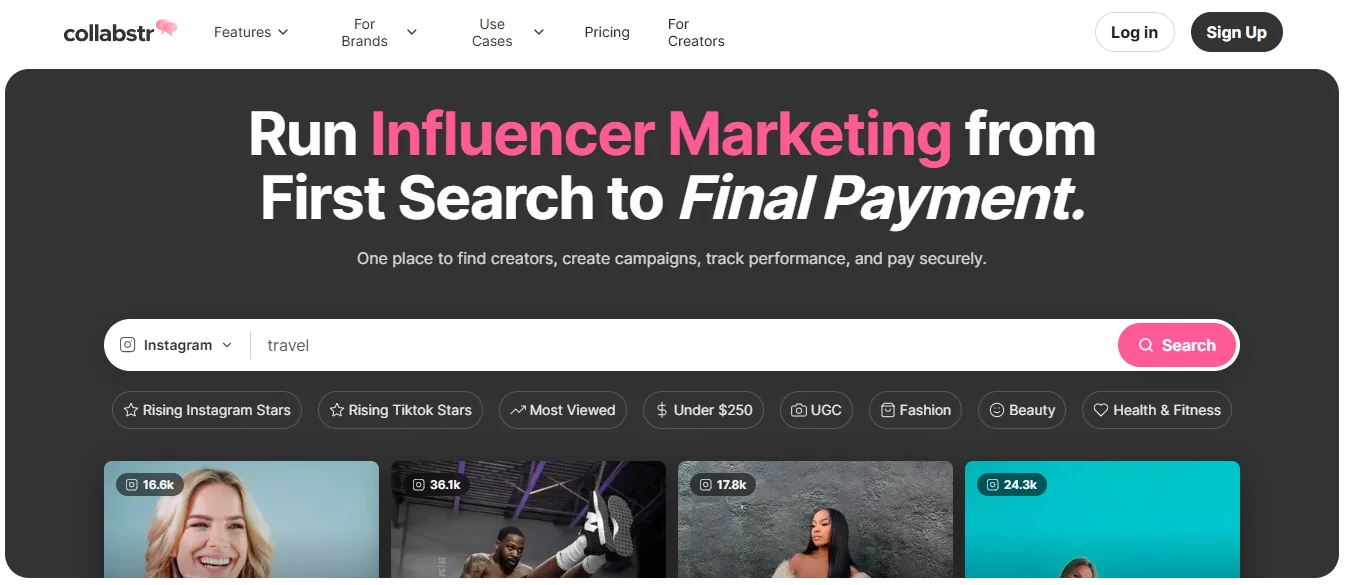
Collabstr is the Fiverr of influencer marketing, and it means that as a compliment. Creators list packaged services with fixed prices, like $150 for one TikTok video. You browse, filter, order, and pay through the platform. No brief negotiation, no rate discovery, no quote.
For a brand coming off a $20,000 annual contract, the appeal is obvious: you can hire one creator for $150 and see what happens. The marketplace holds 200,000+ vetted creators focused on Instagram and TikTok, strongest in fashion, health, beauty and food and beverage. Escrow protects both sides, since funds are deposited up front and released when work is approved.
Pricing is transparent and unusually flexible. The Basic plan is free with a 10% marketplace fee per transaction. Paid tiers reduce that fee to 5% and unlock campaign posting, advanced filters, analytics and priority support, with reported rates ranging from around $99 to $399 a month depending on tier and source. There's a free trial with no card required.
It's a transactional marketplace, not a program platform. There's no real CRM, no outreach automation, no competitor intelligence, and creator quality varies since anyone can list. Fine for one-off campaigns and testing, thin once you're managing fifty relationships.
8. Creator.co
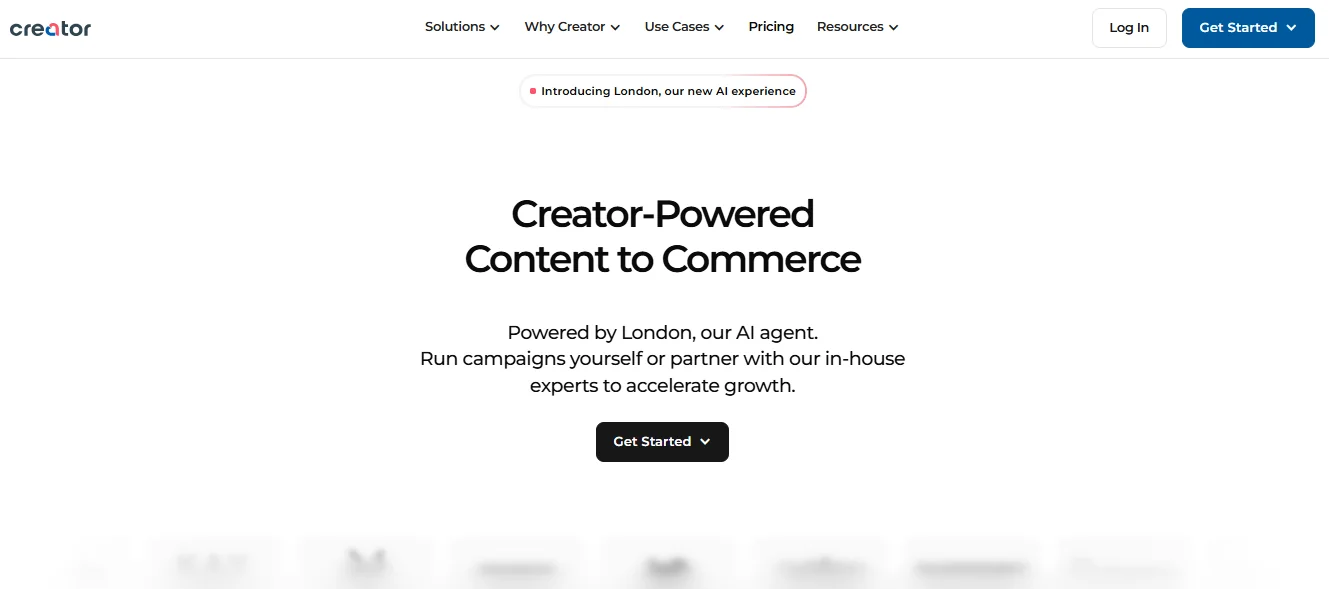
Creator.co is the closest match to Fohr's actual business model, which is software plus optional service layers rather than pure SaaS. That's useful if the reason you were at Fohr was wanting help running the program, not just tooling to run it yourself.
The self-serve tier gives you creator discovery, paid campaigns, giveaways and contests against a database it puts at 400M+ profiles, along with an AI agent called London that handles workflow. Higher tiers add dedicated account managers, go-to-market planning, influencer negotiation and content review. G2 reviewers who started self-serve and moved up consistently say the managed layer is what made it work for small teams.
Pricing scales with execution support rather than feature restriction. Self-Serve sits around $460 to $495 a month, managed tiers start near $995, and the fully bespoke plan runs $3,495+ a month. There's a free trial with no card required, but no free version. Separate brand and agency pricing tracks exist, so agencies with multiple clients should ask for the right one.
The recurring complaint in reviews is turnover on the managed side, with brands having to re-educate new account staff. That's the standard risk of buying services rather than software, and it applies to Fohr's managed tiers too.
9. Social Cat

Social Cat is the cheapest structured way to run the exact thing Fohr does best, which is gifted micro-influencer campaigns. Brands post a campaign, creators apply or get invited from the network, product ships, content comes back, often within days.
The model is deliberately narrow. Instagram and TikTok only, available primarily in the US, UK, Australia and Canada, focused on micro and nano creators willing to work for product. For a skincare, fashion, food or supplements brand that wants volume of authentic content without negotiating individual fees, that focus is the point rather than a limitation.
Pricing starts at $99 a month for Essentials and runs to $299 a month for Pro. Against Fohr's $20,000 annual floor, you can run Social Cat for a year and spend less than one month of the comparison. Product costs are your main variable spend on top.
Be clear-eyed about what's missing. There's no ROI tracking, no outreach automation, no API and limited CRM depth, so it stops scaling once you're managing real volume. Integrations are thin. And the gifted model carries real risk of creators taking product and not delivering, with limited recourse when they don't. It's also notably absent from G2 and Capterra, so independent review data is thin.
10. Stack Influence
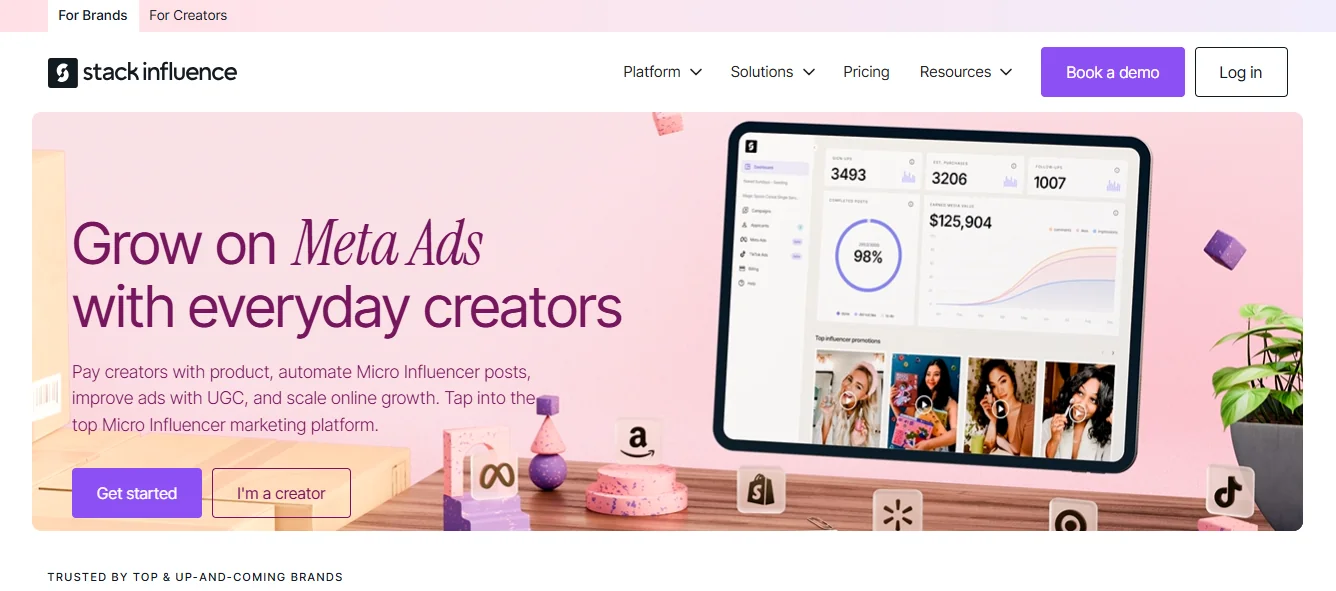
Stack Influence closes the list because its pricing model is the opposite of everything above it. There's no subscription at all. You pay roughly $30 per creator post, charged only when a post actually goes live, and the whole campaign is managed for you end to end.
Creators are compensated with your product rather than cash, drawing from a vetted community of 11M+ micro and nano creators across fitness, beauty, fashion and tech. Outreach, coordination, tracking and UGC collection are handled by Stack Influence, so it's genuinely hands-off in a way most self-serve tools aren't. It's particularly strong for Amazon sellers, where reviewers credit it with driving verified purchase activity, keyword momentum and review velocity alongside the social content.
The pay-per-outcome structure is the real argument against a $20,000 contract. You're buying posts, not platform access, so a campaign that underdelivers costs you less rather than the same. For a brand burned by paying an annual license and then struggling to fill campaigns, that risk profile is worth taking seriously.
The trade is control and scope. You don't hand-pick every creator, there's no discovery database to browse, and the model only works if you have physical product to send. Service businesses get nothing from it. It's also not a platform you build a long-term creator CRM on, since the relationship largely sits with Stack Influence rather than with you.
Which Fohr Alternative Should You Pick?
Fohr sells four different products under one name, so the right replacement depends on which one you were actually buying. If you wanted the ambassador program infrastructure, ShopMy and Creator.co cover that ground with published entry prices. If you wanted the managed service, Creator.co and Stack Influence both run programs for you at a fraction of the commitment. If you wanted the curated opt-in network, #paid and TRIBE work on the same logic.
And if you wanted none of that, you just wanted creators posting about your product without a $20,000 annual contract standing in the way, that's the most common version of this search. Afluencer is an opt-in creator network like Fohr's, priced at $49 a month with a free trial, and you can post your first Collab today rather than after a quarter of procurement.
Start your free trial and post a Collab, or run your brief past CreatorGPT first.