.svg)
.png)
10 Best Impact.com Alternatives in 2026
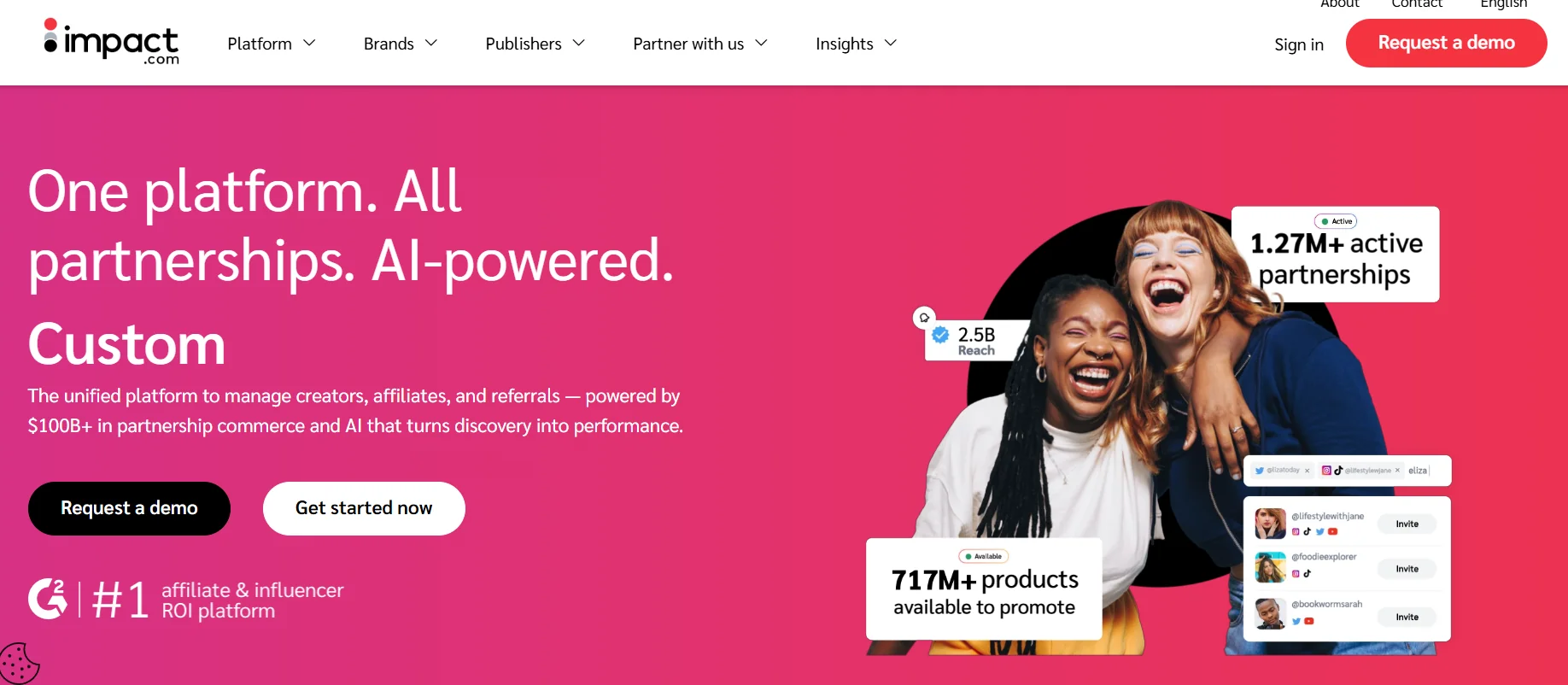
Most brands searching for impact.com alternatives are not unhappy with the tracking. They are unhappy with the bill. impact.com is a serious partnership management platform, and it does affiliate, influencer, referral, and B2B partner programs in one system. But the pricing model catches people off guard: the Starter tier runs $30 per month or 3% of monthly partner revenue, whichever is higher, Essentials sits at $500 per month, and Pro starts at $2,500 per month. On top of that, a 2.5% transaction fee applies to every partner-driven sale, plus setup fees and enterprise quotes that are negotiated behind a sales call.
So the real reason brands leave is rarely "it does not work." It is that the platform charges enterprise rates for a program that may only have 40 active partners, and it stays quiet about the number until you book a demo. The other common gap is discovery. impact.com is excellent at tracking partners you already have, but if your actual problem is finding creators in the first place, you will end up paying for a second tool anyway. That is also why plenty of brands compare it against affiliate networks rather than software.
The good news is the category has split into specialists. Some tools are cheaper and flat-fee. Some are Shopify-native. Some bring creators to you instead of making you recruit them. Here are the 10 best impact.com alternatives in 2026, with real pricing and one honest catch for each.
Top Impact.com Alternatives in 2026
1. Afluencer
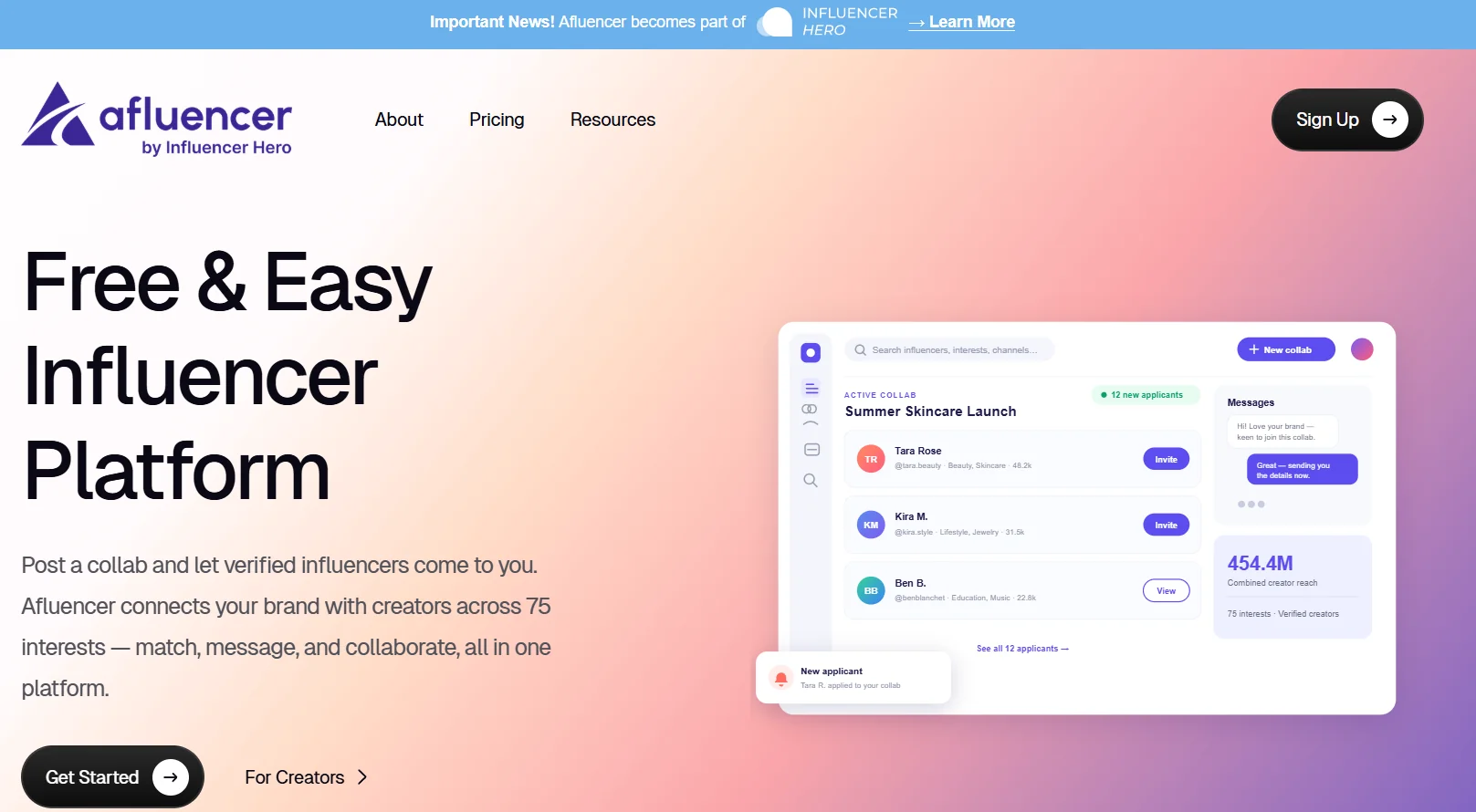
Afluencer works in the opposite direction from impact.com. Instead of recruiting partners into a system and paying a percentage on everything they sell, you post a Collab and verified creators apply to you. Brands describe what they want, set the terms, and review applications from creators who already opted in.
That flip matters for cost. impact.com's model gets more expensive as your program succeeds, because the 2.5% transaction fee scales with revenue. Afluencer charges a flat monthly subscription and takes nothing from your sales. For a brand running its first creator program, that is a very different risk profile.
The marketplace covers Instagram, TikTok, and YouTube, with filters for niche, follower count, location, and audience demographics. You can invite creators directly with invitation credits, message them in the platform, and manage introductions from one dashboard. There are native Shopify and BigCommerce apps, so store connection takes minutes rather than the two to four weeks a typical impact.com implementation runs.
On the AI side, CreatorGPT handles the strategy questions that usually eat a morning. Which creator tier fits your budget, how to phrase a Collab so the right people apply, what commission rate is competitive in your category. It is built on real influencer marketing workflows rather than generic marketing advice.
Pricing is straightforward and public. The Afluencer Marketplace plan is $49 per month and includes 60 invitation credits, premium influencer filters, and phone, email, and live chat support. From there, the Standard plan at $649 per month adds 1,000 reach outs, product send outs, and influencer payments, and the Pro plan at $1,049 per month moves you to 5,000 reach outs, a dedicated account manager, and three or more seats. The logic behind the tiers is simple: if you are just getting started with creators, the $49 marketplace is the ideal place to do it, and if you are scaling into a program with a lot of creators, you step up into the full platform.
Something to flag: Afluencer is a creator marketplace, not an affiliate tracking engine. It is not trying to replicate impact.com's multi-touch attribution, cross-device tracking, or B2B partner modules. If your program is already 500 publishers deep with complex commission tiers, the marketplace alone will not cover it, and you should be looking at the platform tiers or a dedicated affiliate tool.
Ready to test it? Post your first Collab and let verified creators come to you, or ask CreatorGPT what your commission offer should look like before you launch.
2. Influencer Hero
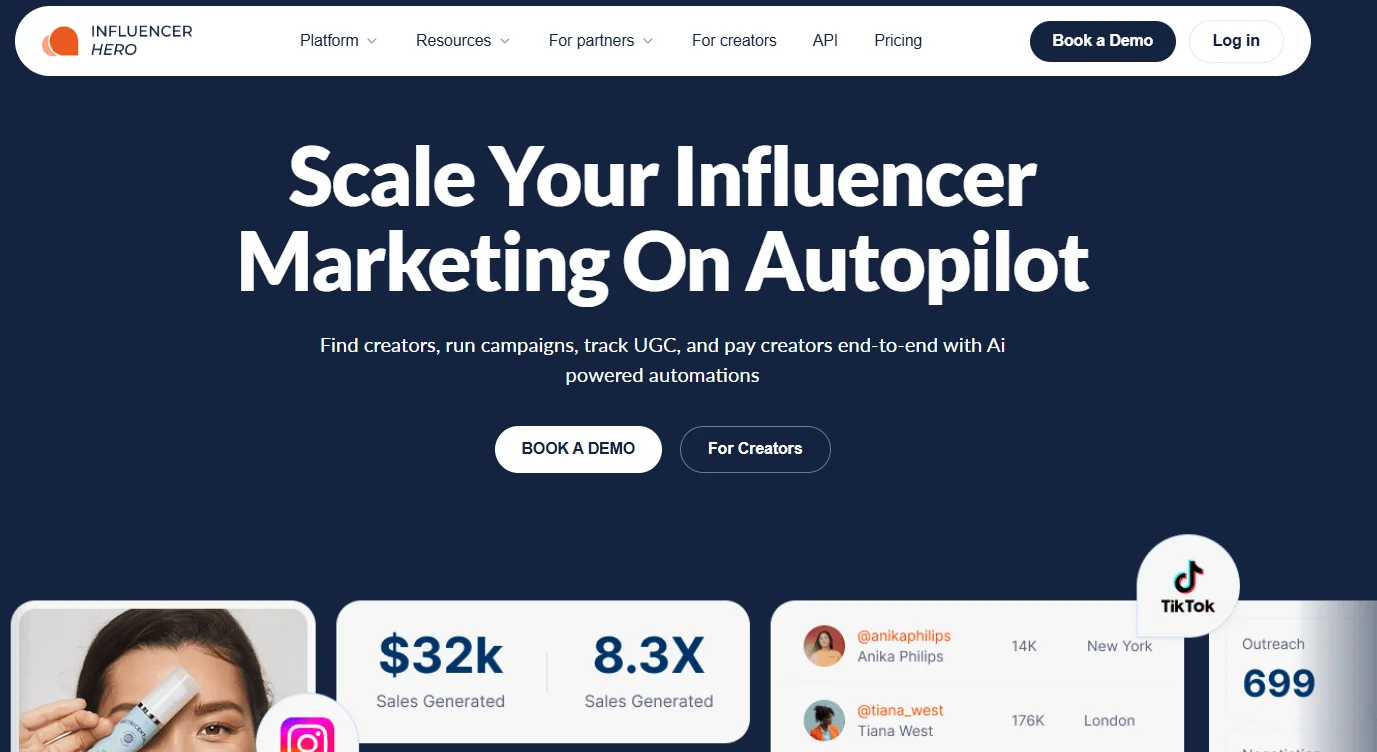
Influencer Hero is the best influencer marketing software for brands whose impact.com program is really a creator program. It covers Instagram, TikTok, and YouTube, and it runs the full sequence in one place: discovery, outreach, CRM, gifting, affiliate, payments, and reporting.
The overlap with impact.com is sharpest on the affiliate side, and that is where it earns its spot. Influencer Hero generates affiliate links and unique discount codes per creator, tracks conversions back to the individual post, handles automated influencer payments, and gives creators their own storefronts. Sales attribution ties content directly to revenue through Shopify and WooCommerce integrations, which is the exact job most brands hired impact.com to do. The difference is that it also finds the creators.
Discovery includes fake follower detection, lookalike search, brand follower detection, a Chrome extension, and AI matching, plus automated outreach sequences and an influencer CRM so nobody falls through the cracks.
That combination is the practical argument for switching. With impact.com, most brands end up paying for tracking and then buying a separate discovery and outreach tool on top. Here it is one subscription.
Pricing is publicly listed, which is a refreshing change: Standard is $649 per month, Pro is $1,049 per month, and Business is $2,490 per month, with custom and agency plans available. Just as importantly, there is no percentage cut of affiliate sales, so your cost does not climb every time the program has a good month.
The caveat is the entry point. There is no free trial, and $649 per month is real money for a brand that only wants to test whether affiliate works at all. It is also a full operating system, so a team that just wants link tracking will be paying for modules it does not touch yet.
If you want to see the affiliate and attribution side against your own numbers, book a demo with Influencer Hero.
3. PartnerStack
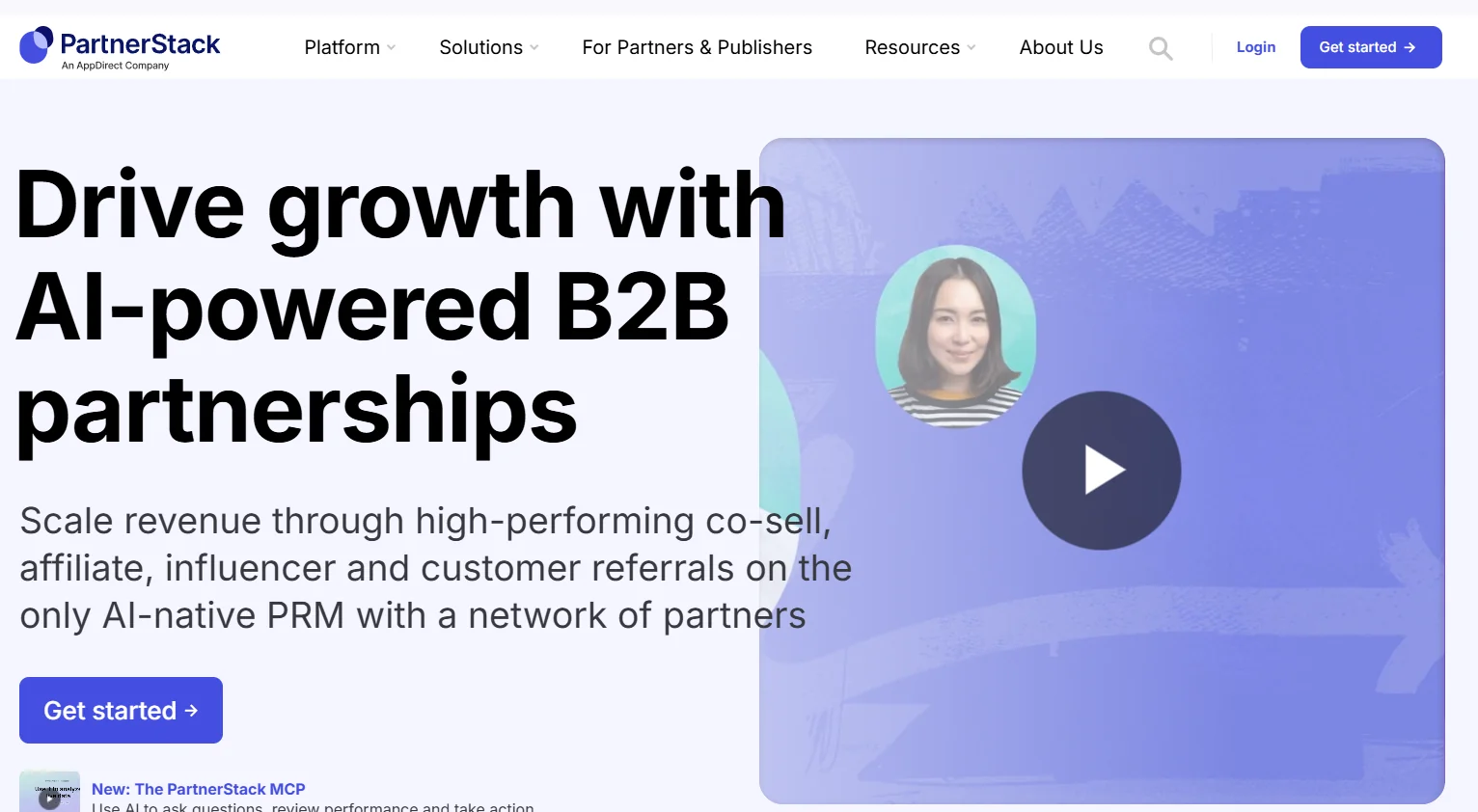
PartnerStack is built for B2B SaaS, and it shows in every design decision. It understands recurring revenue, subscription churn, multi-tier reseller agreements, and the difference between an affiliate, a referral partner, and a reseller. If your impact.com program is a SaaS partner ecosystem rather than an ecommerce affiliate program, this is the more native tool.
The differentiator is the PartnerStack Marketplace, a pool of well over 100,000 B2B-focused publishers you can recruit from. Partners get a proper portal, automated payouts with tax compliance handled, and API access, which is unusually partner-friendly for the category.
Pricing is the sore spot. PartnerStack removed public pricing from its site in 2020, so every prospect goes through a sales call. Third-party estimates put the entry point around $1,500 per month plus a 3% to 15% override on the commissions you pay out. That override is the same structural complaint people have about impact.com's 2.5% fee, just larger.
The other limitation is fit. PartnerStack is genuinely not built for physical products or one-off purchases. If you sell DTC, this is the wrong end of the market.
4. Refersion
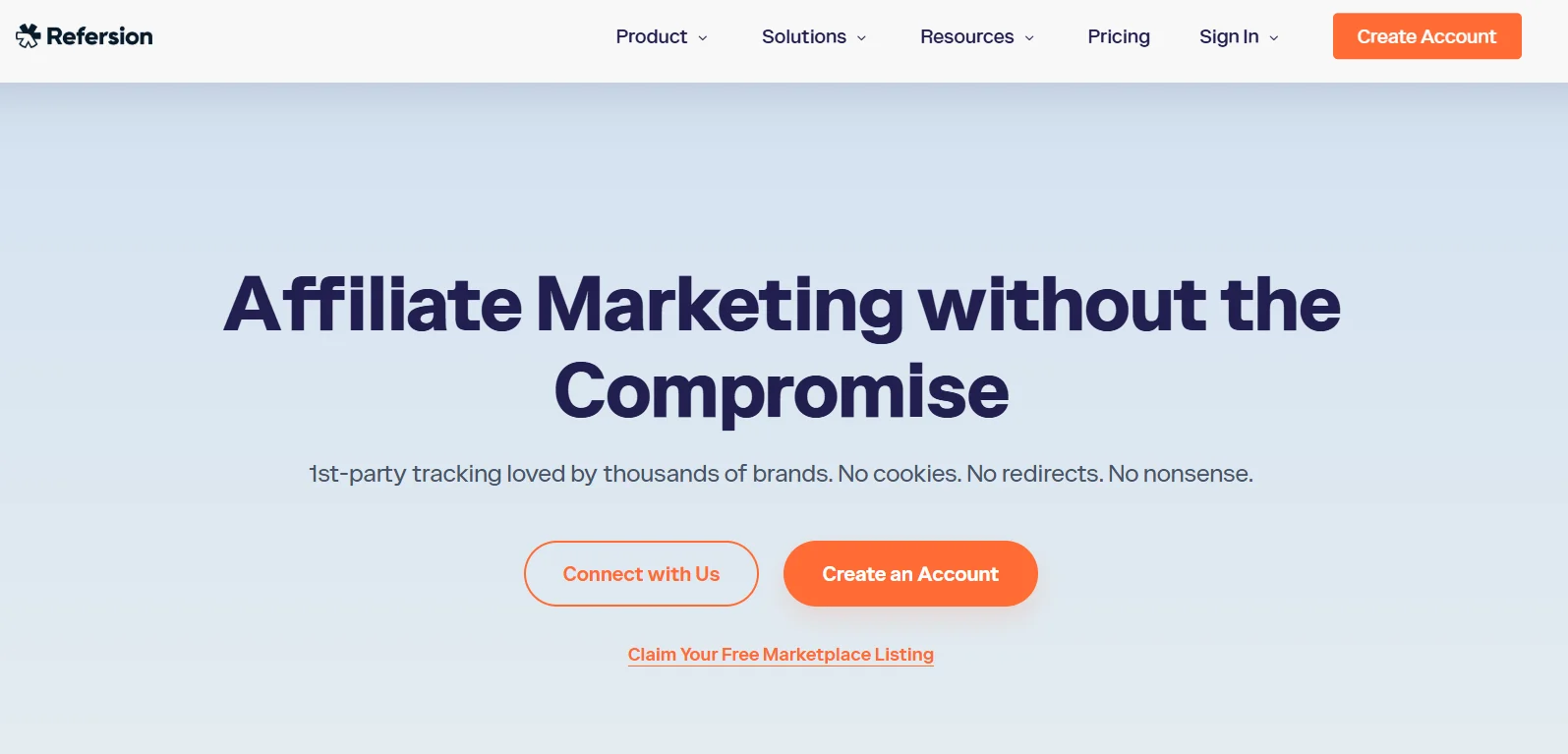
Refersion is the ecommerce answer to impact.com. More than 60,000 brands use it, including Amika, OSEA, and ColourPop, and the setup story is the main reason people switch. A Shopify, WooCommerce, or BigCommerce store can install it and launch a program in 10 to 15 minutes with no developer, against the two to four weeks a typical impact.com implementation takes.
Feature-wise you get first-party conversion tracking, SKU-level commission rules, coupon and link attribution, affiliate dashboards, and the Refersion Marketplace for recruiting. It also handles influencer partners alongside traditional affiliates, which makes it a reasonable single system if you are already running affiliate programs with creators.
Pricing starts at $39 per month on the Launch plan with unlimited affiliates, plus 3% of affiliate-driven sales. Scale runs $599 per month plus 1%, or $479 per month billed annually with 0% transaction fees for stores under $1M in annual GMV. That annual option is genuinely competitive against impact.com's fee stack.
The catch is that percentage again. At low volume the 3% is invisible; at $100,000 in monthly affiliate revenue it is $3,000 on top of your subscription. Model your actual numbers before you commit to the entry tier.
5. Social Snowball
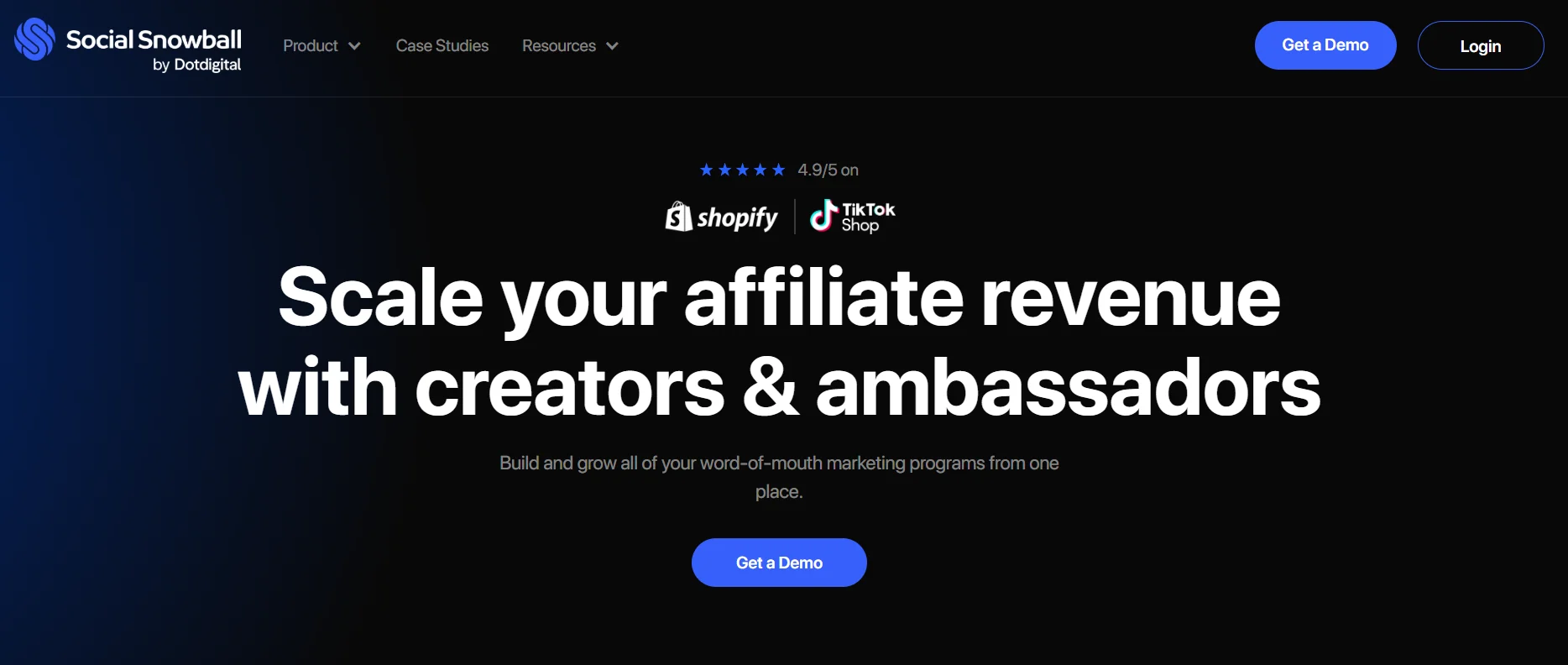
Social Snowball took one specific job and did it better than the enterprise platforms: turning existing customers and creators into affiliates automatically. Every buyer can be auto-enrolled with their own link and code the moment they purchase, which removes the recruitment step that makes most affiliate programs stall in month two.
The standout feature is Safelinks, which stops discount codes from leaking to coupon sites and quietly draining margin. It also handles TikTok Shop affiliate management, Instagram UGC tracking, and flexible payouts, and it sits natively in Shopify. For a DTC brand that mainly wants ambassador and referral revenue, it is far less machinery than impact.com and much faster to launch. It pairs naturally with the kind of creator sourcing you would do through an influencer marketing platform.
Pricing has moved to a quote model. The Snow Day plan is a custom flat fee plus 3% of affiliate-generated revenue, and Blizzard is a custom flat fee with no commission at all. Third-party breakdowns put Snow Day around $249 per month and Blizzard closer to $899, but treat those as floors rather than list prices.
Two honest limitations: it is Shopify-only, and the 3% revenue share on the entry plan reproduces the exact problem that sends people looking for impact.com alternatives in the first place. Run the break-even math before picking a tier.
6. Awin
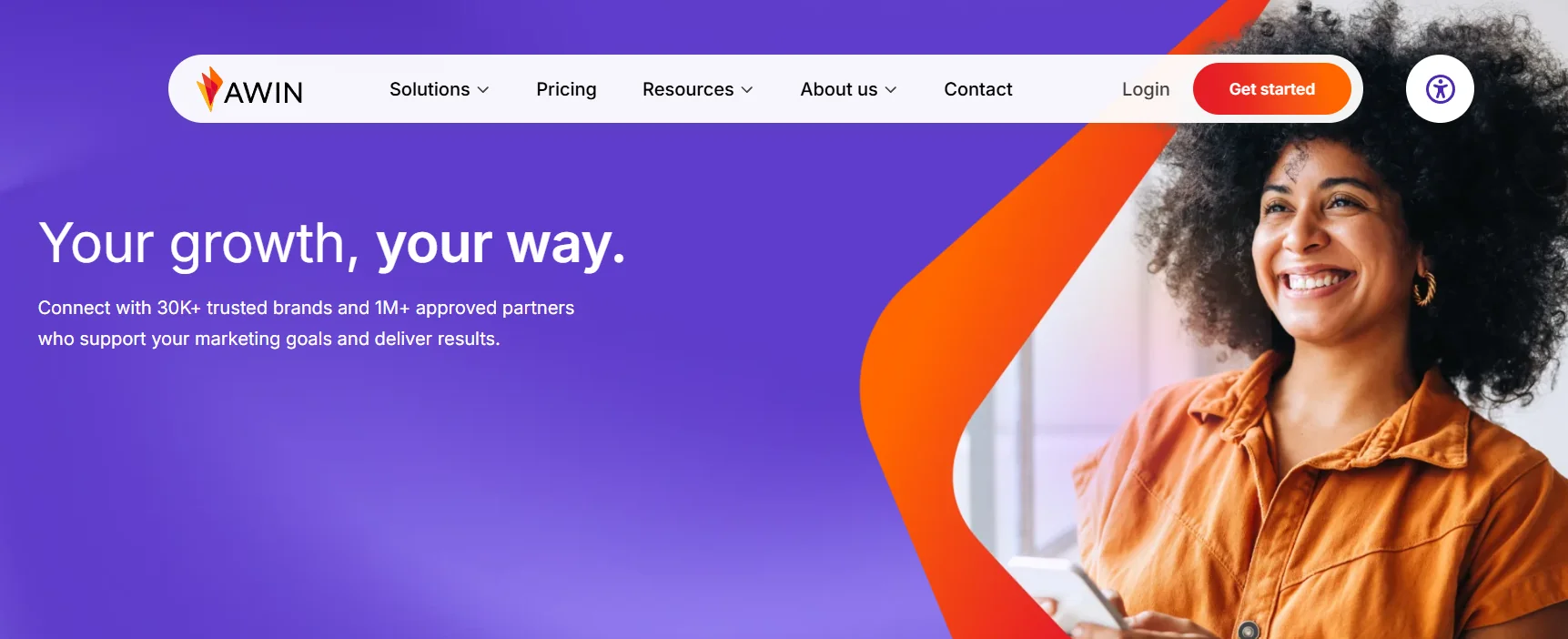
If what you actually wanted from impact.com was publisher supply, Awin is the more direct route. It is a full affiliate network with over a million partners, strengthened by its merger with ShareASale, and it is the default choice for UK and European ecommerce brands. Etsy, HP, and Samsung all run programs there.
Awin gives you server-to-server tracking with cross-device attribution, a Partner Discovery tool for surfacing publishers in your niche, and Ava, its AI assistant for performance insights and partner recommendations. Brands can also blend influencer and affiliate activity in the same platform, which is closer to impact.com's positioning than most tools on this list.
The pricing structure is refreshingly plain. Awin Access is a self-managed plan with a 3.5% tracking fee on transaction value and no long-term contract, so on a $100 sale with 6% commission the partner gets $6 and Awin gets $3.50. Accelerate and Advanced are quoted individually and drop the tracking fee to 2.5%, but they come with a service package attached. Reported entry cost for Access sits around $75 per month.
The downside is network economics. Managed tiers can carry setup fees and higher overrides, and the advertiser dashboard feels dated next to newer platforms. Support quality also varies a lot depending on your program size.
7. Everflow

Everflow is the choice for teams that liked impact.com's tracking depth and wanted more of it. It is a partner marketing platform built for performance agencies, networks, and brands running complex, multi-channel programs, and it processed $4.3 billion in partner-tracked revenue in 2025.
The tracking is the product. You get sub-ID reporting, custom attribution windows per partner type, direct linking, QR code tracking, and mobile deep linking with iOS and Android SDKs. Fraud protection uses click-to-conversion time analysis to flag conversions that fire suspiciously fast. If you have ever wanted to give a content reviewer a 90-day window and a coupon site a 24-hour one, this is where you can do it.
Pricing is quote-based and tiered by monthly payout volume. Reported entry for the Core plan is around $750 per month with a six-month commitment, and the Shopify app listing shows $1,495 per month plus a $500 setup fee. A free trial is available.
The limitation is obvious from those numbers. Everflow is priced for scale, not for experimentation, and it is a technical platform. A small marketing team without an analyst will not get its money's worth.
8. Partnerize
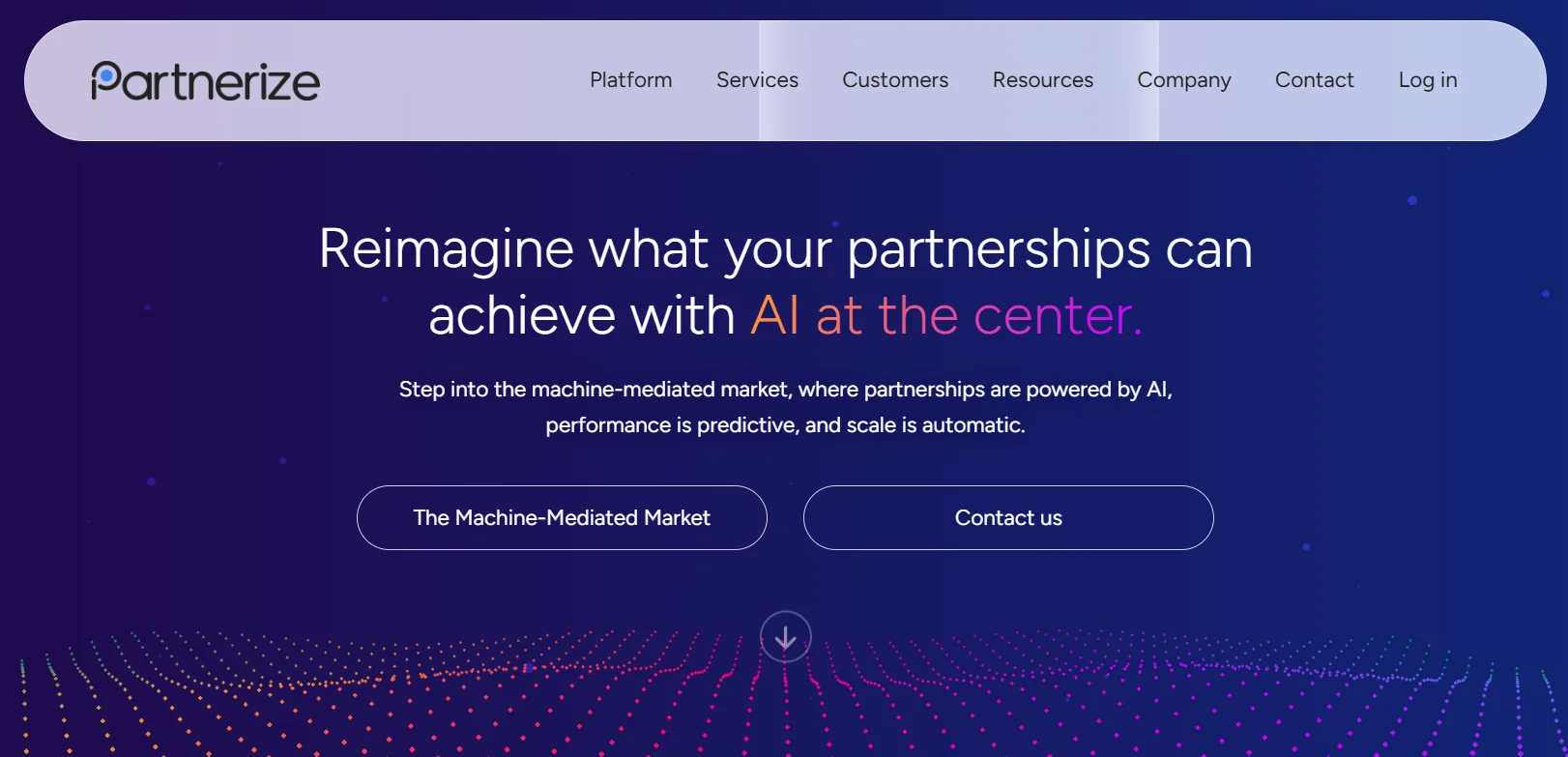
Partnerize is the most direct enterprise swap for impact.com. It covers the same territory: partner discovery, recruitment, optimization, payments, brand safety, and fraud prevention, with over 1,800 brands across retail, travel, finance, and DTC.
Its one genuinely different idea is pricing optionality. Instead of forcing you into a single model, Partnerize lets brands choose between a performance-based fee and a flat platform license fee. If your program has a high average order value and you are tired of paying a percentage on every sale, the license option can work out materially cheaper than impact.com's structure. You can also layer on managed service, in-housing support, or agency-supported management depending on how much of the work you want to keep.
Pricing is not published, and Partnerize is upfront that a quote depends on whether you have an existing program, which markets you operate in, and whether you want service alongside the platform.
The catch is that you are trading one opaque quote for another. Reviewers also consistently flag two things: the platform feels overwhelming to new users, and reporting is complex enough that pulling a clear insight takes real effort.
9. Tapfiliate
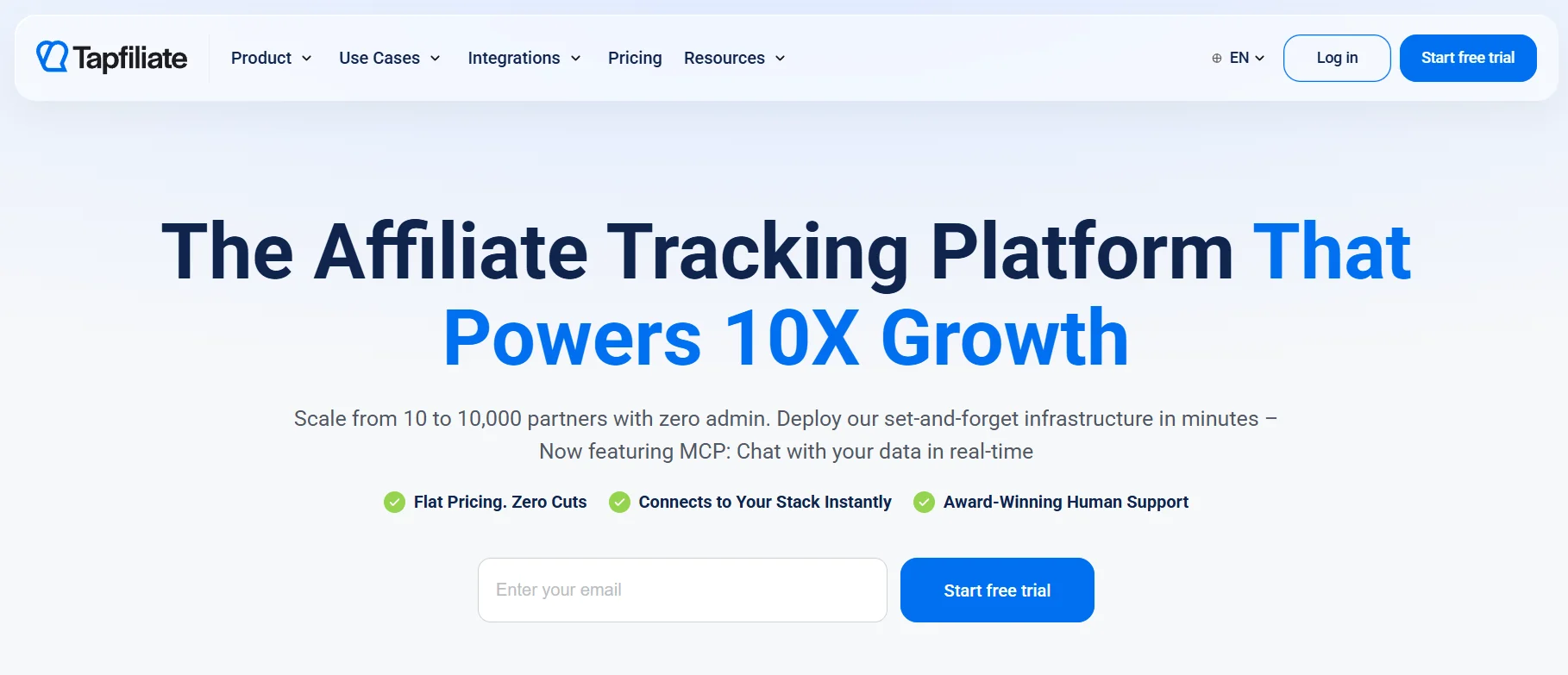
Tapfiliate is the flat-fee answer to the network tax. No transaction fees, no percentage of affiliate revenue, no override on commissions. You pay a subscription and keep your margin, which is the single clearest contrast with impact.com on this entire list.
It is also platform-agnostic in a useful way. If you sell on Shopify, run a SaaS product, and sell an online course, Tapfiliate tracks affiliates across all three from one dashboard with over 30 pre-built integrations and a REST API. Higher tiers add sub-affiliate and MLM structures, affiliate groups with their own commission rules, private creative assets, and full white-labeling of the partner portal.
Plans run $89 per month for Essential with unlimited affiliates and unlimited programs, $149 per month for Pro with five team members and group commissions, and custom pricing for Enterprise with a dedicated manager. There is a 14-day free trial.
The limitation is recruitment. Tapfiliate gives you the infrastructure but not the partners. There is no marketplace of publishers waiting to join your program, so every affiliate is someone you found and convinced yourself.
10. Levanta
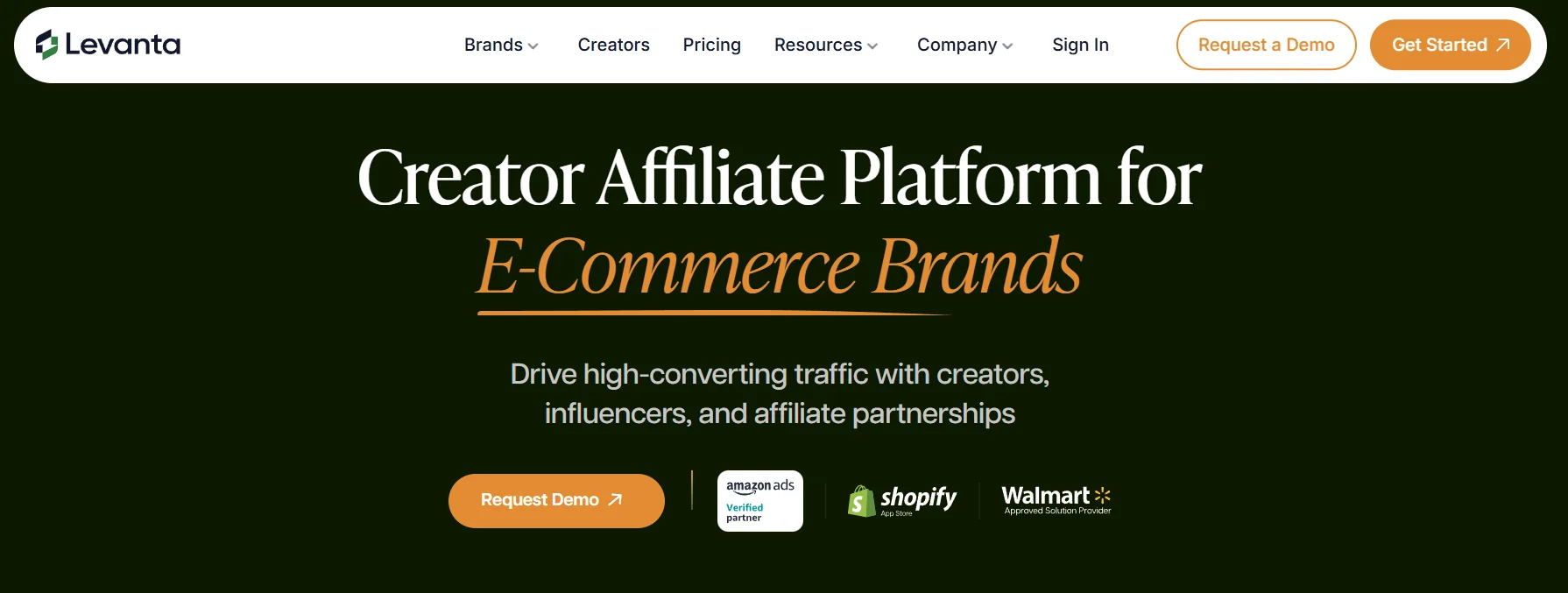
Levanta is the pick for brands whose revenue lives on Amazon, which is exactly where impact.com is weakest. Built by the team behind Grovia, it runs one creator and affiliate program across Amazon, Walmart, and Shopify, so a single creator can see your commission rates on all three channels side by side and decide where to send traffic.
For Amazon sellers, the Brand Referral Bonus integration is the real hook. Eligible US sellers earn roughly 10% back on sales driven from external traffic, which offsets a meaningful chunk of the commission you pay out. Levanta also includes a creator marketplace with AI-powered matching, product seeding, custom and private commission rates per partner, and consolidated billing so you pay one invoice a month instead of chasing individual payouts. If discovery is your main gap, it also works alongside dedicated influencer discovery tools.
Pricing starts around $150 per month, or $120 per month billed annually, plus 5% of affiliate-driven sales. The Gold plan is $750 per month plus 3.5% and unlocks private commissions, more daily invites, additional geos, and advanced reporting.
Here is the catch, and it is a real one: Gold requires a one-year contract with no early exit. Several reviewers have been burned by committing to $750 per month before proving the channel works. Start on the lower tier and earn your way up.
Which Impact.com Alternative Should You Pick?
There is no single replacement for impact.com, because impact.com is really four products stitched together. Once you separate them, the choice gets much easier. If you need affiliate tracking on Shopify, Refersion or Social Snowball will do it faster and cheaper. If you need B2B partner management, PartnerStack is more native. And if you want a flat fee with zero cut of your sales, Tapfiliate is the cleanest structure on the list.
But if the thing you actually struggle with is finding creators worth partnering with, none of those solve it. That is where Afluencer fits: a marketplace where verified creators apply to your Collab instead of you hunting them down, at $49 per month to start. It is built for brands early in their creator journey, and it does not take a percentage of anything you sell. When your program grows past the marketplace and you need reach outs at volume, payments, and full campaign management, the Standard and Pro plans step you into the bigger platform.
Not sure what to offer creators before you launch? Our guide to influencer rates breaks down what brands are actually paying this year. Then post your Collab and see who applies.