.svg)
.png)
10 Best PartnrUP Alternatives in 2026
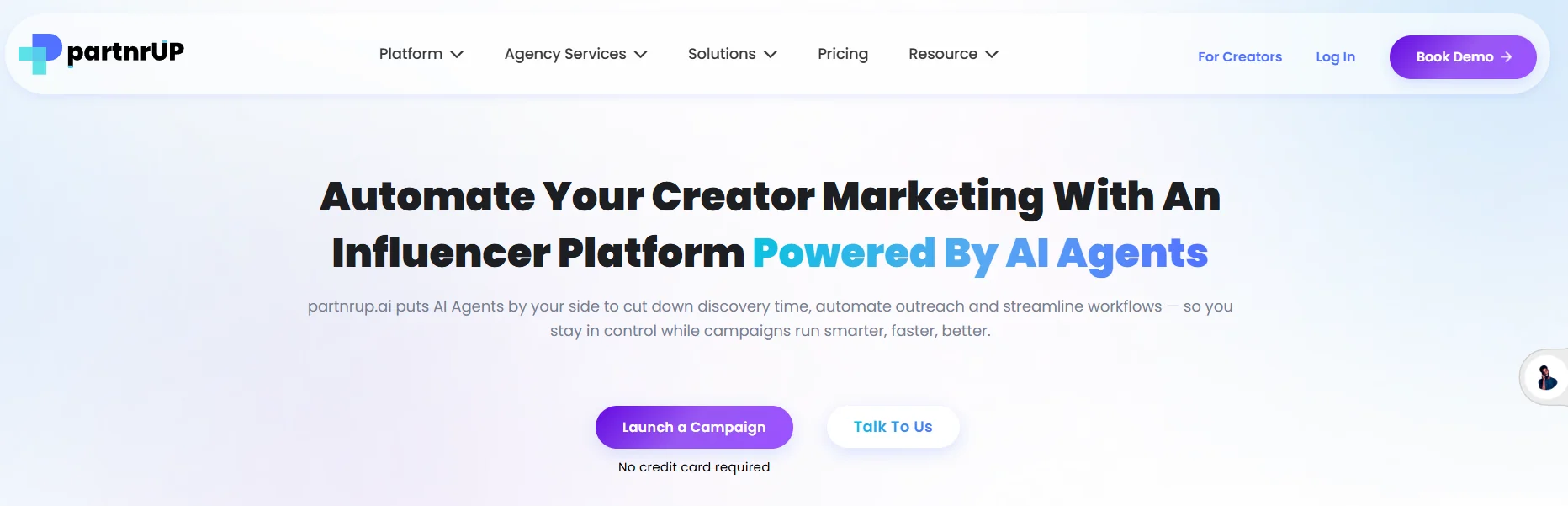
Most brands searching for PartnrUP alternatives in 2026 land here for one reason: the fee on top of the fee. PartnrUP (formerly gen.video, rebranded in October 2025) runs a genuinely clever model. Every plan carries an AI coordination fee charged against your creator spend: 20% on Free, 10% on Pro at $299/month and Growth at $699/month, and 0 to 10% on the custom Scale tier. Once you are paying creators real money, that percentage stops feeling small.
The caps matter too. Free gives you one active campaign and ten active creators. Pro moves you to three campaigns, Growth to five, and every tier below enterprise runs on a single brand workspace. Agencies and multi-brand teams hit that wall quickly. G2 reviewers rate the platform 4.7 across 70 reviews and praise the support, though a few flag clunky navigation and thin creator participation in certain niches.
None of that makes PartnrUP a bad tool. It just means the fit is narrow. Some brands want flat software fees with no skim on creator payments. Others want a bigger discovery pool, a marketplace where creators apply to them, or a platform that does not cap campaigns. If you are still working out what any of this should cost, our guide to influencer rates is a useful sanity check, and our roundup of discovery tools covers the search side in more depth.
Here are the ten best PartnrUP alternatives worth your shortlist this year.
Best PartnrUP Alternatives in 2026
1. Afluencer
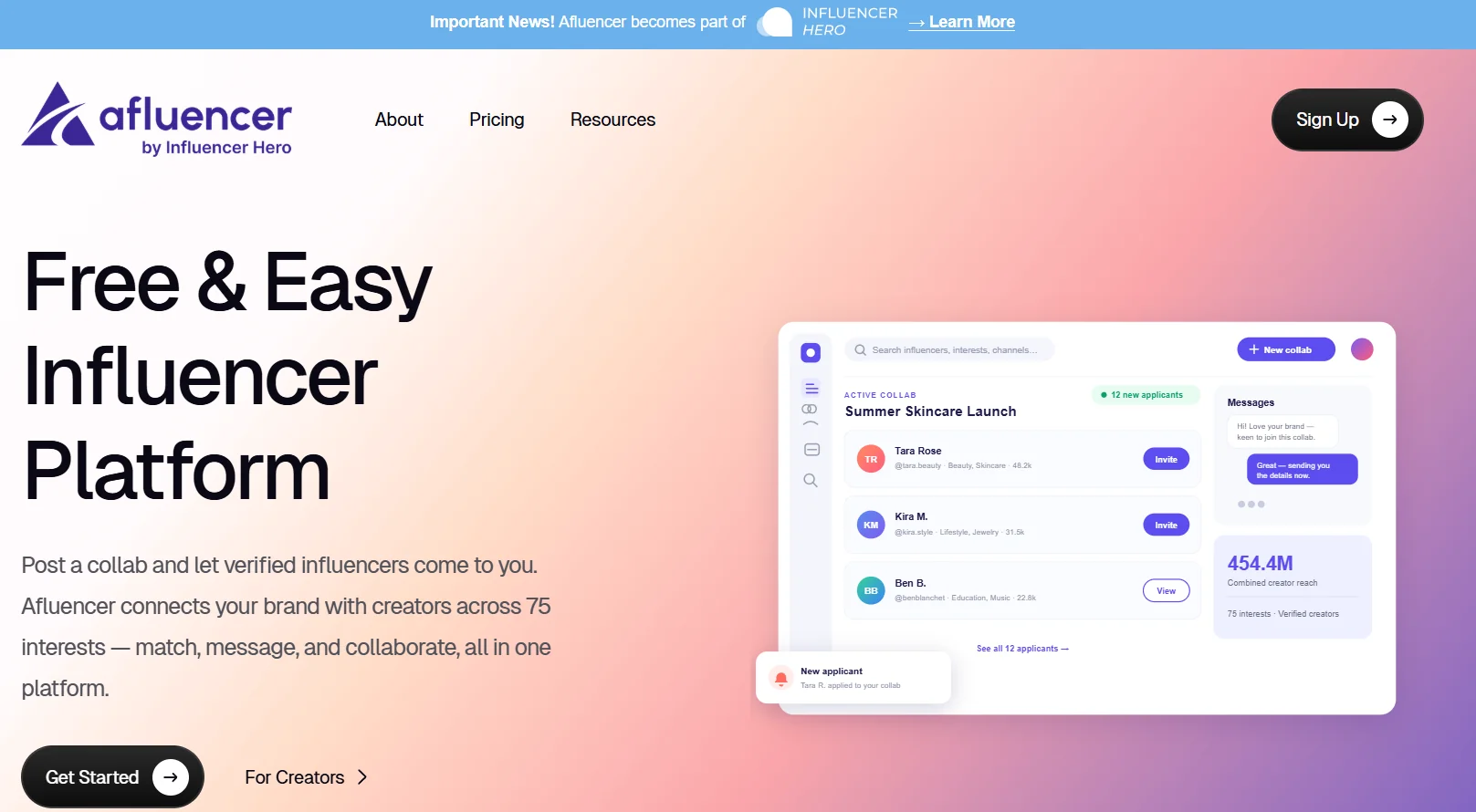
Afluencer flips the sourcing problem around. Instead of paying an AI agent to hunt for creators and hoping they respond, you post a Collab and verified influencers apply to you. The people who land in your inbox already want to work with your brand, which cuts out the slowest and least predictable part of any campaign.
That makes it a direct answer to the two things brands complain about most on PartnrUP. There is no coordination fee taken from your creator payments, and there is no cap on how many campaigns you can have running. You are paying for access and visibility, not for a percentage of every deal you close.
The marketplace covers beauty, fitness, fashion, food, tech, pets and plenty of smaller niches, with creators across Instagram, TikTok and YouTube. Filters let you narrow by platform, follower range, location and interest before you invite anyone, and you can message creators directly inside the platform. For brands running gifting and product seeding, the flow is simple enough that you do not need a dedicated influencer manager to keep it moving. Our guide to gifting platforms walks through how that workflow usually gets built.
Pricing is refreshingly boring, which is the point. Brands post a Collab for free and can test with a free trial, then move to a paid brand plan starting at $49/month for the Marketplace tier, which adds 60 invitation credits a month, premium influencer filters and phone, email and live chat support. Higher tiers run $649/month and $1,049/month for brands that need reach-out volume, product send-outs and influencer payments. Afluencer's free-forever plans are creator-side, not brand-side, so the free trial is your starting point as a brand.
Two AI tools sit alongside the marketplace. CreatorGPT handles strategy questions, from campaign structure to what to offer a creator in a specific niche. The Afluencer Collab Finder matches creators to live opportunities, which keeps the applicant pool warm rather than static.
The honest caveat: Afluencer is a marketplace first. If you need enterprise-grade attribution dashboards or retail syndication on day one, you will want something heavier. For most DTC and Shopify brands, the constraint that actually hurts is finding creators who reply, and that is exactly what this solves.
Chat with CreatorGPT for strategy, or sign up and post your first Collab today.
2. Influencer Hero
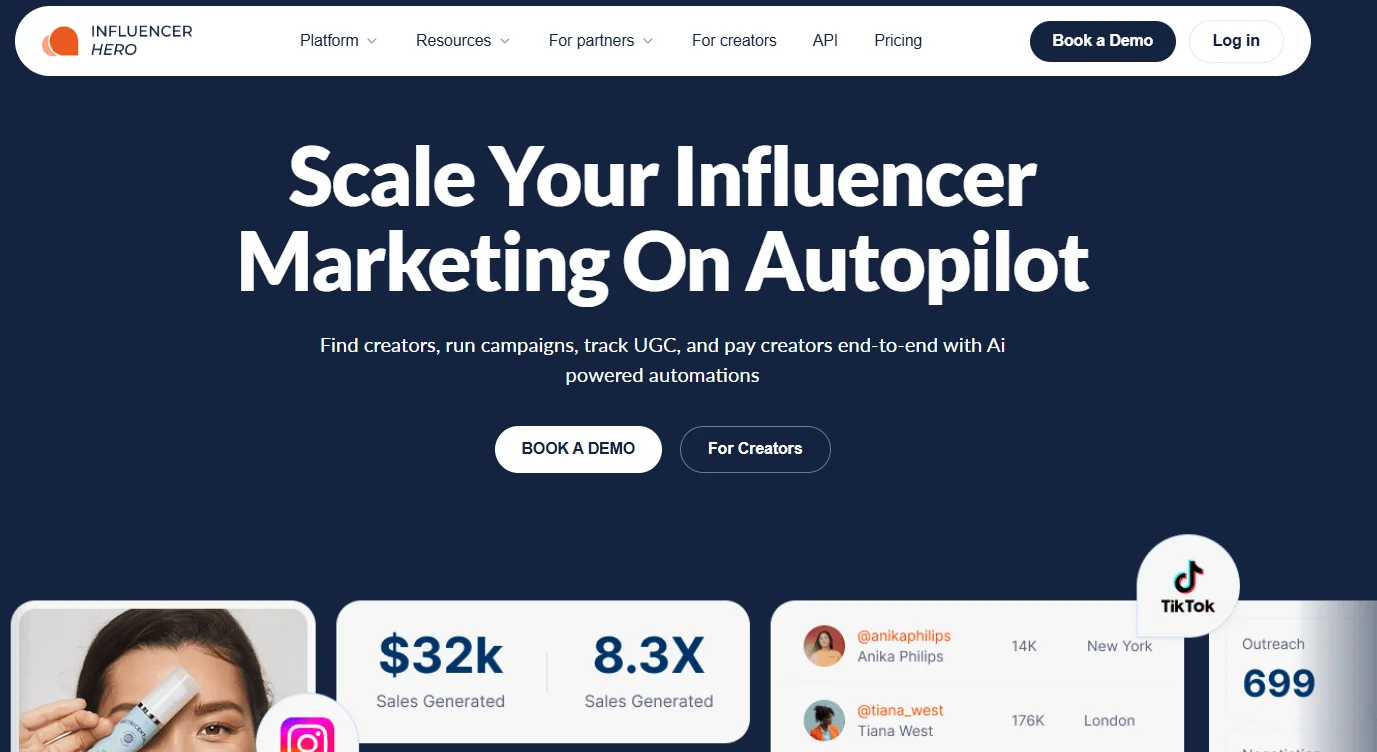
Influencer Hero is the closest thing on this list to a full replacement for PartnrUP's all-in-one promise. Discovery, AI outreach automation, a creator CRM, gifting and product send-outs, affiliate tracking, influencer payments, UGC collection and ROI attribution all live in one system, with a Shopify integration that ties creator activity back to revenue.
Where it separates itself is outreach volume and attribution. Standard includes 1,000 reach-outs a month, Pro moves to 5,000, and Business goes to 10,000 with UGC tracking and unlimited influencer payments. It can also surface creators hiding inside your existing customer base, which is usually the highest-converting group you are not already working with. G2 reviewers rate it 4.8, with the dashboard and outreach automation getting the most praise.
Pricing is public: $649/month for Standard, $1,049/month for Pro and $2,490/month for Business, with custom pricing for agencies. Quarterly billing saves 20% and annual saves 30%. Crucially for anyone leaving PartnrUP over the coordination fee, this is a flat software fee with no percentage taken from creator payments.
All plans require a minimum three-month commitment, and the subscription is priced per brand rather than per agency account, so agencies running several clients pay per brand. Model that total before you sign if you manage multiple rosters.
If your program has outgrown campaign caps and you want discovery, outreach, payments and attribution running in one place, book a demo and see how the workflow handles your creator volume.
3. Later
Later Influence (formerly Mavrck) is the enterprise pick that shows up most often when brands compare PartnrUP competitors head to head. It runs creator discovery, campaign workflow, content approvals and performance reporting on top of Later's social data, and its services team handles strategy for brands that want the work taken off their plate.
The reason it wins against PartnrUP at the top end is scale with no ceilings. Every platform license includes unlimited campaigns and unlimited creators, which removes the campaign-count math entirely. If you are running seasonal pushes across multiple product lines at once, that alone changes the calculation.
Reviewers on G2 give it 4.5 stars and consistently praise how organized the campaign view is. The content approval hub is a genuine strength when several stakeholders need to sign off before anything goes live.
Later does not publish pricing. It sells three levels of paid plans, from a self-serve software license to packages that bundle hourly time with its campaign team, and there is no free trial. Third-party estimates put entry somewhere around $28,500 per year, so this is a budget decision, not a trial. If you are a small brand testing the channel, look further down this list.
4. GRIN

GRIN has been the default creator management platform for DTC ecommerce for years, with SKIMS, ColourPop and IPSY on the client list. Product seeding, affiliate links, discount codes, creator payments and sales attribution all run natively against Shopify, WooCommerce and Magento.
It also went through the biggest pricing change in the category this year. GRIN now sells usage-based plans built around Gia, its AI operator, with monthly credits instead of seats.
Free gives you 200 credits with no card and no trial clock. Starter is $200/month for 2,000 credits, Growth is $500/month for 7,500 credits plus the GRIN Classic workspace for up to 100 active creators, Scale is $1,000/month for 20,000 credits and 250 creators, and Complete is $1,500/month for 30,000 credits and 500 creators. Everything is month to month with no contract and no required sales call.
For anyone weighing PartnrUP's agent model, this is the fairest comparison on the list. Both meter AI work rather than seats. The difference is that GRIN charges no take rate on creator-driven GMV, so your affiliate revenue does not get taxed as it grows. If commissions are central to your program, our roundup of affiliate tools is worth a read alongside this.
The limitation is predictability. Credits reset monthly and do not roll over, and heavy work like reporting, persona building and campaign setup burns through them faster than light outreach does. You set a hard spend cap, so there are no surprise bills, but forecasting your real monthly cost takes a cycle or two.
5. Modash

Modash solves the problem PartnrUP reviewers raise most often, which is creator supply. Its database covers 350M+ profiles across Instagram, TikTok and YouTube, so you are searching the open social graph rather than a marketplace of creators who happen to have signed up. Google, Victoria's Secret, NordVPN and Airbnb are all customers.
Audience analysis is the other draw. You get demographic breakdowns, engagement quality scoring and built-in fake follower detection before you spend a cent on a creator. The Shopify integration handles gifting and affiliate tracking, and campaign tracking pulls posts and Stories automatically so nobody is chasing screenshots.
Pricing is public and mid-market. Essentials runs $299/month billed monthly or $199/month on annual billing, Performance is $599/month or $499/month annually, and Enterprise starts around $14,700/year. There is a 14-day free trial with no card required.
Watch the usage caps rather than the sticker price. Essentials includes 300 opened profiles and 150 email unlocks a month across two seats, and research-heavy teams running several campaigns at once burn through that fast. Modash is also discovery-first, so it is lighter on end-to-end campaign execution than PartnrUP or GRIN.
6. Upfluence

Upfluence is the ecommerce-native option, and its signature trick is identifying influencers already inside your customer base. It connects to Shopify, WooCommerce, Amazon and Klaviyo, then flags the people already buying from you or opening your emails who also have an audience. Those creators convert better than cold outreach, every time.
The platform covers search across millions of creator profiles, outreach, affiliate and campaign management, plus revenue and ROAS dashboards that tie creator activity to actual orders. Social listening is available as its own module.
Pricing is modular and quote-based. Modules start around $478/month for search and contact, and demo quotes for the full stack with a single seat have landed around $1,276/month, which works out to roughly $16,000 a year. Upfluence charges a fixed platform fee and takes no percentage of creator-driven sales, so it fixes the same complaint that pushes brands off PartnrUP.
Two real drawbacks. There is a 12-month contract, and there is no self-serve pricing page, so you cannot evaluate the cost without a sales call. Several reviewers also note that the initial quote grew once add-on modules and extra seats came into the picture.
7. Aspire

Aspire (formerly AspireIQ) built its reputation on ambassador programs. It runs influencer search, a creator marketplace where influencers apply to your briefs, customizable relationship workflows, product seeding, affiliate programs and content amplification into paid social. M&Ms, Keurig, Samsung, HelloFresh and Dyson all use it, and the platform has paid out well over $100M to creators.
The marketplace is the part that matters if you are leaving PartnrUP over creator participation. Instead of relying on one platform's recruited pool, you publish an opportunity and let creators come to you, which tends to produce a steadier flow of applicants in mainstream consumer categories. Aspire also runs an agency services team as a managed add-on if you need hands on the program.
Pricing is not published anywhere. It is quote-based, third-party estimates put it around $2,499/month, and pricing is per user, so costs climb as you add teammates. There is no free plan and no free trial, which makes this a hard tool to test cheaply. If your program is not already running, that is a lot of commitment before your first campaign. For a wider view of where it sits, see our roundup of the best marketing platforms.
8. Insense
Insense is the pick if what you actually want from PartnrUP is content, not reach. It is built around UGC production for paid social, with a vetted creator marketplace, an interactive brief builder, automated contracts and rights, and one-click Meta Partnership Ads and TikTok Spark Ads activation. Content typically lands in 10 to 14 days, and usage rights are recorded in perpetuity once you approve.
For Shopify and DTC brands running creative testing, that workflow is hard to beat. You brief once, get several variations back, and push the winners straight into ads without leaving the platform. Product seeding runs natively through the Shopify integration too.
Pricing starts with a paid one-month trial at $650, then self-service plans from around $500/month billed quarterly, with managed service packages starting around $1,800/month. There is no free trial.
The honest limitation is the fee stack, which is the same trap that sends people looking for PartnrUP alternatives. Creator payments are separate from your subscription, and Insense adds a marketplace fee of roughly 10% to 20% on top of every one. Discovery is also narrow compared to a database tool, and coverage is concentrated on TikTok and Instagram.
9. SARAL
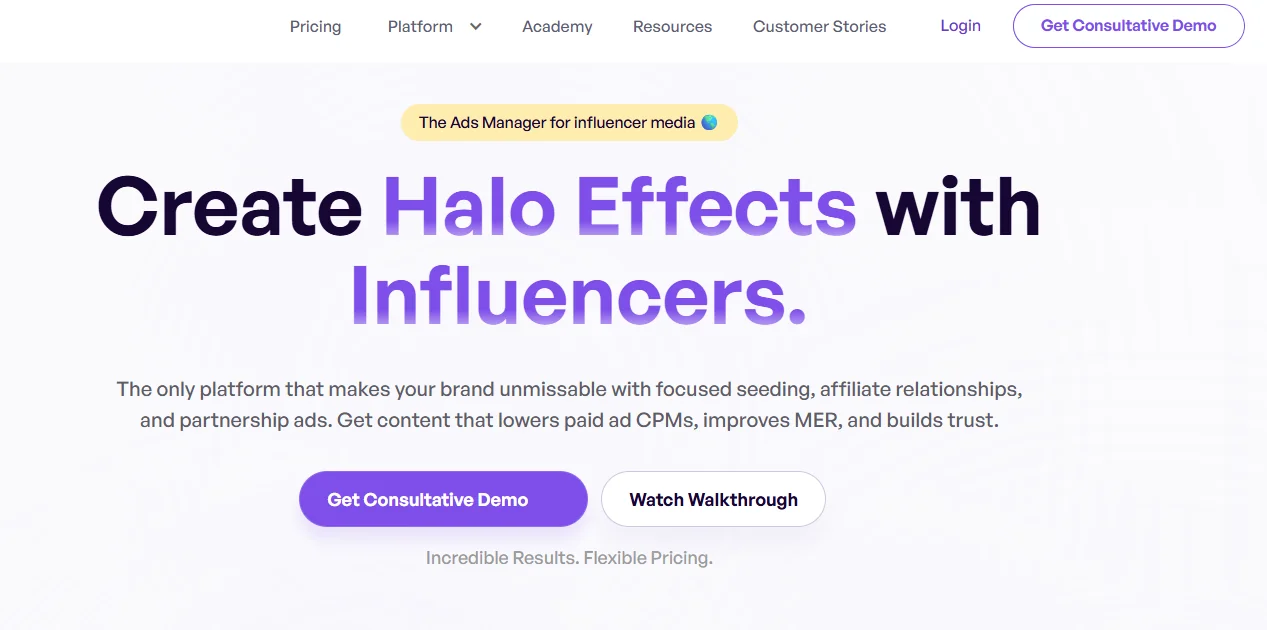
SARAL calls itself an Influencer OS and aims squarely at lean ecommerce teams who want one clean system instead of five browser tabs. You find creators, save them to outreach lists, run personalized email sequences, ship product, assign affiliate links and track sales, all in one place. Social listening picks up brand mentions and UGC automatically.
Its best feature for anyone frustrated by PartnrUP's caps is that every plan includes unlimited influencers managed, unlimited users and unlimited outreach emails. Pricing scales on one axis only, which is how many new influencers you want to search and save each month. No percentage of sales, no per-seat charges, no hidden fees.
Plans start at $3,600 per quarter (roughly $12,000 a year) for Starter, which covers 100 active partnerships, 300 new influencers saved monthly and one seat. Business runs $4,500 per quarter and Professional $7,500 per quarter with 1,000 active partnerships and 10 seats. Onboarding calls and a dedicated success manager come bundled.
That floor is the catch. Twelve thousand dollars a year is a heavy first commitment for a brand still testing whether influencer marketing works for it, and billing is quarterly or annual rather than monthly. Reviewers also flag occasional Gmail sync issues. Our post on SARAL alternatives goes deeper if this one is on your shortlist.
10. Heepsy
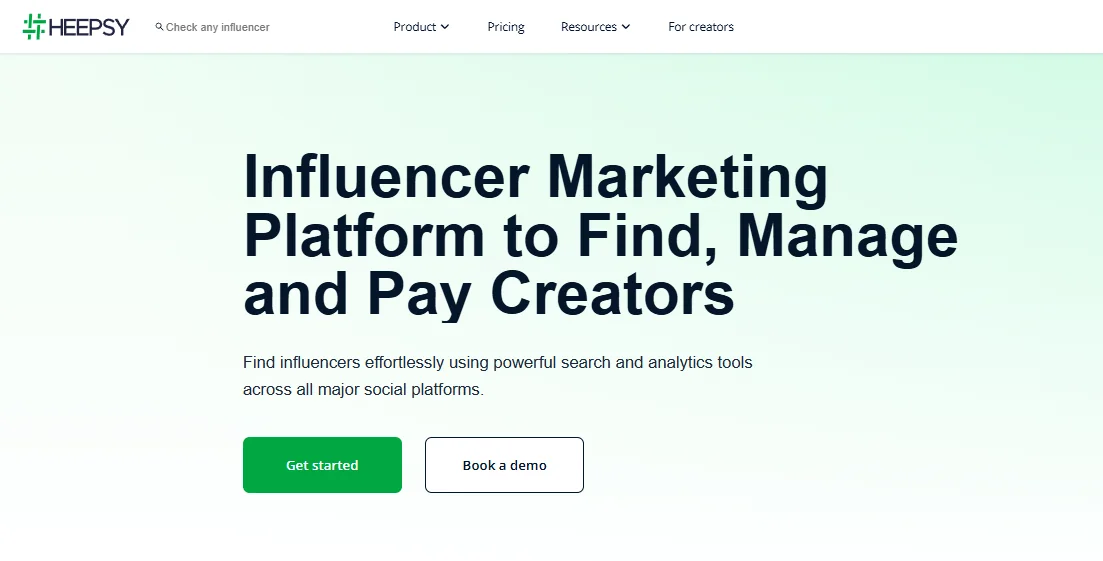
Heepsy is the budget entry point. It indexes 11M+ creator profiles across Instagram, TikTok and YouTube, with filters for category, location, follower count, engagement rate and audience demographics, plus audience authenticity checks to weed out inflated accounts. Its Moonio marketplace lets creators apply to your campaigns, and there is a Shopify integration for sales tracking.
For a small brand that finds PartnrUP's Pro tier hard to justify, this is the cheapest way to start vetting creators properly. There is a free plan for basic discovery, and paid tiers open at €69/month (around $89) for Starter, with higher tiers running into the $200 to $370 range depending on how many analytics reports you need. Billing is monthly with no long-term contract.
Two things to know before you buy. The database is a fraction of the size of Modash or GRIN, so niche and non-English searches thin out fast. And several key filters, including audience demographics and the Shopify sales tracking, sit behind the higher tiers rather than the entry plan. Reviewers on Capterra have also complained about a firm no-refunds policy, so use the free plan properly before you upgrade.
Which PartnrUP Alternative Should You Pick?
There is no single winner here, and you do not need the tool everyone else uses. What you need is the one that matches your size, your budget and how you actually want creators to reach you. If your problem is the coordination fee, look at flat-fee platforms like Influencer Hero, Modash or GRIN. If your problem is creator supply, look at marketplaces where influencers apply to you. If your problem is content volume rather than reach, Insense is the shortcut.
For most small and mid-sized brands, the smartest first move is not a bigger platform. It is a bigger pool of creators who already want to work with you.
That is the case for starting on Afluencer: post a Collab for free, see who applies, and only pay for more visibility once the model is clearly working for your brand. Chat with CreatorGPT if you want a second opinion on your campaign structure first, or check pricing and get your first Collab live this week.