.svg)
.png)
10 Best Whalar Alternatives in 2026
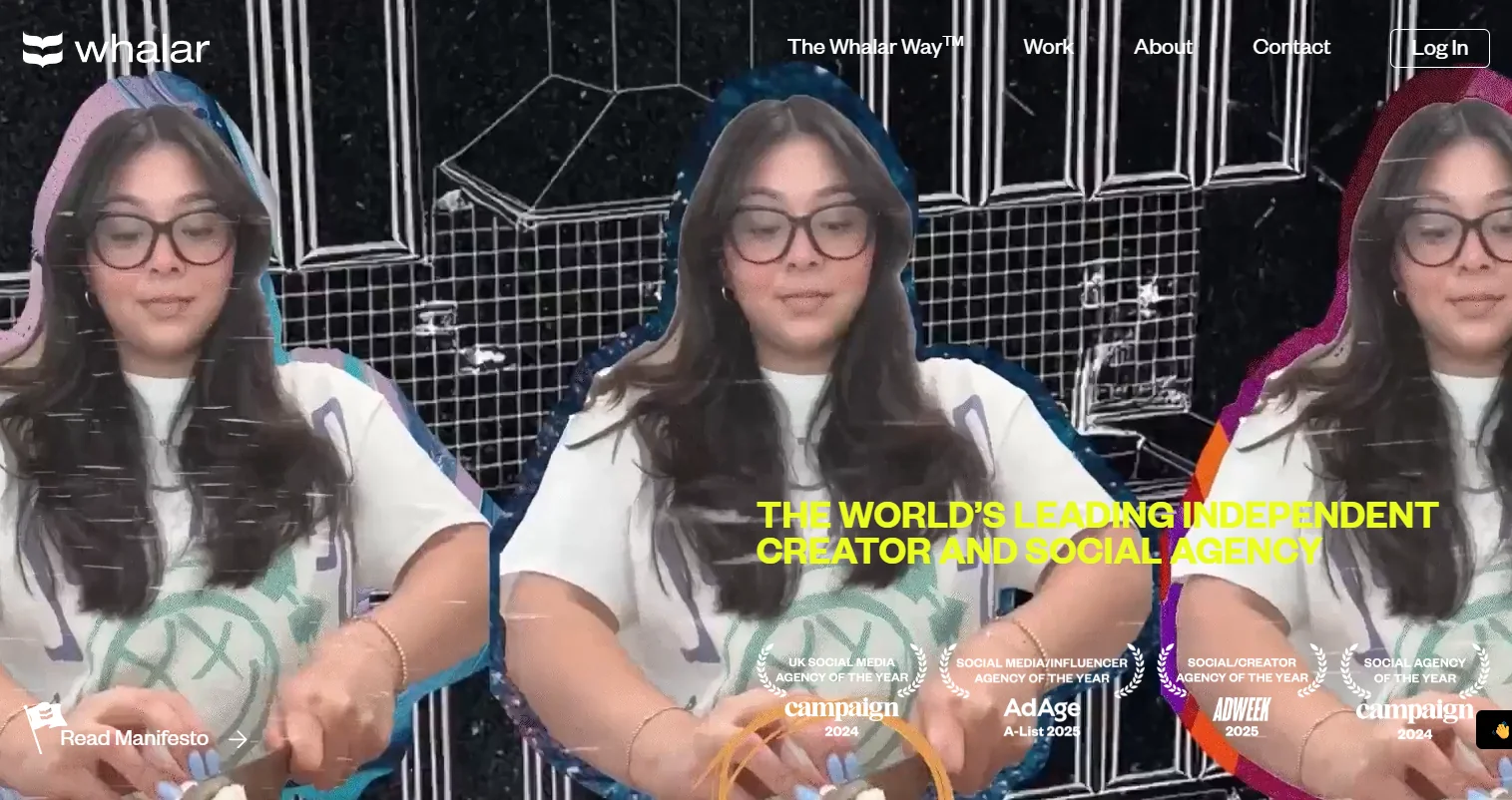
Most brands searching for Whalar alternatives are not unhappy with the work. Whalar is one of the most awarded creator agencies in the world, with campaigns for Nike, Uber, IKEA and Dove behind it. The problem is usually the model. Whalar is a full-service agency, so you brief a team, wait for a scoped proposal, and pay agency rates for strategy, casting, production and reporting. There is no self-serve version and no published rate card.
That model gets expensive fast if you run always-on creator content rather than a few big cultural moments. And the ground shifted in June 2026, when Accenture agreed to acquire Whalar and fold it into Accenture Song. Consultancy ownership usually pulls an agency further upmarket, which is exactly the moment mid-market brands start asking what else is out there.
The alternatives below split into three camps: agencies that do what Whalar does at a different price point, software that lets you run the same workflow in-house, and marketplaces that let you buy creator content one deliverable at a time. Which camp fits depends on your team size and how predictable your content volume is. If you are still benchmarking what creators actually cost, our breakdown of influencer rates is a useful reality check before you get on any sales call.
Let's get into them.
Top Whalar Alternatives in 2026
1. Afluencer
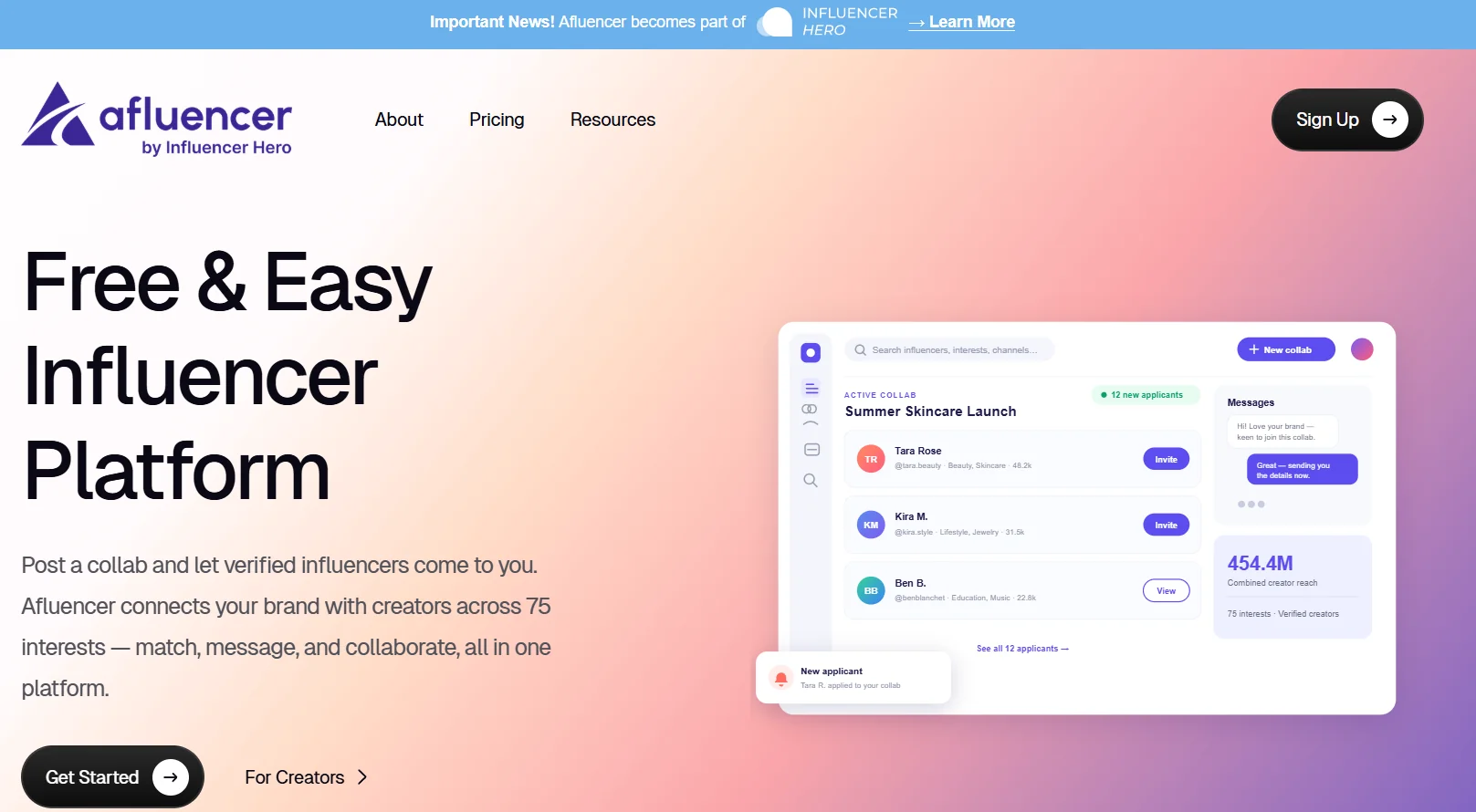
Afluencer flips the agency model on its head. Instead of hiring people to go find creators for you, you post a Collab describing your campaign, and verified creators apply to it. You review who raised their hand, accept the ones that fit, and start the conversation from there.
That inbound model removes the single most expensive part of any creator program: the cold outreach and vetting labour you would otherwise pay an agency to do. For brands running gifting campaigns, micro-influencer collabs or a first round of UGC, it gets you to a shortlist in days rather than after a six-week onboarding.
Afluencer sits closest to Whalar on speed, not scale. You will not get a global multi-market activation here. What you get is a working creator pipeline you can run yourself, with Shopify and BigCommerce apps that handle product send outs so gifting does not turn into a spreadsheet exercise. Our guide on sending products walks through that flow step by step.
The AI tools do the strategy lifting. CreatorGPT works as an influencer marketing assistant for campaign angles, creator-fit questions and outreach planning, while the Afluencer Collab Finder surfaces creators who match live opportunities so the right people find each other faster.
Pricing starts at $49/month for the Afluencer Marketplace plan, which includes 60 invitation credits per month, premium influencer filters and phone, email and live chat support. From there, the Standard Plan at $649/month and the Pro Plan at $1,049/month unlock the Influencer Hero platform for reach-outs at volume, product send outs, influencer payments and a dedicated account manager on Pro.
The way to read that ladder is simple. For brands just getting started, Afluencer is the ideal choice. For brands that want to scale and work with a lot of creators, Influencer Hero is the ideal solution. You are not locked into the wrong tier either way.
One honest caveat: Afluencer is a marketplace, so you reach creators who have joined it, and outbound invitations run on credits. If your campaign depends on casting one specific celebrity creator, an agency still wins that job.
2. Influencer Hero
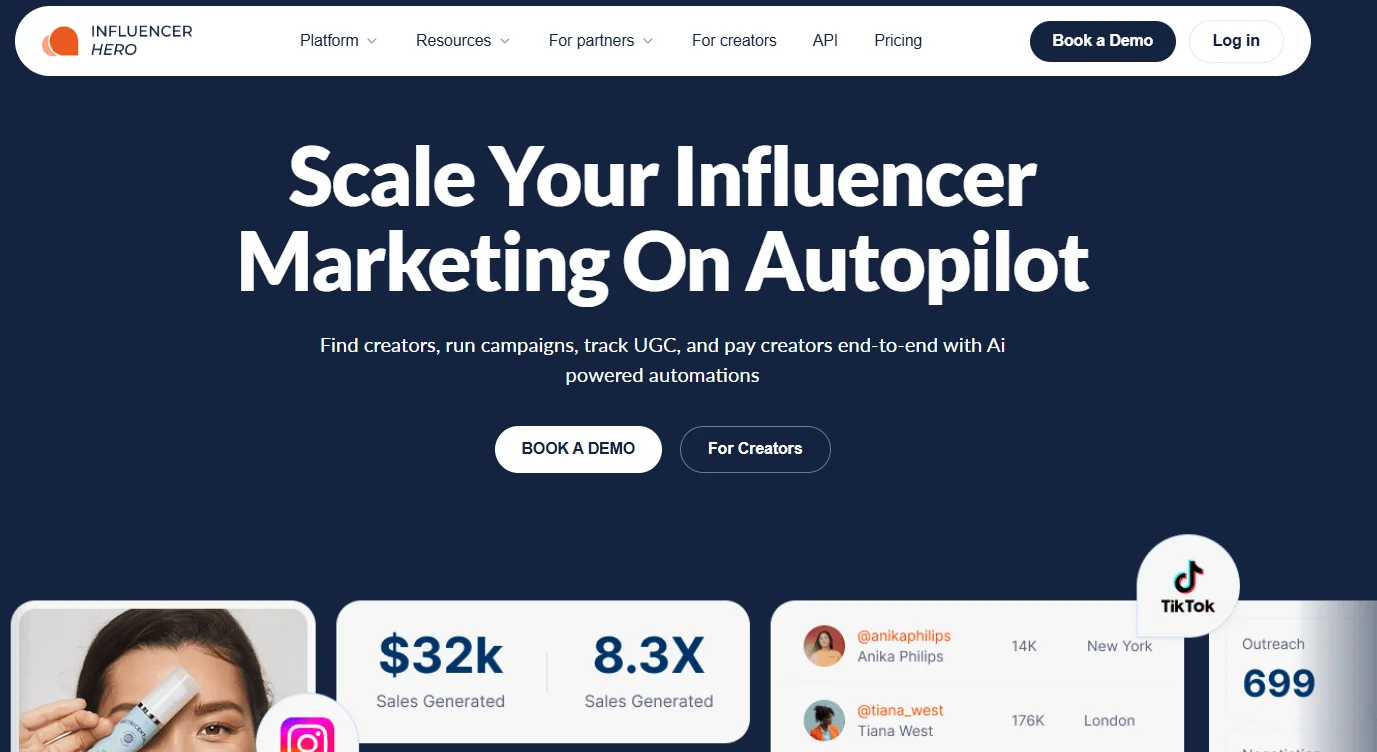
Influencer Hero is the strongest option for brands that want to bring the whole agency workflow in-house without losing any of it. It covers discovery, outreach, CRM, gifting, UGC, affiliate and reporting in one platform, which maps almost one to one onto what a creator agency actually charges you for.
The overlap with Whalar's core offer is worth spelling out. Where Whalar handles casting, content and measurement as a service, Influencer Hero gives your team the same three pillars as software. Discovery runs across Instagram, TikTok and YouTube with fake-follower detection, lookalike search and AI matching. Outreach automation sends personalised sequences and follow-ups at volume, so one marketer can run the reach-out load of a small account team. And the UGC side collects, tags and stores creator content with usage rights attached, then ties it back to revenue through sales attribution, affiliate links and automated payouts.
That last part is where brands feel the difference. Agency reporting arrives as a deck after the campaign. Attribution inside the platform is live, tied to discount codes and tracked links, and it survives after the retainer ends. Shopify and WooCommerce integrations plug gifting straight into your store.
Pricing is public, which is rare at this level. Plans run $649/month for Standard, $1,049/month for Pro and $2,490/month for Business, with custom and agency options above that. Compared to a five-figure monthly agency retainer, a mid-market brand can run a bigger creator roster for a fraction of the cost. Book a demo with Influencer Hero to see the workflow end to end.
The honest caveat: this is software, not a service. Someone on your team still writes the briefs, approves the content and manages the relationships. Brands with no in-house owner will get more out of an agency.
3. Ubiquitous
Ubiquitous is the closest thing to Whalar for brands whose centre of gravity is TikTok and short-form video. Founded in 2021 and based in LA, it runs managed campaigns for Netflix, Amazon, Adobe and Aerie, with a proprietary marketplace of vetted creators sitting underneath the service layer.
The hybrid setup is the real differentiator. You can start with self-serve UGC sourcing and move up to fully managed campaigns as the program grows, so you are not choosing between a tool and an agency on day one. Whalar does not offer that on-ramp.
Third-party listings put managed campaigns at roughly $25,000 per project, with reported minimum budgets in the $21,000 per month range. Ubiquitous does not publish rates, so treat those as directional and confirm on a call.
The caveat: it is still agency pricing, and its global footprint is narrower than Whalar's. For multi-market European or APAC activations, Whalar's offices and language coverage win.
4. Viral Nation
Viral Nation is the most like-for-like swap on this list. Like Whalar Group, it pairs a full-service agency with a talent management arm and proprietary technology, including CreatorOS for creator intelligence and Secure for AI-powered brand safety screening.
That brand safety layer is why regulated categories pick it. Creator content gets scanned for risk before a brief goes out, which matters when your legal team has veto power over every partnership. The agency manages well over $100 million in creator-driven ad spend a year for brands like Uber, Calm and Bud Light.
Reported minimums sit around $15,000 per month, and enterprise roundups put managed campaigns at $50,000 and up. Nothing is published, so the number depends entirely on scope.
The caveat: this is the top of the market. If your total creator budget is under $30,000 a month, the overhead is hard to justify.
5. The Influencer Marketing Factory
The Influencer Marketing Factory is the mid-market agency answer to Whalar. It runs TikTok, Instagram and YouTube campaigns end to end, with strong Gen Z and short-form expertise and official platform partnerships that unlock ad formats you cannot access on your own.
Brands choose it when they want managed execution without an enterprise commitment. Agency roundups put its work in the five-figure range per project, with reported entry points as low as around $5,000, which is a meaningful step down from Whalar or Viral Nation territory.
The caveat: campaign-based work means campaign-based variance. Reviewers note that some programs outperform badly and others land flat, which is the trade-off when you buy projects instead of an always-on program.
6. CreatorIQ
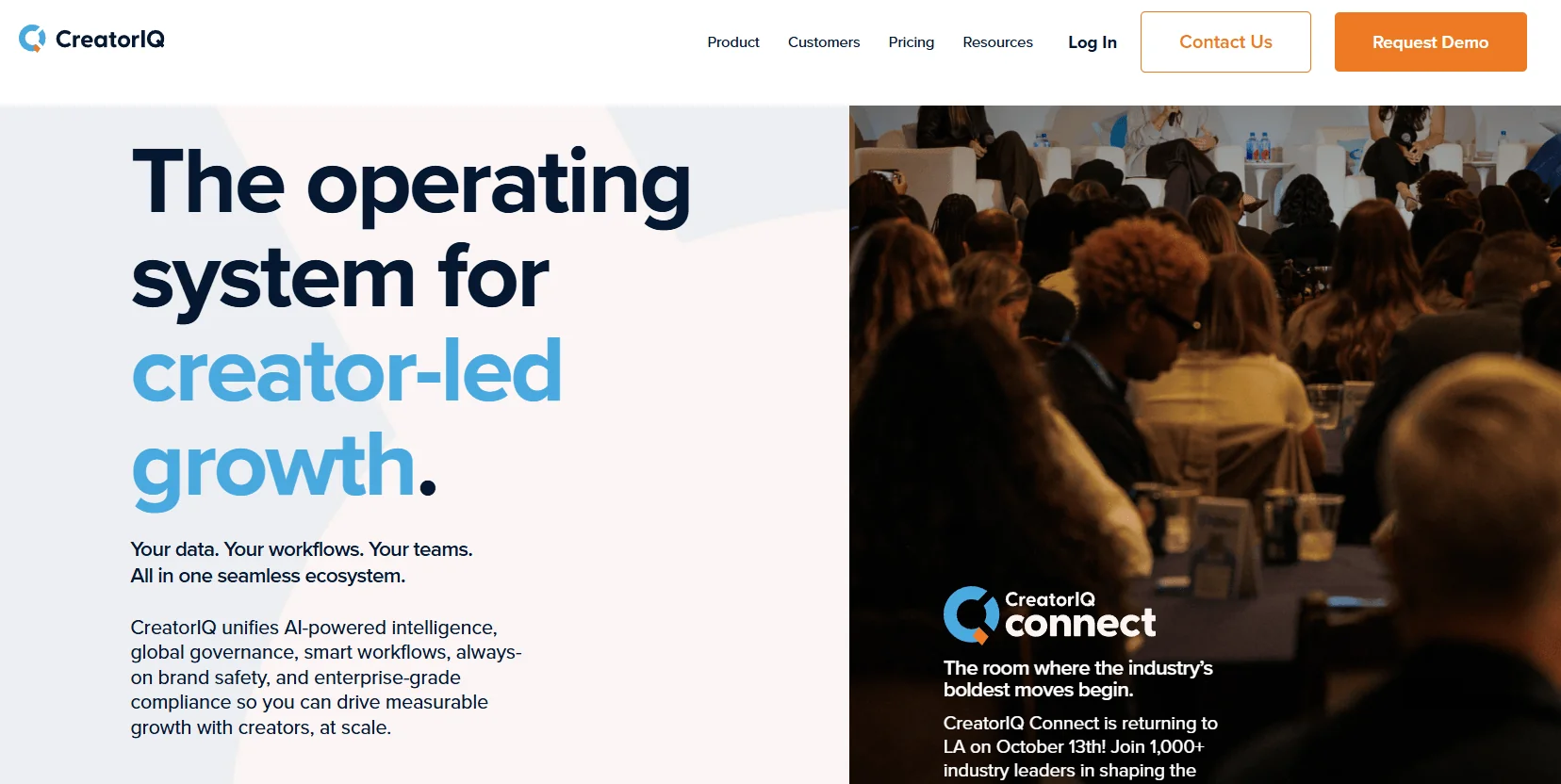
CreatorIQ is the enterprise software route for brands that want to move creator marketing in-house and keep the governance an agency would normally provide. It combines discovery, campaign management, EMV measurement through Tribe Dynamics, compliance workflows and white-label agency tools in a single contract.
It is the right call if you are replacing an agency at Fortune 500 scale and need API integrations with the rest of your martech stack. Disney, Unilever and Ralph Lauren all run on it. Our roundup of influencer marketing platforms covers where it sits against the rest of the category.
CreatorIQ does not publish pricing. Procurement data reported by third parties puts entry contracts around $30,000 per year on annual terms, with mid-tier packages closer to $50,000. There are no monthly plans.
The caveat: onboarding runs six to eight weeks, and reviewers consistently rate discovery data as weaker than the analytics. Mid-market brands price out entirely.
7. Aspire

Aspire, formerly AspireIQ, is the platform mid-market ecommerce brands land on when they want a creator marketplace plus campaign management in one place. It handles discovery, outreach, contracts, content approval, payments, affiliate tracking and analytics, with a marketplace of over a million creators and a strong Shopify integration.
The reason it works as a Whalar alternative is the inbound marketplace. Creators apply to your campaigns, so you get some of the agency effect without paying for a casting team. M&Ms, Keurig, Samsung, HelloFresh and Dyson all run programs on it.
Pricing is custom and not published. Third-party reviews put it around $2,000 per month with a mandatory annual commitment, so roughly $24,000 per year at the floor.
The caveat: there is no monthly option and no easy way to test before you sign. That annual lock-in is the exact friction a lot of brands are trying to escape when they leave an agency.
8. Later
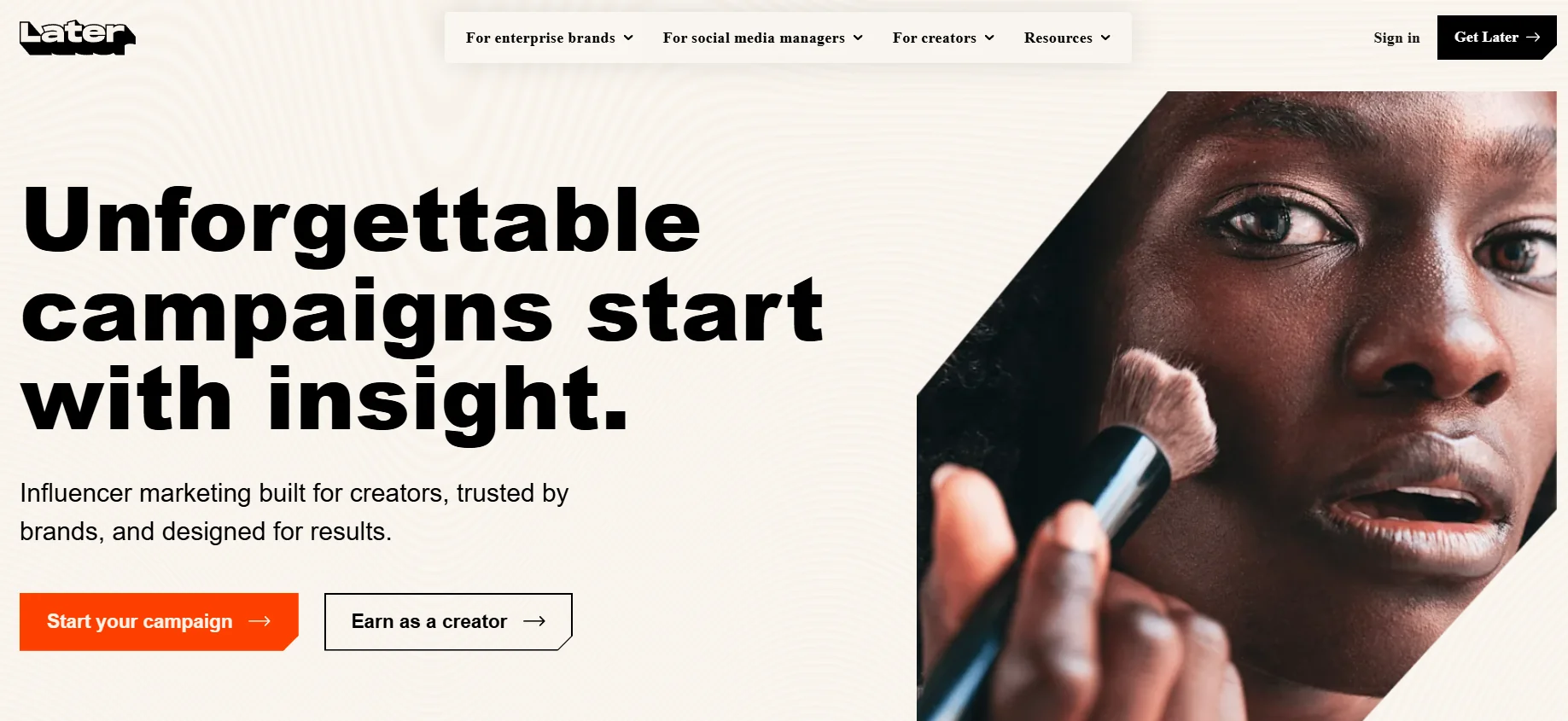
Later Influence is the enterprise platform formerly known as Mavrck, now sitting inside Later alongside its social media management tool and the Mavely creator platform. It runs AI-driven creator discovery on a very large dataset, with automated workflows and integrations across Meta, TikTok, X, LinkedIn, YouTube, Snapchat and Pinterest.
It suits brands that want influencer and organic social managed by the same team in the same stack, which is a genuine structural advantage over hiring an outside agency. Gillette, Dunkin', New Balance and JetBlue are on the client list.
Pricing is quote-only and aimed at enterprise budgets. The free plan was discontinued in 2025, so there is no light way in.
The caveat: no published rates and no self-serve tier means you are back to sales calls, which is one of the reasons brands leave agencies in the first place.
9. Collabstr
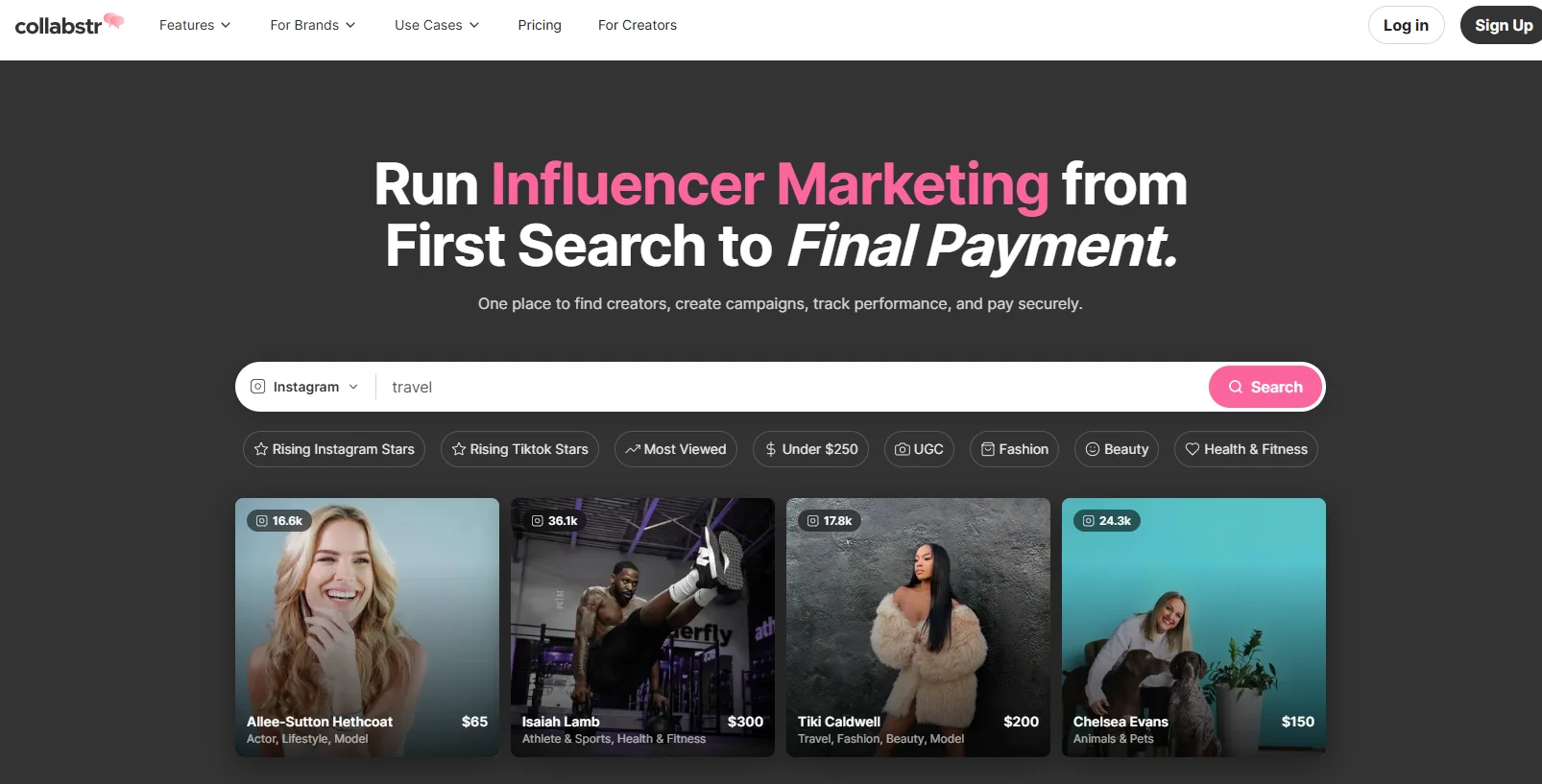
Collabstr is the opposite of an agency retainer. Creators list packages with fixed prices, you browse them like a menu, and you buy. Payment sits in escrow until you approve the work, and the marketplace covers Instagram, TikTok and YouTube creators plus dedicated UGC talent.
The appeal for a Whalar-curious brand is speed and zero commitment. You can book three creators this afternoon without a contract or a discovery call. Collabstr's own data shows 80% of engagements on the platform cost under $300, with UGC packages averaging around $180.
Browsing is free and each hire carries a 10% marketplace fee. Paid plans, reported around $299/month, add campaign management, better filters and a reduced fee. If discovery is your main gap, our list of influencer discovery tools compares it against the specialists.
The caveat: there is no real campaign management depth, no CRM and no revenue attribution. It is a hiring channel, not a program.
10. Billo
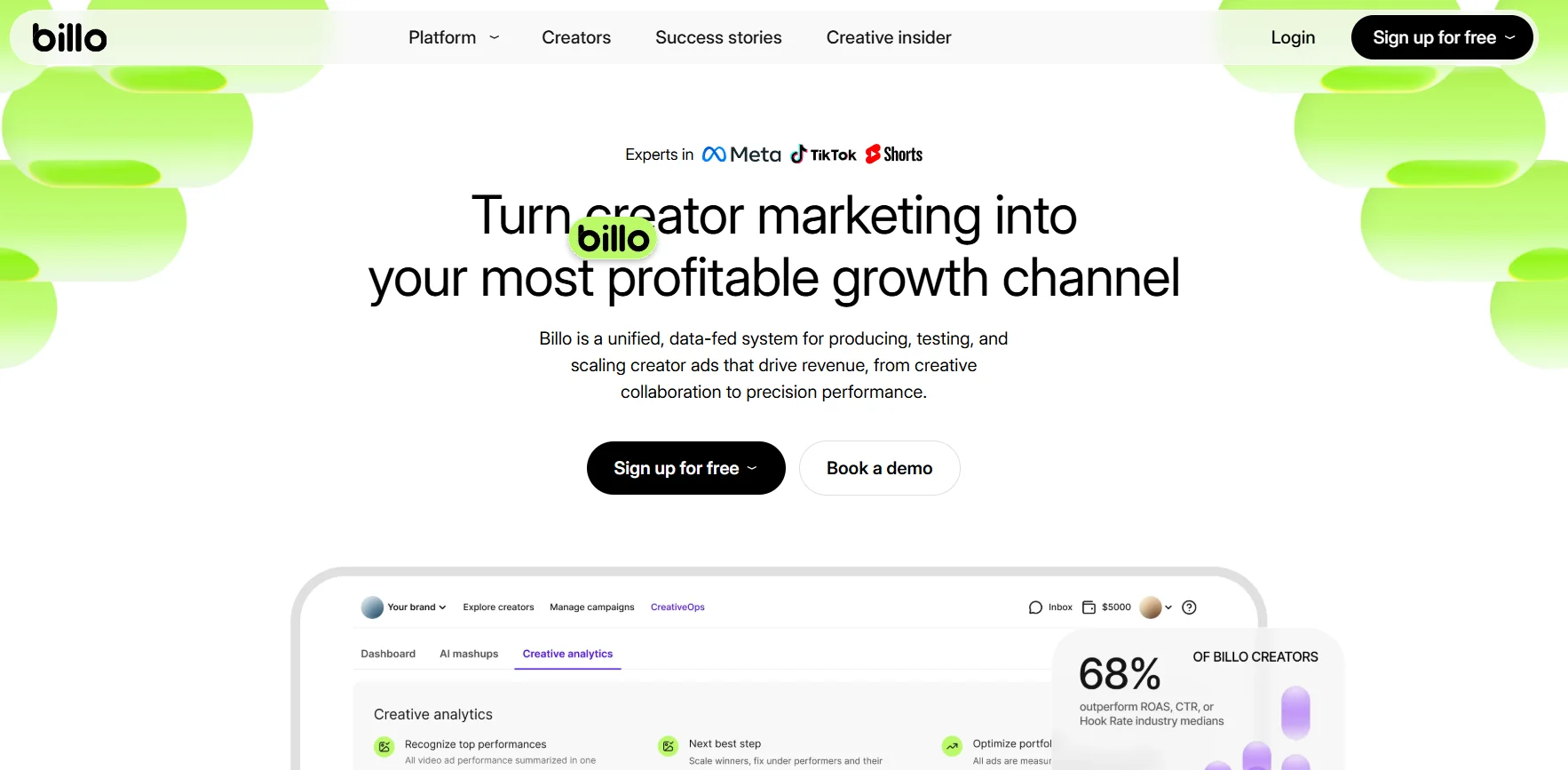
Billo replaces the creative production half of an agency relationship. You submit a brief, get matched with vetted creators, and receive finished video built for paid social on TikTok and Meta. No audiences, no posting, just assets you own and can run as ads.
That narrow focus is the point. A lot of brands hire creator agencies mainly to keep ad creative fresh, and Billo does that job for a fraction of the cost with a pool of 5,000-plus vetted creators across the US, Canada, UK and Australia.
Pricing starts around $99 per video with no subscription tier, so you pay per deliverable and scale up or down with your testing calendar.
The caveat: per-video pricing stops making sense past roughly 20 videos a month, and you get no distribution at all. Billo makes the content. Getting it in front of people is still on you.
Which Whalar Alternative Should You Pick?
There is no single replacement for Whalar, because Whalar sells strategy, casting, production and measurement as one package. Once you unbundle it, the right answer depends on which piece you were actually paying for. If it was scale and brand safety, Viral Nation or CreatorIQ. If it was creative volume, Billo or Collabstr. If it was the whole operation, the question is whether you want to keep renting it or start owning it.
Most brands land somewhere in the middle, and that is where the software route wins on economics. If you are early and want to test the channel without a retainer, Afluencer gets creators applying to your Collab from $49/month. If you have proof the channel works and you are ready to scale a real roster, Influencer Hero gives you the agency workflow at a fraction of agency cost. Either way, start by getting clear on who you want to work with, and let CreatorGPT do the shortlisting before you spend a cent.