.svg)
.png)
HypeAuditor vs Afluencer: A Detailed Comparison
Comparing influencer platforms is frustrating because most comparisons are written by one of the platforms being compared. You end up reading a scorecard built to produce a specific winner.
So here's the honest version. HypeAuditor and Afluencer get shortlisted against each other a lot, and they're built on opposite assumptions. One hands you a database of 227 million creators and a set of audit tools. The other flips the model entirely: you post what you want, and creators come to you.
That difference decides almost everything else, from what you pay to how your week actually looks once you're running a campaign.
By the end you'll know which one fits your budget, your team size, and your sourcing style. If you're still mapping the broader category, our roundup of influencer marketing platforms covers more options.
Quick Comparison: HypeAuditor vs Afluencer
What Is HypeAuditor?
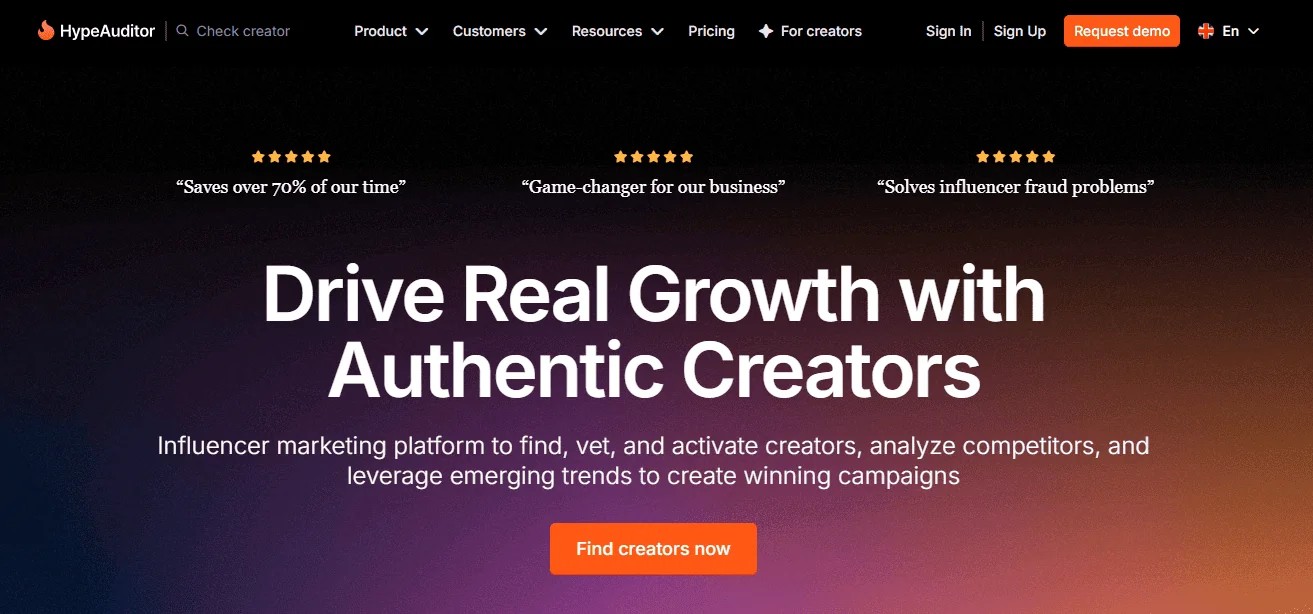
HypeAuditor built its name on one problem: telling you whether a creator's audience is real. It started as an audit tool and grew into a full influencer marketing platform covering discovery, analytics, campaign management and CRM.
The database sits at 227 million-plus creator profiles across Instagram, TikTok, YouTube, X and Twitch. You search it with filters, pull a report on any account, and get scores for audience quality, engagement authenticity and follower growth patterns.
The typical user is a brand or agency that has been burned before, or that spends enough per campaign that one bad creator pick is expensive. It's a diligence-first product.
Audience Quality and Fraud Detection
This is the feature everything else hangs off. HypeAuditor scores each account on a 1 to 100 scale, flags suspicious follower spikes, and separates real engagement from bot activity. Instagram profiles get analysed across 35-plus metrics, YouTube across 17.
If your buying decision hinges on "are these followers real," this is the deepest layer available in either tool here.
Influencer Discovery at Scale
Beyond the audit, you can search by audience location, age, gender and interests rather than only by creator attributes. There's also brand-mention discovery, so you can surface creators already talking about you or about a competitor. Anyone comparing influencer discovery tools will find the filter depth hard to match on raw data.
Campaign Management and Reporting
HypeAuditor handles media planning, KPI tracking, sentiment analysis and real-time reporting. It connects to Shopify, Magento and WooCommerce for affiliate links and promo codes, so campaign activity can be tied back to sales.
Where HypeAuditor Falls Short
The main friction is feature gating. AI search, advanced audience filters and the account quality score sit in higher tiers, so the entry plan can feel thinner than what you saw in the demo. Outreach is also secondary to analytics in the product, which is why brands running high-volume recruitment often pair it with something else or start looking for a HypeAuditor alternative built around workflow.
What Is Afluencer?
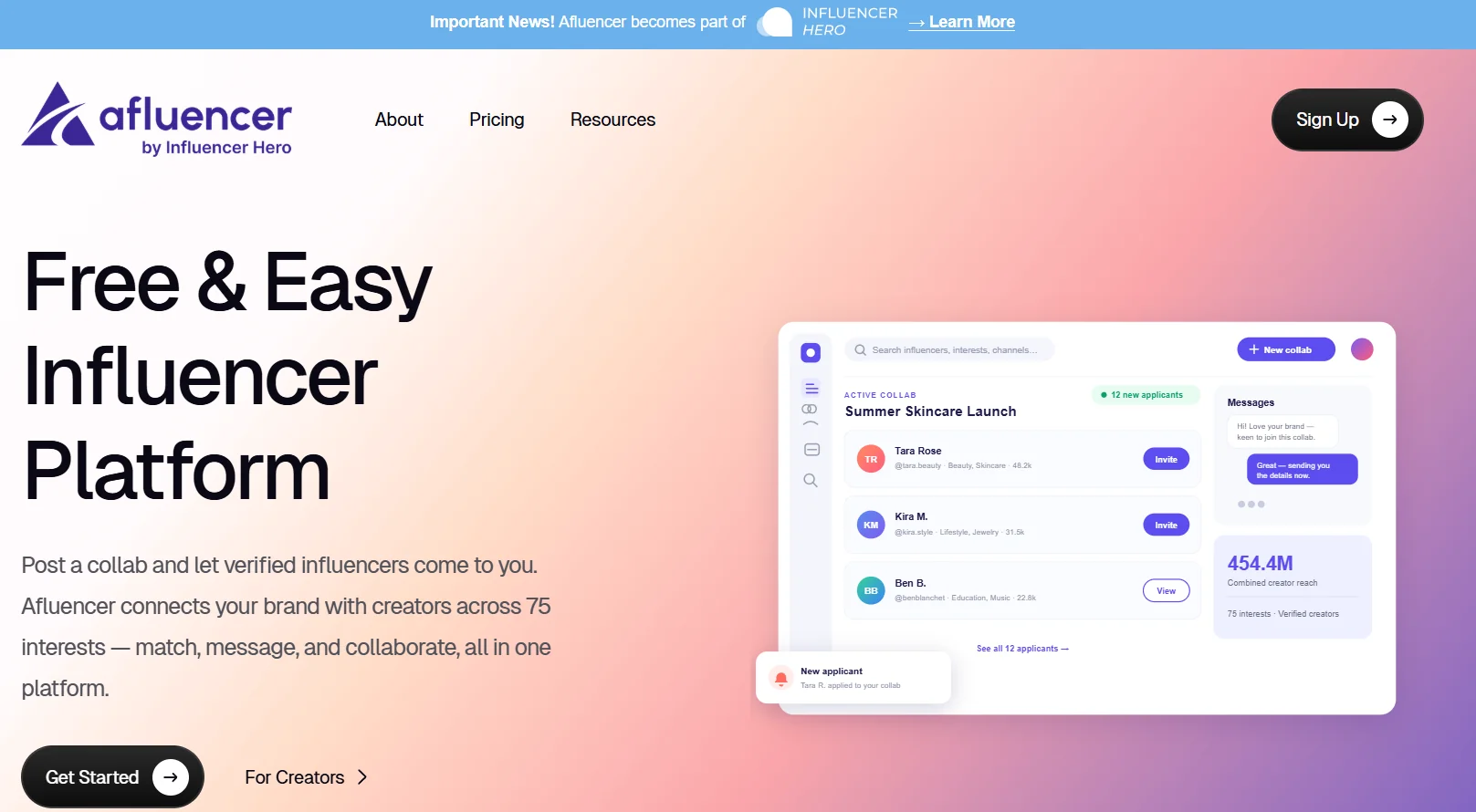
Afluencer flips the sourcing model. Instead of searching a database and pitching strangers, you post a Collab describing what you want, and verified creators apply to it. You're reviewing people who already raised their hand.
That inbound approach removes the most time-consuming part of influencer marketing for small teams: writing outreach nobody answers. Afluencer has been running since 2017 and skews toward micro and nano creators, gifting campaigns and affiliate-style partnerships.
It's also the entry point into a bigger ecosystem, which matters once your program grows. More on that below.
Inbound Discovery Through Collabs
You publish the Collab with your criteria, niche, follower range, platform and offer, and applications come in. The platform also matches creators to live opportunities based on relevance, activity and profile quality rather than who paid to rank higher.
Verified Creators and Direct Messaging
Every creator has an Afluencer profile, so you're not scraping emails and hoping they land. Messaging happens in-app, applications sit in one place, and the Marketplace plan includes 60 invitation credits a month if you want to invite specific creators proactively.
CreatorGPT for Campaign Planning
CreatorGPT is Afluencer's AI assistant for the strategy side: campaign angles, creator-fit questions, offer structure and outreach planning. It earns its place before you post a Collab, when you're still deciding what you're actually asking creators to do.
Where Afluencer Falls Short
It's a marketplace, not an analytics suite. You're working with creators who have joined the platform rather than searching the open social graph, and the entry tier won't give you deep ROI dashboards, sales attribution or multi-brand agency workspaces. Brands running structured outbound programs at volume will feel the ceiling.
HypeAuditor vs Afluencer: Feature-by-Feature Breakdown
Influencer Discovery
HypeAuditor gives you the wider net and far more audience data, which matters when you're evaluating creators you've never heard of in markets you don't know. Afluencer gives you a smaller pool but a warmer one, since everyone in it is actively looking for collabs. One optimises for choice, the other for reply rate.
Outreach and Communication
Afluencer keeps everything in-app, which works well at low volume and removes the deliverability problem entirely. HypeAuditor includes AI outreach, though it's positioned behind higher tiers and secondary to the analytics. Neither is built for sequenced, high-volume email campaigns, so if that's your motion, check our breakdown of outreach tools for the inbound versus outbound math.
Campaign Management and Tracking
HypeAuditor adds media planning, approval controls, KPI dashboards and sentiment analysis, which suits teams reporting up to a marketing lead. Afluencer tracks applications, conversations and campaign status, which is enough when you're running a handful of collabs at a time and reporting to yourself.
Attribution and Payments
HypeAuditor's affiliate links and promo codes connect creator activity to sales through your store integration, though reviewers note payout workflows are less developed than the discovery side. Afluencer includes influencer payments from the Standard plan up, so at the Marketplace tier you're still handling payouts yourself.
Ecommerce Integrations
Both connect to Shopify. HypeAuditor adds Magento and WooCommerce, while Afluencer ships Shopify and BigCommerce apps that keep applications, messaging and approvals inside your store workflow.
Pricing: What You'll Actually Pay
HypeAuditor starts at $299 a month on the Basic plan, billed annually, with the next tier reported around $499 a month and enterprise pricing quote-only. All plans include the same core modules, and higher tiers mainly raise usage limits and unlock advanced filters. Free trials are granted case by case rather than self-serve.
Afluencer publishes everything. Marketplace is $49 a month with 60 invitation credits, premium influencer filters and phone, email and live chat support. Standard is $649 a month with 1,000 reach-outs, product send-outs and influencer payments. Pro is $1,049 a month with 5,000 reach-outs, a dedicated account manager and 3+ seats.
Here's the practical read. If your total monthly influencer budget is under $2,000, a $299 platform fee eats around 15% of it before a single creator gets paid, and that's the annual-billing price. At that stage the $49 Marketplace tier does the job and your money goes to creators instead of software.
Scaling Beyond the Marketplace
Worth knowing if you're evaluating Afluencer: it's part of Influencer Hero, the all-in-one influencer marketing platform. They're separate products with a deliberate handoff between them. Afluencer is the marketplace for brands getting started, and Influencer Hero is where brands go when they want to scale and work with a lot of creators at once.
That handoff matters because the ceiling we mentioned earlier has a door in it. The Afluencer Standard plan and above unlocks the Influencer Hero platform, which adds automated outreach sequences, a full creator CRM, product gifting tied to your store, creator-level sales attribution and automated payouts. If you're building affiliate partnerships rather than paying flat fees per post, that attribution layer is the difference between guessing and knowing which creator drove which sale.
Influencer Hero publishes its pricing too, which is unusual in this category: Standard at $649 a month, Pro at $1,049 and Business at $2,490, plus custom and agency plans. No demo wall required to see the number. Curious how that workflow looks against your current setup? Book a demo with Influencer Hero.
Which Platform Is Right for You?
HypeAuditor is the pick when audience verification drives your decision. If you're spending five figures per campaign, working with creators you can't personally vouch for, or answering to a team that wants proof the audience is real before budget moves, the audit depth and market-level reporting do a job a marketplace doesn't attempt. That's a specific problem, and it solves it well.
Afluencer makes more sense when the bottleneck is getting creators to respond at all. If cold outreach is where your campaigns stall, flipping to an inbound model changes the math more than better filters would, and at $49 a month you can test the channel without a platform-sized commitment.
Plenty of brands end up using both, running audits on HypeAuditor while sourcing through Afluencer. The two aren't mutually exclusive, and the combined cost still lands under most single enterprise tools.
Ready to put a Collab in front of verified creators? See Afluencer plans.
The Bottom Line
These two tools answer different questions. HypeAuditor answers "is this creator worth my budget." Afluencer answers "how do I get creators to say yes without chasing them."
Pick based on which of those is blocking you right now. Most brands hit the second problem first, then grow into the first one once campaigns are running and the stakes per collab go up.
Start with a Collab on Afluencer, and when outreach volume, gifting and creator payments become the constraint, Influencer Hero is where that program lives.