.svg)
.png)
10 Best Statusphere Alternatives in 2026
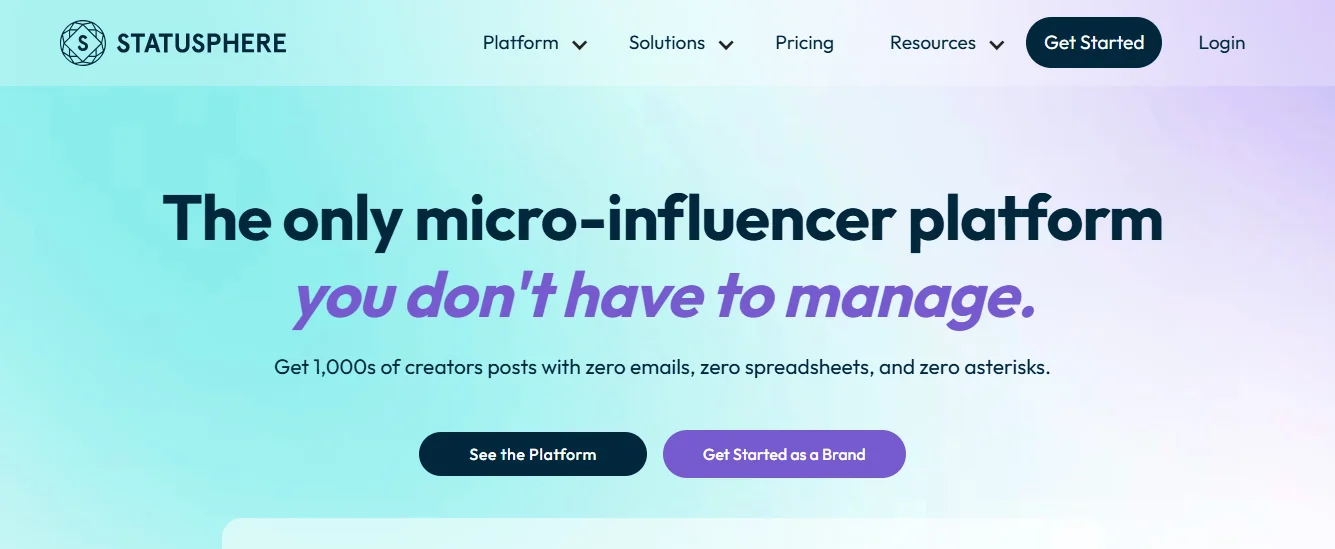
Most brands searching for Statusphere alternatives run into the same wall, and it's the price of entry. Statusphere does its job well. It matches your product to a vetted community of nano and micro creators, ships everything from its own fulfillment center within 48 hours, and guarantees rights-ready posts come back. Fenty Beauty, CoverGirl and Sally Hansen all run on it. But the pricing page puts initial investments at $10,000, with no published tiers, no self-serve option and no free trial.
There's a second reason brands look elsewhere, and it has nothing to do with budget. Statusphere is deliberately hands-off. You don't pick your creators, you don't message them, and you work inside its opted-in community instead of the open market. For a busy CPG team, that's exactly the point. For a brand that wants real relationships with the people posting about its product, or needs creators bigger than micro, it's a dealbreaker. If you're still shaping your program, our guide on how to create an influencer marketing strategy is a good place to start.
The good news is that the seeding and UGC category got a lot deeper this year. Some of these alternatives start under $50 a month. Others do more than Statusphere does, just with more hands on the wheel. For a wider view of the space, our roundup of the best influencer marketing platforms covers a few more options.
Top Statusphere Alternatives in 2026
1. Afluencer
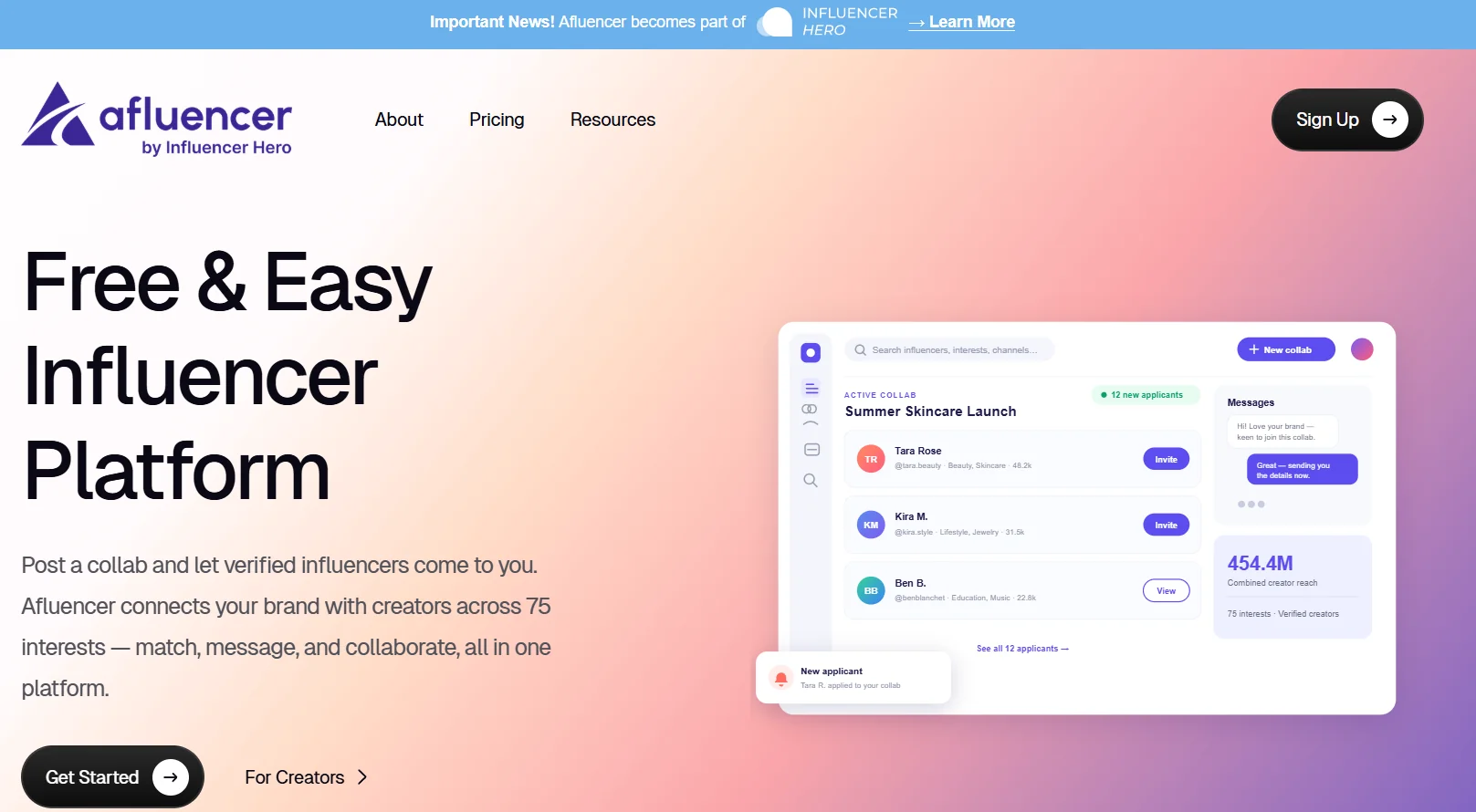
Afluencer flips the Statusphere model on its head. Instead of paying a five-figure minimum for an algorithm to assign creators to you, you post a Collab and verified creators apply to it. You see who they are, what they post, and what their audience looks like before you say yes to anyone.
That difference matters most for gifting campaigns. Statusphere guarantees posts because it controls the whole chain, but you never build a relationship with the creator on the other end. On Afluencer, every collab starts as a conversation. You message creators directly in the app, agree on the deliverables, and keep the ones who perform for the next launch. Brands running gifted campaigns tend to get better content out of creators who actually chose the product, and our guide to influencer programs for brand ambassadors walks through how to turn those one-off sends into something recurring.
The creator supply is deep because joining is free for creators. You'll find micro through macro across Instagram, TikTok, YouTube, Facebook and X, all with verified follower and engagement data. You can filter by location, niche, follower count and demographics, so a beauty brand in Texas isn't sorting through travel creators in Berlin.
Afluencer also layers in AI where it saves real time. CreatorGPT handles strategy questions, campaign planning and pitch feedback, and the Afluencer Collab Finder matches you to live opportunities without manual filtering. Neither one charges extra.
Pricing is where the gap gets wide. Brands start with a free trial and can post a Collab at no cost. The Marketplace plan runs $49 a month and includes 60 invitation credits plus premium filters. Standard is $649 a month and adds 1,000 reach outs, product send outs and influencer payments. Pro sits at $1,049 a month with 5,000 reach outs, a dedicated account manager and extra seats. Against a $10,000 Statusphere entry point, you can test the channel for a couple of months and still spend less than a rounding error on that quote.
Afluencer is a marketplace, not a done-for-you service. Nobody ships your product for you, and nobody guarantees a post lands. If your team has zero bandwidth and you want the whole thing run by someone else, that's the one thing Statusphere buys you.
Chat with CreatorGPT for campaign strategy, or start a free trial and post your first Collab today.
2. Influencer Hero
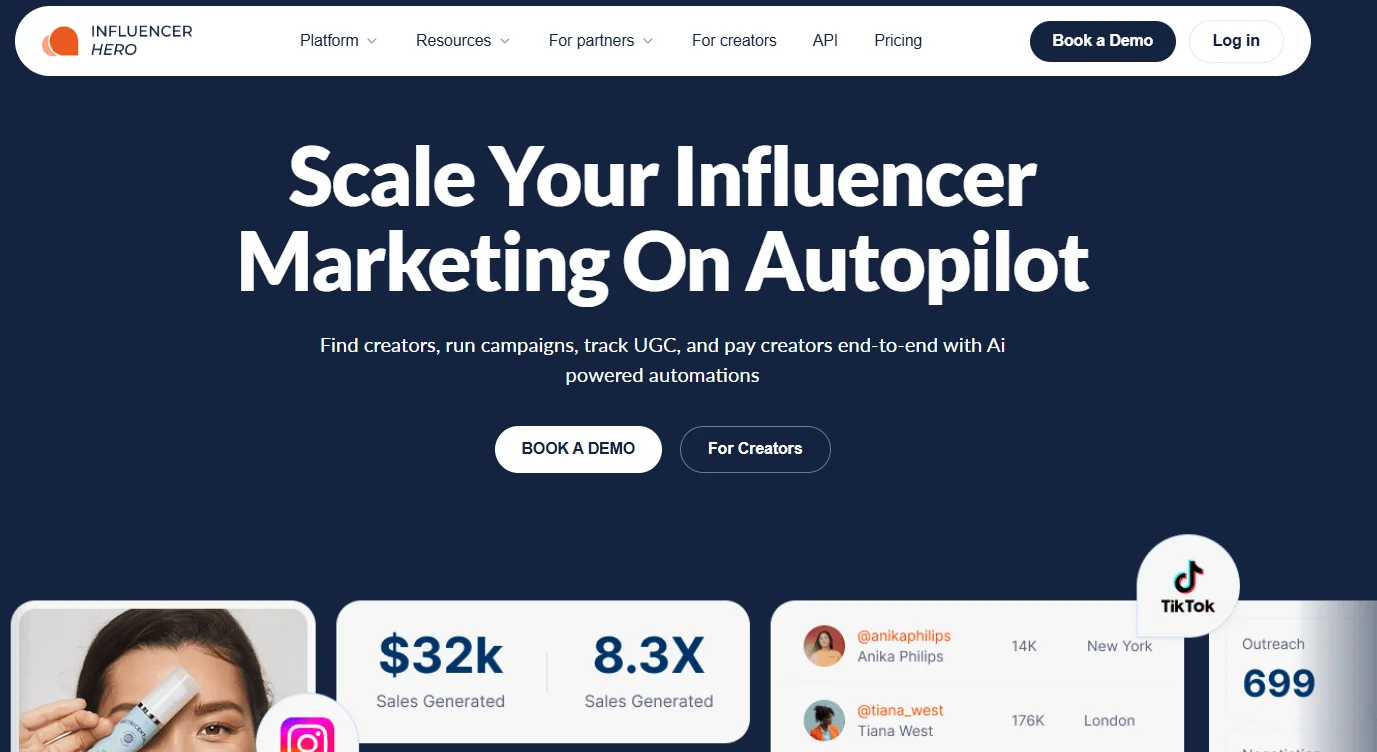
Influencer Hero is an all-in-one platform for brands that want to run everything in-house instead of handing the program to a service. Discovery, outreach automation, CRM, gifting, affiliate tracking and ROI attribution all live in one dashboard, which is a different shape of solution than Statusphere's managed model.
The discovery side is the standout. You get a database of 450M+ creator profiles across Instagram, TikTok, YouTube, Facebook, Pinterest and X, so you're not limited to whoever opted into a single community. For a brand that wants a specific creator, that's the difference between finding them and hoping the matching algorithm surfaces someone similar. Reviewers consistently call out the email automation as one of the strongest in the category, and it holds a 4.8 on G2.
It's also strong for Shopify and ecommerce brands specifically, since it ties creator activity back to actual revenue rather than reach estimates. If you're moving off a managed service because you couldn't prove ROI, that attribution layer is the reason to look.
Plans start at $649 a month, dropping to $454 a month on annual billing, with higher tiers running to $2,490 a month and custom pricing above that. All plans carry a three-month minimum commitment, and pricing is per brand rather than per account, so agencies juggling several clients should model the full cost before signing. It's more platform than a discovery-only buyer needs, but for a brand building a real in-house program it earns the price.
You can book a demo with Influencer Hero to see the discovery and attribution workflow run against your own store.
3. Insense

Insense is the closest thing to Statusphere for brands whose real goal is paid social creative. It connects D2C and Shopify brands to a vetted marketplace of creators, handles briefs and contracts, and specialises in content built for ads rather than organic reach. It's an official partner of both TikTok and Meta, which shows up in the whitelisting and Spark Ads workflows.
The reason it's a real alternative comes down to control. Statusphere assigns creators to you. On Insense you write a brief, review applicants, and pick who you work with. You also get product seeding, influencer posts, affiliate and TikTok Shop activation in the same workflow, so you're not switching tools when a UGC campaign turns into an ambassador program.
Watch the fee stack before you commit. A one-month trial runs $650, self-service plans start at $500 a month billed quarterly, and managed service starts at $1,800 a month. Creator payments sit on top of all of that, starting around $100 per UGC video, plus a marketplace fee between 7% and 20% depending on your plan. A growth-stage brand running two or three campaigns realistically budgets $2,000 to $3,800 a month all in.
So it's cheaper to start than Statusphere, but the sticker price isn't the real price. If your budget is genuinely tight, this isn't the entry point it looks like.
4. Skeepers
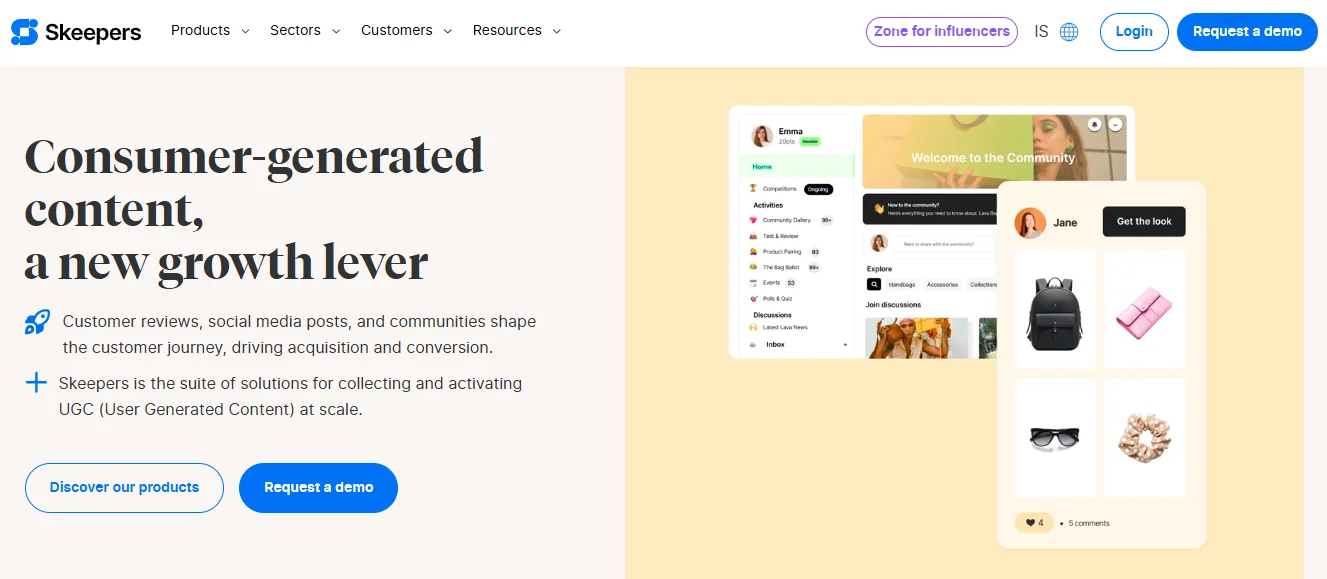
Skeepers is the European answer to Statusphere and it works on almost the same logic. It runs a community of 100,000+ vetted nano and micro influencers, matches them to your gifting campaign, and gets content back without you managing individual creator relationships. Its reported average ship-to-post rate is 85%, which is the metric that matters most in seeding.
Where it pulls ahead for consumer brands is the review side. Skeepers combines influencer posts with Gifted Reviews, so the same campaign generates social content and product text reviews you can push onto ecommerce product pages. If you sell through retailers as well as your own site, that dual output does more work per unit of product shipped than social content alone.
It's built for the same verticals Statusphere targets: beauty, fashion, food and beverage, home and lifestyle. Campaign setup is simple and reporting is clean, and reviewers consistently say the platform itself is easy to pick up.
Pricing is quote-based and Skeepers doesn't publish it. Third-party listings put subscriptions from around €1,250 a month, so it's meaningfully cheaper to enter than Statusphere but still a real commitment. The recurring complaint in reviews is creator quality, which varies more than a hand-picked list would, and coordination gets harder when a campaign needs tight timelines or detailed back and forth.
5. Social Snowball
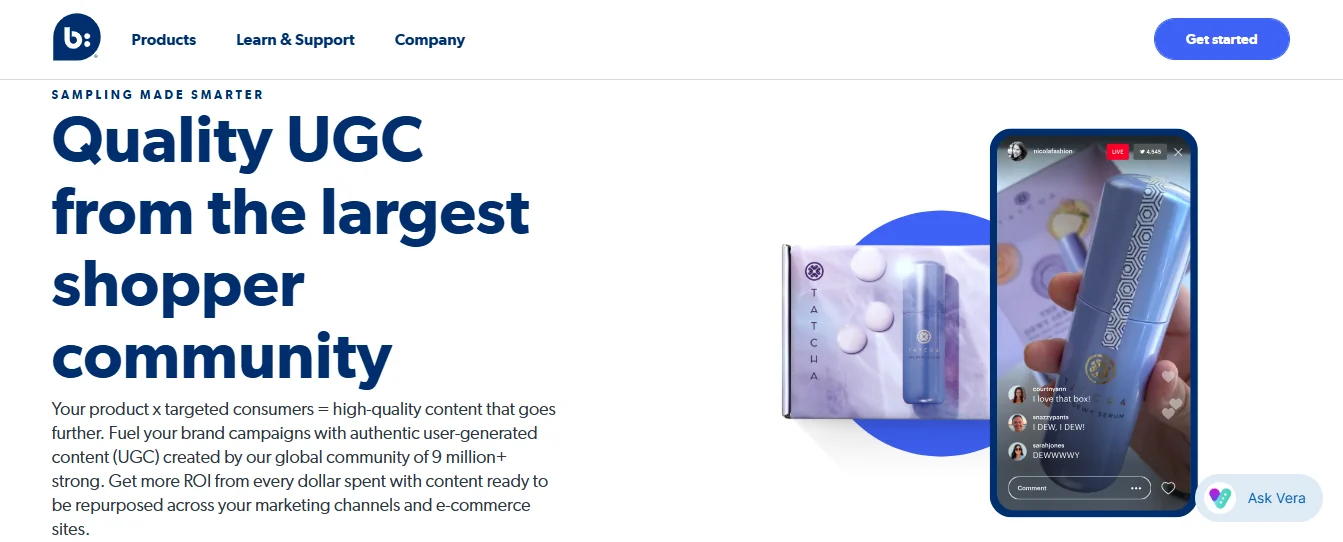
Bazaarvoice Sampling, formerly Influenster, is the closest structural match to Statusphere on this list. You ship product to a targeted slice of an opted-in community, and reviews and social content come back. The community is roughly 8 to 9 million members, with up to 1,000+ data points per member for targeting, which is a much wider net than most seeding platforms cast.
The reason brands pick it over Statusphere is syndication. Bazaarvoice can push the reviews you generate onto retailer product pages at Walmart, Target and Home Depot, not just your own site. For a CPG brand launching into retail, that's the whole game. You can also request campaigns from a self-serve portal and start generating content within weeks.
The trade is effort and scope. Sampling recipients aren't creators under contract, so a post or review isn't guaranteed the way it is with Statusphere. You're also buying into a larger suite: sampling is usually an add-on to Ratings & Reviews rather than a standalone product.
Pricing is quote-based and it's enterprise money. Smaller brand deployments commonly land in the $10,000 to $25,000 a year range, mid-market with retail syndication runs $40,000 to $80,000, and full-suite contracts pass $100,000. This one only makes sense if reviews at retail are already part of your strategy.
6. Aspire
Aspire, formerly AspireIQ, is a word-of-mouth commerce platform popular with fashion, beauty and consumer goods brands. Clients include M&Ms, Keurig, Samsung and Dyson, and it has paid out over $150M to creators, so it's got scale behind it.
The feature that makes it a genuine Statusphere alternative is the inbound marketplace. You publish a campaign and creators apply, which gives you the same "creators come to you" mechanic without giving up the choice of who you work with. Add product seeding, affiliate, content approvals and ecommerce integrations, and you've got a platform that covers the whole lifecycle rather than one campaign type.
It's also strong on the ambassador side. If your seeding program is meant to turn into long-term partnerships rather than one-and-done UGC, Aspire is built for that transition in a way pure content platforms aren't.
The catch is cost and commitment. Aspire doesn't publish pricing, and reported starting points land around $2,300 to $2,499 a month, often per user, with a 12-month contract and an onboarding fee. There's no free trial. Aspire also sells its own agency services add-on, which tells you something: plenty of customers on a strong platform still need help running the program.
7. GRIN

GRIN is one of the best-known creator management platforms for ecommerce, and it just became a lot easier to test. As of 2026 it publishes real pricing, runs month-to-month, and requires no sales call, which is a sharp break from the demo-gated annual contracts it used to sell.
The pricing is credit-based rather than per seat. Free gives you 200 monthly credits, Starter is $200 a month for 2,000 credits, Growth is $500 a month for 7,500 credits and includes GRIN Classic for up to 100 active creators, Scale is $1,000 a month for 250 creators, and Complete is $1,500 a month for 500. Credits pay for the work GRIN's AI assistant does, so heavy discovery burns more than light affiliate management. You set a hard spending cap and never get billed above it.
For Statusphere refugees, the appeal is control plus depth. GRIN handles gifting workflows, creator CRM, content approval, affiliate links and Shopify revenue attribution, so you can run a seeding program and prove what it earned. SKIMS, ColourPop and IPSY all use it.
The honest limitation is the credit model itself. If your program is heavy on discovery and reporting, you'll move up tiers faster than the creator caps suggest, and the free plan is genuinely light. Reviewers also flag that database quality takes extra vetting effort.
8. Modash
Modash is the discovery-first pick, and it's the one to look at if what frustrated you about Statusphere was not choosing your own creators. Its database covers 350M+ creator profiles across Instagram, TikTok and YouTube, which is close to every public account above 1,000 followers.
It publishes its pricing, which is rarer in this category than it should be. Essentials is $199 a month on annual billing or $299 monthly, covering two team members, 300 profile analyses and 100 tracked creators. Performance is $499 a month annually or $599 monthly, with five seats, 800 analyses and 250 tracked creators. Enterprise starts around $14,700 a year. There's a 14-day free trial with no card required, so you can actually test it before you commit anything.
Beyond discovery it handles outreach with verified emails, gifting workflows, promo codes and campaign tracking, with a native Shopify integration. Google, Victoria's Secret and Airbnb are on the client list.
The constraint that bites first is the profile analysis cap. Three hundred analyses a month sounds generous until your team spends two weeks on discovery and burns through it. And Modash won't ship your product for you, so the fulfillment side of a seeding program stays your problem.
9. Saral
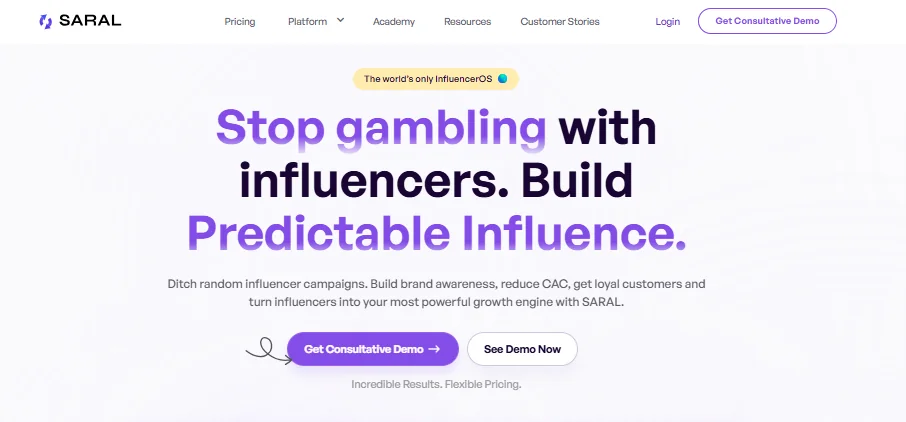
SARAL calls itself an influencer OS for ecommerce brands, and it's aimed squarely at small teams running outreach, seeding and ambassador programs without a dedicated influencer manager. It holds a 4.7 on G2, mostly from founders and lean marketing teams who wanted out of spreadsheets.
Its most distinctive feature is the Chrome extension. You browse Instagram, TikTok or YouTube normally and pull creator metrics, audience data and contact details straight into your workspace. It feels closer to real prospecting than running database queries, and for brands who already know the creators they want, it's faster than any search interface. There's also a 150M+ creator database, automated communication, brand mention tracking, affiliate links and discount codes with sales attribution.
Compared to Statusphere, SARAL gives you full control over who you approach and what you offer, plus native ROAS tracking rather than reach estimates.
The problem is the same one that sends people looking for Statusphere alternatives in the first place. SARAL's cheapest plan is $3,600 per quarter or $12,000 per year, paid upfront, and it caps how many influencers you can save each month. For a brand marketing itself to emerging DTC teams, that's a heavy first commitment, which is why our SARAL alternatives roundup gets as much traffic as it does.
10. Upfluence
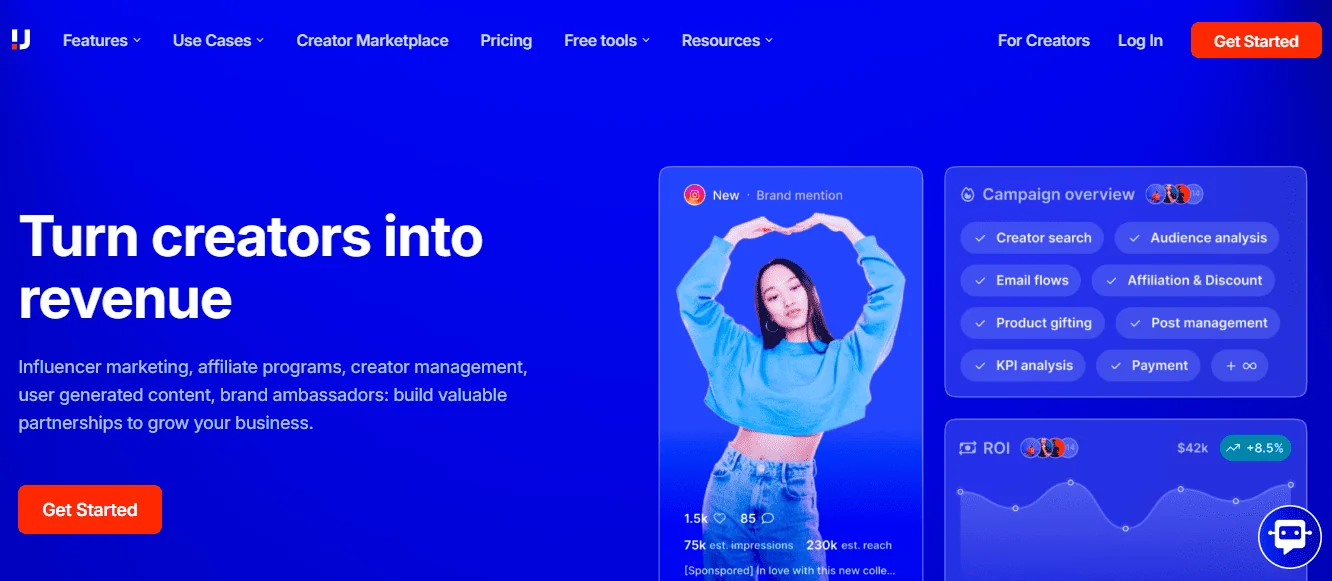
Upfluence rounds out the list for brands that want deep ecommerce integration above everything else. It connects to Shopify, Amazon, Magento and WooCommerce, and its strongest trick is identifying creators who are already your customers, then converting them into affiliates. For a consumer brand with an existing customer base, that's a warmer starting point than any cold database.
It handles the full lifecycle: creator search, outreach, briefs, one-click product seeding, affiliate tracking, creator payments and ROI reporting. The AI matching and Chrome extension both save real time once you're set up.
Pricing is modular, which cuts both ways. A single Search & Contact module starts around $478 a month, but that module alone can't run campaigns or pay creators. A usable setup with all three modules and one seat lands closer to $1,276 a month, or roughly $14,000 to $16,000 a year, with $79 a month for each extra seat. The minimum contract is 12 months, and you get a free trial only after a sales call.
That contract length is the most common complaint in reviews, along with a learning curve steeper than most tools here. Upfluence is worth it if you're running ongoing programs at scale on Shopify or Amazon. If you're testing the channel, it's the wrong tool..
Which Statusphere Alternative Should You Pick?
There's no single replacement for Statusphere, because brands leave it for opposite reasons. Some want the same hands-off seeding at a lower entry point, which points to Skeepers or Bazaarvoice Sampling. Others want the control Statusphere deliberately takes away, which points to Modash, GRIN or Influencer Hero. And plenty just want to test whether influencer marketing works for their product before signing anything with a five-figure minimum.
If that last one sounds familiar, start where the commitment is smallest. Afluencer lets you post a Collab and get verified creators applying to you without a contract, a sales call or a $10,000 quote sitting in your inbox. Run one campaign, see what the content looks like, then decide how much platform you actually need.
Start your free trial and post your first Collab, or chat with CreatorGPT if you want a second opinion on your campaign brief first.