You already know why brands collaborate with influencers. Visibility. Trust. Sales that don’t feel salesy.
What’s less obvious is which ways to collaborate with influencers actually work in 2026 and beyond. The creator economy has matured. Audiences are more selective. And brands can’t rely on one-off shoutouts anymore.
Today, most influencer collaborations are built around long-term partnerships, creator-led storytelling, and smarter discovery tools. That’s where brands see consistency instead of spikes.
In this guide, you’ll find proven ways to collaborate with influencers that still deliver and match with how creators and brands work together in 2026.
Use AI to Plan Better Influencer Collaborations

Influencer marketing has become more nuanced, and brands now use AI tools to reduce guesswork before collaborating with influencers.
In 2026, AI helps brands:
- Analyze creator sentiment and tone to ensure brand alignment
- Spot patterns in creator content styles across platforms
- Explore collaboration ideas that feel native to a creator’s audience
- Support discovery without relying only on follower counts
For example, AI tools can help brands understand whether a creator’s content leans educational, conversational, humorous, or sales-focused before reaching out. This leads to more relevant pitches and stronger partnerships.
AI is also being used for lower-stakes collaborations, such as testing content concepts or virtual brand representations, while human creators remain central to trust-based campaigns.
The key takeaway: AI doesn’t replace influencer relationships. It helps brands collaborate with influencers more intentionally and efficiently.
Tools like CreatorGPT help brands apply this approach by supporting creator discovery, collaboration ideas, and outreach planning before a campaign goes live.
Use CreatorGPT to Discover the Right Influencers Faster
One of the biggest challenges brands face isn’t how to collaborate. It’s who to collaborate with.
Finding creators who actually align with your brand voice, values, and campaign goals takes time. Endless scrolling. Guesswork. Cold outreach that goes nowhere.
That’s where CreatorGPT comes in.
CreatorGPT is an AI-powered discovery and idea assistant designed to help brands explore better ways to collaborate with influencers before launching a campaign. Instead of relying only on follower counts or hashtags, brands can use CreatorGPT to:
- Identify creator types that fit specific campaign goals
- Explore collaboration formats that make sense for different niches
- Get guidance on outreach ideas and partnership angles
- Refine campaign concepts before posting a collaboration
This approach helps brands move away from random influencer selection and toward intentional, well-matched partnerships.
It also makes Collabs smoother for creators. Clearer ideas. Better alignment. Fewer mismatched expectations.
While CreatorGPT is a separate AI tool, it works hand-in-hand with platforms like Afluencer to support smarter discovery, clearer planning, and more effective influencer Collabs from the start.
Different Ways to Collaborate With Influencers at Different Levels
Not all influencer collaborations work the same way. The size of a creator’s audience often determines the most effective collaboration style.
- Nano-influencers (1K–10K followers) are often best for authentic content, product feedback, and community-driven campaigns.
- Micro-influencers (10K–100K followers) are ideal for repeat collaborations, affiliate partnerships, and creator-led storytelling.
- Macro and celebrity influencers are typically used for reach, visibility, and short-term brand awareness campaigns.
Understanding this distinction helps brands choose collaboration formats that actually make sense instead of applying a one-size-fits-all approach.
The most effective influencer strategies combine different creator tiers, each contributing in a way that aligns with their audience size and relationship with followers.
Want To Reach A Wider Audience?
Then it’s time to connect with Influencers who engage with your kind of audiences on a daily basis.
FIND INFLUENCERS
8 Ways to Collaborate with Influencers
Collaborating with Influencers with a massive following can give retailers a much-needed boost in brand awareness, audience engagement, and sales. But even after finding the perfect Influencers for your brand, you’re wondering: what’s the best way to leverage their influence?
Below you’ll find five effective ways of working with Influencers:
1. Whitelisting
Influencer whitelisting allows brands to convert Influencers’ content—posts, stories, reels, and more—into paid ads running from the Influencers’ accounts. Unlike mainstream advertising, brands can post these ads directly from an Influencer’s profile.
Since the target audience is already invested in the Influencer’s content, whitelisted ads will receive better engagement and reach. Besides, brands can also maximize the ROI by defining the audience they want to target and optimizing the content through A/B testing.
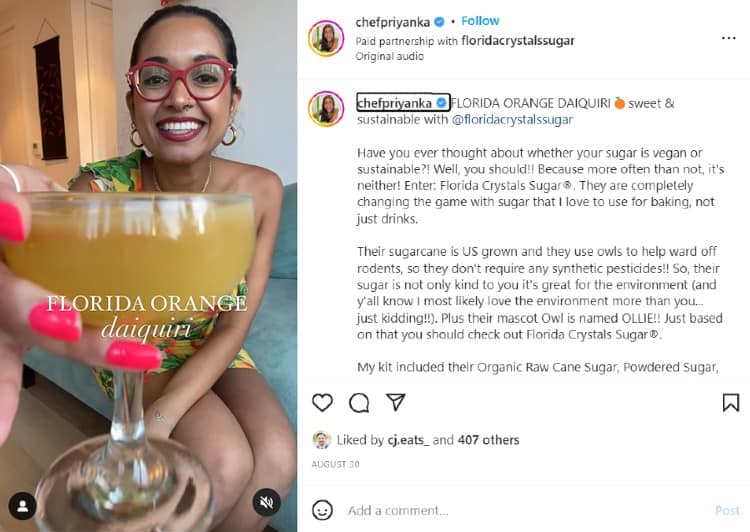
Here’s the perfect example of Influencer whitelisting by Florida Crystals. Their Collaboration with Influencer Priyanka Naik went out as a paid partnership reel on her account. The organic sugar brand then pushed out this reel as a whitelisted ad to get more eyes to the post and generate more brand awareness.
Best practices for Influencer whitelisting
Here are a few handy tips for whitelisting Influencer content and running profitable ads:
- Find relevant Influencers: Choose Influencers who best represent your brand personality and vision. Use Influencer databases like Afluencer to browse a collection of Influencers from different niches and channels before picking the best fit.
- Establish meaningful Influencer relationships: Trust lies at the core of Influencer whitelisting—Influencers should trust a brand enough to grant permission to run ads from their personal accounts. So, focus on nurturing a healthy relationship with your Influencers to pitch a whitelisting campaign.
- Communicate expectations transparently: Give Influencers all the information they need before you run ads from their account. Clarify your expectations and workflows to ensure there are no misunderstandings once the campaign is underway.
- Define a content strategy beforehand: Finalize the core messaging, content formats, and campaign goals before allowing Influencers to create content. A targeted content strategy can help you reach the right audience and get more from your campaign.
- Optimize content with A/B testing: Whitelisting ads means you control how the ads look and feel. Optimize your ad content by testing and modifying the format, design, CTA placement, and other elements.
2. Product seeding (Relationship-first gifting)
Product seeding, sometimes called influencer gifting, is a relationship-first way to collaborate with influencers by introducing your product without requiring guaranteed deliverables.
Instead of treating gifting as a transaction, modern product seeding focuses on fit, timing, and genuine interest. Brands send products to creators who are likely to find real value in them, with the understanding that content is optional, not owed.
When done well, product seeding builds authentic brand awareness and long-term trust. Creators are more inclined to share products they genuinely enjoy, and audiences are far more receptive to organic mentions than scripted promotions.
In 2026, product seeding is most effective when it’s viewed as the start of a relationship, not a one-off tactic. Many long-term influencer partnerships begin with thoughtful gifting rather than a paid campaign.
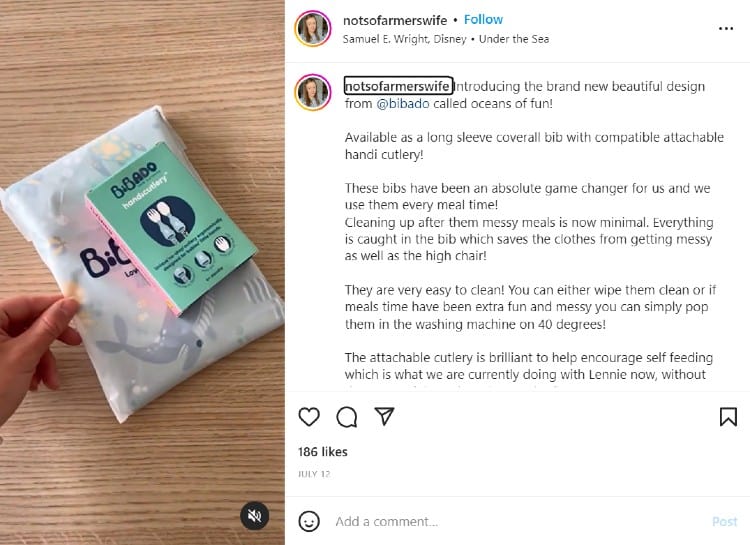
Look at Bibado’s product seeding Collab with Steph, a first-time mother. They sent Steph a newly designed bib for her newborn baby and reached a group of several expecting or new mothers among her Instagram followers. This review also conveyed all the good things about the product to create interest.
Best practices for product seeding
Here are a few handy tips for Influencer gifting to get the best results:
- Choose creators intentionally: Focus on creators whose content, lifestyle, and audience naturally align with your product. Nano and micro-influencers are especially well-suited for this approach.
- Remove pressure: Make it clear that there’s no obligation to post. Optional content leads to more authentic results.
- Personalize the experience: Thoughtful packaging, a handwritten note, or a message explaining why the creator was chosen goes a long way.
- Think long-term: Product seeding works best when followed by continued engagement, not silence after delivery.
- Reuse organically shared content: If creators choose to post, reshare that content across your own channels to extend its lifespan.
Why it works: Product seeding prioritizes trust over reach. Instead of forcing promotion, brands allow creators to engage naturally, resulting in content that feels honest and credible. Over time, this approach builds stronger relationships and opens the door to paid collaborations, ambassador programs, or UGC campaigns.
3. Collab product
Brands with long-term Influencer relationships often solidify their partnerships by co-creating a new product with these Influencers. Designing a new product is an excellent way for retailers to tap into an Influencer’s audience for more sales. For Influencers, this means more publicity and better campaign performance.
Co-creation allows Influencers to be more closely involved in the design and development process. This also increases their commitment to the brand values, turning them into brand ambassadors with a less transactional and more meaningful partnership.
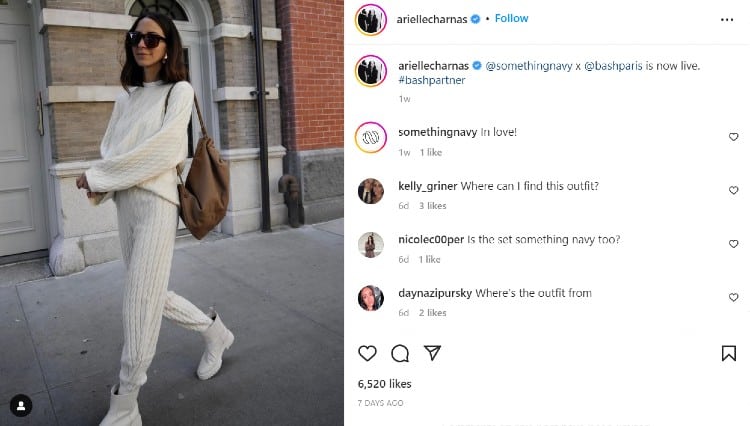
That’s precisely what ba&sh’s Collab with Arielle Charnas’s Something Navy shows. The fashion Influencer co-created a line of accessories with the luxury fashion brand as a part of Influencer marketing. This collection went out to Arielle’s 1.2 million Instagram followers, creating a stronger brand reputation for ba&sh.
Best practices for Collab product
Here are a few handy tips to co-create products with Influencers:
- Pick Influencers with industry expertise: Work with industry-leading Influencers to get the best outputs from a co-creation project. Use this opportunity to build your brand’s credibility. Besides, investing your time and money into building a brand-new product can produce the expected ROI only when Influencers have a huge follower base.
- Strengthen Influencer partnerships: A surefire way to win at co-creation is developing an airtight relationship with the Influencers you have chosen to Collaborate with. When involving an Influencer in the backend development process, you want to ensure they’re fully committed to your brand.
- Involve their audience in the creation process: You can maximize the returns from a Collab product and increase conversions post-launch by involving the Influencers’ audience in the creation process. Include their inputs and ideas to create a customer-centric design.
4. UGC challenges & Gamified campaigns
Traditional giveaways and loop contests are becoming less effective as audiences grow more skeptical of low-effort incentives. Instead, brands are shifting toward UGC challenges and gamified campaigns that encourage meaningful participation.
Rather than asking users to tag friends or follow multiple accounts, these collaborations invite creators to actively participate in a shared challenge. This might include creating content around a theme, completing a simple task, or showcasing how a product fits into everyday life.
UGC challenges work well because they:
- Encourage authentic, creator-led content
- Attract higher-quality engagement
- Reduce bot activity and low-intent followers
- Create momentum beyond a single post
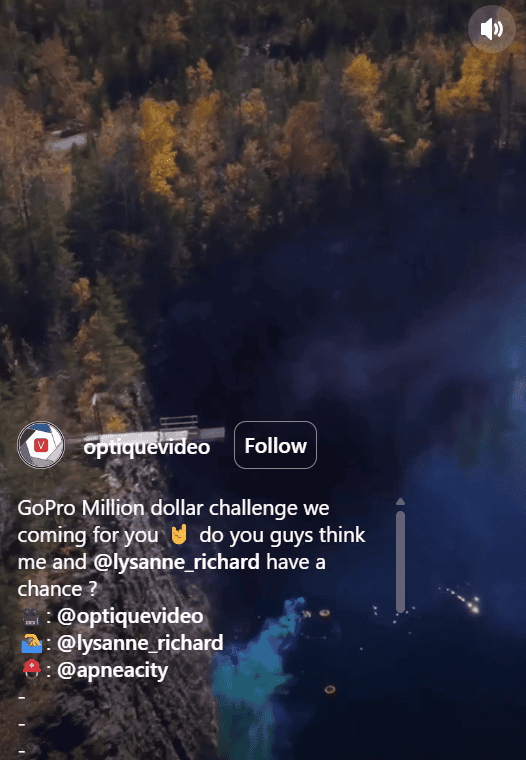
For example, the GoPro Million Dollar Challenge is an annual campaign where users submit footage shot on the brand’s latest camera for a chance to be featured in a global highlight reel. If a user’s clip is selected, they earn an equal share of a $1 million prize pool (for example, in recent years, winners received roughly $18,000 to $22,000 each).
The challenge provides the GoPro with a massive library of high-quality, authentic marketing content at a fraction of the cost of a professional shoot. By requiring footage from the newest camera model, it effectively crowdsources “social proof” that demonstrates the product’s capabilities in real-world scenarios. Ultimately, it turns customers into active brand advocates while fostering deep community loyalty through a high-stakes, collaborative reward system.
Gamification can be as simple as creator spotlights, featured content, or tiered rewards based on participation. The focus shifts from “winning” to contributing, which feels more aligned with how creators and audiences engage today.
Why it works: Instead of buying short-term attention, brands generate dozens or even hundreds of pieces of user-generated content. This creates a reusable library of social proof that can be repurposed across marketing channels, including paid ads, long after the campaign ends.
This collaboration style is particularly effective with nano and micro-influencers, where community participation and relatability matter more than reach.
5. Tiered brand ambassador programs
One-off contests may create short-term attention, but they rarely lead to meaningful relationships. Tiered brand ambassador programs offer a more sustainable way to collaborate with influencers by rewarding long-term involvement instead of single actions.
In this model, creators join an ongoing program and progress through different tiers based on their contributions. Advancement isn’t tied to follower count alone. It can be influenced by consistency, content quality, community engagement, and overall brand alignment.
A tiered ambassador program might include:
- Entry-level ambassadors creating organic content over time
- Mid-tier partners participating in recurring campaigns or launches
- Top-tier ambassadors collaborating on featured content, product development, or exclusive initiatives
While affiliate commissions can be part of the structure, they are just one element. Ambassadors may also receive early product access, higher visibility, creative freedom, or priority collaboration opportunities.
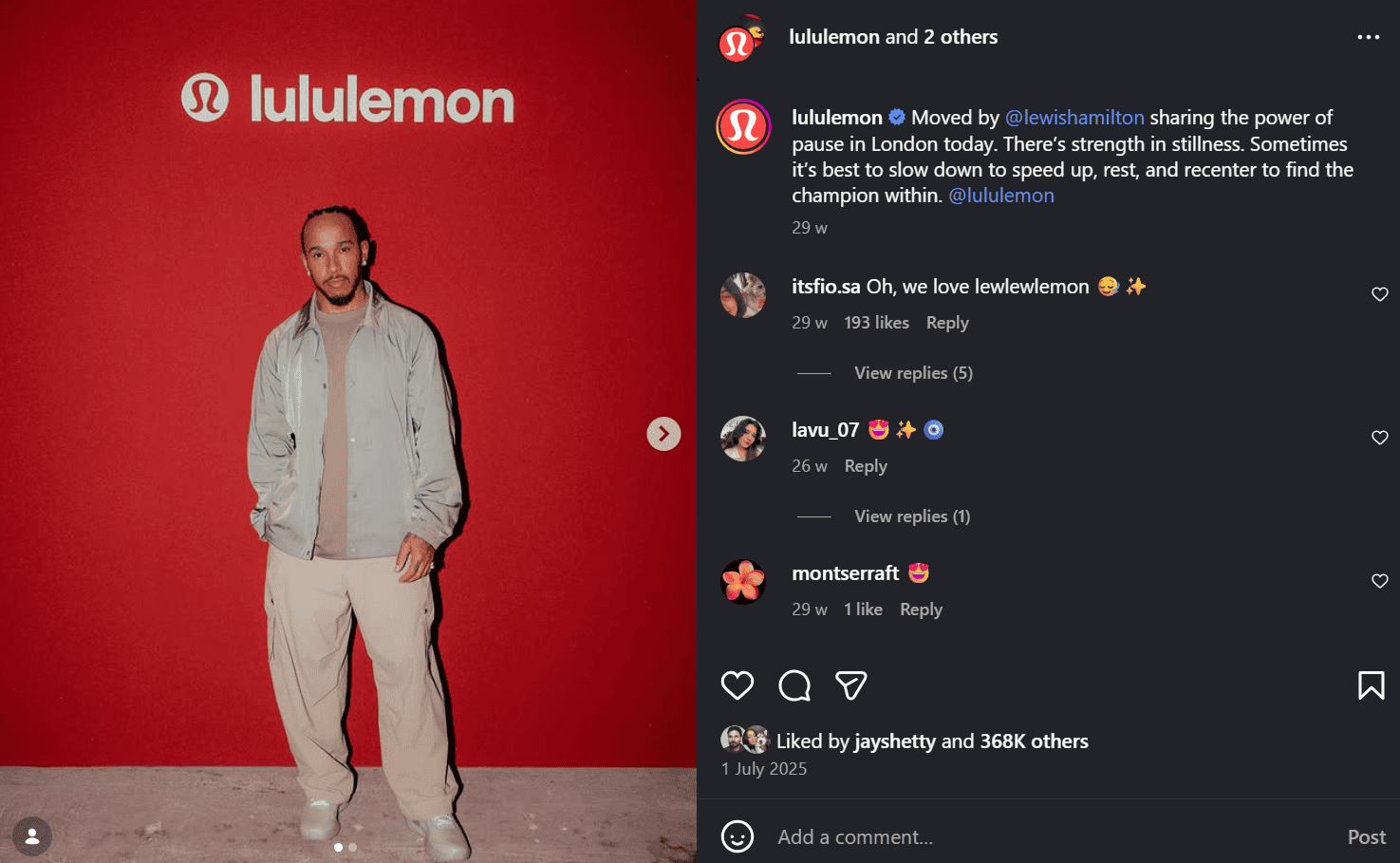
For example, Lululemon’s ambassador program builds hyper-local trust and organic reach by partnering with influential fitness leaders and elite athletes. This strategy drives sales through authentic social proof and provides the brand with direct product feedback from high-performance users.
Lewis Hamilton officially joined as a global ambassador to front their men’s training and lifestyle campaigns.
Why it works: Instead of running repeated contests that reset engagement every time, brands build a reliable network of creators who genuinely understand the product and audience. This leads to more authentic content, stronger trust, and ongoing momentum rather than temporary spikes.
Although we’ve used a celebrity in our example, tiered brand ambassador programs are especially effective with micro-influencers, where long-term relationships and credibility matter more than reach alone.
6. Podcast Features
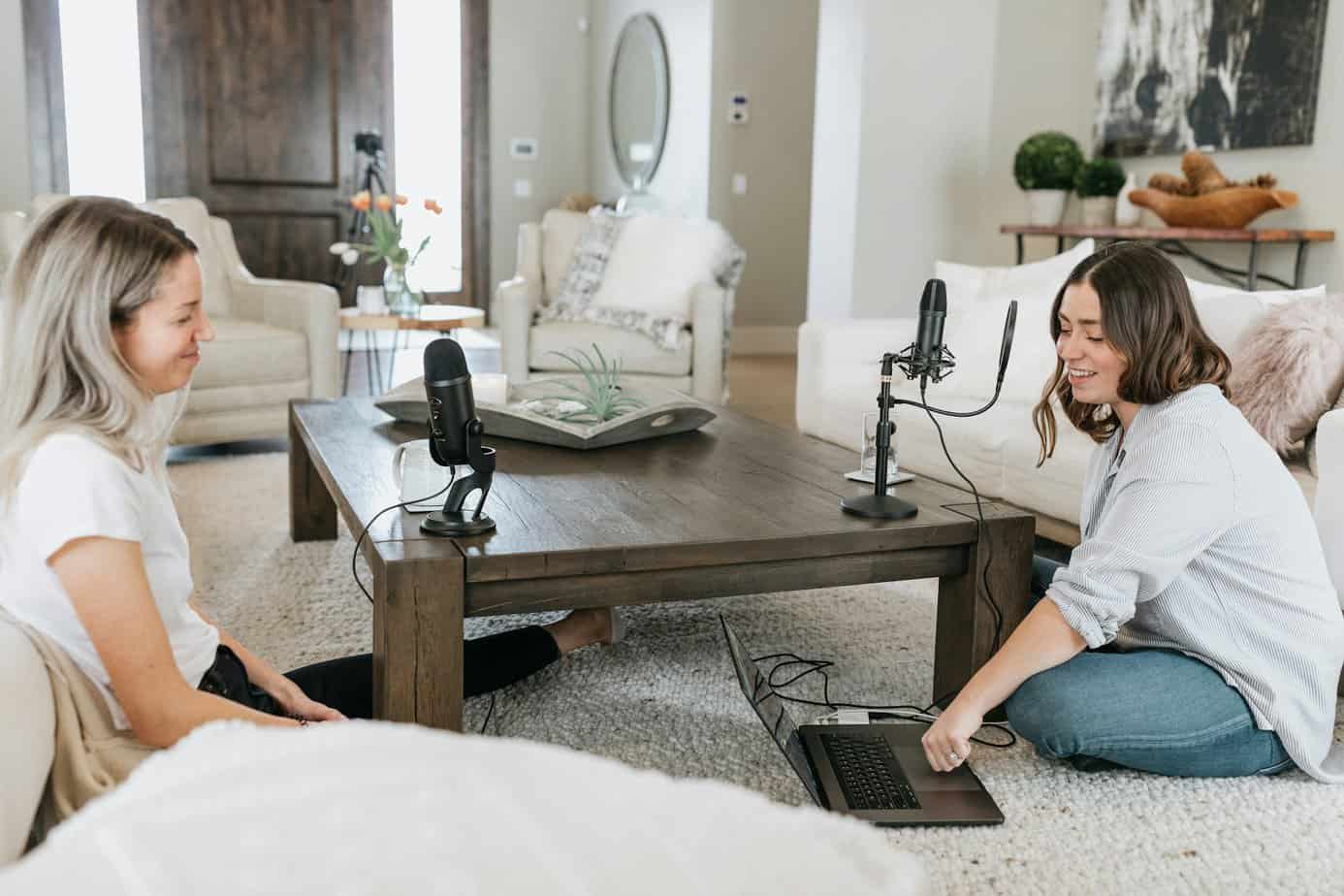
Podcasts continue to grow in popularity and offer a unique way to connect with audiences. Collaborating with influencers who have their own podcasts or creating branded podcast episodes together can be a game-changer. Podcasts allow for in-depth conversations that can showcase your brand’s personality, provide valuable insights, and engage listeners on a deeper level. Partnering with influencers in this way helps you tap into their loyal audience, who trust their opinions and expertise.
When it comes to ways to collaborate with influencers, podcast episodes allow you to amplify your message in a relaxed and relatable format. It’s an effective strategy that builds brand awareness, nurtures relationships with your audience, and creates long-lasting connections with influencers.
Here’s how to make the most out of podcast features:
Benefits of Podcast Features
- In-Depth Discussions: Podcasts allow for detailed conversations about your products or services. Influencers can share their experiences and insights, giving listeners valuable information.
- Storytelling: Influencers can weave your brand’s story into their podcast episodes. This helps build a deeper connection with their audience.
- Personal Connection: The intimate nature of podcasts helps create a personal bond between the influencer, their audience, and your brand.
Best Practices for Podcast Features
- Choose the Right Influencer:
Alignment: Ensure the influencer’s audience aligns with your target market. Their followers should be interested in your products or services.
Engagement: Pick influencers who have high engagement rates on their podcasts. This shows their audience is actively listening and interested.
- Plan the Content Together:
Collaboration: Work with the influencer to plan the episode. Discuss the key messages and topics to cover.
Natural Integration: Ensure the promotion of your brand feels natural and not forced. Authenticity is key to maintaining listener trust.
- Create Valuable Content
Educational: Provide useful and informative content. This could be industry insights, tips, or behind-the-scenes stories.
Entertaining: Keep the content engaging and entertaining. This helps retain listeners and keeps them coming back for more.
- Promote the Episode
Cross-Promotion: Use your social media channels to promote the podcast episode. Share snippets or quotes to generate interest.
Influencer’s Platform: Encourage the influencer to promote the episode on their channels too. This maximizes reach and engagement.
7. Collaborative reels & Joint posts
Influencer takeovers have largely fallen out of favor. Instead of handing over brand accounts, most creators now collaborate through collaborative Reels and joint posts that live natively on both accounts.
This format allows brands and creators to co-publish content without sharing logins or disrupting audience expectations. The creator maintains their voice and storytelling style, while the brand benefits from shared visibility and built-in social proof.
Collaborative Reels work especially well for:
- Day-in-the-life content
- Tutorials and walkthroughs
- Product use in real-world settings
- Educational or value-driven storytelling
Because the content appears on both profiles, engagement feels more organic and audiences are more receptive. It also simplifies approval workflows and reduces the technical friction that made takeovers difficult to manage.
This is one of the most effective ways to collaborate with influencers today, particularly for micro-influencers and creators with highly engaged communities.
8. Educational Webinars and Workshops
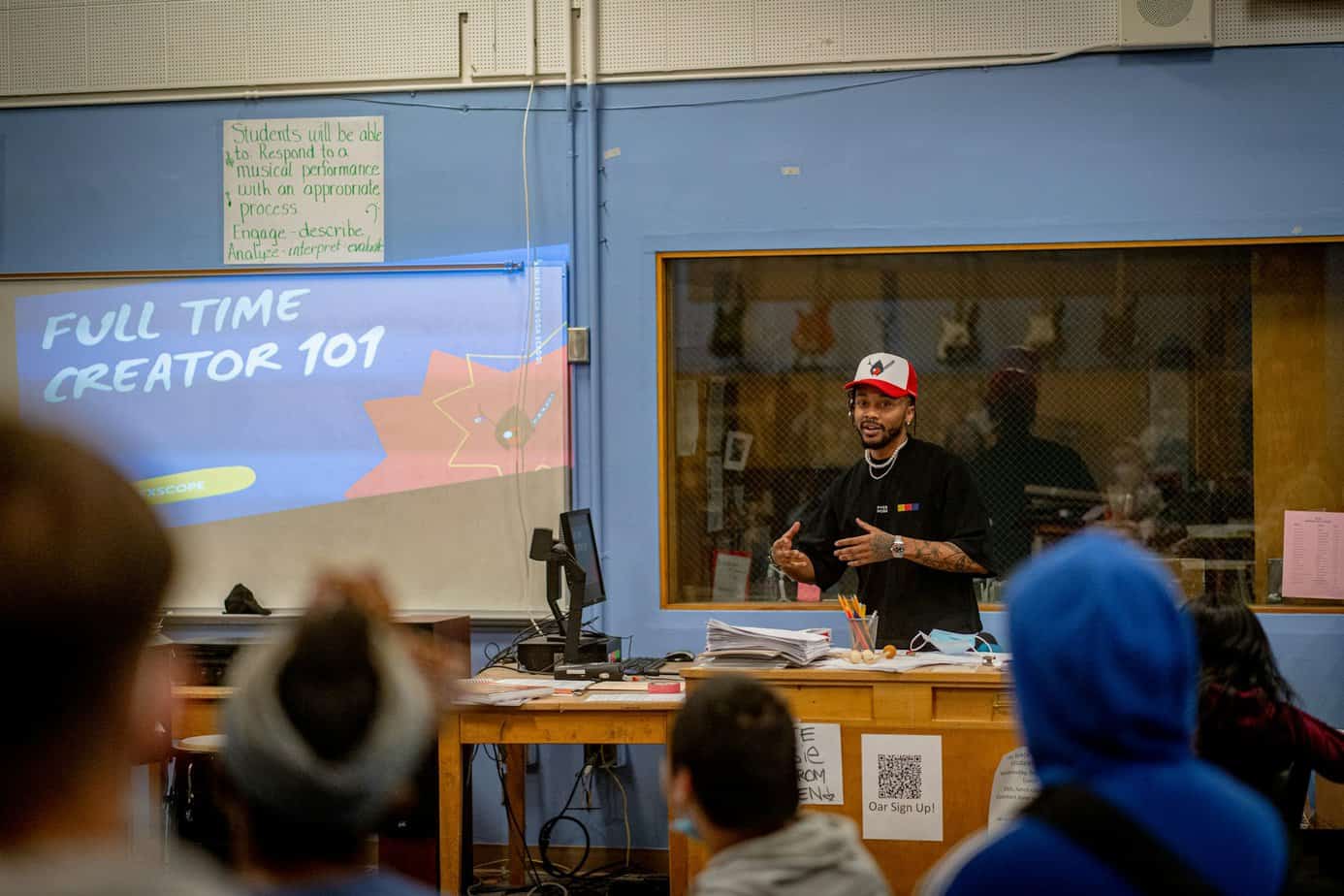
If you’re looking for one of the more “formal” ways to collaborate with influencers, try educational webinars and workshops. Collabbin’ with influencers this way can position your brand as a thought leader while providing valuable content to your audience. These events allow influencers to share their expertise and experiences in a structured, informative format. Collaborating on educational webinars and workshops offers a unique opportunity to engage your target market, demonstrate your brand’s commitment to industry knowledge, and foster a deeper connection with potential customers. Here’s how to effectively leverage educational webinars and workshops:
Benefits of Educational Webinars and Workshops
- Authority and Credibility: Hosting webinars and workshops with knowledgeable influencers can boost your brand’s credibility and authority in your industry.
- Engagement and Interaction: Live events offer real-time interaction with the audience, fostering engagement and a sense of community.
- Lead Generation: These events can be excellent tools for generating leads. Collect attendee information for future marketing efforts.
Best Practices for Educational Webinars and Workshops
- Choose the Right Influencer: We can’t stress this enough!
Expertise: Select an influencer who is an expert in your industry. Their knowledge and credibility will attract attendees and enhance the event’s value.
Audience Alignment: Ensure the influencer’s audience aligns with your target market. This ensures the content is relevant and engaging for attendees.
- Plan the Event
Define Objectives: Set clear objectives for the webinar or workshop. Determine whether the focus is on brand awareness, product education, or lead generation.
Content Strategy: Collaborate with the influencer to develop a detailed agenda. Include key topics, interactive elements, and a Q&A session to keep the audience engaged.
- Promote the Event
Pre-Event Marketing: Use your social media channels, email newsletters, and website to promote the event. Create engaging visuals and teasers to build excitement.
Influencer Promotion: Encourage the influencer to promote the event on their channels. This expands the reach and attracts their followers to join.
- Engage the Audience
Interactive Elements: Incorporate polls, quizzes, and live Q&A sessions to make the event interactive. This keeps attendees engaged and encourages participation.
Exclusive Content: Offer exclusive content or insights that are not available elsewhere. This adds value and makes the event more appealing.
- Provide Value
Educational Focus: Ensure the content is educational and valuable. Avoid making the event too promotional. Focus on providing insights, tips, and actionable advice.
Practical Takeaways: Include practical takeaways that attendees can implement. This enhances the perceived value of the event.
- Follow Up
Post-Event Engagement: Follow up with attendees after the event. Send a thank-you email, share a recording of the webinar or workshop, and provide additional resources.
Feedback and Analysis: Collect feedback from attendees to understand their experience. Analyze the event’s performance to identify areas for improvement.
Examples of Educational Webinar and Workshop Topics
- Industry Trends: Discuss the latest trends and developments in your industry.
- How-To Guides: Provide step-by-step guides on using your products or services.
- Expert Panels: Host panel discussions with multiple influencers or industry experts.
- Case Studies: Share successful case studies and real-world applications of your products.
Want To Increase Brand Awareness?
Hire expert Content Creators who know how to get more eyes on your brand.
FIND CREATORS
3 Ways to Collaborate with Creators
Creators are those who produce content for an audience and monetize this content. They have a relatively smaller following than Influencers. But Content Creators share a deeper and more constructive relationship with their followers.
Here are three of the best ways retailers can Collaborate with Creators:
1. Whitelisting
Whitelisting works the same way for Creators as it does for Influencers. Brands can whitelist Creators’ content as paid ads and bring their followers into the sales funnel. Since Creators produce more authentic content, these whitelisting ads can prove more beneficial than Influencer ads.
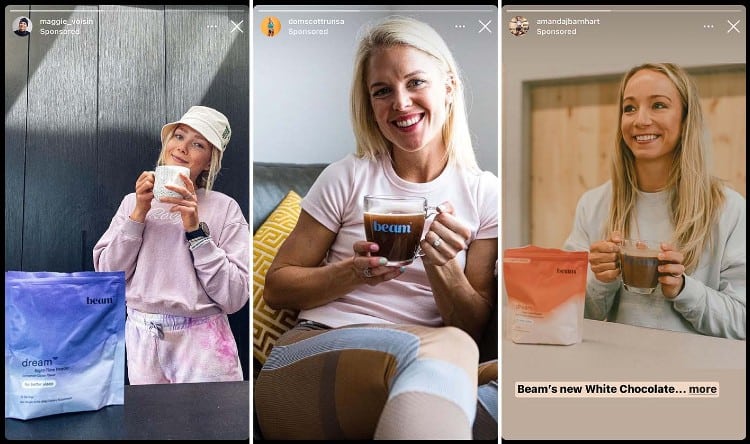
Here’s how Beam Collaborated with various Creators to run whitelisted story ads on Instagram and Facebook. The coffee brand repurposed its stories and posts into story ads with a swipe-up CTA.
Best practices for whitelisting
Here are a few tips to whitelist Creators’ content:
- Select niche-based Creators: Handpick Creators that align with your brand identity. Find Creators on social media using relevant hashtags or use Creator database platforms like Afluencer to pick the right Creators. Assess their engagement rates and comments to see how well they fit your requirements.
- Clearly communicate your guidelines: Let Creators know the campaign goals, timelines, requirements, and budget. Clarifying these details brings more transparency into your partnerships and minimizes the scope of misunderstandings.
- Set KPIs to measure success: Choose a list of metrics for each goal to review the Creators’ performance. You can track these KPIs directly from the ads manager on Facebook.
2. Branded commercials (Creator-led sponsored content)
Branded commercials are a more evolved version of traditional sponsored posts. Instead of one-off ads, they focus on creator-led content that can live organically on social platforms and be reused across paid channels.
These collaborations typically include a paid partnership disclosure and feature creators integrating a brand naturally into their content. This could be through short-form video, storytelling posts, tutorials, or real-life use cases that feel native to their audience.
What’s changed is how branded commercials are executed.
In 2026, the most effective branded content:
- Feels like the creator’s usual content, not an interruption
- Is designed to work organically first, then amplified through paid ads
- Prioritizes clarity, relatability, and usefulness over polish
Rather than scripting ads, brands collaborate with creators to produce content that reflects real use, honest opinions, and everyday scenarios. This approach builds trust and performs better when repurposed across marketing channels.
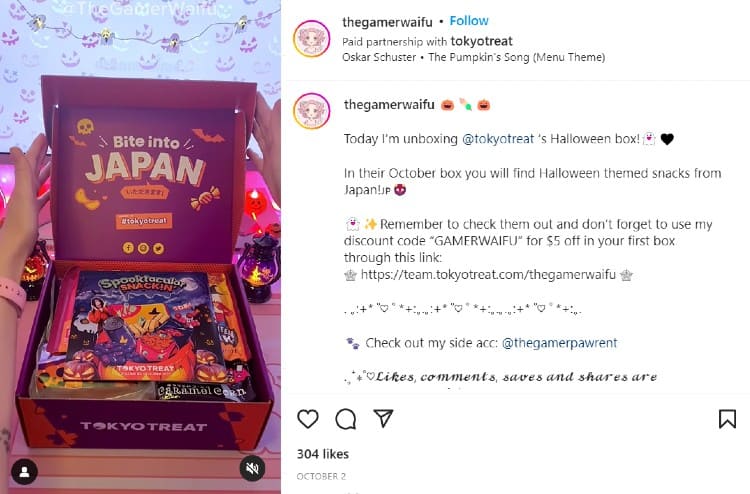
For instance, TokyoTreat’s Collab with Luna, a Japanese gaming Creator, shows how branded commercials work. Luna created an unboxing reel with their snack box and shared it with a “paid partnership” tag. The brand also promoted this reel as a sponsored ad and gained more views.
Best practices for branded commercials
Here are a few handy tips for creating branded commercials with Creators you Collaborate with:
- Lead with value: Educational, entertaining, or problem-solving content performs better than direct promotion. Viewers should gain something from the post, not feel sold to.
- Trust the creator’s voice: Creators know their audience best. Clear guidelines help with alignment, but creative control should remain with the creator.
- Think beyond a single post: The strongest branded commercials are part of a broader content strategy, not isolated placements.
- Design for reuse: Plan content with repurposing in mind, especially for paid social, landing pages, and brand assets.
Branded commercials work particularly well with micro and macro influencers, where reach and storytelling combine to support both awareness and conversion goals.
3. UGC reviews
Creators with a smaller following are open to creating content like product reviews or live-action videos. This is an opportunity for retailers to double down on Creator partnerships and build solid social proof on these platforms.
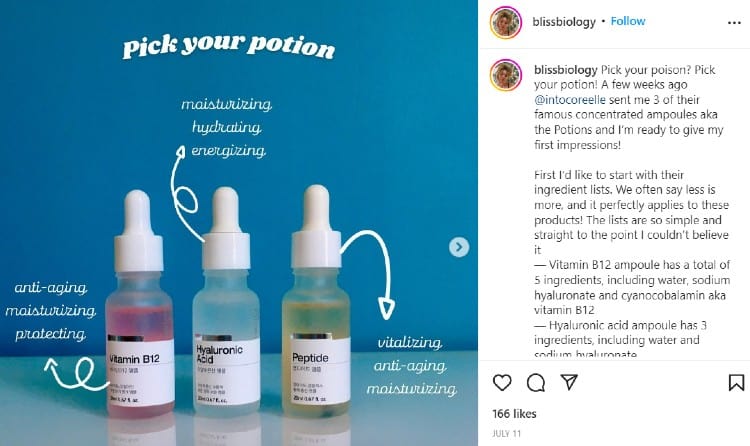
For instance, Coréelle Collaborated with Alisson, a beauty content creator, to review three products. This post included an honest and extensive review of all the products, raising interest from Alisson’s IG community and building more credibility for the skincare brand. Her review also covered a few downsides of the products, making the review less promotional and more realistic.
Best practices for UGC reviews
Here are a few handy tips for creating UGC reviews with Creators you Collaborate with:
- Design channel-specific strategies: Targeting multiple channels is one of the excellent ways to expand your reach and earn users’ trust through UGC. Do your research to identify people’s preferences and create channel-specific strategies.
- Run Influencer hashtag campaigns: Level up the UGC campaign with hashtags. Let Creators use these hashtags to encourage their followers to post brand-aligned content. Create a trend using these hashtags and your Creators.
- Repurpose UGC content for different channels: Recreate your UGC posts into other formats for distribution across various channels. Convert all IG reels and TikToks into YouTube videos and share all posts through a newsletter.
Working with Influencers and Creators Made Easy with Afluencer
Partnering with the right influencers and creators can do wonders for ecommerce brands. Finding the perfect fit for your brand is a breeze with the Afluencer.
Afluencer is an all-in-one influencer marketing platform designed to connect brands with influencers and creators across various niches, platforms, and regions. Whether you’re a small business or a large enterprise, Afluencer simplifies the process of discovering, connecting, and collaborating with the right influencers to elevate your marketing efforts. With its user-friendly interface and powerful features, Afluencer helps you streamline your influencer marketing campaigns from start to finish.
Here’s why Afluencer is your go-to platform for seamless collaborations:
Massive Selection of Influencers and Creators Afluencer offers a huge selection of influencers and creators from various niches, platforms, and regions. Whether you need a beauty guru, a car enthusiast, or a food fanatic, Afluencer has you covered. Simply use the intuitive search filters to find influencers who align with your brand’s values and target audience.
Influencer Spotlight: Seymar K. – Fashion & Beauty
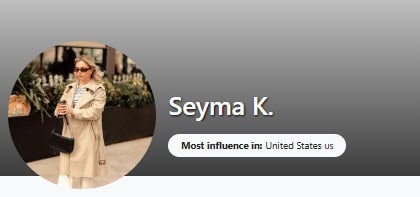
When it comes to fashion and beauty, Seyma K. is an influencer who stands out from the crowd. With content that looks like images straight out of a high-end magazine, Seyma effortlessly combines luxury with everyday wear. Her stunning fashion choices and beauty tips will inspire you to ditch your boring outfits and “Wake up, beauty—it’s time to BEAST,” as she says, LOL.
Seyma’s feed is filled with elegant yet bold styles, from chic street looks to glamorous, red-carpet-worthy ensembles. She’s the go-to source for anyone looking to add a little sparkle to their wardrobe or elevate their beauty routine.
Afluencer – Your Gateaway to Influencer Collabs
Influencers like Seyma K. are just a click away on Afluencer, making it easy for brands to connect with top-tier creators in the fashion and beauty space. With Afluencer, you don’t have to search far to find influencers who can truly elevate your brand’s image.
Streamlined Discovery and Outreach
With Afluencer, discovering and reaching out to potential collaborators is super easy. The platform’s user-friendly interface allows you to browse profiles, view engagement metrics, and check out past collaborations. Once you’ve shortlisted your top picks, you can send proposals directly through the app, saving you time and effort.
Create Collabs and Attract Influencers
One of Afluencer’s standout features is the ability to create collaboration opportunities and have influencers come to you. Post your campaign details, requirements, and goals, and let interested influencers apply. This approach not only saves you time but also ensures that the influencers who reach out are genuinely interested in working with your brand.
Collaboration Management Made Simple
Managing multiple collaborations can be a headache, but not with Afluencer. The app provides tools to track communications, set up campaigns, and more all in one place. You can easily keep tabs on your collaborations and ensure everything runs smoothly.
Tailored Recommendations
Afluencer offers tailored recommendations to help you find the best influencers and creators for your brand. Based on your campaign needs and brand profile, the platform suggests influencers who are a perfect match. This feature ensures that you’re connecting with influencers who can truly elevate your brand.
Support
If you ever need help, Afluencer’s support team is just a click away, ready to assist you with any questions or issues. We got your back, 7 days a week.
Using Afluencer to find and collaborate with influencers and creators is not just easy—it’s fun and engaging. By taking advantage of these ways to collaborate with influencers, you can enhance your brand’s visibility, build authentic connections, and achieve your marketing goals with ease. So why wait? Dive into the world of influencer marketing, sign up with Afluencer and watch your brand soar!
Ready to plan smarter influencer collaborations?
Ask CreatorGPT to explore creator types, collaboration ideas, and outreach angles before launching your next campaign.